

PM’s Visit to Mauritius
Syllabus: GS2/IR
Context
- The Prime Minister paid a state visit to Mauritius, his second since 2015.
- He was the Chief Guest at Mauritius’ National Day Celebrations on March 12.
Key Highlights of the Visit
- MOUs Signed: Includes training civil servants, small and medium enterprises, blue economy development, combating financial crimes, and local currency settlement for trade.
- Indian Rupee Credit Line: A 487.6 crore INR line of credit for replacing water pipelines in Mauritius, a first-ever INR-based credit line.
- White-Shipping Agreement: Technical agreement for maritime security and information exchange.
- Award Conferred: PM Modi received the Grand Commander of the Order of the Star and Key of the Indian Ocean, marking him as the first Indian recipient.
- Vision for the Global South: PM introduced Vision MAHASAGAR (Mutual And Holistic Advancement for Security And Growth Across Regions), building on the previous Vision SAGAR.
About Mauritius
- Location: Mauritius is a strategically located island nation in the western Indian Ocean, close to India.
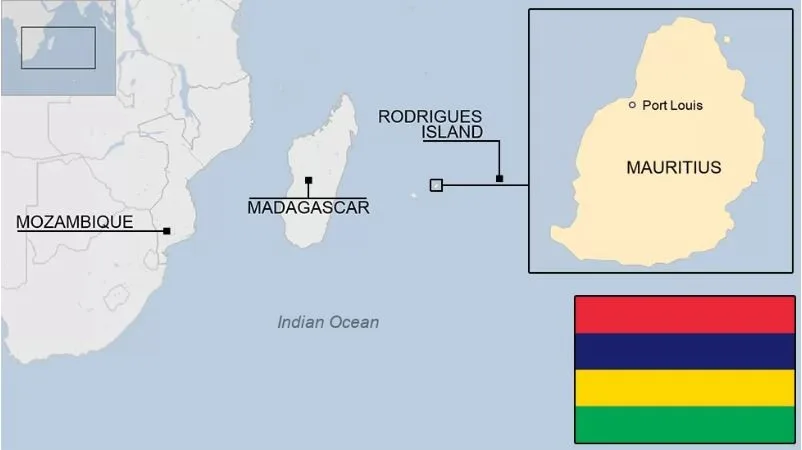
- Population: Nearly 70% of the population (1.2 million) is of Indian origin, strengthening ties with India.
- Colonial History: Mauritius was initially a French colony before becoming a British possession.
- National Day: Mauritius celebrates National Day on March 12, in honor of the date of Mahatma Gandhi’s Dandi March.
India- Mauritius Bilateral Relations
- Diplomatic Relations: India and Mauritius established diplomatic relations in 1948 and have become key trading partners in the Asian continent.
- Commercial Relations: For the FY 2022-2023, Indian exports to Mauritius was USD 462.69 mn, Mauritian exports to India was USD 91.50 mn and Total trade was USD 554.19 mn.
- Double Taxation Avoidance Agreement: Signed in 1982 to help non-resident investors avoid double taxes.
- CECPA Agreement: India and Mauritius signed the Comprehensive Economic Cooperation and Partnership Agreement (CECPA) in 2021, India’s first trade agreement with an African country.
- FDI Source: Mauritius is the second-largest source of Foreign Direct Investment (FDI) into India for FY 2023-24, after Singapore.
- Defence Relations: India is Mauritius’ preferred defence partner for acquiring platforms, capacity building, joint patrolling, hydrological services, etc.
- First Agreement: Transfer of a Dornier aircraft and an Advanced Light Helicopter (Dhruv) to Mauritius on lease.
- Second Agreement: A $100 million Line of Credit (LoC) for Mauritius to procure defence equipment.
- Space Cooperation: India and Mauritius are exploring space research opportunities and signed an MoU in November 2023 for developing a joint satellite.
- Indian Migration: French Rule (1700s): Indians from Puducherry were brought to Mauritius as artisans and masons.
- British Rule (1834 – early 1900s): About half a million Indian indentured workers arrived in Mauritius.
- The majority of these workers settled in Mauritius, influencing its culture and demographics.
- British Rule (1834 – early 1900s): About half a million Indian indentured workers arrived in Mauritius.
- Development Partnership: India has been contributing to projects like the Metro Express, new hospitals, and infrastructure in Agaléga Island.
- Humanitarian Assistance: India assisted Mauritius during Cyclone Chido in 2023, showcasing India’s role as a “First Responder.”
- SAGAR: The term SAGAR – – ‘Security and Growth for All in the Region’ was coined by the PM in 2015 during his visit with a focus on the blue economy.
Significance of Mauritius for India
- Strategic Location: Mauritius is strategically located in the Indian Ocean, crucial for India’s maritime security and trade routes.
- Agaléga island: It is located 1,100 km north of Mauritius, has strategic importance due to its proximity to the Indian southern coast.
- In 2024, India and Mauritius jointly inaugurated the air strip and jetty projects on the island, strengthening their bilateral cooperation.
- Countering China’s Influence: Strengthening ties with Mauritius is crucial for India to counter China’s growing presence in the Indian Ocean region.
- Geopolitical Competition: The Indian Ocean region is a hotspot for geopolitical rivalry, with countries like Europe, the Gulf, Russia, Iran, and Turkey expanding their influence.
- Cultural and Historical Ties: With nearly 70% of its population of Indian origin, Mauritius shares deep cultural, historical, and familial ties with India.
- Blue Economy: Mauritius is key to India’s interests in the Indian Ocean’s blue economy, especially for maritime resources, fisheries, and offshore energy exploration.
- Indian Ocean Cooperation: Mauritius plays a key role in regional organizations like the Indian Ocean Rim Association (IORA), contributing to regional stability and economic cooperation.
Areas of Concern
- Tax Treaty Misuse: The Double Taxation Avoidance Agreement (DTAA) between India and Mauritius had been a point of concern due to its potential misuse for illicit activities like money laundering and round-tripping of funds.
- Security Concerns: Mauritius is a key maritime entity in the Indo-Pacific, making security issues critical.
- India and Mauritius have a strong defence partnership, but evolving regional dynamics pose challenges to maintaining and enhancing this relationship.
- Economic Challenges: Despite being major economic partners, there are concerns regarding trade imbalances and the need to diversify the trade basket.
- Both countries may need to explore new avenues for trade cooperation and address any barriers that hinder the flow of goods and services.
- Presence of China: In recent years, several external powers, including China, have made increasing inroads in Africa and through the Indian Ocean.
- In 2021, China’s Free Trade Agreement (FTA) with Mauritius came into effect.
- This agreement will help China expand the Belt and Road strategy in Africa.
- China’s increasing presence in the region will pose concerns for India.
Way Ahead
- The relationship between India and Mauritius is multifaceted and has grown stronger over the years.
- Both nations can work towards expanding defense and security collaboration, including joint training, counterterrorism efforts, and maritime security.
- This multi-faceted approach can further solidify the longstanding relationship between India and Mauritius, contributing to mutual growth and regional stability.
Disruptions in Parliament and State Assemblies
Syllabus: GS2/Polity & Governance
Context
- Recently, Lok Sabha Speaker Om Birla voiced his concerns over the growing trend of deliberate disruptions in Parliament and State Assemblies, describing them as detrimental to the spirit of democracy.
About the Parliamentary & Legislative Disruptions
- Parliamentary disruptions have become a recurring issue in India, raising concerns about legislative productivity, governance, and democratic accountability.
- It has witnessed disruptions since the early decades of independence, but the frequency and intensity have grown in the last three decades.
- The 1970s and 1980s saw occasional disruptions over significant issues such as the Emergency (1975-77) and economic policies.
- However, the 1990s marked a turning point, with coalition politics leading to frequent disruptions and strategic obstructionism.
- State assemblies of West Bengal, Tamil Nadu, and Karnataka Legislative have all faced intense disruptions, sometimes leading to physical altercations among members.
Data on Legislative Productivity
- Reduced Sitting Days: For instance, the 16th Lok Sabha (2014-2019)had 331 sitting days, the lowest for any full-term Lok Sabha.
- The Monsoon Session of Parliament (2021) with the Lok Sabha functioning for only 21% of its scheduled time and the Rajya Sabha for 28%.
- Decreased Working Hours: The Winter Session of 2024 exemplified this trend:
- Lok Sabha: Functioned for only 52% of its scheduled time.
- Rajya Sabha: Operated at 39% efficiency.
- Frequent Disruptions: For example, during the Winter Session of 2024, the Lok Sabha lost over 65 hours due to interruptions.
- Impact on Question Hour: In the Winter Session of 2024:
- Rajya Sabha: Question Hour was non-functional for 15 out of 19 days.
- Lok Sabha: It did not function for more than 10 minutes on 12 out of 20 days.
- Legislative Backlog: During the Winter Session of 2024, only one bill, the Bharatiya Vayuyan Vidheyak, 2024, was passed, marking the lowest legislative output in the last six Lok Sabha terms.
Causes of Disruptions
- Political Strategies and Protest Culture: Sometimes political parties use disruptions strategically to avoid debates on sensitive issues.
- Contentious Issues and Lack of Consensus: Key policy matters such as economic reforms, minority rights, and constitutional amendments frequently lead to walkouts and protests.
- The lack of dialogue and willingness to reach a consensus exacerbates the problem.
- Laws like Farm Bills (2020), Citizenship Amendment Act (2019), and GST rollout (2017) triggered walkouts and protests.
- Weak Enforcement of Rules: Rules of procedure in Parliament and State Assemblies provide mechanisms to control disruptions, but enforcement is often weak.
- Presiding officers (Speaker, Chairman) have limited power to penalize members who deliberately stall proceedings.
- Media Attention and Public Perception: Lawmakers sometimes use disruptions as a tactic to gain visibility in the media.
- Public sentiment on critical issues often fuels disruptions, as parties attempt to showcase their commitment to popular causes.
- Decline in Constructive Debate: There is a noticeable decline in structured debates, with disruptions replacing meaningful discussions.
- Parliamentary Question Hour and Zero Hour, meant for deliberations, are frequently disrupted.
- Ethnic & Regional Issues: Issues such as caste-based policies, federal conflicts, and regional demands often lead to disruptions.
- Suspension of MPs: Several sessions saw mass suspensions of MPs, further intensifying political standoffs.
Impact of Disruptions
- Legislative Paralysis: Frequent disruptions result in the suspension or delay of crucial bills and policies.
- Important budgetary discussions and debates on national security are affected.
- Erosion of Public Trust: Citizens lose faith in legislative institutions when lawmakers engage in disorderly conduct.
- Voter disillusionment may lead to apathy in democratic participation.
- Economic and Administrative Costs: Wastage of taxpayers’ money due to unproductive parliamentary sessions.
- Administrative delays in implementing key laws and policies.
Key Reforms to Minimize Disruptions in Parliament & State Assemblies
- Stricter Enforcement of Rules: Implementation of Rule 374A (Lok Sabha) and Rule 255 (Rajya Sabha) to suspend members engaging in disorderly conduct.
- Introduction of clear guidelines to prevent unnecessary adjournments due to disruptions.
- Code of Conduct for Legislators: Proposals for a mandatory code of conduct that penalizes repeated disruptions.
- Establishment of a Parliamentary Conduct Committee to review disruptions and recommend actions.
- Increased Use of Technology: Live tracking and documentation of disruptions to hold members accountable.
- Digital screens displaying names of those disrupting proceedings.
Other Possible Solutions
- Institutional Reforms: Ensure greater autonomy for presiding officers to take disciplinary actions.
- Set up an independent parliamentary ethics committee.
- Encouraging Dialogue and Consensus-Building: Pre-legislative consultations between ruling and opposition parties.
- Use of mediation committees to resolve disputes before parliamentary sessions.
- Constitution Club to serve as a platform for informal discussions and policy dialogues, fostering democratic discourse and thoughtfulness.
- Public Accountability Measures: Introduce a disruption-tracking mechanism where citizens can monitor unproductive hours.
- Encourage media coverage that promotes debate rather than highlighting theatrics.
- Reforming the Zero Hour & Question Hour: Providing structured debate slots to the opposition can reduce the need for disruptions as a means of protest.
- Revisiting the Anti-Defection Law: The misuse of the anti-defection law to curb dissent within parties has forced many legislators to express their views through disruption rather than constructive dissent.
UN Statistical Commission adopts a new indicator on Minimum Dietary Diversity
Syllabus: GS2/Health
Context
- A new indicator on Minimum Dietary Diversity has been adopted by the United Nations Statistical Commission.
About
- FAO and UNICEF share custodianship of the new SDG indicator on Minimum Dietary Diversity (MDD).
- MDD indicator addresses a key gap in tracking progress toward SDG 2 (Zero Hunger) and the 2030 Agenda.
- The indicator was adopted by the United Nations Statistical Commission during its 56th session.
- MDD inclusion is a part of the 2025 Comprehensive Review of the SDG indicator framework.
| United Nations Statistical Commission – It was established in 1946. – It is the highest body of the global statistical system bringing together the Chief Statisticians from member states. – It is the highest decision making body for international statistical activities, responsible for setting of statistical standards and the development of concepts and methods, including their implementation. |
About Indicator on Minimum Dietary Diversity
- MDD-C & MDD-W: The new MDD indicator measures dietary diversity for children (MDD-C) and women of reproductive age (MDD-W).
- Indicator Definition: MDD-W is a simple yes/no measure based on whether women have consumed at least five out of 10 defined food groups in the past 24 hours.
- 10 Food Groups: Include grains, pulses, nuts, milk, meat, eggs, dark leafy vegetables, vitamin A-rich fruits/veggies, other vegetables, and other fruits.
- Importance of Diversity: Dietary diversity is essential for preventing malnutrition and supporting overall health, growth, and well-being.
- Focus on Quality: MDD emphasizes the variety of foods consumed, not just calorie intake, highlighting the importance of nutritious diets for health, growth, and well-being.
- FAO & UNICEF Roles: FAO oversees MDD-W, while UNICEF is responsible for MDD-C.
- Higher MDD Scores: A higher proportion of women meeting MDD thresholds indicates better vitamin and mineral intake.
Significance
- Quality of Diets: MDD adds a crucial measure of dietary quality to existing food security and nutrition indicators.
- Dietary Impact: MDD provides a tool for policy-making, program evaluation, and target-setting, focusing on vulnerable groups.
- Critical Step Forward: MDD helps track progress on achieving SDG 2.
- Future Impact: Elevates the importance of dietary diversity and food systems transformation, ensuring its place in post-SDG diet monitoring.
India’s Progress in SDG2
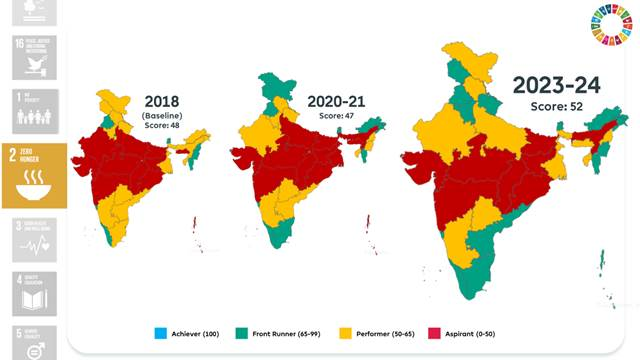
- Improvement in overall composite score of Goal 2 moving from Aspirant category in SDG India Index 3 (2020-21) to Performer category in the SDG India Index 4 (2023-24)
- 99.01% of beneficiaries covered under National Food Security Act (NFSA), 2013.
- Improvement in productivity of rice and wheat from 2995.21 kg/ha in 2018-19 to 3052.25 kg/ha in TE 2021-22.
- Increase in Gross Value Added (GVA) (constant prices) in agriculture per worker from ₹ 0.71 lakhs in 2018-19 to ₹ 0.86 lakhs in 2022-23.

Starlink Satellite Internet
Syllabus: GS3/ Economy, S&T
In News
- Elon Musk-owned SpaceX has secured agreements with Airtel and Jio to distribute Starlink, its satellite internet service.
- However, the final rollout is subject to regulatory approvals.
What is Satellite Internet?
- About: Satellite internet is a wireless communication technology that provides broadband services using satellites orbiting the Earth.
- Unlike fiber-optic or mobile networks, which rely on ground infrastructure, satellite internet beams data from space-based satellites to user terminals on Earth.
- Types: Geostationary Orbit (GEO) Satellites (e.g., VSAT services)
- Low-Earth Orbit (LEO) Satellites (e.g., Starlink, OneWeb)
- Starlink is SpaceX’s satellite internet service that operates using a constellation of LEO satellites (over 7,000 satellites in orbit).
Benefits of Satellite Internet in India
- Bridging the Digital Divide: Provides high-speed internet in remote and rural areas, reducing urban-rural connectivity gaps.
- Supports the Digital India initiative and enhances access to e-learning, telemedicine, and e-governance.
- Disaster-Resilient Communication: Unlike fiber-optic or mobile networks, satellite internet remains functional during natural disasters.
- Turkey-Syria Earthquake (2023): After the devastating earthquake, Starlink provided emergency internet to aid workers in affected regions
- Boost to Defence & Strategic Communication: Provides secure, high-speed internet in border regions (e.g., Ladakh, Northeast, Andaman & Nicobar).
- For example: Starlink played a crucial role in Ukraine’s defense strategy.
- Alternative to Traditional ISPs: Can increase competition in the broadband sector, leading to better services and lower costs. Offers an alternative for rural businesses, boosting economic activities in non-urban regions.
- Support for Emerging Technologies: Helps in the deployment of AI-driven smart agriculture and remote monitoring systems.
Challenges & Concerns
- Environmental Concerns: Starlink’s satellite re-entries release aluminium oxide particles, which could harm the ozone layer.
- Astronomical Interference: Geomagnetic storms or bright light emitted by thousands of LEO satellites could disrupt astronomical observations, affecting ground-based telescopes and space research.
STEM Labs in Government Schools: A Case Study
Syllabus: GS2/ Education
In Context
- In Arunachal Pradesh’s East Kameng district, government schools have established Science, Technology, Engineering, and Mathematics (STEM) labs to enhance educational experiences.
What is STEM Labs?
- STEM labs are dedicated spaces in schools where students can engage in experiments, simulations, and project-based learning using modern tools and technology. They offer access to:
- 3D printers for prototyping
- Robotics kits for coding and automation
- Engineering tools for design and testing
Importance of STEM Labs in Rural Education
- These labs help them visualize concepts better, leading to deeper understanding and retention of knowledge.
- For example: The STEM lab at Government Higher Secondary School, Balijan, enables interactive, practical learning through experiments & models.
- Reduces the urban-rural divide in access to quality education.
- Encourages innovation, coding, engineering, and scientific research skills.
- Prepares students for STEM-related jobs and higher education.
Government Initiatives and Policy Support
- Atal Tinkering Labs (ATLs) under NITI Aayog’s Atal Innovation Mission: Provides funding and mentorship for schools to develop innovation labs.
- PM SHRI Schools Initiative: Centrally sponsored scheme focuses on integrating STEM learning in government schools. It aligns with the National Education Policy (2020), falls under the Samagra Shiksha scheme.
Challenges in Implementation
- Teachers need upskilling in STEM pedagogy and lab management.
- Encouraging students to actively participate in STEM activities remains a challenge.
- Many government schools lack adequate facilities.
About East Kameng district of AP
- It shares an international border with China in the north.
- Located in western Arunachal Pradesh
- The name ‘Kameng’ has been derived from the Kameng river, a tributary of the mighty Brahmaputra. Referred to as the “Jia Bharali” in Assam’s higher reaches.
- Pakke Tiger Reserve is in this district.
- Major tribes: Monpa, Sherdukpen, and Aka tribes
Rise in India’s Patent Applications: WIPO
Syllabus: GS3/ Science and Technology
Context
- India has witnessed a significant rise in intellectual property (IP) filings over the past decade, marking its progress as an innovation-driven economy.
About
- According to the World Intellectual Property Organization (WIPO), India’s patent applications have more than doubled, trademark filings have risen 2.5 times, and design filings have tripled.
- India has been ranked 39th in the 2024 Global Innovation Index and is a leader in Central and Southern Asia.
What is Intellectual Property?
- Intellectual property (IP) refers to creations of the mind, such as inventions; literary and artistic works; designs; and symbols, names and images used in commerce.
- IP is protected in law by patents, copyright and trademarks, which enable people to earn recognition or financial benefit from what they invent or create.
Types of intellectual property
- Patent: A patent is an exclusive right granted for an invention, which is a product or a process that provides, in general, a new way of doing something, or offers a new technical solution to a problem.
- Copyright: It is a legal term used to describe the rights that creators have over their literary and artistic works.
- Trademark: It is a sign capable of distinguishing the goods or services of one enterprise from those of other enterprises.
- Industrial design: It constitutes the ornamental or aesthetic aspect of an article.
Challenges in India’s IP Regime
- Patent Backlog: Despite increasing filings, patent examination and grant delays remain a significant issue.
- IP Infringement: Weak enforcement mechanisms, leading to rampant counterfeiting and piracy.
- Low Patent Commercialization: Many patents filed in India do not get commercialized due to lack of industry-academia collaboration.
- Global Competitiveness: India’s innovation is dominated by foreign applicants, reflecting low domestic R&D investments.
India’s initiative
- National IPR Policy 2016 encompassing all IPRs into a single vision document setting in place an institutional mechanism for implementation, monitoring and review of IP laws.
- The policy encourages innovation and creativity by providing stronger protection and incentives for inventors, artists, and creators.
- Cell for IPR Promotion and Management (CIPAM): It has been set up to coordinate the implementation of the National IPR Policy.
- National Intellectual Property Awareness Mission (NIPAM), a flagship program to impart IP awareness and basic training in educational institutes.
- Scheme for Facilitating Startups Intellectual Property Protection(SIPP): It is introduced to foster innovation and entrepreneurship by providing a supportive ecosystem for startups to protect and manage their IP assets.
- Atal Innovation Mission (AIM): It was set up by NITI Aayog in 2016 to promote a culture of innovation and entrepreneurship in India. AIM has created four programs to support these functions:
- Atal Tinkering Labs
- Atal Incubation Centers
- Atal New India Challenges and Atal Grand Challenges
- Mentor India.
Concluding remarks
- India’s impressive IP growth, marked by significant advancements in patents, industrial designs, and trademarks, underlines its commitment to fostering innovation and reinforcing its global economic presence.
- This momentum supports India’s broader goals of economic expansion and innovation-driven development.
| World Intellectual Property Organization (WIPO) – It is a self-funding agency of the United Nations, that serves the world’s innovators and creators, ensuring that their ideas travel safely to the market and improve lives everywhere. – History: WIPO was established in 1967 by the WIPO Convention. – Members: The organization has 193 member states including both developing and developed nations like India, Italy, Israel, Austria, Bhutan, Brazil, China, Cuba, Egypt, Pakistan, the U.S. and the U.K. 1. India joined WIPO in 1975. – Headquarters: Geneva, Switzerland. Global Treaties – Madrid Protocol for Trademark Registration (1989): It allows businesses to register and manage trademarks in multiple countries through a single application. With 115 members covering 131 countries, including India, it simplifies trademark protection, reduces costs, and centralizes renewals and modifications. – Hague System (1925): It enables industrial designs to be protected in multiple countries through a single application. Also administered by WIPO, the system has over 70 contracting parties covering 96 countries. However, India is not a member. |
Report on the Demands for Grants for Railways
Syllabus :GS3/Economy
In News
- The third report on the “Demands for Grants (2025-26)” of the Ministry of Railways emphasizes several areas for improvement in the Indian Railways, focusing on technological advancements, capacity expansion, and safety enhancement.
| Do you know ? – Indian Railways is managed by the Ministry of Railways through the Railway Board. – The Railways’ expenditure is funded by: Internal revenue (mainly from goods and passenger earnings) 1. Budgetary support from the central government, 2. Extra-budgetary resources (including borrowings, institutional financing, and public-private partnerships). 3. Working expenses like salaries, pensions, and asset maintenance are covered by internal resources. 4. Capital expenditure is funded by government grants and extra-budgetary resources. |
Preset Status
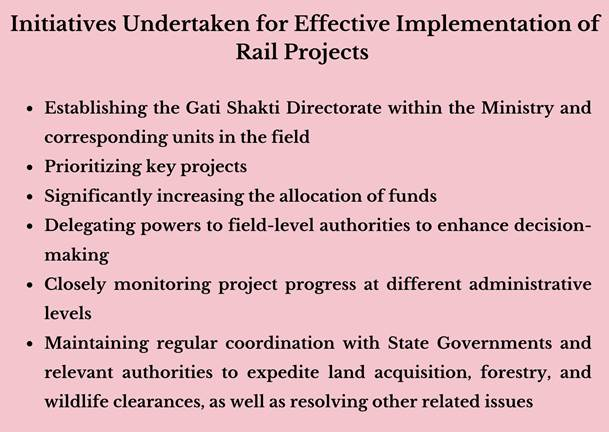
- Indian Railways is undergoing a major transformation to provide faster, safer, and world-class travel experiences to billions of Indians at a nominal cost.
- As part of this effort, the railway has spent 76% of its budget for the current fiscal year, with a focus on capacity augmentation, including the introduction of 136 Vande Bharat trains, near-total electrification of broad gauge lines, and infrastructure development such as new tracks and gauge conversion.
- These investments are enhancing travel speed, safety, and comfort.
Budget Overview
- Railways’ internal revenue for 2025-26 is estimated to be Rs 3,02,100 crore. This an increase of 8.3% over the revised estimate for 2024-25.
- In 2025-26, 99.8% of revenue is estimated to be raised from traffic operations (Rs 3,01,400 crore).
- The total revenue expenditure in 2025-26 is estimated at Rs 2,99,059 crore, an increase of 7.7% over the revised estimate of 2024-25.
- In 2025-26, capital expenditure is estimated at Rs 2,65,200 crore, same as the revised estimate for 2024-25.
Issues
- The National Rail Plan, 2020 (NRP) highlighted underinvestment in capacity, leading to congestion on high-demand routes and low average speeds.
- Indian Railways faces competition from the road sector in attracting freight due to better first and last-mile connectivity.
- Railway finances are constrained, as revenue expenditure has averaged 99% of internal revenue in the last decade, limiting investment in capital works.
- Additionally, between 2000-01 and 2023-24, 3,953 consequential train accidents occurred, including 48 in 2022-23 and 40 in 2023-24, involving collisions, fires, and derailments.
Recent recommendations
- Technology & Safety: The report stresses the importance of advancing technology, including the execution of automatic train protection systems like Kavach.
- Infrastructure Development: Prioritizing capital expenditure for infrastructure development, modernisation, and asset replacement is recommended to ensure timely completion of projects and avoid cost overruns.
- Revenue Optimisation: Suggestions for optimising operating expenses, adopting energy-efficient technologies, and exploring alternative revenue avenues to boost passenger and freight revenues are made.
- Staff Welfare: The Ministry is urged to focus on staff welfare initiatives to improve morale and productivity.
- Internal Resource Mobilisation: The Committee advises the Ministry to explore new ways to increase internal earnings and reduce dependence on government budget allocations by leveraging private sector expertise and market borrowing.
- Doubling of Railway Lines: While the financial utilization stands at 74%, physical progress on doubling railway lines is only 39%, with the Committee urging Railways to address obstacles hindering progress.
- Manned Level Crossings & Production Targets: The Committee highlights consistent shortfalls in closing manned level crossings and meeting production targets for coaches and wagons, recommending an increase in manufacturing capacity.
- Station Redevelopment: Improvements in crowd management and better planning for station redevelopment are urged to prevent incidents and improve efficiency.
- Freight Efficiency: A market-driven approach is recommended to enhance freight traffic, particularly through Dedicated Freight Corridors (DFCs).
- Mumbai-Ahmedabad High-Speed Rail Project: The Committee calls for expedited finalisation of contract packages and timely completion of the project, along with addressing construction challenges and delays to avoid cost overruns.
- Indigenous Manufacturing: Expanding the indigenous manufacturing of Shinkansen technology components under the Make-in-India initiative is advised to support the long-term sustainability of high-speed rail operations.
Conclusion
- The Indian Railways is undergoing a transformative phase, marked by significant investments and modernization efforts to enhance its infrastructure, safety, and passenger experience.
- Key initiatives, such as the Amrit Bharat Station Scheme, modernization of locomotives and coaching stock, and the implementation of advanced safety measures, are crucial steps towards achieving this vision.
- These comprehensive measures are expected to not only boost the efficiency and safety of train operations but also support India’s broader economic growth and connectivity goals.
World Air Quality Report 2024
Syllabus: GS3/ Environmental Pollution
Context
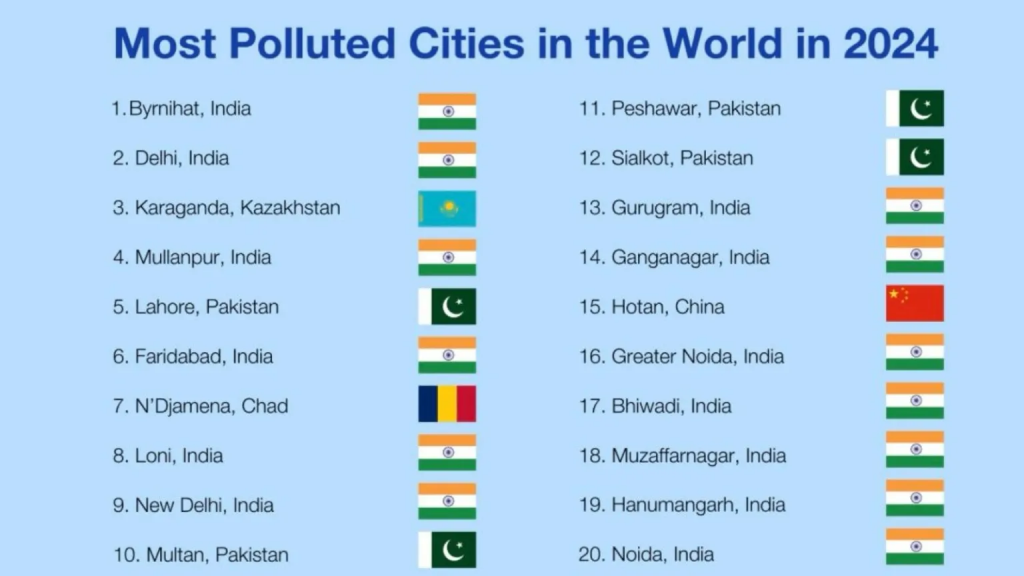
- According to the World Air Quality Report 2024, thirteen of the world’s top 20 most polluted cities are in India, with Byrnihat on the Assam-Meghalaya border being the most polluted.
Key Findings of the report
- India is the fifth most polluted country in the world, with an average Air Quality Index (AQI) of 50.6 μg/m3 – 10 times higher than the World Health Organization’s (WHO) annual PM2.5 guideline value of 5 μg/m3.
- In 2023, India was the third most polluted country.
- Delhi continues to be the most polluted Capital city in the world with an average PM 2.5 concentration of 91.8 μg/m3.
- Out of the 138 countries and regions, 126 (91.3%) exceeded the WHO annual PM2.5 guideline value of 5 μg/m3.
- Only 17% of global cities met WHO air pollution guidelines.
- PM2.5 concentrations decreased in every country in Southeast Asia, though trans-boundary haze and lingering El Niño conditions remain major factors.
| Air Pollution and Its Concerns – When harmful substances (pollutants) – particles, gases, or matter – are released into the air and reduce its quality, the air is polluted. – Common air pollutants include: Particulate Matter (PM), Nitrogen Dioxide (NO2), Sulfur Dioxide (SO2), Ozone (O3), Carbon Monoxide (CO), Volatile Organic Compounds (VOCs), Lead etc. – Concerns: 1. Health Related: Respiratory issues, cardiovascular problems, reduced lung function. 2. Environmental: Ecosystem damage, Biodiversity loss, Water pollution, climate change, crop damage. 3. Healthcare Costs: The health impacts of air pollution result in increased healthcare costs, including expenses related to the treatment of respiratory and cardiovascular diseases. |
Steps Taken by Government of India to combat Air Pollution
- National Clean Air Programme (NCAP): Launched in 2019, NCAP is a comprehensive initiative with the goal of reducing air pollution in identified cities and regions across India.
- The program focuses on improving air quality monitoring, implementing stricter emission standards, and promoting public awareness.
- Bharat Stage VI (BS-VI) Emission Standards: The government implemented BS-VI emission standards for vehicles nationwide in 2020.
- Pradhan Mantri Ujjwala Yojana (PMUY): The PMUY scheme aims to provide clean cooking fuel to households by promoting the use of liquefied petroleum gas (LPG) as an alternative to traditional biomass-based cooking methods.
- FAME (Faster Adoption and Manufacturing of Hybrid and Electric Vehicles) Scheme: The FAME scheme promotes the adoption of electric and hybrid vehicles to reduce air pollution caused by vehicular emissions.
- Green Initiatives for Sustainable Habitat (GRIHA): GRIHA is an initiative to promote sustainable and environmentally friendly practices in the construction and operation of buildings.
- Waste Management Programs including the Swachh Bharat Abhiyan, aim to address solid waste issues and promote cleaner disposal methods.
- Commission for Air Quality Management: The Commission has been set up for Air Quality Management in the National Capital Region and Adjoining Areas for better coordination, research, identification, and resolution of problems surrounding the air quality index.
- Graded Response Action Plan (GRAP): It is a set of emergency measures that kick in to prevent further deterioration of air quality once it reaches a certain threshold in the Delhi-NCR region.
- Promotion of Public Transportation: Encouraging the use of public transportation, such as buses and metro systems, helps reduce the number of individual vehicles on the road, consequently lowering vehicular emissions.
MISCELLANEOUS
Chagos Archipelago
Syllabus : GS 1/ Places In News
Context
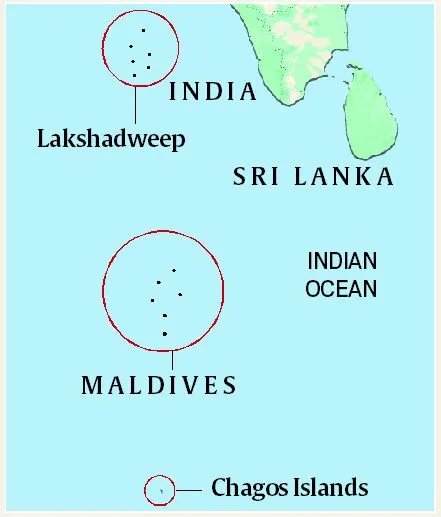
- India has supported Mauritius’ claims of sovereignty over Chagos Archipelago.
About Chagos Archipelago
- It is a group of islands comprising 58 islands, lying roughly 500 km to the south of the Maldives archipelago in the Indian Ocean.
- These islands were uninhabited until the late 18th century, when the French brought in laborers from Africa and India to work in newly-established coconut plantations. In 1814, France ceded the islands to the British.
- In 1965, the UK constituted the British Indian Ocean Territory (BIOT), of which the Chagos Islands were a central part.
- Chagos was attached to Mauritius, another British colony in the Indian Ocean, for administrative purposes. But when Mauritius gained independence in 1968, Chagos remained with Britain.
- Mauritius claims sovereignty over Chagos, citing historical ties before British colonial rule.
- Its largest atoll – Diego Garcia – hosts a major US military base.
Parvatmala Pariyojana
Syllabus: GS3/ Infrastructure
In News
- The Cabinet Committee on Economic Affairs (CCEA), chaired by Prime Minister has approved two major ropeway projects in Uttarakhand under the National Ropeways Development Programme – Parvatmala Pariyojana.
About
- Parvatmala was announced in the 2022 Budget under the Public-Private Partnership (PPP) mode.
- Implemented by National Highway Logistics Management Limited (NHLML) under the Ministry of Road Transport and Highways (MoRTH).
- Aims to develop 250+ ropeway projects covering 1,200 km in five years.
Significance of Ropeways
- Addresses connectivity challenges in remote & hilly areas.
- Boosts tourism & economy
- Provides a direct aerial route, bypassing difficult terrains.
- Minimal deforestation and land degradation.
Soil Fertility Mapping
Syllabus: GS 3/Economy
In News
- Soil fertility maps have been generated for 351 villages across 34 districts in Maharashtra.
Soil Fertility Maps
- Soil fertility maps provide location-specific data, allowing farmers to apply fertilizers more efficiently, avoiding overuse or underuse.
- Soil & Land Use Survey of India (SLUSI) generates digital soil fertility maps using geo-spatial techniques and Soil Health Card (SHC) data.
- These maps guide farmers in using fertilizers and soil amendments efficiently, reducing wastage and improving economic outcomes.
| Do you know ? – Geospatial techniques, including remote sensing & AI based tools, are used in Soil Fertility Mapping. – The SHC soil sampling point is geo-coded using GPS, the sample is assigned a unique QR Code, and this QR code is retained during analysis in soil testing labs. |
Challenges
- Logistical, technical, and infrastructure barriers exist in remote and hilly areas.
- Village Level Soil Testing labs and mini-labs are addressing these challenges.
Importance
- Mapping identifies soil degradation and nutrient deficiencies, helping farmers address these issues through balanced fertilizer use.
| Other Related Schemes – Soil Health & Fertility Scheme: The scheme promotes Integrated Nutrient Management (INM), combining chemical fertilizers, organic manures, and bio-fertilizers to improve soil health and productivity. – Soil Health Card (SHC): SHCs provide information on soil nutrient status (low, medium, high) and recommendations for nutrient application to improve soil health. 1. Parameters tested include pH, electrical conductivity, organic carbon, nitrogen, phosphorus, potassium, sulphur, and micronutrients. 2. SHC data is made available to farmers, who can download their SHC by entering their registered mobile number. 3. The Soil Health & Fertility Scheme is available to all States & UTs in India. |
Evolution of Computer Mouse
Syllabus :GS 3/Science and Technology
In News
- The computer mouse is essential for personal computing, allowing users to interact with virtual objects through graphical interfaces.
About
- The computer mouse, invented by Douglas Engelbart in 1963, was initially a bulky device with two wheels and a cord, resembling a mouse.
- In 1968, the first ball-based mouse was introduced by Telefuken, inspired by a military trackball device.
- The Xerox Alto in 1973 became the first computer with a mouse-driven graphical interface, and Microsoft developed the first PC-compatible mouse in 1982.
- The optical mouse, developed by Jean-Daniel Nicoud, replaced mechanical components with LEDs, and later evolved into wireless and laser mice.
Implementation of Pradhan Mantri Fasal Bima Yojana
Syllabus :GS3/Economy
In News
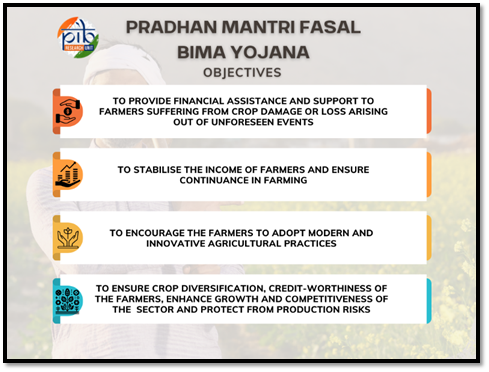
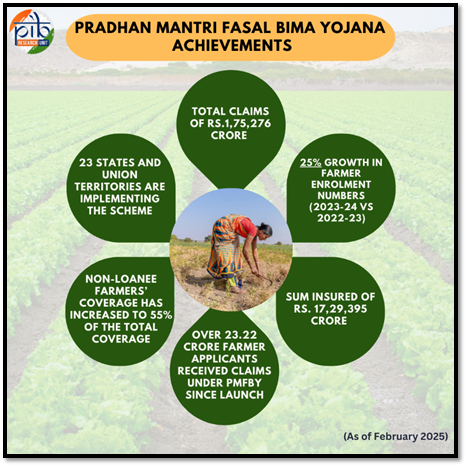
- The Government has approved the continuation of Pradhan Mantri Fasal Bima Yojana (PMFBY) and Restructured Weather Based Crop Insurance Scheme (RWBCIS) till 2025-26.
Pradhan Mantri Fasal Bima Yojana(PMFBY)
- It was introduced in the Kharif 2016 season and is available for all States/UTs. It is voluntary for both States and farmers.
- Affordable Premiums: The maximum premium payable by the farmer will be 2% for the Kharif food and oilseed crops.
- For rabi food and oilseeds crop, it is 1.5% and for yearly commercial or horticultural crops it will be 5%. The remaining premium is subsidized by the government.
- Comprehensive Coverage: The scheme covers natural disasters (droughts, floods), pests, and diseases, along with post-harvest losses due to local risks like hailstorms and landslides.
- Timely Compensation: PMFBY aims to process claims within two months of the harvest to ensure that farmers get the compensation quickly, preventing them from falling into debt traps.
- Technology-Driven Implementation: PMFBY integrates advanced technologies like satellite imaging, drones, and mobile apps for precise estimation of crop loss, ensuring accurate claim settlements.
- Post-harvest Losses: The Government provides for post-harvest losses on an individual farm basis. The Government offers coverage of up to 14 days (maximum) from harvesting for crops that are stored in “cut and spread” condition.
| Do you know ? – Restructured Weather Based Crop Insurance Scheme (RWBCIS) is a weather index-based scheme, which was introduced along with PMFBY. – The basic difference between the PMFBY and RWBCIS is in its methodology for calculation of admissible claims to the farmers. |
