
Online Skill-Based Gaming
Syllabus: GS3/ Economy
In Context
- Online skill-based gaming has the potential to harness programming, design, and storytelling talent to leapfrog India to the top of the tech leaderboard globally.
About
- With India’s 650 million smartphone users and a youthful population, the country is uniquely positioned to leverage gaming as a driver of technological innovation, employment, and economic expansion.
- However, stringent taxation policies, ambiguous regulatory frameworks, and retrospective taxation demands threaten to stifle the sector’s growth.
Potential of Online Skill-Based Gaming
- It is one of the major sunrise sectors of India. The online gaming industry has witnessed exponential growth, with three Indian startups achieving unicorn status. According to a PwC report, the sector:
- Accounted for ₹33,000 crore in 2023.
- It is projected to double to ₹66,000 crore by 2028, growing at a CAGR of 14.5%.
- Could generate 2-3 lakh additional direct and indirect jobs, on top of the 2 lakh existing jobs in the industry.
Why Online Gaming Matters for India’s Tech Ecosystem?
- Fostering Talent: The sector harnesses skills in programming, design, and storytelling, creating a multi-disciplinary innovation hub.
- Boosting Exports: India can become a global exporter of game development, animation, and AR/VR technologies.
- Startups & Investment Growth: The gaming ecosystem is attracting venture capital and international investment, further strengthening India’s digital economy.
Regulatory Challenges Hindering Growth
- Excessive Taxation and Retrospective GST Demand: The Supreme Court’s 2025 stay order on the Union government’s ₹1.12 lakh crore retrospective GST demand highlighted how excessive taxation threatens industry survival.
- Online gaming is taxed at 28% GST, a rate similar to gambling, liquor, and tobacco.
- Smaller startups struggle to comply with such taxation, risking bankruptcies and shutdowns.
- Conflation with Gambling and Betting: Some State governments imposed bans on online gaming, classifying them as gambling.
- Courts later overturned these bans, recognizing that “games of skill” are legal and distinct from gambling.
- However, misconceptions about gaming persist, affecting regulatory clarity.
- Risk of Illegal Offshore Gaming Sites: Excessive taxation can drive users towards unregulated gambling sites, which operate offshore beyond Indian regulatory reach.
- Such platforms pose national security and financial risks while depriving the Indian economy of legitimate tax revenues.
- Societal Concerns: Families and regulators are concerned about gaming addiction and excessive screen time.
Need for a Balanced Regulatory Approach
- Rationalizing Taxes: Online gaming should not be taxed at par with gambling, liquor, and tobacco.
- A differentiated tax structure should be introduced, recognizing gaming as an entertainment and skill-based industry rather than a vice.
- Developing a Transparent Regulatory Framework: A national policy framework should be crafted in collaboration with industry stakeholders.
- Policies should address:
- Skill-based gaming vs. gambling distinction
- Consumer protection measures (age restrictions, self-exclusion options)
- Data privacy and security regulations
- Encouraging Investment in Gaming R&D:Incentives for game development startups to create Indian-origin games with cultural and educational value.
- Establish gaming incubators and research hubs to promote innovation in AR, VR, and AI-based gaming.
- Strengthening Consumer Awareness: Gaming platforms must self-regulate to identify problematic behavior and promote responsible gaming.
The Immigration and Foreigners Bill, 2025
Syllabus: GS2/ Governance
Context
- The Union government introduced the Immigration and Foreigners Bill, 2025 in the Lok Sabha, aimed at overhauling India’s immigration system.
Key Provisions
- The Bill seeks to replace four pre-Independence and early post-Independence Acts: the Passport (Entry into India) Act, 1920, the Registration of Foreigners Act, 1939, the Foreigners Act, 1946, and the Immigration (Carriers’ Liability) Act, 2000.
- Establishment of Bureau of Immigration: The Bill proposes the establishment of a Bureau of Immigration (Section 5), headed by a Commissioner.
- The Bureau will regulate immigration, oversee entry and exit of foreigners, and perform other functions as prescribed by the Centre.
- Central Government’s Powers over Foreigners: Under Section 7, the Bill empowers the Central government to:
- Specify entry and departure points and impose conditions on foreigners upon arrival.
- Order foreigners to stay in designated areas or prohibit them from entering specific regions.
- Mandate identity verification, biometric submission, and medical examination for foreigners.
- Restrict association with certain individuals or involvement in specified activities.
- Punishments: The Bill also carries punishments for foreigners who:
- Enter any area without a valid passport or a travel document (Section 21). The punishment is up to five years imprisonment and/or a fine of up to Rs 5 lakh.
- Restrictions on carriers: A carrier has been defined as a person or entity “engaged in the business of transporting passengers or cargo by air, water or land by aircraft or ship or any other mode of transport”.
- Under Section 17, carriers are required to share information related to the passengers and crew with an immigration officer or with a District Magistrate/Police Commissioner when asked.
Criticism of the Bill
- Violation of Fundamental Rights: It is argued that the Bill violates fundamental rights by granting the government excessive powers over foreigners, potentially affecting asylum seekers and legitimate travelers.
- Lack of an Appeal Mechanism: The government’s authority to issue binding directives without a transparent appeal mechanism raises concerns over natural justice and due process.
Concluding remarks
- The Immigration and Foreigners Bill, 2025, represents an effort to modernize India’s immigration framework.
- However, concerns regarding human rights implications, and broad executive authority highlight the need for additional safeguards.
- Addressing these concerns by introducing clear legal recourse and judicial oversight would ensure a fair and balanced approach to national security and governance.
Balochistan Train Hijack
Syllabus: GS2/IR
Context
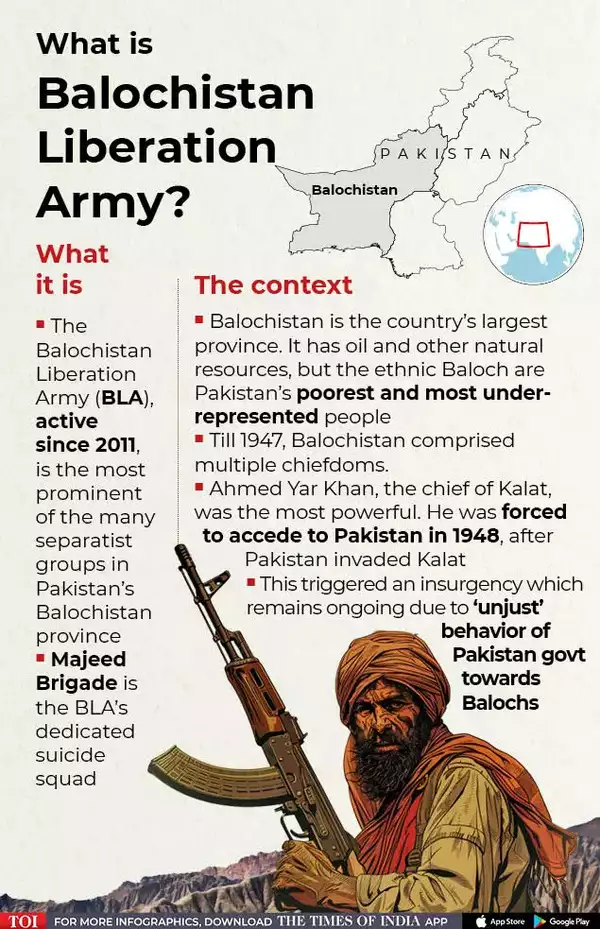
- The Balochistan Liberation Army (BLA) has claimed responsibility for hijacking the Jaffar Express.
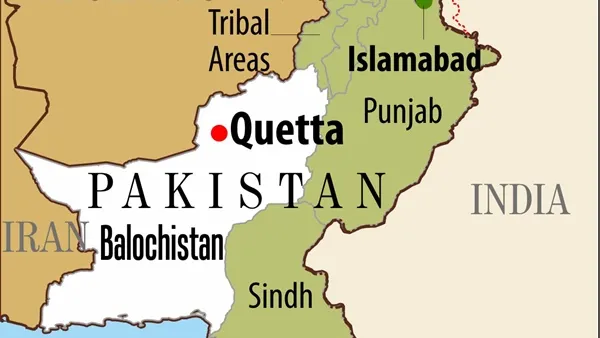
About Balochistan
- It is the largest but least populated of Pakistan’s four provinces – Balochistan, Sindh, Punjab and Khyber Pakhtunkhwa.
- Ethnic Groups: Baloch, Brahui, and Pashtuns.
- It has substantial reserves of oil and gas, alongside gold and copper deposits, but has lagged in economic growth compared to other regions in the country.
- The province has been the site of a series of insurgencies, brutal state repression, and an enduring Baloch nationalist movement since 1948.
Background of the Insurgency
- 1947 Partition of Balochistan: The region was divided into four princely states: Kalat, Kharan, Las Bela, and Makaran.
- During Partition, Kharan, Las Bela, and Makaran chose to join Pakistan, while Kalat opted for independence.
- Treaty with Muslim League: On August 11, 1947, Kalat signed a treaty with the Muslim League, recognizing its independence.
- British Resistance: Despite recognition, the British issued a memorandum stating the Khan of Kalat was unprepared for international responsibilities.
- Pakistan Military Action: On March 26, 1948, the Pakistan Army moved into Baloch coastal regions (Pasni, Jiwani, Turbat).
- The Khan of Kalat had no choice but to agree to merge with Pakistan.
Insurgency and Discontent
- Forceful Integration: The annexation of Kalat into Pakistan led to discontent and resistance among the Baloch people.
- Many nationalists saw the integration as a betrayal of their autonomy and cultural identity.
- Insurgencies: Balochistan experienced numerous uprisings for independence, though Pakistan managed to suppress them.
- Current Status: Once a sovereign state, Balochistan is now the most neglected and poverty-stricken province of Pakistan.
- Despite being the largest province and rich in minerals, Balochistan contributes only about 4% to Pakistan’s economy.
- Balochistan Liberation Army: The BLA are a Baloch ethnonationalist group who emerged in the 2000s with the aim of achieving independence for Balochistan.
- Pakistan banned the organisation in 2006, and the United States designated it as a global terrorist organisation in 2019.
India’s Stand on Balochistan
- Complex Position: India’s stance on Balochistan is shaped by geopolitics, regional stability, and its relationship with Pakistan.
- The India-Pakistan conflict over Kashmir makes any involvement in Balochistan a potential trigger for escalating tensions.
- Support for Self-Determination: India supports the right to self-determination for Balochistan’s people but avoids interfering in Pakistan’s internal affairs.
- Overall, India’s stance on Balochistan involves expressing concerns about human rights violations without interfering into the internal affairs.
Compassion in Health Care
Syllabus: GS2/ Health, GS4/ Ethics
In Context
- Recently, the World Health Organization (WHO) released a landmark report titled “Compassion and Primary Health Care,” recognizing compassion as a transformative force in health care.
About
- Compassion in health care is not merely an ethical obligation but a strategic necessity. It enhances patient recovery rates, improves mental well-being, strengthens patient-provider relationships, and reduces burnout among health-care professionals. The incorporation of compassionate care practices can revolutionize health care delivery, making it more patient-centric, sustainable, and effective.
Benefits of Compassionate Health Care
Several studies emphasize the direct correlation between compassionate care and improved health outcomes:
- Faster Recovery and Shorter Hospital Stays:
- Research by Stanford University’s CCARE indicates that patients treated with compassion recover faster and require shorter hospitalization.
- Johns Hopkins Hospital found that a 40-second compassionate conversation, where a doctor expresses solidarity (e.g., “We are in this together”), significantly reduces patient anxiety and improves recovery, particularly among cancer patients.
- Benefits for Health-Care Providers:
- Studies suggest that practicing compassionate care leads to reduced stress, improved job satisfaction, and stronger patient relationships.
Compassion, Sympathy and Empathy
- The terms sympathy, empathy, and compassion are often used interchangeably, they have distinct meanings in health-care ethics:
- Sympathy: A short-term, pity-based reaction that does not necessarily lead to action.
- Empathy: Involves deep emotional immersion in others’ problems, which can sometimes lead to emotional fatigue and anxiety in caregivers (known as empathy fatigue).
- Compassion: A balanced, problem-solving approach, where health-care providers understand and feel the pain of their patients but maintain emotional stability. This ensures sustained, high-quality health care delivery without personal exhaustion.
- Thus, compassion provides a sustainable model for medical professionals, allowing them to effectively help patients while safeguarding their own mental and emotional well-being.
Urgent Need for Compassion in Mental Health
The WHO and mental health experts warn that depression could become the next global epidemic due to its widespread impact. Health-care systems must integrate compassionate mental health care as a fundamental pillar.
- Case Study: Pradeep’s Transformation through Compassion
- Pradeep, a rescued child, was abandoned and labeled as “cursed” by his community. He was brought to Bal Ashram, a long-term rehabilitation center under the Satyarthi Movement for Global Compassion.
- The caregivers at Bal Ashram, trained in compassionate rehabilitation, allowed him the emotional space to heal, rather than forcing him to speak about his trauma.
- Over time, he formed friendships, rebuilt his confidence, and shared his story, demonstrating how compassion is a transformative force in mental health recovery.
Strategies for Implementing Compassionate Health Care
- Embedding Compassion in Health-Care Leadership & Policy:
- Health-care decision-making should prioritize compassion rather than just operational efficiency.
- Industry leaders, hospitals, and policy think tanks must integrate compassion as a foundational principle in health-care governance.
- Training Health-Care Providers in Compassionate Practices:
- Doctors, nurses, and paramedical staff should be trained in compassion-based communication and differentiating empathy from compassion to avoid burnout.
- Medical curriculums should include compassionate care training, ensuring that future health professionals understand the importance of patient-centric care.
- Ensuring Equitable and Inclusive Health Care for All:
- Compassionate health care must not be limited to privileged sections of society. It should be:
- Accessible to rural populations through better health-care outreach programs.
- Inclusive for marginalized communities (caste, gender, economic status).
- Integrated into public health policies to ensure affordable and dignified treatment for all.
- Compassionate health care must not be limited to privileged sections of society. It should be:
- Strengthening Mental Health Care with a Compassionate Approach:
- Mental health professionals should be trained in trauma-sensitive and compassionate care.
- Community-based mental health programs should be expanded to reduce the stigma around mental health issues.
Global Perspectives and Best Practices
- United Kingdom (NHS): Emphasizes “compassionate leadership” in public health care.
- Japan’s Universal Health Care System: Integrates holistic healing and compassionate patient care.
- Scandinavian Countries: Have patient-first health-care policies that incorporate mental well-being as a fundamental health-care principle.
- India can adopt and customize these best practices within its Ayushman Bharat and AIIMS-led training programs.
Trends and Progress of Housing in India 2024
Syllabus: GS3/ Economy
In News
- National Housing Bank (NHB) has released the Report on Trends and Progress of Housing in India, 2024.
Key Highlights of the Report
- Banks dominate the housing finance market, accounting for 81% of total housing loans whereas the Housing Finance Companies (HFCs) contribute 19%.
- As on 30-09-2024, Economically Weaker Sections (EWS) & Low-Income Groups (LIG) accounted for 39%, Middle-Income Groups (MIG) accounted for 44% and HIG accounted for 17% of outstanding individual housing loans.
- Only 5% of buildings in India are classified as ‘green’.
Government Initiatives Driving Housing Sector Growth
- Pradhan Mantri Awas Yojana-Gramin (PMAY-G): Aims for rural housing development with a focus on affordable housing.
- Pradhan Mantri Awas Yojana-Urban (PMAY-U): Supports low-cost housing projects in urban areas.
- Urban Infrastructure Development Fund (UIDF): Boosts infrastructure financing for affordable housing.
- Affordable Rental Housing Complexes (ARHCs): Focuses on housing solutions for migrant workers and urban poor.
Challenges in Housing Finance
- Regional Disparities in Credit Flow: Western, Southern, and Northern states receive the highest housing finance disbursements.
- Eastern and Northeastern states experience low credit penetration, limiting housing accessibility in these regions.
- Limited Reach of Housing Finance Companies (HFCs): HFCs play a vital role by providing flexible loan eligibility criteria and efficient service.
- However, HFCs have a limited branch network in rural and underdeveloped areas, restricting their ability to bridge the housing finance gap.
- Low Adoption of Green Buildings: Challenges remain there like higher initial costs of eco-friendly construction, lack of incentives for developers, and limited awareness on sustainability.
Opportunities for Growth
- Technological advancements in construction like use of AI, data analytics, and predictive modelling, 3D Printing and the digitization of land records are identified as factors that could facilitate growth in the sector.
- Increase in funding and growing demand for smart cities and affordable housing in metro and Tier-II & Tier-III cities causing demand to go up.
| About National Housing Bank (NHB) – Founded: In 1988, under the National Housing Bank Act, 1987. – Objective: To regulate, promote, and develop the housing finance market in India. – Ownership: 100% owned by the Government of India. – Regulation: NHB supervises HFCs, while the Reserve Bank of India (RBI) is the primary regulator. – Functions: Encourages financial inclusion by improving access to housing loans for the middle-class and low-income groups. – Bridges the housing finance gap by expanding credit facilities to underdeveloped regions. – Headquarter: New Delhi. |
Former Philippine President Duterte Arrested By ICC
Syllabus: GS2/ International Organisation
In News
- Former Philippines President Rodrigo Duterte was taken into custody based on a warrant issued by the International Criminal Court (ICC).
More About the News
- He was accused of crimes against humanity over his deadly “war on drugs” during his tenure where more than 6, 000 suspects were killed which UN found that most victims were young, poor urban males.
- Also, earlier, the International Criminal Court (ICC) issued an arrest warrant against Russian President Vladimir Putin for alleged war crimes in Ukraine.
International Criminal Court (ICC)
- About:
- The International Criminal Court (ICC) is the world’s first permanent international court established to investigate and prosecute individuals accused of serious international crimes.
- Establishment:
- Under the Rome Statute (1998), has 125 member states and exercises jurisdiction over four core crimes:
- Genocide (Intentional destruction of a national, ethnic, racial, or religious group)
- Crimes against Humanity (Widespread attacks against civilians)
- War Crimes (Grave breaches of the Geneva Conventions)
- Crimes of Aggression (Acts of aggression by a state violating sovereignty, territorial integrity)
- Under the Rome Statute (1998), has 125 member states and exercises jurisdiction over four core crimes:
- Jurisdiction: The ICC can exercise jurisdiction when:
- Crimes are committed by a national of a State Party or on territory of a State Party.
- A non-member state accepts ICC jurisdiction voluntarily.
- The UN Security Council can refer a case to the ICC (Chapter VII of the UN Charter).
- The ICC Prosecutor initiates an investigation upon own initiative or a State Party’s request.
- Enforcement Challenges:
- The ICC does not have its own police force and relies on state cooperation for arrests and extraditions.
- Non-member states have no obligation to cooperate (e.g., Israel, the US, Russia, China, and India).
Why Has India Not Joined the ICC?
- India has refrained from joining the Rome Statute, citing concerns over:
- Sovereignty and Political Interference: ICC’s subordination to the UN Security Council raises concerns that it could be politically misused. The power to bind non-member states violates India’s principle of sovereignty.
- Wide Powers of the ICC Prosecutor: The ICC Prosecutor can initiate investigations suo motu (on its own), without a State Party referral. This broad power raises concerns about misuse for political purposes.
- Exclusion of Key Security Issues: Terrorism and nuclear weapons use are not covered under ICC jurisdiction. India believes that these issues pose major security threats and should be included.
- Lack of Protection for Armed Forces: India is concerned that Indian military personnel deployed in conflict zones (e.g., Kashmir, Northeast India, or UN Peacekeeping missions) could be unfairly targeted.
- Selective Prosecution and Western Bias: ICC has failed to investigate powerful countries for their military interventions (e.g., US in Iraq, Russia in Ukraine, NATO’s Libya intervention).
| Features | International Criminal Court (ICC) | International Court of Justice (ICJ) |
|---|---|---|
| Establishment | 2002 (Rome Statute, 1998) | 1945 (UN Charter) |
| Location | The Hague, Netherlands | The Hague, Netherlands |
| Jurisdiction | Individuals accused of serious crimes | Disputes between states |
| Crimes Covered | Genocide, War Crimes, Crimes Against Humanity, Crime of Aggression | Legal disputes (sovereignty, borders, treaty violations) and advisory opinions |
| Binding Nature | ICC rulings are legally binding but rely on state cooperation for enforcement | ICJ rulings are binding but can be ignored (enforcement through UN Security Council) |
| Membership | 125 States Parties (Rome Statute) | All 193 UN Member States |
| Cases Heard | Criminal cases against individuals | Civil cases between states |
| Appeal | Has an appeals mechanism | No formal appeals process |
