
Ramnath Goenka Awards for Excellence in Journalism
Syllabus: GS2/Fundamental Rights; Government Policies & Interventions
Context
- At the 19th edition of the Ramnath Goenka Awards for Excellence in Journalism awards ceremony, President Droupadi Murmu emphasized the critical role of journalism in sustaining democracy.
Journalism in Democracy
- Journalism is often referred to as the ‘Fourth Estate’, as it acts as a watchdog, ensuring transparency, holding power accountable, and providing citizens with the information necessary to make informed decisions.
- In a democracy, the free flow of reliable information strengthens public discourse, enabling active citizen participation.
Historical Significance of Journalism
- Colonial Era & Early Restrictions: The British government enacted laws such as the Vernacular Press Act (1878) to curb nationalist sentiments.
- Newspapers such as Kesari (edited by Bal Gangadhar Tilak), Bande Mataram and Amrita Bazar Patrika played a crucial role in mobilizing public opinion, often facing suppression.
- In India, the press has been instrumental in:
- Exposing corruption: Investigative journalism has uncovered scandals like the Bofors scam, the 2G spectrum case, and the Vyapam scam.
- Framing Legislations: Newspapers and TV debates have influenced key policies and legal reforms, such as the Right to Information (RTI) Act.
- Ensuring electoral integrity: Media coverage of elections educates voters about candidates, policies, and political manifestos.
Functions of Journalism in a Democracy
- Providing Accurate and Timely Information: A well-functioning democracy depends on an informed electorate.
- Journalists gather, verify, and disseminate news about governance, policies, and social issues, enabling citizens to make knowledgeable choices.
- Acting as a Watchdog: The media plays a crucial role in holding governments, corporations, and institutions accountable.
- Investigative journalism helps expose corruption, human rights violations, and abuses of power.
- Facilitating Public Debate and Opinion Formation: Through editorials, debates, and opinion pieces, journalism provides a platform for diverse viewpoints, fostering a culture of discussion and dissent—both essential for a healthy democracy.
- Educating Citizens: Beyond news, journalism provides critical analysis of economic policies, health issues, and global affairs, enabling people to understand complex topics affecting their lives.
- Defending Press Freedom and Human Rights: A free press is the foundation of any democracy. Independent journalism ensures that governments do not suppress dissenting voices, thus preserving democratic ideals.
Challenges in the Modern Journalism Landscape
- Fake News and Misinformation: With the rise of social media, unverified and misleading information spreads rapidly, often influencing public opinion and electoral outcomes.
- Political and Corporate Influence: Media houses often face pressure from political parties and corporate entities, leading to biased reporting. This undermines journalistic integrity and affects public trust.
- Attacks on Press Freedom: Journalists worldwide face censorship, legal threats, and physical violence. In India, reports of intimidation and arrests under sedition laws have raised concerns about declining press freedom.
- Financial Sustainability: The transition to digital media has disrupted traditional revenue models, making it difficult for independent news organizations to survive without corporate or political backing.
Key Legislations Strengthening Journalism in India
- Press Council Act, 1978: It established the Press Council of India to maintain journalistic ethics.
- Acts as a watchdog against media misconduct but has no punitive powers.
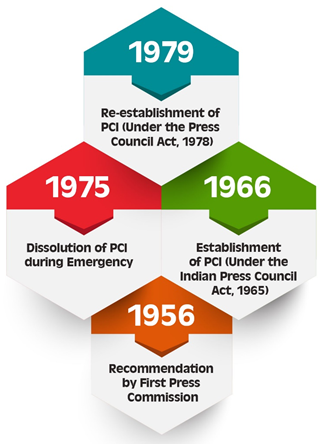
- Right to Information (RTI) Act, 2005: Enables journalists to access government records and promote transparency.
- Used extensively for investigative journalism.
- Whistle Blowers Protection Act, 2014: Provides protection to individuals (including journalists) who expose corruption.
- Cable Television Networks (Regulation) Act, 1995: Regulates content broadcast on TV channels to ensure responsible reporting.
- Information Technology (Intermediary Guidelines and Digital Media Ethics Code) Rules, 2021: Introduces content regulation for digital news media.
- Mandates grievance redressal mechanisms.
- Defamation Laws (Indian Penal Code Sections 499 & 500): Often misused to suppress press freedom but also ensures accountability.
Supreme Court Observations on Journalism in India
- Romesh Thappar vs State of Madras (1950): Affirmed that freedom of the press is part of free speech under Article 19(1)(a).
- However, this right is subject to reasonable restrictions under Article 19(2), allowing the government to impose limitations in cases of national security, defamation, or public order concerns.
- Bennett Coleman & Co. vs Union of India (1973): Struck down government control over newsprint, reinforcing media independence.
- Indian Express Newspapers vs Union of India (1985): Ruled that imposing excessive taxes on newspapers curbs press freedom.
- Sahara India Real Estate Corp vs SEBI (2012): Allowed prior restraints on media reports only in cases of “real and substantial” risk to justice.
- Arnab Ranjan Goswami vs Union of India (2020): Highlighted that press freedom cannot be curtailed arbitrarily, but media must act responsibly.
- Anuradha Bhasin vs Union of India (2020): Stressed that shutting down the internet curbs journalism and violates free speech.
Way Forward: Strengthening Journalism in India
- Legal Reforms and Press Freedom Protections:
- Strengthening the Press Council of India to act as a more effective watchdog.
- Implementing laws to safeguard journalists from legal harassment (e.g., defamation, sedition laws).
- Preventing arbitrary bans on news content and ensuring fair regulations on digital journalism.
- Media Literacy & Ethics Training:
- Encouraging ethical journalism through training programs.
- Promoting fact-checking initiatives to counter misinformation.
- Strengthening self-regulation bodies like the News Broadcasters & Digital Association (NBDA).
- Financial Independence & Sustainability:
- Encouraging independent journalism through grants and subsidies.
- Reducing dependence on government and corporate advertisements.
- Introducing alternative revenue models (e.g., subscription-based journalism).
- Digital Transformation & Cybersecurity:
- Expanding digital access for small and regional news platforms.
- Implementing cybersecurity measures to protect journalists from online threats.
- Enhancing protection against surveillance and data breaches.
Govt. Spending for Healthcare Increased: Union Health Ministry
Syllabus: GS2/Health/Governance
Context
- The Union Health Minister J.P. Nadda, while addressing the Rajya Sabha, highlighted the government’s policy shift towards a comprehensive and inclusive healthcare model under the National Health Policy 2017.
Background
- India’s healthcare system has evolved from a curative approach (post-disease treatment) to a preventive and holistic approach (early detection and wellness promotion).
- Key Milestones in Healthcare Development:
- 1946 – Bhore Committee recommends universal healthcare.
- 1983 – First National Health Policy (NHP) prioritizes primary health.
- 2005 – National Rural Health Mission (NRHM) launched.
- 2017 – National Health Policy (NHP) shifts focus from curative to preventive healthcare.
- 2018 – Ayushman Bharat launched, marking a paradigm shift.
- The World Health Organization (WHO) recommends that countries spend at least 5% of GDP on healthcare.
| Year | India’s Healthcare Expenditure as % of GDP |
|---|---|
| 2013-14 | 1.15% |
| 2017 | 1.35% (Post National Health Policy) |
| 2025 | 1.84% (Target: 2.5%) |
Healthcare Sector of India
- Healthcare Sector: It comprises hospitals, medical devices, clinical trials, outsourcing, telemedicine, medical tourism, health insurance and medical equipment.
- India’s healthcare delivery system is categorised into two major components – public and private.
- Public Sector: It comprises limited secondary and tertiary care institutions in key cities and focuses on providing basic healthcare facilities in the form of Primary Healthcare Centers (PHCs) in rural areas.
- Private Sector: The private sector provides the majority of secondary, tertiary, and quaternary care institutions with a major concentration in metros, tier-I, and tier-II cities.
Structure of Financing of Public Healthcare Sector in India
- In India, states bear the responsibility for public health and sanitation, including hospitals and clinics.
- The Ministry of Health and Family Welfare broadly takes responsibility for formulating policy for public health.
- It provides administrative and financial support to states to operate public health facilities and infrastructure, and to deal with specific health issues, such as maternal health and nutrition.
- It also establishes and manages Medical Institutes of National Importance, such as AIIMS, along with healthcare institutions in Union Territories, including Delhi.
- The Ministry comprises: The Department of Health and Family Welfare, which is responsible for implementing public health schemes and regulating medical education,
- And the Department of Health Research which is responsible for conducting medical research.
Concerns with Low Public Expenditure on Healthcare
- This has resulted in inadequate health infrastructure including human resources, and slow improvement in key health indicators.
- Limited Access to Healthcare Services: Low public spending hampers accessibility to healthcare services, particularly in rural and remote areas where infrastructure is already lacking.
- This exacerbates health disparities between urban and rural populations.
- Neglected Preventive and Primary Care: A large portion of healthcare spending in India is directed towards tertiary care, neglecting preventive and primary healthcare services.
- Higher Disease Burden: Low public spending on healthcare contributes to a higher burden of preventable diseases such as communicable diseases, malnutrition, and maternal and child health issues.
- Increased Out-of-Pocket Expenditure: The lack of public healthcare infrastructure has led people to use private health services more, and that has increased the financial burden on citizens.
Recent steps Taken by the Government for Strengthening Healthcare Sector
- National Health Policy 2017: It outlines the government’s vision to achieve the highest possible level of health and well-being for all and emphasizes preventive and promotive healthcare.
- Equal treatment for modern medicine and traditional systems (Ayurveda, Yoga, Unani, Siddha, Homeopathy).
- All India Institute of Medical Research is now promoting research on traditional medical systems and a comprehensive approach.
- Ayushman Arogya Mandirs: 1.75 lakh health centers functioning with 369 crore visits.
- Focus on screening hypertension, blood pressure, and diabetes for people over 30 years.
- National Digital Health Mission (NDHM): Launched in 2020, NDHM aims to create a digital health ecosystem, including health IDs for citizens and the establishment of a national digital health infrastructure.
- Health and Wellness Centers (HWCs): The government is working towards transforming primary health centers into HWCs to provide comprehensive primary healthcare services, including preventive and promotive care.
- Pradhan Mantri Swasthya Suraksha Yojana (PMSSY): PMSSY aims to enhance tertiary care capacities and strengthen medical education in the country by setting up new AIIMS institutions and upgrading existing government medical colleges.
- Research and Development Initiatives: The government has been encouraging research and development in healthcare, including support for the development of vaccines, drugs, and medical technologies.
- National Medical Commission (NMC) Act: The NMC Act, passed in 2019, aims to bring reforms in medical education and practice by replacing the Medical Council of India (MCI) and promoting transparency and accountability.
- Jan Aushadhi Scheme: The Pradhan Mantri Bhartiya Janaushadhi Pariyojana (PMBJP) aims to provide quality generic medicines at affordable prices through Jan Aushadhi Kendras.
Way Ahead
- The COVID-19 pandemic had shown the cracks in India’s health system and highlighted the need for increased public investment in healthcare.
- Effective primary health care can prevent the occurrence of more serious health issues, meaning that overall health outcomes can be improved significantly through investing in primary healthcare.
Cabinet Approved Incentive Scheme for Promotion of Low-value BHIM-UPI Transactions
Syllabus: GS3/ Economy
In News
- The Union Cabinet, chaired by the Prime Minister has approved an incentive scheme to promote low-value BHIM-UPI transactions (Person-to-Merchant – P2M) for the financial year 2024-25.
Key Highlights
- Incentive Structure:
- 0.15% per transaction incentive for small merchant transactions up to ₹2,000.
- Incentive distributed among Acquiring Bank, Issuer Bank, Payment Service Provider Bank, and App Providers.
- Objectives:
- Promote the indigenous BHIM-UPI platform.
- Strengthen the indigenous BHIM-UPI platform and boost transaction volumes to ₹20,000 crore in FY 2024-25.
- Promote feature phone-based UPI 123PAY & offline UPI Lite/LiteX for financial inclusion.
- Encourage UPI adoption in Tier 3 to Tier 6 cities, especially rural and remote areas.
- Key Benefits:
- Zero cost UPI services for small merchants.
- Continues the Merchant Discount Rate (MDR) exemption introduced in 2020 for UPI transactions.
- MDR is the fee paid by merchants when they accept digital payments.
What is UPI?
- The Unified Payments Interface (UPI) is a real-time payment system developed by the National Payments Corporation of India (NPCI). It allows users to link multiple bank accounts into a single mobile application, enabling instant money transfers.
- BHIM-UPI is the government-backed UPI application, launched in 2016, designed to promote seamless, fast, and secure digital payments.
- The NPCI International Payments Limited (NIPL), a subsidiary of NPCI, is working to expand UPI & RuPay globally. UPI is now accepted in Singapore, UAE, France, Sri Lanka, Nepal, and other countries.
Sagarmala Start Up Innovation Initiative (S2I2)
Syllabus: GS3/ Infrastructure
In Context
- The 4th National Sagarmala Apex Committee (NSAC) Meeting was held under the chairmanship of Union Minister Sarbananda Sonowal to review the Sagarmala Programme and discuss the roadmap for Sagarmala 2.0.
Key Highlights
- Introduction of Sagarmala 2.0:
- An upgrade of the Sagarmala Programme with a new focus on shipbuilding, repair, breaking, and recycling.
- ₹40,000 crore budgetary support to drive fresh investments.
- Supports Maritime Amrit Kaal Vision (MAKV 2047) which aims to position India among the world’s top five shipbuilding nations.
- Launch of Sagarmala Startup Innovation Initiative (S2I2):
- Aims to boost Research, Innovation, Startups, and Entrepreneurship (RISE) in the maritime sector.
- Encourages green shipping, smart ports, logistics tech, shipbuilding, and coastal sustainability.
- Provides funding, mentorship, and industry partnerships for maritime startups.
- Impact on India’s Maritime Growth:
- Coastal shipping increased by 118% in a decade.
- Inland waterway cargo rose by 700%.
- 9 Indian ports rank among the world’s top 100, with Vizag in the top 20 container ports.
About Sagarmala Programme
- Launched in 2015, it is a flagship initiative of the Ministry of Ports, Shipping & Waterways (MoPSW).
- It aims to accelerate economic development by leveraging India’s 7,500 km long coastline and 14,500 km of potentially navigable waterways.
- And, to reduce logistics costs for both domestic and EXIM (export-import) cargo while improving port efficiency and coastal trade.
- The Sagarmala Programme is based on five key pillars: port-led industrialization, port modernization, port connectivity, coastal shipping & inland waterways, and coastal community development, aimed at reducing logistics costs, boosting trade efficiency, and strengthening India’s maritime sector.
NASA’s Astronauts stranded in Space for 9 months Returned to Earth
Context
- NASA astronauts Sunita Williams and Butch Wilmore have finally returned to Earth after a prolonged nine-month stay aboard the International Space Station (ISS).
- The team descended aboard Elon Musk’s SpaceX Dragon capsule.
About
- Williams and Wilmore got stuck after technical issues with the spacecraft meant to bring them home.
- They had travelled to the ISS on board Boeing’s CST-100 Starliner as part of its first crewed test flight.
- The mission, under NASA’s Commercial Crew Program, aimed to develop private spacecraft for transporting astronauts to and from the station.
- By outsourcing low-Earth orbit missions, NASA aims to focus on deep space exploration.
| About Sunita Williams and Wilmore – Sunita Williams is the current commander of the ISS and a retired United States Navy officer, joined NASA in 1998. – Over her career, she has spent 322 days in space and completed nine spacewalks. 1. She previously held the record for the most spacewalks by a female astronaut, until 2017 when the title went to Peggy Whitson, who completed 10. – Wilmore first flew to space in 2009 on board the Space Shuttle Atlantis. Before the Boeing Starliner mission, he had logged 178 days in space. 1. He has served as a flight engineer and commander on previous ISS missions, conducting research in space. |
How do Astronauts Survive Unexpected Stay?
- Life on board the ISS follows a structured routine of exercise, work and leisure.
- This includes regular exercises on both the treadmill and resistance machine to maintain bone and muscle strength.
- Throughout the year, several space agencies and private companies also scheduled missions to resupply the space station with food, water and oxygen.
Complications with Human Space Travel
- Microgravity Effects: Muscle atrophy and bone density loss.
- Fluid redistribution causing facial puffiness and vision issues.
- Radiation Exposure: Increased risk of cancer and cardiovascular diseases.
- Psychological Challenges: Isolation, stress, and interpersonal conflicts in confined spaces.
- Life Support Systems: Dependence on reliable air, water, and waste recycling systems.
- Technical Challenges: Spacecraft design and long-term system reliability.
- Navigation and communication delays.
- Food and Nutrition: Managing long-lasting, nutritious food for extended missions.
- Power and Propulsion: Reliable power sources and efficient propulsion for long trips.
- Space Debris: Risk of collision with space debris damaging the spacecraft.
- Re-entry and Landing: Safely returning to Earth after a mission.
Conclusion
- Continued innovation and collaboration will be key to overcoming these challenges and making human space travel more feasible and sustainable in future.
Risks and Rewards of Using UAVs
Syllabus :GS 3/Science and Technology
In Context
- Chinese Unmanned Aerial Vehicles near Okinawa were seen as less threatening compared to piloted aircraft.
| Do you know? – Unmanned Aerial Vehicle is commonly considered to be a drone or an aircraft with no pilot on board. 1. It can be a remote-controlled aircraft equipped with cameras, sensors, communication systems, and other payload devices. 2. It was created for military usage, and civilian usage to protect the border. 3. It is often considered less dangerous due to their lower capabilities, especially when not armed. |
Why are UAVs seen as less of a threat?
- The absence of human operators makes UAVs seem less powerful or aggressive compared to manned aircraft.
- UAVs are seen as a “low-risk” tool for reconnaissance, as they don’t endanger human lives or costly piloted aircraft.
- UAVs, even when downed, are less of a financial burden compared to manned aircraft.
- Countries may see UAVs as expendable resources for intelligence-gathering or surveillance missions.
Examples of UAV Engagement
- In 2019, Iran shot down a U.S. surveillance drone over the Strait of Hormuz. Despite the incident, the U.S. did not respond with military retaliation.
- In 2023, Russia shot down an American MQ-9 Reaper UAV, but again, no significant retaliatory actions were taken by the U.S.
Impact on India
India faces challenges in handling UAV incursions, especially from neighboring countries like Pakistan, China, and Bangladesh.
- Pakistan: Small UAVs are frequently used to transport arms and narcotics into India. Pakistan has avoided accountability for these incursions, requiring India to develop a cost-effective countermeasure strategy without relying on expensive military resources like missiles.
- India previously used air-to-air missiles (e.g., via Su-30) to bring down UAVs, but such methods are costly.
- Pakistan has not retaliated significantly when India has shot down UAVs, indicating limited escalation risks in such situations.
- Bangladesh: The recent deployment of Turkish-made Bayraktar TB-2 UAVs near the Indian border raises concerns about surveillance activities. While not overtly hostile, such actions necessitate vigilance.
- These larger UAVs are more similar to manned aircraft in terms of size and endurance.
- In the event that such UAVs enter Indian airspace, India needs to address the situation carefully.
- China: China’s rapid advancement in drone warfare, including stealth UAVs and swarm technologies, poses a long-term strategic challenge for India, particularly along the Line of Actual Control (LAC).
Strategic Considerations for India
- Enhancing Counter-Drone Technologies: India must prioritize the development and deployment of cost-effective counter-UAV systems to prevent excessive spending on expensive air-to-air missiles.
- Strengthening UAV Capabilities: To maintain strategic superiority, India should enhance its UAV capabilities through acquisition of Advanced UAVs like MQ-9B SeaGuardian drones from the U.S and launching Swarm Drone Programs.
- Diplomatic and Legal Measures: India should engage diplomatically to establish regional agreements on UAV usage, particularly with Bangladesh and Pakistan, to prevent unintended escalations
- Addressing Cybersecurity Risks: India should develop cybersecurity protocols to protect its own UAV assets.
