
George VI Ice Shelf
Syllabus: GS1/ Geography
In News
- Scientists under the Challenger 150 initiative uncovered thriving deep-sea ecosystems beneath the George VI Ice Shelf in Antarctica.
About George VI Ice Shelf
- Location: Situated in George VI Sound, separating Alexander Island from Palmer Land, adjacent to the Bellingshausen Sea in the Southern Ocean.
- Governance: Falls under the Antarctic Treaty System, with active research led by countries like the UK and USA.
- Geographical Features:
- Length: Extends from Ronne Entrance to Niznik Island
- Rich in floating ice shelves, subglacial ecosystems, and complex underwater geography
Key Findings under Challenger 150 Initiative
- Flourishing Deep-Sea Ecosystems:
- Discovery of large corals, sponges, icefish, and giant sea spiders
- Ecosystems survived despite being cut off from sunlight and surface nutrients for centuries.
- The presence of complex life in absence of known nutrient sources suggests unknown nutrient transport pathways, opening new avenues for research.
- New Species Identified:
- Giant phantom jellyfish
- Octopi, vase-shaped sponges (possibly centuries old), and sea spiders
About Deep-Sea Ecosystems
- Definition: Marine ecosystems occurring below 200 metres, extending into the aphotic zone—which comprises 90% of Earth’s marine habitat.
- Significant Habitats:
- Abyssal Plains: Support species like sea cucumbers sustained by marine snow. Marine Snow are organic particles from upper layers, aiding food chains and carbon sequestration.
- Hydrothermal Vents: Host chemosynthetic life (e.g., tubeworms, yeti crabs)
- Whale Falls: Create temporary yet productive ecosystems (e.g., hagfish)
Significance of the Discovery
- Scientific Relevance: Overshadow previous assumptions that extreme, nutrient-deprived environments cannot support complex life.
- Opens new frontiers in marine biology, ecology, and geosciences.
- Climate Change Insights: As polar ice shelves melt due to global warming, these ecosystems may undergo dramatic shifts.
- Studying them helps understand ecosystem resilience and predict environmental responses to climate change.
- Marine Conservation Imperative: Emphasizes the need for international frameworks to safeguard fragile marine biodiversity, particularly in the Southern Ocean.
International Cooperation & Ocean Decade
- The Challenger 150 programme is part of the UN Decade of Ocean Science for Sustainable Development (2021–2030).
- It underscores the role of multilateral scientific collaboration in exploring and conserving the deep ocean.
- Endorsed by UNESCO/IOC, the initiative aligns with global sustainable development goals, especially SDG 14 (Life Below Water).
Seabed Warfare in a New Era of Geotech Conflicts
Syllabus: GS2/International Relations; GS3/Energy Security
Context
- As nations increasingly rely on undersea infrastructure for communication, energy transmission, and resource extraction, the ocean floor has become a contested space.
Understanding Seabed Warfare
- Seabed warfare encompasses military operations conducted on, from, or targeting the ocean floor.
- It involves the use of advanced technologies such as Unmanned Underwater Vehicles (UUVs), Remotely Operated Vehicles (ROVs), and submersibles to target critical undersea infrastructure, including:
- Communication Cables: Essential for global internet and data transmission.
- Energy Pipelines: Vital for transporting oil and gas.
- Sensors and Surveillance Systems: Used for monitoring and defense.
- Geotech Conflicts refers to geopolitical tensions fueled by advancements in technology. In the seabed warfare domain, it includes:
- Cyber and Hybrid Warfare: Deep-sea drones and AI-powered submarines can conduct espionage or sabotage operations without detection.
- Autonomous Underwater Systems: Nations are developing advanced UUVs capable of surveillance, reconnaissance, and offensive operations.
- Seabed Militarization: There are growing concerns about ‘weaponizing’ the seabed, including installing mines or deploying offensive UUVs near critical infrastructure.
Strategic Importance of the Seabed
- Communication Infrastructure: Over 95% of global internet traffic relies on undersea fiber-optic cables. These cables are essential for global finance, military communications, and internet connectivity.
- Energy and Resources: The seabed hosts vast reserves of oil, gas, rare earth minerals, and polymetallic nodules.
- Underwater energy pipelines also form a critical part of global energy supply chains.
- Military and Surveillance Operations: Nations deploy sensor networks, submarines, and UUVs for surveillance, intelligence gathering, and military operations on the ocean floor.
Global Incidents & Major Players in Seabed Warfare
- United States: It has Seawolf-class and Virginia-class submarines equipped with advanced seabed warfare tools.
- China: It has developed deep-sea research submarines, underwater sensor networks, and artificial intelligence-driven seabed monitoring systems.
- The Great Underwater Wall—a surveillance network in the South China Sea—aims to detect enemy submarines and vessels.
- Russia: The specialized Russian submarine Losharik and deep-diving research vessel Yantar have been linked to tap or cut undersea cables.
- NATO & European Powers: NATO has increased its focus on protecting undersea infrastructure following recent suspected sabotage incidents, such as the Nord Stream pipeline explosions.
- European nations, including the UK and France, are investing in seabed security measures.
- Sabotage of undersea cables in the Baltic Sea in 2023 and 2024.
India’s Efforts in Seabed Warfare
- Strengthening Submarine Capabilities:
- Project 75 & Project 75I: Acquisition of Scorpène-class submarines (INS Kalvari) and planning for next-generation submarines.
- Nuclear Submarines like INS Arihant
- Focus on Undersea Infrastructure Protection:
- India’s Deep Ocean Mission For Deep-Sea Mining & Resource Protection.
- Seabed Surveillance & Unmanned Systems:
- Deployment of Autonomous Underwater Vehicles (AUVs);
- Coastal & Deep-Sea Monitoring: Project By National Institute of Ocean Technology (NIOT).
- Strategic Alliances & Cooperation:
- QUAD Partnership to enhance maritime security and undersea infrastructure protection in the Indo-Pacific.
Future of Seabed Security
- Strengthening Seabed Surveillance: Nations are deploying AI-powered underwater sensors and satellite-based tracking systems to monitor suspicious seabed activities.
- Legal and Policy Frameworks: The United Nations Convention on the Law of the Sea (UNCLOS) provides some guidelines for seabed governance, but enforcement remains weak.
- A new international agreement on seabed security is needed.
- Advancing Defensive Technologies: Development of anti-UUV systems to counter underwater drones.
TB Champions
Syllabus: GS2/Health
Context
- The Meghalaya government is pushing for a TB-free State by re-skilling TB survivors and bringing them back into control programmes as ‘TB champions’.
TB Champions
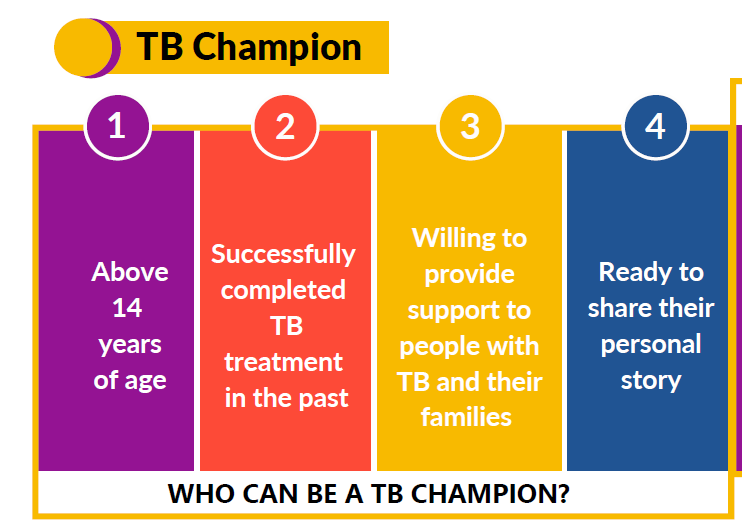
- A TB Champion is a person who has been affected by TB and successfully completed the treatment.
- As survivors, they can provide valuable support to those with TB and their families.
- NTEP has designed a standard sensitization and training curriculum for empowering TB survivors as TB Champions.
- TB survivors themselves can access the self-learning modules available online.
- Districts can coordinate with NTEP partners or local NGOs to conduct the training.
What is Tuberculosis?
- Tuberculosis (TB) is an infectious disease that most often affects the lungs and is caused by the bacteria Mycobacterium tuberculosis.
- It spreads through the air when infected people cough, sneeze or spit.
- Symptoms: prolonged cough (sometimes with blood), chest pain, weakness, fatigue, weight loss, fever, night sweats.
- While TB usually affects the lungs, it also affects the kidneys, brain, spine and skin.
- Treatment: It is preventable and curable with antibiotics.
- TB Vaccine: The Bacillus Calmette-Guérin (BCG) vaccine remains the only licensed vaccine against TB; it provides moderate protection against severe forms of TB (TB meningitis) in infants and young children.
TB in India
- TB as a global health challenge: India has the highest TB burden in the world, contributing to 26% of the global burden and 29% of global TB-related deaths.
- India is followed by Indonesia (10%), China (6.8%), the Philippines (6.8%), and Pakistan (6.3%).
- Multidrug-Resistant TB: India represents 27% of the world’s multi-drug-resistant TB cases, underscoring the need for specialized treatment approaches.
- The World Health Organization (WHO) has recognised India’s progress, with a 17.7% decline in TB incidence from 2015 to 2023, a rate more than double the global decline of 8.3%.
- India’s goal is to eliminate tuberculosis (TB) by 2025, five years ahead of the global target of 2030.
Challenges Faced by India in Eliminating TB
- Drug-resistant TB cases: India has a significant burden of drug-resistant TB, including multidrug-resistant TB (MDR-TB).
- This type of TB is much harder to treat and requires more expensive, specialised drugs and a longer duration of treatment.
- Diagnostics and Case Detection: The accurate and timely diagnosis of TB remains a challenge.
- Some areas lack access to modern diagnostic tools, leading to reliance on older methods with limitations.
- Poor primary health-care and infrastructure: In many parts of India, especially in rural and remote areas, there is limited access to healthcare facilities.
- This can result in delayed diagnosis and treatment, allowing TB to spread within communities.
- Stigma and Awareness: Stigma associated with TB lead to delays in seeking healthcare, and lack of awareness about the disease contribute to its persistence.
- Private Sector Engagement: A significant portion of healthcare services in India is provided by the private sector.
- Coordinating efforts between the public and private sectors and ensuring standardized treatment protocols are crucial for effective TB control.
- Treatment Adherence: TB treatment requires a prolonged course of antibiotics, and ensuring patient adherence to the full course is challenging.
- Vulnerable Populations: Certain populations, such as migrant workers, urban slum dwellers, and those living in crowded conditions, are at higher risk of TB.
Steps Taken by Government of India to Eliminate TB
- Revised National Tuberculosis Control Program (RNTCP): The RNTCP, launched in 1997, was the flagship program to control TB in India.
- The program has been continuously revised and strengthened over the years.
- National Tuberculosis Elimination Program (NTEP): The Government of India has developed a National Strategic Plan (2017-25) for Ending TB in the country by 2025.
- Pradhan Mantri TB Mukt Bharat Abhiyan (PMTBMBA): Launched in 2022 for community support to TB patients with the objective to provide nutritional, diagnostic and vocational support.
- Universal Drug Susceptibility Testing (DST): The government has scaled up efforts to provide universal access to drug susceptibility testing, helping to identify drug-resistant strains of TB early and tailor treatment accordingly.
- Earlier, the patients were started on first line treatment and were tested for drug resistance only if the therapy did not work.
- Ni-kshay portal: An online Ni-kshay portal has been set up to track the notified TB cases.
- New Drugs: Newer drugs such as Bedaquiline and Delamanid for the treatment of drug-resistant TB have been included in the government’s basket of drugs provided free TB patients.
- R&D for Treatment: Researchers have been studying shorter three- and four-month courses of anti-tubercular drugs, instead of the existing six-month therapy.
- Vaccine Development: Trials are underway to test the effectiveness of a vaccine called Immuvac, which was initially developed to prevent leprosy, in preventing TB.
- Researchers are also testing VPM1002, which is a recombinant form of the BCG vaccine modified to express the TB antigens better.
| World Tuberculosis Day 2025 – Commemorates: Dr. Robert Koch’s discovery of Mycobacterium tuberculosis on 24th March 1882. – Objective: Raise awareness about the health, social, and economic impact of TB globally. – 2025 Theme: “Yes! We Can End TB: Commit, Invest, Deliver.” – Focuses on renewed global commitment, financing, and action-oriented delivery to end TB by 2030 (as per SDG targets). |
Under-funding of Nutrient Subsidy Schemes
Syllabus: GS3/ Economy, Agriculture
In News
- The Parliamentary Standing Committee on Chemicals and Fertilizers highlights several key issues and recommendations regarding India’s fertilizer sector.
Key Recommendations of the Committee:
- Funding Concerns: The committee is concerned about the Ministry of Finance’s reduction in the Department of Fertilizers’ budget allocation for 2025-26, specifically impacting the Nutrient-Based Subsidy (NBS) and Urea Subsidy Schemes.
- It urges the Union Fertilizers Ministry to seek additional funds at the revised estimate stage to prevent negative effects on farmer subsidy schemes.
- Nano Fertilizer Promotion: Committee emphasizes the need to expand production capacity for nano urea and nano diammonium phosphate (DAP).
- It calls for a strategy to popularize these nano fertilizers among farmers, citing their potential to improve crop yields and reduce conventional fertilizer usage.
- Raw Material Security: The committee highlights the lack of mining lease agreements for raw material extraction, exploration, refining, or production.
- It recommends that the Centre enter into such agreements to strengthen domestic supply and achieve self-sufficiency in fertilizers.
- Fund Utilization: It points out underutilization of funds across various fertilizer categories during 2024-25.
- It recommends that the Centre ensures full utilization of allocations in a planned and continuous manner.
- Urea Subsidy Scheme: Given urea’s importance in food-grain production, the committee stresses the need for the Urea Subsidy Scheme to continue.
Nutrient Based Subsidy (NBS) Policy
- Objective: Launched in 2010, the NBS Policy aims to:
- Provide subsidized fertilizers to farmers
- Promote balanced use of nutrients, ensuring soil health
- Reduce fiscal burden by making subsidy nutrient-specific
- Validity: The policy has been approved for implementation until the financial year 2025-26.
- Legal Framework: It operates under the Fertilizer (Control) Order (FCO), 1985, which is issued under the Essential Commodities Act, 1955.
- The FCO sets standards for fertilizer use, specifications, licensing, and trading regulations.
- Scope and Eligibility: The NBS policy covers 25 grades of Phosphorus (P) and Potassium (K) fertilizers, including common ones like Di Ammonium Phosphate (DAP), Muriate of Potash (MOP), Mono Ammonium Phosphate (MAP), and Triple Super Phosphate (TSP).
- The government sets a fixed subsidy rate (in Rupees per kilogram) for each primary nutrient in these fertilizers: Nitrogen (N), Phosphate (P), Potash (K), and Sulphur (S).
- Subsidy Determination: An Inter-Ministerial Committee (IMC) plays a critical role in recommending the per-nutrient subsidy rates for N, P, K, and S.
- These recommendations are made before the start of each financial year and are then considered by the Department of Fertilizers for final approval.
- Key implications: The NBS policy allows for the price of fertilizers to fluctuate according to the cost of the raw materials used to produce the fertilizers. Thus the subsidy amount changes, but the farmer still receives a subsidized fertilizer.
India’s Global Push for SFJ Ban.
Syllabus: GS3/Security
Context
- At the Raisina Dialogue 2025, India reiterated its demand to ban SFJ (Sikh For Justice) globally, especially in the US & New Zealand.
- SFJ is a pro-Khalistan secessionist organization, banned in India under the Unlawful Activities (Prevention) Act (UAPA) in 2019.
Background
- SFJ has held so-called “referendums” in cities like London, Rome, Geneva, and Brampton since 2021, garnering media attention and diaspora participation. These are often seen as provocative rather than legitimate.
- India has requested the U.S. and other countries to designate SFJ as a terrorist organization and ban its activities, citing threats to India’s security.
- India maintains that SFJ is not merely an ideological outfit but is directly inciting violence, attempting to radicalize Indian youth, and is reportedly linked to Pakistan’s ISI.
What does the global ban on SFJ mean to India?
- A ban by one of the “Five Eyes” countries (U.S., U.K., Canada, Australia, New Zealand) could trigger a shared approach, and potentially a UNSC listing under resolution 1373.
- If the U.S. designates SFJ as a Foreign Terrorist Organization, it could freeze funds, restrict movement, and prosecute key figures.
- Challenge in banning them:
- SFJ is viewed by some countries as non-serious, with their actions and threats downplayed, leading to lack of compliance with India’s requests.
- India fears this inaction could repeat past mistakes, citing the 1985 Air India bombing linked to Canadian inaction.
Khalistan Movement
- Origin: The Khalistan movement seeks the creation of an independent Sikh state, separate from India.
- Its origins trace back to the time of India and Pakistan’s Independence in 1947 when negotiations leading to the partition of the Punjab region fueled the idea.
- Over the years, this demand has resurfaced, with one of its most violent periods occurring during an insurgency in the 1970s and 1980s that gripped Punjab for more than a decade.
- Operation Blue Star: Then-Prime Minister Indira Gandhi ordered the military’s entry into the Golden Temple, the holiest Sikh shrine, to remove armed separatist leader Jarnail Singh Bhindranwale and his supporters.
- Events followed after Operation Blue Star: A few months later, the Prime Minister was assassinated by her Sikh bodyguards.
- In 1986 and 1988, the Indian army undertook operations to root out militants from Punjab.
- Militants were also held responsible for the 1985 bombing of an Air India Boeing 747 en route from Canada to India, resulting in the tragic loss of all lives on board.
- Khalistan Movement in foreign land: Although the Khalistan movement has dwindled in support within India, it continues to find backing among sections of militants in the U.S., Canada, U.K. and Australia.
UN World Water Development Report 2025 – Mountains and Glaciers
Syllabus: GS 3/Environment, Conservation
In News
- The United Nations World Water Development Report 2025 – Mountains and Glaciers: Water Towers was released by UNESCO.
Key points of the report
- Glaciers are melting faster than ever, with a significant loss of mass in the last few years.
- Since 1975, glaciers have lost over 9,000 billion tonnes of mass, equivalent to an ice block the size of Germany.
- Impurities such as black carbon from wildfires and dust storms are accelerating the melting by increasing the absorption of solar radiation.
- Permafrost Thawing: Rising temperatures are causing permafrost to melt, releasing organic carbon into the atmosphere and exacerbating climate change.
- The thaw also destabilizes slopes, increasing the risk of landslides and other hazards.
- Decline in Snow Cover: Snow cover has decreased in mountain regions, especially in spring and summer, with further declines expected.
- A global mean decline of 7.79% in snow cover between 1979 and 2022.
Impacts and Concerns
- The impacts of glacier melting and permafrost thaw include erratic water flow, increased risk of glacial lake outburst floods (GLOFs), and rising sea levels.
- GLOFs have caused over 12,000 deaths in the past 200 years.
- The melting of glaciers contributes to 25-30% of global sea level rise, posing risks to millions of people.
Suggestions and Way Forward
- Mountains cover 33 million sq km and are vital for sustaining life, with around 2 billion people relying on mountain glaciers for freshwater.
- Therefore awareness and policy changes are needed to address the impact of rising temperatures on mountain ecosystems and downstream communities.
- Mobilization of resources and creation of effective policy frameworks are critical for mitigating these environmental impacts.
