
Expansion of India’s Social Security Net
Syllabus: GS2/Governance; Social Issues
Context
- Recently, the Union Labour Minister highlighted that India has made remarkable strides in expanding its social security net, ensuring that a larger segment of the population benefits from welfare programs.
Overview of Social Security in India
- Social Security in India is a crucial aspect of economic and social policy aimed at providing financial and social protection to the country’s diverse population.
- It is primarily delivered through government initiatives, employer-based benefits, and social insurance programs.
- The legal framework governing social security includes:
- The Employees’ Provident Funds and Miscellaneous Provisions Act, 1952;
- The Employees’ State Insurance Act, 1948;
- The Maternity Benefit Act, 1961;
- The Unorganized Workers’ Social Security Act, 2008;
- The Code on Social Security, 2020.
- These laws and policies cover organized and unorganized sector workers, providing them with financial security and welfare benefits.
Global Perspective and Sustainable Development
- Social protection is a recognized human right, essential for achieving the Sustainable Development Goals (SDGs).
- Goal 1 of the SDGs aims to end poverty by 2030 through national social protection systems, ensuring the coverage of vulnerable groups.
- Article 22 of the Universal Declaration of Human Rights emphasizes social security as a fundamental right, which is reaffirmed in the Social Protection Floors Recommendation by the ILO.
Key Social Security Schemes in India
- Pension and Provident Fund Schemes:
- Employees’ Provident Fund (EPF): Managed by the EPFO under the Ministry of Labour and Employment, EPF is a mandatory savings scheme for employees in organizations with 20 or more workers.
- Both employer and employee contribute 12% of the employee’s salary towards this fund.
- National Pension System (NPS): A voluntary retirement scheme regulated by the Pension Fund Regulatory and Development Authority (PFRDA).
- Available to both public and private sector employees.
- Provides tax benefits under Section 80CCD of the Income Tax Act.
- Employees’ Provident Fund (EPF): Managed by the EPFO under the Ministry of Labour and Employment, EPF is a mandatory savings scheme for employees in organizations with 20 or more workers.
- Social Security for Unorganized Workers:
- Pradhan Mantri Shram Yogi Maan-Dhan (PM-SYM): A pension scheme for unorganized sector workers earning less than ₹15,000 per month.
- Requires a small monthly contribution (₹55-₹200), with a matching contribution from the government.
- Pradhan Mantri Kisan Maandhan Yojana (PM-KMY): A pension scheme for small and marginal farmers aged 18-40 years.
- Building and Other Construction Workers’ Welfare Scheme (BOCW): Provides health, education, and insurance benefits to construction workers.
- Atal Pension Yojana (APY): A guaranteed pension scheme for low-income workers, encouraging financial security in old age.
- Pradhan Mantri Jeevan Jyoti Bima Yojana (PMJJBY): Life insurance coverage of ₹2 lakh for individuals aged 18-50 at an annual premium of ₹436.
- Pradhan Mantri Suraksha Bima Yojana (PMSBY): An accident insurance scheme covering ₹2 lakh for accidental death and disability.
- Pradhan Mantri Shram Yogi Maan-Dhan (PM-SYM): A pension scheme for unorganized sector workers earning less than ₹15,000 per month.
- Health and Insurance Schemes:
- Employees’ State Insurance Scheme (ESI): Provides medical and disability benefits to employees earning up to ₹21,000 per month.
- Covers expenses related to sickness, maternity, disablement, and death due to employment injury.
- Rashtriya Swasthya Bima Yojana (RSBY): A government-funded health insurance scheme for BPL (Below Poverty Line) families.
- Ayushman Bharat – Pradhan Mantri Jan Arogya Yojana (PM-JAY): The world’s largest health assurance scheme providing free medical coverage of up to ₹5 lakh per family per year for economically disadvantaged groups.
- Employees’ State Insurance Scheme (ESI): Provides medical and disability benefits to employees earning up to ₹21,000 per month.
- Maternity and Disability Benefits:
- Maternity Benefit Act, 1961: Provides paid maternity leave of 26 weeks for women working in establishments with 10 or more employees.
- Indira Gandhi National Disability Pension Scheme (IGNDPS): Provides financial assistance of ₹300-₹500 per month to disabled individuals below the poverty line.
- Employment and Labor Welfare:
- Mahatma Gandhi National Rural Employment Guarantee Act (MGNREGA): Guarantees 100 days of wage employment to rural households, strengthening income security.
- e-Shram Portal: A national database for unorganized workers, enabling targeted delivery of social security benefits.
Recent Expansions in Social Security
- Extending Benefits to Gig and Platform Workers: With the rise of the gig economy, the government has proposed bringing gig workers (such as food delivery agents and cab drivers) under the social security umbrella through platforms like e-Shram and the Social Security Code.
- Digital and Financial Inclusion: The Jan Dhan-Aadhaar-Mobile (JAM) Trinity has strengthened the delivery of welfare benefits, ensuring direct benefit transfers (DBT) to beneficiaries, reducing leakages, and improving transparency.
- Ration Card Portability under ‘One Nation, One Ration Card’ (ONORC): It enables migrant workers to access subsidized food grains anywhere in India.
- Strengthening Healthcare and Insurance for Informal Workers: The government has been pushing for the inclusion of informal workers in health schemes, ensuring access to PM-JAY and ESIC facilities.
Challenges in Expanding the Social Security Net
- Underestimation of Coverage: The ILO report does not account for in-kind benefits like food security and housing or state-administered schemes.
- The actual coverage is expected to be higher once these factors are included.
- Low Coverage in the Unorganized Sector: Over 90% of India’s workforce is in the unorganized sector, yet only a small fraction benefits from social security schemes.
- Lack of Awareness and Accessibility: Many eligible beneficiaries remain unaware of existing schemes, leading to lower enrollment rates.
- Funding and Implementation Bottlenecks: The large financial requirement for social security programs poses budgetary constraints, while last-mile implementation remains a challenge, especially in rural areas.
- Fragmented Coverage: Despite multiple schemes, many workers—especially in the unorganized sector—remain outside the formal security net.
- Bureaucratic Hurdles and Corruption: Delays in processing claims and leakages in funds allocation reduce the efficiency of these programs.
Way Forward
- Integration of Schemes: A unified social security framework can enhance efficiency and accessibility.
- Technology-Driven Delivery: Expanding digital enrollment, biometric authentication, and mobile applications can improve outreach.
- Strengthening Public-Private Partnerships: Involving the private sector in providing pension and insurance solutions can enhance social security coverage.
- Formalizing the Unorganized Sector: Incentivizing employers to register workers in social security schemes.
- Simplification of Processes: Reducing paperwork and making enrollment procedures more user-friendly.
India Losing 3% of GDP Annually Due to Road Accidents
Syllabus: GS2/ Governance
Context
- The Minister of Road Transport and Highways has mentioned that India is losing 3% of its GDP due to around five lakh road accidents annually in the country.
Report on Road Accidents in India (2022)
- In 2022, there were 4,61,312 road accidents in India, causing 4,43,366 injuries and 1,68,491 fatalities.
- Compared to 2021, accidents increased by 11.9%, deaths by 9.4%, and injuries by 15.3% in 2022.
- The accident severity (deaths per 100 accidents) decreased from 37.3 in 2021 to 36.5 in 2022.
- Young adults (18-45 years) made up 66.5% of road accident victims, while 83.4% of fatalities were from people aged 18-60.
- Two-wheelers accounted for 44.5% of road accident deaths, followed by pedestrians (19.5%), cars/taxis/vans (12.5%), and trucks (6.3%).
- Overspeeding was the leading cause, responsible for 72.3% of accidents and 71.2% of deaths in 2022.
| Do you know? – In September 2020, the UN General Assembly launched the Decade of Action for Road Safety 2021-2030 which aims to reduce road traffic deaths and injuries by at least 50 per cent by 2030. – The 2nd Global High-Level Conference on Road Safety was held in Brazil, which declared 2011-2020 as the 1st decade of action for Road Safety. 1. In the Brasilia Declaration, the participating countries set targets under the Sustainable Development Goals and pledged to reduce road crash fatalities by 50% in the next 5 years. |
How does Road Accidents lead to Loss of GDP
- Medical treatment costs for accident victims strain healthcare resources.
- Infrastructure damage from accidents requires financial resources for repairs.
- Loss of income due to temporary or permanent disability of accident victims affects economic productivity.
- Increased insurance and legal costs add to the financial burden on businesses and individuals.
- Road accidents reduce tourism and commercial transport efficiency, impacting the economy.
- Loss of life and productivity in young and working-age populations (18-45 years) further impacts GDP growth.
Government Initiatives
- National Road Safety Policy India, 2010: It emphasized the need for better road infrastructure, stricter enforcement of traffic rules, enhanced emergency medical services, public awareness campaigns, and improved post-crash care.
- Electronic Detailed Accident Report (e-DAR)/ Integrated Road Accident Database (iRAD): Centralized system for reporting, managing, and analyzing road accident data to improve safety.
- Speedy Assistance to Accident Victims:
- Award ₹25,000 for Good Samaritans who help accident victims.
- Faster compensation: ₹2.5 lakh for grievous hurt, ₹5 lakh for death.
- Enhanced compensation for hit-and-run victims: ₹2 lakh for death, ₹50,000 for grievous hurt.
- Simplified procedures for third-party insurance, including hired drivers.
- Vehicle Fitness: Old, unfit vehicles contribute to accidents. The Ministry is setting up model Inspection and Certification Centers across States/UTs (28 States/UTs covered by 2024).
- IIT Madras Collaboration: Establishing a Center of Excellence for Road Safety to develop new products, conduct research, and promote safety initiatives.
- Accident Blackspot Rectification: Priority on identifying and improving accident-prone spots on National Highways through engineering measures.
- Road Safety Audits: Mandatory audits for all highway projects at design, construction, and operation stages.
- Brasilia Declaration: India was one amongst the initial 100+ countries to have signed the Brasilia Declaration in 2015 committing to achieve the Sustainable Development Goal 3.6 i.e.to half the number of global deaths and injuries from road traffic crashes by 2030.
- Motor Vehicles Amendment Act, 2019: The act brought about higher penalties for traffic violations, including speeding, drunk driving, and not wearing helmets or seat belts.
Way Ahead
- Global best practices show that countries that adopted a Systems Approach have been able to achieve their targets of 50% reduction in fatalities or are close to achieving it.
- Countries like Australia and Sweden have gone beyond the UN Sustainable Development Goals (SDG) 3.6 and dug deep into the issue. India can, therefore, learn from these global best practices.
- India has done substantial research on road safety through premiere institutions like Indian Institute of Technology (IITs) and Central Road Research Institute (CRRI).
- The government can collaborate with these institutes to improve policies and action plans.
- The corporate sector can play a role in helping strengthen road safety by funding research, spreading awareness.
Call for Changing Collegium System
Syllabus :GS 2/Judiciary
In News
- Vice President Jagdeep Dhankhar chaired a meeting with Rajya Sabha floor leaders to discuss the recovery of semi-burnt Indian currency notes from the residence of Delhi High Court Judge Justice Yashwant Verma.
About
- The meeting also focused on judicial appointments and the need for an alternative to the current Collegium system.
- The Vice President reiterated the importance of the National Judicial Appointments Commission (NJAC), which was struck down by the Supreme Court in 2015.
Collegium System
- The Collegium is the system through which judges of India’s higher judiciary (Supreme Court and High Courts) are appointed and transferred.
- It is not based on the Constitution or any specific law but has evolved through Supreme Court judgments, known as the “Judges Cases.”
Composition
- The Supreme Court Collegium is a five-member body, led by the Chief Justice of India (CJI) and four other seniormost judges.
- High Court Collegiums are led by the Chief Justice of the respective High Court and two other seniormost judges.
How does the Collegium system work?
- The Supreme Court Collegium recommends names for appointments to the Supreme Court, and the High Court Collegiums do so for their respective courts.
- The High Court Collegium’s recommendations must be approved by the Supreme Court Collegium.
- The government conducts an Intelligence Bureau (IB) inquiry on the recommended candidates. If the Collegium reiterates its recommendations, the government is bound to approve them.
Criticisms
- The system has been criticized for being non-transparent, lacking an official mechanism or secretariat.
- There are no prescribed eligibility criteria or a clear selection procedure.
- Decisions are made behind closed doors, and there are no public records or minutes of Collegium meetings.
- Lawyers are often unaware of whether their names are being considered for judicial appointments.
| Do you know ? – The Justice M N Venkatachaliah Commission (2000) recommended replacing the Collegium with a National Judicial Appointments Commission (NJAC). – The NJAC was to include the CJI, two seniormost Supreme Court judges, the Union Law Minister, and an eminent person chosen by the President in consultation with the CJI. – The government passed the NJAC Bill in 2014, but the Supreme Court struck it down as unconstitutional within a year, emphasizing the need to preserve the primacy of the judiciary in judicial appointments. |
Suggestions
- The Collegium System was aimed at preserving judicial independence, and has faced significant criticisms over the years.
- Transparency, inclusivity, and clearer criteria for selection could help address these concerns, ensuring a more accountable and efficient judicial appointment process.
- Reforms in this direction would contribute to strengthening the integrity and functioning of India’s judiciary.
Transgenic Organisms
Syllabus :GS 3/Science and Tech
In News
- U.S. President Donald Trump recently made a mistaken claim that $8 million had been spent on “making mice transgender,” which was later corrected to “transgenic mice.”
About
- Media reports clarified that the research involved hormone treatments for studies on hormone therapy, HIV vaccines, breast cancer, and other health areas—not for altering the gender of mice.
- Studies with transgenic mice have helped understand genetics, cancer, reproduction, and more. These mice are valuable in modeling diseases due to their genetic similarities to humans.
Transgenic organism
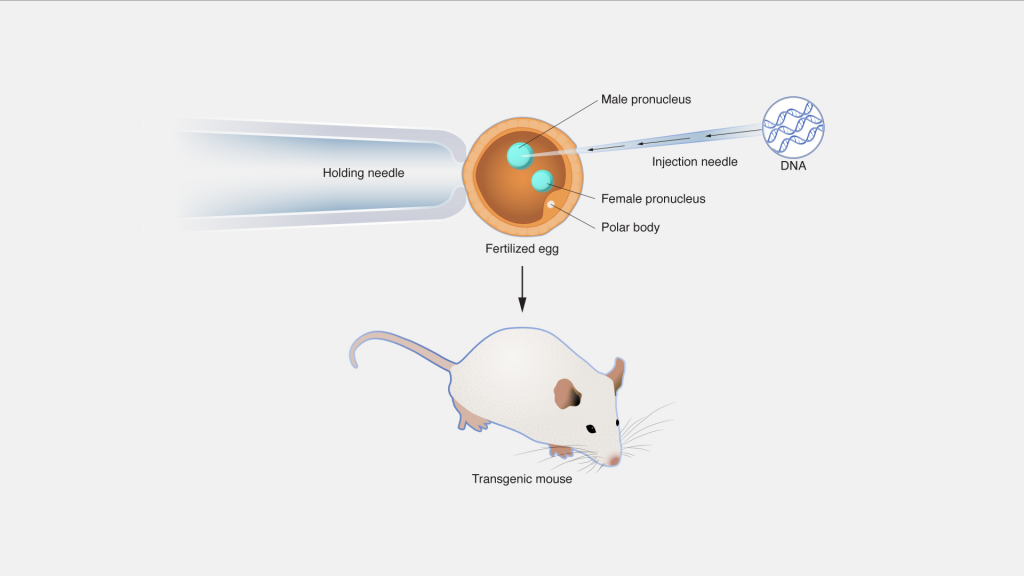
- It refers to an organism or cell whose genome has been altered by the introduction of one or more foreign DNA sequences from another species by artificial means.
- Transgenic organisms are generated in the laboratory for research purposes.
Applications
- Transgenic animals have been used to study genetic processes, such as the role of DNA in carrying genetic information and the link between oncogenes and cancer.
- Transgenic animals also help understand normal physiological processes and model human diseases for treatment development.
- Animals like goats and cows are engineered to produce therapeutic proteins, such as insulin.
- Transgenic crops have been produced that are resistant to infectious diseases and grow faster.
- It is used in bioremediation to break down pollutants like oil spills and heavy metals.
Challenges
- There are ethical concerns about animal welfare and the morality of genetic modification.
- There are chances of Potential environmental or health impacts, such as unintended gene flow or allergic reactions.
- The creation of transgenic organisms is expensive and technically challenging.
Conclusion and Way Forward
- Transgenic organisms offer great potential in medicine, agriculture, and environmental management but require careful handling of ethical, environmental, and regulatory concerns to ensure their responsible use.
Parliament Passes Disaster Management (Amendment) Bill 2024
Syllabus: GS3/Disaster Management
Context
- Parliament has passed the Disaster Management (Amendment) Bill 2024.
About
- The Bill amends the Disaster Management Act, 2005.
- The DM Act establishes:
- National Disaster Management Authority (NDMA),
- State Disaster Management Authority (SDMA),
- and the District Disaster Management Authority.
- These authorities are responsible for disaster management at the national, state, and district level, respectively.
Key Highlights of the Bill
- Preparation of disaster management plans: The Bill provides that NDMA and SDMA will prepare disaster management plans, which was earlier prepared by the National a State Executive Committee.
- Functions of NDMA and SDMA: The Bill adds these functions:
- taking periodic stock of disaster risks, including emerging risks from extreme climate events,
- providing technical assistance to authorities below them,
- recommending guidelines for minimum standards of relief,
- and preparing national and state disaster databases, respectively.
- The Bill also empowers NDMA to make regulations under the Act with prior approval of the central government.
- Disaster Database: The Bill mandates the creation of a comprehensive disaster database at both national and state levels.
- Urban Disaster Management Authorities: It empowers the state government to constitute a separate Urban Disaster Management Authority for state capitals and cities with a municipal corporation.
- Formation of State Disaster Response Force (SDRF): The Bill empowers the state government to constitute a SDRF.
- The state government will define the functions of SDRF and prescribe the terms of service for its members.
- Statutory status to existing committees: The Bill provides statutory status to existing bodies such as the National Crisis Management Committee (NCMC) and the High Level Committee (HLC).
- The NCMC will function as the nodal body for dealing with major disasters with serious or national ramifications.
- The HLC will provide financial assistance to state governments during disasters.
- Appointments to NDMA: It empowers NDMA to specify the number and category of officers and employees, with previous approval of the central government.
- NDMA may also appoint experts and consultants as necessary.
Concerns Raised:
- Several opposition members argued that the amendments could centralize power and undermine the autonomy of state governments.
- The Bill also gives more powers to a new authority, the Urban Disaster Management Authority, over the already existing District Disaster Management Authority.
Conclusion
- The amendments were needed to tackle the new kinds of disasters emerging in the wake of global warming and climate change.
- As per the government, to address these problems in an effective manner, we have to strengthen our institutions and make them accountable.
