
Ancient Jawbone Discovery Expands Insights into Denisovan Migration and Evolution
Syllabus: GS1/Geography; GS3/Science
Context
- A remarkable fossil of jawbone discovery off the coast of Taiwan has provided new insights into the geographic reach of Denisovans, an enigmatic group of archaic humans.
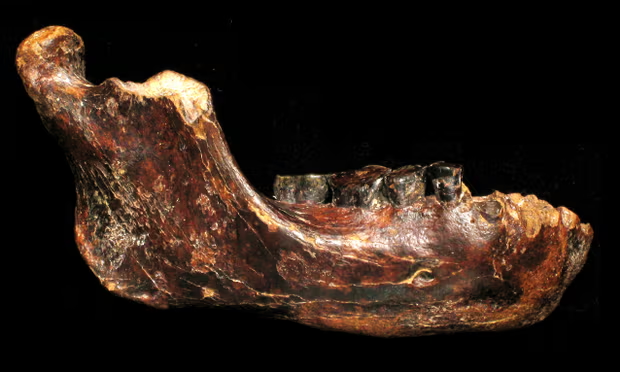
- The jawbone (known as Penghu 1) was recovered from the Penghu Channel, near Taiwan, during commercial fishing operations.
About Ancient Denisovans
- They are an extinct group of archaic humans, known primarily through limited fossil evidence, including a jawbone, teeth, and a finger bone.
- Origins and Discovery: Denisovans were first identified in 2010 from DNA extracted from a finger bone found in the Denisova Cave in Siberia.
- Genetic analysis revealed that they were a distinct lineage, closely related to Neanderthals and modern humans.
- Physical Characteristics: Reconstructions based on DNA Methylation patterns suggest Denisovans had a wider skull and a longer dental arch compared to Neanderthals and Homo sapiens.
Significance of the Findings
- Geographic Range and Adaptability: The discovery of the Penghu 1 jawbone highlights their adaptability to diverse environments, from cold highlands to subtropical coastlines. Key Geographical Range:
- Taiwan (Penghu Channel): Recent Discovery
- Russia (Denisova Cave): Teeth and a small finger bone fragment.
- China’s Gansu Province (Baishiya Karst Cave, Tibetan Plateau): A mandible and rib fragment.
- Laos (Cobra Cave): A molar (believed to be from a Denisovan based on its shape).
- Genetic Legacy: Denisovans interbred with Neanderthals and Homo sapiens, contributing genetic material to modern populations in Asia and Oceania.
- Their genetic influence is evident in traits such as high-altitude adaptation in Tibetan populations.
Challenges and Future Research
- Dating the Fossil: The exact age of Penghu 1 remains uncertain due to the absence of traditional dating methods.
- Estimates range from 10,000 to 190,000 years, based on associated animal fossils.
- Expanding Knowledge: The discovery highlights the need for further exploration of submerged landmasses and other potential Denisovan habitats.
- Advanced techniques like paleoproteomics (analysis of ancient proteins) could help identify more Denisovan fossils and refine our understanding of their distribution.
- Nobel Prize for Physiology or Medicine (2022): It has been awarded to Swedish geneticist Svante Pääbo for his research in the field of genomes of extinct hominins and human evolution.
Concerns Raised over the Amendment into the RTI Act
Syllabus: GS2/Governance
Context
- The Union Information and Technology Minister said that personal details that are subject to disclosure under various laws will continue to be disclosed under the RTI Act after the implementation of the new data protection rule.
About
- Amendment to RTI Act (2005) will come into effect once Digital Personal Data Protection (DPDP) Rules are notified in the coming weeks.
- Section 8(1)(j) of the RTI Act now includes a blanket prohibition on disclosing personal information, even if it serves the public interest.
- Concerns Raised:
- The change makes it harder to access information vital for social audits and uncovering misuse of public funds or corruption.
- RTI requests have been critical in verifying government programs and ensuring accountability, e.g., checking food ration distribution.
- The original RTI Act balanced privacy and transparency; they reject the argument that the changes align with the Supreme Court’s privacy ruling.
- The Union Minister stated the amendment won’t restrict transparency or disclosure of personal information when legally required.
- He cited the 2017 Supreme Court judgement affirming the right to privacy under Article 21 to justify the amendment.
| RTI (Amendment) Act, 2019 – Status and tenure of Information Commissioners changed: The tenure of the Chief Information Commissioner (CIC) and Information Commissioners (ICs) at both central and state levels is no longer fixed at 5 years and has been reduced to 3 years. 1. Salaries, allowances, and service conditions of CICs and ICs are also determined by the Central Government, rather than being equivalent to those of Chief Election Commissioner and Election Commissioners (as in the original Act). – Rules under RTI Act (2022): Online filing of RTI applications encouraged through the RTI Online Portal. 1. Revisions made to streamline appeals and complaint filing procedures. |
Right to Information Act (RTI), 2005
- Aim: It was designed to promote transparency in the functioning of the government by giving citizens the right to access information from public authorities.
- Scope: The Act applies to public authorities, which include government departments, ministries, and organizations that are substantially funded by the government.
- Information Accessible to the Public: Citizens have the right to request information from public authorities. This includes the right to access records, documents, and other information.
- Exclusions: Information that may compromise national security, breach confidentiality, or harm the integrity of ongoing investigations.
- Timeframe for Response: Public authorities are required to respond to information requests within 30 days. In certain cases, this period can be extended to 45 days.
- Penalties: The Act provides for penalties against officials who withhold information without reasonable cause or provide false information.
Significance of the Act
- Empowers Citizens: By accessing information from public authorities, promoting transparency and accountability in government.
- Holds Government Accountable: Helps in holding public authorities accountable for their actions, preventing corruption.
- RTI helped uncover misuse of funds in the National Rural Employment Guarantee Scheme (NREGS).
- Promotes Good Governance: It strengthens democratic processes by ensuring that the government operates transparently, fostering public trust.
- Enables Social Audits: Activists and NGOs use RTI to perform social audits of government schemes and services.
- RTI was used to check if food rations were correctly distributed under the Public Distribution System (PDS).
- Access to Public Records: RTI requests have been used to obtain details of government contracts, exposing corruption or inefficiencies.
- Strengthens Democracy: Provides a tool for citizens to actively participate in the decision-making process, enhancing democracy.
Criticism of the Act
- Overburdening Public Authorities: It has led to an overload of information requests, putting a strain on public authorities and diverting attention from their primary duties.
- Misuse of the Act: Some individuals or groups use RTI requests as a tool for harassment or to settle personal or political scores.
- Delay in Processing Requests: Despite the stipulated time frames for response, some public authorities struggle to adhere to these deadlines, causing frustration among information seekers.
- Capacity and Training Issues: Some public authorities lack the necessary infrastructure, manpower, and training to effectively implement the RTI Act.
- Exemptions and Ambiguities: The Act’s provisions regarding exemptions are sometimes vaguely defined, this ambiguity can be exploited to withhold information that should ideally be in the public domain.
Way Ahead
- The RTI Act has played a significant role in promoting transparency, reducing corruption, and empowering citizens to actively participate in the democratic process by holding government institutions accountable.
- It is a powerful tool for promoting good governance and ensuring that citizens have access to information that affects their lives.
- The amendment has not yet come into effect, as the rules for implementing the DPDP Act (Digital Personal Data Protection Act) are still in draft form.
- Civil society organizations are calling for these draft rules to be revised so that the changes to the RTI Act are not finalized.
India and Russia Approved Strategic Projects
Syllabus: GS 2/IR
In News
- India and Russia have agreed on six new strategic projects during the 8th Session of the India-Russia Working Group on Priority Investment Projects (IRWG-PIP) held in New Delhi.
Background
- The “Declaration on the India-Russia Strategic Partnership” was signed in October 2000 during President Vladimir Putin’s visit to India.
- In 2010, the partnership was elevated to a “Special and Privileged Strategic Partnership,” reflecting increased cooperation across key sectors: defense, politics, economics, and culture.
- India-Russia ties are characterized by high-level engagements, institutional dialogue mechanisms, and cooperation in multilateral forums like BRICS, SCO, and the UN.
Key Points of the 8th IRWG-PIP Session
- Six New Strategic Projects: India and Russia have agreed to collaborate on six new strategic projects with the goal of boosting bilateral investment.
- Sectors involved include trade, technological innovation, and economic development.
- Framework: The IRWG-PIP operates under the India-Russia Intergovernmental Commission on Trade, Economic, Scientific, Technological and Cultural Cooperation.
Significance of the Agreement
- Strengthens Economic Resilience: Diversifies India’s trade portfolio amid shifting global dynamics.
- Reduces Overdependence on the West: Reinforces strategic autonomy by balancing relations with major powers.
- Boosts ‘Make in India’ & Atmanirbhar Bharat: Encourages technology transfer, localization of production, and industrial growth.
- Geopolitical Leverage: Enhances India’s role in a multipolar world and Eurasian regional dynamics.
India and Russia Relations
- They share a long-standing relationship, with bilateral trade and investment ties dating back to the Soviet era.
- Over the years, their cooperation has strengthened, with trade growing from USD 1.4 billion in 1995 to USD 65.7 billion in FY 2023-24.
- Key exports from India include agri-products, chemicals, pharmaceuticals, and machinery, while Russia primarily exports oil, fertilizers, and mineral fuels.
- Both countries aim to reach a bilateral trade target of USD 100 billion by 2030.
- Over the years, their cooperation has strengthened, with trade growing from USD 1.4 billion in 1995 to USD 65.7 billion in FY 2023-24.
- Bilateral cooperation is supported by key forums like the India-Russia Inter-governmental Commission on Trade, Economic, Scientific, Technological and Cultural Cooperation (IRIGC-TEC), which includes 15 Working Groups and 6 Sub-Groups.
- The India-Russia Strategic Economic Dialogue (IRSED) also plays a vital role.
- Multilateral engagement: India & Russia cooperate closely at several multilateral platforms such as the UN, G20, BRICS & SCO.
- India’s Presidency of the G20 & SCO in 2023 afforded the opportunity for officials and ministers of both countries to meet on the sidelines of various events in India
- Defence: Bilateral projects include the supply of S-400, licensed production of T-90 tanks and Su-30 MKI, supply of MiG-29 and Kamov helicopters, INS Vikramaditya (formerly Admiral Gorshkov), production of AK-203 rifles in India and BrahMos missiles.
Delay in Reporting Births and Deaths Data
Syllabus: GS2/ Governance, Health
Context
- The Civil Registration System (CRS), to register births and deaths is facing glitches that have led to delays in issuance of birth and death registration certificates.
Civil Registration System (CRS) App
- The mobile app, prepared by the Registrar General and Census Commissioner of India (Ministry of Home Affairs), is expected to significantly reduce the time required for the registration of births and deaths.
- According to the Registration of Births and Deaths (Amendment) Act, 2023, all reported births and deaths in the country occurring from October 1, 2023 are to be digitally registered.
- The digital birth certificates will be a single document to prove the date of birth for various services such as admission to educational institutions, government jobs and marriage registration.
- The centralized database will also help update the National Population Register (NPR), ration cards, property registration and electoral rolls.
| National Population Register (NPR) – NPR is the first step to the creation of the National Register of Citizens (NRC), as per the Citizenship Act. – NPR, first collected in 2010 and updated in 2015 through door-to-door enumeration, already has a database of 119 crore residents. |
Challenges in Implementation
- Delayed Reporting by Hospitals: Hospitals and healthcare institutions are not uploading data in real time, causing bottlenecks.
- Technical Glitches: The digital system requires seamless integration across states and facilities, which is not yet fully operational.
- Training Issues: Local registrars and hospital staff require digital training and infrastructure support to ensure accurate reporting.
Way Ahead
- Data Privacy: Robust cybersecurity measures must be put in place to protect sensitive data shared across multiple databases.
- Monitoring: Periodic audits and accountability mechanisms for non-reporting or delayed reporting institutions.
- Strengthening Institutional Capacity: Training programs for hospital administrators and registration officials on digital platforms.
| The Registration of Births and Deaths (Amendment) Act, 2023 – The act was amended to the Registration of Birth and Death Act 1969. – Database of births and deaths: The Registrar General, India (who may issue general directions for registration of births and deaths) will maintain a national database of registered births and deaths. 1. The Chief Registrars (appointed by states) and Registrars (appointed by states for local area jurisdiction) will be obligated to share data of registered births and deaths to the national database. – Connecting database: The national database may be made available to other authorities preparing or maintaining other databases. Such databases include: National Population Register (NPR), electoral rolls, ration card, and any other national databases as notified. – Use of birth certificate: The digital birth certificates issued under this system will become a single document to prove the date of birth for various services, 1. admission to an educational institution, 2. preparation of voter lists, 3. appointment to a government post, and 4. any other purpose determined by the central government. – Digital records: All reported births and deaths in the country are to be digitally registered. |
India Needs an Ecosystem That Better Enables Deep-tech Innovation
Syllabus :GS 3/Economy
In News
- At Startup Mahakumbh, Commerce Minister Piyush Goyal criticized Indian startups for focusing on consumer-centric ventures like food delivery and boutique brands.
- He contrasted this with China’s emphasis on high-tech areas such as EVs, AI, and semiconductors.
| Do you know? – Startup Mahakumbh is a landmark event that showcases innovation and entrepreneurship in India. – The theme ‘Startup India @ 2047: Unfolding the Bharat Story.’ – It aims to promote global exposure and collaboration, drive innovation, and position India as a global startup hub by 2047. |
Comparison with china
- Indian start-ups focus on food delivery apps, online services like betting, and influencer-driven content.
- India lacks significant intellectual property (IP) in cutting-edge sectors, unlike China.
- India lacks a globally competitive AI model and is still in the process of evaluating proposals.
- Chinese start-ups are focused on electric vehicles (EVs), battery technology, AI, robotics, and infrastructure.
- China is a global leader in electric mobility and it leads in AI with Deepseek, showing that an effective AI model can be built at a fraction of the expected cost.
- China has over 6,000 deep tech start-ups, which have raised nearly $100 billion in venture capital and private equity.
Challenges for Indian Start-ups
- Innovation Deficit: India is not fostering deep-tech innovation at the same pace as other nations.
- Despite Indian talent succeeding globally (e.g. Google, Microsoft, Tesla), local innovation remains limited.
- India ranks 39th in the Global Innovation Index 2024; China is at 11th — highlighting a major gap.
- Funding Gap: India invested $160B in tech from 2014–2024 vs. China’s $845B.
- 90% of the Indian population lacks financial flexibility for discretionary spending, restricting these companies’ growth.
- Weak Education/Research: Many engineers are unemployable; universities lack global research recognition.
- Brain Drain: Top talent moves abroad due to better opportunities.
- Risk-Averse Venture capital (VC) Culture: Indian VCs prefer low-risk consumer apps over long-gestation deep-tech.
- Limited presence : Many Indian start-ups like Flipkart, Zomato, and Swiggy are primarily focused on domestic markets, limiting their global potential.
- India has made strides in smartphone assembly but remains dependent on Chinese parts for tech manufacturing.
Opportunities
- India is the third-largest startup ecosystem in the world with 1.57 lakh+ startups recognized by DPIIT (as of Dec 31, 2024).
- The country hosts 100+ unicorns, driving innovation across multiple sectors.
- Major cities like Bengaluru, Hyderabad, Mumbai, and Delhi-NCR lead the startup boom.
- Tier II & III Cities contribute over 51% of startups, showing strong grassroots entrepreneurial growth.
- Government initiatives such as Startup India have played a crucial role in fostering this growth and empowering future entrepreneurs.
- India has made significant contributions in the Software-as-a-Service (SaaS) sector, with companies like Zoho, Freshworks, TCS, and Infosys.
- India has also set a global template with the Unified Payments Interface (UPI), though monetization remains a challenge.
- Paytm and PhonePe revolutionized digital payments.
- Startups like Digantara, Skyroot, and Agnikul show promise in space tech.
- Cybersecurity startups are emerging, though often acquired too early.
- Deep-tech investment rose 78% in 2024, reaching $1.6B.
Conclusion
- India has progressed in sectors like SaaS and fintech but lags behind China in deep tech and global reach.
- Startups need stronger support in funding, infrastructure, and innovation. Long-term-focused political leadership is essential for sustained growth.
- To emerge as a global tech leader, India must transition from consumer-driven ventures to foundational, deep-tech innovation through bold investment, policy support, and a culture shift.
- India must focus on sectors like AI, smart manufacturing, medtech, climate tech, defence, and computing.
Weaponization of Trade and Finance
Syllabus: GS2-International Relations / GS3-Economy
Context
- The Defence Minister of India highlighted the erosion of global order and multilateralism, driven by the weaponization of trade, finance, and emerging technologies.
What is Weaponization of Trade and Finance?
- Weaponization of trade and finance refers to the strategic use of trade policies and economic measures by countries to exert political or economic pressure on others.
- This practice departs from the traditional role of trade and finance as instruments of cooperation and globalization.
- Tools of trade weaponization: Tariffs and Sanctions, Restrictions on exports of critical technologies or materials, Currency Manipulation etc.
Recent incidents of trade and finance weaponization
- Tariff War 2.0: The ongoing US-China trade friction has seen high tariffs and investment restrictions being imposed to gain strategic advantage and secure supply chains.
- Financial Sanctions: The West’s exclusion of Russia from the SWIFT network and freezing of its central bank reserves post-Ukraine invasion is a classic case of financial weaponization.
- Technology Denial Regimes: Restrictions on semiconductor exports to China and controls over AI or quantum computing hardware highlight technology weaponization.
Consequences of Economic Weaponization
- Erosion of Multilateral Institutions: The WTO’s dispute settlement mechanism is losing credibility amidst unilateral tariff impositions.
- Institutions like the IMF or World Bank face legitimacy crises as they’re perceived as Western-dominated.
- Decline of Rules-Based Global Order: Growing unilateralism is leading countries to ignore international norms and treaties in favour of national interest.
- Economic Fragmentation: The world is witnessing “geo-economic decoupling” with regional trading blocs, such as RCEP or IPEF, gaining importance.
- Global Inequality: Supply chain disruptions, like those witnessed during the pandemic and Ukraine war, have further deepened global inequalities.
Steps taken against trade weaponization
- Regional Trade Agreements: Countries are forming regional trade agreements (RTAs) to enhance cooperation and reduce reliance on major economies.
- Comprehensive and Progressive Agreement for Trans-Pacific Partnership (CPTPP),
- Regional Comprehensive Economic Partnership (RCEP) etc.
- Alternative Financial Systems: Russia’s SPFS, China’s CIPS, and proposals for a BRICS payment system are alternatives to the SWIFT network.
- Development of Central Bank Digital Currencies (CBDCs) is being pursued to gain monetary independence.
- Mineral Security Partnership (MSP) to diversify and stabilize global supply chains of Critical Minerals.
- Reform of the WTO: Ongoing discussions to reform the World Trade Organization (WTO) aim to enhance its dispute resolution mechanisms and address the challenges posed by unilateral trade actions.
- Indo-Pacific Economic Framework (IPEF): It serves as a countermeasure to economic coercion by countries that use trade as a tool of influence, promoting a more equitable and rules-based trading system.
Concluding remarks
- The weaponization of trade and finance signals a new era of geopolitical contestation where economic interdependence is no longer a guarantee for peace.
- For India, which has always championed multilateralism and global cooperation, navigating this fractured world order requires strategic clarity, resilient institutions, and a robust technological foundation.
