
Neutral Conditions to Prevail in Pacific Ocean: US Weather Monitor
Syllabus: GS1/Geography
Context
- Recently, the National Oceanic and Atmospheric Administration (NOAA) has forecasted that neutral conditions will dominate the Pacific Ocean until October 2025.
- It highlights the absence of El Niño or La Niña phenomena, collectively known as the El Niño-Southern Oscillation (ENSO).
About El Niño-Southern Oscillation (ENSO)
- It is a naturally occurring climate phenomenon resulting from interactions between the ocean and atmosphere in the equatorial Pacific Ocean. It has three distinct phases:
- El Niño: It is a naturally occurring climate pattern associated with the warming of the ocean surface temperatures in the central and eastern tropical Pacific Ocean.
- It occurs irregularly at two to seven year intervals.
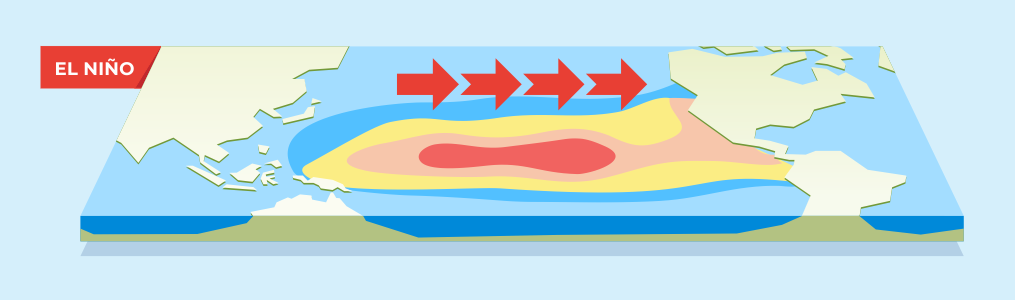
- La Nina: It is characterised by cooler than average ocean surface temperatures in the central and eastern tropical Pacific Ocean.
- During La Niña events, trade winds are even stronger than usual, pushing more warm water toward Asia.
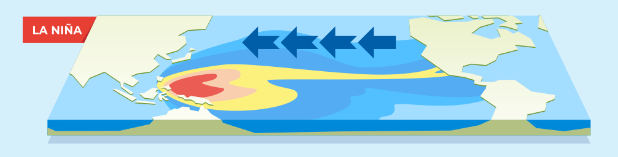
- Neutral: Neither El Niño nor La Niña conditions dominate.
- Neutral conditions occur when sea surface temperatures in the equatorial Pacific Ocean remain close to the long-term average.
| Key Components of ENSO | ||
| El Niño | La Niña | Southern Oscillation |
| – Suppresses rainfall in Australia, Indonesia, and India. – Increases rainfall and flooding in the southern US and Peru. – Typically weakens the Indian Monsoon and increases hurricane activity in the Pacific. | – Strengthens monsoons in South Asia. – Brings drought to the U.S. Southwest. – Causes increased Atlantic hurricane activity. | – Refers to the atmospheric component of ENSO. – Measured via the Southern Oscillation Index (SOI), which tracks pressure differences between Tahiti and Darwin, Australia. |
Recent Trends
- The NOAA report indicates that the short and weak La Niña observed earlier this year has transitioned into neutral conditions.
- Sub-surface temperatures in the Pacific have normalized, signaling the end of La Niña.
Impact on Global Weather
- Global Implications: Neutral conditions reduce the likelihood of extreme weather events linked to El Niño or La Niña, such as droughts or floods.
- However, localized weather anomalies may still occur due to other climatic factors.
- India’s Southwest Monsoon: ENSO-neutral conditions are generally associated with normal or above-normal rainfall during India’s monsoon season.
- It is a positive development for agriculture, as nearly 70% of India’s annual rainfall occurs between June and September.
| Global Impacts of ENSO | ||
| Region | El Niño Effects | La Niña Effects |
| India | – Weaker monsoon, droughts | – Stronger monsoon, flooding |
| USA | – Wetter South, drier North | – Drier South, colder North |
| South America | – Heavy rains and floods (Peru, Ecuador) | – Drier west coast |
| Africa | – Drought in southern Africa | – Flooding in parts of East Africa |
| Australia | – Droughts and bushfires | – Cooler, wetter weather |
Future Outlook
- Forecast Accuracy: NOAA predicts a 50% chance of ENSO-neutral conditions persisting through August-October 2025.
- IMD is expected to release its Long Range Forecast for the monsoon season soon, incorporating these findings.
- Monitoring ENSO: Continuous monitoring of sea surface temperatures and atmospheric patterns is essential for early detection of any shifts toward El Niño or La Niña.
Plastic Parks in India
Syllabus: GS 3/Environment
In News
- The Plastic Parks scheme is promoting industrial growth and environmental sustainability in India’s plastics sector.
Plastic Park
- It is an industrial zone specifically designed for plastic-related businesses and industries.
- It aims to consolidate and synergize the capacities of the plastic processing industry, promoting investment, production, and exports while generating employment.
- These parks also focus on achieving environmentally sustainable growth through waste management and recycling initiatives.
Importance and Progress
- Plastic Parks have emerged as an integral part of India’s strategy for managing plastic waste, promoting recycling, and supporting the chemical industry.
- India ranks 12th globally in plastic exports, with exports growing from $8.2 billion in 2014 to $27 billion in 2022, driven by government efforts like the Plastic Parks scheme.
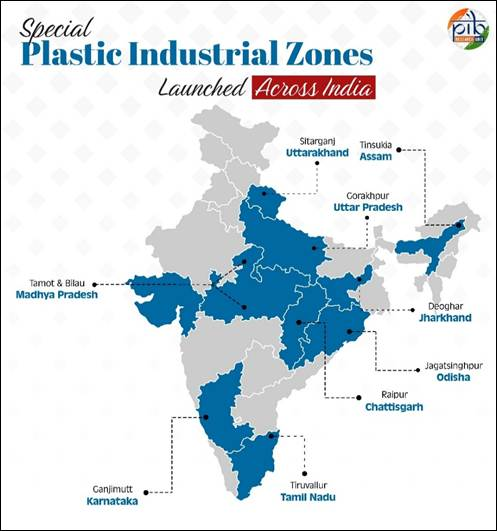
- 10 Plastic Parks have been approved so far in different States.
Existing Issues
- The Indian plastics industry was large but highly fragmented with dominance of tiny, small and medium units and thus lacked the capacity to tap this opportunity.
Governments Efforts
- The Department is implementing a scheme to support setting up need based Plastic Parks, with requisite state-of-the-art infrastructure, enabling common facilities through cluster development approach, to consolidate the capacities of the domestic downstream plastic processing industry.
- The scheme aims to increase investment, production and export in the plastics sector.
- Under the scheme, the government of India provides grant funding up to 50% of the project cost subject to a ceiling of Rs.40 crore per project.
Conclusion
- The Plastic Parks concept is a revolutionary venture aimed at improving the infrastructure of plastic processing in India.
- The Plastic Parks scheme is a strategic initiative to boost India’s plastic industry by enhancing production, exports, and innovation, while ensuring sustainable and environmentally responsible growth.
- As India’s global presence in plastic trade grows, the scheme remains vital to ensuring that this growth is sustainable, inclusive, and driven by innovation.
Powering India’s Participation in Global Value Chains Report
Syllabus: GS3/Indian Economy
Context
- NITI Aayog today released a report titled “Automotive Industry: Powering India’s Participation in Global Value Chains”.
About
- The report offers an extensive analysis of India’s automotive sector.
- It highlights both opportunities and challenges and outlines a pathway for positioning India as a key player in global automotive markets.
Major Highlights
- Global Context & Trends: Battery manufacturing hubs are emerging in regions like Europe and the U.S., these developments are altering traditional supply chains and creating new opportunities for collaboration.
- The rise of Industry 4.0 is transforming automotive manufacturing Technologies such as Artificial Intelligence (AI), Machine Learning (ML), Internet of Things (IoT), and robotics.
- These digital advancements are fostering new business models centered around smart factories and connected vehicles.
- Semiconductor chip costs per vehicle are expected to rise from $600 to $1,200 by 2030.
- Global Auto Component Market: It is valued at $2 trillion in 2022; $700 billion is traded globally.
- Global automobile production: Reached approximately 94 million units.
- The global market is growing at 4–6% annually due to rising demand.
- India’s Position: India has emerged as the fourth-largest global producer after China, USA and Japan, with an annual production of nearly six million vehicles.
- The Indian automotive sector has gained a strong domestic and export market particularly in the small car and utility vehicle segments.
- India is positioning itself as a hub for automotive manufacturing and exports with ‘Make in India’.
Challenges
- Despite being the fourth-largest automobile producer globally, India has a modest share (around 3%) in the global automotive component trade, which amounts to approximately $20 billion.
- The bulk of global trade in automotive components is driven by engine components, drive transmission, and steering systems, but India’s share in these high-precision segments remains low at just 2-4%.
- India’s automotive sector faces challenges on account of operational cost, infrastructural gaps, moderate GVC integration, inadequate R&D expenditure etc. that hinder its competitiveness in the global value chain (GVC).
Recommendations
- Operational Expenditure (Opex) Support: To scale up manufacturing capabilities, with a focus on capital expenditure (Capex) for tooling, dies, and infrastructure.
- Skill Development: Initiatives to build a talent pipeline critical for sustaining growth.
- R&D, Government facilitated IP transfer and Branding: Providing incentives for research, development, international branding to improve product differentiation and empowering MSMEs through IP transfers.
- Cluster Development: Fostering collaboration between firms through common facilities such as R&D and testing centers to strengthen the supply chain.
- Industry 4.0 Adoption: Encouraging the integration of digital technologies and enhanced manufacturing standards to improve efficiency.
- International Collaboration: Promoting joint ventures (JVs), foreign collaborations, and free trade agreements (FTAs) to expand global market access.
- Ease of Doing Business: Simplifying regulatory processes, worker hour flexibility, supplier discovery & development and improving business conditions for automotive firms.
Way Ahead
- The report envisions the country’s automotive component production growing to $145 billion, with exports tripling from $20 billion to $60 billion.
- This growth would lead to a trade surplus of approximately $25 billion and a significant increase in India’s share of the global automotive value chain, from 3% to 8%.
- Additionally, this growth is expected to generate 2-2.5 million new employment opportunities.
Conclusion
- India has significant potential to become a global leader in the automotive industry.
- Achieving this goal requires focused efforts from the central and state governments, as well as industry stakeholders.
- By addressing the existing challenges and leveraging the proposed interventions, India can enhance its competitiveness, attract investments, and build a robust automotive sector capable of leading the global value chain.
India Ends Transshipment for Bangladesh Export
Syllabus: GS2/IR
Context
- India has formally revoked the transshipment facility that allowed Bangladesh to export goods to third countries via Indian land customs stations, ports, and airports.
Transshipment Agreement
- Introduced in 2020 by India’s Central Board of Indirect Taxes and Customs (CBIC), the agreement aimed to enhance regional connectivity and trade cooperation.
- Under this arrangement, cargo from Bangladesh could pass through Indian Land Customs Stations (LCSs) en route to ports and airports.
- This facilitated smoother trade flows for Bangladeshi exports to regions like Europe, West Asia, and beyond.
Why was it revoked?
- India cited logistical challenges as the primary reason for rescinding the facility.
- The transshipment arrangement led to ‘significant congestion’ at Indian airports and ports.
- This congestion resulted in delays, increased costs, and backlogs that hindered India’s own export processes.
- The move is expected to significantly impact Bangladesh’s trade logistics and costs, particularly for exports destined for Western markets.
Highlights of India Bangladesh Relations
- Independence and Liberation War: India played a crucial role in Bangladesh’s independence in 1971, supporting the Bengali nationalist movement against Pakistan’s rule.
- This historic event laid the foundation for strong bilateral ties.
- Land Boundary Agreement (LBA): In 2015, both countries resolved long-standing border issues by exchanging enclaves and simplifying their international border, which had remained unresolved since partition in 1947.
- Connectivity: Five pre-1965 rail links have been rehabilitated between India and Bangladesh. There are currently three railway trains operating between the two countries – Maitri Express ; Bandhan Express ; and Mitali Express.
- The inauguration of Akhaura-Agartala cross-border rail link is a crucial step towards enhancing connectivity of northeastern India with Bangladesh.
- Economic Relations: Bangladesh is India’s biggest trade partner in South Asia and India is the second biggest trade partner of Bangladesh in Asia.
- The total trade turnover in FY24 touched US$ 12.90 billion.
- India’s export to Bangladesh stood at US$ 11.06 billion in FY24.
- Trade Agreements: The two countries are members of various regional trade agreements such as the Asia Pacific Trade Agreement (APTA), the SAARC Preferential Trade Agreement (SAPTA) and the Agreement on South Asian Free Trade Area (SAFTA) which govern the tariff regimes for trade.
- Regional Cooperation: Both countries are active members of regional organizations like SAARC (South Asian Association for Regional Cooperation) and BIMSTEC (Bay of Bengal Initiative for Multi-Sectoral Technical and Economic Cooperation), promoting regional integration and cooperation.
- Various Joint exercises take place between the two countries:
- Exercise Sampriti (Army) and
- Exercise Milan (Navy).
- In the energy sector, Bangladesh imports nearly 2,000 megawatts of electricity from India.
Challenges
- Border Issues: Although the Land Boundary Agreement in 2015 resolved many longstanding border disputes, there are still occasional issues related to border security and illegal crossings that strain relations.
- Water Sharing: Disputes over the sharing of common rivers, such as the Teesta River, remain unresolved.
- Trade Imbalance: While trade between India and Bangladesh has grown significantly, there remains a trade imbalance where India exports more to Bangladesh than it imports.
- This led to economic tensions and protectionist measures.
- Cross-Border Migration and Demographic Shifts: Historical and undocumented migration from Bangladesh to Indian states like Assam and West Bengal remains a politically sensitive issue.
- Security Concerns: Issues related to border security, cross-border smuggling, and occasional incidents involving extremist groups pose security challenges for both countries, requiring continued cooperation and vigilance.
- China’s Growing Influence in Bangladesh: Bangladesh’s deepening ties with China, particularly in infrastructure and defense, is a strategic concern for India. India perceives this as a potential dilution of its strategic space.
Way Ahead
- India considers Bangladesh an important ally in South Asia, with whom it shares the longest land boundary among all its neighbours.
- Over the years, India and Bangladesh have forged a multifaceted relationship, marked by a shared history, culture, and geographical proximity.
- By fostering dialogue, promoting inclusivity, and diversifying partnerships, they can pave the way for a stronger and more resilient bilateral relationship.
The Magic of Indian Silk
Syllabus: GS3/ Economy
Context
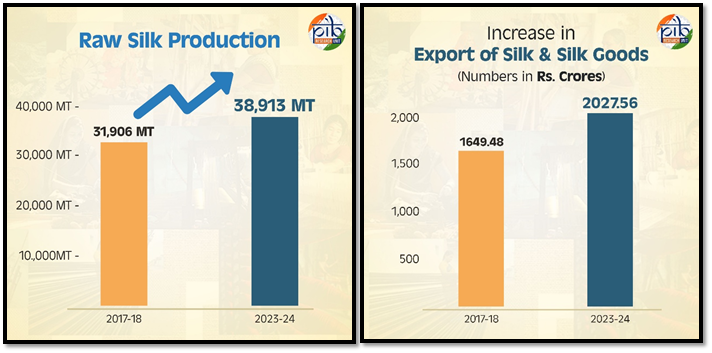
- India’s raw silk production increased from 31,906 MT in 2017-18 to 38,913 MT in 2023-24.
What is Sericulture?
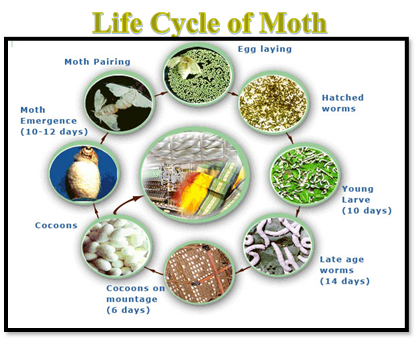
- Sericulture is the process of farming silkworms to make silk.
- Silkworms are raised on mulberry, oak, castor, and arjun leaves. After about a month, they spin cocoons.
- These cocoons are collected and boiled to soften the silk. The silk threads are then pulled out, twisted into yarn, and woven into fabric.
Silk Production in India
- India is the second-largest producer and consumer of silk globally.
- Silk accounts for only 0.2 % of the world’s total textile production.
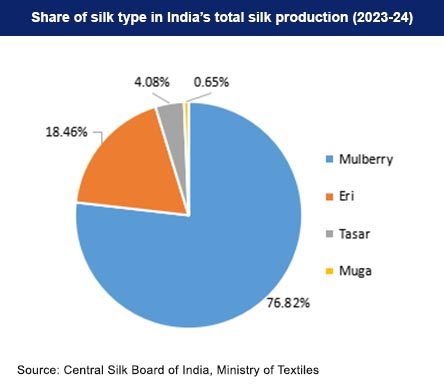
- India produces four types of natural silks; Mulberry, Eri, Tasar and Muga.
- Silk producing states: Karnataka is the largest silk-producing state in India, followed by Andhra Pradesh, West Bengal, Tamil Nadu and Uttar Pradesh.
- Exports of silk and silk goods rose from ₹1,649.48 crores in 2017-18 to ₹2,027.56 crores in 2023-24.
- As per Directorate General of Commercial Intelligence and Statistics (DGCIS) reports, the country exported 3348 MT of silk waste in 2023-24.
- Silk waste consists of leftover or imperfect silk from the production process, such as broken fibers or pieces of cocoons.
Mulberry Vs Non-mulberry silk
- Mulberry silk comes from silkworms that eat only mulberry leaves.
- It is soft, smooth, and shiny with a bright glow, making it perfect for luxury sarees and high-end fabrics.
- 92% of the country’s total raw silk production comes from mulberry.
- Non-mulberry silk (also known as Vanya silk) comes from wild silkworms that feed on leaves from trees like oak, castor and arjun.
- This silk has a natural, earthy feel with less shine but is strong, durable, and eco-friendly.
Government Initiatives in Silk Development
- The Silk Samagra Scheme: Its objective is to scale up production by improving the quality and productivity and to empower downtrodden, poor & backward families through various activities of sericulture in the country. It has four major Components:
- Research & Development, Training, Transfer of Technology and I.T. Initiatives,
- Seed Organizations,
- Coordination and Market Development and
- Quality Certification Systems (QCS) / Export Brand Promotion and Technology Up-gradation.
- Sericulture Development in the North-Eastern States (NERTPS): The objective of this scheme was the revival, expansion, and diversification of sericulture in the state with a special focus on Eri and Muga silks.
| The Indian Silk Export Promotion Council (ISEPC) – Sponsored by the Ministry of Textiles, Government of India, the ISEPC is an apex body of the exporters, manufacturers and merchandisers. – The main activities of the council are to explore markets, establish contacts with potential buyers, organize buyer-seller meets, silk fairs, and exhibitions, resolve trade disputes, and promote and develop the Indian silk industry and exports. |
Syllabus: GS3/ Internal Security
Naxalmukt Bharat Abhiyan: From Red Zones to Growth Corridors
Context
- India has made significant strides in curbing Left Wing Extremism, with a sharp decline in affected districts, violence, and Naxalite presence.
What is the Naxalite Movement?
- Origin: The Naxalite movement began in 1967 in Naxalbari, West Bengal, as a radical leftist uprising championing the rights of tribal and landless communities.
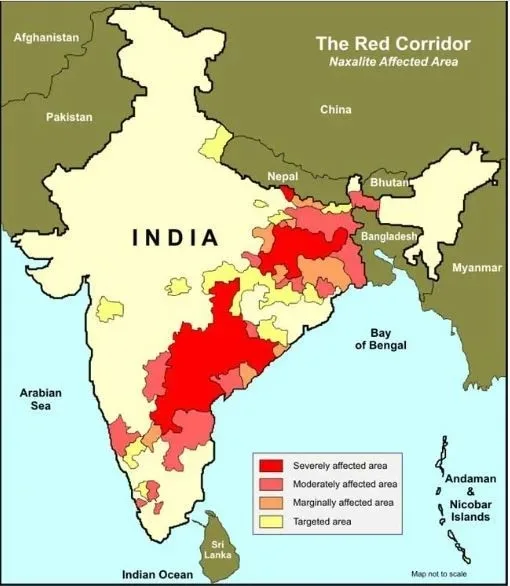
- Geographic Spread: The insurgency spread across the so-called Red Corridor, covering parts of Chhattisgarh, Jharkhand, Odisha, Maharashtra, West Bengal, Andhra Pradesh, Telangana, Madhya Pradesh, and Kerala.
- Approach adopted: Naxalites employ guerrilla warfare, target state institutions, extort local populations, and often recruit children.
- They claim to fight for marginalized communities but resort to violent methods.
Consequences of Naxalism
- Political Consequences: It undermines state authority and weakens democratic institutions in affected areas.
- It also creates governance vacuums, making administration and law enforcement extremely difficult.
- Economic Consequences: Naxalism disrupts economic activities like agriculture, and infrastructure development.
- Increases government spending on security, reducing funds available for development and hampers private investment.
- Social Consequences: It fosters fear, mistrust, and a sense of alienation among marginalized communities.
- The disruption of education and health services, especially in remote areas, leads to significant human development losses.
Improvement in India’s Fight Against Naxalism
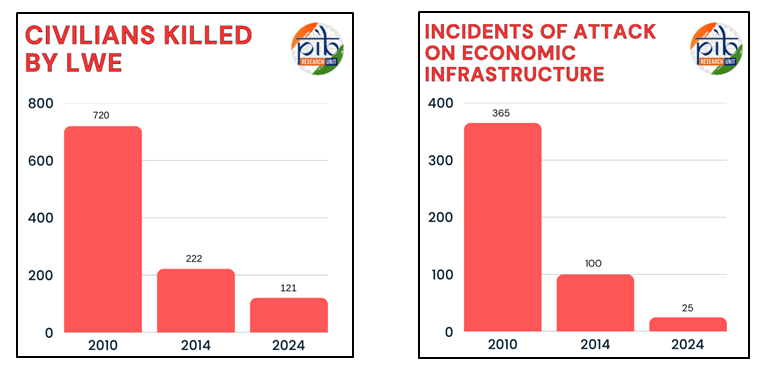
- Reduction in Affected Districts from 126 in 2010 to just 38 in 2024, showing successful containment of Left-Wing Extremism (LWE) zones.
- Drop in Violence: LWE-related violent incidents have dropped by 81%, from 1,936 in 2010 to 374 in 2024.
- Reintegration into the Mainstream: LWE-affected areas are increasingly experiencing improved education, healthcare, connectivity, and governance.
- Over 8,000 Naxalites have surrendered in the last 10 years.
Government Initiatives
- Security Related Expenditure (SRE) Scheme: This Scheme is being implemented as a sub-scheme of the umbrella scheme ‘Modernization of Police Forces’.
- The Central Government reimburses security related expenditure for LWE affected districts and districts earmarked for monitoring.
- SAMADHAN Strategy: A comprehensive approach involving Smart Leadership, Aggressive Strategy, Motivation and Training, Actionable Intelligence, Dashboard-Based KPIs and KRAs, Harnessing Technology, Action Plans for each Theatre, and No Access to Financing.
- Scheme of Fortified Police stations: 612 Fortified Police Stations have been constructed in LWE affected areas in the last 10 years.
- Aspirational District: The Ministry of Home Affairs has been tasked with the monitoring of Aspirational districts programme in 35 LWE affected districts.
- Focused Developmental Assistance: Special Central Assistance (SCA) of ₹30 crore for most affected districts and ₹10 crore for Districts of Concern is bridging infrastructure gaps.
Way Ahead
- Community Engagement: Promote confidence-building measures and empower tribal institutions.
- Employment and Education: Provide youth with skills, education, and job opportunities to break the recruitment chain.
- Technological Integration: Enhance intelligence, surveillance, and communication using modern technology.
Concluding remarks
- The Government of India has set a target to eliminate Naxalism by 31st March 2026, recognizing it as a major impediment to the development of tribal and remote regions.
- The success of Naxalmukt Bharat Abhiyan lies in balancing robust security with inclusive development.
- With continued political will, administrative efficiency, and local participation, a future free from Left Wing Extremism is within reach.
