
Supreme Court Needs to Change from Being a Chief Justice-Centric Court
Syllabus: GS2/ Polity and Governance
Context
- Former Supreme Court Judge, Justice A.S. Oka, emphasized in a more democratic and institutionalised manner rather than being heavily centered around the Chief Justice of India (CJI).
The Need for Reform
- Master of the Roster Doctrine: As reaffirmed in Shanti Bhushan vs. Supreme Court of India (2018), the CJI alone decides;
- Which bench hears which case,
- Which judges are assigned to benches,
- When the case is listed for hearing.
- Constitution Bench Control: Although Constitution Bench cases must consist of at least five judges, it is often the CJI who;
- Decides when such benches are constituted, and
- Frequently presides over them.
- Control Over Court Administration: According to State of Rajasthan v. Prakash Chand (1998), while the Chief Justice is ‘first among equals’ in judicial matters, in administrative functions he occupies a unique, dominant role. This includes;
- Control over court registry,
- Determination of work allocation, and
- Implementation of administrative decisions without formal consultation.
- Strengthening the Lower Judiciary: Justice Oka also emphasised the need to empower the district judiciary, often termed the “backbone” of India’s justice delivery system.
Challenges emerging from this structure
- Lack of Transparency: Litigants and even fellow judges remain unaware of how cases are allocated or delayed.
- Delay in Justice: Cases of constitutional or national importance have faced inordinate delays due to the discretionary power of the CJI in constituting benches.
- Weakened Collegiality: The current structure undermines judicial equality and collective responsibility within the apex court.
Steps taken for Increased Transparency
- In 2018, a public roster system was introduced by the Chief Justice of the Supreme Court, to improve transparency in the allocation of sensitive cases to judges.
- CJI’s Office Under RTI (2019): In Subhash Chandra Agarwal v. Supreme Court, a Constitution Bench held that the office of the CJI falls under the purview of the Right to Information Act — a landmark step for judicial transparency.
- The Supreme Court uploaded details of the appointment process for judges to High Courts and the apex court, enhancing public understanding of judicial selections.
Reforms Needed
- Committee-Based Decision-Making: Establishing internal committees for Bench composition, Case listing, and Administrative matters can decentralise power and bring in broader institutional input.
- Transparent Listing Mechanism: Technology must be used to automate the listing of cases through an algorithm-based system with minimal human discretion.
- Collegiality in Constitution Bench Assignments: A panel of senior judges could collectively decide on the composition of Constitution Benches and the timing of their hearings, rather than relying on the sole discretion of the CJI.
Concluding remarks
- As the ultimate guardian of constitutional rights, the Supreme Court must ensure that it remains not only independent but also institutionally robust, inclusive, and transparent.
- Moving away from a CJI-centric model towards a more committee-based, democratic structure would strengthen judicial credibility, promote equal responsibility among judges, and reinforce the principle of justice for all.
Microfinance Loan Delinquencies Jump 163% in FY2025
Syllabus: GS3/ Economy
Context
- India’s microfinance sector has witnessed a 163% surge to Rs 43,075 crore in loan delinquencies in FY2025.
What is Microfinance?
- Microfinance refers to financial services offered to low-income individuals or groups who are typically excluded from traditional banking.
- It includes microloans, savings, insurance, and remittance services, mostly extended by NBFC-MFIs, Small Finance Banks (SFBs), and banks.
- Reserve Bank of India (RBI) defines a microfinance loan as a collateral-free loan provided to a household with an annual income up to ₹3,00,000.
Key trends in Microfinance Sector
- The gross loan portfolio of the microfinance sector dropped by 13.9% year-on-year, from ₹4.42 lakh crore in March 2024 to ₹3.81 lakh crore in March 2025.
- There is a shift from low-ticket to high-ticket loans. Loans above ₹1 lakh grew by 38.5% year-on-year, while those under ₹30,000 declined by 35.9% year-on-year.
- The number of active microfinance loans fell from 16.1 crore to 14 crore during FY2025.
- Additionally, borrowers associated with five or more lenders dropped from 9.7% to 4.9%.
Reasons for Rising Delinquencies
- Overleveraging by Borrowers: Borrowers, especially in rural and semi-urban areas, take loans from 5 or more institutions, leading to unsustainable debt burdens.
- Weak Credit Appraisal: Many microfinance institutions (MFIs), especially smaller NBFC-MFIs and banks under pressure to meet loan targets, have relaxed credit norms and lent without robust background checks.
- Income Instability: The aftermath of the pandemic, inflationary pressures, rural distress, and lack of stable employment have all reduced the repayment capacity of borrowers.
- Collection Inefficiencies: Lack of field-level engagement post-COVID, digital migration, and weak collection infrastructure in some areas have hampered recovery efforts.
- Loan Utilisation Issues: A significant portion of microfinance loans are diverted from income-generating activities to consumption or social obligations (e.g., weddings, festivals, health emergencies).
Government Initiatives related to microfinance
- Pradhan Mantri MUDRA Yojana: In 2015, the Micro Units Development Finance Agency (MUDRA) and Pradhan Mantri Mudra Yojana (PMMY) were launched to allow small businesses to borrow micro credit up to Rs.10 lakhs without collateral.
- These loans were given with the help of MFIs and other member institutions, which were refinanced by MUDRA Ltd.
- Udyam Assist Platform (UAP): The platform helps informal micro-entrepreneurs (many of whom are MFI clients) register as MSMEs and avail benefits like priority sector lending, subsidies, and credit guarantees under different schemes.
- Credit Information Sharing Mandate: RBI has mandated all microfinance lenders to report credit bureaus, such as CRIF High Mark and CIBIL, ensuring that borrowers’ credit histories are accessible for proper assessment.
- RBI’s Revised Regulatory Framework for Microfinance Loans, 2022 provides a uniform regulatory framework for all regulated entities (banks, NBFCs, NBFC-MFIs, SFBs) to ensure borrower protection and promote responsible lending.
Way Ahead
- Credit assessment tools: There is a need to strengthen borrower evaluation to curb over-indebtedness.
- Role of Credit Bureaus: Data from agencies like CRIF High Mark is essential in identifying patterns of stress early.
- Regulatory Oversight: RBI and state governments need to ensure that collection practices are fair, and lending norms are responsibly followed.
- Financial Literacy and Inclusion: There is a need to ensure that borrowers are aware of their credit obligations and rights is critical.
NITI Aayog Releases Report on “Designing a Policy for Medium Enterprises”
Syllabus: GS3/ Economy
In Context
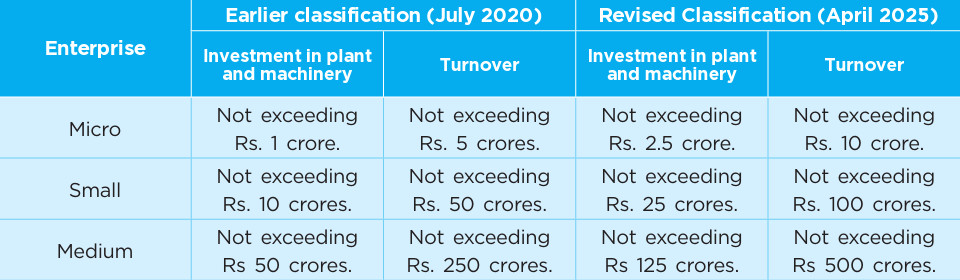
- The MSME sector is a cornerstone of India’s economy, contributing nearly 29% to GDP, 40% to exports, and employing over 60% of the workforce. However, it’s overwhelmingly skewed in favour of micro enterprises:
- Micro units form 97% of registered MSMEs.
- Small enterprises account for 2.7%.
- Medium enterprises make up just 0.3%, yet medium enterprises account for nearly 40% of MSME exports, showcasing their potential and strategic importance.
Why Such Tilt Towards Micro Enterprises?
- Overdependence on informal and subsistence-level micro firms.
- A gross under-leveraging of medium enterprises, which are better positioned to scale, adopt innovation, and integrate with global supply chains.
Challenges Faced by Medium Enterprises
- Access to Finance is Limited: Only 37% of medium enterprises can access formal loans. Collateral-heavy procedures, poor risk assessment, and lack of dedicated credit lines are barriers.
- Technology Gap: A whopping 82% of Medium Enterprises don’t use advanced tech like AI, IoT, or digital automation — hindering their productivity and global competitiveness.
- Skill Mismatch: About 88% of medium enterprises don’t benefit from any government skill or training program. Training modules are either outdated or inaccessible.
- Low Scheme Awareness: Over 90% are unaware of key government portals or schemes like RAMP, ZED, or GeM. Even when aware, bureaucratic complexity hampers usage.
- Heavy Compliance Burden: Multiple inspections from labour, health, and safety departments increase transaction costs and reduce ease of doing business.
Why Do Medium Enterprises Matter?
- High Forex Yield: Each medium enterprise generates ₹39.95 crore in forex income, compared to ₹8.3 crore by small and just ₹1.39 crore by micro units.
- Innovation Leaders: Medium enterprises contribute 81% of total MSME R&D expenditure, investing in automation, AI, and process improvements.
- Employment Generators: With an average of 89 employees per unit, medium firms create far more jobs than micro (5.7) and small (19.1) units.
- Profitability and Scale: These firms benefit from economies of scale, better infrastructure, and investment capabilities, ensuring higher return on capital and sustained competitiveness.
Policy Recommendations
- Tailored Finance Instruments: Launch a working capital scheme tied to enterprise turnover, with fast-track approvals.
- Introduce a ₹5 crore ME credit card at market rates with minimal collateral.
- Technology Upgradation through Competence Centres: Convert existing tech centres into India ME 4.0 hubs, offering access to Industry 4.0 tools for sectors like ESDM, pharma, and sports.
- Focused R&D Ecosystem: Establish a 3-tier funding mechanism (Expert Committee → Proposal Solicitation → Monitoring).
- Use Self-Reliant India Fund (SRI) to finance sector-specific innovation projects.
- Cluster-Based Testing and Certification: Expand MSE-CDP to include medium enterprises.
- Set up testing labs in regional ME clusters to ensure quality compliance, especially in exports.
- Customized Skill Development: Design export-oriented, sector-specific training curricula.
- Integrate ME modules into existing ESDP programs with help from the Ministry of Skill Development.
- Centralized Digital Support Portal: Develop a dedicated ME sub-portal under Udyam with scheme discovery, compliance tracking, and market intelligence modules.
Coal Sector in India: A Strategic Engine for Sustainable Growth and Global Leadership
Syllabus: GS3/Energy
Context
- Coal has long been the backbone of India’s energy sector, fueling industries, power plants, and economic growth. However, the global shift towards sustainability has necessitated a transformation in how coal is utilized.
Brief about the India’s Coal Sector
- India is the 5th largest in coal reserves and 2nd largest coal consumer globally.
- Per capita coal energy consumption remains lower than China, the USA, or OECD nations.
- Coal’s share in installed capacity has decreased from 60% in 2014–15 to 47% today.
- It has crossed the 1 Billion Tonne, both production and dispatch in FY25.
- It reinforces India’s energy security, ensures a reliable and cost-effective power supply.
- The coal industry has contributed significantly to employment, supporting over 5 lakh workers across more than 350 coal mines.
Significance of Coal Sector in India
- Backbone of India’s Energy Security: Coal powers 46.88% of India’s total installed power capacity (as of Nov 2024), making it the single largest contributor to electricity generation.
- Despite the rise of solar and wind energy, coal is projected to retain 55% share of power generation by 2030.
- Strategic Role in Core Industries: Coal dependent steel industry uses coking coal in blast furnaces — India aims to produce 140 MT of domestic coking coal by 2029–30 under Mission Coking Coal.
- Economic Engine of Mineral-Rich Regions: Coal production contributes over ₹70,000 crore annually through royalties, GST, and District Mineral Foundation (DMF) funds.
- Major Employment Provider: The coal sector employs around 5 lakh workers across 350+ mines.
- Railway Revenue Pillar: Coal is the single largest source of freight revenue for Indian Railways, contributing 49% of total freight earnings (FY 2022–23).
- Corporate Social Responsibility and Nation Building: Coal PSUs spend over ₹600 crore annually on CSR — funding schools, hospitals, skill centers, and community welfare in backward regions.
| Geographical Distribution of Coal in India – Gondwana Coals: About 98% of total coal in India is based on Gondwana time; 1. Majorly found in Chhattisgarh, Jharkhand, Odisha, Madhya Pradesh, Andhra Pradesh etc. 2. Major Gondwana Coal Mining Centres: (a). Damodar Valley: Daktonganj, Bokaro, Jharia, Dhanbad, Raniganj, Durgapur (b). Son Valley: Associated with North Koel river, Singrauli (c). Mahanadi Valley: Associated with rivers like Hasdeo, Ib, South Koel etc, Korba, Jhilmil, Talcher (d). Godavari and Wardha Valley: Singreni, Kotagundam (Telangana), Kamptee Valley (Nagpur, Maharashtra) Types of Coal in India – Anthracite: Highest carbon content, rare in India. – Bituminous: Most abundant and commonly used for power generation. – Sub-bituminous: Higher heating value than lignite. – Lignite: Low-grade coal, used mainly in power plants near mining sites. |
| Important Coal Fields | |
| Coal Fields & Location | Importance |
| Jharia Coalfield, Jharkhand | Known for high-quality coking coal. |
| Raniganj Coalfield, West Bengal | India’s oldest coalfield, primarily producing non-coking coal. |
| Talcher Coalfield, Odisha | One of the largest coal reserves in India. |
| Korba Coalfield, Chhattisgarh | A major source of thermal coal. |
| Singrauli Coalfield, Madhya Pradesh & Uttar Pradesh | Important for power generation. |
| Bokaro Coalfield, Jharkhand | Produces both coking and non-coking coal. |
| Singareni Coalfield, Telangana | Major coal field in South India |
| Wardha Valley Coalfield, Maharashtra | Significant for industrial use. |
Challenges India’s Coal Sector Facing
- Coal Supply Shortages: India has experienced periodic coal shortages, leading to power crises.
- Factors such as stagnating domestic production, transportation bottlenecks, and reduced imports have contributed to supply constraints.
- Environmental and Sustainability Issues: These include deforestation, air pollution, and carbon emissions.
- While India is pushing for coal gasification and cleaner mining technologies, the transition remains slow.
- Dependence on Coal Imports: Despite having the fifth-largest coal reserves, India still imports coal to meet demand.
- High import costs and global price fluctuations pose economic challenges.
- Infrastructure and Transportation Bottlenecks: Coal transportation relies heavily on railways, which often face congestion and delays.
- Improving logistics and infrastructure is crucial for ensuring timely coal supply.
- Social and Labor Concerns: Coal mining employs over 5 lakh workers, but safety concerns, displacement of communities, and inadequate rehabilitation programs remain pressing issues.
Recent Key Reforms in the Coal Sector
- Commercial Coal Mining (2020): It allows private players to participate in coal auctions. It increased competition, improved efficiency, and attracted investments, leading to higher production and employment generation.
- The Coal Bearing Areas Act of 1957 signaled state control but lacked trust in private innovation.
- Coal Mines Special Provisions Act (CMSP Act 2015): It was enacted to address the cancellation of coal block allocations by the Supreme Court.
- It introduced a transparent auction process, encouraging private sector involvement and generating revenue for the government.
- SHAKTI (Scheme for Harnessing and Allocating Koyala Transparently in India) Policy for Coal Allocation (revised in 2025): It ensures greater flexibility, wider eligibility, and better accessibility to coal, supporting India’s energy needs.
- Single Window E-Auction Mechanism: It removes market distortions, increases operational efficiency, and ensures fair pricing for all sectors.
- Revival of Abandoned Coal Mines: India has initiated policies to reopen abandoned and discontinued coal mines through private sector participation.
- It aims to optimize coal resources while ensuring environmental sustainability.
- Push for Underground Coal Mining: Incentives like waiving upfront payments and reducing revenue share requirements, to encourage private investment and adoption of advanced mining technologies.
- Coal Gasification and Sustainable Mining: India has set a target to gasify 100 million tonnes of coal by 2030, reducing carbon emissions and fostering cleaner energy solutions.
- Financial support and tax incentives have been introduced to accelerate coal gasification projects.
Tech-Driven Revolution: Coal Exchange and DigiCoal
- India to launch its first coal trading exchange for seamless, transparent access and pricing.
- DigiCoal initiative to digitize coal mines:
- 5G, AI monitoring, GPS tracking, drone surveys
- Digital twins for operational safety and efficiency.
Future Vision: Viksit Bharat 2047
- From 1.10 MWh per capita electricity consumption today to matching or exceeding global averages.
- India’s journey to a $5 trillion economy by 2030 and $35 trillion by 2047 depends on reliable energy access.
- Coal will remain pivotal, complemented by renewables.
Mendel’s Work with Laws of Inheritance
Syllabus: GS3/Science and Technology
Context
- A global team mapped pea genomic diversity, advancing breeding research, revisiting Mendel’s traits, and boosting sustainable agriculture.
About
- The research, which appears in the journal Nature, is built on a collaboration between the John Innes Centre (JIC) and the Chinese Academy of Agricultural Sciences (CAAS), together with other research groups in China, the UK, USA, and France.
- The research has connected more than 70 agronomic traits to corresponding genomic locations.
- The many different genetic markers at each of these locations can be used to accelerate pea improvement.
- Their work has uncovered new insights into the traits that Mendel famously studied and revealed valuable genetic diversity.
Significance of the Study
- The expanded gene bank and genomic resources now available to researchers and breeders worldwide have the potential to transform pea breeding and advance research into this environmentally vital legume.
- The study comes at a time when peas and other legumes are being called upon as a source of plant protein, and as sustainable crops which can fix their own nitrogen.
- It will pave the way for more predictive breeding – such as using AI models which can select combinations of genes to deliver better yielding, disease resistant, agronomically viable pea plants.
Mendel’s Experiments
- Mendel is known as the father of genetics because of his ground-breaking work on inheritance in pea plants 150 years ago.
- He focused on seven traits: pea seed shape (round or wrinkled), pea seed colour (green or yellow), pod shape (constricted or inflated), pod colour (green or yellow), flower colour (purple or white), plant size (tall or dwarf) and position of flowers (axial or terminal).
- Mendel chose pea plants because they have easily observable traits (e.g., flower color, seed shape), grow quickly, and can be self- or cross-pollinated.

- Over many years of experiments, involving thousands of plants, he established fundamental rules of inheritance, how characteristics are passed down through the generations, and single-handedly laid the groundwork for the science of genetics.
Mendel’s Laws of Inheritance
- Law of Segregation: Each individual has two alleles for a trait, but only one allele is passed on to the offspring during gamete formation.
- Traits are determined by pairs of alleles.
- During meiosis, the two alleles segregate (separate), so each gamete receives only one allele.
- Law of Independent Assortment: Genes for different traits assort independently of one another during gamete formation.
- The inheritance of one trait (e.g., plant height) does not affect the inheritance of another trait (e.g., seed color), assuming the genes are on different chromosomes.
- This explains the variety in traits among offspring.
- Law of Dominance: When two different alleles are present in a pair, one (the dominant allele) masks the expression of the other (the recessive allele).
- In a heterozygous condition (e.g., Tt), the dominant trait (tallness) is expressed, and the recessive trait (shortness) is hidden.
Conclusion
- Mendel’s work remained unnoticed until it was rediscovered in 1900.
- Today, his principles are the basis for classical genetics, helping us understand how traits are passed from one generation to another.
Gond and Madhubani Art
Syllabus :GS 1/Art and Culture
In News
- The artists of Gond art and Madhubani art met President Droupadi Murmu at Rashtrapati Bhavan as part of the Artists in Residence programme- Kala Utsav.
Madhubani Paintings

- They originated in the Madhubani district of Bihar’s Mithila region.
- They are known for their intricate line drawings filled with bright, earthy colors and tribal motifs.
- They were traditionally created by women on mud walls of bridal chambers.
- They featured themes from Hindu mythology and local beliefs, symbolizing marriage and fertility.
- The paintings show human beings, animals, trees, flowers, birds, etc
Gond paintings

- Gonds are one of the prominent tribes in India. They are mainly settled in Madhya Pradesh and Chhattisgarh
- The Akbar Nama, a history of Akbar’s reign, mentions the Gond kingdom of Garha Katanga that had 70,000 villages.
- Gond tribals belong to the Dravida race, and are very fond of dance, music and storytelling.
- Gond paintings, also called Thingna, often feature geometrical designs and motifs like horses, elephants, birds, and human figures, painted using earth colours (white, red, yellow, black).
- Homes are decorated with these motifs, especially around doors, windows, and courtyards, often with relief work made from cow dung and rice husk.
Source: PIB
Saraswati Pushkaralu
Syllabus: GS1/ Culture
Context
- The 11th day of the ongoing Saraswati Pushkaralu witnessed a massive turnout of pilgrims at Kaleshwaram.
Saraswati Pushkaralu
- Saraswati Pushkaram or Pushkaralu is a Hindu river festival that occurs once every 12 years, aligned with the entry of Jupiter (Brihaspati) into the Gemini (Mithuna) zodiac sign.
- It is observed for 12 days, starting from the exact moment Jupiter enters the Mithuna rasi.
- The festival is dedicated to River Saraswati, often referred to as Antarvahini—the invisible river believed to flow beneath the Triveni Sangam.
- The Triveni Sangam at Kaleshwaram—where Godavari, Pranahita, and the invisible Saraswati are believed to meet—is a key pilgrimage site during the festival.
Source: IE
NITI Aayog’s Governing Council
Syllabus: GS2/ Polity and Governance
Context
- PM Modi chaired the 10th meeting of the NITI Aayog Governing Council held on the theme of ‘Viksit Rajya for Viksit Bharat@2047’.
Governing Council of NITI Aayog
- The Governing Council embodies the objectives of cooperative federalism and presents a platform to discuss inter- sectoral, inter-departmental and federal issues to accelerate the implementation of the national development agenda.
- It comprises;
- The Prime Minister of India,
- Chief Ministers of all the States and Union Territories with Legislature;
- The Lieutenant Governors of Union Territories, except Delhi and Puducherry,
- The Vice Chairman of NITI Aayog,
- Full-time members of NITI Aayog.
| NITI Aayog – Established: NITI Aayog (National Institution for Transforming India) is a government think tank established in 2015. – Aim: It replaced the Planning Commission, aiming to focus on more contemporary challenges like sustainable development, policy innovation, and governance reforms. – Composition: It is led by the Prime Minister as the Chairperson, with the Vice-Chairperson and CEO leading the executive functions. |
Source: TH
Panchayat Advancement Index (PAI) Version 2.0
Syllabus: GS2/Governance
Context
- The Ministry of Panchayati Raj rolled out Panchayat Advancement Index (PAI) Version 2.0.
About
- PAI is a multidimensional assessment framework developed by the Ministry of Panchayati Raj to enable performance tracking of over 2.5 lakh Gram Panchayats across nine themes aligned with the Localization of Sustainable Development Goals (LSDGs).
- The nine LSDG-aligned themes include: Poverty-free and Enhanced Livelihoods, Healthy, Child-Friendly Panchayat, Water-Sufficient Panchayat, Clean and Green Panchayat, Panchayat with Self-Sufficient Infrastructure, Socially Just and Socially Secured, Panchayat with Good Governance, and Women-Friendly.
- The transition from PAI 1.0 to 2.0 reflects a focused refinement of the framework, with a sharper and more practical set of indicators and data points.
- Significance: It provides public representatives, policy makers, government agencies, and local authorities with valuable insights into the areas that require attention.
Sugar Boards in Schools
Syllabus: GS 2/Health
In News
- The CBSE has directed over 24,000 affiliated schools in India to set up ‘sugar boards’ that display information educating students about the health risks of excessive sugar consumption.
- Studies show children consume far more sugar than recommended, with 13–15% of their daily calories from sugar, compared to the advised limit of 5%.
What are Sugar boards?
- They are educational displays set up in schools to visually show the amount of sugar in popular drinks and foods, aiming to raise awareness among students about the dangers of excessive sugar consumption.
- The National Commission for Protection of Child Rights (NCPCR) has advocated for their introduction in all schools, citing high sugar intake from easily available snacks and drinks as a major contributor.
- These boards include information on recommended sugar intake, health risks of high sugar consumption, and healthier alternatives.
- Sugar boards are necessary due to the rising incidence of Type 2 Diabetes among children, a condition once mostly seen in adults.
India’s Policy & Regulatory Framework
- India’s regulatory stance on High Fat, Salt, and Sugar (HFSS) content in foods, particularly school meals, is still evolving.
- Food Safety and Standards Authority of India (FSSAI) is the apex regulatory body for food safety. It has directed food companies for mandatory nutrition labelling for packaged foods, banning HFSS food in schools & creating “Eat Right India” Campaign for safe, healthy, and sustainable diets.
- Also, India imposes higher GST (18–28%) on processed, sugary items like carbonated drinks, packaged snacks, and chocolates.
Source :TH
India’s Cotton Area May Shrink Due to Low Yields
Syllabus :GS 3/Economy
In News
- India’s cotton production is expected to decline by 2% in the 2025–26 season, according to the US Department of Agriculture, due to a shift in farmer preference toward more profitable crops like maize and groundnut.
Cotton Industry in India
- Cotton is a vital commercial crop in India, contributing about 24% to global cotton production and sustaining the livelihoods of millions of farmers and workers.
- It plays a crucial role in India’s foreign exchange earnings through exports of raw cotton, intermediate products, and finished goods. India holds the largest cotton acreage in the world.
- India has the largest cotton acreage globally; ranks 36th in productivity.
- India is the 2nd largest producer and consumer of cotton in the world.
- India grows all four species of cotton: G. Arboreum, G. Herbaceum (Asian cotton), G. Barbadense (Egyptian cotton) and G. Hirsutum (American Upland cotton).
- Major Growing Zones: Cotton is primarily grown in the Northern, Central, and Southern zones of India.
Source :TH
Honey Production In India
Syllabus: GS3/Economy
In News
- Over the last 11 years, India’s annual honey production has increased from 70,000–75,000 metric tonnes to 1.25 lakh metric tonnes, marking a 60% growth.
Key Reason for Growth
- Integration of beekeeping with horticulture and farming, supported by schemes like NBHM (National Beekeeping and Honey Mission).
- Rise in floral diversity, training programs, and modern hive technologies.
India’s Honey Industry
- India is the 7th largest honey producer globally. China remains the top global producer and exporter, dominating both production volume and international trade.
- Areas of Production: Uttar Pradesh (17%), West Bengal (16%), Punjab (14%), Bihar (12%) and Rajasthan (9%)
- Major Export Destinations (2023-24) : U.S.A, UAE, Saudi Arabia, Qatar and Libya.
Bananas Cultivation
Syllabus: GS3/Agriculture
Context
- A recent report by UK NGO Christian Aid has warned that 60% of the best banana growing areas are in danger from climate change-driven rising temperatures.
About
- The report showed that extreme weather, rising temperatures and climate related pests pose a threat to banana producing regions, sparking calls for faster emission cuts and more support for farmers.
- The report indicates that India is expected to see declining banana yields due to climate change by 2050.
Banana Production
- Bananas are the fourth most important food crop globally, following wheat, rice and maize.
- The top banana producing countries are India followed by China.
- Bananas thrive in temperatures ranging from 15 to 35 degrees Celsius and require ample water to grow effectively.
- Currently, Latin America and the Caribbean account for 80% of global banana exports.
- Despite being the world’s largest banana producer, India’s export share is currently just one percent in the global market, even though the country accounts for 26.45 percent of the world’s banana production at 35.36 Million Metric Ton.
- Andhra Pradesh is the largest banana-producing state, followed by Maharashtra, Karnataka, Tamil Nadu, and Uttar Pradesh.
- These five states collectively contribute around 67 percent to India’s banana production in the fiscal year 2022-23.
