
Government to Bring New National Policy on Senior Citizens
Syllabus: GS 1/Social Justice
In News
- The Union Ministry of Social Justice and Empowerment is drafting a new national policy for senior citizens, considering India’s changing demographics.
More about the News
- The policy was discussed at the fourth meeting of the National Council for Senior Citizens.
- Other key topics included are digital inclusion, involving NGOs in policymaking, elder abuse grievance mechanisms, and setting standards for old age homes.
Senior citizens in India
- According to Census 2011, India has approximately 103 million elderly citizens, accounting for 8.6 per cent of the population.
- The government defines people aged 60 and above as “elderly”.
- According to the government’s projections, they will account for about 12.16% of the country’s population in 2026.
- Population projections estimate 20% of the country will be senior citizens by 2047.
- This increased longevity is due to the availability of good healthcare services and accessibility to lifesaving drugs.
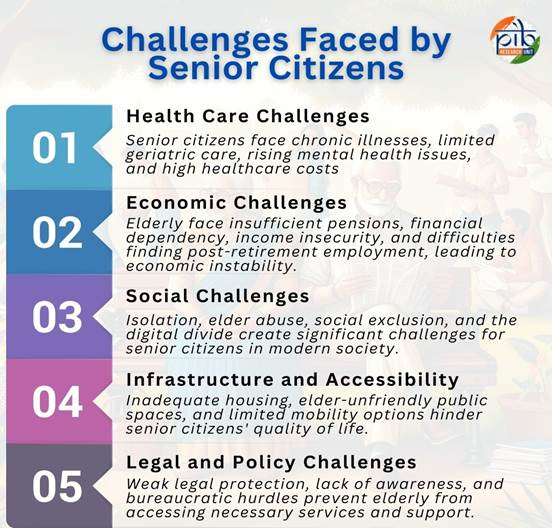
Various Schemes
- The Integrated Programme for Senior Citizens (IPSrC) provides grant-in-aid to NGOs for running senior citizen homes offering free shelter, food, healthcare, and entertainment.
- Elderline: The National Helpline on Toll free number 14567 namely ‘Elderline’ was launched in 2021 for grievance redressal of Senior Citizens and to generate awareness .
- Rashtriya Vayoshri Yojana (RVY): It is implemented by the Ministry of Social Justice and Empowerment, aims to support economically weaker senior citizens (with a monthly income of ₹15,000 or less) who suffer from age-related disabilities or infirmities and provides free assistive devices.
- Seniorcare Ageing Growth Engine(SAGE): It supports innovative startups to develop products and services for the elderly, while the Geriatric Caregiver Training Scheme aims to create a professional caregiving workforce.
- Legal support is provided under the Maintenance and Welfare of Parents and Senior Citizens Act, 2007, which mandates maintenance by children/relatives and penalizes abandonment or harassment.
- Health needs are addressed through Ayushman Bharat-PMJAY, which offers free health coverage to all citizens aged 70+, and the National Programme for Healthcare of the Elderly (NPHCE), which ensures geriatric services from the primary to tertiary levels.
Conclusion and Way Forward
- India’s aging population is growing rapidly, government initiatives play a crucial role in ensuring the welfare and dignity of senior citizens.
- As the nation moves forward, it is imperative to continue strengthening initiatives to provide a secure and respectful life for the elderly.
- India must adopt sensitive policies to address the economic, health, and social needs of the elderly.
Eruption of Mount Etna in Sicily
Syllabus: GS1/ Geography
Context
- The recent eruption of Mount Etna in Sicily, Italy highlights the dynamic processes beneath the Earth’s crust.
What is Volcanic Eruption?
- A volcanic eruption is the expulsion of gases, rock fragments, and/or molten lava from within the Earth through a vent onto the Earth’s surface or into the atmosphere.
- Formation of Magma: Deep beneath the earth’s surface, temperature and pressure are high enough to melt parts of the mantle and crust to form molten rock called magma.
- Magma is less dense than surrounding solid rock, so it rises through the crust, collecting in underground chambers.
- Role of Gases and Pressure: Magma contains volatile compounds like water vapor, carbon dioxide, and sulfur dioxide.
- Deep underground, these gases are dissolved due to immense pressure.
- As magma ascends and pressure reduces near the surface, the gases form bubbles, increasing internal pressure.
- Eruption Mechanism:
- At tectonic boundaries or hotspots (mantle plumes), cracks and faults allow magma to push upward. If gas pressure builds up significantly, it erupts violently, releasing lava, ash, and gases.
- If magma is suddenly obstructed, the resulting pressure may also cause earthquakes or generate seismic waves.
Types of Volcanoes
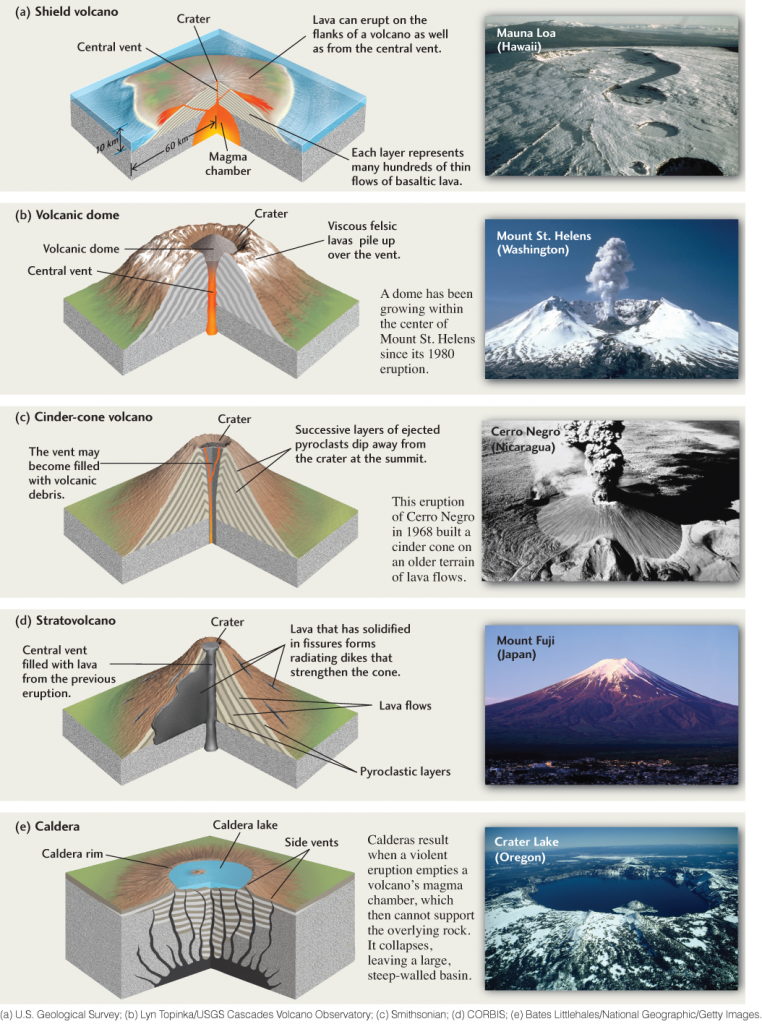
- Stratovolcanoes (Composite): Tall, steep, explosive (e.g., Mount Etna, Mount Fuji).
- Shield Volcanoes: Broad, gentle slopes, fluid lava flows (e.g., Mauna Loa in Hawaii).
- Cinder Cone Volcanoes: Small, steep, single-eruption (e.g., Capulin Volcano).
- Calderas: Large depressions formed by major eruptions (e.g., Yellowstone).
- Volcanic Domes (Lava Domes): Small, rounded, steep-sided structures formed by slow extrusion of viscous lava (e.g., Novarupta Dome in Alaska).
Classification Based on Activity
- Active volcanoes: These volcanoes have erupted within the last 10,000 years or are currently erupting.
- Dormant volcanoes: These volcanoes have not erupted in a long time (typically since the last ice age, about 12,000 years ago) but are still considered capable of erupting again.
- Extinct volcanoes: These volcanoes are not expected to erupt again. They may have erupted in the past, but their magma supply has been depleted, and the volcano is no longer considered active.
Impacts of Volcanic Eruptions
- Positive Impacts:
- Fertile soils from volcanic ash.
- Geothermal energy resources.
- Creation of landforms and islands.
- Negative Impacts:
- Destruction of life and property.
- Climate change (e.g., sulfur aerosols temporarily cool the climate but disrupt global weather patterns).
- Disruption of air travel and infrastructure.
Announcement of Census Dates
Syllabus: GS2/ Polity and Governance
Context
- The Union government announced that the much delayed Census 2021 will be held in two phases beginning October 1, 2026 and March 1, 2027.
About
- The census, typically conducted every ten years to update the National Population Register (NPR), was scheduled for 2021 but had to be postponed due to the Covid pandemic.
- The delimitation of constituencies for the Lok Sabha and State Legislative Assemblies is to be carried out on the basis of the first Census after 2026.
- This will be India’s first digital Census and will be the first Census since 1931 to capture granular caste data, beyond the broader classifications of Scheduled Castes (SCs) and Scheduled Tribes (STs) that have been enumerated in every post-Independence Census.
Census in India
- A census is a survey of the population of an area that includes collecting details of a country’s demographics including age, sex and occupation.
- History: Under W.C. Plowden, the Census Commissioner of India, the first synchronous decennial (every ten years) census was conducted in 1881.
- Independent India’s first census was held in 1951 and since then it has happened in the first year of every decade.
- The Constitution mandates that enumeration is carried out but the Census of India Act of 1948 does not specify its timing or periodicity.
- The population census is conducted by the Office of the Registrar General and Census Commissioner of India under the Ministry of Home Affairs.
| What is a Caste Census? – A caste Census involves collecting data on the population size and socio-economic conditions of various caste groups. – First detailed caste Census conducted in 1871-72 across major regions like Bengal and Madras. 1. However arbitrary classification led to confusion, as noted by W. Chichele Plowden in the 1881 Census report. – 1931 Caste Census: It identified 4,147 castes, exposing challenges like different identities claimed by the same caste in different regions. – Post-Independence: 2011 Socio-Economic and Caste Census (SECC) identified over 46.7 lakh castes/sub-castes with significant errors. |
Need for the Census
- Informed Policy Making: The Census provides detailed socio-economic data, helping the government make informed decisions on issues like education, healthcare, housing, employment, and infrastructure.
- Evaluating Development Progress: Comparing census data over decades helps assess the effectiveness of past policies, guiding future strategies.
- Environmental Planning: The Census provides insights into human settlements and demographic pressures, supporting environmental sustainability efforts.
- Electoral Reforms and Delimitation: Census data directly impacts the delimitation of constituencies, ensuring fair representation in Parliament and State Legislatures.
Way Ahead
- The upcoming Census presents a critical opportunity to bridge long-standing data gaps, especially on caste and socio-economic markers.
- Enumerators must be adequately trained to handle complex classifications, particularly for caste data, to ensure reliability and uniformity across states.
India’s first Variable Speed Pumped Storage Plant
Syllabus: GS3/ Environment
In News
- THDC India Ltd. (under the Ministry of Power) announced the Commercial Operation Declaration (COD) of the first 250 MW unit of India’s first Variable Speed Pumped Storage Plant (PSP) at Tehri, Uttarakhand.
What is a Pumped Storage Plant (PSP)?
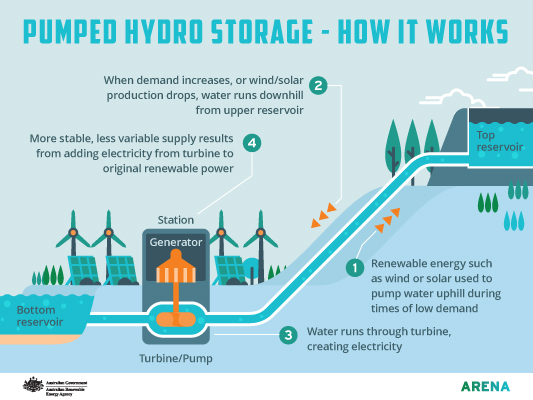
- A PSP is a type of hydropower storage system where water is pumped from a lower reservoir to an upper reservoir during low demand (off-peak hours) using surplus power.
- During high demand (peak hours), water is released from the upper reservoir to generate electricity.
- Variable speed PSPs allow flexible and precise control of pump-turbine operations, enabling them to respond to rapid fluctuations in grid demand and renewable energy intermittency.
National and Sectoral Importance
- Grid Stability and Renewable Energy Integration: Variable speed PSP can quickly ramp up/down, making it a critical grid balancing solution.
- Peaking Power Supply: Can provide round-the-clock energy support, especially during evening peaks when solar generation drops.
- Energy Self-Reliance and Atmanirbhar Bharat: Represents high-end engineering capacity of Indian PSUs in complex hydro infrastructure.
World Environment Day 2025
Syllabus: GS3/Environment
Context
- World Environment Day is celebrated every year on June 5, is a global initiative to raise awareness and drive action for environmental protection.
| About the World Environment Day – Background: 1. 1972: First UN Conference on the Human Environment in Stockholm, Sweden, with the theme of ‘Only One Earth’. (a). It resulted in the adoption of the Stockholm Declaration and the Action Plan for the Human Environment. (b). The United Nations Environment Programme (UNEP) designated 5th June of every year as World Environment Day in 1973 to encourage global participation in addressing environmental challenges. – World Environment Day 2025: 1. Host Country: Republic of KoreaTheme: #BeatPlasticPollution, emphasizing the urgent need to tackle plastic waste and its devastating impact on ecosystems. |
Plastic Pollution
- Key Facts: Every year 19-23 million tonnes of plastic waste leaks into aquatic ecosystems, polluting lakes, rivers and seas.
- Every day, the equivalent of 2,000 garbage trucks full of plastic are dumped into the world’s oceans, rivers, and lakes.
- It costs the world $300-600 billion every year.
- 7,000 million tonnes of plastic waste generated since 1950.
- Microplastics are now found in soil, water & food.
- Scale of Plastic Pollution in India: India generates approx 3.5 million metric tonnes of plastic waste annually.
- These plastics end up in the environment, contaminating soil and water sources.
- Without urgent action, plastic pollution is expected to triple by 2060.
Plastic Pollution and Its Impact on SDGs
- SDG 6 (Clean Water and Sanitation): Plastic waste contaminates freshwater sources, harming biodiversity and human health.
- SDG 12 (Responsible Consumption and Production): Encourages reducing plastic use, promoting recycling, and adopting sustainable alternatives.
- SDG 13 (Climate Action): Plastic production and waste contribute to greenhouse gas emissions, exacerbating climate change.
- SDG 14 (Life Below Water): Marine ecosystems suffer from plastic debris, with 85% of marine litter consisting of plastics.
- SDG 15 (Life on Land): Plastic pollution affects soil health and terrestrial wildlife.
| Other Environmental Problems – Rising Carbon Emissions: Between 2015 and 2024, global CO₂ emissions increased by nearly 10%, with India’s emissions surging from 2.33 billion to 3.12 billion metric tonnes. – Biodiversity Loss and Deforestation: India’s mega-diverse ecosystems are under threat due to deforestation, wetland degradation, and monoculture agriculture. – Severe Pollution Levels: India consistently ranks among the world’s most polluted countries, with Delhi topping global air pollution lists. 1. It generates 62 million tonnes of waste annually, but only 20% is scientifically processed. |
Global Commitments and India’s Role
- Basel, Rotterdam and Stockholm Conventions (2019): India actively supports global efforts to regulate hazardous waste and chemical use.
- It opposed e-waste dumping in developing countries and advocated for stricter global rules.
- G20 Osaka Blue Ocean Vision (2019): India and other member countries agreed to take strong action against plastic pollution.
- They committed to reducing marine plastic litter and microplastics and set a goal to stop adding any new plastic waste to the oceans by 2050.
- High Ambition Coalition for Nature and People (2021): It aims to protect at least 30% of the world’s land and oceans by 2030.
- India joined it during the ‘One Planet Summit’ held in Paris.
Policy Measures in India
- Plastic Waste Management Rules 2021 (under Environment (Protection) Act, 1986), which ban single-use plastic items and regulate plastic carry bags.
- Extended Producer Responsibility (EPR) Portal, ensuring that manufacturers take responsibility for plastic waste disposal.
- EPR means companies that make or sell plastic products must take care of the plastic waste they create.
- Plastic Parks and CSIR Technology, which convert plastic waste into fuel and recyclable products.
- Plastic Parks are specially developed industrial zones where many plastic-related businesses work together in one place.
- Swachh Bharat Mission, promoting rural and urban plastic waste management.
Solutions for a Plastic-Free Future
- Refuse single-use plastics like straws and cutlery.
- Reduce plastic packaging by opting for reusable alternatives.
- Recycle responsibly and support businesses that prioritize sustainability.
- Rethink consumption habits by choosing eco-friendly products.
Stampede In Bengaluru
Syllabus: GS3/ Disaster Management
In Context
- A tragic stampede outside Bengaluru’s M. Chinnaswamy Stadium resulted in the loss of several lives and significant damage to property.
About Stampede
- A stampede is a sudden, uncontrolled rush of people, typically caused by panic, excitement, or fear, leading to trampling and crushing injuries or deaths.
- It’s often a crowd crush rather than people intentionally pushing or stampeding — people simply get trapped with no space to move or breathe.
- Recently, India has witnessed a series of tragic stampedes, resulting in significant loss of life. For example: Hathras (Uttar Pradesh), 2024, New Delhi Railway Station & Mahakumbh stampede (2025) etc.
Causes of Stampedes in India
- Rumors and Panic: Sudden noise or false information (like bomb threat or structural collapse).
- Religious Gatherings: Overcrowding at religious events without proper planning.
- Example: Sabarimala (Kerala), 2011 – 106 killed during Makar Jyothi due to poor crowd dispersal planning.
- Poor Infrastructure and Planning: Narrow lanes, blocked exits, lack of signage.
- VIP Movement and Mismanagement: Prioritizing VIPs disrupts natural crowd flow.
- Overcrowding/Insufficient Space: When crowd density exceeds the venue’s capacity, it increases the risk of crushing.
Impacts of Stampedes
- Human Loss and Trauma: High death tolls, injuries, lifelong disability.
- Economic and Social Costs : Severe economic distress for families, medical expenses and further compound the burden. Article 21 of the Constitution is violated when preventable deaths occur.
- Damage to Infrastructure & Property: Uncontrolled crowd movement can lead to the collapse of barriers, temporary structures, and damage to permanent infrastructure.
- Erosion of Public Trust: Repeated incidents lead to a loss of faith in event organizers, authorities, and governance.
- Social & Religious Disruptions: Fear of stampedes can reduce participation in religious gatherings and festivals, affecting social cohesion and cultural traditions.
Recommendations of NDMA in Crowd Management
- Pre-Event Planning:
- Risk Assessment: Identify potential triggers, calculate safe holding capacity.
- Infrastructure Audit: Ensure adequate width of pathways, multiple exits, signage, and barricading.
- Clear SOPs for Organizers: Assign roles to police, fire, health, and civic authorities.
- Capacity Regulations: Entry by ticket/pass even for free events to monitor crowd volume.
- Use of Technology:
- CCTV Surveillance & Drones: Real-time monitoring of crowd behavior.
- GIS Mapping and Simulations: Plan for alternate routes and emergency exits.
- Early Warning Systems and PA Systems: Real-time communication in case of panic or disruption.
- Personnel Training and Deployment: Volunteers and police trained to handle surge and panic.
- Emergency Preparedness:
- Medical Camps & Ambulance Access: Field hospitals, triage zones for immediate aid.
- Multi-Agency Coordination: Coordination between health, police, NDRF, fire services, etc.
MISCELLANEOUS
International Institute of Administrative Sciences (IIAS)
Syllabus: GS2/IR
In News
- India has won the Presidency of the International Institute of Administrative Sciences (IIAS) for the 2025–2028 term.
The International Institute of Administrative Sciences (IIAS)
- It is a global federation comprising 31 Member Countries, 20 National Sections, and 15 Academic Research Centres, collaborating on scientific research in public administration.
- Key member countries include India, Japan, China, Germany, Italy, Korea, Saudi Arabia, South Africa, Switzerland, Mexico, Spain, Qatar, Morocco, and Indonesia, among others.
- India has been a Member State of the IIAS since 1998, represented by the Department of Administrative Reforms and Public Grievances.
- It is not a formally affiliated body of the United Nations, it actively engages with the UN’s work in the field of public administration.
- It maintains a close working relationship with the United Nations, and participates in the UN’s Committee of Experts on Public Administration (CEPA) and the UN Public Administration Network (UNPAN).
Source :TH
India-Middle East-Europe Economic Corridor (IMEC)
Syllabus :GS 2/IR
In News
- The ongoing crisis in the Middle East could pose an obstacle to the completion of the India-Middle East-Europe Economic Corridor (IMEC)
India-Middle East-Europe Economic Corridor (IMEC)
- IMEC was launched during India’s G20 presidency in 2023.
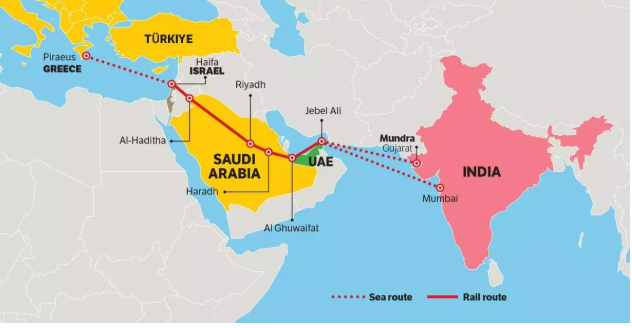
- It is a proposed corridor spanning ship, ship-rail, and road networks to connect India to the Gulf region and the Gulf region to Europe.
- It aims to integrate India, Europe, the Middle-East through UAE, Saudi Arabia, Jordan, Israel and the European Union.
Importance
- It is an important initiative that can add to India’s maritime security and faster movement of goods between Europe and Asia.
- It will reduce the logistics costs by up to 30% and transportation time by 40%.
Source :TH
Economic and Social Council (ECOSOC) of the United Nations
Syllabus: GS 2/IR
In News
- Recently, India was elected to the Economic and Social Council (ECOSOC) of the United Nations for the period from 2026-28.
About Economic and Social Council (ECOSOC)
- Established in 1945 by the UN Charter as one of the six principal organs of the United Nations.
- It is the United Nations’ main body for coordinating and reviewing policies on economic, social, and environmental issues, as well as overseeing the implementation of global development goals.
- It serves as a central platform for UN system activities in these fields, supervises subsidiary and expert bodies, and fosters debate and innovation on sustainable development.
- It has 54 Members, elected by the General Assembly for overlapping three-year terms.
National Polio Surveillance Network (NPSN)
Syllabus: GS2/ Health
Context
- The Government of India, in collaboration with the WHO has proposed a phased winding down of the National Polio Surveillance Network (NPSN), reducing from 280 in 2024-25 to 140 by 2026-27.
National Polio Surveillance Network (NPSN)
- Established in 1997 by WHO in coordination with the Ministry of Health and Family Welfare, is a nationwide surveillance system comprising over 200 field surveillance units.
- It played a pivotal role in India’s declaration as polio-free in 2014 and has since expanded its scope to include surveillance of measles, rubella, DPT (diphtheria, pertussis, tetanus)
| What is Polio? – Polio (poliomyelitis) is a highly contagious viral disease caused by the poliovirus, primarily affects children under the age of 5 and can lead to severe complications such as paralysis, disability, or even death. – Polio spreads mainly through fecal-oral transmission. 1. It can also be spread via respiratory droplets from coughing or sneezing. – There is no cure for polio, it can only be prevented through vaccines. – There are three types of wild poliovirus (WPV): type 1, type 2, and type 3. State of Polio – EradicationEradication: Type 2 wild poliovirus was declared eradicated in September 2015 and Type 3 wild poliovirus was declared eradicated in October 2019. – Only type 1 wild poliovirus remains.The WHO South-East Asia Region was declared free of poliovirus in 2014 and the WHO African Region was certified free of wild poliovirus (WPV) in 2020. – India was certified polio-free in March 2014 and continues to be so. – According to the WHO, Pakistan and Afghanistan are the only countries in the world where polio remains endemic. |
Source: TH
IISc Researchers Developed Novel Nanozyme to Prevents Excess Clotting
Syllabus: GS2/ Health
Context
- Researchers at the Indian Institute of Science (IISc) have developed a metal-based nanozyme to address abnormal blood clotting caused by conditions like Pulmonary Thromboembolism (PTE) and COVID-19-related thrombosis.
What is Blood Clotting (Haemostasis)?
- About: It is a natural physiological mechanism in which platelets and proteins in the blood work together to form clots that stop bleeding when a blood vessel is injured.
- This process is initiated and regulated by chemical signals or physiological agonists such as collagen and thrombin, which activate platelets and initiate a complex series of protein interactions.
- Concern: Controlled clotting is essential, but abnormal activation leads to thrombosis, which can cause strokes or heart attacks.
- In disorders like PTE or COVID-19, oxidative stress leads to elevated Reactive Oxygen Species (ROS).
- ROS over-activates platelets, causing excessive clotting or thrombosis.
Nanozymes Developed by IISc
- Nanozymes: Artificial nanomaterials that mimic antioxidant enzymes to control ROS.
- Purpose: Prevent over-activation of platelets and formation of dangerous clots.
- Synthesis: Redox-active nanomaterials were synthesized using controlled chemical reactions.
- Among various types synthesized and tested on human platelets, spherical vanadium pentoxide (V₂O₅) nanozymes were found most effective.
Source: TH
India’s Stainless Steel Industry
Syllabus: GS3/ Economy
Context
- At the Global Stainless Steel Expo 2025, industry leaders emphasized the need for a National Stainless Steel Policy to unlock its full potential in manufacturing, innovation, and global competitiveness.
About
- In FY 2024-25, India’s stainless steel consumption reached approximately 4.8 million tonnes, marking an 8% year-on-year increase.
- Over the past five years, consumption has grown by 84%, up from 2.61 million tonnes in FY 2020-21.
- Per capita consumption has also risen from 2.5 kg to 3.4 kg during this period.
Need for the a new policy
- Despite being the third-largest producer of stainless steel globally, India relies on imports for nearly 30% of its domestic consumption.
- In FY25, imports stood at approximately 1.73 million tonnes.
- The domestic production capacity is around 7.85 million tonnes annually, but current utilization is only about 60%, indicating significant underused potential.
| What is Stainless Steel? – Stainless steel is a type of alloy primarily made of iron and a minimum of 10.5% chromium, along with varying amounts of nickel, molybdenum, carbon, and other elements. – Key Properties: 1. Corrosion-resistant: The chromium forms a thin oxide layer that protects the steel from rusting. 2. Durable and strong: High tensile strength and can withstand high temperatures without losing strength. – Applications: 1. Construction: Bridges, cladding, roofing, and structural supports. 2. Kitchenware: Cutlery, sinks, utensils, and cookware. 3. Medical equipment: Surgical tools, implants, and hospital furniture. |
Source: TH
Two New Ramsar Sites Added To Ramsar List
Syllabus: GS3/ Environment
Context
- On World Environment Day 2025 (observed annually on June 5 since 1973 and led by the UN Environment Programme), two wetlands from Rajasthan—Khichan and Menar—were designated as new Ramsar Sites, taking India’s total sites to 91.
- Now Rajasthan now has four Ramsar sites, while Tamil Nadu continues to lead with the highest number (20 sites) in India.
What are the Wetlands?
- The Ramsar Convention’s definition for wetlands includes:
- “areas of marsh, fen, peatland or water, whether natural or artificial, permanent or temporary, with water that is static or flowing, fresh, brackish or salt, including areas of marine water the depth of which at low tide does not exceed six metres”.
- Human-made wetlands: Fish and shrimp ponds, farm ponds, irrigated agricultural land, salt pans, reservoirs, gravel pits, sewage farms and canals.
What is the Ramsar Convention?
- The Ramsar Convention is one of the oldest inter-governmental accords signed by member countries to preserve the ecological character of their wetlands of international importance.
- It was signed on February 2, 1971 in Ramsar, Iran and came into force in 1975.
- India became a signatory to the Ramsar Convention in 1982.
Newly Designated Ramsar Sites in Rajasthan
- Menar Wetland, Udaipur: A freshwater monsoon wetland complex comprising:
- Three ponds: Braham Talab, Dhand Talab, and Kheroda Talab
- Seasonal agricultural lands that flood during monsoon.
- Biodiversity: White-rumped vulture, Long-billed vulture, Indian flying foxes.
- Khichan Wetland (Phalodi) Jodhpur: Located in the northern Thar Desert. It comprises; Ratri Nadi (river), Vijaysagar Talab (pond), Riparian zones and scrublands.
- Biodiversity: It supports 150+ bird species and is notable for migratory demoiselle cranes with over 22,000 individuals arriving each winter.
