
UNFPA State of World Population 2025
Syllabus: GS1/ Human Geography
Context
- India’s population has reached an estimated 146.39 crore by April 2025, according to the United Nations report titled “State of the World Population 2025: The Real Fertility Crisis.”
India’s Status as per the 2025 Report
- Current Population Status: India is the world’s most populous country with 146.39 crore people, surpassing China (141.61 crore).
- The population is expected to peak at 170 crore before beginning to decline in approximately 40 years.
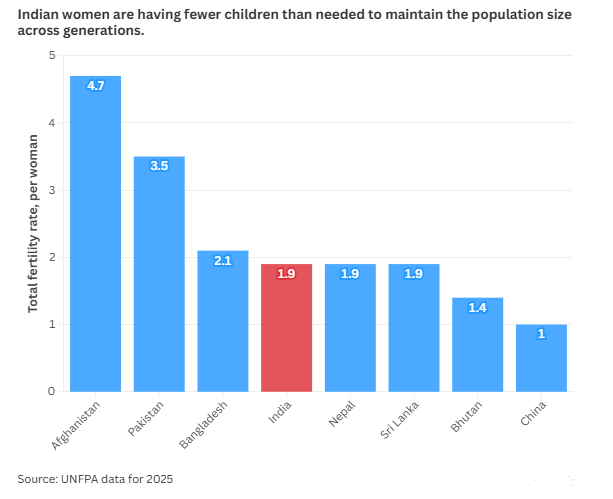
- Decline in Fertility Rate: TFR is now 1.9, below the replacement level of 2.1.
- Among the states that had fertility rates higher than national average were Bihar (2.98), Meghalaya (2.9), Uttar Pradesh (2.35), Jharkhand (2.26), and Manipur (2.2).
- Demographic Composition:
- Working-age population (15–64 years): 68%
- Children (0–14 years): 24%
- Youth (10–24 years): 26%
- Elderly (65+ years): 7% (expected to rise)
What is the Real Fertility Crisis?
- The real fertility crisis lies not in overpopulation or underpopulation, but in the inability of individuals to achieve their reproductive goals.
- It calls for reproductive agency—the freedom to make informed choices regarding sex, contraception, and family planning.
| Total Fertility Rate (TFR) – The average number of children born to a woman during her childbearing years. – A TFR of 2.1 is considered the replacement level needed to maintain a stable population. |
Reasons for Population Decline
- Access to Reproductive Healthcare: Contraceptive use and maternal health services have expanded.
- Female Education & Empowerment: Increased female literacy and workforce participation delay childbirth.
- Urbanization: Urban lifestyles reduce family size due to cost and space constraints.
- Economic Uncertainty: Rising cost of living and job instability discourage large families.
Significance of the Population decline
- Population Stabilization: A TFR of 2.0 indicates India is approaching population stabilization, which can ease pressure on natural resources, public services, and the environment.
- Improved Maternal health: Fewer childbirths per woman, coupled with delayed age of marriage, lead to reduced maternal mortality, better child care, and healthier families.
- Women Empowerment: Lower fertility rates reflect higher education levels, workforce participation, and greater autonomy among women, leading to better social and economic outcomes.
What are the concerns?
- Ageing Population: A rise in the elderly population will increase the dependency on the working population, demanding increased focus on pension, healthcare, and social welfare systems.
- Potential for Skewed Sex Ratios: In certain areas, fertility reduction without tackling gender bias can exacerbate sex-selective practices, leading to imbalanced sex ratios.
- Demographic Imbalance: States with vast fertility differences, potentially leading to interstate migration, cultural shifts, and resource strain in low-TFR states.
| Global scenario – In Japan the median age is over 48 years. This has led to prolonged economic stagnation, shrinking workforce, and increased public spending on pensions and healthcare. – China’s one-child policy, enforced from 1979 to 2015, significantly lowered the birth rate, leading to a rapidly aging population. – South Korea has one of the world’s lowest fertility rates, at 0.78 as of 2022. |
Concluding remarks
- India stands at a demographic crossroads. The decline in fertility is a testament to social progress in education, healthcare, and gender empowerment.
- However, as the focus shifts from population control to reproductive rights and demographic balance, India must prepare for a future that balances economic productivity, social support systems, and individual reproductive choices.
India’s IBC Framework: Balancing Resolution with Recovery
Syllabus: GS3/ Economy
Context
- Over eight years since its enactment, India’s Insolvency and Bankruptcy Code (IBC), 2016 has significantly altered the country’s credit landscape.
Insolvency and Bankruptcy Code (IBC) 2016
- IBC was introduced in 2016 to address rising Non Performing Assets and ineffective debt recovery mechanisms in India.
- It aims to overhaul the corporate distress resolution system, replacing debtor-controlled regimes with creditor-in-control mechanisms for time-bound resolutions.
- Objectives of the IBC resolution are;
- Business Revival: To save businesses through restructuring, changes in ownership, or mergers,
- Maximization of Asset Value: To preserve and maximize the value of the debtor’s assets,
- Promoting Entrepreneurship and Credit: To encourage entrepreneurship, improve credit availability, and balance the interests of stakeholders, including creditors and debtors.
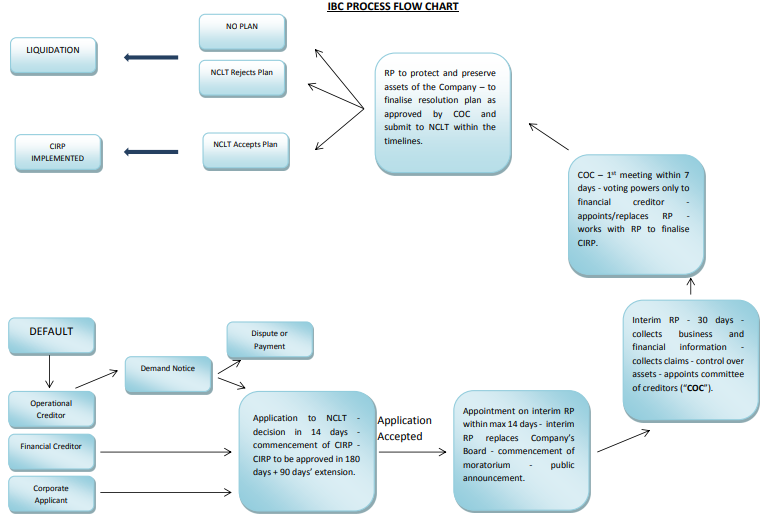
- Currently a maximum 330 days is allowed to find a resolution for a company admitted into the insolvency resolution process.
- Otherwise, the company goes into liquidation.
Resolution Process under the Insolvency and Bankruptcy Code (IBC)
- Initiation of Process: The creditor or the debtor can file an application for initiating the Corporate Insolvency Resolution Process (CIRP) before the Adjudicating Authority (NCLT).
- If the application is admitted by NCLT, it appoints an Interim Resolution Professional (IRP) to manage the affairs of the corporate debtor.
- A moratorium is declared, i.e., a legal stay on all recovery proceedings, foreclosures, etc., and public announcement is made to invite claims from creditors.
- The IRP identifies financial creditors and constitutes a Committee of Creditors (CoC), consisting mainly of financial creditors.
- The CoC may confirm the IRP as the Resolution Professional (RP) or appoint a new one.
- The RP invites resolution plans from interested resolution applicants. The CoC evaluates and negotiates the resolution plan, which include:
- Restructuring debt
- Changing management
- Mergers or acquisitions
- Reduction in interest rates, extension of loan tenure, etc.
- The resolution plan must be approved by at least 66% of the voting share of the CoC members.
- Once approved by CoC, the resolution plan is submitted to the NCLT for final approval. After approval by NCLT, the plan is binding on all stakeholders.
- Liquidation: If no resolution plan is approved within the prescribed timeline (330 days), or if the CoC decides to liquidate, then liquidation proceedings are initiated.
How has IBC helped improve resolutions?
- Since the introduction of IBC, India has improved its Ease of Doing Business ranking (basis World Bank report 2020), particularly in ‘Resolving Insolvency’, from 136 in 2016 to 52 in 2020.
- According to the Trend and Progress of Banking in India 2024 report published by the Reserve Bank of India, IBC accounted for 48% of the total recoveries made by banks in the financial year 2023–24.
What are the Concerns?
- Delays at the NCLT: A major challenge is the delay in completing insolvency cases.
- As of March 31, 2025, nearly 78% of ongoing Corporate Insolvency Resolution Process (CIRP) cases had exceeded the 270-day mark, despite a 330-day statutory limit.
- These delays often occur even after approval by the Committee of Creditors (CoC).
- Judicial interventions after resolution, such as in the Bhushan Power and Steel case, have raised concerns. Such interventions may discourage resolution applicants and reduce investor confidence.
- High Haircuts for Creditors: On average, creditors face haircuts of around 67%, recovering only about one-third of their admitted claims.
- The IBC lacks clear provisions for handling issues unique to modern firms, such as intellectual property valuation, employee claims, and technology continuity.
- This limits effective resolution of non-traditional enterprises.
- Capacity Constraints: The NCLT and NCLAT continue to suffer from manpower shortages and limited infrastructure.
Rapid Expansion of Gig Workforce in India
Syllabus: GS3/Economy
Context
- Recently, VV Giri National Labour Institute (VVGNLI) forecasted that the Gig workforce in India, making up 15% of the country’s total non-agricultural workforce.
- It builds on estimates from NITI Aayog’s 2022 gig workforce report.
Key Findings & Projections of Study
- Approximately 3 million workers were engaged in platform jobs across 11 major companies in 2020.
- It is expected to reach 23 million, making up 7% of the non-agricultural workforce by 2030, and is projected to more than double, reaching 62 million workers by 2047.
- It could generate up to 90.8 million jobs under aspirational growth scenarios, but economic and regulatory uncertainties could limit growth to 32.5 million.
- Sectoral Expansion: Initially concentrated in ride-sharing and food delivery, gig jobs have diversified into healthcare, education, creative services, and professional consulting with the rapid rise of app-based services and shifting work preferences.
Challenges and Regulatory Gaps
- Lack of Social Security: Gig workers often operate without health benefits, insurance, or retirement provisions.
- Long Working Hours and Stress: Unregulated working hours, erratic schedules, and heavy workloads lead to stress and health safety issues.
- Absence of Grievance Redressal Mechanisms: Workers who raise concerns or speak out against unfair practices often face retaliation, including instances like ID blocking.
Regulatory Considerations Highlighted in Study
- Worker Rights & Unionisation: The study calls for legal recognition of gig workers, including the right to unionize and collectively bargain.
- Transparency in task allocation algorithms is crucial for fair pay distribution and improved working conditions.
- Classification & Legal Protections: Countries like the UK, Canada, Spain, and France legally differentiate workers from independent contractors, ensuring access to labor protections and social security.
- India needs clear classification criteria to address worker vulnerabilities.
- Fair Wages & Algorithmic Accountability: The study recommends policies to:
- Ensure minimum income guarantees
- Regulate working hours
- Increase transparency in gig work assignments
- Enhance grievance redressal mechanisms
- National Registry for Gig Workers: A statutory registry (i.e. National Platform Worker Registry), managed by central and state governments, could help streamline social security access for gig employees.
- Integration of occupational health and safety standards in platform-based work.
Other Policies & Initiatives
- Code on Social Security, 2020: It aims to extend social security benefits to gig and platform workers.
- It proposes the creation of a social security fund, financed through contributions from aggregators, to provide health insurance, pension schemes, and accident coverage.
- Skill Development & Training: Programs focused on upskilling gig workers in areas like digital literacy, entrepreneurship, and specialized trades are being encouraged to enhance employability.
Blue NDC Challenge
Syllabus: GS3/ Environment
In News
- France and Brazil launched a landmark international initiative Blue Nationally Determined Contributions (NDC) Challenge.
About Blue Nationally Determined Contributions (NDC) Challenge
- It urges countries to embed ocean-centric actions into their climate plans, known as Nationally Determined Contributions (NDCs).
- The challenge aims to dramatically scale up ocean-focused climate action ahead of the 30th Conference of Parties (COP30) to the United Nations Framework Convention on Climate Change (UNFCCC) in Belem, Brazil.
- The initiative is supported by various organizations like Ocean Conservancy, the Ocean & Climate Platform, the World Resources Institute (through the Ocean Resilience and Climate Alliance – ORCA), and WWF-Brazil.
Significance of Oceans in Climate Action
- Carbon Sequestration: Oceans absorb over 25% of global CO₂ emissions and 90% of excess heat generated by human activity, making them critical in mitigating climate change.
- Blue Carbon Ecosystems: Coastal ecosystems like mangroves, seagrasses, and salt marshes store carbon at a rate up to five times higher than terrestrial forests.
- Biodiversity: Oceans are home to a vast diversity of life forms, and protecting marine ecosystems is essential for maintaining biodiversity, which in turn ensures the resilience of the ecosystem to climate impacts.
- Livelihood and Food Security: Oceans support over 3 billion people worldwide who depend on marine resources for food, livelihoods, and economic activities.
Initiatives for Ocean Conservation
- Ocean Cleanup Project: Launched in 2013, The Ocean Cleanup is a non-profit organization focused on developing advanced technologies to remove plastic pollution from the ocean.
- United Nations Decade of Ocean Science for Sustainable Development (2021-2030): Aims to promote ocean science as a key tool for sustainable development, environmental protection, and climate action.
- High Seas Treaty (Agreement on Biodiversity Beyond National Jurisdiction – BBNJ Agreement): Adopted in 2023, this landmark legally binding agreement aims to protect marine biodiversity in international waters.
- Blue Carbon Initiatives: It refers to the carbon captured by coastal and marine ecosystems such as mangroves, seagrasses, and salt marshes.
- National Marine Protected Areas (MPAs) Network: It aims to conserve critical marine and coastal habitats like coral reefs, mangroves, and seagrasses.
- Integrated Coastal Zone Management (ICZM): To address the challenges of coastal ecosystem degradation, including erosion, overfishing, and pollution.
Challenges and Barriers
- Financial Constraints: Many developing nations may struggle to secure the necessary funding to implement ocean-based climate solutions.
- Technical and Scientific Challenges: Ocean-based solutions are complex and require sophisticated scientific knowledge to implement effectively.
Ocean Acidification
Syllabus: GS3/ Environment
Context
- A recent study has revealed that ocean acidification has breached its planetary boundary, posing grave threats to marine ecosystems and global climate stability.
What is Ocean Acidification?
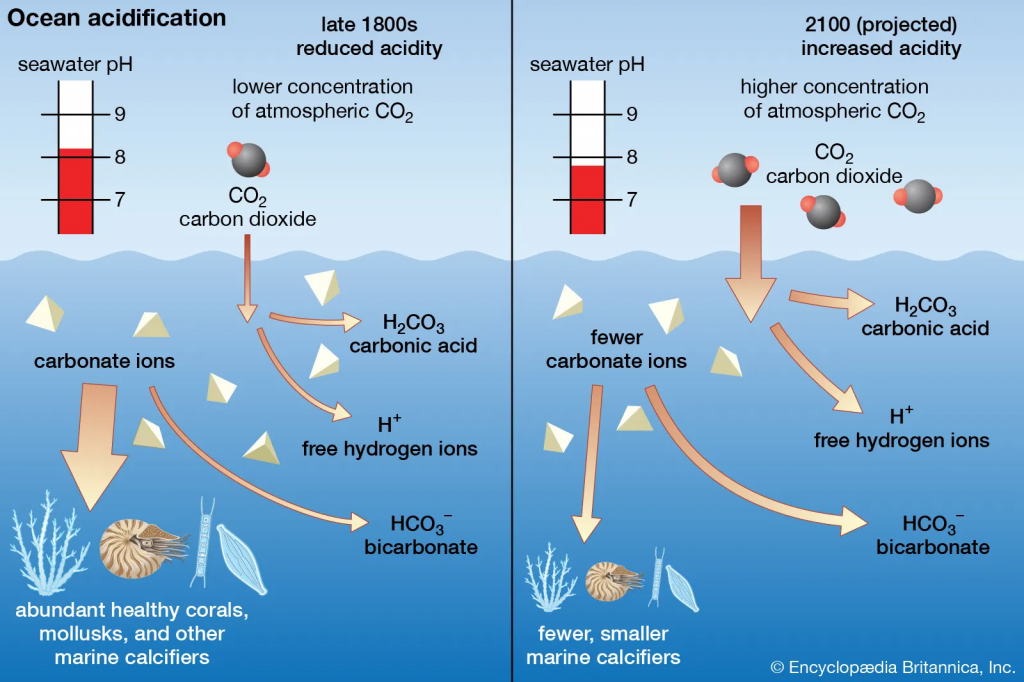
- Ocean acidification refers to the ongoing decrease in the pH of Earth’s oceans, caused by the uptake of carbon dioxide (CO₂) from the atmosphere.
- When CO₂ dissolves in seawater, it forms carbonic acid, which lowers ocean pH and reduces calcium carbonate levels – essential for many marine organisms.
Planetary Boundary Breach
- Planetary boundaries are thresholds beyond which the Earth’s vital systems may no longer maintain a stable environment.
- The study finds that by 2020, the average global ocean conditions had already fallen 20% below pre-industrial calcium carbonate saturation, crossing the safe threshold for acidification.
- At 200 metres below the surface, 60% of global waters had breached the “safe” limit for acidification.
Impacts of Ocean acidification
- Calcifying Species Affected: Corals, oysters, mussels, and pteropods (sea butterflies) are most vulnerable.
- Acidification weakens shells and skeletons, reduces reproduction, slows growth, and increases mortality.
- Fisheries and Livelihoods: Decline in fish nursery grounds affects food security and economic stability of coastal communities.
- Tourism Sector: Coral reef degradation affects tourism and recreational diving industries.
- Climate Feedbacks: Damage to ocean ecosystems like plankton may affect carbon sequestration capacity of oceans. This could amplify global warming over time.
- Social impacts: Climate-linked migration and livelihood loss may increase geopolitical tensions. Rising unemployment in coastal sectors may trigger social unrest.
Initiatives to Tackle Ocean Acidification
- Global Ocean Acidification Observing Network (GOA-ON): GOA-ON is a collaborative international network of 367 members from 66 countries, aimed at enhancing the monitoring and understanding of ocean acidification across estuarine, coastal, and open ocean systems.
- UN Decade of Ocean Science for Sustainable Development (2021–2030): Proclaimed in 2017 by the United Nations General Assembly, it aims to reverse the decline the ocean health through;
- Stimulating scientific research, technological innovation, and policy-relevant knowledge.
- Supporting countries to achieve SDG-14 (“Life Below Water) and broader climate resilience.
- Intergovernmental Oceanographic Commission (IOC) of UNESCO: Under its Global Ocean Observing System (GOOS), it supports real-time ocean monitoring including pH and CO₂ measurements.
- Blue Carbon Initiatives provides research, policy advice, and financing mechanisms to promote blue carbon strategies globally.
- Blue Carbon refers to the carbon stored in coastal and marine ecosystems such as mangroves, salt marshes, and seagrasses.
Way Ahead
- Policy and Governance: Mainstream ocean acidification into national climate and ocean policies.
- Prioritise Marine Spatial Planning and Integrated Coastal Zone Management.
- Local Adaptation and Conservation: Protect and restore resilient ecosystems, such as mangroves and seagrasses.
- Implement Marine Protected Areas (MPAs) in regions of high vulnerability.
Concluding remarks
- Ocean acidification is not just a marine problem, it is a multi-dimensional crisis affecting biodiversity, economies, food systems, and climate resilience.
- Its silent but accelerating pace demands urgent and coordinated policy responses globally and nationally.
Axiom-4 Mission to the International Space Station (ISS)
Syllabus :GS3/Space
In News
- The launch of the Axiom-4 mission has been postponed again due to a technical issue with SpaceX’s Falcon 9 rocket.
| Falcon 9 is a reusable, two-stage rocket designed and manufactured by SpaceX for the reliable and safe transport of people and payloads into Earth orbit and beyond. |
The Axiom-4 (Ax-4) mission
- It will spend 14 to 21 days on the ISS, conducting over 60 experiments in collaboration with 31 countries, covering fields like biomedical research, Earth observation, and materials science.
- Some experiments involve ISRO, offering India key insights for its upcoming Gaganyaan mission, now expected in 2027.
- The Ax-4 crew includes members from India, Poland, and Hungary, marking each nation’s first mission to the space station in history and second government-sponsored human spaceflight mission in over 40 years.
- Shubhanshu Shukla will be India’s second national astronaut to go to space since 1984.
- The mission highlights Axiom Space’s role in advancing international access to low-Earth orbit.
| The International Space Station (ISS) – It was designed between 1984 and 1993, with construction of its components beginning in the late 1980s across the US, Canada, Japan, and Europe. – The ISS program unites international flight crews, various launch vehicles, worldwide operations and training facilities, communication networks, and the global scientific research community. |
Axiom’s Journey to ISS
- To reach the ISS, the mission must launch within a carefully calculated window that aligns the spacecraft’s trajectory with the ISS’s orbit.
- After liftoff, Falcon 9’s first stage separates and returns to Earth, while the second stage continues the ascent before releasing the Dragon capsule into orbit.
- The ISS, located about 400 km above Earth and moving at 28,000 kmph, requires the Dragon to gradually raise its orbit and adjust its path using 16 Draco thrusters via a series of phasing maneuvers.
- Unlike Russia’s faster Soyuz craft, Dragon typically takes about 28 hours to reach the ISS due to its newer design and the need to conduct in-flight tests.
- As it nears the station, Dragon performs a final maneuver, enters the 200-meter “keep-out sphere,” and uses GPS, cameras, and Lidar for autonomous docking.
- Once docked, safety checks are completed over 1–2 hours before the astronauts can board the ISS.
Miscellaneous
Sant Kabir Das
Syllabus: GS1/History
In News
- The Prime Minister paid tribute to Sant Kabir Das on his birth anniversary (11th June).
Sant Kabir Das
- Early Life:
- He was a 15th-century Indian poet and mystic.
- He was born in Kashi (Varanasi), though details of his life are largely based on legends and scattered sources like the Bijak, Adi Granth, and Dabistan-i-Tawarikh.
- It is said to have been born to a Brahmin widow and later adopted by Nima, the wife of a Muslim weaver.
- He developed a deep spiritual inclination and sought initiation under the saint Ramananda.
- Teaching and Belief:
- His philosophy was shaped by elements of Upanishadic non-dualism, Islamic monism, and the Bhakti tradition.
- He strongly rejected caste discrimination, idol worship, and empty rituals, emphasizing devotion, inner truth, and moral living instead.
- He wrote in a mix of local dialects—Hindi, Bhojpuri, Punjabi, Urdu, and Persian—making his poetry accessible yet rich in mystical symbolism.
- He Influenced figures like Guru Nanak and movements like the Kabir Panth.
- He is revered in Hinduism, Sikhism, and Sufism and his verses continue to inspire with their focus on inner truth and enlightenment.
- Contributions:
- He is known for his simple and profound couplets, “Kabir ke Dohe,” which are rich in mystical symbolism and everyday metaphors.
- The Kabir Bijak is preserved by the Kabirpanth (the path or sect of Kabir) in Varanasi and elsewhere in Uttar Pradesh.
- Kabir Granthavali is associated with the Dadupanth in Rajasthan, and many of his compositions are found in the Adi Granth Sahib.
Hodeidah Port
Syllabus: GS1/ Places in News
In News
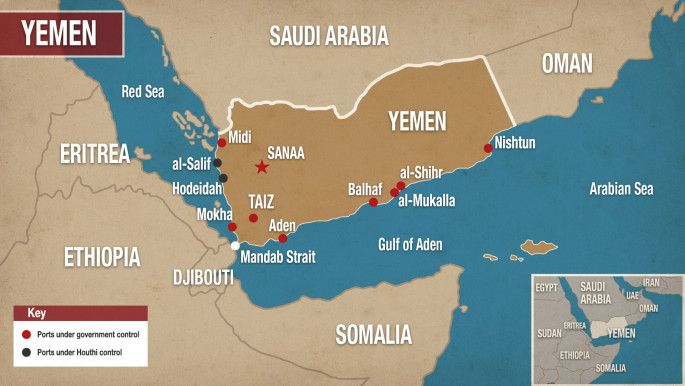
- Israel conducted its first-ever naval strike on Yemen’s Hodeidah Port, targeting two key piers.
About Hodeidah Port
- Location: Yemen’s Hodeidah Port is situated on the western coast of Yemen, along the Red Sea on the Tihāmah coastal plain.
- Historical Context: The port has historical significance, having been shelled during the Italo-Ottoman War (1911–1912). Its location along the Red Sea has made it a focal point in regional power struggles
- Significance: Hodeidah Port is the largest and most vital seaport for Yemen, facilitating the import of essential goods, including humanitarian aid, fuel, and commercial imports.
Supreme Court Ruling on Narco Test
Syllabus: GS2/ Polity and Governance
Context
- The Supreme Court has ruled that narco-analysis tests cannot be conducted on accused persons without their free and informed consent, reaffirming that such practices violate fundamental rights under the Indian Constitution.
Narco-Analysis

- It involves the injection of a drug called sodium pentothal into the accused, inducing a hypnotic or sedated state.
- The assumption is that a subject in such a state is less inhibited and is more likely to divulge information.
- Because the drug is thought to weaken the subject’s resolve to lie, it is often referred to as a “truth serum.”
Supreme Court ruling
- The Court held that the use of involuntary narco-analysis:
- Violates Article 20(3): Protection against self-incrimination.
- Violates Article 21: Right to life and personal liberty, including the right to privacy.
- The Court emphasized that technological advancement in investigation cannot override constitutional protections.
- Earlier in 2010, the SC in the case of Selvi v. State of Karnataka ruled that no lie detector tests should be administered “except on the basis of consent of the accused” in accordance with the fundamental right against self-incrimination as enshrined under Article 20(3) of the Constitution.
National Investment and Infrastructure Fund Limited (NIIF)
Syllabus: GS3/ Economy
Context
- The Union Minister for Finance and Corporate Affairs chaired the 6th meeting of the Governing Council (GC) of the National Investment and Infrastructure Fund Limited (NIIF) in New Delhi.
About
- NIIF was established in 2015 by the Government of India as a sovereign-linked alternative investment platform.
- Objective: It aims to attract long-term capital from international and domestic investors into infrastructure and other high-priority sectors of the Indian economy.
- NIIF is registered with the Securities and Exchange Board of India (SEBI) as an Alternative Investment Fund (AIF).
- The Government of India holds a 49% share in NIIF, while the remaining is open to other institutional investors.
- The Governing Council of NIIF is chaired by the Union Finance Minister.
| Alternative Investment Funds (AIFs) – AIFs are privately pooled investment vehicles in India, regulated by the Securities and Exchange Board of India (SEBI). – They collect capital from sophisticated investors, both Indian and foreign, and invest it according to a defined policy. – Regulated entities like banks and NBFCs often invest in AIFs. |
