
PM Visit To Cyprus
Syllabus: GS2/IR
In News
- Recently, the Prime Minister of India visited Cyprus, marking the first visit by an Indian PM to the country in over 20 years.

Key Highlights of the Visit
- Strategic Roadmap: A five-year strategic roadmap will be developed to steer bilateral cooperation.
- Alignment between Cyprus Vision 2035 and India’s Viksit Bharat 2047 — both aiming for inclusive, tech-driven, sustainable development.
- Economic & Trade Relations: India-Cyprus-Greece Business & Investment Council launched earlier in 2025.
- PM Modi emphasized India-EU Free Trade Agreement (FTA) — target: by end of 2025.
- Grand Cross of the Order of Makarios III: PM Modi was awarded Cyprus’ highest civilian honour.
- Named after Cyprus’ first President, it is awarded to heads of state and leaders of merit.
Historical Linkages
- India and the Republic of Cyprus (RoC) share a long-standing relationship built on friendship, mutual respect, and cooperation, particularly in international forums.
- Diplomatic ties were established in 1962, two years after Cyprus gained independence.
- The bond was rooted in shared ideals championed by leaders like Archbishop Makarios and Jawaharlal Nehru, both pioneers of the Non-Aligned Movement.
- Cyprus is among the top 10 investors in India with cumulative investments of USD 14.65 Billion during April 2000 – March 2025 .
International fora
- They continue to align closely on major global issues and collaborate actively in the UN, Commonwealth, and other platforms.
- India supports a peaceful resolution to the Cyprus issue based on UN Security Council resolutions, international law, and EU principles, advocating for a bi-zonal, bi-communal federation.
- In return, the Republic of Cyprus has been a dependable ally, backing India’s bid for a permanent seat on the UN Security Council and supporting the India-US Civil Nuclear Agreement within the Nuclear Supplier Group (NSG) and International Atomic Energy Agency (IAEA), aiding India’s energy and economic growth.
Economic and Commercial Relations
- India and Cyprus have steadily strengthened their economic and commercial ties, focusing on boosting bilateral trade and investment.
- Key Indian exports to Cyprus include pharmaceuticals, textiles, iron & steel, ceramics, machinery, and chemicals, while Cyprus exports pharmaceuticals, beverages, and manufactured goods to India.
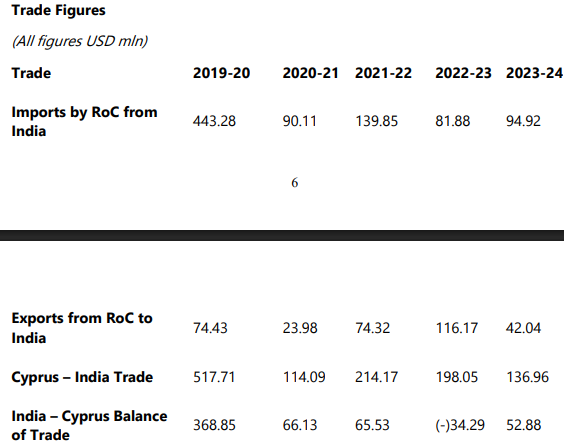
- Despite the impact of the COVID-19 pandemic, bilateral trade in 2023–24 reached USD 137 million.
Defence Ties
- India and the Republic of Cyprus have strengthened their defence cooperation through key agreements.
- An MoU on Defence Cooperation was signed in December 2022 during the Indian External Affairs Minister’s visit to Cyprus, followed by the signing of the Bilateral Defence Cooperation Programme (BDCP) for 2025 in January 2025.
Culture
- India and Cyprus share strong cultural ties rooted in shared values and traditions. A Cultural Cooperation Agreement was signed in 1980, and both nations regularly exchange cultural groups and host events like National Days and International Day of Yoga in Cyprus.
- Symbolizing mutual respect, India named an avenue in New Delhi after Archbishop Makarios, the first President of Cyprus.
Importance
- Cyprus is considered a strong and dependable ally of India, supporting its bid for a permanent seat on the UN Security Council and backing the India-US Civil Nuclear Agreement.
- Strategically, Cyprus is vital to India as part of the India-Middle East-Europe Economic Corridor (IMEC) and will hold the EU Council Presidency in 2026, enhancing its importance in India’s efforts to strengthen trade and security ties with Europe.
- Cyprus has long-standing tensions with Turkey (a vocal ally of Pakistan). India’s deepening Cyprus ties subtly counterbalance Turkish lobbying against India at the OIC and UN.
Artificial Intelligence (AI) and Biomanufacturing
Syllabus: GS3/Role of IT; Science & Technology
Context
- As global industries increasingly leverage AI for precision-driven bioproduction, India’s efforts are becoming more evident, though challenges remain, particularly in policy frameworks and innovation.
What is Biomanufacturing?
- It involves the use of living cells and biological systems to produce commercial goods — ranging from life-saving vaccines and biologics to biofuels, enzymes, biodegradable plastics, and advanced materials.
- The convergence of synthetic biology, artificial intelligence, and industrial biotechnology has expanded its scope across sectors including healthcare, energy, food processing, and materials science.
- India produces over 60% of global vaccines, showcasing its industrial biomanufacturing strength, and India is often termed as the ‘Pharmacy of world’.
Role of AI in Biomanufacturing
- AI-Powered Process Optimization: AI-driven automation can adjust variables such as temperature, pH, and nutrient supply, improving efficiency and reducing costs.
- Accelerated Drug Discovery & Biopharmaceutical Production: AI expedites molecular modeling, allowing researchers to predict protein structures and optimize drug formulations.
- In vaccine production, AI helps analyze genetic data to design mRNA-based vaccines more rapidly, improving pandemic preparedness.
- Predictive Maintenance & Smart Manufacturing: AI can forecast equipment failures in biomanufacturing plants, reducing downtime and optimizing resource utilization.
- AI-enabled robotics assist in precision tasks such as bioassembly and cell culture handling.
- Supply Chain & Logistics Optimization: AI-driven platforms enhance the transportation and storage of biological products by predicting demand fluctuations and optimizing cold-chain logistics.
- Blockchain integration with AI ensures transparency in biomanufacturing supply chains.
Challenges in Policy and Regulation
- Data & AI Integration Gaps: AI-driven biomanufacturing requires large-scale bioinformatics infrastructure, predictive modeling tools, and real-time analytics.
- India’s AI in biotech regulations remains fragmented, posing hurdles for seamless integration.
- Funding & R&D Ecosystem: Biomanufacturing demands high capital investment, particularly for AI-driven automation and synthetic biology research.
- While initiatives like Biotechnology Industry Research Assistance Council (BIRAC) support innovation, private sector participation remains limited compared to nations like the US and China.
- Intellectual Property & Ethical Regulations: AI-generated biotech innovations challenge traditional patent laws.
- India needs to clarify IP regulations on AI-assisted bioengineering, ensuring ethical practices without stalling innovation.
- Manufacturing Scalability & Workforce Upskilling: AI-powered biomanufacturing requires advanced robotics and computational biology expertise.
- Upskilling initiatives must align with demand, fostering an AI-ready workforce.
Key Government Initiatives
- National Biotechnology Development Strategy: Focuses on bioindustrial growth, but AI integration requires more direct incentives.
- India hosts over 5,300 biotech startups (as of 2024), and aims to scale this to 50,000 by 2030.
- National Biomanufacturing Policy (Proposed): The Department of Biotechnology (DBT) has drafted a policy to promote indigenous biomanufacturing capabilities, reduce dependence on petrochemicals, and enhance sustainability.
- Biomanufacturing Mission (2023): It aims to support R&D, scale bio-based industrial production, and attract global investments.
- PLI Scheme for Biotech: It incentivizes domestic production of biopharmaceuticals, enzymes, and fermentation-based inputs.
- Regulatory Framework for AI & Biotechnology: Addressing ethical concerns, data security, and AI-powered genetic research will be crucial.
- Academic-Industrial Collaboration: Leading institutions like IISc, IITs, and DBT-supported Biotech Parks have become innovation engines for biomanufacturing solutions.
Policy Recommendations
- Establish AI-Biomanufacturing Regulatory Framework: A dedicated policy mechanism for AI-driven bioengineering can streamline approvals and address ethical concerns.
- Enhance Public-Private Partnerships: Encouraging private investments in AI-powered biomanufacturing can accelerate infrastructure development.
- Strengthen AI & Biotech R&D Ecosystems: Increased funding in genomic AI, predictive biomanufacturing tools, and quantum-powered bioinformatics can drive next-gen solutions.
- Develop AI-Based Compliance Tools: AI-assisted tracking and regulatory automation can enhance safety protocols while ensuring ethical biotech applications.
Road Forward
- Strengthen biofoundries and shared infrastructure for rapid prototyping.
- Promote public-private partnerships to de-risk R&D and scale-up investments.
- Foster green supply chains using circular economy principles.
- Streamline approval and IP frameworks for synthetic biology and AI-driven innovations.
Insurance Sector of India
Syllabus: GS3/Economy
Context
- Chairman and MD of state-owned General Insurance Corporation of India (GIC Re), says the biggest problem for the insurance industry is fraud.
Indian Insurance Sector (FY24)
- Market Performance: Total insurance premium grew by 7.7%, reaching ₹11.2 lakh crore in FY24.
- Reflects continued momentum despite global and domestic economic volatility.
- Insurance Penetration: Overall insurance penetration declined slightly from 4.0% in FY23 to 3.7% in FY24.
- Life Insurance Penetration dropped from 3.0% to 2.8%.
- Non-Life Insurance Penetration remained stable at 1.0%.
- Future Outlook: The Swiss Re Institute has projected India’s insurance sector to grow at a rate of 11.1% and is expected to become the fastest-growing market among the G20 nations over the next five years (2024-2028).
- An expanding middle class, technological advancements, and supportive regulatory measures will likely drive this growth.
- Insurance Companies: At present, there are 25 life insurance companies, and 34 general insurers in the country.
- Among the life insurers, Life Insurance Corporation (LIC) is the sole public sector company.
- In addition to these, there is a sole national re-insurer, namely General Insurance Corporation of India (GIC Re).
| Insurance Regulatory and Development Authority of India (IRDAI) – IRDA was constituted in 1999 as an autonomous body after the recommendations of the Malhotra Committee report to regulate and develop the insurance industry. 1. It was incorporated as a statutory body in 2000. – The Authority has the power to frame regulations under Section 114A of the Insurance Act, 1938. – Objective: The main objective of the IRDA is to protect the interests of the policyholder and regulate the insurance industry. – IRDAI is under the jurisdiction of the Ministry of Finance, Government of India. – It has framed regulations ranging from registration of companies for carrying on insurance business to protection of policyholders’ interests. |
Challenges faced by the Sector
- Low Penetration: With an overall insurance penetration rate of 3.7 per cent, below the global average of 7 per cent, there is a notable gap in coverage that presents opportunities for insurers to expand their reach.
- Claims Settlement Issues: Delays, rejections, and lack of transparency in the claims process create customer dissatisfaction.
- Distribution Limitations: There is limited reach in rural areas, and insurance distribution remains urban-centric, relying heavily on agents.
- Affordability: High premiums and the underpricing of certain products affect accessibility for low-income groups.
- Fraud and Mis-selling: Fraudulent claims and mis-selling by agents are common problems, damaging customer trust.
- Rising Costs: Increasing medical and claims costs impact affordability and profitability for insurers.
Initiatives Taken by the Government of India
- Last year, the Union Finance Ministry released a consultation paper proposing to raise the Foreign Direct Investment (FDI) limit in the insurance sector from 74% to 100%.
- The FDI limit in the insurance sector was previously increased from 49% to 74% in February 2021.
- Empowered the Insurance Regulatory and Development Authority of India (IRDAI) for:
- Regulating, promoting, and ensuring orderly growth of the insurance industry.
- Improving customer grievance redressal.
- Simplifying product approvals.
- Bima Sugam initiative: It aims to empower all insurance stakeholders by connecting them all through a single platform.
- The platform uses advanced technology to simplify processes for insurance companies, policy holders’, intermediaries, insurance repositories and external data sources etc.
- Bima Vahak: Focus on last-mile delivery of insurance in rural areas through trained agents (Bima Vahaks).
- Mandatory e-insurance: IRDAI mandated the digitisation of insurance policies across all categories to streamline processes, enhance efficiency, and improve accessibility for policyholders.
- IRDAI has decreased the health insurance waiting period from 48 months to 36 months.
- The waiting period refers to the duration during which policyholders are not eligible to claim benefits for any pre-existing health conditions they might have during the purchase of the insurance policy.
Way Ahead
- By targeting tier 2 and 3 cities and rural areas where awareness and accessibility are limited, insurers can tap into new customer segments and stimulate Growth.
- Increase Financial Literacy: Conduct educational programs to enhance understanding of insurance products among the population.
- Simplify Regulations: Streamline regulatory processes to make product approvals faster and less complex, while ensuring consumer protection.
- Improve Claims Settlement: Ensure faster, transparent, and more efficient claims processing to build trust and reduce disputes.
- Expand Distribution Networks: Leverage digital platforms and mobile technology to reach underserved rural and semi-urban areas.
- Enhance Health Coverage: Expand coverage to include critical illnesses, hospitalization, and post-treatment care.
How DNA Identification Works?
Syllabus: GS3/Science and Technology
Context
- After the Air India Boeing 787 Dreamliner crash in Ahmedabad, authorities are using DNA analysis to identify the remains of those killed in the accident.
About
- With the exception of identical twins, every person has a unique DNA that is present in nearly every cell of their body.
- DNA identification is the gold standard for identifying human remains, especially after mass fatality events in which bodies might not be easy to identify otherwise.
Challenges in DNA Identification
- DNA Degradation: It begins immediately after death and affects analysis accuracy.
- Factors Impacting Degradation:
- Tissue type: Soft tissues degrade faster than hard tissues (bones, teeth).
- Environmental conditions: DNA survives better in cold and dry conditions than in hot and humid ones.
- Sample Collection Timeline: Delays can further degrade DNA.
Preservation of DNA Samples
- Samples have to be collected as soon as possible, and once collected, stored in a cool and dry environment.
- They should ideally be frozen at minus 20 degrees Celsius, or, in the case of soft tissues (skin, muscles, etc.), they may be stored in 95% ethanol.
Methods of DNA Analysis
- Reference DNA is needed to match unidentified remains.
- Ideal sources: Parents and children (share 50% of DNA).
- Other possible sources: Maternal or paternal relatives depending on the method used.
- Depending on the quality of the collected DNA, scientists can choose between a number of different methods of analysis.
- Short Tandem Repeat (STR) Analysis: Its basis is the short repeating DNA sequences.
- STRs are typically found on nuclear DNA which is located within the nucleus of a cell.
- Use: High variability among individuals makes STR ideal for identification.
- Limitation: Requires well-preserved nuclear DNA.
- Mitochondrial DNA (mtDNA) Analysis: Found in mitochondria (outside the nucleus), this method is used when nuclear DNA is degraded or unavailable.
- mtDNA is passed down by the mother, unchanged, to all her children. This means that samples from a person’s remains can be matched with the maternal line of inheritance.
- Advantage: Easier to recover from degraded samples due to multiple copies per cell.
- Y-Chromosome STR Analysis: Analyses STRs on the Y chromosome.
- Inheritance: Passed from father to son.
- Application: Matches possible with any paternal line male relative (e.g., father, brother, paternal uncle).
- Single Nucleotide Polymorphism (SNP) Analysis: It is based on the variation at a single base (A, C, G, T).
- It is applied when DNA is highly degraded.
- Sources for reference: Victim’s personal items like toothbrushes or hairbrushes.
- Limitation: Less effective than STR analysis.
Conclusion
- DNA identification is a critical tool in disaster victim identification. Each method has strengths and limitations based on the quality of DNA, type of tissue, and available reference material.
- The choice of method depends on the condition of remains and availability of relatives or personal items.
Miscellaneous
Cash Plus Model Pushes Up Early Breastfeeding Rate in Rajasthan
Syllabus: GS1/ Issues Related to Women and Children, GS2/ Governance
Context
- Rajasthan’s Cash Plus Model, the first in India to combine Direct Benefit Transfers (DBT) with Social and Behaviour Change Communication (SBCC), has led to a 49% rise in early breastfeeding.
About the Cash Plus Model
- Complementary to PMMVY: The model builds on the existing Pradhan Mantri Matru Vandana Yojana, which provides financial assistance to women during their first pregnancy.
- The Cash Plus model extends these benefits to second-time mothers, filling a major policy gap.
- Integrated Behavioural Change Strategy: It combines cash transfers with home-based counselling, nutrition education, community engagements, and digital outreach to promote healthy practices.
- Phased Implementation: Launched in 2020 as a pilot in five tribal districts, the scheme was scaled up state-wide in 2022.
- Financial Commitment: The annual budget for the scaled-up version is ₹210 crore, targeting around 3.5 lakh second-time pregnant women every year.
Vietnam officially Joins BRICS As ‘Partner Country’
Syllabus: GS2/IR
Context
- Vietnam has officially joined BRICS as a partner country.
About
- Vietnam has now become the 10th BRICS partner.
- The partner country category was created at the 2024 BRICS Summit in Kazan, Russia.
- The current list of partners includes Vietnam, Belarus, Bolivia, Kazakhstan, Cuba, Malaysia, Nigeria, Thailand, Uganda, and Uzbekistan.
About BRICS
- BRICS is an acronym that refers to a group of five major emergingnational economies:Brazil, Russia, India, China, and South Africa.
- Egypt, Ethiopia, Iran, Indonesia, Saudi Arabia, and the United Arab Emirates have joined BRICS as new full members .
- The term ‘BRIC’ was originally coined by economist Jim O’Neill in 2001.
- Origin: As a formal grouping, BRIC started after the meeting of the Leaders of Russia, India and China in St. Petersburg on the margins of the G8 Outreach Summit in 2006.
- The grouping was formalized during the 1st meeting of BRIC Foreign Ministers on the margins of UNGA in New York in 2006.
- Initially, the grouping was termed BRIC as South Africa was inducted in 2010 and from there on it has been referred to as BRICS.
- Summits: The governments of the BRICS states have met annually at formal summits since 2009.
- BRICS countries have come together to deliberate on important issues under the three pillars of:
- political and security,
- economic and financial and
- cultural and people-to-people exchanges.
- New Development Bank: Formerly referred to as the BRICS Development Bank, is a multilateral development bank established by the BRICS states.
- The Bank shall support public or private projects through loans, guarantees, equity participation and other financial instruments.
Step-and-shoot spot-scanning proton arc therapy (SPArc)
Syllabus :GS3/Science and Tech
In News
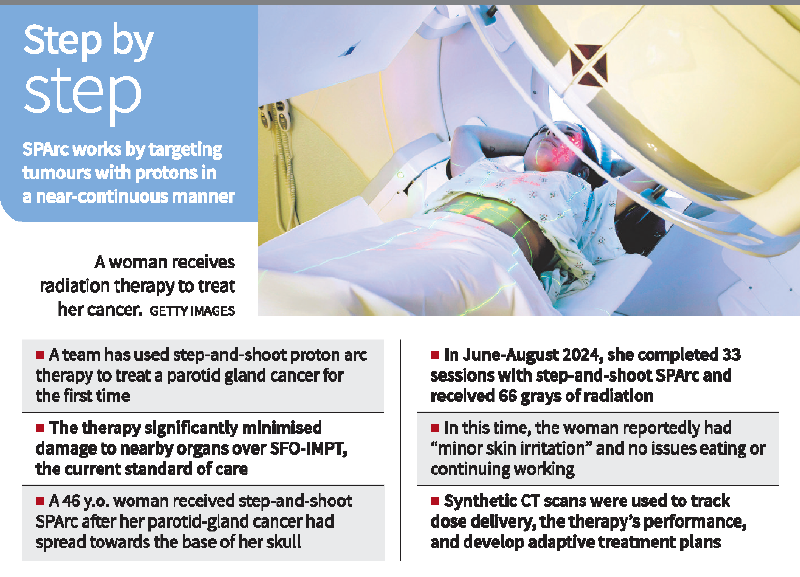
- A team at Corewell Health William Beaumont University Hospital in the U.S. for the first time successfully used step-and-shoot spot-scanning proton arc therapy (SPArc) to treat Adenoid cystic carcinoma.
| Adenoid cystic carcinoma (ACC) – It is a rare cancer that typically begins in salivary glands but can also occur in areas like the respiratory tract and tear glands. – It grows slowly but can spread to nearby nerves and other body parts. – Symptoms vary by tumour location and may include swelling, pain, and difficulty swallowing or breathing. – It is difficult to treat due to its nerve invasion and high chance of recurrence. |
About the Threapy
- Step-and-shoot spot-scanning proton arc therapy (SPArc) reduced radiation exposure to vital organs like the brainstem, optical chiasm, and spinal canal significantly compared to standard SFO-IMPT therapy.
- It uses proton beams with varying energy layers to precisely ‘paint’ the tumour while machine learning tools ensure accurate dose delivery despite changes like weight loss.
Relevance
- SPArc holds great potential for treating tumours in complex anatomical areas, though concerns remain about its high cost and the risk of under-treating due to tumour movement or shrinkage during therapy.
- Although fully dynamic SPArc showed slightly better results, it is still in development.
Rubber Board
Syllabus :GS3/Economy
In News
- The Union Ministry of Commerce and Industry approved the appointment of staff members to the Rubber Board to several long-pending vacancies.
Rubber Board
- It is a statutory organization constituted under Section (4) of the Rubber Act, 1947 and functions under the administrative control of the Ministry of Commerce and Industry.
- It is headed by a Chairman appointed by the Central Government and has 28 members representing various interests of the natural rubber industry.
- The Board’s headquarters is located at Kottayam in Kerala.
Functions
- The Board is responsible for the development of the rubber industry in the country by assisting and encouraging research, development, extension and training activities related to rubber.
- It also maintains statistical data of rubber, takes steps to promote marketing of rubber and undertake labour welfare activities.
Flue Gas Desulphurisation
Syllabus: GS3/Environment
Context
- A committee chaired by Principal Scientific Advisor (PSA) Ajay Sood, has recommended that India do away with mandating Flue Gas Desulphurisation (FGD) units in all coal-fired thermal power plants (TPPs).
About
- In 2015, the Union Environment Ministry issued a policy that mandated all 537 coal-fired TPPs in India to install FGD units to reduce SO2 emissions.
- In 2025, a study commissioned by the PSA’s office concluded that the Environment Ministry should roll back its 2015 policy mandating all of India’s TPPs to install FGD units.
- Installing FGD units is a costly affair. According to the Central Electricity Authority, FGD costs approximately ₹1.2 crore per MW to install.
Flue Gas Desulphurisation (FGD)
- Flue gas is emitted as a byproduct of combustion of fossil fuels. It mainly contains pollutants such as carbon dioxide (CO2), sulphur dioxide (SO2), nitrogen oxides, particulate matter, etc.
- FGD units specifically target the SO2 emissions in flue gas.
- SO2 is an acidic gas, and is usually treated with a basic compound in the FGD unit to neutralise the pollutant.
- It is one of the major greenhouse gases that cause global warming, and can cause respiratory problems in humans.
- There are three common types of FGD systems around the world — dry sorbent injection, wet limestone treatment, and using sea water to remove SO2.
- The dry sorbent injection method involves adding a powdered sorbent like limestone to the flue gas, where it reacts with SO2.
- The wet limestone treatment method also uses limestone to remove SO2, but instead of using it in a powdered form, it uses a limestone slurry.
- Passing SO2 through this slurry results in the formation of gypsum, which is a stable compound and has wide applications in industries like construction.
- This is the commonly used technology, and has very high efficiency.
- Sea water treatment is used in plants located near coastal areas.
- Sea water first absorbs SO2 from flue gas, and then the water is treated to make it suitable to be discharged back into the sea.
UN’s ICAO Rated India Above Global Average
Syllabus: GS3/Disaster Management
Context
- India was rated well above the global average in terms of its operations and airworthiness by the International Civil Aviation Organization (ICAO).
About
- The Directorate General of Civil Aviation (DGCA) was last audited in November 2022.
- The overall Effective Implementation score rose to 85.65% from 69.95% in 2018, indicating an improvement in the country’s aviation safety ranking.
- India scored higher than the global average in all eight categories under ICAO’s Universal Safety Oversight Audit Programme (USOAP).
- In the operations category, India scored 94.02%, significantly higher than the global average of 72.28%, and even surpassed countries like the United States (86.51%) and China (90%).
- In terms of airworthiness, India achieved a score of 97.06%, again outperforming the US (89.13%) and China (94.83%).
- Although India was audited in 2022, while the US and China were audited in 2024.
| Do you know? – India is currently the third-largest domestic aviation market in the world, after the United States and China. – It is also recognized as the fastest-growing major aviation market, reflecting the increasing demand and expansion in civil aviation infrastructure. |
About ICAO and Safety Audits
- ICAO is a specialized agency of the United Nations responsible for establishing global standards and regulations for civil aviation safety and operations.
- ICAO conducts the Universal Safety Oversight Audit Programme (USOAP) to assess the ability of member states to ensure effective safety oversight in civil aviation.
- The USOAP evaluates eight critical areas: legislation, organisation, licensing, operations, airworthiness, accident investigation, air navigation services, and aerodromes.
FAA’s Safety Assessment of India
- The Federal Aviation Administration (FAA) of the United States conducts the International Aviation Safety Assessment (IASA) to determine if a country’s civil aviation authority complies with ICAO standards.
- In 2021, the DGCA of India was audited by the FAA, based on the positive findings, in 2023, the FAA reaffirmed India’s status as Category 1 under the IASA programme, indicating full compliance with ICAO safety oversight standards.
- A Category 1 rating allows Indian airlines to operate and expand flights to the United States and to code-share with US carriers.
New Species of Jumping Spider Discovered
Syllabus :GS3/Environment
In News
- Researchers in southern India have discovered a new species of jumping spider, Spartaeus karigiri, marking the first time the genera Spartaeus and Sonoita.
Jumping spiders
- They belong to the Salticidae family which is the largest spider family with over 5,000 species.
- They are small to medium-sized spiders known for their dense iridescent scales and large front median eyes.
- They inhabit diverse environments, from vegetation and rocky areas to buildings, and are active daytime hunters relying on their keen eyesight to catch prey like ants and fruit flies.
- They occur worldwide, except for Greenland and Antarctica.
- Unlike many spiders, they don’t spin webs for trapping prey but use silk as an anchor line and create silken retreats for molting or resting.
New species : Spartaeus karigiri
- The study found male spiders hiding in rocky crevices in Karnataka’s Karigiri region and females guarding eggs, with additional specimens spotted in Tamil Nadu.
- It marks the first time that the genera Spartaeus and Sonoita (specific groups within a subfamily)have been found in India.
- It was previously known only from Southeast Asia and Africa.
- These findings increase India’s Spartaeinae spider count to 15 species across 10 genera, highlighting the country’s rich but still largely unexplored spider biodiversity.
| Do you know ? – The research also identified Sonoita cf. lightfooti in Karnataka, raising questions about its origin. – Additionally, the study clarified that Marpissa gangasagarensis is the same species as Phaeacius fimbriatus, resolving a longstanding taxonomic confusion. |
