
The 51st G7 Summit
Syllabus: GS2/IR
Context
- Prime Minister Narendra Modi held productive exchanges with G7 leaders on key global challenges during the G-7 Outreach Summit at Kananaskis in Canada.
About
- This year’s G-7 Outreach Summit, being hosted by Canada, is themed around three core pillars of “protecting our communities around the world”, “building energy security and accelerating the digital transition” and “securing the partnerships of the future”.
- In 2025, G7 partners are marking 50 years of partnership and cooperation.
- This was the Prime Minister’s sixth consecutive participation in the G-7 Summit.
- He addressed a Session on ‘Energy Security: diversification, technology and infrastructure to ensure access and affordability in a changing world’
- Ensuring affordable, reliable and sustainable energy is India’s priority.
- India highlighted the priorities of the Global South.
- Besides the summit, PM Modi is expected to participate in four bilateral meetings with the leaders of Germany, Canada, Ukraine and Italy.
Group of Seven (G7)
- The Group of Seven (G7) is an informal grouping of 7 of the world’s advanced economies and the European Union.
- Its members meet annually at the G7 Summit to discuss global economic and geopolitical issues.
- The G7 was founded in 1975 in response to the oil crisis, France, Germany, Italy, Japan, the United Kingdom and the United States formed the Group of Six.
- Canada joined in 1976, forming the G7.
- These countries represent about 10% of the world’s population and nearly 30% of the global economy by GDP.
- The European Union has observer status, and is excluded from the rotating chairmanship.
- With the inclusion of Russia in 1998, the group temporarily became the G8.
- In 2014, the group returned to the G7 format.
- Mandate: The topics at the G7 Summit change every year, depending on what’s happening in the world. Some common areas include:
- International peace and security;
- Economic growth and inflation;
- Climate change and energy use;
- Artificial Intelligence and technology;
- Health and future pandemic response;
- Trade policies and supply chains;
- The goal is to find solutions that benefit not just G7 countries, but the entire world.
- The changing agenda and thematic priorities of the G7 are determined by the respective presidency.
- Decisions are usually taken by consensus.
India’s Growing Role At G7 Summits:
- India, though not a formal member of the G7 has been recognised as a powerful and influential global player.
- India has been consistently invited to the G7 Summits as an outreach partner since 2003, reflecting its growing economic and geopolitical significance.
- India has been invited to attend the G7 Summit outreach sessions more than eleven times, and every year since 2019.
- This frequent inclusion underscores India’s role as the world’s fifth-largest economy and a key voice for the Global South in addressing global challenges such as climate change, energy security, and economic development.
Why The G7 Summit is Important?
- Economic Influence: The G7 comprises some of the world’s largest and most advanced economies.
- Its members collectively represent a significant share of global GDP and trade, giving the group substantial influence over international markets and economic policymaking.
- Global Impact of Decisions: Decisions and commitments made at G7 summits can have far-reaching effects on global trade, financial stability, climate policy, and humanitarian efforts.
- Crisis Coordination Platform: The G7 serves as a critical forum for coordinating international responses to global challenges, such as economic downturns, pandemics, wars, and geopolitical tensions.
- Symbol of Multilateralism: The G7 exemplifies the principles of multilateral cooperation and consensus-building among major powers, reinforcing a rules-based international order.
Revised Green India Mission plan
Syllabus: GS3/Environment
Context
- Union Environment Minister Bhupender Yadav released the revised Green India Mission (GIM) document for 2021-2030 period.
The National Mission for a Green India
- The National Mission for a Green India (GIM) was launched in 2014 as one of the eight core missions under India’s National Action Plan on Climate Change (NAPCC).
- The mission aims to protect, restore, and enhance forest and tree cover in India while addressing the challenges of climate change through both adaptation and mitigation strategies.
- The Green India Mission is being implemented over a 10-year period from 2021 to 2030.
- A portion of the plantation activities has already been completed.
- If the current trend of over 2 million hectares of annual tree plantation continues, it could cover another 12 million hectares between 2025 and 2030.
- Key Objectives and Targets: One of the primary objectives of the mission is to increase forest and tree cover on five million hectares of forest and non-forest land.
- Additionally, the mission seeks to improve the quality of forest cover on another five million hectares.
- The mission also contributes to India’s climate commitments by aiming to create an additional carbon sink of 2.5 to 3 billion tonnes of CO₂ equivalent, as part of its Nationally Determined Contributions (NDCs) under the Paris Agreement.
Revised Projections and Area Requirements:
- According to the Forest Survey of India (FSI), if all planned restoration activities are implemented, India could potentially achieve a carbon sink of 3.39 billion tonnes of CO₂ equivalent.
- To meet this goal, the mission would need to increase forest and tree cover over an estimated 24.7 million hectares of land.
- Micro-Ecosystem Approach in Vulnerable Landscapes: The mission proposes a ‘micro-ecosystem’ approach to address ecological restoration in vulnerable landscapes.
- These landscapes include the Aravallis, Western Ghats, arid regions of Northwest India, mangroves, and the Indian Himalayan Region.
- The approach involves region-specific restoration practices that are tailored to the ecological needs of each area.
- Key Strategies for Implementation: Restoration will be carried out through the recovery of open forests, agroforestry, and plantation on degraded lands.
- Tree plantations will also be undertaken on wastelands, along railway lines, and national highways to increase green cover.
- The FSI has identified that the greatest potential for creating additional carbon sinks lies in restoring forests that have been degraded in the last 15 to 20 years.
Mission Governance Structure
- The National Governing Council of the Mission will be chaired by the Union Environment Minister.
- The National Executive Council will be headed by the Secretary, Ministry of Environment.
- The Directorate will be supported by a team of experts and secretarial staff.
Progress Made So Far
- Field-level interventions under the mission began in the year 2015–16.
- By 2020–21, a total of 11.22 million hectares of land had been brought under various plantation and restoration activities.
Hydraulic Systems: Functioning & Applications
Syllabus: GS3/General Science
Context
- Hydraulic systems convert power into smooth, flexible mechanical movement, making heavy lifting and precision tasks possible.
About the Hydraulic Systems
- Hydraulic systems are essential in modern engineering, enabling powerful and precise movement in various industries.
- They offer advantages such as smooth operation, high power-to-weight ratio, precise control, and efficient heat dissipation.
- Worldwide, hydraulics constitute a $45-50 billion market and is growing steadily.
Working of Hydraulic Systems
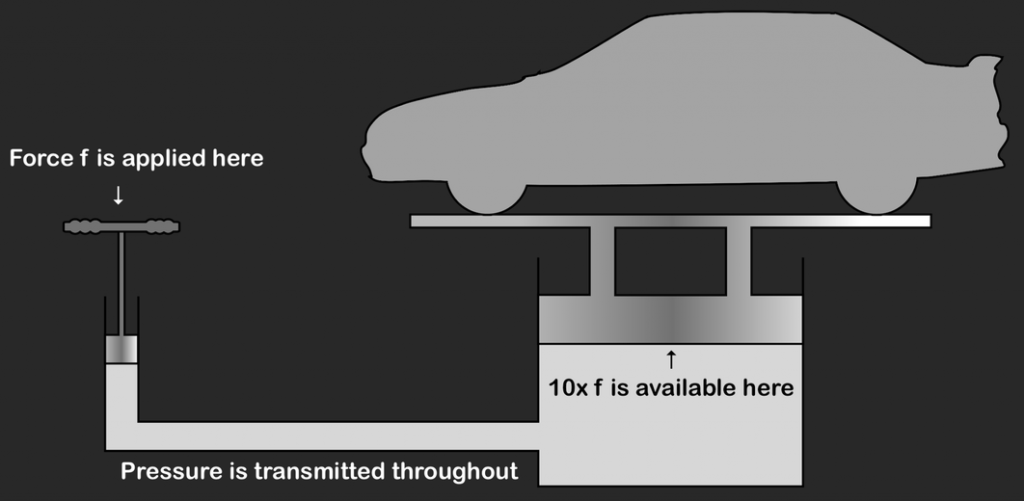
- Hydraulic systems use incompressible fluids to transmit force efficiently, making them ideal for heavy-duty applications, based on Pascal’s Law.
- Pascal’s law states that when there is an increase in pressure at any point in a confined fluid, there is an equal increase at every other point in the container.
- Pneumatic systems use compressible fluid, such as air, in their operation.
- Pascal’s law states that when there is an increase in pressure at any point in a confined fluid, there is an equal increase at every other point in the container.
- It allows a small force applied over a small area to generate a much larger force over a larger area.
- They operate by applying pressure to a fluid, which then transmits force evenly in all directions.
- In this system, forces perpendicular everywhere to the surface; force per unit area (pressure) same everywhere.
- Key Components:
- Pumps: Convert mechanical energy into fluid pressure
- Valves: Control the flow and direction of the fluid
- Actuators: Deliver mechanical output, either linear or rotary.
- Pipes and Tanks: Store and transport hydraulic fluid.
- Sensors and Switches: Ensure operational safety and control.
Applications of Hydraulic Systems
- Construction Equipment: Cranes, excavators, and bulldozers rely on hydraulic power for lifting and movement.
- Aviation: Aircraft landing gear and control surfaces use hydraulic mechanisms.
- Manufacturing: Press machines and robotic arms operate using hydraulic force.
- Automotive Industry: Braking systems in vehicles function through hydraulic pressure.
India is Set to Air Conditioner Temperature Guidelines
Syllabus: GS2/ Governance, GS3/ Environment
Context
- The Indian government is planning to adopt new standards to cap air conditioner (AC) temperature settings between 20 and 28 degrees Celsius to reduce peak power demand.
Rising Cooling Demand in India
- Cooling Demand Statistics: Cooling accounts for around 50 GW, or nearly 20% of India’s peak power demand.
- Growth in AC Usage: India currently has 10 crore ACs, with 1.5 crore units added every year.
- Energy-Saving Potential: Each 1°C increase in AC temperature leads to 6% electricity savings.
How do Air Conditioners Work?
- An AC works by pumping heat from one space to another. ACs remove heat from indoor spaces using a vapour-compression cycle involving a refrigerant (liquid).
- Key Components:
- The evaporator absorbs heat and removes humidity.
- Compressor compresses the vapour, consuming the most energy.
- Condenser releases heat and transforms vapour back into liquid.
- The expansion device regulates pressure and temperature before recirculation.
Need for Temperature Standardisation
- The Bureau of Energy Efficiency (BEE) has recommended setting the default temperature at 24°C.
- Temperatures at 18–21°C in public buildings (airports, hotels, offices) does not enhance cooling performance, but leads to energy wastage and discomfort due to excessively cold environments.
- Human Comfort Standards: According to the comfort chart, temperatures up to 25°C are comfortable when accompanied by adequate humidity and air movement.
- The World Health Organization (WHO) recommends maintaining indoor temperatures above 18°C to avoid adverse health impacts like respiratory infections, hypertension, and reduced cognitive function.
What are the Challenges?
- Only 20% of ACs sold are 5-star rated. BEE’s efficiency rating thresholds are lenient and due for stricter revision by 2028.
- Despite having building codes like Energy Conservation Building Code (ECBC), implementation remains weak. Passive cooling designs must be incentivized.
Way Ahead
- Promote Passive Cooling Designs: Encourage architectural features like cross-ventilation, shaded facades, thermal insulation, and green roofs.
- Incentivize through urban planning norms and affordable housing schemes.
- Awareness Campaigns: Educate consumers on the economic and health benefits of keeping ACs at 24–26°C.
- Stricter Energy Efficiency Norms: Gradually raise BEE standards and phase out inefficient models.
Concluding Remarks
- Air-conditioners are now indispensable in India due to rising temperatures, but unregulated and energy-intensive usage is straining both the power grid and the environment.
- Setting a regulated temperature range is a strategic and health-conscious intervention.
- However, to truly achieve sustainable cooling, complementary measures such as building design reforms, product efficiency upgrades, and public awareness campaigns must be integrated into a comprehensive national cooling policy.
| India Cooling Action Plan (ICAP) – It is a first-of-its-kind policy document from any country, aimed at addressing the rising cooling demand in a climate-sensitive and energy-efficient manner. – It was launched by the Ministry of Environment, Forest and Climate Change (MoEF&CC). – The India Cooling Action seeks to; 1. Reduce cooling demand across sectors by 20% to 25% by 2037-38, 2. Reduce refrigerant demand by 25% to 30% by 2037-38, Reduce cooling energy requirements by 25% to 40% by 2037-38, 3. Recognize “cooling and related areas” as a thrust area of research under national S&T Programme, 4. Training and certification of 100,000 servicing sector technicians by 2022-23, synergizing with Skill India Mission. |
World Day to Combat Desertification & Drought
Syllabus: GS3/Environment
Context
- Recently, India joined the global community in observing the World Day to Combat Desertification and Drought, reaffirming its commitment to sustainable land management and climate resilience.
About World Day to Combat Desertification and Drought
- It was established by the United Nations General Assembly in 1994, observed annually on June 17.
- It highlights the urgent need for sustainable land management and global action against desertification.
- Theme (2025): ‘Restore the Land. Unlock the Opportunities’
Desertification
- UNCCD (United Nations Convention to Combat Desertification) defines land desertification as “land degradation in arid, semi-arid and dry sub-humid areas resulting from various factors, including climatic variations and human activities.”
- Land degradation is accelerating, costing the global economy $878 billion annually. Africa and Asia are worst affected, with the Sahel, Middle East, and Central Asia being major hotspots.
- According to ISRO’s Desertification and Land Degradation Atlas (2021), 29.7% of India’s total geographical area (TGA) is undergoing desertification or land degradation.
- The UNCCD was created to address these issues, promoting policies that encourage sustainable land use and resilience against climate change.
Causes of Desertification
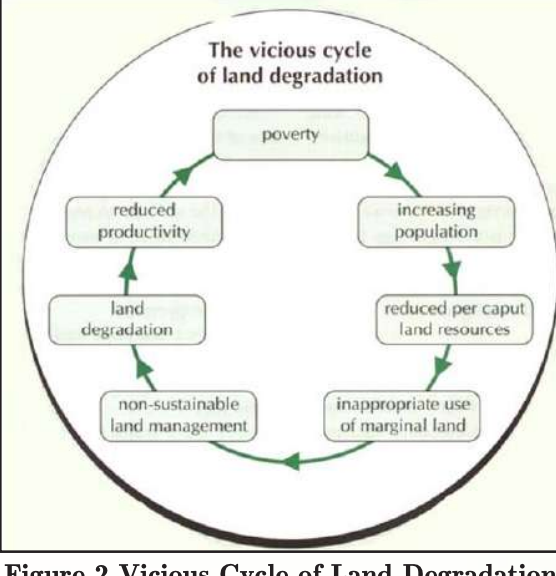
- Drought and erratic rainfall: Overgrazing, deforestation, and unsustainable agriculture
- Climate change: Urbanisation and industrialization
- Wind and water erosion: Excessive groundwater withdrawal and poor irrigation practices
- Salinization of soil: Mining and infrastructure development
Impacts of Desertification
- Environmental: Decline in soil fertility, biodiversity, and groundwater recharge.
- Intensification of climate change via reduced carbon sequestration.
- Increased frequency of dust storms and sand encroachment.
- Economic: Reduced agricultural productivity and livelihood loss for farmers and pastoralists.
- Increased rural poverty, food insecurity, and migration pressures.
- Huge costs on restoration and irrigation infrastructure.
- Social: Distress migration and resource-based conflicts.
- Erosion of traditional knowledge and indigenous land management systems.
- Geopolitical: Desertification contributes to transboundary tensions over water, land, and food security, particularly in fragile ecosystems like the Sahel or Indo-Gangetic plains.
India’s Efforts
- National Action Plan on Climate Change (NAPCC): National Mission on Sustainable Agriculture and Green India Mission address land degradation.
- National Afforestation Programme: Through the National Mission for a Green India (GIM) and Forest Fire Protection & Management Scheme (FFPM), India supports states in afforestation and forest conservation.
- Compensatory afforestation under Compensatory Afforestation Fund Management and Planning Authority (CAMPA) is used to increase forest cover.
- Desert Development Programme (DDP): Targets arid zones with integrated watershed management.
- Mangrove and Coastal Ecosystem Protection: India implements annual Management Action Plans for conserving mangroves and coral reefs across coastal states and UTs under the National Coastal Mission.
International Frameworks
- UN Convention to Combat Desertification (UNCCD): India has been a party since 1996; hosted COP-14 in 2019 in New Delhi.
- Bonn Challenge: It is a global goal to bring 150 million hectares of degraded and deforested landscapes into restoration by 2020 and 350 million hectares by 2030.
- India pledged to restore 13 million hectares of degraded land by 2020 and an additional 8 million hectares by 2030.
- 2030 Agenda (SDG 15.3): Committed to achieving Land Degradation Neutrality.
Way Forward
- Integrated Land Use Planning: Align national planning with land capability and agro-climatic zones.
- Promote multi-cropping, crop rotation, and sustainable grazing systems.
- Community-Led Watershed Management: Empower Panchayats and local communities.
- Incentivize watershed-based planning and decentralized water harvesting.
- Scientific Monitoring: Use remote sensing, GIS, and AI for real-time tracking of degradation.
- Strengthen Soil Health Monitoring Networks.
- Sustainable Agriculture: Shift towards organic farming, zero-budget natural farming, and agroforestry.
Kerala High Court Bans Single-Use Plastic in Hilly Areas
Syllabus: GS3/ Environment
Context
- The Kerala High Court has imposed a ban on single-use plastics in hilly tourist destinations and regulated the use of plastic bottles at large gatherings such as weddings and government events.
- The court clarified that the ban does not apply to the non-woven polypropylene bags with a thickness of 60 GSM (grams per square metre) and above.
Impact of plastic waste
- Climate and Biodiversity Linkages: Plastic waste in the hilly regions contributes to soil and water contamination, affecting biodiversity and local food systems.
- Environmental Sensitivity: Hilly regions are ecologically fragile and require extra safeguards against pollution and degradation.
- Public Health: Accumulated plastic waste leads to mosquito breeding, water contamination, and affects the natural beauty of tourist destinations.
Challenges in Waste Governance in the hilly areas
- Lack of Localised Waste Infrastructure: Most mountain towns and villages lack basic waste collection, segregation, and treatment facilities.
- Plastic Ban Policies: Although the tourist destinations have banned certain plastic products, the enforcement is weak, due to inconsistent monitoring, and a lack of viable alternatives for local communities and vendors.
- Low Awareness: There is insufficient awareness among producers about their responsibilities under Extended Producer Responsibility (EPR).
- Also tourists often lack both education and sensitivity towards sustainable practices.
- Dispersed Settlements: The rugged topography, scattered population, and seasonal weather conditions make it logistically challenging to establish and maintain effective waste management systems in hilly areas.
India’s Efforts in Tackling Plastic Waste
- Extended Producer Responsibility (EPR): The Indian government has implemented EPR, making plastic manufacturers responsible for managing and disposing of the waste generated by their products.
- Plastic Waste Management (Amendment) Rules, 2022: It prohibits manufacture, import, stocking, distribution, sale and use of plastic carry bags having thickness less than 120 microns.
- Swachh Bharat Abhiyan: It is a national cleanliness campaign, which includes the collection and disposal of plastic waste.
- Plastic Parks: India has set up Plastic Parks, which are specialized industrial zones for recycling and processing plastic waste.
- The Indian judiciary, under Article 21 of the Constitution (Right to Life), has proactively engaged in cases of environmental degradation.
Way Ahead
- Mountain-Sensitive Waste Policies: Waste management policies that consider geographic remoteness, traditional practices, and ecological sensitivity are essential.
- Decentralised Waste Systems: Focus should be on community-based, low-impact waste solutions rooted in traditional knowledge and local governance.
- Sustainable Tourism Practices: Establish mandatory waste audits and management protocols at tourist sites, especially around water bodies and pilgrimage circuits.
Strait of Hormuz
Syllabus: GS1/Places in News
Context
- Iran has reportedly threatened that it could consider closing the Strait of Hormuz amid the ongoing conflict, raising eyebrows globally.
About
- Strait of Hormuz is a critical narrow waterway between Iran and Oman, and connects the Persian Gulf with the Gulf of Oman and the Arabian Sea.
- A strait is a narrow passage of water that connects two larger bodies of water.
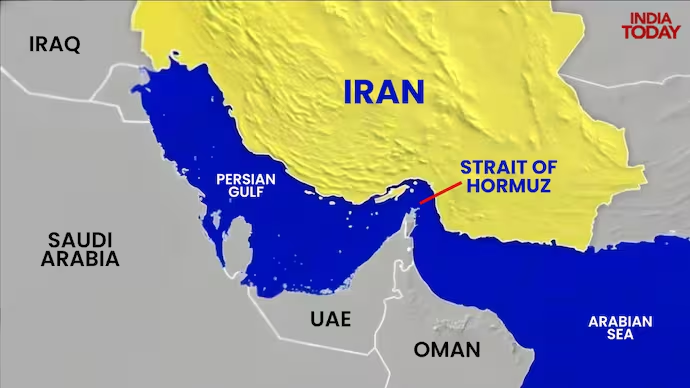
- Key ports located near the strait include:
- Iran’s Bandar Abbas – a major naval and commercial port.
- UAE’s Fujairah Port – an important oil storage and shipping point.
- Oman’s Sohar Port – used for trade and shipping reroutes.
- Qatar’s Ras Laffan – a key port for liquefied natural gas (LNG) exports.
- Approximately 20% of the world’s oil supply passes through it with nearly 83% of it destined for Asian markets.
- It is the main shipping route for energy exports from major producers like Saudi Arabia, Iraq, Iran, Kuwait, Qatar, and the UAE.
- Much of India’s oil from key West Asian suppliers like Iraq, Saudi Arabia, and the UAE reaches Indian ports via the Strait of Hormuz.
- A bulk of India’s LNG imports, which come predominantly from Qatar, also come through this vital choke point.
- The importance of the chokepoint for India’s energy supply and security cannot be understated.
Campaign Aims to Push Tribal Welfare Schemes PM JANMAN and Dharti Aaba
Syllabus :GS2/Governance
In News
- The Ministry of Tribal Affairs has launched a major outreach campaign in over 500 districts to cover 1 lakh tribal villages, focusing on doorstep delivery of welfare through two flagship schemes — PM JANMAN and Dharti Aaba Janjatiya Gram Utkarsh Abhiyan.
Pradhan Mantri Janjati Adivasi Nyaya Maha Abhiyan (PM-JANMAN)
- It was announced by the Prime Minister on the Janjatiya Gaurav Diwas in 2023.
- It is a flagship initiative aimed at the holistic development of Particularly Vulnerable Tribal Groups (PVTGs).
- It comprises Central Sector and Centrally Sponsored Schemes and reflects the government’s commitment to inclusive growth and social justice, contributing to the vision of Viksit Gaon, Viksit Bharat.
- It aims to provide basic facilities such as safe housing, clean drinking water and improved access to education, health and nutrition, road and telecom connectivity, electrification of unelectrified households and sustainable livelihood opportunities in 3 years.
Dharti Aaba Janjatiya Gram Utkarsh Abhiyan
- It was launched on October 2, 2024, aligns with Prime Minister Modi’s vision of inclusive development by ensuring governance benefits reach every tribal citizen.
- It builds on PM-JANMAN’s success and it is a multi-sectoral initiative involving 17 ministries and 25 interventions to transform tribal villages into centers of opportunity and dignity, placing tribal communities at the heart of India’s development.
| Do you know? – Janjatiya Gaurav Divas is observed every year on November 15 in memory of Bhagwan Birsa Munda and his 150th birth anniversary celebrated in 2024 . |
Source :IE
International Day Against Unilateral Coercive Measures
Syllabus: GS3/ International Relations / Economy
Context
- The United Nations General Assembly has adopted a resolution declaring December 4 as the International Day Against Unilateral Coercive Measures, starting in 2025.
About the resolution
- The resolution passed with 116 votes in favour, 51 against, and 6 abstentions.
- It urges all states to refrain from using unilateral economic, financial, or trade measures that violate international law or the UN Charter.
What Are Unilateral Coercive Measures (UCMs)?
- UCMs refer to sanctions or restrictions imposed by individual states or regional groups without authorization from the UN Security Council.
- It often targets state economies, limiting access to essential goods, technology, finance, and development aid.
- They are seen as politically motivated tools that breach sovereignty and multilateral norms.
CCI Buys 100 lakh Bales of Cotton at MSP
Syllabus :GS3/Economy
In News
- The Cotton Corporation of India (CCI) purchased nearly 100 lakh bales of cotton at the Minimum Support Price (MSP) this season and sold 35 lakh bales.
| Minimum Support Price (MSP) – It is the minimum rate at which farmers sell their crops to the government. – The Cabinet Committee on Economic Affairs sets the MSP for crops each sowing season based on recommendations from the Commission for Agricultural Costs and Prices (CACP). 1. CACP considers factors like demand-supply, production costs, domestic and global price trends, and consumer impact. 2. It submits annual price policy reports for five commodity groups: kharif crops, rabi crops, sugarcane, raw jute, and copra. |
Cotton
- Cotton is a commercial crop in India which contributes about 24% to global cotton production and sustains the livelihoods of millions of farmers and workers.
- India grows all four species of cotton: G. Arboreum, G. Herbaceum (Asian cotton), G. Barbadense (Egyptian cotton) and G. Hirsutum (American Upland cotton).
- It is primarily grown in the Northern, Central, and Southern zones of India.
- India holds the largest cotton acreage in the world.
- India is the 2nd largest producer and consumer of cotton in the world.
- Cotton imports surged by 133% in May 2025, as international cotton is 8% cheaper than Indian cotton.
Cotton Corporation of India (CCI)
- It was established on 31st July 1970 under the Ministry of Textiles.
- It is a public sector undertaking supporting cotton farmers and the textile industry.
- Initially a canalizing agency for cotton imports and procurement, CCI’s main role now is to conduct Minimum Support Price (MSP) operations when market prices fall below MSP, without any limit. It also undertakes commercial purchases to ensure cotton supply during lean seasons.
NICDC-led Industrial Nodes
Syllabus: GS3/Economy
Context
- The Union Minister of Commerce & Industry chaired a high-level review meeting to assess the progress of NICDC-led industrial nodes in Andhra Pradesh under various industrial corridors.
About
- The National Industrial Corridor Development Corporation (NICDC) is an initiative under the Ministry of Commerce & Industry.
- It is dedicated to developing next-generation industrial smart cities aimed at boosting manufacturing, attracting investments, generating employment, and enhancing India’s global economic competitiveness.
- NICDC ensures seamless multimodal connectivity, plug-and-play infrastructure, and sustainable urbanization through its flagship corridors:
- Delhi–Mumbai Industrial Corridor (DMIC),
- Amritsar–Kolkata Industrial Corridor (AKIC),
- Chennai–Bengaluru Industrial Corridor (CBIC),
- East Coast Economic Corridor (ECEC),
- and Bengaluru–Mumbai Industrial Corridor (BMIC).
- Andhra Pradesh is the only state in the country to host industrial nodes under three separate Industrial Corridors.
Turmeric Cultivation
Syllabus: GS3/Agriculture
Context
- Turmeric farming has become a new way to thwart wild animal threat in Munnar, Kerala.
About
- Turmeric is a part of Curcuma Long botanic group and it is a perennial herbaceous plant of the ginger family (Zingiberaceae).
- It is used as a seasoning, dye, drug with diverse applications and also used in the cosmetics industry.
- Turmeric is also known as ‘Golden Spice’.
- India is the largest producer, consumer and exporter of turmeric in the world.
- In 2023-24, India was responsible for over 70% of global turmeric production and there are 30 varieties of turmeric produced in India.
- Andhra Pradesh, Tamil Nadu, Orissa, Karnataka, West Bengal, Gujarat, Meghalaya, Maharashtra, Assam are some of the important states cultivating turmeric.
Climatic Conditions
- It is a tropical herb which grows in both tropics and subtropics.
- It grows at a temperature range of 20-35°c with an annual rainfall of 1500mm or more.
- It requires a humid climatic condition.
- Soil Requirement: It grows best in well drained sandy or clayey loam with a little higher sand content.
| National Turmeric Board – It is a dedicated body established in 2025, to promote turmeric cultivation, research, and exports, ensuring holistic growth in the turmeric sector. – Headquarters: Nizamabad, Telangana. – Ministry: Operates under the Ministry of Commerce and Industry. – Aim: To enhance turmeric production. 1. Support farmers and improve their livelihoods. 2. Boost global exports of turmeric and value-added products. – Functions: The Board will also look into creating awareness on the essential and medical properties of turmeric, ways to increase its yield and boost logistics and supply chain to foster trade into newer markets. |
Synthetic Aperture Radar (SAR)
Syllabus :GS3/Science and Technology
In News
- The NASA-ISRO Synthetic Aperture Radar (NISAR) mission marked a significant step forward with its arrival at the Satish Dhawan Space Centre in India ahead of its scheduled launch in July.
Synthetic Aperture Radar (SAR)
- It refers to a technique for producing fine-resolution images from a resolution-limited radar system.
- It is a type of active data collection where an instrument sends out a pulse of energy and then records the amount of that energy reflected back after it interacts with Earth.
- Unlike optical imagery, which is a passive data collection technique based on emitted energy, SAR imagery is created from the reaction of an emitted pulse of energy with physical structures (like mountains, forests, and sea ice) and conditions like soil moisture.
Applications
- SAR has been used in a wide range of applications, including studying Antarctic icebergs, tracking the paths of oil spills into sensitive marshes, and mapping the wetlands of Alaska.
| Do you know? – NASA-ISRO SAR (NISAR) is a Low Earth Orbit (LEO) observatory being jointly developed by NASA and ISRO. – It will map the entire globe in 12 days and provide spatially and temporally consistent data for understanding changes in Earth’s ecosystems, ice mass, vegetation biomass, sea level rise, ground water and natural hazards including earthquakes, tsunamis, volcanoes and landslides. – It carries L and S dual band Synthetic Aperture Radar (SAR), which operates with Sweep SAR technique to achieve large swaths with high resolution data. |
Source :TH
Indian Navy Set to Commission INS Arnala
Syllabus: GS3/ Defence
Context
- The Indian Navy is set to commission INS Arnala, the country’s first Anti-Submarine Warfare Shallow Water Craft (ASW-SWC), at the Naval Dockyard in Visakhapatnam.
About INS Arnala
- INS Arnala is the first of 16 ASW-SWC vessels being inducted into the Indian Navy.
- It is named after the historic Arnala Fort off the coast of Maharashtra, which was strategically important during the Maratha and Portuguese eras.
- Designed by Garden Reach Shipbuilders & Engineers (GRSE), Kolkata, in collaboration with L&T Shipbuilders.
- Over 80% indigenous content, aligning with the ‘Aatmanirbhar Bharat’ initiative.
- Features: The ship measures 77.6 meters in length, displaces over 1,490 tonnes, and is the largest Indian naval vessel powered by a diesel engine-waterjet propulsion system.
- Role and Capabilities: It is designed for subsurface surveillance, search and rescue operations and low intensity maritime operations (LIMO); alongside its primary role in anti-submarine warfare.
- It is further equipped with mine-laying capabilities.
