
India-Canada Ties
Syllabus: GS2/IR
Context
- Two years after a major rupture in ties, India and Canada have agreed to restore the High Commissioners, and discussed restarting talks for a trade agreement, visa services, and other dialogue mechanisms.
About
- The decisions came during Prime Minister Narendra Modi’s talks with Canada’s newly elected Prime Minister Mark Carney on the sidelines of the G7 outreach session.
- The leaders also discussed the importance of restarting the stalled negotiations on the Trade Agreement (EPTA), with a view to paving the way for a Comprehensive Economic Partnership Agreement (CEPA).
- The two Prime Ministers discussed collaborations in “clean energy, digital transformation, artificial intelligence, LNG, food security, critical minerals, higher education, mobility, and supply chain resilience”.
Background of the Issue
- Khalistani separatist activities in Canada have strained ties; India has repeatedly raised concerns over Canada’s inaction.
- 2023 Diplomatic Row: Relations deteriorated after the Canadian PM alleged Indian involvement in the killing of a Canadian citizen linked to Khalistan extremism.
- India dismissed the allegations and expelled Canadian diplomats.
- Talks on trade and economic agreements were suspended due to the diplomatic fallout.
Brief on India-Canada Relations
- Historical Relations: India and Canada established diplomatic relations in 1947.
- Shared democratic values and Commonwealth membership have underpinned ties.
- Relations were historically strained after India’s nuclear tests in 1974 and 1998, due to Canada’s non-proliferation stance.
- Economic Cooperation: In 2024 (January – August), total bilateral trade in goods amounted to USD 8.55 billion (India’s exports: USD 5.22 billion and India’s imports: USD 3.33 billion).
- Negotiations continue on a Comprehensive Economic Partnership Agreement (CEPA) and a Foreign Investment Promotion and Protection Agreement (FIPA).
- Civil Nuclear Cooperation: Nuclear Cooperation Agreement (NCA) signed in 2010, operational since 2013.
- A Joint Committee oversees implementation of the 2010 Agreement on “Cooperation in Peaceful Uses of Nuclear Energy”.
- Space Cooperation: MoUs signed in 1996 and 2003 between ISRO and Canadian Space Agency (CSA).
- Cooperation includes satellite tracking, space astronomy, and commercial satellite launches.
- ISRO’s commercial arm ANTRIX has launched multiple Canadian nanosatellites.
- Science and Technology: Department of Earth Science and Polar Canada have started a programme for exchange of knowledge and scientific research on Cold Climate (Arctic) Studies.
- A Memorandum of Cooperation between National Centre for Polar and Ocean Research (NCPOR) and POLAR Canada was signed in 2020.
- People-to-People Links: There are around 1.8 million Indo-Canadians and one million non-resident Indians in Canada, making up over 3% of its population.
- India is the largest source of international students in Canada, with Indians making up around 40% of that group.
- Strong cultural exchanges and vibrant diaspora influence bilateral perceptions.
- Multilateral Cooperation: Both countries cooperate in forums like the G20, Commonwealth, United Nations, and International Solar Alliance.
Conclusion
- India–Canada relations have strong foundations and significant potential, especially in trade, education, and clean energy. However, bilateral ties remain fragile, with political and security concerns acting as key irritants.
- The future of the relationship depends on how both countries manage these differences while leveraging shared interests.
India and Croatia to Make Long-term Plans for Deepening Defence Ties
Syllabus: GS2/IR
Context
- India and Croatia have agreed to develop a long-term defence cooperation plan.
Major Highlights
- Both sides agreed to develop a long-term Defence Cooperation Plan including:
- Joint military training.
- Personnel exchanges.
- Industry-level defence partnerships.
- Emphasis on cooperation in cybersecurity and defence production.
- MoUs Signed on Agriculture, Cultural Exchange, Science & Technology and setting up of an ICCR Chair of Hindi in Zagreb.
- India-EU FTA: India and Croatia have discussed the long-pending India-EU Free Trade Agreement.
- Croatia has reiterated its strong support for the early conclusion of the FTA.
- Investment: Commitment to enhance investment in Croatia’s critical industries, including pharmaceuticals, agriculture, information technology, clean technology, digital technology, and semiconductors.
- Academic and cultural exchanges: Academic institutes from both countries would carry out joint research projects.
- The two sides finalised a five-year plan for cultural exchange programs, institutionalising the people-to-people connections.
- Enhanced mobility and diplomatic engagement: India and Croatia would “soon” sign a mobility agreement to facilitate the movement of people between the two countries.
- This agreement is expected to boost tourism, educational exchanges, and business cooperation.
- Space and Academic Collaboration: Joint work in space ventures announced.
- India to share its space expertise with Croatia.
Significance of the Engagement
- Evolving European Strategy: PM Modi’s visit reflects India’s expanding European outreach beyond traditional Western partners.
- The focus is on newer EU members like Croatia that influence the EU’s consensus-driven decision-making.
- Importance of Croatia in India’s Strategic Vision: Croatia’s neutral stance on major global conflicts and tech cooperation willingness align with India’s values.
- Minimal dependence on China and skepticism toward BRI make Croatia ideal for India’s vision of democratic, sustainable development.
- Eastern & Central Europe Access: Croatia shares borders with Hungary, Slovenia, Bosnia & Herzegovina, and Serbia.
- Strengthening ties offers a gateway to Central European markets and emerging sectors.
- Enhances India’s regional presence in the Balkans and Central Europe.
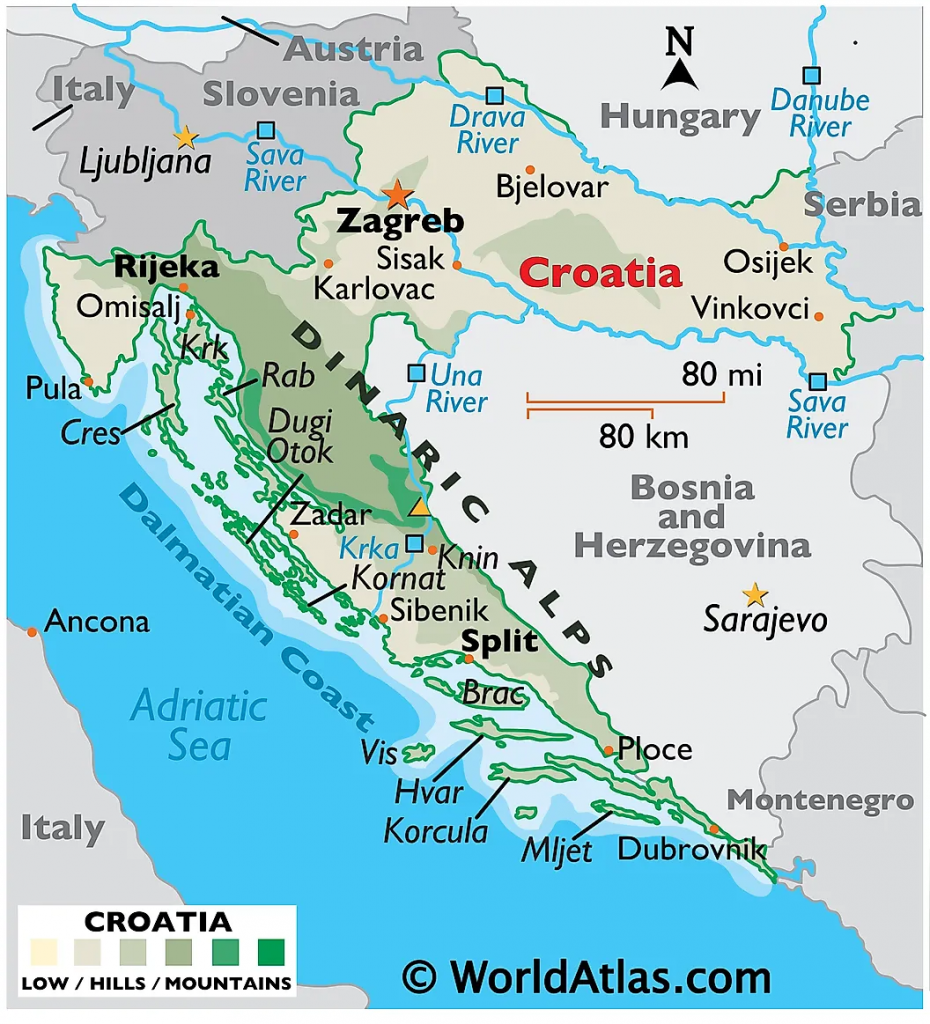
- Maritime and Logistics Significance: Croatia is located on the eastern Adriatic coast, a key maritime gateway to Europe.
- Strategic for India amid Red Sea/Suez disruptions and global supply chain rebalancing.
- Role in India–Middle East–Europe Economic Corridor (IMEC): Croatia viewed as a critical node in the IMEC trade corridor.
- Offers alternative trade routes to Central and Eastern Europe bypassing traditional Western European ports.
- Influence in EU and NATO: Croatia is a full member of the EU and NATO, increasing its institutional weight.
- Provides India with indirect access to European regulatory systems and policy debates.
- Supports India’s FTA with EU; valuable for overcoming FTA negotiation roadblocks.
- Diplomatic Alignment and Multilateral Support: Croatia supports India’s UNSC permanent membership bid.
- India’s position on Jammu and Kashmir (non-interventionist approach).
- Acts as a predictable and consistent partner, unlike some larger EU countries.
Conclusion
- The visit marks a new chapter in India’s European diplomacy.
- Rooted in shared values, mutual respect, and complementary capabilities.
- Demonstrates that small but influential nations can be vital in India’s multipolar global strategy.
Lateral Entry Policy Still Active
Syllabus :GS 2/Governance
In News
- Union Minister Jitendra Singh clarified that the government has not given up on the idea of lateral entry into government departments.
Lateral entry
- It refers to the hiring of specialists, including professionals from the private sector, to take up senior roles in the government.
- It aims to bring in fresh talent and strengthen middle management by appointing specialists with domain expertise for specific roles.
View of NITI Ayyog and various commissions
- The policy of lateral entry originated from recommendations by the NITI Aayog in its 2017 report, which highlighted the need for specialists in policymaking due to the economy’s growing complexity.
- It proposed inducting experts to enhance competition and bring fresh talent into governance.
- The idea was to replace frequent officer rotations with longer, specialised postings.
- Similar recommendations were made earlier by the second Administrative Reforms Commission in 2005 under the UPA government.
Previous appointments
- Former PM Manmohan Singh and experts like Verghese Kurien, Homi Bhabha, and A.P.J. Abdul Kalam were lateral entrants who made significant contributions in various fields.
- Post-independence, lateral entries helped overcome the shortage of civil servants, and the system gradually evolved with regular UPSC recruitment.
- Around 60 posts had already been filled through the lateral entry mode. “Today 40 to 45 [lateral entry recruits] are still working.
| Do you know? – In August 2024, the UPSC withdrew its notification for recruiting 45 officers through lateral entry—10 joint secretaries and 35 directors or deputy secretaries—after facing political backlash. – Opposition parties criticized the move for bypassing reservations for OBCs, SCs, and STs. |
Advantages
- Lateral entrants can bring domain-specific knowledge and professional experience, essential in today’s complex policymaking environment.
- Private sector professionals may introduce new ideas, data-driven strategies, and outcome-based approaches to governance.
- The government faces a shortage of All India Services officers, especially at the Central level.
- Lateral entry helps fill these gaps.
- According to a 2023-24 parliamentary panel report on the DoPT, only 442 IAS officers were working with the Union government, against the required strength of 1,469.
- Lateral entry helps fill these gaps.
Disadvantages
- Lateral entry has faced criticism for not applying caste-based reservations, potentially sidelining marginalized groups.
- Critics argue that such appointments bypass the DoPT’s roster system, which applies reservation to each department individually, not across ministries.
- Entrants may lack knowledge of governmental procedures and hierarchies, leading to inefficiencies.
- Cooperation related challenges with existing civil servants.
Way Ahead
- The lateral entry holds promise for modernizing India’s administrative machinery but it must be implemented with transparency, fairness, and clear integration mechanisms to ensure long-term success.
Global Drought Outlook
Syllabus: GS3/ Environment
Context
- The Organisation for Economic Co-operation and Development (OECD) has released its Global Drought Outlook, highlighting the increasing frequency, and geographical spread of droughts globally.
What is drought?
- Droughts are periods characterised by a significant hydrological imbalance in water sources or reservoirs, typically marked by “drier-than-normal” weather conditions.
- These periods are primarily driven by low rainfall and can be further intensified by high temperatures or strong wind, which accelerate water evaporation, as well as human activities.
- Classification:
- Meteorological drought refers to a prolonged period of low precipitation.
- Agricultural (or ecological) drought refers to a condition where soil moisture is insufficient to meet the needs of crops and vegetation.
- Hydrological drought occurs when surface or groundwater water levels drop below average over a prolonged period.
Key Findings
- The global land area affected by drought doubled between 1900 and 2020, with 40% of the planet experiencing increased drought frequency and intensity in recent decades.
- Since 1980, 37% of global land has experienced significant soil moisture decline. Similarly, groundwater levels are falling globally, with 62% of monitored aquifers in decline.
- Climate change made the 2022 European drought up to 20 times more likely and increased the likelihood of the ongoing drought in North America by 42%.
Causes of Droughts
- Natural Causes:
- Climate variability, such as El Niño and La Niña, affects global weather patterns and can result in prolonged dry spells in some regions.
- Reduced snowfall and melting glaciers diminish freshwater sources over time.
- Anthropogenic Causes:
- Deforestation and land degradation reduce the soil’s ability to retain moisture and disturb the local water cycle.
- Urbanisation leads to soil sealing, which prevents water infiltration and groundwater recharge.
- Unsustainable agriculture and over-extraction of groundwater, especially through inefficient irrigation practices, worsen the drought intensity in some areas.
Impacts of Drought
- Environmental Consequences: Droughts severely degrade ecosystems such as forests, wetlands, and grasslands, leading to loss of biodiversity and reduction in plant biomass.
- Economic Consequences: Droughts also impact hydropower production, industrial operations, and fluvial trade, reducing efficiency and increasing energy and food insecurity.
- The economic costs of droughts are rising globally by 3% to 7.5% annually.
- Social Consequences: They contribute to food insecurity, migration, water scarcity, and livelihood loss, especially among marginal and vulnerable communities.
- Droughts account for only 6% of natural disasters but cause 34% of all disaster-related deaths.
Key Recommendations
- Investment in Drought Resilience: Every USD 1 invested in drought prevention yields USD 2 to 3 in benefits, with some resilience projects offering up to ten times the return on investment.
- Ecosystem and Land Use Management: Ecosystem restoration improves water retention and soil health. Drought-tolerant crops and adaptive farming help secure food systems.
- Cross-Sectoral Action: Include energy, transport, infrastructure, and urban planning in drought resilience strategies.
- Irrigation efficiency improvements could cut global water use by 76%.
| Measures Taken in India – Integrated Watershed Management Programme (IWMP): Promotes soil and water conservation in drought-prone areas. – Pradhan Mantri Krishi Sinchayee Yojana (PMKSY): Aims to enhance irrigation efficiency and ensure “more crop per drop”. – National Agricultural Drought Assessment and Monitoring System (NADAMS): Uses satellite data to monitor drought conditions and aid early warning. – Promotion of climate-resilient crops and contingency crop planning is being encouraged under the National Mission on Sustainable Agriculture (NMSA). United Nations Convention to Combat Desertification (UNCCD) – UNCCD was established in 1994 to protect and restore the land and ensure a safer, just, and more sustainable future. – is the only legally binding framework set up to address desertification and the effects of drought. – There are 197 Parties to the Convention, including 196 country Parties and the European Union. |
Third United Nations Oceans Conference (UNOC)-2025
Syllabus: GS3/Environment
Context
- Recently, the third United Nations Oceans Conference (UNOC), held in Nice, France, concluded with commitments aimed at safeguarding the planet’s marine ecosystems.
| Background: United Nations Oceans Conference (UNOC) – 1st UNOC (2017): In New York, Co-hosted by Sweden and Fiji; To support SDG 14: Life Below Water. – 2nd UNOC (2022): In Lisbon, Co-hosted by Portugal and Kenya; To emphasize the need for science-based solutions and innovative partnerships. – 3rd UNOC (2025): In Nice, France, and co-hosted by Costa Rica 1. Theme: Accelerating action and mobilizing all actors to conserve and sustainably use the ocean. |
Key Outcomes of the Conference (2025)
- High Seas Treaty Nears Enforcement: Fifty-six of the required sixty countries have ratified the Biodiversity Beyond National Jurisdiction (BBNJ) Agreement (aka High Seas Treaty).
- It enables the creation of marine protected areas (MPAs) in international waters, regulate marine genetic resources, and mandate environmental impact assessments.
- Voluntary Commitments and Financial Pledges: The European Commission pledged 1 Billion Euro to support ocean conservation and sustainable fishing.
- French Polynesia announced plans to establish the world’s largest marine protected area, covering its entire exclusive economic zone—about five million square kilometers.
- Global Political Declaration: Over 170 countries adopted the Nice Ocean Action Plan, a political declaration paired with more than 800 voluntary commitments.
- These range from youth advocacy to deep-sea ecosystem literacy and capacity-building in marine science.
- Pushback Against Deep-Sea Mining: A growing coalition of nations called for a precautionary pause on deep-sea mining, citing its potential to irreversibly damage fragile marine ecosystems.
- India’s Role and Roadmap: India pledged to ratify the High Seas Treaty and proposed a 10-point roadmap for sustainable ocean governance. It includes:
- Expand Marine Protected Areas (MPAs)
- Scale Up the Blue Economy
- Reduce Marine Pollution
- Promote Offshore Renewable Energy
- Support the Global Plastics Treaty
- Invest in Ocean Science and Technology
- Strengthen Coastal Resilience
- Ensure Equitable Access to Marine Resources
- Pause Deep-Sea Mining
- Foster Global Partnerships
About High Seas
- The high seas refer to areas of the ocean that lie beyond the jurisdiction of any single country — specifically, beyond 200 nautical miles (about 370 kilometers) from a nation’s coastline (United Nations Convention on the Law of the Sea-UNCLOS).
- These waters are considered part of the global commons.
- The high seas make up nearly two-thirds of the ocean’s surface and are vital for regulating Earth’s climate, supporting marine biodiversity, and sustaining global fisheries.
Importance of Oceans
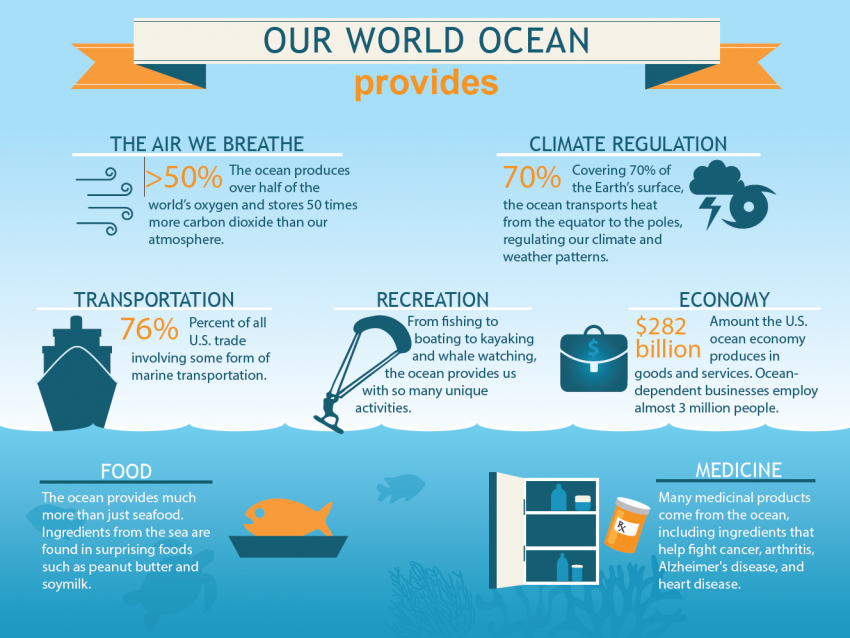
- Climate Regulation: Oceans absorb over 25% of global carbon emissions and generate 50% of the oxygen.
- They act as Earth’s largest carbon sink and heat buffer, helping stabilize the climate.
- Food Security: Oceans provide 15% of the animal protein consumed globally.
- In some developing nations, seafood is the primary protein source for over half the population.
- Livelihoods and Economy: More than 3 billion people depend on marine and coastal resources for their livelihoods.
- The ocean economy is valued at $3–5 trillion annually, supporting industries like fisheries, tourism, and shipping.
- Biodiversity Reservoir: Oceans host an immense variety of life—from coral reefs to deep-sea ecosystems that are essential for ecological balance and future scientific discoveries.
Key Concerns
- Ocean Pollutions: An estimated 75 to 199 million tonnes of plastic. Each year, 8 to 12 million metric tons more are added.
- Asia largest (81%) contributors of ocean plastic pollution (largely due to inadequate waste management systems).
- About 92% of microplastics have been found in 60% of fish consumed by humans annually.
- Five major ocean garbage patches, with the Great Pacific Garbage Patch containing an estimated 1.8 trillion pieces of trash.
- About 14 million metric tons of ocean garbage rest on the seafloor.
- By 2050, plastic in the ocean is projected to outweigh all fish if current trends continue.
- Currently, the ocean’s average pH is 8.1 which is about 30% more acidic than in pre- industrial times.
- Other Concerns:
- Overfishing, threatening marine species and food chains.
- Climate change, causing acidification, sea-level rise, and coral bleaching.
- Deep-sea mining, which risks irreversible damage to fragile ecosystems.
Ocean Conservation Efforts
- Early Foundations (Pre-1970s): International Whaling Commission (1946), one of the first global marine conservation agreements.
- Institutionalization (1970s–1990s): The US passed the Marine Protection, Research, and Sanctuaries Act (1972), and the Law of the Sea Convention (1982) laid the groundwork for international maritime law.
- Scientific & Global Expansion (2000s–2010s):
- Marine Protected Areas (MPAs): Countries began designating MPAs to safeguard biodiversity. However, only about 2.7% of the oceans were highly protected till 2020.
- Data-Driven Conservation: Initiatives like MegaMove used satellite tracking to identify critical habitats for marine megafauna, helping shape smarter conservation strategies.
- Modern Era (2020s–Present):
- High Seas Treaty (2023): It allows for the creation of MPAs in international waters—covering nearly two-thirds of the ocean.
- 30×30 Goal: At COP15 in 2022, nations committed to protecting 30% of oceans by 2030.
- Indigenous Knowledge Integration: Pacific Islander traditions are increasingly recognized as vital to conservation, blending ancestral wisdom with modern science.
