
Nuclear Non-Proliferation Treaty (NPT)
Syllabus: GS2/Global Grouping; Effect of Policies of Developed Countries
Context
- Recently, Iran’s Foreign Ministry has confirmed that its Parliament is drafting legislationto withdraw from the Non-Proliferation of Nuclear Weapons (NPT) Treaty.
- It comes amid escalating tensions with Israel and renewed scrutiny from the International Atomic Energy Agency (IAEA).
Nuclear Non-Proliferation Treaty (NPT): Background
- It is one of the most widely adhered-to arms control agreements signed in 1968 and entered into force in 1970.
- It was extended indefinitely in 1995.
- Membership Provisions (Two Categories):
- Nuclear-Weapon States (NWS): These are the five countries that had tested nuclear weapons before January 1, 1967 — United States, Russia, China, France, and the United Kingdom.
- Non-Nuclear-Weapon States (NNWS): All other signatories agree not to pursue nuclear weapons and to accept IAEA safeguards on their nuclear activities.
- NPT established a three-pillar framework:
- Non-Proliferation: NWS agreed not to transfer nuclear weapons or assist NNWS in acquiring them.
- Disarmament: All parties committed to pursuing negotiations toward nuclear disarmament.
- Peaceful Use of Nuclear Energy: To access nuclear technology for peaceful purposes under IAEA safeguards.
- Withdrawal Clause (Article X of NPT): It allows any state to exit if it determines that ‘extraordinary events’ have jeopardized its supreme national interests, provided it gives three months’ notice to other signatories and the UN Security Council (UNSC).
Present Status
- A total of 191 States have joined the Treaty, including the five nuclear-weapon States.
- India, Pakistan, South Sudan and Israel never joined the treaty, however they are known or believed to possess nuclear weapons.
- North Korea joined the NPT in 1985 but withdrew in 2003.
| Other Important Nuclear Disarmament Treaties – Strategic Arms Reduction Treaty (START I & II), 1991–1993: These were signed between the USA and the Soviet Union (later Russia), aimed to reduce deployed strategic nuclear warheads. – Comprehensive Nuclear-Test-Ban Treaty (CTBT), 1996: It bans all nuclear explosions for both civilian and military purposes. 1. It has not entered into force due to the non-ratification by the USA, China, India, and Pakistan. – Treaty on the Prohibition of Nuclear Weapons (TPNW), 2017: It is the first legally binding international agreement to comprehensively prohibit nuclear weapons. 1. It entered into force in 2021, though none of the nuclear-armed states have joined. – New START Treaty, 2010: It limits the number of deployed strategic nuclear warheads and delivery systems. |
India’s Approach NPT
- India’s position on the Treaty has remained consistent since the treaty’s inception in 1968.
- India’s primary objection lies in the treaty’s division of the world into nuclear ‘haves’ and ‘have-nots’.
- India’s refusal to sign was based on ‘enlightened self-interest and considerations of national security’, as highlighted by former Prime Minister Indira Gandhi in Parliament.
India’s Alternative Vision
- India has consistently advocated for a universal, non-discriminatory, and verifiable disarmament regime.
- India has proposed a Nuclear Weapons Convention that would ban the development, production, and use of nuclear weapons globally.
- Voluntary Commitments and Responsible Conduct By India:
- It maintains a voluntary moratorium on nuclear testing.
- It adheres to a No First Use (NFU) policy.
- It has implemented stringent export controls and aligned with global regimes like the Missile Technology Control Regime (MTCR) and the Wassenaar Arrangement.
- India’s 2008 Civil Nuclear Agreement with the USA and subsequent waiver from the Nuclear Suppliers Group (NSG) further acknowledged its responsible nuclear behavior.
Concerns & Challenges
- Disarmament Stalemate: Critics argue that nuclear-weapon states have not made sufficient progress toward disarmament (Article VI of Treaty), undermining the treaty’s credibility.
- Non-Compliance and Withdrawal: North Korea’s withdrawal and Iran’s contested nuclear activities have tested the treaty’s enforcement mechanisms.
- Technological Dual-Use Dilemma: Peaceful nuclear technology can be diverted for weapons development, raising concerns about proliferation risks.
Future Outlook
- Strengthening Verification: Expanding the IAEA’s role and universalizing the Additional Protocol could enhance transparency and trust.
- Bridging the Disarmament Gap: Renewed commitment by nuclear powers to reduce arsenals is essential to maintain the treaty’s legitimacy.
- Addressing Non-Signatories: Engaging India, Pakistan, and Israel in parallel frameworks may help integrate them into the global non-proliferation regime.
- Preventing Weaponization of New Technologies: The rise of cyber threats and autonomous systems necessitates updated safeguards.
- Preparatory process for the NPT Review Conference (2026), held every five years to assess progress and address emerging threats, is underway.
UK Assisted Dying Bill
Syllabus: GS2/Polity/Health/GS4/Ethics
Context
- The U.K. House of Commons passed the Assisted Dying Bill to allow terminally ill people in England and Wales to end their lives.
About
- The bill will only apply to people in England and Wales who have less than six months to live.
- A patient choosing to die would need to be of competent mind and two doctors, a psychiatrist, senior lawyer and social worker would need to sign off on their decision.
- Advocates regard the new Bill as a humane and compassionate intervention that brings closure to a painful dependence on the immediate family.
- Opponents are apprehensive that the severely disabled and vulnerable patients may feel forced to end their lives to relieve the burden on relatives.
What is Assisted Dying?
- Assisted dying refers to the act of helping someone intentionally end their life, typically to relieve suffering from a terminal illness or severe, untreatable pain.
- There are two main forms:
- Assisted Suicide: A person, with the help of a medical professional or another person, takes their own life, usually by consuming a prescribed lethal dose of medication.
- Euthanasia: A doctor or healthcare provider actively administers a lethal substance to end the life of a patient, typically at their request, to relieve extreme suffering.
Status Across the Globe
- The practice of assisted dying is highly controversial and is legal in only a few countries or regions, with strict guidelines and regulations where it is permitted.
- Switzerland was the first country which in 1942 legalised assisted dying.
- Across Europe, six countries have some form of legalised assisted dying: Switzerland, the Netherlands, Belgium, Luxembourg, Spain and Austria.
- Later on the U.S., Australia and New Zealand enacted related legislations.
- Canada’s 2016 Medical Assistance in Dying law may be availed even by those whose condition is not terminal.
What is the position in India?
- The Supreme Court had in 2018 legalised passive euthanasia, contingent upon the person having a “living will”.
- SC held that the ‘right to die with dignity’ forms a part of the right to life under Article 21 of the Constitution of India.
- A living will is a written document that specifies the actions to be taken if the person is unable to make their own medical decisions in the future.
- Goa is the first state that has formalised, to some extent, the implementation of directives issued by the Supreme Court.
- In 2024, the Health Ministry released draft guidelines on withdrawing medical support for terminally ill patients.
- These specify that doctors must refrain from initiating life-support measures when they offer no benefit to the patient and are likely to cause suffering and a loss of dignity.

Arguments in Favour of Assisted Dying
- Autonomy and Choice: Individuals should have the right to make decisions about their own lives, including the choice to end it to avoid prolonged suffering.
- Relief from Suffering: Assisted dying provides a compassionate option for those with terminal illnesses or unbearable pain, allowing them to die with dignity.
- Quality of Life: For some, the quality of life may deteriorate to a point where death is seen as a better option than living with constant suffering or loss of independence.
- Respect for Individual Rights: People should have control over their bodies and lives, including the decision to end their life in a humane and controlled manner.
Arguments Against Assisted Dying
- Moral and Ethical Concerns: Many believe that taking a life, even at the person’s request, is morally wrong and goes against the sanctity of life.
- Risk of Abuse: Vulnerable individuals, such as those with mental health issues or pressure from family, may be coerced into choosing assisted dying.
- Medical Ethics: Healthcare professionals are traditionally bound to preserve life, and assisted dying may conflict with the fundamental role of doctors in healing and care.
- Alternative Solutions: Advocates argue that palliative care and pain management can provide relief, making assisted dying unnecessary.
Way Ahead
- Stronger Regulations: Implementing strict legal safeguards to ensure it is only available to those who meet specific criteria.
- Palliative Care Expansion: Improving access to high-quality palliative care to address suffering and reduce the demand for assisted dying.
- Public Debate: Ongoing discussions about the moral, legal, and ethical implications of assisted dying, can be considered while framing the guidelines.
- International Perspective: Countries may look to those with legal assisted dying frameworks for guidance on effective regulation and safeguards.
- Mental Health Support: Providing psychological evaluations to prevent coercion or impulsive decisions and ensure informed consent is given.
Understanding Pakistan’s Balancing Act on Iran
Syllabus: GS2/IR
Context
- Pakistan has extended strong rhetorical support to Iran amid the ongoing Iran-Israel conflict.
Iran and Pakistan Relations
- Foundational Ties: Iran was the first country to recognize Pakistan after its independence in 1947.
- Iran provided military and diplomatic support to Pakistan during the 1965 and 1971 wars with India.
- Despite shared Islamic identity, ties have been marked by deep mistrust, particularly since the 1979 Iranian Revolution, which redefined Iran’s geopolitical stance.
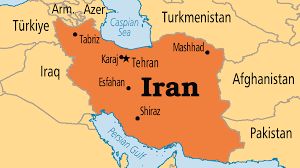
- Border Tensions and the Baloch Question: The 900-km Iran-Pakistan border runs through the Baloch heartland, with the Pak province of Balochistan on one side and the Iranian province of Sistan-Baluchistan on the other.
- Each side accuses the other of providing safe haven to separatist groups.
- There have been at least 15 border clashes in the past decade, most recently in January 2024.
- Divergence over Afghanistan: Iran (Shia-Majority) supported the anti-Taliban Northern Alliance in the 1990s, out of concerns stemming from a strongly anti-Shia group (Taliban) ruling a neighbour with which it shares a 921-km-border.
- Pakistan has historically backed the Taliban, resulting in conflicting regional stakes in Afghanistan.
- Sectarian Dimensions and the Saudi Factor: Pakistan’s close alliance with Saudi Arabia, a Sunni-majority power, has strained ties with Iran.
- Saudi-funded Sunni madrasas in Pakistan have fostered sectarian ideologies against Shia minorities.
- Iran sees this as part of a broader Sunni axis hostile to its interests.
The American Angle: Divergent Alignments
- Post-1979, Iran has remained hostile to the US, while Pakistan has relied on American support, particularly during the Cold War.
- Post-9/11 era, Pakistan was a key US ally against the Taliban, receiving massive military and economic aid.
- US disengagement post-2021 (after the Afghanistan exit) has reduced Pakistan’s value America’s strategic calculus.
- Now, Iran–Israel tensions offer Pakistan a potential diplomatic opening to regain relevance in US eyes:
- Publicly rejecting military support for Iran reassures US.
- Pakistan is also pitching itself as a mediator, with Foreign Minister claiming efforts to amplify Iran’s willingness to negotiate with the US, contingent on a halt in Israeli strikes.
How is Iran Strategically Important to India?
- India and Iran share deep civilisational, linguistic, and historical ties. Post-independence, they signed a friendship treaty in 1950.
- Key milestones include the 2001 Tehran Declaration and the New Delhi Declaration, which strengthened cooperation in areas like economy, energy, education, and counter-terrorism.
- Iran is extremely important for India as a strategic partner as it offers connectivity, particularly through the Chabahar Port and the International NorthSouth Transport Corridor (INSTC).
- These provide alternative trade routes, bypassing Pakistan and enhance access to Central Asia and beyond.
Emerging Challenges
- Pakistan’s actions amid the Iran-Israel conflict reflect a broader strategy to regain regional relevance and re-engage with the US.
- Pakistan’s balancing act involves:
- Vocal non-military support to Iran.
- Leveraging diplomatic tools to remain relevant post-Afghanistan.
- Pakistan also sees rhetorical support for Iran as a way to weaken India-Iran ties, especially given India’s strategic investments in Iran’s Chabahar Port and connectivity projects that bypass Pakistan.
Conclusion
- The Iran–Pakistan relationship is a strategic paradox which on the surface are Islamic allies with historical ties but in reality are geopolitical competitors, deeply divided over sectarian, regional, and global alignments.
- The US factor, India’s strategic outreach to Iran, and the Israel–Iran crisis add further layers to this dynamic.
- For India, understanding this relationship is key to protecting its interests in Iran and maintaining regional balance in the face of Pakistan’s recalibrated foreign policy.
Steel Industry in India
Syllabus: GS3/Economy
In News
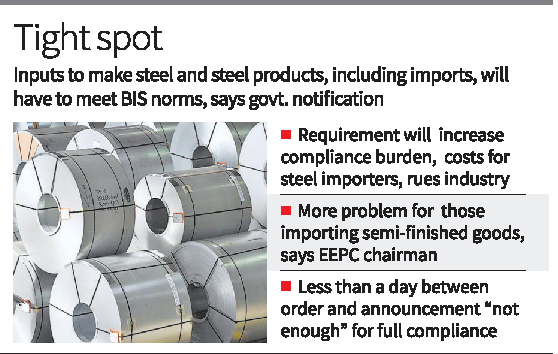
Recently ,the Ministry of Steel has extended Bureau of Indian Standards (BIS) quality norms to steel inputs and imports, giving industry players less than one working day to comply.
India’s Steel Sector
- Steel has been a key driver of industrialization and is considered a foundation of economic development.
- As both a raw material and intermediate product, its production and consumption reflect a nation’s growth.
- In India, the steel industry is divided into three categories: major producers, main producers, and secondary producers.
Present Status
- India is the world’s second largest crude steel producer after China with production of 144.3 million tonnes crude steel in FY 2023-24.
- India was net importer of finished steel during 2023-24 with export of 7.49 million tonnes and import of 8.32 million tonnes.
- The steel sector is vital to India’s economy, contributing about 2% to GDP.
Steps
- The Government of India has launched the Purvodaya programme which aims to accelerate the development of eastern India through the establishment of an integrated steel hub.
- The National Steel Policy, 2017 envisages 300 million tonnes of production capacity by 2030-31.
- In the Union Budget 2024-25, Basic Customs Duty (BCD) has been reduced from 2.5% to Nil on Ferro-Nickel and Molybdenum ores and concentrates which are raw materials for the steel industry.
- BCD exemption on Ferrous Scrap and specified raw material for manufacture of CRGO steel has been continued upto 31.03.2026.
- Implementation of Domestically Manufactured Iron & Steel Products (DMI&SP) Policy for promoting ‘Made in India’ steel for Government procurement.
- Launching of the Production Linked Incentive (PLI) Scheme for Specialty Steel to promote the manufacturing of ‘Specialty Steel’ within the country and reduce imports by attracting capital investments.
- Revamping of Steel Import Monitoring System (SIMS) 2.0 for more effective monitoring of imports to address the concerns of the domestic steel industry.
- Introduction of Steel Quality Control Order thereby banning sub-standard/ defective steel products in domestic market as well as imports to ensure the availability of quality steel to the industry, users and public at large.
Challenges and Concerns
- India’s steel industry is facing major challenges due to a surge in cheap Chinese exports, which have hurt both domestic prices and export competitiveness.
- Indian steelmakers warn that without protective measures like safeguard duties, India risks becoming a dumping ground for global steel surpluses.
- The lack of government support and abrupt implementation without adequate notice has drawn strong criticism from industry stakeholders.
Way Forward
- The steel industry has emerged as a major focus area given the dependence of a diverse range of sectors on its output as India works to become a manufacturing powerhouse through policy initiatives like Make in India.
- Despite high Chinese exports, India remains a strong growth market.
- India must proactively implement safeguard measures to reduce its reliance on imports and promote domestic steel production to ensure atmanirbharta and long-term competitiveness.
India to Cut Logistics Cost to 9% by Year-End
Syllabus: GS3/ Infrastructure
Context
- The Union Road Transport and Highways Minister has said that India’s logistics cost will come down to 9% by the Year-End.
Background
- Logistics cost refers to the total expenditure incurred to move goods from the point of origin to the point of consumption.
- It includes Transportation cost, Warehousing cost, Inventory carrying cost and Packaging and administrative cost.
- The Economic Survey 2022-23 pointed out that logistics costs in India have been in the range of 14-18% of GDP against the global benchmark of 8%.
India’s logistics sector
- The logistics industry plays a vital role in the dynamic economic landscape of India by enabling the efficient movement of goods and services throughout the country’s large territory.
- The Indian logistics sector is one of the largest in the world and presents a huge addressable opportunity.
- The warehousing and logistics sector contributes 13-14% to India’s GDP and is expanding to keep pace with the country’s rapid economic growth.
- In 2023, India ranked 38 out of the 139 nations in the World Bank’s Logistics Performance Index (LPI), up six places from the previous rankings in 2018.
Benefits of a Robust Logistics sector
- Economic Competitiveness: Efficient logistics reduces overall cost of goods and services, improving India’s ability to compete globally.
- Boosts Exports and Trade: Reliable, cost-effective logistics reduce turnaround time and improve delivery commitments.
- Industrial Growth: Reduces input cost and improves Just-in-Time (JIT) production models.
- Improves Ease of Doing Business: Efficient goods movement reduces compliance burden and inventory cost for businesses.
- Encourages both domestic and foreign investment.
- Strengthens Supply Chain Resilience: Minimises disruption risks and delays, enhancing supply chain predictability and flexibility.
Challenges with Logistics sector in India
- Lack of Technology Adoption: Slow adoption of advanced technologies, such as Internet of Things (IoT), RFID (Radio-Frequency Identification), and automation.
- The lack of technological integration results in manual processes, errors, and increased costs.
- Infrastructure Bottlenecks: Inadequate infrastructure, especially in terms of roads, ports, and last-mile connectivity, along with Poor road conditions and congestion can lead to delays and increased costs.
- Higher logistics costs: India’s expenditure on logistics costs amounts to approximately 13-14% of its Gross Domestic Product (GDP), which is considerably higher than the global average of around 8%.
- Inefficient Warehousing: Inefficiencies in warehousing, such as outdated infrastructure, lack of automation, and inadequate storage capacity, contribute to higher logistics costs.
- Limited Modal Choice: Overreliance on road transport and limited use of alternative modes such as rail and coastal shipping contribute to higher logistics costs.
Steps taken by Government of India
- Grant of Infrastructure status to Logistics sector: The government has granted infrastructure status to the logistics sector, enabling the industry to access cheaper finances.
- PM Gati Shakti’s initiative: It is a National Master Plan focused on multimodal connectivity to reduce logistics costs and stimulate economic growth.
- National Logistics Policy (NLP): In 2022, NLP was launched to ensure quick last-mile delivery, end transport-related challenges, and ensure desired speed in the logistics sector.
- The policy aims to reduce logistics costs from the current 14-18% of GDP to 8% by 2030, aligning with global best practices.
- Dedicated Freight Corridors (DFCs): The government is working on the construction of dedicated freight corridors such as the Eastern Dedicated Freight Corridor and the Western Dedicated Freight Corridor.
- Bharatmala Pariyojana: This is a flagship road and highways development program aimed at improving connectivity across the country. The project includes the development of economic corridors, inter-corridors, and feeder routes.
- Sagarmala Project: This initiative focuses on promoting port-led development to reduce logistics costs for domestic and export-import trade. It includes the development of ports, coastal shipping, and inland waterways.
Way Ahead
- Digitalisation: It enables the digitisation of documents and transactions, reducing paperwork and improving the overall efficiency of logistics operations.
- Data analytics: It can provide valuable insights into supply chain performance, allowing for better decision-making and optimisation of routes, inventory management, and resource allocation.
- Technology upgradation: Technologies such as barcode scanning, RFID, and real-time tracking can significantly enhance tracking and tracing capabilities, improving operational efficiency and reducing costs.
- Warehouse efficiency: Improved inventory accuracy, reduced warehouse stock, and optimized on-shelf stock availability, can enhance overall warehouse efficiency.
Concluding remarks
- As India positions itself as a global manufacturing alternative to China, efficient logistics will be key to outpacing competitors like Vietnam and Indonesia.
- Improved logistics performance will enhance trade competitiveness, generate employment, and help India emerge as a regional and global logistics hub.
India Develops Solar-Based Technology for Green Hydrogen Generation
Syllabus: GS3/ Energy
Context
- Scientists have developed a scalable next-generation device that produces green hydrogen by splitting water molecules using only solar energy.
About the New Device
- Core Innovation: The device uses a silicon-based photoanode with n-i-p heterojunction architecture, composed of:
- n-type TiO₂
- intrinsic Si (undoped)
- p-type NiO
- Fabrication: Done through magnetron sputtering, an industry-ready, scalable method.
- This new device has high efficiency, low energy input, robust durability, and cost-effective materials.
What is hydrogen?
- Hydrogen is the chemical element with the symbol H and atomic number 1.
- Hydrogen is the lightest element and the most abundant chemical substance in the universe, constituting roughly 75% of all normal matter.
- It is colorless, odorless, tasteless, non-toxic, and highly combustible gas.
What is Green Hydrogen?
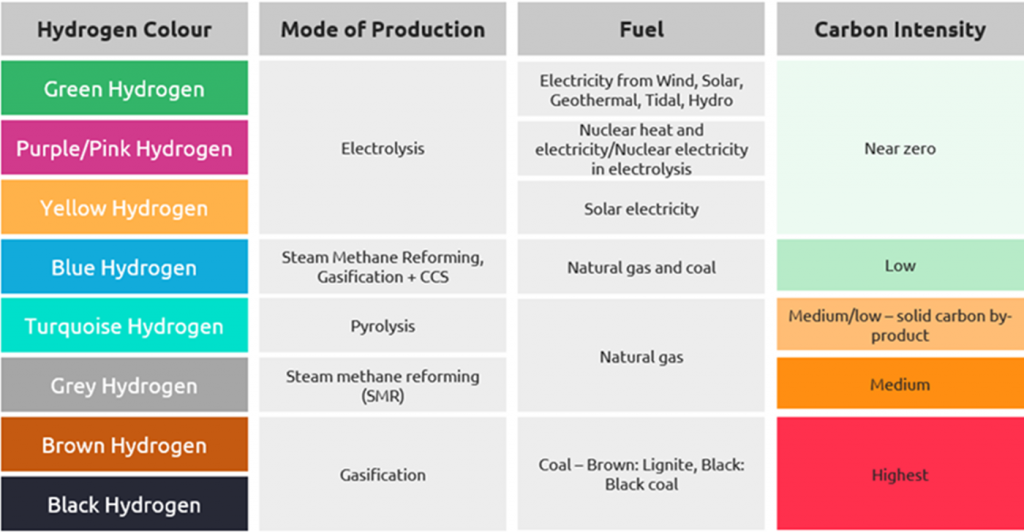
- Green Hydrogen: The hydrogen produced via electrolysis, the splitting of water into hydrogen and oxygen with electricity generated from renewable energy sources such as solar or wind, is known as Green hydrogen.
- MNRE defines Green Hydrogen as having a well-to-gate emission (i.e., including water treatment, electrolysis, gas purification, drying and compression of hydrogen) of not more than 2 kg CO2 equivalent / kg H2.
- Gujarat’s Kandla port is the first in India to have an operational Green Hydrogen plant using indigenous Electrolysers.
Significance of Green Hydrogen
- Energy Security: India is the third-largest oil consumer and fourth-largest crude oil importer, and hydrogen technology will play a key role in reducing this reliance.
- Industrial Decarbonisation: Can replace fossil fuels in hard-to-abate sectors – steel, cement, ammonia, refineries.
- Clean Mobility: Powering fuel cell vehicles, trains, and ships.
- Grid Stability: Acts as an energy storage medium for intermittent renewables.
Challenges
- Risks associated with the transportation: Hydrogen in gaseous form is highly inflammable and difficult to transport, thereby making safety a primary concern.
- High Production Costs: The levelized cost of electricity (LCOE) and electrolyzer costs are major factors driving up the overall production costs.
- Disparity in Production Costs: A substantial disparity between green hydrogen production costs ($5.30- $6.70 per kg) and traditional grey/blue hydrogen production costs ($1.9-$2.4 per kg).
- Technological Readiness: The adoption rates and risk factors associated with futuristic technologies pose challenges for financing and scaling up production.
Government initiatives for Green Hydrogen
- National Green Hydrogen Mission: The mission was launched in 2023 with an outlay of Rs. 19,744 crores. It lays out a comprehensive roadmap to:
- Identify and Create demand in potential sectors
- Provide production incentives for setting up domestic capacity
- Achieve 5 million metric tonnes of green hydrogen production by 2030.
- Averting nearly 50 MMT of CO2 emissions annually.
- Attract investments of about USD 100 billion.
- Generate over 600,000 jobs.
- The Green Hydrogen Certification Scheme is a framework established to ensure the transparent and credible certification of green hydrogen production in India.
- Green Hydrogen and Green Ammonia plants have been exempted from Environmental Clearance by the Ministry of Environment, Forest and Climate Change.
Progress
- The first batch of three hydrogen-powered heavy-duty trucks will operate on the Faridabad–Delhi NCR and Ahmedabad–Surat–Vadodara routes.
- To support this transition, Indian Oil Corporation Limited (IOCL) is establishing hydrogen refueling stations in Faridabad, Vadodara, Pune, and Balasore.
- Three major ports namely Kandla, Paradip and Tuticorin ports have been identified by the Ministry of Ports, Shipping and Waterways (MoPSW) to be developed as Green Hydrogen hubs.
Concluding remark
- India’s success in developing a solar-powered green hydrogen device signals the beginning of a transformative journey toward a decarbonised economy.
- However, translating scientific innovation into large-scale application will require coordinated efforts across policy, industry, and finance.
