
Draft Registration Bill 2025
The Draft Registration Bill, 2025, introduced by the Ministry of Rural Development’s Department of Land Resources, is a significant piece of proposed legislation for UPSC aspirants. It aims to replace the archaic 117-year-old Registration Act of 1908, ushering in a new era of digitized and citizen-centric property registration in India. This bill holds considerable relevance for the GS Paper-2 (Governance) and GS Paper-3 (Land Reforms, Economy) of the UPSC Civil Services Examination.
Context and Need for the Bill:
- Outdated 1908 Act: The existing law is a colonial-era remnant, ill-equipped to handle modern property transactions and the digital age.
- Issues with current system: Paper-heavy processes, delays, intermediaries, scope for fraud, and lack of transparency.
- Promoting Digital India: The bill aligns with the government’s vision of digital governance and ease of doing business.
- Growing reliance on registered documents: Registered documents are crucial for financial dealings, legal matters, and government services, necessitating a robust and reliable system.
2. Key Features of the Draft Registration Bill, 2025:
- End-to-End Digital Registration: Enables a completely online process from submission to final registration. Citizens will have the option for both online and traditional offline methods.
- Aadhaar-Based Verification (with alternatives): Allows Aadhaar for identity verification with informed consent, while also providing for alternative methods to ensure no denial of service.
- Expanded Scope of Registrable Documents: Widens the list of documents that must be registered, including agreements for sale, power of attorneys (POAs), mortgages created by deposit of title deeds, and business mergers involving immovable property. This aims to increase transparency and curb fraud.
- Clear Grounds for Refusal and Cancellation: Defines specific reasons for a Sub-Registrar to refuse registration. It also empowers the Inspector General of Registration to cancel fraudulent or illegal registrations, with an appeal provision.
- Reduced Penalties: Proposes a reduction in imprisonment terms for offenses from the current seven years to three years, along with fines.
- New Administrative Roles: Introduces Additional and Assistant Inspector Generals of Registration to strengthen the oversight and administration of the registration process.
- Integration with other systems: Enables electronic integration with other record-keeping systems for enhanced efficiency and data integrity.
3. Potential Benefits:
- Increased Transparency and Reduced Fraud: Digital records and expanded mandatory registration are expected to significantly curb property-related fraud and disputes.
- Ease of Doing Business and Living: Simplifies property transactions, reducing the need for physical visits and reliance on intermediaries, saving time and money for citizens.
- Enhanced Accountability: Clearly defined roles and powers for registration officers will lead to greater accountability.
- Streamlined Processes: Faster approval of home loans and other financial transactions due to instant verification of digitally recorded documents.
- Accessibility for all, including NRIs: Online processes and Aadhaar authentication can facilitate property transactions for NRIs and those who cannot physically be present.
4. Concerns and Challenges:
- Cybersecurity Risks: The transition to digital records necessitates robust cybersecurity measures to protect sensitive property data and e-signatures from breaches and cybercrime.
- Procedural Gaps with CSCs: Delegation of legally sensitive functions like stamp duty valuation and title transfer to Common Services Centres (CSCs) might lead to inconsistencies or procedural lapses if not properly regulated and monitored.
- Digital Divide: Ensuring equitable access to online registration for citizens in remote areas or those with limited digital literacy remains a challenge.
- Data Integrity and Accuracy: The success of digitization heavily relies on the accuracy and integrity of the initial data entry and ongoing updates to prevent the legitimization of historical injustices or fraudulent claims.
- Infrastructure Requirements: Adequate digital infrastructure and training for officials and the public are crucial for seamless implementation.
5. Related Government Initiatives (Contextual Linkages):
- Digital India Land Records Modernization Programme (DILRMP): This ongoing program aims to modernize and integrate land records, reduce disputes, and improve transparency. The Draft Registration Bill complements and builds upon the objectives of DILRMP.
- SVAMITVA Scheme: Launched to provide “Record of Rights” to property owners in rural areas using drone and GIS technology, which further emphasizes the government’s push towards clear land titles and digital records.
- NAKSHA Programme: A tech-driven initiative to modernize urban land records.
6. UPSC Exam Relevance:
- Prelims: Questions can be framed on the key features of the bill, its purpose, the existing act it replaces, and related government schemes (DILRMP, SVAMITVA).
- Mains (GS-2 Governance):
- Government Policies and Interventions for Development: Analyze how the bill promotes good governance, transparency, and ease of doing business.
- Issues Arising Out of Design and Implementation of Policies: Discuss the challenges related to cybersecurity, digital divide, and implementation through CSCs.
- Role of Technology in Governance: Evaluate the transformative potential and associated risks of digitizing property records.
- Mains (GS-3 Economy):
- Land Reforms: Discuss how the bill contributes to land reforms by formalizing property titles and reducing disputes.
- Ease of Doing Business: Analyze its impact on property transactions and investment.
7. Way Forward/Suggestions:
- Robust cybersecurity framework and data protection laws.
- Capacity building and training for all stakeholders.
- Public awareness campaigns to ensure widespread adoption.
- Clear guidelines and oversight for CSCs involved in registration processes.
- Mechanisms for grievance redressal and appeals.
Fighting Antimicrobial Resistance (AMR) with Insect-Based Livestock Feed
Syllabus: GS2/ Health
Context
- In light of growing concerns over antibiotic overuse in animal husbandry, India is advancing insect-based feed innovations through ICAR-led partnerships to create AMR-resilient food systems.
What is Antimicrobial Resistance?
- Antimicrobial Resistance (AMR) occurs when bacteria, viruses, fungi and parasites change over time and no longer respond to medicines making infections harder to treat and increasing the risk of disease spread, severe illness and death.
- Nearly 700,000 people die of AMR every year. The toll can rise to as many as 10 million by 2050 and eat up 3.8 per cent of annual global gross domestic product (GDP).
How does traditional Livestock feed contribute to AMR?
- Over 50% of all antibiotics globally are consumed in animal agriculture. These are used not just to treat diseases but also to promote growth.
- However, the constant exposure of gut bacteria in animals to antibiotics fosters the development of antibiotic resistance genes (ARGs), which can spread to humans through the food chain, water, soil, and direct contact.
Significance of Insect-Based Feed
- Curbing AMR: Insects contain antimicrobial peptides (AMPs) such as defensins and cecropins, which naturally boost immunity in animals and reduce disease incidence, thereby reducing antibiotic use.
- Nutritional Superiority: Insects are high in digestible protein, essential amino acids, fats, and micronutrients (e.g., zinc, iron, calcium).
- They serve as natural components of the diets of many fish and poultry species.
- Economic Viability: Studies suggest insect-based feed has a better benefit-to-cost ratio than conventional fishmeal or soybean meal.
- Local production of insect-based feed reduces dependency on expensive imports of protein-rich feed ingredients.
Efforts Against Antimicrobial Resistance
- Global Efforts:
- Global Action Plan (GAP) on Antimicrobial Resistance: Nations adopted the framework set out in the Global Action Plan (GAP) 2015 to address AMR through a coordinated and “One Health” approach.
- World Antimicrobial Awareness Week (WAAW): It is a global campaign that aims to raise awareness of antimicrobial resistance worldwide.
- Global Antimicrobial Resistance and Use Surveillance System (GLASS): WHO launched it in 2015 to continue filling knowledge gaps and to inform strategies at all levels.
- Global Antibiotic Research and Development Partnership (GARDP): A joint initiative of WHO and the Drugs for Neglected Diseases Initiative (DNDi), GARDP encourages research and development through public-private partnerships.
- Indian Initiatives:
- National Action Plan on Antimicrobial Resistance (NAP-AMR): It has a focus on the One Health approach & was launched with the aim of involving various stakeholders ministries/departments.
- AMR Surveillance Network: Indian Council of Medical Research (ICMR) established the AMR surveillance and research network (AMRSN) to generate evidence and capture trends and patterns of drug resistant infections in the country.
- India’s Red Line campaign: Which demands that prescription-only antibiotics be marked with a red line, to discourage the over-the-counter sale of antibiotics– is a step forward.
- National Antibiotic Consumption Network (NAC-NET): The network sites compile data on antibiotic consumption in their respective health facilities and send it to National Centre for Disease Control (NCDC).
- The Kerala Drug Control Department launched Operation AMRITH (Antimicrobial Resistance Intervention for Total Health) to prevent the overuse of antibiotics in the state.
Concluding Remarks
- The AMR crisis is no longer a future threat—it is a present and growing danger that challenges the very foundation of modern medicine, agriculture, and global development.
- Transitioning to insect-based livestock feed offers a transformative opportunity to not only curb the misuse of antibiotics but also reduce the environmental footprint of food systems.
How Will Foreign Universities Impact Higher Education in India?
Syllabus: GS2/ Education
Context
- The entry of several foreign universities into India, enabled by the UGC (Setting up and Operation of Campuses of Foreign Higher Educational Institutions in India) Regulations, 2023, marks a major development in Indian higher education.
Background
- Prominent foreign institutions are setting up branch campuses, mainly in GIFT City and Navi Mumbai.
- NYU Abu Dhabi and Yale-NUS in Singapore are notable successes—due to strong local partnerships, generous state support, and academic autonomy.
- This move is in line with the vision of the National Education Policy (NEP) 2020, which encourages the internationalisation of education.
Why Are Foreign Universities Entering India?
- Push Factors in the West:
- Demographic Transition: Many Global North countries like the U.K., Canada, and Australia are witnessing declining domestic enrolments due to falling birth rates.
- Financial Pressures: Public funding for higher education has declined in several Western countries. As a result, universities have turned to international students, who pay significantly higher tuition fees, to plug funding gaps.
- Recent Visa and Policy Changes: The U.K., Australia, and Canada have all introduced caps or tighter controls on international student visas due to rising migration and housing pressures, impacting their universities’ revenues.
- Budget Cuts: Faced with reduced enrolments and income, many universities have begun downsizing, making the search for overseas markets like India more urgent.
- Pull Factors in India:
- Large Youth Population: India has the largest youth population in the world. With more than 40 million students in higher education and a GER (Gross Enrolment Ratio) of ~30%, the demand for quality education is rising.
- Growing Middle Class: Rising incomes and aspirations are making premium education more affordable for Indian families.
- Regulatory Reforms: The FHEI Regulations 2023 permit top-ranking foreign universities to establish campuses in India with operational autonomy.
- NEP 2020 Goals: The NEP promotes global partnerships, knowledge exchange, and academic excellence—creating a conducive policy ecosystem.
Benefits of Foreign University Campuses
- Improved Academic Standards: Top foreign institutions are expected to bring global pedagogical practices, faculty training, interdisciplinary curriculum, and research orientation.
- International Degrees: Students who cannot afford to go abroad will be able to access international degrees at a lower cost in India.
- It also reduces the burden of foreign exchange outflows, as India annually loses around $60 billion to education abroad.
- Curbing Brain Drain: By providing high-quality opportunities within India, some students may prefer staying back, reducing the outflow of talent.
- Collaboration Opportunities: These campuses could serve as hubs of industry-academia partnerships, especially in STEM, AI, climate sciences, fintech, and liberal arts.
- Innovation Ecosystems: Locations like GIFT City and Navi Mumbai are being positioned as edu-economic hubs where students can access internships, entrepreneurship incubators, and global corporate networks.
What are the Challenges?
- Limited Initial Impact: The scale will be small in the short to medium term—initial enrolments are likely to be limited to a few thousand students per campus.
- Affordability Concerns: If foreign campuses replicate their home-country fee structures, accessibility for average Indian students may be low.
- Operational Hurdles: Despite UGC’s liberalised norms, concerns remain over land acquisition, accreditation recognition, and faculty recruitment norms.
- Precedents of Failure: Several foreign campuses in Malaysia, UAE, and China have either shut down or failed to meet expectations due to low enrolments or cultural misalignment.
Way Ahead
- Tiered Fee Structures: To ensure inclusivity, campuses should be incentivised to offer scholarships, need-based financial aid, and differential pricing.
- Clear Quality Assurance Mechanisms: UGC and NAAC should build robust oversight mechanisms to ensure foreign campuses uphold global standards while aligning with Indian values.
- Strong Local Partnerships: Foreign universities should be encouraged to collaborate with Indian HEIs, industry bodies, and research institutes to localise content and improve outreach.
- Periodic Impact Assessments: A national-level impact monitoring mechanism should assess student satisfaction, research output, and employability outcomes of foreign branch campuses.
Concluding remarks
- Foreign universities entering India is a transformational opportunity, but not a magic bullet.
- Their success will depend on affordability, inclusivity, and integration with India’s broader educational ecosystem. If navigated wisely, this move can catalyse India’s ambition of becoming a global knowledge hub, as envisioned by the NEP 2020.
Expansionary Policies in a Slowing Economy
Syllabus: GS3/Economy
Context
- India is currently witnessing a rare phase where both fiscal and monetary policies are expansionary.
- While this approach aims to revive aggregate demand in a slowing economy, it also brings the risk of inflation, policy misalignment, and fiscal stress.
Key Policies Adopted Recently
- In Union Budget 2025–26, ₹11.21 lakh crore earmarked for infrastructure, agriculture, MSMEs, and digital connectivity (strong emphasis on capital expenditure).
- Income Tax cuts announced were intended to boost consumption during a slowdown.
- RBI cut the repo rate to 5.5% to encourage borrowing and investment amid slowing growth.
- The RBI’s dual mandate — price stability and growth — has led to:
- Rate cuts to encourage borrowing.
- Inflation targeting, with retail inflation falling to 4.6% in 2024–25.
- Liquidity support for financial institutions and NBFCs.
Issues & Challenges
- Lack of Policy Coordination: If both policies work together without coordination, it might overheat the economy causing inflation.
- Despite these policies, growth is still slow, credit growth is weak, and unemployment is rising.
- Muted Demand Response: People are not spending much, even with tax cuts. This challenges the Rational Expectations Theory (core to inflation targeting)
- Widening Fiscal Deficit Risk: If growth doesn’t rise, tax revenue will fall, leading to a fiscal deficit. To plug the gap, the government may have to cut welfare spending, hurting vulnerable groups.
- Rising Inequality and Weak Wages: Corporate profits rising, but real wages stagnant. Expansion policies may benefit capital more than labour.
Instances of Expansionary Policies Adopted in Past
- The New Deal (1930s): By the United States, in response to the Great Depression.
- Post-2008 Global Financial Crisis: By Central Banks and US Federal Reserve; Slashed interest rates to near zero and introduced quantitative easing — buying government securities to inject liquidity into the economy.
- In India, RBI slashed the repo rate from 9% in 2008 to 4.75% by April 2009.
- Japan’s Abenomics (2012–2020): Three-pronged strategy:
- Monetary easing by the Bank of Japan;
- Fiscal stimulus through government spending; and
- Structural reforms to revive Japan’s stagnant economy.
- COVID-19 Pandemic Response (2020–2021):
- Massive fiscal stimulus packages — direct cash transfers, unemployment benefits, and business loans — while central banks cut interest rates and expanded asset purchases to cushion the economic blow.
- India rolled out the Aatmanirbhar Bharat Abhiyan, a ₹20 lakh crore package
- Other steps:
- Repo rate cuts to a historic low of 4%.
- Loan moratoriums and liquidity support for NBFCs and housing finance companies.
Benefits of Expansionary Policies in India
- Boosts Aggregate Demand: Expansionary fiscal policies like tax cuts and increased public spending raise disposable incomes and consumption.
- Similarly, lower interest rates encourage borrowing and investment, helping revive demand across sectors.
- Supports Employment: Government-funded infrastructure projects and MSME support schemes can generate jobs, especially in rural and informal sectors, reducing unemployment during downturns.
- Encourages Private Investment: Lower borrowing costs and improved consumer sentiment can incentivize businesses to invest in capacity expansion, innovation, and hiring.
- Stabilizes Financial Markets: Liquidity injections by the RBI and credit guarantees for NBFCs and banks help maintain financial stability and prevent credit crunches.
- Short-Term Economic Relief: During emergencies like the COVID-19 pandemic, direct cash transfers and food security measures provided immediate relief to vulnerable populations.
Way Forward
- Strengthen Policy Coordination Mechanism: Institutionalised dialogue between RBI and Ministry of Finance.
- Prioritise Targeted Transfers: Increase DBTs and wage support schemes to boost bottom-up demand.
- Revise Tax Structures Holistically: Combine income tax relief with indirect tax (GST) rationalisation.
- Monitor Inflation Proactively: Pre-emptively tighten monetary policy if demand-pull inflation rises.
Conclusion
- Expansionary policies have played a vital role in India’s economic management, especially during crises. However, their success depends on timing, targeting, and coordination.
- Policymakers need to balance short-term stimulus with long-term fiscal prudence and structural reforms to ensure sustainable growth.
| Fiscal Policy – It refers to the government’s use of taxation and public spending to influence the economy. – Expansionary Fiscal Policy involves increasing government spending or cutting taxes to stimulate demand. – Contractionary Fiscal Policy means reducing spending or increasing taxes to cool down an overheating economy or reduce fiscal deficits. 1. The government uses fiscal responsibility frameworks, such as the FRBM Act, to maintain long-term macroeconomic stability. Monetary Policy – It is managed by the Reserve Bank of India (RBI) and involves regulating interest rates and money supply to maintain price stability and support growth. – Expansionary Monetary Policy: By lowering interest rates or conducting open market operations to inject liquidity. – Contractionary Monetary Policy: It involves raising interest rates or reducing money supply, used to curb inflation. |
Quantum Communication
Syllabus: GS3/Science and Technology
Context
- India has successfully demonstrated quantum secure communication using quantum entanglement over free space by the DRDO-Industry-Academia Centre of Excellence (DIA-CoE), IIT Delhi.
- This marks a significant milestone in India’s quantum technology roadmap.
Key Highlights
- Technology Used: Quantum Entanglement-based Free-Space Quantum Key Distribution (QKD).
- Secure Key Rate: ~240 bits per second.
- Quantum Bit Error Rate (QBER): < 7%.
- Distance: Over 1 km free-space optical link on IIT Delhi campus.
Quantum Communication
- Quantum communication uses quantum physics, especially quantum entanglement, to create ultra-secure channels for sending information.
- Quantum Entanglement: When two photons are entangled, measuring one instantly determines the state of the other — even if they are far apart.
- Main purpose: To make communication leak-proof. Any eavesdropping attempt will disturb the entangled state, revealing the intrusion.
What is Quantum Key Distribution (QKD)?
- QKD allows secure exchange of encryption keys using quantum mechanics.
- Uses photons (light particles) as information carriers.
- Quantum entanglement-based QKD is highly secure — any hacking attempt disturbs the system and gets detected.
- Entanglement-based Quantum Key Distribution (QKD) Advantages:
- Security even with imperfect or compromised devices.
- Intrusion detection through quantum state disturbance.
- More robust than traditional prepare-and-measure QKD methods.
- Applications:
- Defence communications.
- Secure banking and telecom networks.
- Strategic sector data protection.
- Cost-effective: Free-space QKD avoids costly fiber-laying in challenging geographies.
Why Free-Space Communication?
- Free-space or satellite-based QKD can connect long distances without laying cables.
- Cables (optical fiber) become costly and impractical over long distances.
Global Comparison
- China is leading with a 4,600 km quantum network since 2021.
- China had demonstrated satellite-based quantum communication nearly one decade ago, as they had a head start in quantum communication activities since the early 2000s.
- Since 2005, there have been ground demonstrations in Europe, Canada, and the United States of free-space (without cables) QKD greater than 100 km, suggesting that India still has much to cover regarding QKD-entanglement communication.
Challenges
- It requires not only adequate funds but also a large, dedicated team of multidisciplinary skilled experts for developing several types of enabling technologies.
- Atmospheric disturbances increase error in free-space.
- India started late (2020s) and must catch up with global leaders.
- Using fibre optic cables provides a stable channel for quantum communication which free-space channels do not.
Future Plans
- Under the National Quantum Mission (NQM) India is focusing on satellite-based long-distance QKD.
- The support includes quantum start-ups, indigenous equipment, and lab-to-market technologies.
- India aims to achieve satellite-based QKD and a quantum network across India in 5–10 years.
Source: TH
MISCELLANEOUS
Dr. Syama Prasad Mukherjee
Syllabhus: GS1/History
In News
- Prime Minister Narendra Modi paid tributes to Bharatiya Jana Sangh’s founding president Syama Prasad Mukherjee on his death anniversary.
Dr. Syama Prasad Mukherjee
- He was born on 6th July 1901 in Calcutta.
- He was a multifaceted personality -patriot, educationist, parliamentarian, statesman, and humanitarian.
- He inherited a legacy of erudition and nationalism from his father, Sir Ashutosh Mukherjee, an esteemed Vice-Chancellor of Calcutta University and Judge of the Calcutta High Court.
Major Contributions
- He excelled academically and served as the youngest Vice-Chancellor of Calcutta University, promoting Indian languages and education.
- He was initially involved with Congress and later joined the Hindu Mahasabha, becoming its acting president and advocating for complete Indian independence.
- As Finance Minister in Bengal, he opposed colonial interference and contributed to famine relief efforts.
- Post-independence, he served as Industry Minister, helping establish key industrial institutions before founding the Bharatiya Jan Sangh in 1951.
- He was Known as “The Lion of Parliament,” he was a powerful orator championing national unity, especially the integration of Jammu and Kashmir.
Legacy
- He died in detention in Kashmir in 1953 and is remembered for his patriotism, leadership, and dedication to India’s unity.
Source :PIB
UMEED Portal
Syllabus: GS2/ Governance
Context
- The Minority Affairs Ministry actively engages with States and Union Territories to ensure effective implementation of the UMEED portal, ensuring all Waqf properties are uploaded within six months.
About UMEED Portal
- The portal is developed by the Ministry of Minority Affairs to manage Waqf properties efficiently across India.
- The UMEED Central Portal, short for Unified Waqf Management, Empowerment, Efficiency and Development Act, 1995 will serve as a centralized digital platform for real-time uploading, verification, and monitoring of Waqf properties.
- Key Features of the Portal are:
- Creation of a digital inventory with geo-tagging of all Waqf properties
- Online grievance redressal system for better responsiveness
- Transparent leasing and usage tracking
- Integration with GIS mapping and other e-Governance tools
- Public access to verified records and reports.
Source: PIB
US Attack on Iran’s Nuclear Facilities
Syllabus: GS2/ International relations
Context
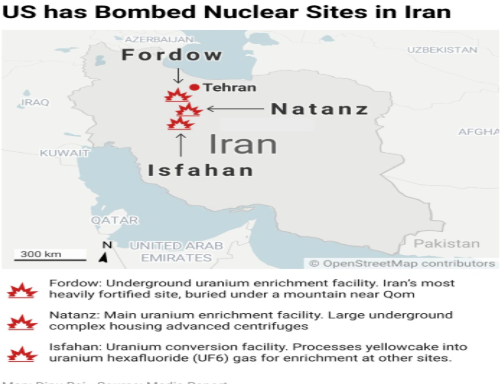
- The United States attacked three key nuclear installations in Iran—Natanz, Fordow, and Isfahan.
Background
- The strikes, known as Operation Midnight Hammer, mark the first direct U.S. military intervention targeting Iran’s nuclear infrastructure amid its war with Israel.
- The operation was coordinated with Israeli forces.
Other Nuclear Sites (Not Targeted)
- Bushehr Nuclear Power Plant: Commercial site, Russian-fueled, under IAEA monitoring.
- Arak Heavy Water Reactor: Potential for plutonium production; reconfigured under JCPOA.
- Tehran Research Reactor: Retrofitted for low-enriched uranium use.
| Joint Comprehensive Plan of Action (JCPOA) – JCPOA, commonly known as the Iran nuclear deal, is a landmark diplomatic agreement reached in 2015 between Iran and the P5+1 countries — United States, United Kingdom, France, Russia, China, and Germany, along with the European Union. – To ensure that Iran’s nuclear program remains peaceful and to prevent Iran from developing nuclear weapons, in exchange for lifting economic sanctions. – However In 2018, the U.S. under President Donald Trump unilaterally withdrew from the JCPOA. Main Provisions of the JCPOA – Uranium Enrichment Limits: Iran agreed to cap uranium enrichment at 3.67% purity (far below the 90% needed for weapons). 1. It could only keep 300 kg of low-enriched uranium, down from over 10,000 kg. – Centrifuge Reduction: Iran agreed to reduce its number of centrifuges from about 20,000 to 6,104, of which only 5,060 could be used for enrichment. – About Fordow: No uranium enrichment for 15 years. 1. Natanz: The only site allowed to enrich uranium under strict monitoring. – Heavy Water Reactor at Arak: Iran had to redesign and rebuild the reactor to prevent plutonium production. – Iran agreed to allow IAEA inspectors regular and long-term access to its nuclear facilities, including undeclared sites. – Sanctions Relief: In exchange, UN, U.S., and EU nuclear-related sanctions were lifted, giving Iran access to global markets and frozen assets. |
Source: IT
Iran Moves to Block Strait of Hormuz
Syllabus: GS2/ IR
In News
- Iran’s Parliament has approved a proposal to close the Strait of Hormuz due to U.S. strikes on Iranian nuclear facilities, escalating the Iran-Israel conflict.
About Strait of Hormuz
- The Strait of Hormuz connects the Persian Gulf to the Gulf of Oman and the Arabian Sea.
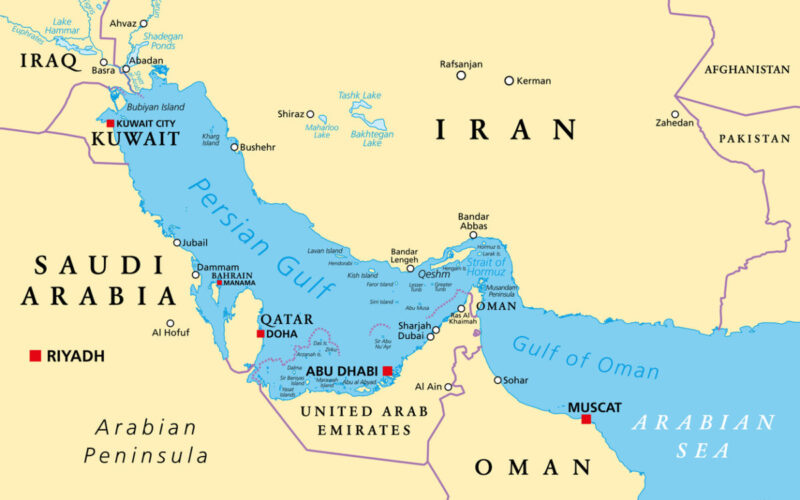
- It is located between Oman and Iran.
- It provides the only sea passage from the Persian Gulf to the open ocean and is one of the world’s most strategically important choke points.
- It serves as the primary export route for Gulf producers such as Saudi Arabia, the United Arab Emirates, Iraq, and Kuwait.
- It handles about 20 million barrels of oil daily—around one-fifth of global supply—and significant LNG volumes.
- In 2024–25, it accounted for over a quarter of global seaborne oil trade, making it vital to global energy security.
Impacts of Closure
- Saudi Arabia and the UAE have limited overland pipeline alternatives to the Strait of Hormuz, covering less than half its capacity.
- Any closure of the Strait would disrupt global supply chains and increase shipping and insurance costs.
- India imports 90% of its crude oil, with around 2 million barrels per day passing through the Strait of Hormuz.
- However, India’s diversified oil sources, with Russian crude now making up 38% of imports.
- A prolonged crisis could weaken growth, raise inflation, pressure the rupee, and strain fiscal space.
Source: BS
Sariska Tiger Reserve
Syllabus: GS3/Environment
Context
- A plan drawn up to rationalise the boundary of Sariska Tiger Reserve’s Critical Tiger Habitat (CTH) may offer a lifeline to over 50 marble and dolomite mines that were closed following a Supreme Court order.
- If approved, the new boundaries would exclude degraded peripheral areas, moving mining operations outside the prohibited one-kilometre zone.
About
- Sariska Tiger Reserve or Sariska National Park is one of the biggest and most renowned Tiger reserves in Northern India.
- The park is located in the Alwar district of Rajasthan.
- Sariska Tiger reserve used to be the hunting ground for the princely state of Alwar. But after Independence, The Sariska Forest was first notified as a Wildlife Reserve in 1955.
- 1978: It was declared as the 11th Tiger Reserve by the Government of India.
- 1982: The Sariska Wildlife Sanctuary was designated as Sariska National Park.
Source: IE
GBU-57 Massive Ordnance Penetrator/MOP
Syllabus: GS3/Defence
Context
- The American military has completed airstrikes on three sites in Iran, marking a significant escalation in the ongoing conflict with Israel.
- Located 300 feet beneath a mountain, Fordo is where Iran has allegedly tried to enrich uranium for weapons purposes and stockpile the enriched uranium.
About
- The GBU-57 Massive Ordnance Penetrator is the largest non-nuclear bomb in the US inventory.
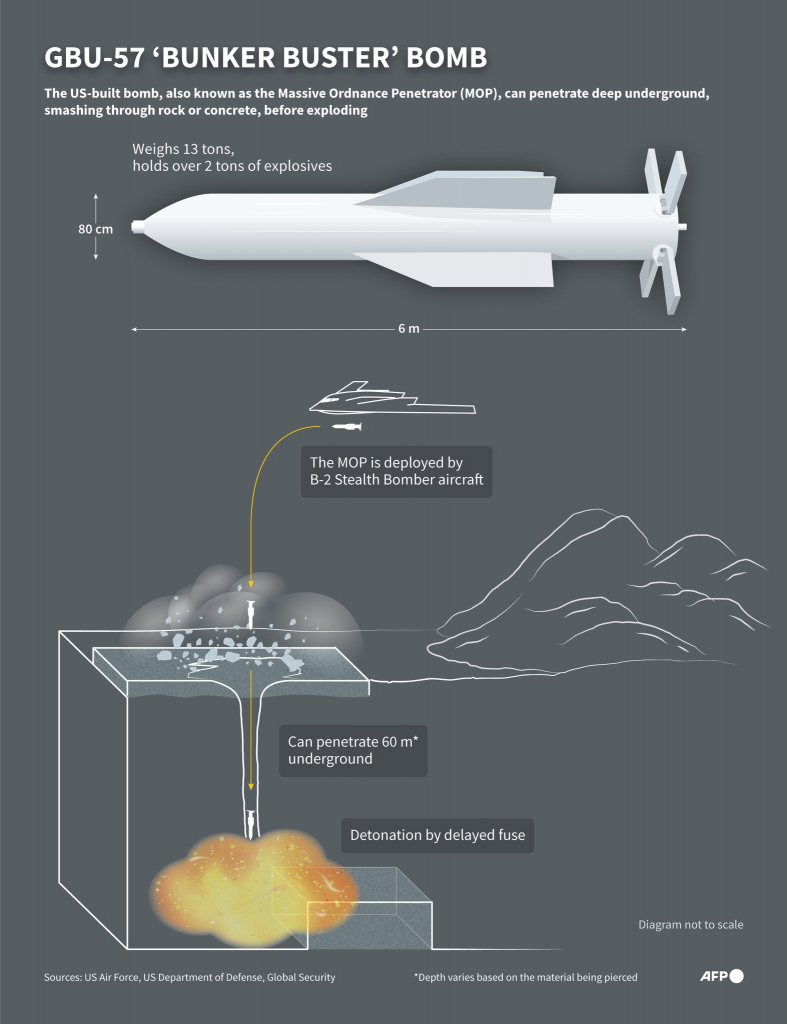
- Built by Boeing and guided by GPS, it is engineered specifically to target deeply buried and hardened bunkers.
- MOP measures 20.5 feet in length and 31.5 inches in diameter, and weighs just under 30,000 pounds—including 5,300 pounds of high-explosive material.
- The bomb can burrow more than 200 feet through reinforced concrete before detonating. Its casing, made from high-performance steel alloy, helps it withstand the immense impact forces upon penetration.
- Any country other than the US, does not have any non-nuclear weapon systems that can penetrate a site as deep as Fordo.
