
Bangladesh Joins Tri-Nation Meeting with China & Pakistan
Syllabus: GS2/ International Relations
Context
- Bangladesh, China and Pakistan held an informal trilateral meeting on the sidelines of the 9th China-South Asia Exposition and the 6th China-South Asia Cooperation meeting in Kunming.
About the meeting
- The three countries exchanged views on the basis of mutual trust, understanding and shared vision for peace, prosperity and stability in the region, the release added.
- They identified key areas for cooperation including infrastructure, connectivity, trade, investment, healthcare, agriculture, maritime affairs, ICT, disaster preparedness, and climate change.
Why Are These Countries Coming Closer?
- China’s Strategic Interests:
- BRI Expansion: China is deepening its Belt and Road Initiative (BRI) footprint in South Asia by integrating regional players through infrastructure and trade projects.
- Countering Indo-Pacific Strategy: The trilateral can be seen as an effort to balance the Quad (India, US, Japan, Australia) and the Indo-Pacific security architecture.
- Pakistan’s Objectives:
- Regional Isolation: Pakistan is facing regional diplomatic isolation and sees China as a steadfast ally.
- Leverage in South Asia: Inclusion of Bangladesh helps Pakistan engage with another key South Asian player, diluting Indian influence.
- Bangladesh’s Calculated Hedging:
- Balancing India and China: While traditionally close to India, Bangladesh is also seeking Chinese investment and infrastructure support to diversify its partnerships.
- Economic Interests: China is Bangladesh’s top trading partner and a significant source of FDI, especially in energy and infrastructure.
Geopolitical Implications of the Trilateral Engagement
- Attempt at Creating a ‘Continental Bloc’: The trilateral could gradually evolve into a strategic bloc in South Asia with deep Chinese influence — running parallel to India-led initiatives like BIMSTEC and BBIN.
- China’s Maritime Ambitions: If the cooperation extends into Bay of Bengal maritime affairs, it would mark a significant Chinese foothold in India’s maritime backyard.
- Diminishing SAARC Relevance: With SAARC rendered ineffective due to India-Pakistan tensions, China is now attempting to craft a China-centric alternative regional format.
- Potential for Strategic Infrastructure: China’s port investments in Chittagong (Bangladesh) and Gwadar (Pakistan) could eventually support dual-use facilities, raising concerns about militarisation and encirclement of India.
Way Ahead
- Regional Multilateralism: India needs to proactively push sub-regional groupings like BIMSTEC, BBIN, and IORA as platforms for promoting regional connectivity and countering China-centric regional architectures.
- Recalibration of Neighbourhood Policy: A long-term strategic blueprint that includes predictable economic assistance, respect for smaller nations’ agency, and cooperative security mechanisms can help counter China’s transactional diplomacy.
- India must enhance its maritime domain awareness and naval diplomacy. Strengthening QUAD naval exercises, expanding Sagarmala and Project Mausam, and deepening ties with Indian Ocean littoral countries (like Seychelles, Mauritius, Indonesia) are vital.
Concluding remarks
- The informal alignment among China, Pakistan, and Bangladesh reflects China’s evolving strategy to reshape South Asia’s geopolitical architecture in its favour.
- India must respond with a balanced strategy that combines principled diplomacy, development-led partnerships, and robust security measures to preserve its leadership and promote regional stability.
India-South Africa Exchange Agreements in Domain of Submarine Cooperation
Syllabus: GS2/ IR, GS3/ Defence
Context
- India and South Africa signed two agreements in the domain of submarine cooperation during the 9th Joint Defence Committee (JDC) meeting held in Johannesburg, South Africa.
Significance of Cooperation Between two Countries
- Blue‑Water Collaboration: For India’s goal to bolster blue-water naval presence, cooperation with South Africa enhances reach across the Indian and Atlantic Oceans.
- Shared Security Beyond Submarines: These agreements bolster not just rescue, but also training, surveillance, and joint R&D—a key to addressing threats like piracy, trafficking, and strategic rivalries.
- Defence Industrial Growth: India’s defence manufacturing prowess aligns well with South Africa’s naval modernization ambitions.
- Regional & Historical Significance: Rooted in shared anti-colonial histories, this partnership extends diplomatic convergence into deeper defence integration.
India-South Africa Relations
- History of Friendship: India and South Africa share historic ties rooted in the struggle against colonialism and apartheid. India was the first country to cut trade ties with the apartheid regime in 1946 and led international efforts at the UN and NAM to impose sanctions.
- Diplomatic Relations: Formal diplomatic ties were restored in 1993.
- The Red Fort Declaration of 1997 created a Strategic Partnership.
- 2023 marked 30 years of renewed diplomatic relations.
- Defence and Maritime Cooperation: Defence cooperation began in 1996.
- India and South Africa conduct joint naval exercises like IBSAMAR (India-Brazil-South Africa Maritime) and MILAN.
- South Africa also participates in India-Africa Defence Dialogue and has sent liaison officers to India’s IFC-IOR.
- Political Engagement: India and South Africa regularly hold high-level meetings at BRICS, G20, and IBSA forums.
- President Cyril Ramaphosa was the Chief Guest at India’s Republic Day in 2019.
- Trade and Investment: Bilateral trade reached $19.25 billion in 2023–24.
- India exports vehicles, pharma products, rice, and chemicals.
- It imports gold, coal, copper ore, phosphoric acid, and manganese from South Africa.
- India is among the top 10 trading partners of South Africa.
- Skill and Education Cooperation: The Gandhi–Mandela Centre of Specialisation was set up in Pretoria in 2021 to train artisans.
- India offers ITEC training programmes for South African professionals.
- Indian Diaspora: South Africa has a 1.7 million strong Indian-origin population.
- Most reside in KwaZulu-Natal, Gauteng, and Cape Town.
Way Ahead
- India–South Africa relations are built on shared history, mutual respect, and a commitment to inclusive development.
- By deepening cooperation across defence, trade, innovation, and multilateral forums, India and South Africa can play a leading role in shaping a just and equitable world for the Global South.
NITI Aayog Pushes for Robust Data Ecosystem
Syllabus: GS3/Infrastructure
Context
- NITI Aayog today released the third edition of its quarterly insights series Future Front, titled “India’s Data Imperative: The Pivot Towards Quality.”
About
- This report underscores the urgent need for robust data quality to fortify digital governance, cultivate public trust, and ensure efficient service delivery.
- India’s digital infrastructure (UPI, Aadhaar, Ayushman Bharat) has scaled massively.
- However, as platforms mature, quality of data has become a national imperative.
- A single error (wrong digit, mismatched name) can cause serious issues: halted pensions, subsidy misdelivery, or inflated welfare costs.
Need for Robust Data Ecosystem
- Fiscal Leakage: Errors and duplication lead to 4–7% annual welfare overspending.
- Policy Distortion: Inconsistent or outdated data causes misdirected schemes and delays.
- Erosion of Trust: Citizens lose faith due to mismatched records and claim rejections.
Core Challenges Identified
- Systemic Design Flaws: Incentives prioritize speed over accuracy.
- Fragmentation: Silos and incompatible formats hinder integration.
- Outdated Systems: Legacy tech lacks validation, audit trails.
- Lack of Accountability: No clear data custodianship.
- Rushed Execution: Quantity-focused targets compromise quality.
- Low Expectations: 80% accuracy considered “good enough” in many systems.
Structural Recommendations
- Institutionalising Ownership: Designate data custodians at national/state/district levels.
- Make quality a shared responsibility—programme heads, IT teams, field staff.
- Ensure a single point of accountability for maintaining data integrity end-to-end.
- Incentivising Data Quality: Go beyond speed; reward accuracy and completeness.
- Track indicators like error rates, completion levels and timeliness.
- Integrate these into programme reviews as a measure of delivery strength, not just audit compliance.
- Ensuring Interoperability: Enable systems to securely exchange data across platforms, departments, and time horizons.
- Essential for preserving public data value.
Road Ahead: Cultural Shift Needed
- Promote a culture of data stewardship across all levels of government.
- Call for visible top-level commitment to reinforce the value of clean, trusted data.
- Data quality is now central to public trust, efficient service delivery, and the success of India’s AI ecosystem.
RBI and Banks to Launch Digital Payment Intelligence Platform (DPIP)
Syllabus: GS3/Economy
In News
- Major public and private sector banks are collaborating to develop the Digital Payment Intelligence Platform (DPIP) as a Digital Public Infrastructure (DPI) under the guidance of the Reserve Bank of India (RBI).
| Do you know? – Digital Public Infrastructure (DPI) refers to foundational digital systems that are accessible, secure, and interoperable, supporting essential public services. – In India, DPI has been instrumental in transforming the digital economy, much like traditional infrastructure for industrial growth. |
Digital Payment Intelligence Platform (DPIP)
- It aims to strengthen fraud risk management by enabling real-time data sharing and intelligence gathering to detect and prevent fraudulent digital transactions.
- The institutional framework is being jointly developed by public and private banks, recognizing fraud as a shared threat.
- The Reserve Bank Innovation Hub (RBIH) is building a prototype in collaboration with 5–10 banks using advanced technologies.
- The platform is expected to become operational in the next few months.
Need and Purpose
- Cybercrime, particularly digital financial fraud, is a growing threat in India, affecting millions and causing massive financial losses.
- RBI’s FY25 report highlights a threefold rise in bank frauds to ₹36,014 crore from ₹12,230 crore in FY24.
- Public sector banks reported ₹25,667 crore in frauds (mainly in loans/advances).
- Private sector banks saw the highest number of frauds in digital payments (card/internet).
- The DPIP is thus a proactive step to secure India’s growing digital financial ecosystem.
- It will tackle the rising digital payment frauds and aims to enhance fraud detection and prevention through real-time data sharing and intelligence gathering.
Challenges
- Fraudsters typically exploit victims through impersonation, phishing for banking credentials, or stealing card details, and then launder the stolen money through multiple accounts to evade detection.
- Investigations face major challenges such as delayed reporting, victims erasing evidence, and slow, unstructured data sharing from financial institutions.
Other related steps
- The Government, along with financial regulators like RBI and NPCI, is actively strengthening cybersecurity to combat digital financial frauds.
- The Ministry of Home Affairs (MHA) established the Indian Cyber Crime Coordination Centre (I4C) and launched the National Cyber Crime Reporting Portal to enable public reporting of cybercrimes, routing cases to respective law enforcement agencies.
- The ‘Citizen Financial Cyber Fraud Reporting and Management System’ has helped save around Rs. 4386 crore from 13.36 lakh complaints.
- RBI has issued guidelines mandating security controls for digital payments and introduced an AI tool, ‘MuleHunter,’ to detect money mules.
- NPCI has implemented security measures like device binding, two-factor authentication, transaction limits, and AI-based fraud monitoring for UPI transactions.
Suggestions and way forward
- Financial fraud in India requires a combined effort involving technology, regulatory reforms, faster data sharing, and public awareness.
- Cooperation among banks, fintech companies, law enforcement, and consumers is essential to protect the digital financial system and build a secure, trustworthy environment.
- Key prevention measures include multi-device login alerts, disabling screen-sharing on banking apps, and mandating clear, detailed bank statements.
India Breaks into Top 100 in Global SDG Rankings
Syllabus: GS3/Sustainable Development
Context
- India has, for the first time, secured a position among the top 100 countries in the Sustainable Development Goals (SDG) Index.
About
- The Sustainable Development Report (SDR) reviews progress made each year on the Sustainable Development Goals since their adoption by the 193 UN Member States in 2015.
- This edition also includes for the first time an assessment of which countries have made the most progress on the SDGs using a headline SDG Index (SDGi).
Major Highlights
- Global Commitment through Voluntary National Reviews (VNRs): 190 out of 193 UN member states have participated in the VNR process since the adoption of Agenda 2030.
- Regional Trends in SDG Progress: East and South Asia is the fastest progressing region since 2015.
- Drivers of progress: Rapid improvements in socioeconomic indicators.
- Top Performers in SDG Index: Finland, Sweden and Denmark hold the top three positions.
- 19 out of the top 20 performers are European countries.
- Challenges remain even for top countries — particularly in climate action and biodiversity goals.
- India ranked 99th out of 167 nations.
- It places India with a score of 67 on the SDG Index, a significant improvement from its 109th rank in 2024.
- Since the adoption of the SDGs, India has steadily improved its standing: it ranked 112th in 2023, 121st in 2022, and 120th in 2021.
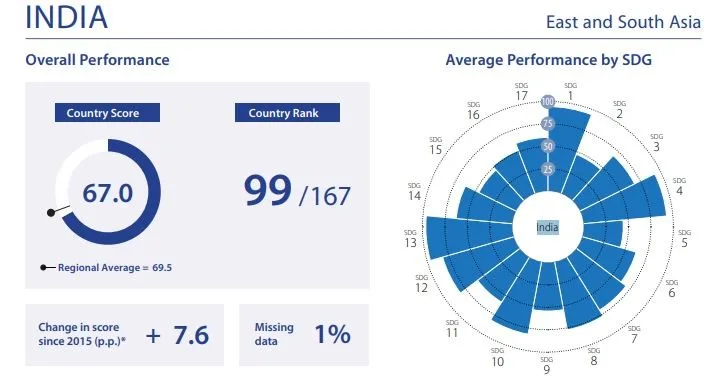
- Among India’s neighbours, China ranks 49th (74.4), Bhutan ranks 74th (70.5), Nepal 85th (68.6), Bangladesh 114th (63.9), and Pakistan 140th (57).
- Maritime neighbours Maldives and Sri Lanka stand at 53rd and 93rd places respectively.
- Global SDG Progress Remains Off-Track: None of the 17 SDGs are currently on track to be achieved globally by 2030.
- Only 17% of SDG targets are on track worldwide.
- Major obstacles: Conflicts, structural vulnerabilities, limited fiscal space.
- Notable progress seen in: SDG 3 (Health): Under-5 and neonatal mortality.
- SDG 7: Access to electricity.
- SDG 9: Mobile broadband use and internet access.

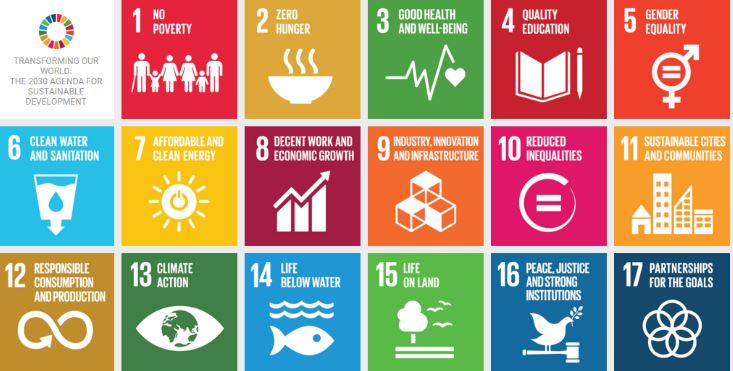
- It identified five areas of significant regression since 2015: obesity rates (SDG 2), press freedom (SDG 16), sustainable nitrogen management (SDG 2), the Red List Index measuring biodiversity loss (SDG 15), and the Corruption Perceptions Index (SDG 16).
- UN-Based Multilateralism Index (UN-Mi): Barbados ranks 1st – most committed to UN-based multilateralism.
- The United States ranks last, following the withdrawal from Paris Climate Agreement (2025), Exit from World Health Organization (WHO) and Formal opposition to SDGs and Agenda 2030.
- Fiscal Constraints in Developing Countries: Around 50% of the global population lives in countries lacking fiscal capacity to invest in sustainable development.
- Global public goods (like climate protection, global health, peace) remain underfunded.
Recommendations
- Need for Reform in Global Financial Architecture (GFA) as the current GFA favors wealthy nations with easier capital access.
- Proposes practical reforms to boost and align global financing toward SDGs and public goods.
Climate Finance
Syllabus: GS3/Environment
Context
- India has emerged as a vocal leader among developing nations, reigniting the debate over climate finance obligations, at the ongoing climate talks in Bonn, Germany.
| Bonn Climate Change Conference – It is formally known as the Sessions of the UNFCCC Subsidiary Bodies (SB62), held annually in Bonn, Germany. – It brings together delegates from nearly 200 countries to advance technical negotiations and lay the groundwork for decisions at the year-end COP summit. Focus Areas – Finalizing indicators for the Global Goal on Adaptation (GGA) – Advancing the Just Transition Work Programme – Scaling up Climate Finance, including discussions on the $1.3 trillion roadmap – Enhancing transparency systems and climate data exchange – Reviewing progress on Nationally Determined Contributions (NDCs) and Article 6 mechanisms of the Paris Agreement. |
About Climate Finance
- It refers to local, national, or transnational funding — sourced from public, private, and alternative channels — that supports mitigation and adaptation actions to address climate change.
- It is grounded in the principle of Common But Differentiated Responsibilities (CBDR), recognizing that developed countries must provide financial support to those with fewer resources and greater vulnerability.
Roadmap of Climate Finance
- At COP29 in Baku, the global community adopted the Baku to Belém Roadmap (B2B Roadmap) as part of the New Collective Quantified Goal (NCQG) on climate finance.
- It aims to scale up climate finance to $1.3 trillion annually by 2035, a significant leap from the unmet $100 billion annual pledge made in 2009.
- Rio Declaration (1992) formally introduced the polluter-pays principle.
Why Climate Finance Is Essential?
- Bridging the Adaptation Gap: Adaptation remains underfunded compared to mitigation.
- Developing countries need financial support to build resilient infrastructure, climate-smart agriculture, and early warning systems.
- Enabling Mitigation at Scale: Transitioning to clean energy, improving energy efficiency, and reducing emissions in sectors like transport and industry demand large-scale investments.
- Without climate finance, many developing nations cannot meet their NDCs under the Paris Agreement.
- Addressing Equity and Justice: Developed nations, historically responsible for the bulk of emissions, are obligated to support those who contributed least but suffer most.
Key Concerns
- For Developing Nations:
- Sovereignty and Conditionality: Developing countries, including India, have raised concerns about the imposition of external conditions on finance delivery.
- The G77 and China bloc emphasized that climate finance must respect national priorities.
- Shift from Provision to Mobilization: India, speaking on behalf of the Like-Minded Developing Countries (LMDCs), reiterated that climate finance is a legal obligation, not an investment opportunity.
- Adaptation vs. Mitigation Imbalance: While mitigation projects — like renewable energy — attract more funding, adaptation efforts remain underfunded.
- It affects vulnerable communities in the Global South, who face the brunt of climate impacts.
- Sovereignty and Conditionality: Developing countries, including India, have raised concerns about the imposition of external conditions on finance delivery.
- For Developed Nations:
- Expanding Donor Base: Some developed countries argue that emerging economies like China and Gulf nations should contribute to climate finance, citing their economic strength.
- Private Sector Reliance: Developed nations increasingly advocate for private-sector-led finance, raising concerns about transparency, equity, and alignment with public interest.
India’s Climate Finance Landscape
- India’s Global Advocacy: India has consistently emphasized the legal obligation of developed nations under Article 9.1 of the Paris Agreement to provide climate finance.
- India has received approximately USD 1.16 billion in climate finance through UN mechanisms — comprising funds from the Green Climate Fund, Global Environment Facility, and Adaptation Fund.
- Most of India’s climate action, including large-scale renewable energy deployment and adaptation programs, is financed through domestic resources.
- India & Adaptation: The Economic Survey 2024–25 highlights the development of a National Adaptation Plan (NAP) and the submission of an Initial Adaptation Communication (IAC) to the UNFCCC. These include:
- Climate-resilient agriculture through improved seeds and soil health.
- Urban adaptation via the National Mission on Sustainable Habitat (NMSH).
- Water body rejuvenation under AMRUT, with over 3,000 projects approved.
