
Mitochondrial Replacement Therapy (MRT): A Frontier in Reproductive Medicine
Syllabus: GS3/Science & Technology (Biotechnology, Health, Genetic Engineering); GS2/Ethics (Bioethics, Reproductive Rights)
In Context
Mitochondrial Replacement Therapy (MRT), a revolutionary assisted reproductive technology, has once again garnered international attention. Recent reports indicate that eight healthy babies have been born in Britain using MRT, a technique aimed at preventing mothers from passing on severe, life-threatening mitochondrial diseases to their children. This success story from the UK, which was the first country to legally approve the use of mitochondrial donation in 2015, highlights the potential of MRT while reigniting global discussions around its ethical, scientific, and legal implications, particularly in countries like India where it is not yet permitted.
What are Mitochondria and Mitochondrial Diseases?
- Mitochondria: Often referred to as the “powerhouses” of the cell, mitochondria are organelles responsible for generating most of the chemical energy (ATP) needed to power a cell’s biochemical reactions. They possess their own small, circular DNA, known as mitochondrial DNA (mtDNA), separate from the nuclear DNA found in the cell’s nucleus.
- Maternal Inheritance: Crucially, mtDNA is inherited almost exclusively from the mother (via the egg). The father’s sperm contributes virtually no mitochondria to the zygote.
- Mitochondrial Diseases: Mutations in mtDNA can lead to a range of severe and often debilitating mitochondrial diseases. These disorders can affect energy-hungry organs such as the brain, heart, muscles, kidneys, and liver, leading to symptoms like developmental delays, muscle weakness, neurological problems, organ failure, and in many cases, early childhood death. Examples include Leigh Syndrome, Kearns-Sayre Syndrome, and MELAS syndrome. There is currently no cure for these conditions.
What is Mitochondrial Replacement Therapy (MRT)?
Mitochondrial Replacement Therapy is an advanced in-vitro fertilization (IVF) technique designed to prevent the transmission of mutated mtDNA from a mother to her child. It essentially creates an embryo with nuclear DNA from the two biological parents and healthy mitochondria from a third-party female donor. This has led to the term “three-parent baby,” although the genetic contribution from the donor is extremely small (less than 0.1% of the child’s total DNA).
Key Techniques of MRT:
There are two primary techniques for MRT:
- Maternal Spindle Transfer (MST):
- This technique is performed before fertilization.
- The nucleus (containing the mother’s chromosomes) is removed from the unfertilized egg of the biological mother (who carries the faulty mitochondria).
- The nucleus is then transferred into a donor egg that has had its own nucleus removed but retains its healthy mitochondria.
- This “reconstructed” egg (with the mother’s nuclear DNA and donor’s healthy mitochondria) is then fertilized with the father’s sperm in vitro and subsequently implanted into the mother’s womb.
- Pronuclear Transfer (PNT):
- This technique is performed after fertilization.
- Both the biological mother’s egg and the donor’s egg are fertilized separately with the father’s sperm, creating two zygotes.
- The pronuclei (containing the nuclear DNA from both biological parents) are removed from the fertilized egg of the biological mother (which contains faulty mitochondria).
- These pronuclei are then transferred into the enucleated fertilized donor egg (which contains healthy mitochondria).
- The resulting embryo is then implanted into the mother’s womb.
Why is MRT Controversial? Ethical and Safety Concerns:
MRT, while offering hope to families, is highly contentious due to several ethical and safety considerations:
- Germline Modification: MRT involves altering the genetic makeup of an embryo, and these changes are heritable, meaning they can be passed down to future generations. This raises concerns about “designer babies” or unforeseen long-term effects on the human gene pool, although proponents argue that mtDNA is distinct from nuclear DNA and primarily affects cellular energy.
- “Three-Parent” Identity: The concept of a child having genetic material from three individuals raises questions about identity, kinship, and societal perceptions.
- Safety Concerns and Long-Term Effects:
- Mitochondrial DNA Carryover: While MRT aims to prevent the transfer of mutated mtDNA, a small amount of the mother’s faulty mitochondria might still be inadvertently transferred during the process, leading to a risk of disease development later in life. Studies are ongoing to monitor this “reversion” phenomenon.
- Mito-Nuclear Mismatch: There are theoretical concerns about a potential mismatch or incompatibility between the nuclear DNA of the parents and the mitochondrial DNA of the donor, which could lead to unforeseen health issues.
- Procedural Risks: The manipulation of eggs and embryos can cause cellular damage, although current techniques have been refined to minimize this.
- As a relatively new technology, the long-term health and developmental outcomes of children born through MRT are still being closely monitored.
- Embryo Destruction: The PNT technique involves the creation and destruction of two embryos (the mother’s fertilized egg and the donor’s fertilized egg before pronuclear transfer), which raises ethical objections for some.
- Donor Issues: Questions arise regarding the identity and rights of mitochondrial donors, as well as the potential for commercialization of human genetic material.
Legal Status and Global Scenario:
- United Kingdom: The UK was the first country to legally approve MRT in 2015, following extensive public consultation and parliamentary debate. It is strictly regulated by the Human Fertilisation and Embryology Authority (HFEA), with licenses granted only for severe cases where there is a high risk of transmitting a serious mitochondrial disease.
- Australia: Also permits MRT under specific, stringent regulations.
- United States: The clinical use of MRT is currently prohibited by federal law due to a rider in the annual appropriations act that bans FDA from accepting applications for clinical research involving heritable genetic modification. However, some US researchers have attempted to circumvent this by conducting parts of the procedure offshore.
- Other Countries: MRT is available in some countries without specific legal regulations (e.g., Ukraine, Mexico) for infertility treatment, which further raises ethical questions about oversight and safety.
- India: MRT is currently not permitted in India. The regulatory framework for assisted reproductive technologies in India is still evolving. While India has laws regulating IVF and surrogacy, a specific legal framework for MRT and germline modification is absent, reflecting caution given the ethical complexities.
Conclusion
Mitochondrial Replacement Therapy represents a significant scientific advancement, offering a glimmer of hope to families grappling with devastating mitochondrial diseases. The birth of healthy babies through MRT in the UK demonstrates its potential efficacy. However, the technology continues to navigate a complex landscape of scientific uncertainty, profound ethical dilemmas, and diverse legal perspectives worldwide. For countries like India, the path forward involves careful consideration of the scientific evidence, robust ethical debate, and the establishment of a clear, comprehensive, and transparent regulatory framework before considering the clinical application of such a transformative technology.
Constitutional Validity of UAPA Upheld by Bombay High Court: A Reaffirmation Amidst Human Rights Concerns
Syllabus: GS2/ Indian Constitution (Fundamental Rights, Judicial Review); Polity (Statutory Bodies, Executive, Judiciary); GS3/ Internal Security (Terrorism, Anti-Terror Laws); Ethics (Liberty vs. Security)
In Context
In a significant ruling on Thursday, July 17, 2025, the Bombay High Court dismissed a petition challenging the constitutional validity of the Unlawful Activities (Prevention) Act (UAPA). A bench of Justices A.S. Gadkari and Neela Gokhale declared that the UAPA, in its current form, is “constitutionally valid” and, therefore, the challenge to its legal standing (vires) fails. This decision comes amidst long-standing debates and concerns from human rights organizations and legal experts regarding the stringent provisions of the UAPA and its potential for misuse.
The Unlawful Activities (Prevention) Act (UAPA), 1967
The UAPA is India’s primary anti-terrorism law, enacted in 1967 with the original aim of preventing unlawful activities by individuals and associations. Over the years, particularly after major terrorist attacks (like the 2008 Mumbai attacks), it has been significantly amended and strengthened, especially in 2004, 2008, and most notably in 2019, to broaden its scope to deal specifically with terrorist activities.
Key Provisions and Amendments of UAPA (Post-2019):
- Definition of “Unlawful Activity”: Includes actions supporting or inciting the cession or secession of any part of India, or actions questioning or disrespecting its sovereignty and territorial integrity.
- Designation of Individuals as Terrorists: The 2019 amendment empowered the Central Government to designate an individual as a “terrorist” without necessarily being a member of a banned terrorist organization. Previously, only organizations could be designated.
- Investigation Powers:
- The National Investigation Agency (NIA) has wide-ranging powers to investigate and prosecute cases nationwide.
- The 2019 amendment empowered NIA officers, of the rank of Inspector or above, to investigate cases related to terrorism, a power previously limited to officers of the rank of Deputy Superintendent or Assistant Commissioner of Police or above.
- Seizure of Property: The Act allows for the seizure or attachment of property that may be connected with terrorism, with the approval of the Director General of NIA (if the NIA is investigating).
- Bail Provisions (Stringent): Section 43D(5) of the UAPA makes it extremely difficult for an accused to obtain bail. Bail can be denied if the court is of the opinion, based on the police report or the case diary, that there are “reasonable grounds for believing that the accusation against such person is prima facie true.” This effectively reverses the normal presumption of innocence.
- Extended Detention: The investigating agency can file a charge sheet within a maximum of 180 days (compared to 60 or 90 days under normal criminal law), and this period can be extended further after informing the court.
- Extraterritorial Application: The Act applies to both Indian and foreign nationals and to offenses committed outside India if they are punishable under UAPA.
- Punishment: It provides for severe punishments, including the death penalty and life imprisonment for terrorist acts.
The Challenge in the Bombay High Court
The petition challenging the UAPA’s constitutional validity was filed by Anil Baburao Baile in 2021, who had been issued a notice in connection with the Elgaar Parishad case by the National Investigation Agency (NIA).
The petitioner’s main contentions were:
- “Unbridled Power” to the Executive: The UAPA grants “unbridled power” to the executive to declare an organization or an individual and their activity as “unlawful” or “terrorist” without providing clear definitions in the law.
- Violation of Fundamental Rights: The provisions, especially the 2019 amendment allowing individual designation as a terrorist, allegedly violate fundamental rights such as:
- Right to equality (Article 14): By granting arbitrary power.
- Right to freedom of speech and expression (Article 19(1)(a)): By potentially criminalizing dissent or ideological expression.
- Right to life and personal liberty (Article 21): Due to stringent bail provisions and the potential for arbitrary detention without a clear judicial process for designation.
- Right to reputation: Being designated a “terrorist” without trial harms one’s reputation.
- Beyond UN Mandate: The petitioner argued that the UAPA amendment, which adopted the UN Security Council’s 2001 resolution on international terrorism, went beyond its mandate by allowing the Indian government to declare its own citizens as terrorists.
- Lack of Due Process: Absence of a clear procedure for individuals to present their case before being designated as a “terrorist.”
Bombay High Court’s Ruling
The Bombay High Court, after hearing arguments from both sides (the petitioner and the NIA/Centre), dismissed the petition. While a detailed judgment is awaited, initial reports indicate that the Court found “no merit” in the arguments raised by the petitioner. The bench observed that the UAPA, in its current form, is “constitutionally sound” and meets constitutional muster. The Court seemingly rejected the argument that the UAPA is a “preventive detention law,” stating that even if it were, the constitutional challenge on that basis would still fail.
Arguments in Support of UAPA (from Government/NIA):
- Checks and Balances: The Centre and NIA argued that UAPA contains sufficient checks and balances, including the availability of default bail (if a charge sheet is not filed within the stipulated time) and the need for accused to be produced before a special court.
- National Security: The law is crucial for tackling serious crimes related to terrorism and maintaining the unity, integrity, and sovereignty of India.
- International Obligations: The amendments align with India’s international obligations to combat terrorism, as per UN Security Council resolutions.
- No Blanket Power: The government maintains that powers are not “blanket” and are exercised within legal frameworks.
Significance and Implications
- Reaffirmation of the Law: The Bombay High Court’s ruling reaffirms the constitutional validity of UAPA, providing a judicial endorsement for the stringent anti-terror law.
- Impact on Pending Cases: This decision will likely influence numerous ongoing cases under UAPA, particularly those where similar constitutional challenges have been raised.
- Continued Debate: The ruling, however, is unlikely to quell the broader public and human rights concerns surrounding the UAPA. Critics will continue to highlight:
- Low Conviction Rate: Despite a high number of arrests, UAPA has a notoriously low conviction rate (around 2-3% according to past data), leading to concerns about the “process becoming the punishment.”
- Pre-Trial Detention: Prolonged pre-trial detention under UAPA’s stringent bail provisions, often without clear evidence, continues to be a major human rights concern.
- Targeting Dissent: Allegations of the law being used to suppress dissent, target human rights activists, journalists, and academics, particularly after the 2019 amendments allowing individual designation as a “terrorist.”
- Vagueness of Definitions: The broad and somewhat ambiguous definitions of “unlawful activity” and “terrorist act” allow for wide interpretation, potentially leading to misuse.
Future Outlook:
This Bombay High Court ruling may be challenged in the Supreme Court. The Supreme Court has, in previous judgments (e.g., K.A. Najeeb vs. Union of India, 2021), emphasized that the right to a speedy trial under Article 21 is paramount and can override the stringent bail provisions of UAPA if the trial is unduly delayed. The Supreme Court is also currently hearing petitions challenging the constitutionality of the 2019 UAPA amendments, specifically Sections 35 and 36 (related to individual designation as a terrorist and review mechanisms). The ultimate pronouncement by the Supreme Court will be crucial in defining the contours of this powerful anti-terror legislation in India’s democratic framework.
NATO Secondary Sanctions: India Calls Out ‘Double Standards’ in Firm Rebuke
Syllabus: GS2/ International Relations (India and its Neighbourhood, Bilateral Groupings and Agreements involving India and/or affecting India’s interests; Effect of Policies and Politics of Developed and Developing Countries on India’s Interests); GS3/ Indian Economy (Impact of Sanctions on Trade and Energy Security)
In Context
India has issued a strong condemnation of the recent threats of secondary sanctions by NATO Secretary General Mark Rutte, explicitly calling out “double standards” regarding its trade ties with Russia. The warning, which also encompassed China and Brazil, specifically targeted these nations for their continued purchase of Russian crude oil and other goods amidst Western sanctions on Moscow following the invasion of Ukraine. New Delhi firmly asserted that its energy procurement is driven by its national interests and prevailing market dynamics.
What are Secondary Sanctions?
Sanctions are punitive measures imposed by one or more countries (or international bodies) against another country, entities, or individuals to compel a change in their behavior.
- Primary Sanctions: These are direct sanctions imposed by a country (e.g., the US) on entities or individuals within a target country (e.g., Russia). They prohibit transactions between the sanctioning country and the target.
- Secondary Sanctions: These are far more expansive and controversial. Secondary sanctions target third-party countries, entities, or individuals that engage in certain transactions with the directly sanctioned country or entity. The aim is to coerce third parties to comply with the primary sanctions, even if they are not legally bound by them in their own jurisdictions.
- Mechanism: If a country or company is hit by secondary sanctions, it can face penalties (e.g., severe tariffs, restrictions on access to US/EU financial systems and markets, exclusion from international payment systems) from the sanctioning country, even if its trade with the sanctioned entity is otherwise legal under its domestic law.
- Objective: To expand the reach of sanctions and cut off the targeted country’s access to global trade and finance by pressuring other nations to cease business with it.
NATO’s Warning and India’s Response
The Warning:
- NATO Secretary General Mark Rutte, during a visit to Washington D.C. on July 16, 2025, explicitly warned India, China, and Brazil that they “might be hit very hard” by secondary sanctions if they continue to maintain significant trade relations with Russia.
- Rutte urged the leaders of these three countries to “make the phone call to Vladimir Putin and tell him that he has to get serious about peace talks, because otherwise this will slam back on Brazil, on India and on China in a massive way.”
- This warning coincided with similar statements from US President Donald Trump, who threatened “very severe tariffs,” potentially up to 100%, on Russian exports and secondary tariffs on countries buying Russian goods if a peace deal with Ukraine is not reached within 50 days.
India’s Firm Rebuke and Call for “Double Standards”:
- India’s Ministry of External Affairs (MEA) spokesperson Randhir Jaiswal, in his weekly media briefing on July 17, 2025, responded strongly:
- “We have seen reports on the subject and are closely following the developments.”
- “Let me reiterate that securing the energy needs of our people is understandably an overriding priority for us. In this endeavour, we are guided by what is available in the markets and also by prevailing global circumstances.”
- “We would particularly caution against any double standards on the matter.“
- India’s Petroleum and Natural Gas Minister Hardeep Singh Puri also expressed confidence that India is prepared to manage any disruptions in Russian imports by diversifying its supply sources from emerging producers like Guyana and established ones such as Brazil and Canada.
Why India is Calling Out “Double Standards”
India’s strong response stems from several points of perceived hypocrisy and inequity:
- European Reliance on Russian Energy: Despite pushing for sanctions, many European countries (including some NATO members) have historically been, and in some cases continue to be, heavily reliant on Russian oil and gas. While the EU aims to cease Russian gas imports by 2027, it still imported a significant percentage of its gas from Russia in 2024. Critics highlight that Europe’s indirect consumption of Russian oil (refined in third countries like India) also undercuts their moral authority.
- National Interest First: India, as the world’s third-largest crude oil importer, relies on imports for approximately 88% of its crude oil needs. Securing affordable energy for its vast population and growing economy is a paramount national interest. Russia offered discounted oil, which India, like many other energy-deficit nations, found economically viable.
- Sovereignty and Unilateral Sanctions: India consistently maintains a foreign policy stance against unilateral sanctions that are not endorsed by the United Nations Security Council. India views secondary sanctions as an infringement on its sovereign right to conduct trade based on its national interests. The MEA spokesperson reiterated that “India does not subscribe to any unilateral sanction measures.”
- Impact on Development: Punitive measures on trade can disproportionately affect developing economies like India, which are focused on economic growth and poverty alleviation.
- Global Supply Chains: Disrupting India’s energy sourcing could have ripple effects on global supply chains and lead to higher energy prices worldwide, exacerbating global economic instability.
- Diversified Foreign Policy: India pursues a foreign policy of strategic autonomy, maintaining robust relations with various global powers, including both the West and Russia, based on its multifaceted national interests. This includes engagement in groupings like BRICS and the SCO, alongside its partnerships with Quad and IPEF.
Implications for India and Global Dynamics
- Heightened Geopolitical Tensions: The direct warning from NATO and the US signifies an escalation in pressure on countries like India, China, and Brazil to align with Western positions on the Russia-Ukraine conflict.
- Economic Impact: While India expresses confidence, severe secondary sanctions could potentially impact India’s trade surplus with the US ($45.7 billion) and affect key sectors like textiles, pharmaceuticals, and IT services, if broadly applied. The recent EU sanctions on Nayara Energy’s Vadinar refinery (partially owned by Russia’s Rosneft) indicate a concrete step in this direction.
- Diversification and Resilience: The threats accelerate India’s resolve to diversify its energy sources and build greater resilience in its supply chains, including boosting domestic oil and gas production and exploring new global partners.
- Multipolar World Order: India’s firm stance underscores its commitment to a multipolar world order where nations exercise their strategic autonomy rather than being forced to choose sides in geopolitical conflicts.
- Diplomatic Balancing Act: India will continue its delicate diplomatic balancing act, engaging with all parties while prioritizing its core national interests, particularly energy security and economic growth.
The push for secondary sanctions against India over its Russian trade highlights the growing assertiveness of Western powers in leveraging economic tools to achieve foreign policy objectives, and India’s equally firm resolve to defend its strategic autonomy and pursue a path aligned with its own national imperatives.
CARA Issues Directions to States for Strengthening Counselling Support in Adoption
Syllabus: GS2/ Government Policies & Interventions (Welfare Schemes, Vulnerable Sections); Social Justice (Child Welfare); GS1/ Indian Society (Family, Gender).
In Context
The Central Adoption Resource Authority (CARA), India’s apex statutory body for adoption, has issued comprehensive directions to all State Adoption Resource Agencies (SARAs) to significantly strengthen and institutionalize counselling services throughout the adoption process. This crucial directive, issued on July 7, 2025, aims to reinforce the psychosocial support framework for all key stakeholders: prospective adoptive parents (PAPs), adopted children, and biological parents who surrender their children for adoption. These directions are in exercise of powers conferred by Section 70(1)(a) of the Juvenile Justice (Care and Protection of Children) Act, 2015 (as amended in 2021), and are aligned with the provisions of the Adoption Regulations, 2022.
Understanding CARA and its Mandate
- Statutory Body: CARA is an autonomous and statutory body under the Ministry of Women and Child Development, Government of India. It was established in 1990 and gained statutory status under the Juvenile Justice (Care and Protection of Children) Act, 2015.
- Nodal Agency: It functions as the nodal body for the adoption of Indian children, both within the country and internationally.
- Key Functions:
- To monitor and regulate in-country and inter-country adoptions.
- To promote in-country adoptions and facilitate inter-state adoptions.
- To frame regulations on adoption and related matters.
- To act as the Central Authority to deal with inter-country adoptions in accordance with the provisions of the Hague Convention on Inter-country Adoption, 1993 (which India ratified in 2003).
- To primarily deal with the adoption of orphaned, abandoned, and surrendered children through recognized adoption agencies.
- To maintain a centralized database of children available for adoption and prospective adoptive parents through the CARINGS portal (Child Adoption Resource Information & Guidance System).
The Need for Enhanced Counselling Support
The adoption journey is a complex emotional and psychological process for all involved. Insufficient or inadequate counselling can lead to challenges such as:
- Adjustment Issues: Difficulties for the adopted child in adjusting to the new family environment, or for the adoptive parents in integrating the child.
- Post-Adoption Trauma: Children, especially older ones, may carry trauma from their past experiences (abandonment, institutionalization) that requires professional support.
- Unrealistic Expectations: Prospective parents might have unrealistic expectations that are not adequately addressed, leading to disappointment or struggles.
- Lack of Preparedness: Biological parents surrendering a child may not be fully aware of the emotional implications or the legal finality of their decision.
- Disrupted Adoptions: In extreme cases, a lack of proper support can lead to the disruption or even dissolution of an adoption, which is detrimental to the child’s well-being.
- Root Search Challenges: Adopted individuals often embark on a “root search” to understand their origins, a process that requires sensitive and professional guidance.
Key Directions Issued by CARA for Strengthening Counselling:
CARA has stressed that counselling is not merely a regulatory formality but a vital support mechanism that upholds the best interest of the child and contributes to the overall success and sustainability of adoptions. The directions reiterate the mandatory nature of structured and need-based counselling services as prescribed under various provisions of the Adoption Regulations, 2022.
The directives instruct State Adoption Resource Agencies (SARAs) to undertake the following measures:
- Designate/Empanel Qualified Counsellors: SARAs are to ensure that qualified counsellors are designated or empaneled at both the district and state levels. These professionals should ideally have a background in child psychology, mental health, or social work.
- Mandatory Pre-Adoption Counselling: This is a crucial component for Prospective Adoptive Parents (PAPs) during the Home Study Report (HSR) process, as per Regulation 10(7). It ensures emotional preparedness and realistic expectations.
- Counselling for Older Children: Older children must receive counselling support both before and during the adoption process, in line with Regulation 30(4)(c). This helps them understand the process and cope with emotional transitions.
- Post-Adoption Counselling (Need-Based): Counselling must be provided in specific situations, including:
- When an adopted child initiates a root search to trace their origins (Regulation 30(4)(e)).
- In cases of non-adjustment between the child and adoptive family.
- In any situation indicating potential disruption or dissolution of the adoption.
- Any other circumstance warranting psychosocial intervention as determined by Specialized Adoption Agencies (SAAs) or District Child Protection Units (DCPUs).
- Counselling for Biological Parents: Biological parents surrendering their children for adoption must receive counselling. They must be clearly informed about the legal finality of their decision after 60 days and the child’s future right to undertake a root search, in accordance with Regulations 7(11) and 30(2)(c).
- Documentation: All counselling sessions and psychosocial interventions must be systematically recorded and documented at both the SAA and DCPU levels to ensure transparency and continuity of care.
Significance and Expected Impact:
- Child-Centric Approach: These directions reinforce the paramount principle of adoption: the best interest of the child. By providing comprehensive psychological support, CARA aims to ensure a smoother transition and better long-term outcomes for adopted children.
- Holistic Support: The directive covers all stages of adoption—pre-adoption, during adoption, and post-adoption—and addresses the needs of all key stakeholders, making the process more humane and supportive.
- Reducing Adoption Disruptions: By adequately preparing parents and children, and providing timely intervention post-adoption, the risk of adoption disruptions due to adjustment issues can be significantly reduced.
- Professionalization of Services: Mandating qualified counsellors will bring a higher degree of professionalism and expertise to the psychosocial support provided in the adoption ecosystem.
- Transparency and Accountability: The emphasis on documentation will enhance transparency and accountability in the counselling process.
- Empowering Stakeholders: It empowers both adoptive and biological parents with necessary information and support, and gives adopted children a voice in their journey.
CARA’s proactive step underscores its commitment to building a robust, child-friendly, and emotionally supportive adoption ecosystem in India, ensuring that every adoption leads to a secure and loving family environment.
Swachh Survekshan 2024-25 Rankings: Indore Retains Top Spot, New Categories Emerge
Syllabus: GS2/ Governance (Government Policies & Interventions, Local Self-Government); GS3/ Environment (Waste Management, Urbanization).
In Context
The 9th edition of the Swachh Survekshan (SS) 2024-25 rankings were officially announced on Thursday, July 17, 2025, by President Droupadi Murmu at a grand ceremony held at Vigyan Bhawan, New Delhi. Conducted by the Ministry of Housing and Urban Affairs (MoHUA), this annual cleanliness survey is the world’s largest of its kind, evaluating over 4,500 cities and urban local bodies (ULBs) across India on various sanitation, waste management, and service delivery parameters. This year’s survey introduced new categories and a revamped methodology to foster fairer competition and deeper engagement.
Key Highlights of Swachh Survekshan 2024-25:
- Indore’s Unbroken Streak: Indore (Madhya Pradesh) has once again been declared the cleanest city in India for the eighth consecutive time, a remarkable achievement showcasing its consistent efforts in urban sanitation.
- Top 3 Cities Overall (Super Swachh League):
- Indore (Madhya Pradesh)
- Surat (Gujarat)
- Navi Mumbai (Maharashtra) These cities, along with Vijayawada (4th), have earned a place in the newly introduced “Super Swachh League”, recognizing their sustained excellence and top-tier performance over multiple years.
- New Generation of Clean Cities: Ahmedabad, Bhopal, and Lucknow have been recognized as India’s “New Clean Cities,” demonstrating significant progress.
- Uttar Pradesh as Cleanest State: Uttar Pradesh has been recognized as the cleanest state in India in the Swachh Survekshan Awards 2024-25, indicating comprehensive improvements across its urban areas.
- Categories of Awards: A total of 78 awards were presented across four main categories:
- Super Swachh League Cities: For cities demonstrating consistent excellence.
- Top 3 Clean Cities in 5 Population Categories:
- Million-Plus Cities (> 10 Lakh population)
- Big Cities (3 – 10 Lakh population)
- Medium Cities (50,000 – 3 Lakh population)
- Small Cities (20,000 – 50,000 population)
- Very Small Cities (< 20,000 population)
- Special Category: Including Ganga Towns, Cantonment Boards, SafaiMitra Suraksha, and Mahakumbh.
- State Level Awards: For “Promising Clean City” of State/UT.
Key Winners in Specific Categories:
- Million-Plus Cities (>10 Lakh Population):
- Indore (1st)
- Surat (2nd)
- Navi Mumbai (3rd)
- Ahmedabad also secured a top position in this category.
- Big Cities (3 – 10 Lakh Population):
- Mira-Bhayandar Municipal Corporation (MBMC) (Maharashtra) secured the first rank nationally, outshining 4,589 cities in this category.
- Noida, Chandigarh, Mysuru, Ujjain, and Gandhinagar were also noted as top performers in this category.
- Cleanest Ganga Town: Prayagraj (Uttar Pradesh) received this prestigious title for its efforts in keeping the river pollution-free, also earning a special award for its exemplary urban waste management during the Mahakumbh.
- Best Cantonment Board: Secunderabad Cantonment (Telangana) was recognized for its outstanding sanitation efforts.
- SafaiMitra Surakshit Shehar (Cities ensuring safety and dignity of sanitation workers): GVMC Visakhapatnam, Jabalpur, and Gorakhpur received this recognition.
- Promising Clean Cities of State/UT: Lalkuan (Uttarakhand) was an example of a smaller municipality making rapid progress.
- Uttar Pradesh’s Performance: Beyond being the cleanest state, Lucknow secured the third position among cities with over a million residents and earned a 7-Star Garbage Free City certification. Agra was recognized as the ‘Emerging Clean City of Uttar Pradesh’.
Methodology and Focus of SS 2024-25:
The 9th edition of Swachh Survekshan adopted a refined and comprehensive approach with a total score of 12,500 marks. It used:
- 10 well-defined parameters and 54 indicators to evaluate cities on sanitation, waste management, and service delivery.
- Three main pillars for assessment:
- Service Level Progress: Measuring efficiency in waste collection, transportation, processing, and maintenance of public toilets.
- Citizen Voice: Direct feedback and engagement with 14 crore citizens through various platforms (face-to-face interactions, Swachhata App, MyGov, social media).
- Certifications: Performance under MoHUA’s certification protocols, such as Star Rating for Garbage Free Cities (GFC) and ODF/ODF+/ODF++/Water+ certifications.
- Theme: The awards spotlighted the theme of “Reduce, Reuse, Recycle” (3Rs), aligning with circular economy principles.
- Inclusivity and Transparency: Over 3,000 assessors conducted thorough inspections across every ward in the country. The survey also emphasized a “One City, One Award” principle for smaller cities to ensure fairer competition within population categories.
- Digital Integration: The Swachh Survekshan 2024-25 Results Dashboard was digitally launched, providing an interactive overview of rankings and achievements.
Significance of Swachh Survekshan:
- Fostering Competition and Awareness: Swachh Survekshan has successfully instilled a spirit of healthy competition among ULBs to improve their sanitation services and cleanliness standards.
- Driving Behavioral Change: The survey, along with the broader Swachh Bharat Mission, has played a pivotal role in changing mindsets and promoting better hygiene practices among citizens.
- Data-Driven Governance: It provides a comprehensive framework for cities to assess their performance, identify gaps, and implement targeted interventions for urban cleanliness and waste management.
- Promoting Sustainable Practices: The increasing emphasis on source segregation, waste processing, dumpsite remediation, and the 3Rs promotes a shift towards more sustainable urban waste management models.
- Recognition and Motivation: The awards serve as a recognition of the tireless efforts of municipal corporations, sanitation workers (SafaiMitras), and citizens, motivating them to strive for even higher standards.
The Swachh Survekshan 2024-25 results highlight India’s continued journey towards a cleaner and healthier urban environment, driven by competition, citizen participation, and strategic policy interventions.
Miscellaneous
Eswatini
Syllabus: GS1/Places in news
In News
- The United States has deported five foreign nationals convicted of serious crimes to Eswatini.
About Eswatini
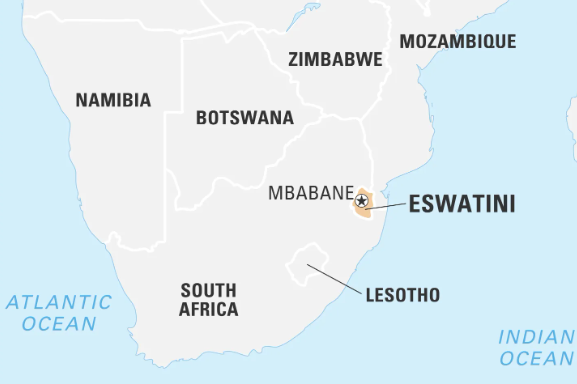
- It is a landlocked country bordering South Africa and Mozambique in Southern Africa.
- It is a member of the Common Monetary Area (CMA), with Lesotho, Namibia, and South Africa.
- It was formerly known as Swaziland and it changed its name in 2018 to reflect its pre-colonial identity.
- It remains one of the few countries in the world, and the only one in Africa, governed by an absolute monarch.
- King Mswati III, who has ruled since 1986, holds full control of government functions and rules by decree.
- The country faces major social and economic challenges, with over half the population living on less than $4 a day and the highest global HIV rate at about 26%.
Source :IE
Cabo Delgado Region
Syllabus: Gs1/ Places in News
In News
- A new study reveals that four planned Liquefied Natural Gas (LNG) projects in the Rovuma Basin, located in the Cabo Delgado region of northern Mozambique, could have an outsized impact on the global climate if fully exploited.
About Cabo Delgado Region
- Cabo Delgado is the northernmost province of Mozambique, bordering Tanzania to the north (across the Rovuma River), the provinces of Niassa (west) and Nampula (south), and the Indian Ocean to the east.
Source: DTE
Conduct of Business in Lok Sabha
Syllabus: GS2/Polity and Governance
Context
- The Monsoon Session of Parliament will begin soon.
Parliament holds three Sessions in a year
- Budget Session—February-May;
- Monsoon Session—July-September; and
- Winter Session—November-December.
Rules for the Conduct of Business of Parliament
- Under Rule 377 of the Rules of Procedure and Conduct of Business in Lok Sabha, Members are allowed to raise matters which are not Points of Order or which have not been raised during the same session under any other Rule.
- In the Rajya Sabha, Members are allowed to make a mention of matters of public importance under Rule 180A-E of the Rules of Procedure and Conduct of Business in the Council of States.
- There are four main procedures under which there could be a discussion in the Lok Sabha — a debate without voting under Rule 193, a motion (with a vote) under Rule 184, and an adjournment motion or a no-confidence motion.” Except the last one, similar measures also exist in the Rajya Sabha.
Procedures
- Question Hour: Generally, the first hour of a sitting of the Lok Sabha is devoted to Questions called the Question Hour.
- Members can ask questions on every aspect of administration and governmental activity.
- MPs raise questions during Question Hour to hold the government accountable for its policies and actions.
- ‘Zero Hour’: The period of time immediately after the Question Hour is over and before the regular business as entered in the List of Business is taken up, is referred to as the ‘Zero Hour’.
- The Government is under no obligation to respond to the matters raised during the ‘Zero Hour’.
- Short Duration Discussion: Members could raise discussion for a short duration without a formal motion or vote.
- Any member may give notice in writing specifying clearly and precisely the matter desired to be raised.
- It shall state the reasons for raising the discussion and supported by the signatures of at least two other members.
- Adjournment Motion: This motion is introduced to draw attention of the house towards a recent matter of urgent public importance.
- If admitted, it leads to setting aside the normal business of the House for discussing a definite matter of urgent public importance.
- No-Confidence Motion: The Council of Ministers must enjoy the confidence of the House at all times to remain in power.
- The Opposition Parties in Lok Sabha can move a No-confidence Motion in the Council of Ministers to express the lack of confidence of the House and such a motion, if adopted, results in the fall of the Government.
PAC Calls for Aadhaar Review
Syllabus: GS2/Governance
In News
- The Public Accounts Committee has called for a review of the functioning of the Unique Identification Authority of India (UIDAI), flagging several concerns, including the high rate of failure of Aadhaar biometric verification which can lead to many beneficiaries being excluded from social welfare schemes.
About Public Accounts Committee (PAC)
- The Committee on Public Accounts was first set up in 1921 in the wake of the Montague-Chelmsford Reforms.
- It is a key parliamentary committee in India, constituted annually to examine government expenditure and financial accounts.
- It reviews the appropriation of funds granted by Parliament, annual Finance Accounts, and other relevant accounts (except those of Public Undertakings and Government Companies which come under the purview of the Committee on Public Undertakings).
- Composition: The PAC has up to 22 members—15 elected from the Lok Sabha and up to 7 from the Rajya Sabha—selected through proportional representation.
- The Chairperson, appointed by the Lok Sabha Speaker, is traditionally from the opposition.
- Ministers cannot be members of the committee.
- The term of office of the members is one year.
- Functions: The PAC’s functions include scrutinizing government spending to ensure funds are used legally and appropriately within the sanctioned limits. It examines cases of excess expenditure, financial irregularities, losses, and wasteful spending.
- The committee also reviews reports by the Comptroller and Auditor-General (CAG) on both expenditure and revenue, investigating tax administration issues like under-assessment and tax evasion, and recommends measures to prevent revenue leakage.
Source :TH
