
Topic 1: Tamil Nadu Unveils TN-TREND Reforms to Speed Up Approvals and Simplify Business Rules
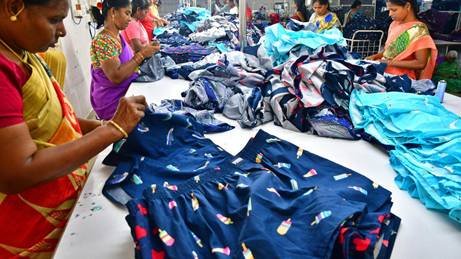
Representative image: workers at a garment unit in Tamil Nadu. TN-TREND’s 21-day approval framework targets faster clearances for such manufacturing units (image: The Hindu BusinessLine).
Subject: State Economy – Ease of Doing Business and Regulatory Reform
Syllabus
TNPSC Group I/II/IV: Tamil Nadu economy; ease of doing business; industrial approvals; single-window systems; deregulation and investment climate
Context
The Tamil Nadu government has unveiled TN-TREND, a package of ease-of-business reforms built on six pillars, promising time-bound approvals within a 21-day framework and longer validity for licences and clearances.
Main Body: Multi-Dimensional Analysis
1. The package: TN-TREND bundles regulatory changes across the departments that investors deal with most, and is presented as a single framework so that businesses can track one set of commitments rather than scattered circulars.
2. Six pillars: The reforms rest on six pillars covering faster approvals, simpler compliance, longer licence validity, digitised processes, clearer rules and accountable delivery, converting ease-of-business slogans into measurable administrative commitments.
3. 21-day framework: The centrepiece is a 21-day framework for approvals: departments must dispose of specified applications within three weeks, replacing open-ended waits with a clock the applicant can see.
4. Validity extensions: Licences and clearances that earlier expired quickly and forced repeated renewals will now carry longer validity, cutting the compliance burden of running an established business, not only starting one.
5. Why it matters now: States compete intensely for mobile investment, and the speed and predictability of approvals often decide location choices as much as incentives do, so procedural reform is itself an industrial policy tool.
6. Deemed approvals: Time-bound regimes typically pair the clock with a deemed-approval principle: if the department does not act within the period, the application is treated as approved, shifting the cost of delay to the government.
7. Single window: A single-window system is only as good as the departments behind it; TN-TREND’s value depends on whether line departments accept the portal’s decisions instead of demanding parallel offline clearances.
8. Compliance burden: For micro and small enterprises, repeated renewals and inspections consume owner time disproportionately, so validity extensions and simpler returns help the smallest firms most.
9. Implementation test: The credibility of the package will rest on published disposal data: how many applications actually cleared within 21 days, and what happened to those that did not.
10. Comparison context: Business reform rankings and investor surveys have long flagged approval delays as India’s core weakness; Tamil Nadu’s framework addresses exactly the friction investors cite most.
11. Administrative accountability: A visible clock creates accountability: an officer who sits on a file past 21 days now violates a published commitment, which gives industry associations a concrete basis for complaint.
12. Investor signalling: Announcing the framework signals to prospective investors that Tamil Nadu wants to be judged on execution speed, complementing its investment promotion outreach with procedural credibility.
13. Departmental redesign: A reform like TN-TREND usually requires amending department rules, not just issuing a portal: timelines must be written into the statutes and government orders that officers actually follow.
14. Small-town dimension: Approval speed matters most outside the big cities, where a single delayed clearance can stall the only major investment a town sees in a decade.
15. Political commitment: Announcing the framework at the top of government signals that departments will be answerable upward for missing the clock, which is often what makes such reforms stick.
16. Sunset and review: Good reform packages carry their own review clause: a dated evaluation of whether the 21-day clock and validity extensions changed real investor experience, with findings placed in the public domain.
17. Backward linkage: Faster approvals help only if land, power and water connections keep pace; TN-TREND’s promise will pull the utility agencies into the same time discipline, which is where delays often migrate.
18. Investor services: Dedicated investor facilitation cells, staffed to answer queries and chase files across departments, give the framework a human interface that portals alone cannot provide.
Positives, Negatives, & Government Schemes
| Category | Dimension / initiative | Explanation |
| Positive | 21-day approval clock | A published three-week deadline converts open-ended waiting into a measurable commitment investors can hold the government to. |
| Positive | Longer licence validity | Extending validity cuts repeat compliance for established firms and reduces departmental workload created by renewals. |
| Negative | Enforcement gap risk | If departments ignore the clock without consequence, TN-TREND becomes another announced reform that businesses experience as paperwork as usual. |
| Government initiative | TN-TREND | Tamil Nadu’s six-pillar ease-of-business reform package featuring a 21-day approval framework and validity extensions for licences and clearances. |
Examples
1. Deemed-approval clauses in other States’ single-window laws show how a missed deadline can automatically clear an application, disciplining departments without litigation.
2. Longer licence validity for factories and shops reduces the renewal queue itself, freeing departmental capacity for genuine scrutiny of risky proposals.
3. Investor feedback surveys consistently rank approval speed and predictability above subsidy size when firms compare locations.
4. District-level single-window committees in Tamil Nadu have cleared smaller proposals faster when empowered with a deadline, a pattern TN-TREND generalises.
5. Publishing monthly disposal statistics, as some States do for their single-window portals, lets industry verify the 21-day promise rather than take it on trust.
6. MSME units frequently cite the time cost of renewals as a reason they stay informal; longer validity directly addresses that incentive.
7. Single-window clearance acts in several States create legal backing for time limits, turning service promises into enforceable rights.
Way Forward
1. Publish a monthly dashboard of applications received, cleared within 21 days, delayed and deemed approved, by department.
2. Extend the deemed-approval principle to every service in the framework so the clock has real teeth.
3. Digitise end to end: no department should demand physical papers after an online clearance is issued.
4. Set up a grievance channel where applicants can flag clock violations and get a reasoned response within days.
5. Review the six pillars annually against investor feedback and prune rules that add cost without adding safety.
6. Train district-level officers on the new timelines so the framework works outside Chennai as well as it does at headquarters.
7. Bring utility connections, power, water and drainage, into the same 21-day discipline so approval speed is not lost downstream.
Conclusion
TN-TREND will be judged not by its six pillars on paper but by the disposal data it generates. A visible 21-day clock, deemed approvals and longer licence validity can genuinely lower the cost of doing business in Tamil Nadu, provided the government publishes its own scorecard and lets applicants enforce the deadlines it has promised.
Practice Mains Question
Examine the components of the TN-TREND reforms and discuss how time-bound approval frameworks can improve the investment climate in Tamil Nadu.
Topic 2: Chella Punnagai: Tamil Nadu Plans Pilot to Fix Dental Issues of School Students

Representative image: a dentist treating a patient. The Chella Punnagai pilot will screen and treat school students for dental problems across five districts (image: The New Indian Express).
Subject: Health – School Health and Oral Care
Syllabus
TNPSC Group I/II/IV: health policies of Tamil Nadu; school health programmes; National Health Mission; preventive and public health
Context
The Tamil Nadu government plans a pilot programme, Chella Punnagai, to screen and treat dental problems among school students, covering 1,500 students across five districts at a cost of Rs 1.8 crore under the National Health Mission.
Main Body: Multi-Dimensional Analysis
1. The pilot: Chella Punnagai, meaning precious smile, will screen and treat school students for dental problems in a pilot covering 1,500 students spread across five districts, at an estimated cost of Rs 1.8 crore.
2. Funding route: The programme is taken up under the National Health Mission, the Union-State platform that funds much of Tamil Nadu’s public health delivery, allowing the State to test the model before scaling.
3. Why oral health: Dental caries and untreated oral disease are among the most common childhood health problems, affecting nutrition, attendance and learning, yet they rarely feature in school health priorities.
4. School platform: Schools offer a captive, organised setting where screening reaches nearly every child, making school-based dental care one of the most efficient public health delivery channels.
5. Screening to treatment: The pilot’s design matters: screening alone identifies problems, but the programme must also arrange treatment referral, or parents in poor households will not follow through.
6. Five districts: Choosing five districts lets the State test logistics across varied geographies, and the pilot’s unit costs will inform the budget needed for a Statewide rollout.
7. NHM framework: The National Health Mission supports school health through its Rashtriya Bal Swasthya Karyakram component, which already screens children for defects, deficiencies, diseases and developmental delays.
8. Prevention focus: Oral health programmes succeed on prevention: fluoride varnish, sealants, brushing instruction and reduced sugar intake cost far less than restorative treatment later.
9. Manpower question: Dentists and dental hygienists are scarce in the public system; a Statewide scheme will need to contract private practitioners, mobile dental units or dental college outreach.
10. Learning outcomes: Pain and infection from untreated teeth keep children out of class and unable to concentrate, so dental care is also an education investment, not merely a health one.
11. Equity angle: Private dental care is expensive and urban; a public school-based programme reaches exactly the children whose families would otherwise never visit a dentist.
12. Scale decision: The Rs 1.8 crore pilot works out to a per-child cost the government can multiply across the State’s school population, turning the pilot into a budget line for expansion.
13. Parental engagement: School health pilots work best when parents are informed and involved: consent, follow-up visits and home care habits all depend on family cooperation.
14. Data value: Screening 1,500 students will generate the State’s first structured data on school dental disease patterns in these districts, useful beyond the pilot itself.
15. Fluoride and diet: The pilot is an opening to address causes: water fluoride levels, sugary snacks near schools and brushing habits all shape children’s dental outcomes.
16. Continuity of care: Dental disease recurs; the programme’s design should anticipate annual re-screening of the same cohort so that treated children stay treated rather than returning to the queue.
17. Cost signal: At Rs 1.8 crore for 1,500 students, the pilot spends about Rs 12,000 per child, a figure that will anchor the budget debate if the scheme goes Statewide.
18. Tobacco and hygiene: Adolescent oral health also connects to tobacco prevention: school dental contact is a natural moment to counsel against gutka and tobacco use, a major oral disease driver in the State.
19. Evaluation design: Building a simple before-and-after evaluation into the pilot, with untreated comparison schools, would give the State real evidence of impact rather than activity counts alone.
Positives, Negatives, & Government Schemes
| Category | Dimension / initiative | Explanation |
| Positive | School-based delivery | Using schools as the screening platform reaches nearly every child at low marginal cost, including those who never see a dentist. |
| Positive | NHM funding route | Running the pilot through the National Health Mission plugs it into an existing financing and reporting structure, easing scale-up. |
| Negative | Treatment follow-through risk | Screening without assured referral treatment leaves poor families with a diagnosis they cannot afford to act on. |
| Government initiative | Chella Punnagai | Tamil Nadu’s school dental health pilot covering 1,500 students in five districts at Rs 1.8 crore under the National Health Mission. |
Examples
1. Rashtriya Bal Swasthya Karyakram screens schoolchildren nationwide for the 4 Ds: defects at birth, deficiencies, diseases and developmental delays.
2. Mobile dental units run by some district health societies show how treatment can follow screening into rural schools.
3. School health screening under NHM already records vision and anaemia findings, and adding dental checks uses the same infrastructure.
4. States that coupled screening with free referral treatment saw far higher completion of care than those that only informed parents.
5. Dental colleges attached to government hospitals routinely run school outreach camps, offering a ready workforce for scale-up.
6. Mid-day meal programmes demonstrate how school platforms deliver nutrition interventions at scale; dental care can ride the same reach.
7. States that added fluoride varnish applications to school screening cut new cavities measurably in follow-up surveys.
Way Forward
1. Publish pilot results with per-child screening and treatment costs before deciding on Statewide expansion.
2. Guarantee a treatment referral pathway so screened children actually receive fillings, extractions or preventive care.
3. Use dental colleges and mobile units to staff the programme where public dentists are unavailable.
4. Add oral hygiene education, including supervised brushing, to the school health curriculum alongside screening.
5. Integrate dental records into the existing school health card so problems are tracked across years.
6. Plan the Statewide budget from measured pilot costs rather than estimates, and phase the rollout district by district.
7. Build an annual re-screening cycle into the pilot design so treated children are tracked over multiple school years.
8. Use the dental visit to counsel students against tobacco and gutka, extending the programme’s preventive value.
Conclusion
Chella Punnagai addresses a neglected but widespread childhood health problem through the cheapest possible delivery channel, the school. Its success will depend less on screening numbers than on whether identified children actually receive treatment, and whether pilot costs translate into a credible Statewide plan.
Practice Mains Question
Discuss the significance of school-based oral health programmes like Chella Punnagai and the challenges in scaling them across Tamil Nadu.
Topic 3: Rotary Club of Madras Partners with Tamil Nadu to Vaccinate 3.5 Lakh Girls Against HPV
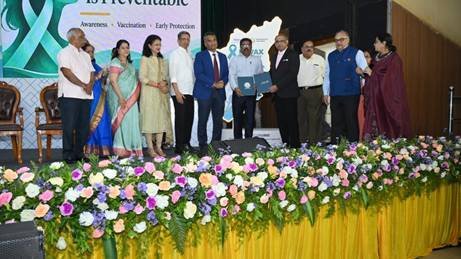
Current-event image: the launch of the Rotary Club of Madras and Tamil Nadu government partnership to vaccinate 3.5 lakh girls against HPV, Chennai (image: The Hindu).
Subject: Health – Immunisation and Cancer Prevention
Syllabus
TNPSC Group I/II/IV: health policies; immunisation programmes; cervical cancer prevention; public-private partnership in health
Context
The Rotary Club of Madras has partnered with the Tamil Nadu government to vaccinate 3.5 lakh girls against the human papillomavirus, a public-private effort estimated at about Rs 200 crore to prevent cervical cancer.
Main Body: Multi-Dimensional Analysis
1. The partnership: The Rotary Club of Madras will work with the Tamil Nadu government to administer HPV vaccine to 3.5 lakh girls, in a programme valued at roughly Rs 200 crore, combining philanthropic resources with the State’s health delivery network.
2. Why HPV: Persistent infection with high-risk HPV types causes the great majority of cervical cancers, and vaccinating girls before exposure, typically between 9 and 14 years, prevents most of those cases decades later.
3. Cervical cancer burden: Cervical cancer remains one of the leading cancers among Indian women, killing tens of thousands each year, and India accounts for a large share of the global burden because screening and vaccination coverage are low.
4. Public-private model: The partnership shows a division of labour: the club mobilises funds and vaccine supply, while the government provides the delivery machinery through schools, primary health centres and immunisation staff.
5. Vaccine options: India now has an indigenous HPV vaccine, CERVAVAC, developed by the Serum Institute, alongside imported quadrivalent and nonavalent vaccines, and domestic supply has sharply lowered cost.
6. National context: The Union government has moved to include HPV vaccination in the national immunisation programme for girls, and State-level partnerships accelerate coverage ahead of full national rollout.
7. Cold chain and consent: School-based HPV drives need parental consent, careful communication against misinformation, and a working cold chain, all of which the State’s immunisation system already manages for other vaccines.
8. Single-dose evidence: The WHO has endorsed a single-dose HPV schedule as sufficiently protective, which halves programme cost and simplifies delivery, a consideration central to scaling to lakhs of girls.
9. Equity: Cervical cancer deaths concentrate among poor women who never access screening; vaccinating girls in government schools targets exactly the population least served by private healthcare.
10. Beyond vaccination: Even a fully vaccinated cohort needs screening later in life, so the programme complements, and does not replace, the State’s cervical screening services for adult women.
11. Philanthropy in health: Large philanthropic partnerships can fill financing gaps quickly, but they must align with government protocols so that record-keeping, adverse-event monitoring and follow-up doses remain public responsibilities.
12. Tamil Nadu’s record: The State has historically run strong immunisation programmes with high coverage, which makes it a plausible setting for one of the country’s largest sub-national HPV drives.
13. Age cohort: The programme targets girls in the recommended age window, roughly 9 to 14 years, when one or two doses confer durable protection before exposure to the virus.
14. Record linkage: Vaccinating 3.5 lakh girls creates a cohort whose future cervical cancer rates can be studied, giving Tamil Nadu rare long-horizon programme evidence.
15. Supply security: A drive of this size must lock vaccine supply in advance; stock-outs mid-drive destroy confidence and leave partial schedules.
16. Consent architecture: School-based drives live or die on consent rates: clear information to parents, in Tamil, about safety and benefit is the single most important operational investment.
17. Adult screening bridge: The programme creates a natural platform to educate mothers accompanying daughters about cervical screening, converting one visit into protection for two generations.
18. Elimination goal: The WHO has set a global cervical cancer elimination threshold, and large sub-national drives like this one are exactly the instrument by which high-burden regions move toward it.
19. Communication spine: A drive this size needs a single communication spine: one set of approved Tamil materials for schools, parents and media, so rumours do not fill an information vacuum.
20. School microplanning: Each school in the drive will need a microplan: consent collection, session site, cold chain point and recording, the same discipline that polio campaigns perfected.
Positives, Negatives, & Government Schemes
| Category | Dimension / initiative | Explanation |
| Positive | Massive scale | Covering 3.5 lakh girls in one partnership is among the largest sub-national HPV efforts and can measurably cut future cervical cancer cases. |
| Positive | Public-private complementarity | Philanthropic funding with government delivery combines resources with reach, letting each partner do what it does best. |
| Negative | Sustainability risk | A one-time philanthropic drive must transition to budgeted annual cohorts, or coverage will lapse for girls who age into eligibility later. |
| Government initiative | HPV vaccination partnership | The Rotary Club of Madras and Tamil Nadu government collaboration to vaccinate 3.5 lakh girls against HPV, valued at about Rs 200 crore. |
Examples
1. CERVAVAC, India’s indigenous HPV vaccine from the Serum Institute, has brought per-dose cost down sharply compared with imported vaccines.
2. Sikkim was the first State to introduce HPV vaccination Statewide in 2018, achieving high coverage through school-based delivery.
3. The WHO’s single-dose recommendation has been adopted in India’s national programme planning to stretch vaccine supply further.
4. School-based tetanus-diphtheria drives show that Tamil Nadu’s immunisation machinery can run school campaigns at scale.
5. Misinformation scares in some countries depressed HPV uptake for years, underlining the need for proactive parent communication.
6. Cervical screening camps under the National Programme for Prevention and Control of Cancer, Diabetes, Cardiovascular Diseases and Stroke complement vaccination for older cohorts.
7. Australia’s school-based HPV programme, sustained for over a decade, has put cervical cancer elimination within sight there.
Way Forward
1. Publish coverage data district-wise so gaps in uptake are visible and correctable within the drive itself.
2. Run parent and teacher communication campaigns before the drive to counter vaccine hesitancy.
3. Integrate HPV vaccination records into the State’s immunisation registry for lifelong follow-up.
4. Ensure adverse-event monitoring and reporting follow national immunisation protocols throughout the partnership.
5. Plan continuation: philanthropy can seed the drive, but the State budget should absorb recurring cohorts of girls each year.
6. Pair the drive with awareness on cervical screening for adult women so prevention covers every cohort.
7. Use the drive to register accompanying mothers for cervical screening at primary health centres.
Conclusion
The HPV partnership is preventive health at its best: a vaccine given once in early adolescence prevents a cancer that kills poor women disproportionately. The test ahead is execution and continuity, converting a large one-time drive into a permanent, budgeted line of Tamil Nadu’s immunisation programme.
Practice Mains Question
Examine the role of HPV vaccination in preventing cervical cancer and discuss the opportunities and challenges of public-private partnerships in immunisation.
Topic 4: One-Time Settlement for Cooperative Housing Loan Defaulters: Tamil Nadu Issues Government Order
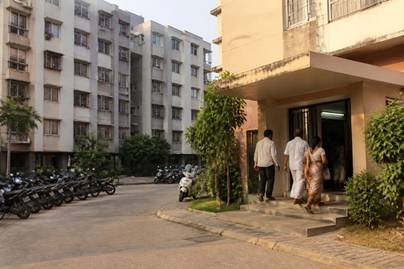
Representative image: apartments of a housing society. The one-time settlement applies to defaulters of cooperative housing society loans (image: Urban Acres).
Subject: State Administration – Cooperatives and Housing Finance
Syllabus
TNPSC Group I/II/IV: cooperative movement in Tamil Nadu; housing finance; government orders and their implementation; financial inclusion
Context
The Tamil Nadu government has issued a government order announcing a one-time settlement scheme for defaulters of cooperative housing society loans, covering 24,301 borrowers whose loans total Rs 2,430.28 crore, with Rs 776.42 crore outstanding; according to news reports of the order, members who defaulted up to 31 March 2026 and clear their dues in a single payment within one year get penal and related interest waived, and accounts already under legal action are excluded.
Main Body: Multi-Dimensional Analysis
1. Scheme terms (as reported in news coverage): News reports of the government order issued by the Housing and Urban Development Department on 23 November 2026 describe a one-year settlement window for 24,301 defaulters of cooperative housing loans (Rs 2,430.28 crore in loans, Rs 776.42 crore outstanding): penal interest, decree interest and EMI interest are waived for members who defaulted up to 31 March 2026 and repay in a single instalment; accounts already under legal action are excluded, and LIG and MIG borrowers receive an additional one percent interest concession, according to the order as reported.
2. What OTS means: A one-time settlement lets a borrower close a defaulted loan by paying an agreed amount within a deadline, with the lender waiving part of the interest or penal charges according to the scheme’s terms.
3. Why cooperatives: Cooperative housing societies in Tamil Nadu have historically financed homes for lower and middle income members, but weak recovery discipline left many societies carrying old defaults that block fresh lending.
4. Balance-sheet logic: Settling old defaults converts stuck dues into cash, however discounted, restoring the societies’ ability to lend and cleaning accounts that otherwise grow only on paper through accrued interest.
5. Moral hazard: The central risk of any OTS is moral hazard: regular payers feel penalised, and some borrowers delay payment in expectation of the next waiver, weakening future repayment culture.
6. Design safeguards: Well-designed OTS schemes limit eligibility to genuinely stressed accounts, exclude wilful defaulters, set tight payment deadlines and refuse repeat settlements to the same borrower.
7. Target group: Many defaulters are small borrowers hit by income shocks rather than speculators; a settlement that closes their dues and gets account status reported accurately serves both the family and the society; it does not by itself erase adverse credit history.
8. Administrative load: Processing 24,301 settlements requires societies to verify dues, apply waiver rules uniformly and issue closure documents, a workload that needs clear GO-level instructions and monitoring.
9. Precedents: Banks and cooperative institutions across India have used OTS windows periodically; the design lesson drawn from that experience is that a time-bound, credibly final window is what makes collections materialise.
10. Transparency: Publishing category-wise settlement outcomes after the window closes will show whether the scheme recovered real money or merely re-labelled bad loans.
11. Cooperative health: The episode underlines the need for stronger appraisal and recovery systems in cooperative housing finance so that fresh defaults do not simply replace the settled ones.
12. Government role: The State, as registrar and supervisor of cooperatives, must balance relief for distressed borrowers with the depositors and members whose money funds these societies.
13. Title clarity: For many borrower families, settlement is about the house document: clearing the loan releases the mortgaged title deed that heirs and buyers need.
14. Deposit protection: Cooperative societies lend members’ deposits; recovering dues through settlement protects the small depositors whose savings funded the loans.
15. Uniform application: A government order must specify identical waiver terms across societies so that settlement outcomes do not vary by district or by the borrower’s influence.
16. Recovery culture: Announcing the scheme as strictly one-time, with no hint of repetition, is itself policy: expectation of another waiver is what kills repayment discipline after a settlement.
17. Audit trail: Every settlement should pass through documented verification of dues and waivers, since discretionary discounts at society level are where favouritism creeps in.
18. Communication duty: The government order must be explained to borrowers in plain language at every society office, since eligible families often miss settlement windows for want of clear information.
19. Legislative hygiene: Periodic review of cooperative housing lending norms, including borrower assessment and collateral practice, is the legislative complement to a one-time clean-up of old dues.
20. Fiscal framing: The settlement’s implicit cost, the waived interest, should be disclosed so the public knows what the clean-up cost the cooperative system.
Positives, Negatives, & Government Schemes
| Category | Dimension / initiative | Explanation |
| Positive | Balance-sheet clean-up | Settling 24,301 stuck accounts converts paper dues into real cash and restores cooperative societies’ lending capacity. |
| Positive | Borrower relief | Distressed small borrowers get a route to close loans, reclaim clear titles and, subject to lender criteria, seek formal credit again. |
| Negative | Moral hazard | If waivers become expected, future repayment discipline weakens and honest borrowers end up subsidising defaulters. |
| Government initiative | Cooperative housing loan OTS | A government order offering one-time settlement to 24,301 cooperative housing loan defaulters, covering Rs 2,430.28 crore of loans with Rs 776.42 crore outstanding. |
Examples
1. Possible mechanism: a hard deadline with no repeat promise can push borrowers to settle now rather than wait for the next waiver; treat this as design reasoning, not a reported outcome of this scheme.
2. Possible mechanism: settling old defaults frees a society’s cash for fresh lending; the gain depends on recovery actually materialising, not on the waiver itself.
3. RBI’s June 2023 framework for compromise settlements permits banks and cooperative banks to settle even wilful-default and fraud accounts, with board approval and without prejudice to criminal proceedings; excluding such borrowers is a policy choice, not an RBI mandate. Cooperative housing societies are State-regulated, so the GO itself sets the rules here.
4. Tamil Nadu’s cooperative sector, among the oldest in the country, has run earlier settlement and interest-waiver exercises for agricultural loans.
5. Possible mechanism: strict eligibility rules keep an OTS from rewarding deliberate default, which is where blanket waivers erode repayment culture.
6. Digitised loan records help societies compute dues and waivers uniformly, reducing disputes at settlement time.
7. Closure certificates matter practically: without them, settled loans continue to appear as defaults in credit bureau records.
Way Forward
1. Define eligibility tightly: settle genuinely distressed accounts, exclude wilful defaulters and bar repeat settlements.
2. Fix a non-extendable deadline and publish the waiver formula so every borrower is treated identically.
3. Require societies to issue closure certificates promptly and report settled status accurately to credit bureaus; settlement is recorded as settled, not erased, and future credit access remains subject to each lender’s criteria.
4. Publish post-scheme recovery data by district and society so the exercise is auditable.
5. Pair the settlement with stronger appraisal norms for fresh cooperative housing loans to prevent recurrence.
6. Counsel settled borrowers into financial discipline programmes rather than letting them slip back into default.
7. Mandate internal audit of a sample of settled accounts in each district before closures are certified.
8. Display the scheme’s terms prominently at every cooperative society office in Tamil so no eligible borrower misses the window.
Conclusion
The one-time settlement is a pragmatic attempt to unlock both the societies’ frozen balance sheets and the borrowers’ trapped titles. Its success depends on disciplined execution: strict eligibility, a hard deadline, transparent reporting and stronger lending norms so that today’s relief does not seed tomorrow’s defaults.
Practice Mains Question
Discuss the rationale for one-time settlement schemes in cooperative housing finance and the safeguards needed to prevent moral hazard.
Topic 5: 4,758 Urban Infrastructure Works Worth Rs 1,019.61 Crore Sanctioned Across Tamil Nadu in Five Months

Representative image: an urban road being relaid. 4,758 infrastructure works worth Rs 1,019.61 crore were sanctioned across Tamil Nadu in five months (image: The New Indian Express).
Subject: State Administration – Urban Development and Municipal Infrastructure
Syllabus
TNPSC Group I/II/IV: urban governance in Tamil Nadu; municipal administration; infrastructure financing; urban missions and schemes
Context
Tamil Nadu has sanctioned 4,758 urban infrastructure works worth Rs 1,019.61 crore over five months, routed through the Directorate of Municipal Administration and the Chennai Metropolitan Infrastructure Urban Development Mission framework.
Main Body: Multi-Dimensional Analysis
1. The sanction: The State sanctioned 4,758 urban infrastructure works costing Rs 1,019.61 crore in a five-month window, a volume that signals an execution-focused push in municipal administration.
2. Implementing agencies: The works flow through the Directorate of Municipal Administration for municipalities and town panchayats, with mission-mode coordination under the Chennai Metropolitan infrastructure and urban development framework for the capital region.
3. Types of works: Urban sanction lists typically cover roads, stormwater drains, drinking water, sewerage, streetlights, parks and solid waste assets, the everyday infrastructure residents judge their town by.
4. Why pace matters: Sanctioning is only the first step; the real test is tendering, execution and completion within cost and time, areas where urban local bodies have historically been weak.
5. Urbanisation pressure: Tamil Nadu is among India’s most urbanised States, and its towns face rising demand for water, drainage and roads that outpaces municipal revenue, making State and mission funding essential.
6. Funding mix: Urban works in Tamil Nadu draw on State grants, Union missions such as AMRUT and Swachh Bharat Mission (Urban), municipal own revenue and loans from institutions like the Tamil Nadu Urban Finance and Infrastructure Development Corporation.
7. Capacity constraint: Many municipalities lack engineers and project staff to execute large sanction volumes, which is why project management units and empanelled contractors matter to delivery.
8. Maintenance question: New assets decay without maintenance budgets; every sanctioned work should carry a plan for who maintains it and from which funds.
9. Equity across towns: Distribution across small town panchayats and larger municipalities matters: smaller towns often need the works most but execute slowest, requiring handholding.
10. Monitoring: The five-month sanction figure is an administrative output indicator; the government should pair it with completion and utilisation data so the public sees outcomes, not just approvals.
11. Drainage priority: After repeated urban flooding episodes, stormwater drainage has become a political priority in Tamil Nadu’s towns, and sanction lists increasingly reflect that.
12. Metropolitan dimension: For the Chennai region, coordinated planning through the metropolitan framework is meant to align municipal works with water supply, sewerage and transport agencies.
13. Citizen visibility: Because municipal works are the most visible face of government in a town, their pace and quality shape public perception of the entire administration.
14. Climate lens: New urban works increasingly must plan for heavier rainfall and heat: drains sized for old rainfall patterns and unshaded concrete spaces fail today’s climate.
15. Convergence: The best urban projects converge funding: a State grant for the road, AMRUT for the water line beneath it, and CSR for the park alongside.
16. Contract quality: High sanction volumes test the contracting pipeline: if tenders are rushed, the same few contractors corner the works at inflated rates, and quality suffers invisibly.
17. Third-party inspection: Independent quality checks, by technical institutions or empanelled engineers, are the standard safeguard when municipal engineering capacity is stretched thin.
18. Five-month signal: Reporting sanctions in a five-month bundle sets an administrative tempo; the natural next disclosure is how many of these works have been tendered and grounded in the same period.
19. Citizen complaint loop: Tying sanctioned works to the urban grievance system lets residents flag defects during execution, when correction is cheap, rather than after inauguration.
20. Town-level differentiation: Corporations, municipalities and town panchayats start from very different baselines; the same rupee buys more transformation in a small town than in a big city.
Positives, Negatives, & Government Schemes
| Category | Dimension / initiative | Explanation |
| Positive | High sanction volume | 4,758 works in five months shows administrative momentum and should translate into visible improvements across towns. |
| Positive | Mission-mode coordination | Routing works through established directorates and the metropolitan framework aligns local works with State and Union funding channels. |
| Negative | Execution and maintenance risk | Sanctions can outrun municipal capacity to execute and maintain, leaving incomplete works or decaying assets. |
| Government initiative | Urban infrastructure sanctions | Tamil Nadu’s sanction of 4,758 urban infrastructure works worth Rs 1,019.61 crore in five months through municipal administration channels. |
Examples
1. AMRUT, the Atal Mission for Rejuvenation and Urban Transformation, funds water supply, sewerage and green spaces in mission towns including many in Tamil Nadu.
2. Swachh Bharat Mission (Urban) financed toilets, waste processing and sanitation infrastructure across the State’s urban bodies.
3. The Tamil Nadu Urban Finance and Infrastructure Development Corporation appraises and lends for municipal projects, bridging the gap between sanction and funding.
4. Chennai’s stormwater drain expansion after the 2015 and 2023 floods shows how disaster experience reshapes urban sanction priorities.
5. Project monitoring portals that geo-tag works let citizens verify whether sanctioned projects actually materialise on the ground.
6. Smaller town panchayats that received engineering support from district teams completed works faster than those left to manage alone.
7. Tamil Nadu’s online building plan approval and work tracking portals let residents monitor sanctioned projects in their own wards.
Way Forward
1. Publish work-wise status from sanction to completion on a public dashboard with geo-tagged photographs.
2. Pair every sanction with a maintenance budget line and a named agency responsible for upkeep.
3. Strengthen municipal engineering capacity through shared district project units for small towns.
4. Prioritise drainage and water supply in sanction lists, reflecting flood experience and scarcity risk.
5. Audit a sample of completed works annually and publish quality findings to discipline contractors.
6. Report utilisation and completion rates alongside sanction figures in official statements.
7. Empanel third-party quality inspectors for works above a threshold value and publish their findings.
8. Differentiate handholding by local body tier so small towns get the engineering support their scale cannot fund.
9. Report tendering and grounding figures alongside sanctions every quarter.
Conclusion
The five-month sanction tally is a strong output signal, but urban Tamil Nadu will judge it by completions: drains that carry floodwater, taps that supply water and roads that survive the monsoon. Transparent tracking from sanction to commissioning is the discipline that will convert approvals into assets.
Practice Mains Question
Examine the role of State and Union missions in financing urban infrastructure in Tamil Nadu, and the challenges in converting sanctions into completed works.
Topic 6: Supreme Court Bars Tamil Nadu from Coercive Action Against SASTRA University in Land Dispute
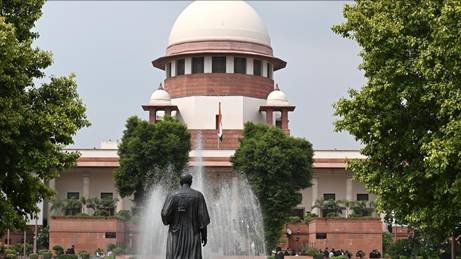
Representative image: the Supreme Court of India, New Delhi. The Court granted SASTRA University interim protection against coercive action in the land dispute with the Tamil Nadu government (image: The Hindu).
Subject: Polity and Education – Judicial Protection and University Land
Syllabus
TNPSC Group I/II: Indian polity; fundamental rights and judicial remedies; higher education administration; land acquisition and State power
Context
The Supreme Court has barred the Tamil Nadu government from taking coercive action against SASTRA University in a dispute over 31.37 acres of land, issuing rule nisi and protecting the institution while the case is examined.
Main Body: Multi-Dimensional Analysis
1. The order: The Supreme Court ordered that no coercive steps be taken against SASTRA University over the disputed 31.37 acres, restraining the State from precipitate action such as dispossession while the dispute is adjudicated.
2. Rule nisi: Issuing rule nisi means the court calls upon the opposing party to show cause why the interim protection sought should not be made absolute; it is a standard device preserving the status quo pending fuller hearing.
3. The dispute: The State claims rights over the land in question, while the university asserts lawful possession and use for its campus, a classic contest between asserted public title and long institutional occupation.
4. Coercive action bar: The bar on coercive action does not decide title; it only prevents irreversible steps, such as eviction or demolition, that would render the final adjudication meaningless.
5. Why it matters: Universities depend on secure campuses; abrupt dispossession mid-litigation would disrupt students and faculty, which is why courts typically freeze possession until title questions are settled.
6. State’s position: Governments have a legitimate interest in recovering public or poramboke land wrongfully occupied, and the order leaves the State free to prove its claim through due process rather than force.
7. Judicial balance: Interim protection balances two public interests: enforcing land law on one side, and preventing irreparable harm to an educational institution and its students on the other.
8. Procedural lesson: The case shows why land disputes should move through title suits and statutory mechanisms; summary executive action invites interim stays that delay lawful recovery too.
9. SASTRA context: SASTRA, based in Thanjavur, is among Tamil Nadu’s prominent private universities, and disputes over its land holdings carry wider interest for the State’s higher education landscape.
10. Next steps: The matter will proceed to a fuller hearing where both sides produce title documents, assignment records and survey details; the interim order holds until then.
11. Governance angle: Clear, digitised land records reduce such disputes: ambiguity in survey numbers and classifications is often what allows decades of contested possession.
12. Exam relevance: For TNPSC, the case illustrates interim relief doctrines, the meaning of rule nisi, and the constitutional balance between State power over land and protection of institutions through courts.
13. Public land inventory: The dispute points to a wider gap: Tamil Nadu lacks a fully reconciled public inventory of government and poramboke land, which is why occupation disputes keep surfacing.
14. Investor signal: Frequent land disputes involving institutions signal title risk to investors and donors, an economic cost beyond the case itself.
15. Student protection: Courts weighing interim relief in campus disputes routinely factor the disruption to enrolled students, treating education as a continuing public interest.
16. Precedent value: How the court balances interim protection against public land claims here will guide lower courts handling the many similar disputes pending across the State.
17. Executive restraint: The order is also a message to revenue officials: coercive steps against long-standing institutions invite judicial intervention, so due process is the faster route in practice.
18. Records remedy: Whatever the outcome, the case strengthens the argument for completing digitised, reconciled land records, the only durable cure for such disputes.
19. Wider docket: The stay joins a long line of interim orders in Tamil Nadu land disputes, evidence that title ambiguity, not any single case, is the systemic problem to fix.
20. For students: The enrolled student’s interest is the quiet centre of such cases: whichever way title goes, academic continuity must be protected.
Positives, Negatives, & Government Schemes
| Category | Dimension / initiative | Explanation |
| Positive | Status quo preserved | The bar on coercive action prevents irreversible dispossession before title is adjudicated, protecting students’ interests. |
| Positive | Due process affirmed | The order channels the dispute into adjudication, reinforcing that land recovery must follow legal process. |
| Negative | Recovery delayed | Interim protection can stall legitimate recovery of public land if final hearings drag on without priority listing. |
| Government initiative | Supreme Court interim order | The Supreme Court bars Tamil Nadu from coercive action against SASTRA University over 31.37 acres, issuing rule nisi pending adjudication. |
Examples
1. Courts routinely grant status quo orders in land disputes so that possession does not change hands before title is decided.
2. Digitisation of land records in Tamil Nadu, through online patta and registration services, aims to reduce exactly such title ambiguities.
3. Several States have created special mechanisms to review alleged encroachments on government land, with judicial scrutiny of evictions.
4. University land disputes elsewhere in India have ended in negotiated exchanges where public purpose and campus needs were both accommodated.
5. Interim protection in education-related disputes often weighs the impact on enrolled students as a distinct equitable factor.
6. Rule nisi practice descends from English prerogative writ procedure and remains standard in Indian interim relief.
7. Comprehensive land surveys and resurveys, when completed in other States, sharply reduced possession disputes by fixing boundaries on record.
Way Forward
1. Both sides should produce complete title and survey documentation early so the dispute is decided on records, not possession.
2. The State should pursue lawful adjudication rather than executive shortcuts that invite stays and delay.
3. Universities should audit and regularise their land holdings to prevent vulnerability to such challenges.
4. Accelerate land record digitisation and dispute resolution so decades-old ambiguities stop generating litigation.
5. Courts should fix prompt final hearings in campus land cases so interim freezes do not become indefinite.
6. Consider negotiated solutions where genuine public purpose and educational use can both be secured.
7. List the case for early final hearing so interim protection does not harden into indefinite limbo.
Conclusion
The interim order is a holding action, not a verdict: it keeps SASTRA’s campus undisturbed while leaving the State free to prove its title in court. The lasting lesson is administrative, that clear land records and lawful process resolve such disputes faster than coercive moves that courts will freeze.
Practice Mains Question
Explain the doctrine of interim protection and rule nisi with reference to the SASTRA University land dispute, and discuss the balance between State power over land and institutional security.
Topic 7: Tamil Nadu Plans Mental Health Programme in 12 Districts at Rs 26.87 Crore

Representative image: hands extended in support. The State’s mental health programme will cover 12 districts at a cost of Rs 26.87 crore (image: The New Indian Express).
Subject: Health – Mental Health Services
Syllabus
TNPSC Group I/II/IV: health policies of Tamil Nadu; mental health programmes; National Health Mission; district health administration
Context
Tamil Nadu plans a mental health programme across 12 districts at a cost of Rs 26.87 crore, implemented through the National Health Mission’s State arm with the Institute of Mental Health, Kilpauk, as a key institutional partner.
Main Body: Multi-Dimensional Analysis
1. The programme: Tamil Nadu will roll out a dedicated mental health programme covering 12 districts with an outlay of Rs 26.87 crore, extending structured mental healthcare beyond Chennai into district health systems.
2. Implementing institutions: The programme runs through the National Health Mission’s Tamil Nadu arm, drawing on the Institute of Mental Health, Kilpauk, one of India’s oldest psychiatric institutions, for expertise and training.
3. Why mental health: Mental disorders contribute a large and growing share of India’s disease burden, while treatment gaps remain enormous: most people with depression, anxiety or severe mental illness never receive care.
4. District focus: Locating the programme in 12 districts takes services to where specialists are scarcest, since psychiatrists and clinical psychologists concentrate in metropolitan hospitals.
5. Integration logic: Mental healthcare works best integrated into primary health: trained medical officers and community workers can identify, refer and follow up common conditions without every patient travelling to a tertiary hospital.
6. National framework: The District Mental Health Programme under the National Mental Health Programme provides the template: outpatient services, counselling, referral linkage and community awareness at district level.
7. Tele-MANAS context: The national Tele-MANAS helpline, launched in 2022, offers tele-counselling that district programmes can plug into, multiplying scarce specialist time.
8. Human resources: The binding constraint is trained personnel: psychiatrists, psychologists, psychiatric nurses and lay counsellors all need recruitment or training, which the Rs 26.87 crore must largely fund.
9. Stigma: Stigma keeps families from seeking care until crises; community awareness components of the programme are as important as clinical services for closing the treatment gap.
10. Suicide prevention: Tamil Nadu has historically recorded high suicide rates, making crisis intervention, helplines and gatekeeper training urgent components of any district mental health plan.
11. Mental Healthcare Act: The Mental Healthcare Act, 2017 guarantees the right to mental healthcare and decriminalises suicide attempt; district programmes operationalise these rights at the ground level.
12. Measurement: The programme should define clear outcome indicators: patients reached, treatment continuity, referral completion and reduced emergency presentations, published district-wise.
13. Workforce pipeline: Tamil Nadu’s psychiatry and clinical psychology training seats must expand in step, or district programmes will compete for the same scarce specialists.
14. Community follow-up: The hardest part of district mental healthcare is continuity: keeping discharged patients on medication and review, which needs community-level workers, not only clinics.
15. Emergency pathway: Every district unit needs a crisis pathway for acute episodes, including ambulance linkage and designated beds, so families know where to go at night.
16. School linkage: Adolescent mental health is best reached through schools; the district programme should connect with school counsellors so early distress is caught before it becomes clinical.
17. Data systems: Mental health records need privacy-conscious data systems that still allow programme monitoring, a design challenge the outlay must anticipate.
18. Budget arithmetic: At roughly Rs 2.24 crore per district, the outlay must cover personnel, medicines, awareness and referral transport, a tight envelope that argues for integration with existing NHM staff rather than parallel structures.
19. Rural reach: Within each district, services must extend beyond the district headquarters town: taluk hospitals and primary health centres are where most rural patients first appear.
20. Medicine supply: Uninterrupted supply of essential psychiatric medicines at district facilities is a basic precondition; stock-outs undo months of trust-building with patients and families.
21. Youth focus: Rising distress among students and young workers makes youth-focused components, campus counsellors and workplace outreach, essential within the district plans.
22. Family role: Families are the real caregivers in most mental illness; including family education and support in the programme design improves outcomes and reduces relapse.
Positives, Negatives, & Government Schemes
| Category | Dimension / initiative | Explanation |
| Positive | District reach | Taking structured mental healthcare to 12 districts addresses the urban concentration of specialists and services. |
| Positive | Institutional anchoring | Partnership with the Institute of Mental Health, Kilpauk, gives the programme clinical depth and training capacity. |
| Negative | Manpower gap | Without enough psychiatrists, psychologists and counsellors, sanctioned funds cannot convert into actual patient care. |
| Government initiative | 12-district mental health programme | Tamil Nadu’s Rs 26.87 crore mental health programme through NHM-TN with the Institute of Mental Health, Kilpauk. |
Examples
1. The District Mental Health Programme model already operates in many States, providing outpatient and outreach services through district hospitals.
2. Tele-MANAS, the national tele mental health helpline (14416), handled lakhs of calls and links callers to local services.
3. The Institute of Mental Health, Kilpauk, founded in the nineteenth century, anchors psychiatric training and care in Tamil Nadu.
4. School and college counselling initiatives in the State show how early intervention catches distress before it escalates.
5. Community health worker models, such as accredited social health activists trained to recognise distress, extend reach into villages.
6. Kiran, the earlier national psychological support helpline, demonstrated demand for anonymous, immediate support during the pandemic.
7. Kerala’s district mental health experience shows that sustained community follow-up, not clinic opening, is what reduces readmissions.
Way Forward
1. Recruit or contract psychiatrists, psychologists and counsellors for all 12 districts before launch, not after.
2. Integrate mental health screening into primary health centre visits so cases surface early.
3. Link every district unit to Tele-MANAS and crisis response so helpline callers reach local care.
4. Run sustained anti-stigma campaigns through schools, workplaces and local media.
5. Train general duty medical officers in mental health protocols to multiply specialist capacity.
6. Publish district-wise outcome data annually so coverage and treatment continuity can be audited.
7. Connect the district programme to school counselling networks for early identification of adolescent distress.
8. Publish district-wise patient reach and medicine stock status every quarter.
Conclusion
The 12-district programme is a serious step toward closing Tamil Nadu’s mental health treatment gap, but money alone will not deliver care. Recruitment, integration with primary health, tele-support and anti-stigma work must move together for the Rs 26.87 crore to reach patients rather than remain a sanction on paper.
Practice Mains Question
Discuss the need for district-level mental health programmes in Tamil Nadu and the challenges in delivering mental healthcare through the public system.
Topic 8: Tamil Nadu to Shortlist Families for Annapoorani Super Six LPG Refill Reimbursement from Pongal
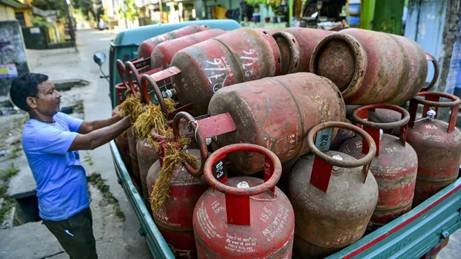
Representative image: LPG cylinders loaded for delivery. The State will reimburse the cost of three refills a year under the Annapoorani Super Six scheme from Pongal (image: PTI via The Hindu BusinessLine).
Subject: State Welfare – LPG Subsidy and Household Energy
Syllabus
TNPSC Group I/II/IV: welfare schemes of Tamil Nadu; subsidies and direct benefit transfer; household energy; LPG distribution policy
Context
The Tamil Nadu government is set to shortlist eligible families for the Annapoorani Super Six scheme, announced in the State Assembly on 24 August 2026 and to be launched at Pongal in January 2027, under which the cost of three LPG refills a year will be reimbursed by direct benefit transfer to about 1.30 crore families; the scheme is announced and under preparation, not yet implemented.
Main Body: Multi-Dimensional Analysis
1. The scheme (as announced): Tamil Nadu will shortlist families for the cost of three LPG refills a year, reimbursed after purchase through direct benefit transfer, with the launch planned from Pongal in January 2027; coverage is estimated at about 1.30 crore families at roughly Rs 4,000 crore a year.
2. Annapoorani Super Six: The Chief Minister announced the scheme in the Assembly under Rule 110 on 24 August 2026 as the first phase of the Annapoorani Super Six welfare basket; announced eligibility covers families with annual income up to Rs 2.5 lakh, small and marginal farming families, families with persons with disabilities and other vulnerable families, with women heads of households as beneficiaries.
3. Delivery route: Benefits flow through direct benefit transfer, with the subsidy credited to beneficiaries’ accounts after purchase, the same DBT plumbing used by the national PAHAL scheme.
4. Why LPG support matters: Refill costs are the main reason poor households lapse back to firewood after getting an LPG connection; refill subsidies target usage, which is where clean cooking schemes usually fail.
5. Ujjwala backdrop: The Union’s Pradhan Mantri Ujjwala Yojana massively expanded LPG connections among poor households, but sustained refill use lagged; State top-ups like this one address the usage gap.
6. Shortlisting exercise: Identifying up to 1.30 crore eligible families requires clean beneficiary databases: ration cards, LPG consumer numbers and Aadhaar-seeded bank accounts must match.
7. Fiscal cost: Three refills for over a crore families is a substantial recurring budget commitment, and its sustainability depends on transparent costing and inclusion errors being controlled.
8. Health gains: Shifting households from solid fuels to LPG cuts indoor air pollution, a major cause of respiratory illness among women and children in poor homes.
9. Targeting choices: Universal coverage of all ration-card families is simple but costly; income-based targeting saves money but risks exclusion errors that hit the poorest hardest.
10. Pongal timing: Launching from Pongal in January 2027 ties the benefit to a culturally resonant date and gives the administration a clear public deadline for the shortlisting machinery.
11. DBT discipline: Direct transfer reduces leakage but demands that beneficiaries’ bank accounts are active and seeded; dormant accounts and failed payments are the weak points.
12. Stacking with Centre: Households benefiting under Union schemes receive the State refills as an additional layer, so coordination between oil marketing companies and the State database is essential.
13. Gender dividend: Clean fuel frees women’s time from fuelwood collection and reduces their smoke exposure, making refill support a gender welfare measure as much as an energy one.
14. Delivery logistics: Three extra refills per family raise cylinder delivery volumes sharply; distributors need capacity planning so the promise does not become a booking backlog.
15. Verification discipline: Periodic re-verification of the beneficiary list keeps departed or ineligible families from absorbing slots meant for the poor.
16. Price shield: The refill subsidy insulates poor households from LPG price volatility, which has historically pushed families back to firewood whenever cylinder prices rose.
17. Administrative calendar: Meeting the Pongal deadline requires the shortlist, seeding checks and oil company coordination to complete within weeks, a real test of the delivery machinery.
18. Election-cycle scrutiny: Welfare expansions attract questions about timing and targeting; transparent criteria and published lists are the government’s best answer to charges of patronage.
19. Household economics: For a poor household, three free refills can cover a large share of annual cylinder purchases, a meaningful transfer that frees cash for food, education and health.
20. Complementary welfare: The refills sit alongside the State’s other household supports, and their combined effect on a poor family’s monthly budget is greater than any single scheme’s.
Positives, Negatives, & Government Schemes
| Category | Dimension / initiative | Explanation |
| Positive | Usage-focused support | Subsidising refills targets the real bottleneck in clean cooking, sustained use, rather than connection alone. |
| Positive | DBT delivery | Direct benefit transfer uses proven national plumbing, reducing leakage and middlemen. |
| Negative | Database risk | Errors in ration card, LPG and bank seeding can exclude genuine families or fail payments at scale. |
| Government initiative | Annapoorani Super Six LPG refills | Announced on 24 August 2026 and to launch at Pongal in January 2027; reimburses the cost of three LPG refills a year to about 1.30 crore eligible families via DBT; announced, not yet implemented. |
Examples
1. PAHAL, the national direct benefit transfer for LPG, credits subsidy to consumer bank accounts and is the world’s largest DBT programme of its kind.
2. Pradhan Mantri Ujjwala Yojana provided deposit-free LPG connections to crores of poor households, expanding access before affordability.
3. Possible mechanism: a refill subsidy lowers the effective price per cylinder for poor households, which is what keeps them from lapsing back to firewood; treat this as design reasoning, not a reported outcome of this scheme.
4. Ration card databases in Tamil Nadu already anchor several welfare deliveries, from PDS grains to cash assistance, easing beneficiary identification.
5. Indoor air pollution studies link solid fuel cooking to chronic respiratory disease, the health case for refill subsidies.
6. Operational risk to manage: dormant or incorrectly seeded bank accounts are the known weak point of DBT delivery, which the shortlisting exercise must clean up before launch.
7. Ujjwala’s second phase added migrant-friendly features such as portability, a lesson in keeping beneficiary databases responsive to real household movement.
Way Forward
1. Complete Aadhaar-bank-LPG seeding checks for shortlisted families before Pongal so transfers do not fail.
2. Publish the shortlisting criteria and let families verify their status online or at ration shops.
3. Set up a grievance channel for excluded families with time-bound correction.
4. Track refill usage data to confirm the subsidy converts into actual clean cooking, not only transfers.
5. Cost the scheme transparently in the budget each year so its fiscal footprint is visible.
6. Coordinate with oil marketing companies so State benefits stack smoothly on Union schemes.
7. Publish a weekly readiness tracker of shortlisting and seeding progress until the Pongal launch.
8. Publish district-wise beneficiary counts and refill utilisation every quarter after launch.
9. Audit a sample of transfers each cycle so payment failures are caught and corrected early.
Conclusion
The three-refill promise addresses the right problem: the refill, not the connection, decides whether poor kitchens stay smoke-free. Delivering it well means getting the shortlist right, seeding accounts before Pongal and publishing usage data, so that 1.30 crore families experience clean cooking rather than a transfer that misses.
Practice Mains Question
Examine the role of refill subsidies in sustaining LPG use among poor households and the operational challenges in delivering them through direct benefit transfer.
