MeitY Launches AIKosha and Other Initiatives
Syllabus: GS3/Science & Technology; Awareness in the Field of IT
Context
- The Union Minister for Electronics & Information Technology unveiled a series of AI-driven initiatives under the IndiaAI Mission, marking a major step in strengthening India’s artificial intelligence ecosystem.
Key Initiatives Launched
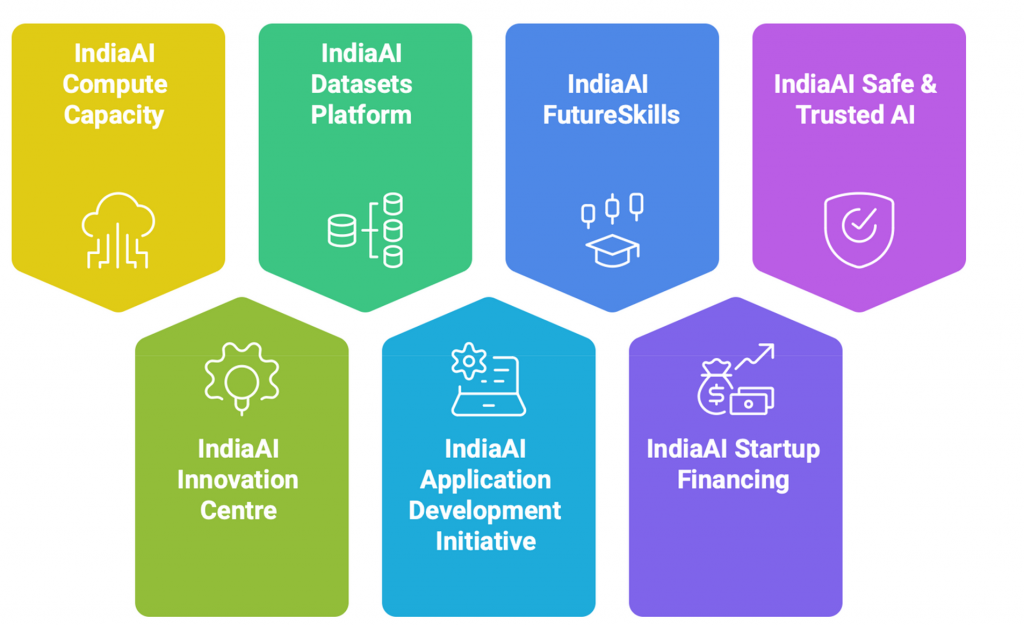
- AIKosha (IndiaAI Datasets Platform): A secured AI repository designed to facilitate AI innovation by providing:
- 300+ datasets and 80+ AI models for diverse applications.
- An AI sandbox environment with an integrated development environment (IDE), tools, and tutorials.
- The datasets on AI Kosha include submissions from various sources, such as 2011 Census data, satellite imagery captured by Indian satellites, Open Governance Data platform, health data, and meteorological and pollution data.
- IndiaAI Compute Portal: It provides discounted AI compute, network, storage, and cloud services to startups, MSMEs, researchers, students, and government agencies.
- Eligible AI users can receive up to 40% subsidy on cloud AI compute services.
- It supports high-end and mid-range GPUs such as NVIDIA H100, H200, A100, AMD MI300x, Intel Gaudi 2, and AWS Tranium.
- AI Competency Framework for Public Sector Officials: To equip government officials with AI-related skills.
- iGOT-AI: Personalized AI Learning: AI-powered content recommendation system for government officials on the iGOT Karmayogi platform.
- IndiaAI Startup Financing: IndiaAI Startups Global Acceleration Program with STATION F (four-month accelerator program in collaboration with STATION F and HEC Paris).
- IndiaAI Innovation Centre (IAIC): Supports Indian researchers, startups, and entrepreneurs in building Indian Foundational Models (LLMs, SLMs & LMMs).
IndiaAI Mission
- About: Launched in March 2024, it is a comprehensive initiative aimed at fostering AI research, development, and innovation in India.
- Funding: 5-year public-private partnership model.
- Implementing Agency: ‘IndiaAI’ Independent Business Division under Digital India Corporation.
- Objectives: Strengthening public-private partnerships to accelerate AI research & development.
- Deployment of over 10,000 GPUs to enable high-performance AI computing.
- Establishing AI supercomputing facilities like AIRAWAT at C-DAC, Pune.
- Ensuring ethical AI practices, data transparency, and accessibility.
- Over the next five years, IndiaAI Mission will support the initiatives like:
Conclusion
- The launch of AIKosha, the AI Compute Portal, and other IndiaAI initiatives marks a major step in democratizing AI access, fostering research-driven innovation, and strengthening India’s global AI leadership.
- The event brought together government officials, researchers, industry leaders, and startups, fostering collaboration to build an AI-powered future for India.
Revised Livestock Health and Disease Control Programme (LHDCP)
Syllabus: GS3/ Agriculture
In Context
- The Union Cabinet approved the Revision of Livestock Health and Disease Control Programme (LHDCP).
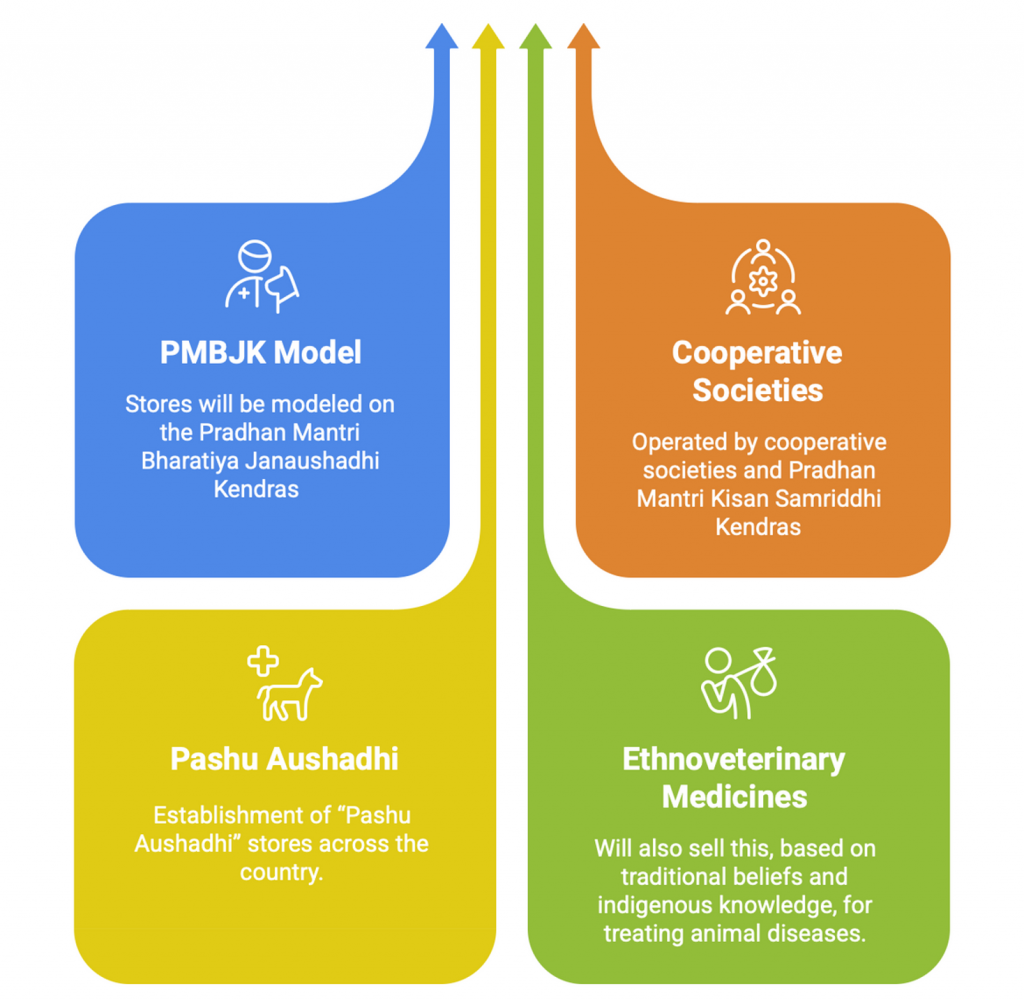
- The Pashu Aushadhi is a new component added to the LHDCP scheme.
Overview of LHDCP
- Total Outlay: ₹3,880 crore for the years 2024-25 and 2025-26
- Objective:
- To improve livestock health through prophylactic vaccination programs.
- To enhance capacity building, disease surveillance, and veterinary infrastructure.
- To prevent economic losses due to livestock diseases.
- Key Components of the Revised Scheme:
- The revised LHDCP consists of three major components:
- National Animal Disease Control Programme (NADCP)
- Livestock Health & Disease Control (LH&DC)
- Pashu Aushadhi (Newly Introduced Component)
- Sub-Components of LH&DC:
- Critical Animal Disease Control Programme (CADCP): Focuses on controlling Peste des Petits Ruminants (PPR) and Classical Swine Fever (CSF).
- Establishment & Strengthening of Veterinary Hospitals & Dispensaries – Mobile Veterinary Units (ESVHD-MVU): Aims to provide doorstep veterinary healthcare to farmers.
- Assistance to States for Control of Animal Diseases (ASCAD): Covers state-prioritized exotic, emergent, and zoonotic animal diseases, including Lumpy Skin Disease (LSD).
- The revised LHDCP consists of three major components:
Pashu Aushadhi Initiative
- Objective: To ensure the availability of affordable generic veterinary medicines for livestock farmers.
- To reduce treatment costs for farmers by promoting non-branded, cost-effective veterinary drugs.
- Implementing Ministry: Ministry of Fisheries, Animal Husbandry and Dairying.
- Key Features:
Major Livestock Diseases Targeted
- LHDCP focuses on controlling various critical livestock diseases that impact productivity and cause economic losses:
- Foot and Mouth Disease (FMD): Leads to reduced milk production and weight loss in cattle, buffaloes, and pigs.
- Brucellosis: Causes infertility, abortions, and low milk yield in cattle and buffaloes.
- Peste des Petits Ruminants (PPR): A highly fatal disease affecting sheep and goats.
- Classical Swine Fever (CSF): A viral disease in pigs, leading to high mortality rates.
- Lumpy Skin Disease (LSD): Affects cattle, causing skin lesions and severe economic losses.
Status of Livestock Sector in India
- About:
- India has the world’s largest population of livestock and plays a crucial role in the global meat and dairy industry.
- India is the largest producer of buffalo meat and the second-largest producer of goat meat.
- India ranks first in milk production, contributing 23% of global milk production.
- Significance of the Livestock Sector in India:
- Key Economic Contributions: In 2021-22, the total Livestock Gross Value Added (GVA) at constant prices was 30.19% of Agricultural and Allied Sector GVA and 5.73% of Total GVA.
- Employment Generation: Livestock rearing is a major source of livelihood for over 70% of rural households in India.
- Food and Nutritional Security: Livestock products such as milk, meat, and eggs are rich in essential nutrients, playing a crucial role in combating malnutrition.
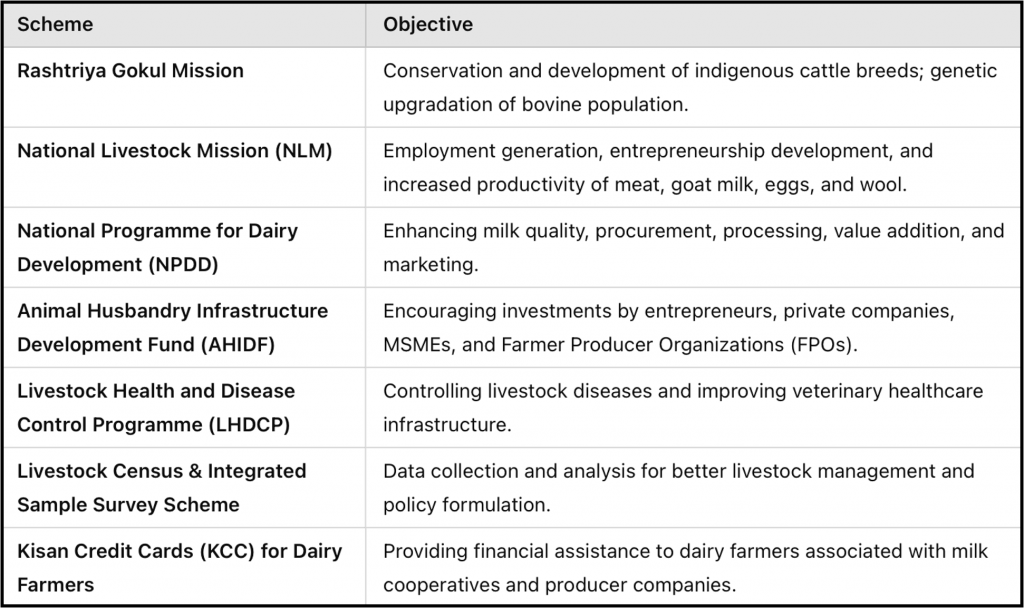
Other Government Initiatives Supporting Livestock Sector
India’s AI Revolution
Syllabus: GS3/Science and Technology
Context
- The government is actively shaping an AI ecosystem where computing power, GPUs, and research opportunities are accessible at an affordable cost.
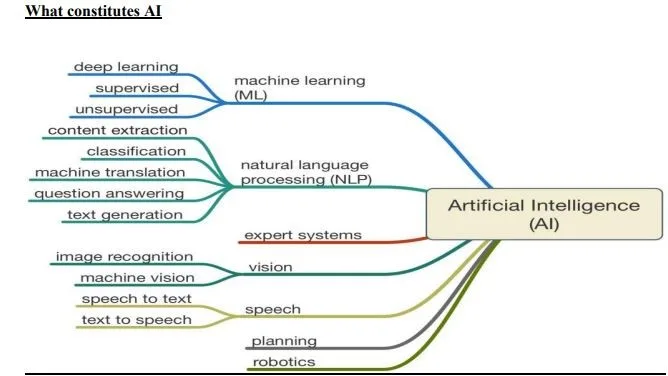
What is Artificial Intelligence (AI)?
- It is a wide-ranging branch of computer science concerned with building smart machines capable of performing tasks that typically require human intelligence.
- Artificial intelligence allows machines to model, or even improve upon, the capabilities of the human mind.
India’s AI Sector
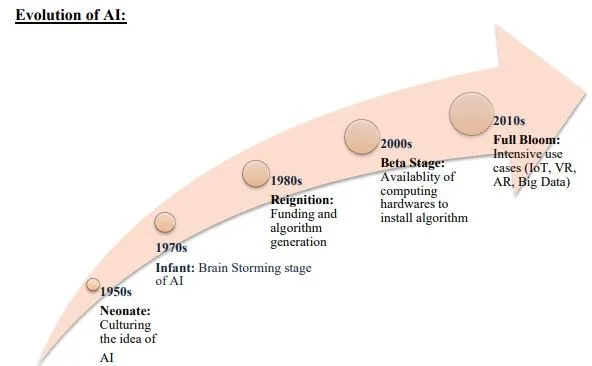
- Evolution:
- India as AI Hub: India ranks second in public generative AI projects on GitHub and houses 16% of the world’s AI talent.
- AI Industry Growth: India’s AI industry is projected to reach USD 28.8 billion by 2025, growing at a CAGR of 45%.
- India Ranks 1st in Global AI Skill Penetration: According to the Stanford AI Index 2024, India ranks first globally in AI skill penetration with a score of 2.8, ahead of the US (2.2) and Germany (1.9).
- AI Talent Demand: India is among the top five fastest-growing AI talent hubs, alongside Singapore, Finland, Ireland, and Canada, with a projected demand for one million AI professionals by 2026.
- Generative AI Ecosystem: Indian GenAI startup funding reached USD 51 million in Q2 FY2025, marking a six-fold increase.
- AI Adoption Across Industries: 80% of Indian companies prioritize AI, with plans to increase tech investments, including over USD 25 million towards AI initiatives in 2025.
- Workplace AI Adoption: 70% of Indian employees use AI at work in 2024, up from 50% the previous year.
- AI Startup Ecosystem: India hosts over 520 tech incubators, making it the third-largest startup ecosystem globally.
Challenges
- Talent Shortage: Despite a growing demand, there is a gap in the availability of skilled AI professionals.
- Data Privacy and Security: Concerns over data protection and regulatory challenges related to AI data usage.
- Infrastructure Gaps: Inadequate infrastructure in certain regions limits the scalability and deployment of AI solutions.
- High Costs: The cost of AI technology adoption can be prohibitive for small and medium-sized businesses.
- Ethical Concerns: Lack of clear frameworks for addressing the ethical implications of AI, including biases in algorithms.
- Limited Research and Development Funding: Insufficient investment in AI R&D compared to global leaders like the US and China.
- Regulatory Uncertainty: Absence of comprehensive AI-specific policies and guidelines creates ambiguity for businesses and developers.
- Access to Quality Data: Limited access to high-quality, diverse datasets needed for training AI models in various sectors.
Government Initiatives
- IndiaAI Mission (2024): It has a budget of ₹10,300 crore over five years.
- A key goal is the creation of a high-end common computing facility with 18,693 GPUs.
- India’s AI Models & Language Technologies: The government is facilitating the development of India’s own foundational models, including Large Language Models (LLMs) and problem-specific AI solutions tailored to Indian needs.
- BharatGen: The world’s first government-funded multimodal LLM initiative, BharatGen was launched in 2024.
- Sarvam-1 AI Model: A large language model optimised for Indian languages, Sarvam-1 has 2 billion parameters and supports ten major Indian languages.
- Hanooman’s Everest 1.0: A multilingual AI system developed by SML, Everest 1.0 supports 35 Indian languages, with plans to expand to 90.
- AI Centers of Excellence: Establishing dedicated AI hubs and innovation centers across the country to support AI startups and research.
- India’s Digital Public Infrastructure (DPI): Combines public funding with private sector innovation to drive digital transformation.
- Aadhaar, UPI, and DigiLocker serve as the foundation of India’s DPI.
- Intelligent solutions are being integrated into financial and governance platforms to enhance DPI.
Conclusion
- India’s rapid AI advancements are driven by strong government initiatives, positioning it as a global AI powerhouse.
- As AI adoption accelerates across industries, India’s proactive approach is not only strengthening its digital economy but also paving the way for self-reliance in critical technologies.
- With a clear vision for the future, India is set to become a leader in AI innovation, shaping the global AI landscape in the years to come.
India Emerges as world’s 3rd Largest Biofuel Producer
Syllabus: GS3/ Economy
Context
- According to the Minister of Petroleum and Natural Gas, India has emerged as the world’s third-largest biofuel producer.
- India has achieved 19.6% ethanol blending in petrol as of January and is on track to reach 20%, five years ahead of its original 2030 target.
What are Biofuels?
- Biofuels are alternative fuels made from plant and plant-derived resources.
- Example: Bioethanol, Biodiesel, Green diesel, Biogas etc.
- Generations of Biofuels: Biofuels can be categorized into different generations based on the feedstocks used and the processes involved in their production.
- First Generation: They are made from food crops like corn, sugarcane, wheat, and vegetable oils.
- Second Generation: They are made from biomass extracted from agricultural waste or waste plant material like non-food feedstocks corn stover.
- Third Generation: These are often derived from algae and other microorganisms.
- Fourth Generation: They are made from genetically modified species crops. These include synthetic biology and microorganisms engineered to produce specific biofuels.
National Policy on Biofuels, 2018
- The National Policy on Biofuels 2018 (amended in 2022) provides a framework for increasing the use of biofuels in India to enhance energy security.
- It will allow more feedstocks for production of biofuels.
- The Policy allows use of surplus food grains for production of ethanol for blending with petrol with the approval of National Biofuel Coordination Committee.
- The policy will advance the ethanol blending target of 20% blending of ethanol in petrol to Ethanol Supply Year (ESY) 2025-26 from 2030.
- It will promote the production of biofuels in the country, under the Make in India program, by units located in Special Economic Zones (SEZ)/ Export Oriented Units (EoUs).
| Key Facts – India has also become the fourth-largest in the world in LNG terminal capacity, ensuring stable energy supplies. – The country holds the fourth-largest global refining capacity and ranks as the seventh-largest exporter of refined petroleum products. – The United States is the leading biofuel producer in the world. |
Significance of Biofuel Expansion
- Economic Growth: The initiative has also saved India approximately Rs. 85,000 crore in foreign exchange by reducing crude oil imports.
- Environmental Benefits: The shift towards ethanol-based fuels has led to a significant reduction in CO2 emissions, which is equivalent to planting 175 million trees.
- It promotes a circular economy by converting waste into energy.
- Benefits for Farmers: Ethanol production provides an alternative market for sugarcane, maize, and surplus food grains, boosting rural incomes.
- It strengthens the sugar industry, making it less dependent on government subsidies.
- During the Ethanol Supply Year 2023-24, Ethanol Blended Petrol (EBP) programme helped in payment of approximately Rs 23,100 crore to the farmers.
Challenges in Biofuel Expansion
- Feedstock Constraints: Sugarcane-based ethanol is water-intensive, putting pressure on water resources.
- Slow adoption of second-generation (2G) biofuels, as technology is still evolving and expensive.
- Infrastructure Issues: Limited ethanol blending infrastructure, such as dedicated pipelines and storage facilities.
- Inadequate refineries and blending stations, leading to supply chain inefficiencies.
- There are challenges in transporting ethanol, as it is highly flammable and requires separate logistics.
Government Efforts for Biofuel Expansion
- Pradhan Mantri JI-VAN Yojana (Jaiv Indhan – Vatavaran Anukool fasal awashesh Nivaran Yojana): It promotes 2G ethanol production from agricultural waste and residues.
- GOBAR-Dhan Scheme (Galvanizing Organic Bio-Agro Resources Dhan): It promotes biogas and bio-CNG production from cattle dung and organic waste.
- SATAT Scheme (Sustainable Alternative Towards Affordable Transportation): It promotes Compressed Bio-Gas (CBG) production as a fuel alternative, targets the establishment of 5,000 CBG plants by 2025.
Way Ahead
- There is a need to strengthen financial incentives for advanced biofuels like 2G, 3G.
- Expand biogas and bio-CNG adoption in rural and urban transport.
- Invest in biofuel R&D for cost reduction and efficiency improvement.
NITI Aayog Report on Quantum Computing
Syllabus: GS3/ Science and Technology
Context
- NITI Aayog’s Frontier Tech Hub (NITI-FTH) highlights the potential of quantum computing for economic growth and national security and global competitiveness.
What is Quantum Technology?
- Quantum technology is a rapidly advancing field that leverages the principles of quantum mechanics to develop new technologies with unprecedented capabilities.
- Quantum mechanics is the branch of physics that studies the behavior of particles at the quantum level, where classical physics no longer applies.
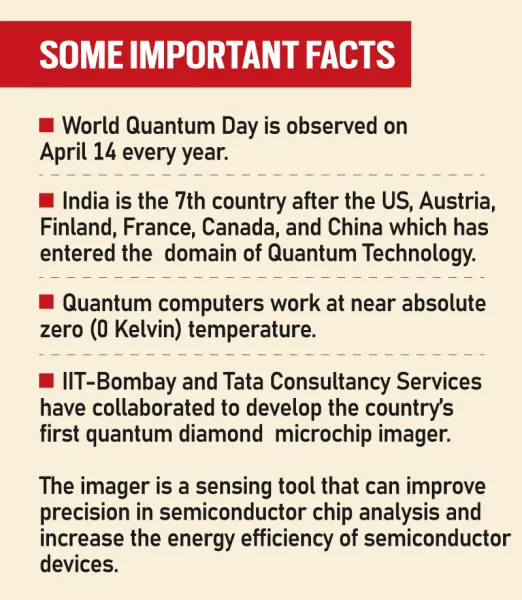
- Quantum computing uses ‘qubit’ (or quantum bit) as its fundamental unit.
- This technology exploits the principles of quantum mechanics, which include superposition, quantum entanglement, and interference.
- Superposition refers to the ability of these particles to exist in multiple locations simultaneously.
Domains of Quantum Technologies
- Quantum communication: It applies the properties of quantum physics to provide better security and improved long-distance communications.
- Quantum simulation: It refers to the use of a quantum system to simulate the behavior of another quantum system.
- Quantum computation: It is a field of computing that utilizes the principles of quantum mechanics to perform certain types of calculations more efficiently than classical computers.
- Quantum sensing and metrology: It leverages the principles of quantum mechanics to achieve highly precise measurements.
| National Quantum Mission (NQM) – It was conceptualized by the Prime Minister Science Technology Advisory Council (PM-STIAC) with a total outlay of Rs 6003.65 Crore for a period of eight years. – The Mission aims to seed, nurture, and scale up scientific and industrial R&D and create a vibrant & innovative ecosystem in Quantum Technology (QT). – The Mission aims to establish four Thematic Hubs (T-Hubs) in domains such as, 1. Quantum Computing, 2. Quantum Communication, 3. Quantum Sensing & Metrology, and 4. Quantum Materials & Devices. |
Role of Quantum computing in reshaping National Security
- Cybersecurity and Cryptography: The technology could break traditional encryption methods, threatening sensitive government and financial data. India must accelerate its transition to Post-Quantum Cryptography (PQC).
- Intelligence Gathering: Quantum computing will enhance intelligence-gathering capabilities, enabling nations to decode encrypted communications swiftly.
- Defense Applications: Quantum-enhanced AI will optimize battlefield logistics, autonomous systems, and missile guidance.
- Geopolitical Power: The report points out that the dominance of a country in quantum technology will give it an edge to shape global technology standards and norms, thus shaping international regulations.
Key Recommendations
- PQC Transition Plan: Involving risk prioritization-based transition and roadmap, accelerated POCs, testing and certification, and exchanging information about the deployments.
- Early Warning System: Leverage scientific intelligence for potential breakthroughs.
- Technology Access Agreements: Establish bilateral partnerships for rapid adoption, especially the modalities that offer scalability, including topology qubit.
- Flexible R&D Funding: Adapt investment priorities based on emerging breakthroughs.
Concluding remarks
- India’s quantum security strategy must integrate technology monitoring, research flexibility, and supply chain security while leveraging global partnerships and domestic innovation.
- A proactive, multi-pronged approach will ensure national security remains resilient in the quantum era.
Paris Agreement Target is at Risk
Syllabus :GS 3/Environment
In News
- Jim Skea, chairperson of the IPCC, stated that the aspiration to limit global warming to 1.5°C is still possible but is “hanging by a slender thread.”
| Do you know? – The Intergovernmental Panel on Climate Change (IPCC) established in 1988 by the World Meteorological Organization (WMO) and the United Nations Environment Programme (UNEP). – It provides scientific information to help governments develop climate policies. – With 195 member countries, the IPCC plays a key role in international climate change negotiations. |
Paris Agreement Adoption
- It is a legally binding international treaty on climate change.
- It was adopted by 196 Parties at the UN Climate Change Conference (COP21) in Paris, France, on 12 December 2015. It entered into force on 4 November 2016.
- It is aimed to combat climate change and accelerate actions towards a sustainable, low-carbon future.
- The main goal is to limit global temperature rise to well below 2°C above pre-industrial levels, with efforts to further limit it to 1.5°C.
Features
- It focuses on enhancing countries’ ability to cope with climate impacts and aligning financial flows with a low greenhouse gas (GHG) emissions and climate-resilient future.
- It includes the provision of financial resources, technology frameworks, and capacity-building to assist developing countries and the most vulnerable nations.
- All Parties are required to submit nationally determined contributions (NDCs) and regularly report their emissions and actions.
- Every 5 years, a global stocktake will assess collective progress and guide future actions.
Current Climate Situation
- The world temporarily exceeded 1.5°C of warming in 2024, highlighting the urgent need for stronger climate action.
- While limiting warming to 1.5°C was once considered achievable, current trends indicate that this goal is slipping away due to insufficient emission reductions, inadequate adaptation measures, and slow progress in climate finance.
| India’s Progress – India has made significant progress in addressing climate change as per the Paris Agreement. – In its 4th Biennial Update Report (BUR-4) submitted in December 2024, India reported a 36% reduction in emission intensity of GDP between 2005 and 2020, compared to its NDC target of 45% by 2030. – India’s non-fossil fuel-based electricity generation capacity reached 47.10% in December 2024, just short of the 50% target for 2030. – Additionally, India has achieved 2.29 billion tonnes of carbon sink through additional forest cover, approaching the 2.5-3.0 billion tonne target by 2030. – India amended the Energy Conservation Act in 2022 to support the development of a carbon market, launching the Carbon Credit Trading Scheme (CCTS) in 2023. – To align with national climate goals, India plans to transition energy-intensive sectors (such as aluminium, cement, steel, and textiles) from the Perform, Achieve, and Trade (PAT) scheme to the CCTS compliance mechanism. – At the UNEA 2024, India introduced the resolution on sustainable lifestyles, promoting the Mission LiFE (Lifestyle for Environment) initiative. |
Conclusion and Way Forward
- Climate change is a global emergency that goes beyond national borders.
- It is an issue that requires international cooperation and coordinated solutions at all levels.
- Since the Paris Agreement, there has been progress in developing low-carbon solutions and new markets.
- By 2030, zero-carbon solutions could become competitive in sectors covering over 70% of global emissions, creating new business opportunities for early adopters.
- The impact of climate change can be mitigated through renewable energy sources like wind and solar energy and by utilizing adaptation strategies.
Growth in India’s Bioeconomy Sector
Syllabus: GS3/Economy
Context
- Union Minister Dr. Jitendra Singh said that India’s Bioeconomy grew more than 10 times in the last 10 years.
What is BioEconomy?
- The BioEconomy is the knowledge-based production and use of biological resources to provide products, processes and services in all economic sectors within the frame of a sustainable economic system.
- It encompasses sectors like agriculture, forestry, fisheries, food production, biotechnology, and bioenergy.
- Subsectors of the BioEconomy in India are;
- BioPharma or BioMedical: It includes the development and production of medical products and services, such as pharmaceuticals, medical devices, and lab-grown organoids.
- BioAgri: It includes the development and production of genetically modified crops and animals, precision agriculture technologies, and bio-based products. EX: Bt Cotton.
- BioIndustrial: It includes the development and production of biobased chemicals and products using enzymes, biosynthetic routes, and recombinant DNA technology.
BioEconomy of India
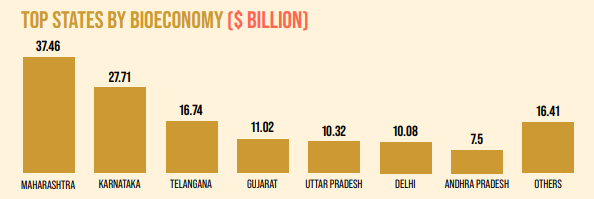
- India’s BioEconomy has grown 13-fold over the last decade, from $10 billion in 2014 to over $130 billion in 2024, with a projection to reach $300 billion by 2030.
- In the Global Innovation Index, India has climbed from 81st place in 2015 to 40th out of 132 economies.
- India ranks 3rd in the Asia-Pacific region and 12th globally in terms of biomanufacturing.
- Biotechnology, a sunrise sector, has achieved a valuation of Rs 75,000 crore over the past 10 years.
- In 2022, BioEconomy accounted for 4% of India’s gross domestic product (GDP) of $3.47 trillion and employs over 2 million people.
Government Initiatives
- Biotechnology Industry Research Assistance Council (BIRAC) established by the Department of Biotechnology (DBT) is aimed at strengthening and empowering emerging biotechnology enterprises to undertake strategic research and innovation.
- Policy initiatives of the Government of India (GoI) such as Startup India and Make in India programs are aimed to develop India as a world-class Biotechnology and Bio-manufacturing hub.
- Favorable Government Policies like Draft R&D Policy 2021, PLI Schemes and Clinical trial rules have propelled India to be the ‘pharmacy of the world’.
Challenges for BioEconomy of India
- Global Competition: India’s BioEconomy faces stiff competition from more established bio Economies in countries like the USA, EU, and China, which have more advanced infrastructure, funding, and R&D capabilities.
- Intellectual Property (IP) Protection: Protecting intellectual property in the biotech sector is challenging, leading to concerns over innovation theft and lack of incentives for research.
- Lack of Infrastructure: Insufficient infrastructure for research, development, and commercialization of biotechnology innovations.
- Brain Drain: Talented scientists and researchers leave India for better opportunities abroad, reducing the country’s capacity for innovation.
Way Ahead
- Encourage increased public and private investment in biotech R&D through grants, tax incentives, and venture capital support.
- Engage in global research collaborations to leverage expertise, share resources, and accelerate the development of new technologies.
- Develop innovation clusters/ecosystems where academia, industry, and government entities can collaborate closely on BioEconomy initiatives.
MISCELLANEOUS
SC on Misuse of CAMPA Funds
Syllabus: GS 3/Environment
In News
- Recently, the Supreme Court of India sought a response from the Uttarakhand Chief Secretary regarding allegations of misuse of Compensatory Afforestation Fund Management and Planning Authority (CAMPA) funds.
CAMPA
- The Compensatory Afforestation Fund (CAF) Act, 2016, and its accompanying rules, notified in 2018.
- It aims to compensate for the loss of forest ecosystems due to forest land diversion for non-forest use.
- The Act establishes two special interest-bearing funds:
- the National Compensatory Afforestation Fund (National Fund) managed by the Central Government through the National CAMPA, and
- the State Compensatory Afforestation Fund (State Fund) managed by the respective State Governments/UT Administrations through State CAMPA.
Purpose
- The funds are used for compensatory afforestation, restoring degraded forests, improving wildlife habitats, and enriching biodiversity.
- The funds are non-lapsable and earn interest at a rate declared by the Central Government annually.
Source: TH
Festival of Letters 2025
Syllabus :GS 1/Culture
In News
- Sahitya Akademi is organizing its annual Festival of Letters at Rabindra Bhavan in New Delhi.
Festival of Letters
- It is Asia’s Largest Literature Festival with about 700 writers from different parts of the country representing more than 50 languages participating in the festival that spans over 100 sessions.
- The theme of the festival will be Indian Literary Traditions and a National Seminar on the topic featuring eminent thinkers and writers will be organized during the last three days of the festival.
- It has representation from Young Writers, Women Writers, Dalit Writers, North-East Writers, Tribal Writers, LGBTQ Writers & Poets.
Sahitya Akademi
- Established: 12 March 1954 by the Government of India.
- Registered as: A society under the Societies Registration Act, 1860.
- Ministry: Autonomous organization under the Ministry of Culture.
- Headquarters: New Delhi.
- Functions & Role:
- Central institution for literary dialogue, publication, and promotion in India.
- Only institution conducting literary activities in 24 Indian languages, including English.
- Encourages translation, preservation, and dissemination of literature across languages.
Source: PIB
Vitiligo
Syllabus: GS2/Health
Context
- A study from Northwestern University discovered that a natural compound derived from gut-friendly bacteria may slow vitiligo progression.
Vitiligo
- Vitiligo is a chronic autoimmune disorder where the body’s immune system attacks pigment-producing cells (melanocytes), causing white patches on the skin.
- It can occur anywhere on the body, including the face, hands, and other exposed areas.
- There are 2 main types of vitiligo:
- Non-segmental vitiligo – Often appear on both sides of your body as symmetrical white patches.
- Segmental vitiligo – Only affects one area of your body.
- In rare cases, it’s possible for vitiligo to affect the whole body. This is known as universal vitiligo.
- The prevalence of vitiligo in India has been invariably reported between 0.25% and 4%, and up to 8.8% in Gujarat and Rajasthan, as per a paper in the Indian Dermatology Online Journal.
- Treatment options include creams, light therapy, and sometimes surgery to help manage symptoms.
Golden Dome
Syllabus: GS3/ Defence
In Context
- The “Golden Dome” is an advanced missile defense system announced by U.S. President Donald Trump during his recent address to Congress.
About
- Inspired by: Israel’s Iron Dome, which is effective against short-range rocket threats.
- Objective: To provide nationwide missile defense against:
- Ballistic Missiles
- Hypersonic Missiles
- Cruise Missiles
- Components: Space-based sensors for early threat detection.
- Advanced interceptors to neutralize missiles mid-flight.
- Multi-layered defense system integrating ground, naval, and space-based assets.
Central Industrial Security Force
Syllabus: GS3/Security agencies in India
Context
- The Central Industrial Security Force is set to recruit between 15,000 and 20,000 personnel annually over the next few years, to increase its capacity.
About CISF
- It is a paramilitary force established in 1969, under the Central Industrial Security Force Act, 1968.
- Every year, CISF Raising Day is observed on March 10.
- The force is led by a Director General (DG) and operates under the Ministry of Home Affairs of India.
- Roles:
- Providing security to the strategic establishment, including the Department of Space, the Department of Atomic Energy, the Airports, the Delhi Metro, the ports.
- Also, the historical monuments and the basic areas of the Indian economy such as petroleum and natural gas, electricity, coal, steel and mining.
- It also provides counter-terrorism security to various sensitive facilities, as well as private sector operations.
- CISF also provides consultancy services to private industries as well as other organisations within the Indian government.
- It is also providing security to the protected persons classified as Z Plus, Z, X, Y.
Paramilitary Forces
- They are semi-militarized forces with structures, tactics, and training similar to the military, but not part of formal armed forces.
- The Assam Rifles is the oldest paramilitary force of India. It was raised in 1835.
Differences between Paramilitary Forces and Military in India:
- Role and Function:
- Military: Primarily responsible for national defense, protecting the country from external threats, and engaging in warfare.
- Paramilitary Forces: Primarily responsible for maintaining internal security, law enforcement, border security, and assisting in disaster management.
- Command and Control:
- Military: Led by the Ministry of Defence, under the command of the Indian Armed Forces (Army, Navy, Air Force).
- Paramilitary Forces: Operate under different ministries, depending on the force.
- Legal Framework:
- Military: Governed by the Indian Army Act, Navy Act, and Air Force Act.
- Paramilitary Forces: Governed by various individual acts, such as the Border Security Force Act or Central Reserve Police Force Act.