
Panel Recommends Framework for Direct Recruitment in CBI
Syllabus: GS2/Governance
Context
- The Parliamentary Standing Committee on Personnel, Public Grievances, Law and Justice recommended independent direct recruitment in the CBI.
Key Recommendation:
- Independent Recruitment: Significant number of posts filled on deputation from various organizations.
- CBI should develop an independent recruitment framework.
- Direct recruitment through SSC, UPSC, or a dedicated CBI exam.
- Lateral entry for specialists in cybercrime, forensics, financial fraud, and legal domains.
- Deputation should be limited to senior posts.
- Create an in-house expertise team to reduce reliance on external experts.
- State Consent: Enact a new law allowing CBI to investigate matters of national security and integrity without state consent.
- Ensure safeguards to maintain impartiality and prevent state governments from feeling powerless.
- Permanent Cadre: CBI should establish a permanent cadre with structured career progression for stability.
Issues with the Central Bureau of Investigation (CBI)
- Lack of Autonomy & Effectiveness: Operates under the Delhi Special Police Establishment (DSPE) Act, 1946, which limits its independence.
- State government consent is required for investigations, often creating operational roadblocks.
- Manpower Shortages: Nearly 16% of the agency’s sanctioned strength is vacant leading to operational hurdles.
- CBI Deputations Issue: The CBI faces challenges in filling posts through deputations, especially for ranks below inspector, due to a shortage of suitable candidates from state police.
Central Bureau of Investigation (CBI)
- CBI is India’s specialized investigative agency, responsible for tackling high-profile crimes, corruption, and national security matters.
- Founded: CBI was established in 1963 on the recommendation of the Santhanam Committee on Prevention of Corruption.
- Ministry: Ministry of Personnel, Public Grievances, and Pensions.
- Jurisdiction: CBI’s investigative powers are subject to state government consent for crimes not covered under its general consent.
- Eight states have withdrawn this consent, limiting its ability to investigate certain cases.
- Director: The CBI is headed by a Director for a tenure of 2 years, appointed by the central government on recommendation by a three-member Appointment Committee.
The Medical Termination of Pregnancy (MTP) in India
Syllabus: GS2/Health
Context
- Some doctors express ethical discomfort about performing abortions, especially as the pregnancy progresses.
- Concerns intensify in cases of advanced gestation, where Foetal viability debates emerge.
About
- Foetal Viability Debate: Viability refers to the point at which a fetus can survive outside the womb, but no definitive moment exists.
- As pregnancy advances, the fetus’s right to life grows stronger, making viability a contentious issue in legal and ethical discussions.
India’s Legal Stance on Abortion
- The Medical Termination of Pregnancy (MTP) Act permits abortions in specific predetermined situations.
- Before the enactment of the MTP Act in 1971, the medical termination of pregnancy was governed by the Indian Penal Code (IPC).
- Most of these provisions aimed at criminalising abortions, except where the procedure was done in good faith in order to save the woman’s life.
- The provisions failed to make a distinction between wanted and unwanted pregnancies, making it extremely onerous for women to access safe abortions.
- In 1971, the MTP Act was enacted by Parliament as a “health” measure, to decriminalise abortion in certain defined circumstances and under due supervision of registered medical practitioners.
- A pregnancy could only be terminated under Section 3(2) if it did not exceed 20 weeks.
- It laid down that the pregnancy can be terminated on the opinion of one doctor if it is done within 12 weeks of conception and two doctors if it is done between 12 and 20 weeks.
- The 2021 amendment to the MTP Act: Rule 3B permitted abortion up to 24 weeks for women due to change of marital status during the ongoing pregnancy, besides in cases of survivors of rape, victims of incest, and other vulnerable women.
- It also replaced the word “by any married woman or her husband” with the words “any woman or her partner”, bringing within the fold of the law pregnancies outside marriage institutions.
- After 24 weeks, the MTP Act requires medical boards of expert doctors to be set up by the state government in each district, which opine on whether to allow termination of pregnancy in case of substantial foetal abnormality.
Arguments in favour of MTP
- Bodily Autonomy and Reproductive Rights: Women should have the autonomy to make decisions about their own bodies, the Supreme Court has emphasized the importance of reproductive rights as part of personal liberty.
- Physical Health: If carrying a pregnancy threatens a woman’s health, including conditions like gestational diabetes or eclampsia, abortion may be justified to protect her life.
- Mental Health: In cases where pregnancy exacerbates mental health conditions (e.g., postpartum depression or psychosis), abortion may be necessary to safeguard the mental health of the mother.
- Non-Viable Fetuses: If the fetus has congenital abnormalities or conditions incompatible with life, abortion may be ethically acceptable to avoid prolonged suffering for the child.
- Unplanned Pregnancies: For women facing economic or social hardships, the ability to access abortion services can allow them to avoid further challenges.
- Reduction in Unsafe Abortions: Legal access to abortion reduces the number of unsafe, illegal abortions that often lead to serious health risks or even death for women.
Arguments Against MTP
- Right to Life of the Fetus: Ethical objections argue that the fetus has a right to life, especially as pregnancy progresses and fetal viability increases, making abortion less acceptable.
- Emotional and Psychological Effects: Terminating a pregnancy can have long-term psychological consequences for the woman, including guilt, regret, and emotional trauma.
- Non-Medical Abortions: There is a concern that allowing abortion may lead to its normalization as a method of birth control, rather than a rare and necessary medical intervention.
- Risk of Misuse: There is a concern that abortion laws may be misused, such as for sex-selective abortions or for non-medical reasons, like convenience.
- Negative Impact on Society: Widespread abortion could contribute to a decline in societal values regarding family and the value of life.
- Cultural Beliefs: Cultural norms often view abortion as morally unacceptable, especially when it’s perceived as a violation of the natural order or traditional family structures.
Way Ahead
- Access to Abortion Care: Making MTP pills more accessible and reducing administrative barriers could improve abortion access.
- Improved sex education and viewing abortion as a health service rather than a legal exception might help reduce stigma.
- Empathy in Medical Decision-Making: Doctors are encouraged to treat women with empathy, especially in emotionally and physically challenging situations involving late-term abortions.
10th Anniversary of Sagarmala Programme
Syllabus: GS3/ Infrastructure
In Context
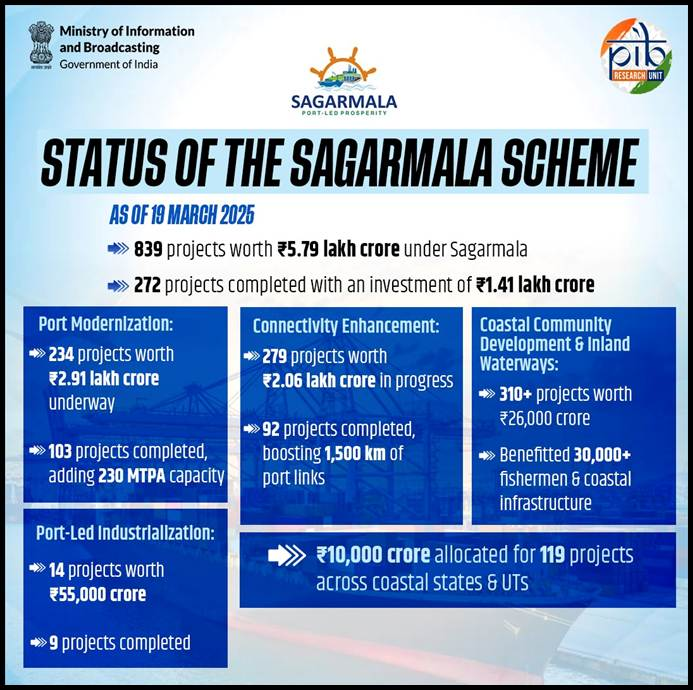
- The Sagarmala Programme which was launched in 2015 by the Ministry of Ports has revolutionized India’s maritime sector.
About
- With a 7,500 km coastline, 14,500 km of potentially navigable waterways, and a strategic position on key global trade routes, India holds immense potential for port-led economic growth.
- The Sagarmala Programme is a key pillar of the Maritime Amrit Kaal Vision 2047 (MAKV), driving India’s ambition to become a global leader in maritime affairs. Building on Maritime India Vision 2030, MAKV sets ambitious targets, including 4 million Gross Registered Tonnage (GRT) of shipbuilding capacity and 10 billion metric tons of port handling annually, aiming to position India among the top five shipbuilding nations by 2047.
- MAKV outlines over 300 strategic initiatives to develop world-class ports, expand coastal and inland waterways, and promote a sustainable Blue Economy.
Sagarmala Programme
- Objectives: To streamline logistics, reduce costs, and enhance international trade competitiveness by shifting from traditional, infrastructure-heavy transport to efficient coastal and waterway networks.
- The program focuses on port modernization, industrial growth, job creation, and sustainable coastal development, ensuring minimal infrastructure investment while maximizing economic impact.
- Components:
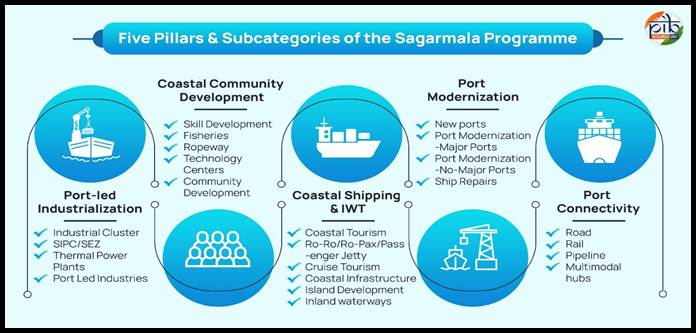
- The program consists of several key components aimed at transforming India’s maritime sector. The overall set of projects under the Sagarmala Programme are divided into 5 pillars.
- Implementation Mechanism:
- Major Ports, central ministries, State Governments, state maritime boards, and other relevant agencies execute projects.
- Projects are selected based on the Master Planning of Major Ports, meetings of the National and State Steering Committees.
- Funding Structure:
- Many projects are funded through the internal resources of MoPSW agencies, including Major Ports.
- Priority is given to private sector participation, with PPP models implemented wherever feasible.
- Sagarmala Development Company Limited (SDCL) was established to support project Special Purpose Vehicles (SPVs).
- Achievements:
- Coastal shipping grew 118% in a decade, Ro-Pax ferries moved over 40 lakh passengers, and inland waterway cargo rose 700%.
- Nine Indian ports rank in the world’s top 100, with Vizag in the top 20 container ports.
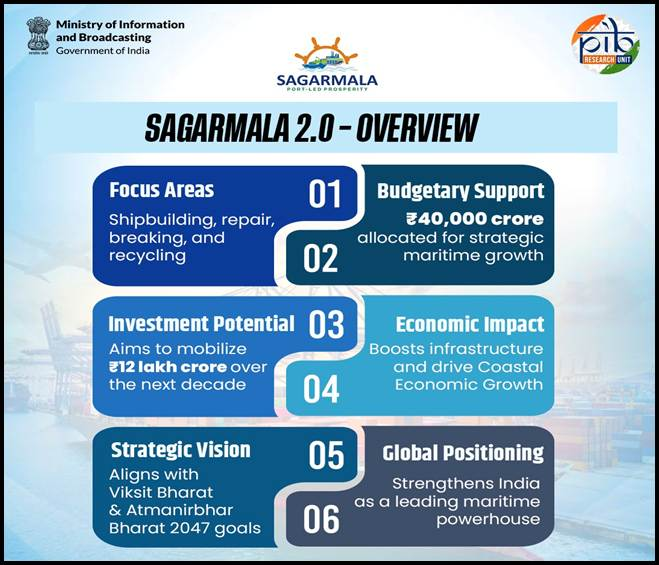
Sagarmala 2.0
Sagarmala Startup Innovation Initiative (S2I2)
- Launched on March 19th 2025, it is a transformative program designed to foster innovation and entrepreneurship in India’s maritime sector.
- S2I2 supports startups in green shipping, smart ports, maritime logistics, shipbuilding technology, and sustainable coastal development by providing funding, mentorship, and industry partnerships.
- Anchored in the principles of RISE—Research, Innovation, Startups, and Entrepreneurship-S2I2 will drive technological advancements, enhance industry competitiveness, and accelerate economic growth.
Challenges
- Investment Mobilization and Budgetary Support: Securing timely investments and adequate budgetary allocations has been a persistent issue.
- Land Acquisition and Environmental Concerns: Acquiring land for infrastructure development, especially in coastal areas, involves complex legal and environmental considerations.
- Stakeholder Coordination: Effective implementation requires seamless coordination among central and state agencies, port authorities, and private sector participants.
- Connectivity Issues: Inadequate last-mile connectivity between ports and the hinterland affects the efficiency of cargo movement. Underutilization of domestic waterways and constrained rail infrastructure further exacerbate this problem.
- Community and Social Impacts: Port expansion and related industrial activities can lead to the displacement of local communities, particularly fishing populations.
Way Ahead
- Improve Inter-agency Coordination: Foster better collaboration between central, state, and local bodies for seamless execution.
- Focus on Sustainable Development: Ensure environmental safeguards, promote green ports, and support community livelihoods.
- Enhance Port-Hinterland Connectivity: Invest in multi-modal transport networks to improve last-mile cargo movement.
- Promote Indigenous Shipbuilding & Recycling: Support Make in India initiatives for maritime infrastructure and services.
Growth of India’s E-retail Market
Syllabus :GS 3/Economy
In News
- India’s e-retail market is expected to triple to $170–$190 billion in gross merchandise value (GMV) by 2030 driven by an expanding shopper base and innovative business models.
India’s retail industry
- It is one of the fastest-growing globally and India is a key market for international retail giants, driven by its large middle class and untapped potential.
- The urban Indian consumer’s increasing purchasing power is fostering demand for branded goods across various categories.
Drivers of Growth
- Favorable Demographics: India’s large, young population, rising middle class, urbanization, and changing lifestyles are major contributors to retail growth, supported by favorable government policies.
- User adoption is spreading to Tier-2 and Tier-3 cities, with 60% of new shoppers since 2020 coming from smaller cities.
- The Northeast region shows higher e-retail penetration, with 1.2 times higher shopper adoption than other parts of India.
- Increase in Income and Purchasing Power: India ranks amongst the top economies in GDP by Purchasing Power Parity (PPP), with rising income levels and improved purchasing power, alongside a significant reduction in extreme poverty.
- Change in Consumer Mindset: A shift from traditional retail to online platforms has led to increased convenience, wider product selection, price sensitivity, trust in online transactions, and greater reliance on technology and fast delivery.
- Brand Consciousness: Consumers in India are becoming more brand-conscious, influenced by economic, cultural, and technological factors.
- Easy Consumer Credit and Quality Products: The growth of unsecured retail loans alongside a rise in quality products, has further boosted consumer spending.
Current Status
- India is currently the world’s second-largest e-retail market and had over 270 million online shoppers in 2024.
- India now trails only China, which boasts a staggering 920 million digital buyers.
- The market is valued at $60 billion in 2024, with a growth rate of 10–12%, down from over 20% due to macroeconomic pressures.
- Categories like grocery, lifestyle, and general merchandise are expected to drive 70% of incremental growth by 2030, with penetration levels rising two to four times.
- Quick commerce (Q-commerce), accounting for 10% of total e-retail GMV, is forecast to grow over 40% annually.
Challenges
- India’s e-retail market surged in 2024, but its annual growth rate has slowed due to broader economic challenges, including rising inflation, stagnant wages, and weakened consumer spending, particularly in urban markets.
- Many consumer brands have reported sluggish revenue growth, struggling to adapt to changing spending patterns.
Various initiatives
- The government has introduced policies to improve the business climate and simplify the process for foreign companies to establish fully owned subsidiaries, further boosting the retail sector’s growth.
- Government of India has allowed 100% FDI in online retail of goods and services through the automatic route, thereby providing clarity on the existing businesses of E-commerce companies operating in India.
Conclusion and Way Forward
- The COVID-19 pandemic has shifted consumer preferences, blending online and offline shopping experiences.
- Retailers are using innovative strategies, integrating e-commerce with traditional methods, and experimenting with new revenue models to enhance customer value.
- E-commerce is growing rapidly, offering consumers more choices at lower prices, and is expected to continue revolutionizing the retail industry.
- Retailers should focus on digital channels to reduce real estate costs and reach more customers in Tier II and Tier III cities.
Battling Money Laundering & Terrorist Financing
Syllabus: GS3/Internal Security; Money-laundering & Its Prevention
Context
- In a recent address at the Financial Action Task Force (FATF) Private Sector Collaborative Forum, the Governor of RBI emphasized the need for a balanced approach in combating money laundering and terrorist financing.
| Key Highlights of RBI Governer’s Address – Balanced Regulations: The Governor emphasized the importance of regulations that effectively target illicit activities without stifling legitimate investments or financial inclusion. – Potential of Advanced Technologies: Use of AI, machine learning and blockchain to enhance transaction monitoring and risk assessment. – Public-Private Collaboration: Need for strong partnerships between government agencies, financial institutions, and civil society to safeguard the financial system. |
Understanding Money Laundering
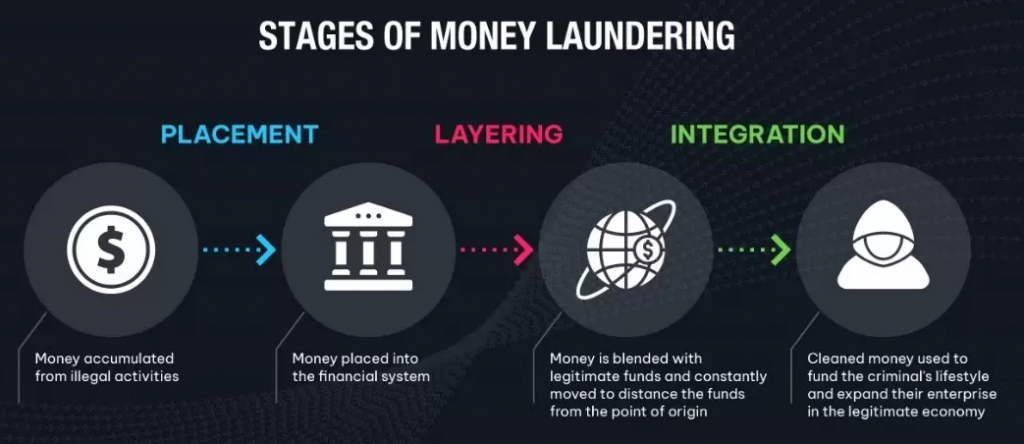
- It is the process of making illegally acquired money appear legitimate. It generally occurs in three stages:
- Placement: Introducing illegal funds into the financial system.
- Layering: Conducting multiple transactions to obscure the source.
- Integration: Reintegrating the laundered money into the economy as seemingly legitimate wealth.
- Common techniques include shell companies, offshore accounts, real estate purchases, trade-based laundering, and digital currency transactions.
Terrorist Financing
- It often involves relatively small but crucial amounts of money channeled for operational costs, recruitment, and propaganda.
- These funds may originate from legal sources such as donations or charities, or illegal means like drug trafficking and smuggling.
- Key Methods of Terrorist Financing:
- Hawala transactions (informal value transfer systems);
- Charitable organizations and NGOs misused for fundraising;
- Cryptocurrencies and digital wallets;
- Fake business enterprises and shell companies;
- Smuggling of cash and high-value goods.
Challenges in Combating Money Laundering and Terrorist Financing
- Evolving digital payment methods like cryptocurrencies.
- Hawala networks that bypass formal banking channels.
- Cross-border financial flows make tracking difficult.
- Complex corporate structures used to obscure illicit funds.
- Delay in judicial proceedings leading to slow convictions.
India’s Legal and Institutional Framework
- India has adopted several laws and enforcement measures to tackle money laundering and terrorist financing, aligned with global standards set by the Financial Action Task Force (FATF).
- Prevention of Money Laundering Act (PMLA), 2002: It is India’s primary anti-money laundering law.
- It mandates financial institutions to report suspicious transactions and empowers authorities to seize illicit assets.
- The Enforcement Directorate (ED) is the primary agency enforcing PMLA provisions.
- Unlawful Activities (Prevention) Act (UAPA), 1967: It criminalizes terrorist financing and provides strict penalties for funding or supporting extremist groups.
- Financial Intelligence Unit – India (FIU-IND): It, under the Ministry of Finance, collects and analyzes financial data to detect money laundering and terror financing.
- Reserve Bank of India (RBI) Guidelines: RBI mandates Know Your Customer (KYC), Anti-Money Laundering (AML) and Counter-terrorism Financing (CFT) Frameworks and norms for banks and financial institutions to curb illicit financial flows.
- Foreign Contribution (Regulation) Act (FCRA), 2010: FCRA monitors foreign funding received by NGOs and associations, ensuring they are not used for illegal activities.
Recent Developments
- India has ramped up its efforts to combat financial crimes, particularly in light of FATF reviews and growing digital financial transactions. Key measures include:
- Crackdown on shell companies to prevent money laundering.
- Regulation of cryptocurrency transactions for AML compliance.
- Strengthening inter-agency coordination between the ED, FIU, RBI, and Intelligence agencies.
Free Movement Regime between India and Myanmar
Syllabus: GS2/IR/GS3/Internal Security
Context
- In 2024, the Union Home Minister announced that the Free Movement Regime (FMR) along the Myanmar border would be scrapped but there hasn’t been any progress yet.
Free Movement Regime
- The FMR is a mutually agreed arrangement between the two countries that allows tribes living along the border to travel inside the other country without a visa.
- The FMR with Myanmar came into existence in 1968 as people on either side of the border have familial and ethnic ties.
- The territorial limit of free movement then was 40 km, which was reduced to 16 km in 2004, and additional regulations were enforced in 2016.
Reasons for Scrapping FMR
- Threat to internal security: The instability in Myanmar, coupled with the presence of armed groups, poses a significant challenge for India in terms of cross-border migration and internal security.
- Drug Trafficking: The drugs that are coming in from the Golden Triangle, a region where the jungle borders of Thailand, Laos, and Myanmar meet and which is one of the world’s main illicit drug production and trafficking areas,
- Insurgent Groups: The prevailing arrangement allows insurgents to have camps in the dense jungles of Myanmar across the border.
- Refugees Influx: There are a large number of refugees moving into the northeastern (NE) states, primarily in Manipur.
- China’s Influence: Myanmar’s dependence on China grew post-coup in 2021, with China shielding Myanmar from international criticism, though Myanmar had sought diversification pre-coup.
Brief on India- Myanmar Relations
- Location: India shares a long land border with Myanmar as well as a maritime boundary in the Bay of Bengal.
- Four northeastern states, viz., Arunachal Pradesh, Nagaland, Manipur and Mizoram, have a boundary with Myanmar.
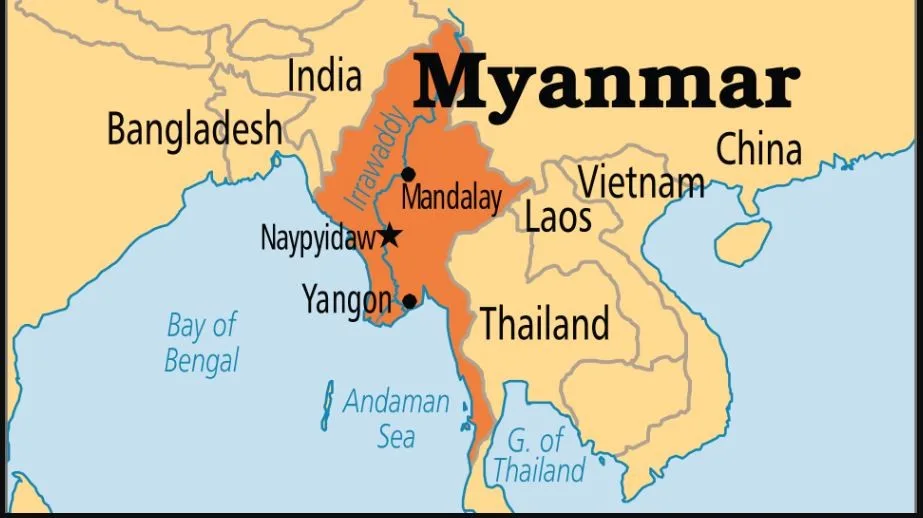
- Diplomatic Relations: Diplomatic relations between India and Myanmar have generally been friendly, with high-level visits and engagements strengthening ties at the governmental level.
- India and Myanmar signed a Treaty of Friendship in 1951.
- Historical and Cultural Ties: Both Nations share deep historical and cultural connections, with influences from Buddhism, Hinduism, and trade routes shaping their interactions over millennia.
- Geopolitical Significance: Myanmar holds significant geopolitical importance for India due to its strategic location, acting as a bridge between South Asia and Southeast Asia.
- India is seeking to enhance its cooperation with Myanmar in line with ‘Act East’ and ‘Neighborhood First’ Policies.
- Economic Cooperation: Economic cooperation between the two nations has been steadily growing since the trade agreement in 1970, with India being one of Myanmar’s largest trading partners.
- The bilateral trade stood at US$ 1.50 billion in 2023-24. Bilateral trade is conducted under ASEAN-India Trade in Goods Agreement (AITIGA) and India’s Duty Free Tariff Preference (DFTP) scheme.
- Security Cooperation: Both countries share concerns over border security, insurgency, and cross-border trafficking.
- They have cooperated on security issues, including intelligence sharing and joint patrolling along the border.
- Connectivity Projects: India is involved in various connectivity projects aimed at improving infrastructure and connectivity between the two countries.
- The Kaladan Multi-Modal Transit Transport Project and the India-Myanmar-Thailand Trilateral Highway are notable examples.
- Sittwe Port in Myanmar’s Rakhine Province is crucial for the Kaladan Multi-Modal Transit Transport Project (KMMTTP).
- Development Assistance: India has been providing development assistance to Myanmar in various sectors, including infrastructure, healthcare, education, and capacity building.
- Shared Platforms: BIMSTEC, Mekong-Ganga Cooperation (MGC).
Conclusion
- The political situation is unpredictable in Myanmar, India needs to establish a certain mechanism to check the flow of people from Myanmar to India.
- The government needs to educate the people in India about the problems in the region, take the people into confidence, and arrive gradually at a decision.
Coral Bleaching Devastates Western Australia’s Ningaloo Reef
Syllabus: GS3/ Environment
In News
- A severe mass coral bleaching event described as unprecedented is unfolding off Australia’s western coast, impacting the Ningaloo Reef, a UNESCO World Heritage site.
About
- The event is part of a broader fourth global coral bleaching episode, ongoing since 2023.
- The NOAA reported that nearly 84% of the world’s reef areas have experienced bleaching-level heat stress, impacting over 80 countries and territories.
- The crisis is worsened by rising global sea surface temperatures, overfishing, and pollution—challenges that have intensified due to climate change.
Coral Reefs: Key Facts
- What are Coral Reefs?
- Underwater ecosystems formed by reef-building corals.
- Composed of colonies of coral polyps bound by calcium carbonate.
- Coral polyps live in endosymbiosis with algae (zooxanthellae).
- Favorable Conditions:
- Temperature: 20°C–35°C
- Salinity: 27%–40%
- Depth: Prefer shallow waters (<50 m) for sunlight access
- Major Coral Reefs:
- Global: Great Barrier Reef, Australia (UNESCO World Heritage Site)
- India: Gulf of Kutch, Gulf of Mannar, Andaman & Nicobar Islands, Lakshadweep, and Malvan.
Benefits of Coral Reefs
- Marine biodiversity hotspot & support oceanic food chains
- Coastal protection against storms and erosion
- Carbon sequestration aiding climate mitigation
- Livelihoods and boost to the Blue Economy
- Source of novel medicines (antivirals, anticancer agents).
Threats to Coral Reefs
- Climatic impacts: Bleaching, acidification, algal blooms
- Human Activities: Overfishing, pollution, coral mining
- Habitat Destruction: Coastal development and sedimentation
Way Ahead
- Climate Action: Keep global warming well below 2°C (Paris Agreement)
- Policy & Governance: Enforce SDGs (especially SDG 8 & 12)
- Global Collaboration: Tackle overfishing and marine pollution collectively
- Innovation: Promote R&D in climate-resilient coral species
