
Sagarmatha Sambaad
Syllabus: GS1/ Indian Geography, GS3/Environment
In News
- Union Minister for Environment addressed the 1st Sagarmatha Sambaad in Nepal, presenting a five-point global action plan to protect fragile mountain ecosystems, with a focus on the Himalayas.
Key Highlights From the Address
- “Sagarmatha”, meaning ‘Head of the Sky’, symbolizes both the majesty and responsibility of protecting mountain ecosystems. Sambaad (dialogue) is named after the world’s tallest mountain Sagarmatha (Mt. Everst).
- He emphasized the shared cultural and ecological bonds between India and its Himalayan neighbours.
- South Asia houses 25% of the global population, contributing only 4% to historical CO₂ emissions. Yet, developing countries like India bear disproportionate impacts of climate change.
- And, developed countries are falling short on climate finance, technology transfer, and capacity building.
- He called for transboundary cooperation under the International Big Cats Alliance for species like snow leopards, tigers, and leopards & also reiterated India’s progress under Project Snow Leopard.
Five-Point Global Action Plan Proposed by India
- Enhanced Scientific Cooperation: Strengthening research collaboration, and monitoring cryospheric changes, hydrological cycles, and biodiversity.
- Building Climate Resilience: Investing in climate adaptation measures, early warning systems for disasters like Glacial Lake Outburst Floods (GLOFs), and climate-resilient infrastructure in mountain areas.
- Empowerering Mountain Communities: Ensuring that the welfare, needs and aspirations of local communities are at the heart of policy-making and their benefit from green livelihoods and sustainable tourism. Their traditional knowledge is an invaluable resource.
- Providing Green Finance: Making available adequate and predictable climate finance as per the UNFCCC and its Paris Agreement for mountain Nations to implement adaptation and mitigation strategies effectively.
- Recognizing Mountain Perspectives: Ensuring that the unique vulnerabilities and contributions of mountain ecosystems are suitably featured in global climate negotiations and sustainable development agendas.
Importance of Himalayas
- Climate Regulator: The Himalayas act as a barrier against cold Central Asian winds and influence the Indian monsoon, ensuring rainfall across northern plains.
- Water Source: They are the origin of major rivers like the Ganga, Indus, and Brahmaputra, supporting water and food security for over a billion people.
- Biodiversity Hotspot: Home to diverse flora and fauna, including endangered species like the snow leopard and red panda.
- Cultural Significance: Sacred in Hinduism and Buddhism, the region hosts many pilgrimage sites like Amarnath, Badrinath, and Kailash Mansarovar.
- Strategic Importance: Serving as a natural frontier with China, Nepal, and Bhutan, the Himalayas are vital to India’s national security.
Initiatives Taken to Protect Himalayas
- National Mission on Sustaining Himalayan Ecosystem (NMSHE): Part of India’s National Action Plan on Climate Change (NAPCC), it focuses on sustainable development, glacier monitoring, and biodiversity conservation in the Himalayan region.
- Secure Himalaya Project: Launched with UNDP support, it promotes conservation of high-altitude biodiversity and supports sustainable livelihoods in Himachal Pradesh, Uttarakhand, Sikkim, and Ladakh
- Project Snow Leopard: Aims to protect snow leopards and their habitat through community-based conservation and scientific research in five Himalayan states.
- International Big Cats Alliance (IBCA): India-led initiative to foster global cooperation in protecting big cats like snow leopards and tigers across transboundary Himalayan regions.
US Remittance Tax Plan Raises Concerns
Syllabus: GS2/IR/GS3/Economy
Context
- A U.S. bill proposes a 5% excise tax on any remittances that originate in the US to any other country.
Proposed Bill
- Tax Scope:The Bill proposes the levy on all cross-border remittances made by non-citizens, including H-1B, L-1, and F-1 visa holders, as well as green card holders. US citizens and nationals are exempt from this.
- No minimum limit has been set in the proposed bill, this means even small transactions will be taxed.
- For non-resident Indians in the US, the proposed tax will apply to any income they earn in the US from investments or stock options as well.
- Tax Collection: The provision requires that the tax be collected by remittance-transfer providers, who are responsible for depositing it every quarter with the treasury secretary.
What are Remittances?
- Remittances are a way to electronically send funds to people, often family, in another country.
- Usually sent by individuals working in foreign countries, especially those employed in blue-collar or skilled jobs.
- Impact: Remittances are a significant source of income for many countries, contributing to their economic stability, supporting local economies, and sometimes helping to finance national trade deficits.
- Modes of Transfer: Remittances can be sent through banks, money transfer operators, or digital platforms.
Overseas Indians in US
- Nearly 54 lakh overseas Indians in the US, most of these individuals are in the US on temporary work visas like H-1B and L-1, or are green card holders who have not yet acquired citizenship.
- India is the largest recipient of remittances from the US, receiving $32.9 billion in 2023-24 with a 27.7 per cent share in the country’s inward remittances (RBI).
- As per the World Bank, India has been the top recipient of remittances since 2008, with its share in world remittances rising from around 11 per cent in 2001 to about 14 percent in 2024.
Potential Impacts
- Remittances have long been a critical source of income for low- and middle-income countries, and have continued to exceed foreign direct investment (FDI) flows and ODA combined.
- If the proposal gets approved, the cost for Indians in the US sending money back home will rise.
- Could discourage remittances to families in home countries.
- Transfer providers may face new administrative and compliance responsibilities.
- Might affect decisions on where to invest or hold assets, especially for those on temporary visas.
- Critics argue the tax constitutes double taxation, as immigrants already pay U.S. taxes on their income.
India’s Remittances: Key Facts
- India’s remittances have more than doubled from $55.6 billion in 2010-11 to $118.7 billion in 2023-24.
- Remittances from the U.S. and U.K. nearly doubled to 40% of total inward remittances in FY24, up from 26% in FY17.
- The U.S. became the top source of remittances in FY21, contributing 23.4% followed by the UAE contributing 19.2%.
- Half of the remittances went to Maharashtra, Kerala, and Tamil Nadu. Other states like Haryana, Gujarat, and Punjab had smaller shares (below 5%).
Nearly 300 million people faced acute hunger in 2024: Report
Syllabus: GS3/Sustainable Development
Context
- The Global Report on Food Crises (GRFC) 2025 provides consensus-based analysis on acute food insecurity, acute malnutrition and population displacement in countries/territories identified as having food crises in 2024.
About
- The document is published annually by The Global Network Against Food Crisis (GNAFC) with analysis from the Food Security Information Network.
- GNAFC is an international alliance of the United Nations, the European Union, governmental and non-governmental agencies working together to address food crises.
- It offers insights into immediate and medium-term risks to the food security and nutrition status of populations.
- Though, India was not selected among the 53 countries analysed for the report.
| Terms Related to Food Security – Food security exists when all people, at all times, have physical, social and economic access to sufficient, safe and nutritious food that meets their dietary needs and food preferences for an active and healthy life. – Acute food insecurity occurs when any of the four pillars of food security — availability, access, utilization, stability — is disrupted. – A food crisis is when acute food insecurity exceeds national response capacity and requires urgent external aid. |
Major Findings
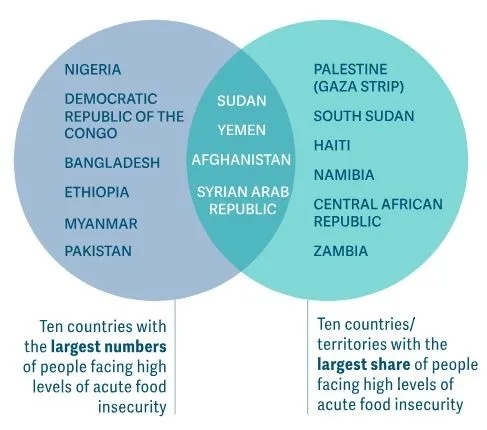
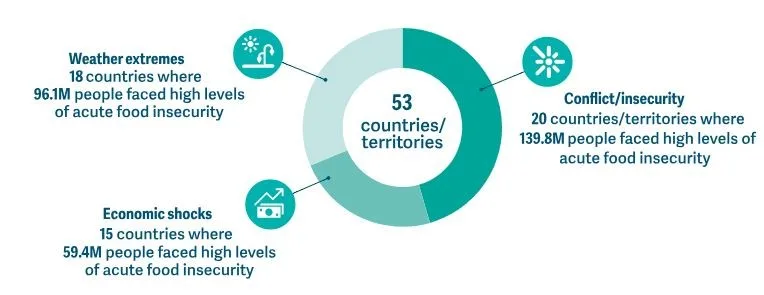
- 295 million people across 53 countries faced acute hunger, 13.7 million more than in 2023.
- Even though there were some improvements in 15 countries including in Afghanistan, Kenya, and Ukraine, deteriorating acute food insecurity in 19 others outweighed those improvements.
- Most Severely Affected
- The number of people facing catastrophic hunger more than doubled between 2023 and 2024, to reach 1.9 million — the highest on record since the GRFC began tracking in 2016.
- High malnutrition rates were recorded in the Gaza Strip, Mali, Sudan, and Yemen.
- Famine has been confirmed in Sudan, while other hotspots with people experiencing catastrophic levels of acute food insecurity include the Gaza Strip, South Sudan, Haiti, and Mali.
- Major Drivers of the Crisis
- Conflict, forced displacement, climate change & other economic factors like inflations, fragile state economy.
UN & Partner Recommendations
- Evidence-driven, impact-focused interventions.
- Invest in local food systems and integrated nutrition services to build long-term resilience.
- Scale proven solutions, pool resources, and center affected communities in responses.
Gene Editing Therapy Used to Cure a Rare Disease
Syllabus: GS3/ Science & Technology
In News
- In a historic medical breakthrough, scientists in the United States have, for the first time, successfully used a personalized CRISPR-based gene-editing therapy to treat a rare genetic disorder Carbamoyl Phosphate Synthetase 1 (CPS1) deficiency in an infant.
- CPS-1 Deficiency is a rare genetic metabolic disorder where the liver lacks an enzyme to convert toxic ammonia into urea, which is usually excreted through urine.
What is Gene Editing Therapy?
- Definition:
- Gene editing therapy refers to the deliberate alteration of DNA sequences within the cells of an individual to treat or cure genetic diseases.
- It involves modifying, deleting, or inserting specific genes at targeted locations in the genome to correct mutations or enhance cellular functions.
- Types of Gene Editing Techniques:
- CRISPR-Cas9: Most widely used tool; cuts DNA at specific sites using guide RNA and Cas9 enzyme
- Zinc Finger Nucleases (ZFNs): Uses engineered proteins to bind and cut DNA
- Base Editing: Alters a single nucleotide without breaking DNA strands
- Prime Editing: Acts like a ‘word processor’ to insert, delete, or replace DNA sequences
- Mechanism:

Applications of Gene Editing Therapy
- Medicine: Treating genetic disorders like Sickle Cell Anaemia, Beta-Thalassemia, CPS-1 Deficiency.
- Engineering immune cells (CAR-T therapy) to target cancer
- Agriculture: Developing disease-resistant, high-yield crops
- Veterinary Science: Enhancing livestock traits
India’s Progress in Gene Editing
- CSIR-Institute of Genomics and Integrative Biology (IGIB) is developing indigenous CRISPR platform (IndiCRISPR).
- The Department of Biotechnology (DBT) is funding genome-editing research under the National Biopharma Mission.
- Gene Therapy Guidelines (2020): Issued to streamline ethical clinical application.
Challenges
- Safety issues: Off-target effects, immune reactions, unintended mutations.
- Ethical concerns: Germline editing (heritable changes), designer babies
- Limited access: High cost, availability limited to developed nations
Hybrid & Proxy Warfare
Syllabus: GS3/Security
Context
- Recently, the Union Defence Minister emphasized that India’s fight against terrorism is now part of its National Defence Doctrine, reinforcing its commitment to eliminating hybrid and proxy threats.
Understanding Hybrid Warfare
- It is designed to destabilize adversaries without direct military confrontation. It involves a mix of kinetic (traditional military operations) and non-kinetic (extends beyond usual military operations) tactics, including:
- Cyber warfare: Attacks on critical infrastructure, financial systems, and government networks.
- Disinformation campaigns: Manipulating public perception through fake news and propaganda.
- Economic coercion: Trade restrictions, sanctions, and financial manipulation.
- Proxy conflicts: Supporting insurgent groups or non-state actors to destabilize adversaries.
- The Russia-Ukraine conflict is a prime example, where cyberattacks, drone warfare, and economic sanctions have played a crucial role.
Understanding Proxy Warfare: Indirect Conflict Through Third Parties
- Proxy warfare involves state or non-state actors supporting armed groups or insurgencies to achieve strategic objectives without direct involvement.
- India has consistently faced cross-border terrorism, with Pakistan-backed groups engaging in proxy conflicts.
- Pakistan’s Proxy War Against India:
- Cross-Border Terrorism targeting Indian security forces and civilians.
- Drug and Weapon Smuggling into Punjab, aiming to create internal disturbances.
India’s Response to Hybrid & Proxy Warfare
| Key Insights on India’s Hybrid Warfare Strategy | ||
| Aspect | Current Threats | Preparedness Measures |
| Cyber Warfare | State-sponsored attacks (e.g., Chinese malware, Pegasus) | CERT-In, Defence Cyber Agency, Cyber Security Policy |
| Information Warfare | Fake news, disinfo campaigns, deep fakes | PIB fact-check unit, Draft Digital India Bill (2023) |
| Terrorism / Proxy Warfare | Cross-border terrorism, insurgent funding | NIA, UAPA strengthening, FATF compliance |
| Military Doctrine | Gray zone ops, maritime salami slicing | Theatre commands, tri-service exercises, DSA |
| Legal/Institutional Gaps | No unified hybrid warfare law or body | Need for national hybrid warfare policy |
- Strengthening Cyber Defenses: Enhancing cybersecurity infrastructure to prevent cyber espionage and attacks.
- Military Modernization: Investing and Strengthening cyber defenses, AI-based warfare, electromagnetic warfare, and space-based security.
- Institutional Reforms: Like Chief of Defence Staff (CDS), Integrated Battle Groups (IBGs) and Military Theaterisation etc.
- Intelligence Agencies: Research and Analysis Wing (RAW), Intelligence Bureau (IB), and National Technical Research Organisation (NTRO).
- Strategic Partnerships: Collaborating with global allies to counter misinformation and economic coercion.
- Example: Quadrilateral Security Dialogue (QUAD)
SC Bans Retrospective Environment Permits
Syllabus: GS3/ Environment
Context
- The Supreme Court invalidated retrospective environmental clearances, emphasizing that development cannot compromise environmental protection.
Retrospective environmental clearances
- These are approvals granted to industrial or infrastructure projects after the commencement of operations or construction, bypassing the legal requirement of prior environmental assessment.
- The Environment Impact Assessment (EIA) Notification of 2006, under the Environment (Protection) Act, 1986, mandates prior EC before commencing any project that may affect the environment.
Supreme Court Ruling
- The Court invalidated the 2017 notification and 2021 Office Memorandum that permitted such clearances, calling them illegal and contrary to constitutional mandates.
- The ruling cited Article 21 of the Constitution, which guarantees the right to live in a pollution-free environment.
- Highlighting Article 48A and 51A(g) of the Constitution, the judgment reaffirmed both state and citizen obligations to protect the environment.
| Constitutional Safeguards – Directive Principles of State Policy (DPSP): Article 48A of the Constitution directs the State to protect and improve the environment and to safeguard the forests and wildlife of the country. – Fundamental Duties: Article 51A(g) enjoins citizens to “protect and improve the natural environment including forests, lakes, rivers, and wildlife, and to have compassion for living creatures.” |
Significance of Supreme court ruling
- Custodians of environmental rights: The SC’s decision is a classic example of judicial activism to uphold environmental justice.
- Role of Polluter Pays Principle: The ruling implicitly upholds the Polluter Pays Principle, as those who pollute without clearance cannot be legally protected.
- It calls for environmental compensation mechanisms and project-specific reparations.
- International Commitments: India is a signatory to the Paris Agreement and the 2030 Agenda for Sustainable Development (SDGs).
- Allowing ex post facto clearances goes against SDG 13 (Climate Action) and SDG 15 (Life on Land).
MISSCELLANEOUS
58th Jnanpith Award
Syllabus: Syllabus: GS1/ Culture
Context
- President Droupadi Murmu conferred the 58th Jnanpith Award on Sanskrit scholar Jagadguru Rambhadracharya and Urdu poet and lyricist Gulzar.
About Jnanpith Award (also spelled Gyanpeeth Award)
- It is India’s highest literary honor, instituted in 1961 by the Bharatiya Jnanpith.
- Bharatiya Jnanpith is a literary and research organization founded by Sahu Shanti Prasad Jain and Smt. Rama Jain.
- It is awarded for the work in 22 languages recognized by the Constitution of India and, from 2013, in the English language.
- Once a language receives the award, it becomes ineligible for the next 3 years.
- It is awarded annually to an Indian author for their outstanding contribution to literature.
- The prize carries a cash award, a citation, and a bronze replica of Vagdevi (Saraswati), the goddess of learning.
- The first recipient of the award was the Malayalam writer G. Sankara Kurup who received the award in 1965 for his collection of poems, Odakkuzhal (The Bamboo Flute).
Rajon ki Baoli
Syllabus: Syllabus: GS1/Culture
Context
- The Archaeological Survey of India restored the 16th- century stepwell, Rajon ki Baoli.
About the Rajon ki Baoli
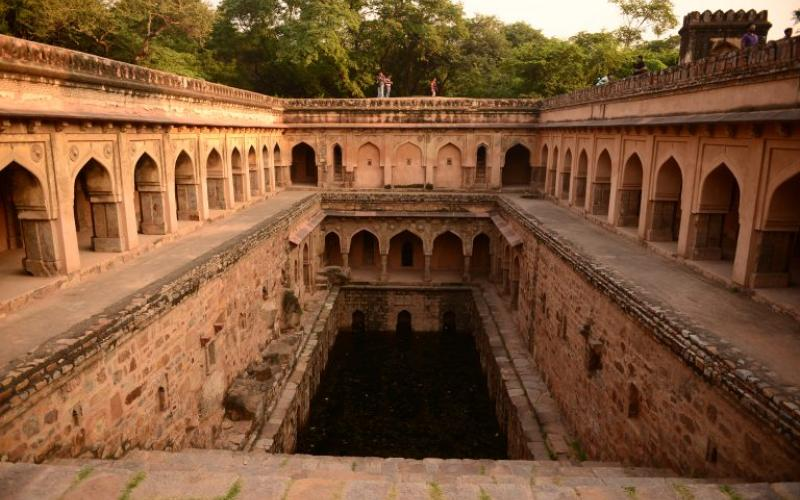
- Built around 1506 by the Daulat Khan during the Lodi dynasty (at the reign of the Ibrahim Lodi), Rajon ki Baoli stands as a testament to Lodhi-era architecture and traditional water engineering.
- The name ‘Rajon Ki Baoli’ comes from the masons (Raj Mistri) who were living at the Baoli and using its water.
- This four-tiered stepwell was thoughtfully designed not only to store water but also to offer shade and rest to travellers.
- Its elegant arched colonnades, ornate stucco medallions with floral and geometric patterns, and finely carved stone elements reflect the artistic sophistication of the time.
About Lodi Dynasty (1451–1526)
- Ruled: Delhi Sultanate (1451–1526)
- Dynasty Origin: Founded by Bahlul Lodi, the first Afghan ruler of Delhi.
- Significance: The last dynasty of the Delhi Sultanate before the rise of the Mughals.
- Territorial Reach: Dominated Punjab, Jaunpur, Gwalior, and the Upper Ganga Valley.
PM E-Drive
Syllabus: GS2/ Governance
In News
- The Karnataka government has formally requested the allocation of electric buses under the PM E-Drive initiative.
About PM E-Drive
- Launch: 2024
- Ministry: Ministry of Heavy Industries.
- Aim: To accelerate the adoption of electric vehicles (EVs) in India by providing demand incentives, supporting the establishment of charging infrastructure, and fostering the growth of the EV manufacturing ecosystem.
- Duration: 2 years (2024 to 2026).
- Components:
- Subsidies (Demand Incentives): Financial support for buyers of e-2Ws (electric two-wheelers), e-3Ws (electric three-wheelers including e-rickshaws and e-carts), e-ambulances, e-trucks, and other emerging EV categories. These incentives are provided to reduce the upfront purchase price.
- Grants for creation of capital assets: Financial assistance for the deployment of e-buses, the establishment of a network of public EV charging stations for various vehicle categories, and the upgradation of vehicle testing agencies under the Ministry of Heavy Industries.
- The PM E-DRIVE scheme subsumes the Electric Mobility Promotion Scheme (EMPS) 2024.
Shingles Vaccine
Syllabus: GS2/Health
Context
- A recent study highlighted that shingles vaccination can lower the development of cardiovascular conditions by 23%.
About Shingles
- It is a viral infection that causes painful rashes and is caused by varicella-zoster virus (VZV), the same virus that causes chickenpox.
- Once a person has chickenpox, the virus stays in their body. The virus can reactivate later in life and cause shingles.
- Though, the people who never had chickenpox or didn’t get chickenpox vaccine can get infected with VZV from someone who has shingles.
- These people can get the virus through:
- Direct contact with the fluid from shingles rash blisters.
- Breathing in virus particles that come from the blisters.
- Vaccination: The shingles vaccine, which prevents the reactivation of the varicella-zoster virus, is recommended primarily to individuals over the age of 50 years.
RBI Surplus Transfer to the Government
Syllabus: GS3/ Economy
Context
- The central board of directors of the Reserve Bank of India (RBI) reviewed the Economic Capital Framework (ECF), to assess risk provisioning and surplus distribution.
- It is estimated that in FY 2024–25, the RBI may transfer ₹2.5–₹3 lakh crore to the central government, up from ₹2.11 lakh crore in FY 2023–24.
How Does RBI Make Profits?
- Returns on foreign assets: Investments in sovereign bonds, treasury bills, and deposits with foreign central banks.
- Interest income: From holdings of rupee-denominated government securities, and lending to banks (like repo operations).
- Commission: For managing public debt (central and state governments).
Policy on Surplus Distribution
- The “surplus” is the net of income over expenditure, and it is transferred to the Central Government under Section 47 of the RBI Act, 1934, after provisioning for: Bad debts, Depreciation, Staff benefits and Contingency reserves.
- While there is no explicit policy on surplus, recommendations have been made over the years:
- Malegam Committee, 2013: Advocated higher transfer of surplus to the government.
- Jalan Committee, 2019: Recommended maintaining a Contingency Risk Buffer (CRB) at 5.5–6.5% of RBI’s balance sheet, with excess transferred as surplus.
