
Importance of Ahilyabai Holkar
Syllabus :GS 1/History
In News
- Madhya Pradesh is marking the 300th birth anniversary of Maratha queen Devi Ahilyabai Holkar with a major state-led campaign.
Ahilyabai Holkar
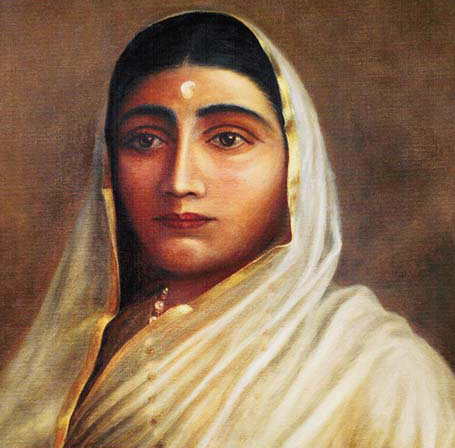
- Early Life: She was the Holkar Queen of the Maratha-ruled Malwa kingdom in India.
- She was Born in Chaundi village, Maharashtra, to Mankoji Rao Shinde.
- She received an education from her father despite the norms against women’s education at the time.
- Personal Tragedies: Ahilyabai Holkar’s husband, Khanderao, died in the Battle of Kumbher in 1754. Twelve years later, her father-in-law, Malhar Rao Holkar, also passed away.
- Her son Malerao, who was mentally ill, died in 1767.
- Role as a queen : In 1767, she became the queen of the Malwa kingdom.
- She moved the capital to Maheshwar south of Indore on the Narmada River.
- She defended her kingdom from invaders, led armies herself, and appointed Tukojirao Holkar as Chief of Army.
- She broke another tradition when she married her daughter to Yashwantrao, a brave but poor man after he succeeded in defeating the dacoits.
- Contributions : In the 18th century, she was instrumental in spreading the message of dharma and propagating industrialization. She was a devout ruler known for her charitable works.
- She built hundreds of Hindu temples and rest houses (Dharmashalas) across India.
- One of her most notable contributions was the renovation of the Kashi Vishwanath Temple in 1780.
- She also established a textile industry in Maheshwar, which today is very famous for its Maheshwari sarees.
- She held daily public audiences to address people’s issues and engaged in extensive philanthropic work, including building temples, ghats, wells, tanks, and rest-houses across India.
- She built hundreds of Hindu temples and rest houses (Dharmashalas) across India.
- Legacy: She was known as the ‘Philosopher Queen,’ she passed away on 13 August 1795 at the age of 70.
- Her reign is remembered as a period of peace, prosperity, and religious tolerance.
- She was a capable and respected ruler, and after her death, she was revered as a saint by the people.
- Her legacy endures through the many public works she commissioned.
Madden-Julian Oscillation Helped Trigger the Early Onset of the Monsoon
Syllabus: GS1/ Geography
Context
- The early onset of the southwest monsoon over Kerala this year has caught the attention of meteorologists.
- According to the India Meteorological Department (IMD), the Madden-Julian Oscillation (MJO) played a significant role in this development.
What is Madden-Julian Oscillation (MJO)
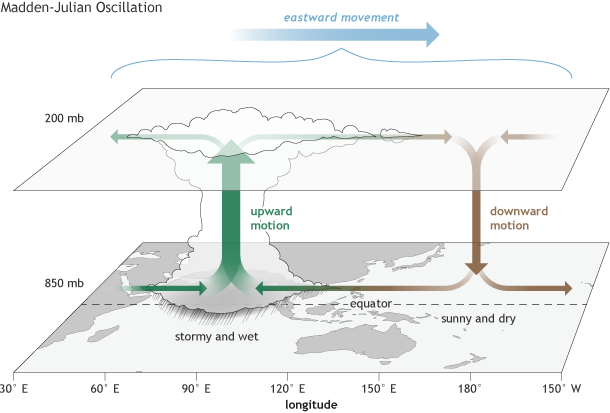
- The MJO is a moving system of winds, clouds, and pressure that brings rain as it circles around the equator.
- It was discovered in 1971 by Roland Madden and Paul Julian.
- The system travels eastward at 4–8 m/s and circles the globe typically every 30–60 days, though it can take up to 90 days.
- As it moves, strong MJO activity often splits the planet into two parts — one in which the MJO is in active phase and brings rainfall, and the other in which it suppresses rainfall.
Geographical Influence
- The effect of the MJO is witnessed mainly in the tropical region, in the band between 30 degrees North and 30 degrees South of the equator, even though the mid-latitude regions in both hemispheres also feel its impact.
- It also includes India, making it a crucial player in the South Asian monsoon system.
- During an active MJO phase, regions within its influence experience above-average rainfall, often due to increased cloud formation, convection, and cyclonic activity.
Contribution of MJO to the Early Monsoon
- This year, the MJO was observed in Phase 4 with an amplitude greater than 1 around May 22, originating in the Indian Ocean.
- Phase 4 with strong amplitude is indicative of intense rainfall and storm systems, conducive for monsoon initiation.
- This setup contributed to frequent cyclonic activity and cloud build-up over the Bay of Bengal, helping trigger the early arrival of the monsoon over Kerala.
Other reasons for Early Monsoon
- Transition to La Niña: In early 2025, global climate models indicated El Niño weakening and possible La Niña development — a pattern historically associated with stronger and earlier monsoon seasons in India.
- Stronger-than-usual cross-equatorial winds: During May, winds from the southern hemisphere begin to blow across the equator and enter the Arabian Sea.
- When these winds are stronger and more organised, they push moisture-laden air toward the Indian coast more quickly, hastening the monsoon’s arrival.
- Above-normal sea surface temperatures: Warmer-than-usual waters in the Arabian Sea and Bay of Bengal fuel intense convection, which helps develop cloud bands and low-pressure systems needed for monsoon formation.
- In 2025, sea surface temperatures in the region were higher than average, aiding early cloud development.
Concluding remarks
- While the early onset of the monsoon offers critical advantages for agriculture and water resource management, it also intensifies climate-related vulnerabilities.
- As monsoon patterns become increasingly erratic under climate change, strengthening early warning systems and forecasting models remains essential for safeguarding lives, livelihoods, and ecosystems.
Government mulls 15-year Stay Requirement for Ladakh Domicile Tag
Syllabus: GS2/Polity and Governance
Context
- The Union Government is considering a new policy for Ladakh under which citizens who have had a continuous 15-year stay in the region, beginning 2019, will be considered domiciles.
About
- The consensus was reached at a high-powered committee meeting between civil society leaders and the Ministry of Home Affairs (MHA).
- The HPC led by Minister of State for Home Nityanand Rai was first constituted in 2023 to address the concerns of people in Ladakh.
- Any ‘outsider’ who settled in Ladakh after its special status along with that of Jammu and Kashmir (J&K) was struck down in 2019 will be considered a domicile only after 2034.
- The definition is important to decide eligibility to apply for 5% gazetted government vacancies as many citizens feared that people from other parts of the country would take away the jobs of the locals.
- If Proposal is approved then, at least 80% vacancies would be reserved for Scheduled Tribes (ST), 4% for people living along the Line of Actual Control/Line of Control, 1% for Scheduled Castes and 10% for Economically Weaker Sections (EWS).
Background
- Ladakh became a Union Territory in 2019 without a Legislative Assembly after Article 370 of the Constitution was read down by the Parliament.
- A year later, the region comprising Buddhist-dominated Leh and Muslim-dominated Kargil district, erupted in protests pressing forth constitutional safeguards such as Statehood for Ladakh, inclusion of Ladakh in the Sixth Schedule of the Constitution thus giving it a tribal status, job reservation for locals and a parliamentary seat each for Leh and Kargil.
- Since it became a UT, recruitment for gazetted government posts is yet to begin in Ladakh.
| J&K Domicile Policy 2020 – It removed the concept of permanent residents and introduced new policy which states: 1. that anyone “who has resided for a period of 15 years in the UT of J&K 2. or has studied for a period of seven years and appeared in Class 10th /12th examination in an educational institution located in the UT of J&K 3. or who is registered as a migrant by the Relief and Rehabilitation Commissioner (Migrants)” will be considered a domicile. 4. Children of Central government officials who have served in J&K for a “total period of 10 years” will also be domiciles. 5. It will allow West Pakistan refugees and children of women who married non-locals to apply for jobs in J&K. |
Major Concerns of People of Ladakh
- Lack of Political Autonomy: As a Union Territory without an assembly, all major decisions are taken by the Lieutenant Governor and central ministries, which limits local involvement.
- Demographic Changes: There is fear of a demographic imbalance due to migration, which could threaten the cultural and ethnic composition of the region.
- Environmental Degradation: Rapid infrastructure development and mass tourism have led to depletion of water sources, waste problems, and ecological stress.
- Youth Discontent: High unemployment and lack of educational and professional opportunities are fueling frustration among youth.
Key Demands
- Constitutional Safeguards (Sixth Schedule): Ladakhis seek inclusion under the Sixth Schedule of the Indian Constitution, which provides autonomy and land protection for tribal areas.
- Full-fledged Statehood or Legislative Assembly: Currently, Ladakh is a Union Territory without a legislative assembly.
- There is a demand for greater political representation and democratic governance through either full statehood or a legislature for better local decision-making.
- Job Reservation and Local Employment Opportunities: Locals demand reservation in government jobs and priority in private sector employment for Ladakhis.
- Concerns about outsiders occupying government and private posts have led to calls for exclusive job quotas.
- Environmental Protection Laws: Given Ladakh’s fragile ecosystem, there is a demand for strict environmental regulations to curb unplanned tourism and infrastructure projects.
- Protection of Cultural and Religious Heritage: The Buddhist population, particularly in Leh, seeks protection of Tibetan-Buddhist heritage and monastic traditions.
- There is concern about the erosion of cultural identity due to external influences and rapid modernization.
- Economic Development with Local Participation: There are demands for inclusive development that benefits local communities, especially in sectors like tourism, solar energy, and agriculture.
| Sixth Schedule of the Constitution – The Sixth Schedule was adopted under Article 244 of the Constitution with provisions for formation of autonomous administrative divisions within a state. 1. The Sixth Schedule is applicable to what are officially called as ‘tribal areas’ in the States of Assam, Meghalaya, Mizoram and Tripura. There are 10 such ‘tribal areas’ at present in these four States. 2. These divisions, in the form of Autonomous District Councils (ADCs), were granted certain legislative, judicial and administrative autonomy within the state. – Composition: According to the Sixth Schedule, the ADCs administering a region within a state have 30 members with a term of five years. 1. The Bodoland Territorial Council in Assam is an exception to this with more than 40 members and rights to make laws on 39 issues. – Jurisdiction: ADCs can make laws, rules and regulations with regard to land, forest, water, agriculture, village councils, health, sanitation, village and town level policing, inheritance of property, marriage and divorce, social customs, and mining, among other issues. 1. ADCs also have powers to form courts to hear cases where both parties are members of Scheduled Tribes and the maximum sentence is less than 5 years in prison |
Way Ahead
- A sustainable and peaceful future for Ladakh requires a careful balancing of national interests with local aspirations.
- Recognizing the unique cultural, geographical, and demographic characteristics of the region — and embedding these into governance structures — will be key to ensuring long-term stability and satisfaction among Ladakh’s people.
ED Listed CPM in Money Laundering Case
Syllabus: GS3/ Economy
Context
- The Enforcement Directorate (ED) has listed the Communist Party of India (Marxist) or CPM as an accused in the Karuvannur Cooperative Bank money laundering case.
About
- The CPM is a political party registered under Section 29A of The Representation of the People Act, 1951.
- Under this section, only an association or body of individuals can apply to register as a political party.
- The ED has made CPM an accused in the money laundering case under section 70 of the Prevention of Money Laundering Act, which deals with offences by companies.
- According to the section, a ‘company’ means any corporate body and includes a firm or other association of individuals.
- The ED argued that as the CPM is identified as an association of individuals under the Representation of the People Act, it falls within the definition of ‘company’ under the PMLA.
What is Money Laundering?
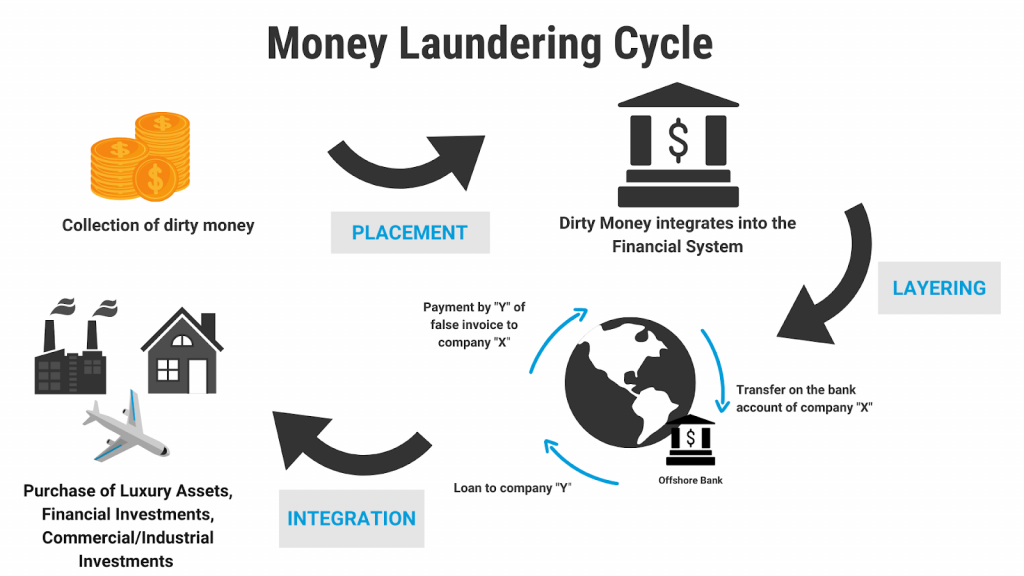
- Money laundering is the illegal process of making large amounts of money generated by criminal activity, such as drug trafficking or terrorist funding, appear to have come from a legitimate source.
- In terrorism financing the funds were used to procure arms and ammunition and for training the cadres of the violent extremist organization, among other purposes.
- The money from the criminal activity is considered dirty, and the process “launders” it to make it look clean.
Impact of Money Laundering
- Reduces Tax Revenue: As illicit funds are hidden from authorities, governments suffer significant losses in tax collection, weakening their ability to fund public services.
- Creates Asset Bubbles: Laundered money is often invested in real estate, gold, or luxury goods, leading to artificial inflation and economic disparities.
- Hampers Investment: Uncertainty and lack of transparency caused by money laundering deter foreign and domestic investment.
- Supports Criminal Networks: Money laundering sustains organized crime, including drug trafficking, terrorism, and human trafficking.
- International Repercussions: Countries perceived to have weak anti-money laundering measures face sanctions or restrictions from global bodies such as the Financial Action Task Force (FATF), affecting international relations and trade.
Measures taken by India
- Key Initiatives:
- Jan Dhan-Aadhaar-Mobile (JAM): Enhancing financial transparency.
- GST E-Invoices and E-Bills: Promotes transparency in the supply chain.
- Indian Cyber Crime Coordination Centre: Strengthens cybercrime enforcement.
- Central KYC Records Registry (CKYCR): Repository for KYC data and customer records.
- Task Forces and Committees: Formed to address corruption, black money, drug trafficking, and fake currency.
- Investigative Agencies: The National Investigation Agency (NIA) and Enforcement Directorate (ED) effectively conducted probes.
- Financial Intelligence Unit-India (FIU-IND): The FIU-IND is the central national agency responsible for receiving, processing, analyzing, and disseminating information relating to suspicious financial transactions.
- It serves as the nodal agency for coordinating action against money laundering and related offenses.
| Prevention of Money Laundering Act (PMLA) 2002 – It was enacted by Parliament of India under Article 253 of Constitution in 2002 to prevent money laundering and provide for the confiscation of property derived from or involved in money laundering. – PMLA and the Rules notified there under came into force with effect from 2005, and it was further amended in 2009 and in 2012. – Provisions: 1. Sec. 3 of PMLA defines the offense of money laundering as any process or activity connected with the proceeds of crime and projecting it as untainted property. 2. Prescribe obligation: PMLA prescribes the obligation of banking companies, financial institutions and intermediaries for verification and maintenance of records of the identity of all its clients. 3. Empowerment of officers: PMLA empowers Directorate of Enforcement to carry out investigations in cases involving offense of money laundering and also to attach the property involved in money laundering. |
Way Ahead
- Introduce clear legal provisions to regulate the financial conduct of political parties without compromising their democratic functions.
- Create an autonomous body or strengthen the Election Commission’s mandate to audit and monitor political party finances and enforce compliance.
- Ensure investigative bodies like the ED to act transparently, independently, and impartially, maintaining public trust and avoiding perception of bias.
Quantum Technology Research Centre
Syllabus: GS3/Science and Technology
Context
- Defence Research and Development Organisation (DRDO) inaugurated the Quantum Technology Research Centre (QTRC).
About
- Aim: To strengthen indigenous quantum capabilities for strategic and defence applications.
- QRTC is equipped with state-of-the-art experimental set-ups designed to propel research and development in critical quantum domains.
- The key capabilities of this centre include:
- Characterisation of Vertical-Cavity Surface-Emitting Lasers and Distributed Feedback Lasers;
- Test-beds for evaluating single-photon sources;
- Set-up for characterisation of Micro Fabricated Alkali Vapor Cell;
- Experimental platforms for developing and validating Quantum Key Distribution techniques to enable ultra-secure communication and safeguard national security in the post-quantum era, spearheaded by Scientific Analysis Group (SAG), DRDO.
QTRC also focuses on Foundational Technologies
- Foundational Technologies (led by SSPL):
- Ultra-Small Atomic Clock based on Coherent Population Trapping for precise timekeeping in GNSS-denied environments.
- Atomic Magnetometer using optically pumped magnetometry for ultra-sensitive magnetic field detection.
- Research on cutting-edge solid-state quantum devices and materials.
Quantum Technology
- Quantum technology is a rapidly advancing field that leverages the principles of quantum mechanics to develop new technologies with unprecedented capabilities.
- Quantum mechanics is the branch of physics that studies the behavior of particles at the quantum level, where classical physics no longer applies.
- Quantum technology harnesses the unique properties of quantum systems, such as superposition and entanglement, to perform tasks that were previously thought impossible or significantly enhance existing capabilities.
- Four domains of quantum technologies:
- Quantum communication: It applies the properties of quantum physics to provide better security and improved long-distance communications.
- Quantum simulation: It refers to the use of a quantum system to simulate the behavior of another quantum system.
- Quantum computation: It is a field of computing that utilizes the principles of quantum mechanics to perform certain types of calculations more efficiently than classical computers.
- Quantum sensing and metrology: It leverages the principles of quantum mechanics to achieve highly precise measurements.
National Quantum Mission (NQM)
- The government approved the NQM in 2023 from 2023-24 to 2030-31.
- Aim: To seed, nurture and scale up scientific and industrial R&D and create a vibrant & innovative ecosystem in Quantum Technology (QT).
- This will accelerate QT led economic growth, nurture the ecosystem in the country and make India one of the leading nations in the development of Quantum Technologies & Applications (QTA).
- Objectives: The Mission objectives include developing intermediate-scale quantum computers with 50-1000 physical qubits in 8 years in various platforms like superconducting and photonic technology.
- Satellite-based secure quantum communications between ground stations over a range of 2000 kilometers within India, long-distance secure quantum communications with other countries, inter-city quantum key distribution over 2000 km as well as multi-node Quantum networks with quantum memories.
- Developing magnetometers with high sensitivity in atomic systems and Atomic Clocks for precision timing, communications, and navigation.
- It will also support the design and synthesis of quantum materials such as superconductors, novel semiconductor structures, and topological materials for the fabrication of quantum devices.
- Single photon sources/detectors, and entangled photon sources will also be developed for quantum communications, sensing, and metrological applications.
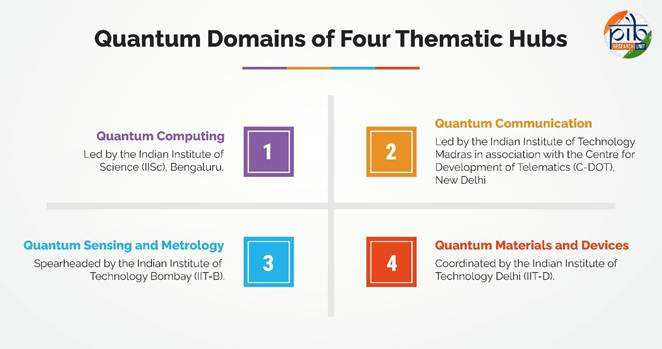
- Implementation:Four Thematic Hubs (T-Hubs) have been set up, bringing together 14 Technical Groups across 17 states and 2 Union Territories.
- Indian Institute of Science (IISc) Bengaluru
- Indian Institute of Technology (IIT), Madras in association with the Centre for Development of Telematics, New Delhi
- Indian Institute of Technology (IIT), Bombay
- Indian Institute of Technology (IIT), Delhi.
MICESLLANEOUS:
Veer Savarkar
Syllabus: GS1/Modern History
Context
- Savarkar Jayanti is celebrated on May 28, marking the birth of Vinayak Savarkar in 1883.
About
- Vinayak Damodar Savarkar (1883–1966), also known as Veer Savarkar, was a freedom fighter, poet, writer, and political ideologue.
- He urged Indians to embrace revolution to achieve independence.
- While studying at Fergusson College in Pune, he founded the secret society “Abhinav Bharat” in 1904, advocating armed resistance against British rule.
- In London, he established the “Free India Society” and authored The First War of Independence, highlighting the 1857 revolt.
- He was arrested in 1910 for his revolutionary activities (opposition to the Morley-Minto reforms), and was sentenced to 50 years in the Cellular Jail.
- After his release in 1937, he joined the Hindu Mahasabha and served as its president for about seven years.
- He worked relentlessly for the removal of untouchability.
- In 1951, he dissolved the revolutionary organisation “Abhinav Bharat” and devoted his time and energy to the ideals of the Hindu Mahasabha.
| Hindu Mahasabha – Founded: 1915 in Haridwar, during the Kumbh Mela by Madan Mohan Malviya. – Originally formed as a response to rising influence of Muslim League, especially after the 1909 Morley-Minto Reforms that granted separate electorates to Muslims. – Key Objectives: 1. Unite Hindus under one political and cultural banner. 2. Promote Hindu religious, social, and cultural causes. 3. Safeguard Hindu rights in education, employment, and governance. |
Source: TH
Njattadi Festival
Syllabus: GS1/Culture
Context
- Kerala’s Agriculture Minister inaugurated the ‘Njattadi festival’ (sapling festival).
About
- Njattadi Festival is a traditional agricultural festival celebrated in Kerala, particularly among the farming communities.
- The term “Njattadi” comes from the Malayalam word “Njattuvela”, which refers to a period in the Malayalam calendar that is considered ideal for sowing paddy (rice) seeds.
- The festival marks the beginning of the paddy cultivation season.
- Njattadi often features folk songs (Vanchipattu, Njattu Pattu) and traditional dances.
Source: TH
Defence Minister Approves AMCA Fighter Jet Execution Model
Syllabus: GS3/Defence
Context
- Defence Minister Rajnath Singh has approved the execution model for the Advanced Medium Combat Aircraft (AMCA).
About
- The Aeronautical Development Agency (ADA) is set to execute the programme through industry partnership.
- Hindustan Aeronautics Limited (HAL) will compete with the private industry to manufacture the indigenous fifth-generation fighter jet.
- AMCA: It is the country’s only fifth gen fighter programme, received approval from the Cabinet Committee on Security (CCS) in 2024 at an approximate cost of ₹15,000 Crore as a 25-tonne twin engine stealth aircraft.
- The execution model approach provides equal opportunities to both private and public sectors on a competitive basis.
- They can bid either independently or as joint ventures or as consortia.
- The entity/bidder should be an Indian company compliant with the laws and regulations of the country.
- The design of AMCA is ready and the first prototype is expected to roll out by 2028-29 and production is expected to begin from 2032-33.
- The target is to have the aircraft ready for induction in 2034.
Significance
- Self-reliance (Aatmanirbharta) in aerospace and defense is central to this initiative.
- India faces increased regional security concerns, especially post Operation Sindoor and growing Chinese-Pakistani military ties.
- AMCA is essential for maintaining future air superiority and technological parity with China.
- Successful development and induction of AMCA would place India among a small group of countries with fifth-gen capabilities.
Source: TH
Kangchenjunga Mountain
Syllabus: GS1/ Geography
Context
- The Chief Minister of Sikkim has urged the Central Government to declare Mount Khangchendzonga, sacred to the people of Sikkim, as out of bounds for mountaineers.
- The Sikkim government banned all climbing activities on Mt. Khangchendzonga through notifications in 1998 and 2001 under the Sacred Places of Worship (Special Provisions) Act, 1991.
About Kangchenjunga
- It is the third-highest mountain in the world at an elevation of 8,586 metres.
- It is located on the border between Sikkim in India and eastern Nepal.
- It is part of a section of the Himalayas known as the Kangchenjunga Himal. This section is geographically bounded by the Tamur River in the west and the Teesta River in the east.
UNESCO World Heritage Status
- The Khangchendzonga National Park, located in Sikkim, was declared a UNESCO World Heritage Site in 2016 under the Mixed category, both cultural and natural.
- Numerous glaciers, such as the 26 km long Zemu Glacier, and high-altitude lakes further enhance the park’s ecological diversity.
- The park lies in the Eastern Himalaya global biodiversity hotspot and covers 25% of the total area of Sikkim.
Source: TH
RoDTEP scheme
Syllabus :GS 3/Economy
In News
- The Government of India has announced the restoration of benefits under the Remission of Duties and Taxes on Exported Products (RoDTEP) scheme for exports made by Advance Authorization (AA) holders, Export-Oriented Units (EOUs), and units operating in Special Economic Zones (SEZs).
- The benefits will be applicable for all eligible exports made from 1st June 2025 onwards.
RoDTEP scheme
- Remission of Duties and Taxes on Exported Products (RoDTEP) scheme was launched in January 2021.
- It reimburses exporters for embedded Central, State, and local taxes that were previously non-refundable.
- It follows the principle that taxes on exported goods should be exempted or refunded.
- It complies with World Trade Organization (WTO) rules and uses a fully digital platform for transparent and efficient implementation.
- The rebate is issued as a transferable electronic scrip by the Central Board of Indirect Taxes & Customs (CBIC) through a fully digital system.
Source :PIB
India’s first gene-edited sheep
Syllabus :GS3/Science and Technology
In News
- Researchers at a Kashmir-based Agricultural university have produced India’s first gene-edited sheep, marking a historic milestone in the field of animal biotechnology.
- The team of researchers led by Riaz Ahmad Shah had previously cloned India’s first Pashmina goat- ‘Noori’- in 2012, a milestone that garnered global acclaim.
About the development
- The gene editing was performed using CRISPR-Cas9 technology and adhered to international biosafety protocols.
- The edited sheep contains no foreign DNA, distinguishing it from transgenic organisms and paving the way for regulatory approval under India’s evolving biotech policy framework,
- The gene editing targeted the myostatin gene to increase muscle mass by about 30%, a trait absent in Indian sheep but present in some European breeds.
- The team aims to apply this technology for disease resistance and other improvements.
Gene Editing
- Genome editing involves technologies that enable precise changes to an organism’s DNA by adding, removing, or altering genetic material.
- The first genome editing technologies were developed in the late 1900s.
- A new genome editing tool called CRISPR, invented in 2009, has made it easier than ever to edit DNA.
- CRISPR-Cas9 is a popular and efficient method adapted from a natural bacterial immune system, where bacteria capture viral DNA snippets to recognize and cut viral DNA during future attacks, disabling the virus.
- This system has revolutionized genome editing due to its speed, accuracy, and cost-effectiveness.
Source :IE
Conservation of Dugongs
Syllabus :GS3/Species
In News
- World Dugong Day is celebrated on May 28 to raise awareness about dugongs.
Dugongs((Dugong dugon)
- They are also called ‘Sea Cow’ and are one of the four surviving species in the Order Sirenia.
- They are the only herbivorous mammals found in India’s marine ecosystems.
- They depend on seagrass meadows for food and habitat, consuming large quantities daily to meet nutritional needs.
- Distribution : They resemble a cross between a whale and a seal and are found in shallow Indo-Pacific waters, especially in India’s Gulf of Mannar, Palk Bay, Gulf of Kutch, and the Andaman and Nicobar Islands.
- IUCN Red List status : They are listed as being ‘vulnerable’ on the IUCN Red List for Threatened Species.
- In India, they are classified as “regionally endangered”.
- Threats : Habitat loss due to coastal development, pollution, destructive fishing practices (like mechanized boats, gill nets, and trawl nets), climate change, and accidental entanglement leading to drowning. Illegal hunting and boat collisions also pose risks.
- their numbers have dwindled to an estimated 200 individuals.
- Conservation Efforts: India has taken steps such as creating its first dugong conservation reserve in Palk Bay, Tamil Nadu, protecting key seagrass habitats.
- NGOs and government bodies have worked on seagrass restoration and monitoring for over a decade.
- Promoting sustainable fishing, community involvement, awareness campaigns, research support, and alternative livelihoods like eco-tourism are critical for dugong survival.
Source : TH
