
Appraisal of CSSs and CSs Ahead of the 16th Finance Commission Cycle
Syllabus: GS2/ Governance
In News
- The Department of Expenditure, Ministry of Finance has initiated a comprehensive exercise to appraise and approve Centrally Sponsored Schemes (CSSs) and Central Sector Schemes (CSs) for continuation post March 2026.
- This aligns with the 16th Finance Commission cycle starting 1st April 2026.
About
- The foundation of this appraisal exercise lies in the 2016 Union Budget, which formally introduced the policy of assigning a sunset clause and outcome-based evaluation for every centrally funded scheme.
- The goal was to ensure that no scheme continues indefinitely without proven effectiveness and relevance.
- For Centrally Sponsored Schemes (CSSs), the Development Monitoring and Evaluation Organisation (DMEO) under NITI Aayog is responsible for conducting evaluations.
- For Central Sector Schemes (CSs), the concerned ministries select third-party agencies to assess outcomes and performance.
Significance of the Reappraisal Exercise
- Outcome-Driven Governance: Aligning schemes with measurable outcomes through third-party evaluations ensures evidence-based policymaking.
- It eliminates continuation of underperforming or redundant schemes.
- Fiscal Consolidation and Optimal Resource Use: Helps contain revenue expenditure and create fiscal space for capital-intensive projects.
- Example: Capital expenditure for FY 2025–26 (BE) stands at ₹11.21 lakh crore, enabled by similar rationalisation in the past.
- Scheme Convergence and Efficiency: Integration of overlapping schemes reduces duplication, administrative costs, and enhances synergies (e.g., health + nutrition + WASH).
- Digital Targeting and DBT Integration: Linking schemes with universal Aadhaar-based DBT enhances transparency, reduces leakages, and ensures last-mile delivery.
- India @100 Vision Alignment: Facilitates policy alignment with long-term developmental goals such as infrastructure, health, education, and innovation.
Challenges in Recalibrating Schemes
- Political and Federal Sensitivities: States may resist merger or closure of schemes due to regional priorities or electoral concerns.
- CSSs often involve shared finances—creating friction over cost-sharing ratios.
- Institutional Inertia and Bureaucratic Resistance: Ministries may be reluctant to let go of legacy schemes due to vested interests or fear of budget cuts.
- Evaluation Limitations: Quality and neutrality of third-party evaluations vary; some schemes lack robust data for review.
- Implementation Gaps: Even well-designed schemes fail due to weak implementation capacity, especially at district and local levels.
- Transition Risks: Phasing out schemes without adequate transition planning may disrupt service delivery.
Way Forward
- Strengthen Evaluation Frameworks: DMEO-NITI Aayog and Ministry-appointed agencies must adopt uniform standards, real-time MIS integration, and participatory evaluation.
- Foster Centre-State Coordination: Transparent dialogue and incentive-based funding to secure state buy-in for scheme redesign.
- Digital Infrastructure for Scheme Monitoring: Expand platforms like PFMS and JanSamarth to track disbursements, outputs, and impact.
| Aspect | Centrally Sponsored Schemes (CSSs) | Central Sector Schemes (CSs) |
|---|---|---|
| Funding Pattern | Shared between Centre and State Governments. [60:40 (General States), 90:10 (NE and Himalayan States)] | Fully funded by the Central Government (100%) |
| Implementation | Implemented by State Governments | Implemented directly by Central Ministries/Departments |
| Constitutional Jurisdiction | Focuses on State List and Concurrent List subjects | Focuses on Union List subjects |
| Control | Joint control – Centre provides guidelines; States execute | Central control – planned, executed, and monitored by Centre |
| Objective | To ensure national development with state involvement | To implement strategic or priority initiatives of national interest |
| Examples | MGNREGA, ICDS, PMAY-G, NHM, Samagra Shiksha | BharatNet, PM-KUSUM, INSPIRE, DRDO R&D schemes |
First Batch of Female Cadets Graduates from NDA
Syllabus: GS2/Gender Issues
Context
- Recently, the first batch of 17 female cadets graduated alongside over 300 male counterparts from the National Defence Academy (NDA) in Pune.
| Background – The National Defence Academy (NDA), widely known as the ‘cradle of leadership’, has traditionally been an all-male institution. – However, following a Supreme Court directive in 2021, the academy opened its doors to female cadets, allowing them to join the 148th NDA course in 2022. 1. The first batch of 17 female cadets joined the NDA, undergoing rigorous training alongside their male counterparts. Breaking Barriers in Military Training – It reflects India’s commitment to gender inclusivity in the armed forces, paving the way for more women to pursue military careers. – The graduating cadets received degrees from Jawaharlal Nehru University (JNU), with specializations in Science, Computer Science, Arts, and Technology. |
Women and Armed Forces
- Early Contributions:
- World War I: Women were primarily recruited as nurses in the British Indian Army, filling gaps left by male doctors.
- World War II: Women’s roles expanded with the formation of the Women’s Auxiliary Corps, allowing them to serve in administrative and communication roles.
- The Rani of Jhansi Regiment, led by Subhash Chandra Bose’s Azad Hind Fauj, was a pioneering all-female combat unit that actively fought alongside the Imperial Japanese Army.
- Post-Independence Struggles and Progress:
- After independence, women were largely restricted to medical roles. It wasn’t until 1958 that they received regular commissions in the Indian Army Medical Corps.
- Over the decades, women gradually entered non-medical branches, including logistics, engineering, and legal services.
- Combat Roles and NDA Entry: The 1990s saw a significant shift, with women being inducted into the Indian Air Force as pilots.
- The Supreme Court of India, in 2021, ruled in favor of women’s entry into the NDA, allowing them to train alongside male cadets for permanent commissions.
Recent Contribution
- Combat and Leadership Roles: Women officers have actively participated in Operation Sindoor, contributing to India’s defense strategies.
- Colonel Sofiya Qureshi and Wing Commander Vyomika Singh led key operations, showcasing women’s leadership in military engagements.
- Naval Achievements: Lieutenant Commanders Dilna K and Roopa A completed the Navika Sagar Parikrama II, a circumnavigation expedition covering 25,600 nautical miles over eight months.
- Their journey demonstrated endurance and resilience, reinforcing the role of women in maritime defense.
Arguments Favoring Women in Defense Sector
- Gender Equality in Armed Forces: Allowing women into NDA promotes inclusivity and equal opportunities in defense services.
- Expanding Talent Pool: Women bring diverse skills and perspectives, strengthening the military’s operational effectiveness.
- Successful Integration in Other Countries: Many nations, including the US, UK, and Israel, have successfully integrated women into combat roles.
- Breaking Stereotypes: Women’s participation challenges traditional gender roles and inspires future generations.
Arguments Against the Women in Defense Sector
- Physical Training Differences: Critics argue that physiological differences may require modifications in training programs.
- Operational Challenges: Concerns exist about logistical adjustments, including infrastructure and deployment conditions.
- Combat Readiness: Some believe that integrating women into frontline combat roles may require additional policy adaptations.
- Cultural and Social Resistance: Traditional mindsets may pose challenges in acceptance and integration within military ranks.
Key Steps Incorporating Women in Defense Sector
- Agnipath Scheme (2022): It introduced Agniveers, a short-term military recruitment program that included women for the first time.
- It aims to modernize the armed forces while providing young recruits with military training and career opportunities.
- Supreme Court Ruling (2020): It ruled in favor of granting Permanent Commission to women officers in the Indian Army.
- It emphasized gender equality and rejected stereotypes that questioned women’s ability to serve in command roles.
- Kargil Review Committee (1999): It recommended the expansion of women’s roles in the armed forces, and suggested that women be inducted into non-combat roles in logistics, engineering, and intelligence.
- Parliamentary Standing Committee on Defence: It advocated for equal opportunities for women in the defense sector, and recommended infrastructure improvements to accommodate female officers in training academies.
Road Ahead
- While Indian women have made remarkable strides in the armed forces, challenges remain. Gender biases, infrastructure limitations, and cultural perceptions continue to shape their journey.
- However, with progressive policies and societal support, women in uniform are set to redefine India’s defense landscape.
Swachh Survekshan Grameen (SSG) 2025
Syllabus: GS2/Governance
In News
- Union Minister of Jal Shakti Shri C R Patil launched Swachh Survekshan Grameen (SSG) 2025.
Swachh Survekshan Grameen (SSG) 2025
- It is a nationwide rural sanitation survey by the Department of Drinking Water and Sanitation (DDWS), Ministry of Jal Shakti.
- It is India’s largest sanitation survey and The first Swachh Survekshan was conducted in 2016, in which 73 cities were evaluated and Mysuru was ranked first in the country.
Features
- It will conduct a comprehensive assessment of rural sanitation, with a strong focus on sustaining the achievements of the Open Defecation Free (ODF) Plus Model under the Swachh Bharat Mission-Gramin (SBM-G).
- The survey will involve sampling village evaluations and detailed surveys of households and public spaces to measure cleanliness across various parameters.
- Key areas of assessment include the operational status of Plastic Waste Management Units (PWMUs), Faecal Sludge Management (FSM) plants, and GOBARdhan plants, along with citizen feedback and the evaluation of Swachhata Green Leaf Rating (SGLR) sites.
Importance
- Swachh Survekshan Grameen 2025 represents a crucial milestone in advancing India’s vision of clean, healthy, and sustainable rural communities.
- It emphasizes the collaborative efforts of Panchayats, local leaders, frontline workers, and citizens in strengthening rural sanitation.
- This initiative will play a key role in shaping the future of rural hygiene and bringing the nation closer to realizing the goal of a Swachh Bharat.
| The Swachh Bharat Mission (Grameen) [SBM(G)] – It was launched on 2nd October 2014 to eliminate open defecation in rural India by providing toilet access to all rural households. 1. By 2nd October 2019, the mission had achieved 100% sanitation coverage, constructing over 10 crore Individual Household Latrines (IHHLs) and declaring all villages Open Defecation Free (ODF). – Phase-II of SBM(G) was initiated on 1st April 2020, focusing on sustaining ODF status and implementing Solid and Liquid Waste Management (SLWM) to transition villages to ODF Plus (Model) status by 2025-26. 2. The ODF Plus progress is tracked through three categories: Aspiring, Rising, and Model. |
Karnataka’s Platform-Based Gig Workers (Social Security and Welfare) Ordinance, 2025
Syllabus: GS3/ Economy
In News
- Karnataka Platform-Based Gig Workers (Social Security and Welfare) Ordinance, 2025 was passed for establishing a legal framework for protecting and supporting gig workers across the state.
Who are Gig workers?
- Section 2(35) of the Code on Social Security, 2020 defines a gig worker as “a person who participates in a work arrangement and earns from such activities outside of a traditional employer–employee relationship.”
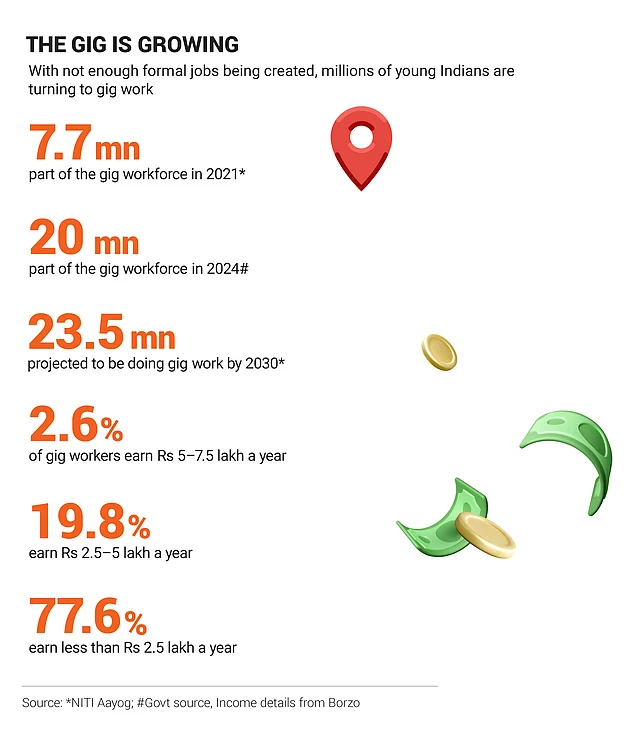
- In the recent report titled India’s Booming Gig and Platform Economy, projected that the number of gig workers in India may rise to 23.5mn by 2030.
Background
- The introduced labor codes in 2020, including the Code on Social Security, 2020, to extend welfare benefits to unorganized and gig workers.
- The code defines platform workers and mandates the formation of a National Social Security Board.
Key Provisions of the Law
- Gig Workers Welfare Board: The board would be established to implement the gig workers’ welfare law. The Board will look after all the issues of gig workers and platforms.
- Platform and Worker Registration: Aggregator platforms like Zomato, Ola, Swiggy, Amazon must register with a state welfare board and enroll all their gig workers, who will receive a unique ID.
- Welfare Contributions: Aggregator platforms like Zomato, Ola, Swiggy, Amazon must contribute 1% to 5% of their payout to workers into a state-run welfare fund for social security.
- Disclosing Algorithmic Logic: Platforms need to explain how their algorithms function for task allocation, pay, ratings, and access, ensuring no discrimination.
- Written Agreements: Platforms are required to provide clear, written contracts to workers detailing earnings, payment methods, and conditions for access blocking.
- Grievance Redressal and Working Conditions: A two-tier grievance system is established, starting with an Internal Dispute Resolution Committee within the platform, and escalating to the Welfare Board.
- Interest and Penalties for Non-Compliance: Late payment of welfare fees incurs a 12% annual interest. Non-compliance can lead to fines of up to Rs 5,000 for the first violation and up to Rs 1 lakh for subsequent violations.
Challenges to Gig Workers
- Job Insecurity and Lack of Social Protection
- Low Wages and Income Inequality
- Algorithms control task allocation, pay rates, performance ratings, and even deactivation, but their logic is often hidden from workers.
- The unclear employment status of gig workers makes it difficult to apply existing labor laws, which were designed for traditional employment.
Steps Taken by India for Gig Workers
- Social Security Code, 2020: This code recognizes gig workers as a separate category and aims to extend social security benefits to them.
- e-Shram Portal: This is a national database for unorganized sector workers, including gig and platform workers.
- Union Budget 2025-26: Included provisions of issuance of identity cards, and healthcare coverage under the Ayushman Bharat Pradhan Mantri Jan Arogya Yojana (AB-PMJAY).
- Rajasthan Platform-Based Gig Workers Act, 2023: This is India’s first state-level legislation specifically addressing gig worker rights.
Promotion of Organic Farming
Syllabus: GS3/ Agriculture
Context
- Indian Overseas Bank (IOB), Amul, and Rich Plus have signed a tripartite Memorandum of Understanding (MoU) to promote organic farming in India.
More About the News
- Launch of Organic Farming Card: A co-branded Organic Farming Card has been introduced for account holders of IOB who are engaged in organic farming.
- This card will enable farmers to access discounted organic agricultural inputs through Amul’s certified retail outlets.
- IOB has announced a dedicated credit scheme named “Harit Kranti”, specifically designed to address the financial needs of organic farmers.
- Richplus will play a key role in offering technical expertise and training to farmers on organic farming practices.
What is Organic farming?
- Organic farming is a sustainable agriculture system that excludes synthetic inputs like chemical fertilizers and pesticides.
- It relies on natural resources like crop residues, farmyard manure, and compost to maintain soil health and manage pests and diseases.
Organic farming in India
- India ranks at 4th place in terms of certified area globally as per the report published by International Federation of Organic Agriculture Movements (IFOAM) Statistics 2022.
- Madhya Pradesh has the largest area under organic certification followed by Maharashtra, Rajasthan, Gujarat and Karnataka.
- Sikkim is India’s first fully organic state, with implementing organic practices on around 75,000 hectares of agricultural land.
- India ranks first globally in terms of number of farmers practicing organic farming.
- The exports of India’s organic products stood at $708 million in 2022-23 and considering the global market size of around $138 billion, there is a tremendous scope to increase the organic exports in the near future.
Advantages of Organic farming
- Healthier Food Products: Organic farming results in food products that are free from harmful chemical residues with higher levels of essential nutrients.
- Enhanced Soil Health: Organic farming methods focus on building and maintaining soil health by increasing organic matter content, microbial activity, and nutrient cycling.
- Economic Opportunities: Organic farming provides economic benefits to farmers through premium prices for organic products, access to niche markets, and reduced input costs over the long term.
- Climate Change Mitigation: Organic farming practices such as composting and organic soil management contribute to carbon sequestration in the soil, helping to mitigate climate change by reducing greenhouse gas emissions.
- Biodiversity Conservation: Organic farming practices support biodiversity by creating habitats for beneficial insects, birds, and other wildlife.
Organic certifications systems in India
- National Programme for Organic Production (NPOP): It is under the Ministry of Commerce and Industry for development of the export market.
- It is a third party certification programme where the production and handling of activities at all stages such as production, processing, trading and export requirements for organic products is covered.
- Participatory Guarantee System (PGS-India): PGS-India under Ministry of Agriculture and farmers Welfare involves stakeholders (including farmers/ producers) in decision making about the operation of the PGS-India certification by assessing, inspecting and verifying the production practices of each other.
- Food Safety Regulation has made it mandatory for organic products to be certified under NPOP or PGS for being sold in the domestic market under the Jaivik Bharat logo.
| Agricultural and Processed Food Products Export Development Authority (APEDA) – It was set up in 1986 through an Act of Parliament under the Ministry of Commerce and Industry, Government of India. – Headquarters: New Delhi – APEDA is mandated with the responsibility of export promotion and development of the products like Fruits, Vegetables, Meat, Poultry and their Products,etc. – APEDA functions as the Secretariat to the National Accreditation Board (NAB) for implementation of accreditation of the Certification Bodies under National Programme for Organic Production (NPOP) for organic exports. |
Government Initiatives for Organic Farming
- Paramparagat Krishi Vikas Yojana (PKVY): The schemes stress on end-to-end support to farmers engaged in organic farming i.e. from production to processing, certification and marketing and post-harvest management.
- Training and Capacity Building are integral parts of the scheme.
- Mission Organic Value Chain Development for North Eastern Region (MOVCDNER): The scheme is being implemented exclusively in the NE States to support farmers engaged in organic farming.
- Jaivik Kheti portal is a one stop solution for facilitating organic farmers to sell their organic produce and promoting organic farming and its benefits. This portal caters various stakeholders like local groups, individual farmers, buyers and input suppliers.
Way Ahead
- Enhance Market Access: Expand procurement, branding, and retailing of organic produce through platforms like Amul and Jaivik Kheti.
- Promote Awareness and Training: Ensure that farmers receive technical guidance and training to meet certification norms and market expectations.
- Expand Certification Infrastructure: Simplify certification processes and increase availability of local certification bodies.
Only 24% Present-Day Glaciers Will Remain if World Gets Warmer by 2.7°C
Syllabus: GS3/ Environment
Context
- According to a new study published in the journal Science, If the world gets warmer by 2.7°C due to the current trajectory of climate policies, only 24% of the world’s present-day glaciers will remain.
What are glaciers?
- They are essentially large and thick masses of ice that are formed on land due to the accumulation of snow over centuries.
- They hold 70 per cent of the Earth’s freshwater, currently encompassing around 10 percent of the planet’s land area.
Key findings of the study
- Massive Glacier Loss: The study cautioned that even if temperatures stopped rising today, the world’s glaciers would still lose 39% of their mass, compared to 2020 levels, and that would lead to a sea level rise of 113 mm.
- Disproportionate Impact on Some Regions: Glaciers in Scandinavia, the Rockies in Western Canada and the US, and the European Alps are particularly vulnerable.
- A recent glacier collapse in Blatten, Switzerland, which buried parts of a village, highlights this vulnerability.
- High Sensitivity to Incremental Warming: For every 0.1°C increase in global temperature between 1.5°C and 3°C, there is a 2% global glacier loss, with steeper regional impacts.
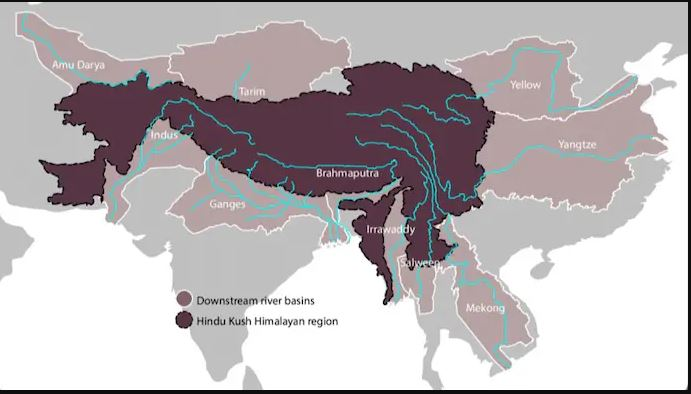
- Hindu Kush Himalaya Under Threat: The study estimates that only 25% of ice will remain in the Hindu Kush Himalayan region at 2°C warming. This region feeds key river systems– Ganga, Indus and Brahmaputra –vital to South Asia.
Impacts of Glaciers loss
- Water Security in South Asia: Himalayan glaciers serve as perennial sources for India’s major rivers.
- Their depletion threatens agricultural output, drinking water supplies, and hydroelectric generation, particularly during the dry season.
- Sea-Level Rise and Coastal Risk: The glacier melt contributes to global sea-level rise, endangering coastal populations, particularly in low-lying nations like the Maldives and coastal Indian cities.
- Ecosystem Disruption: Glacial melt impacts mountain biodiversity, alpine ecosystems, and can lead to glacial lake outburst floods (GLOFs).
- Socioeconomic Consequences: Loss of water sources may lead to climate-induced migration, conflict over resources, and increased poverty in already vulnerable regions.
Global Initiatives to conserve glaciers
- Paris Agreement 2015, aims to limit global warming to well below 2°C, preferably to 1.5°C, above pre-industrial levels.
- High Mountain Summit (WMO): Recognizes mountains and glaciers as climate sentinels and promotes early warning systems and enhanced data sharing.
- International Cryosphere Climate Initiative (ICCI): Established in 2009 as a result of the COP-15, it is a network of senior policy experts and researchers that works with governments and organizations.
- It creates and implements initiatives designed to preserve the Earth’s cryosphere.
- National Mission for Sustaining the Himalayan Ecosystem (NMSHE) is a government initiative aimed at addressing climate change and its impacts on the Himalayan region.
- It focuses on developing sustainable strategies, and addressing issues like glacial melt, natural hazards, and biodiversity loss.
- The Arctic Council: It is a forum for Arctic countries to collaborate on environmental protection, sustainable development, and climate change mitigation in the Arctic region.
- Global Ice Monitoring Initiatives like the World Meteorological Organization’s Global Cryosphere Watch (GCW) and the European Space Agency’s CryoSat mission use satellite-based remote sensing to monitor changes in glaciers and ice sheets.
Concluding remarks
- The accelerating loss of glaciers due to rising global temperatures is a stark reminder of the urgent need for coordinated climate action.
- While global initiatives such as the Paris Agreement and IPCC reports provide a strategic framework, their success hinges on timely implementation and increased ambition by all nations.
Discovery of Three Tombs in Luxor
Syllabus: GS 1/Historical Places
In News
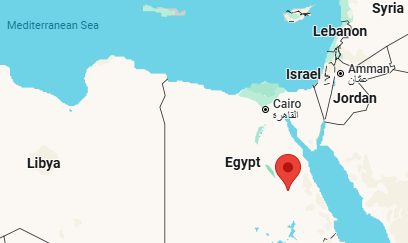
- Egyptian archaeologists have discovered three ancient tombs in the Dra Abu al-Naga necropolis in Luxor, dating back to the New Kingdom period (1550–1070 BC).
Luxor and discovery of tombs
- It is located on the east bank of the Nile River in Egypt.
- It is home to numerous historic landmarks, including the Luxor Temple, Karnak Temples, the Valley of the Kings and Queens, and several funerary temples and noble tombs.
- The newly discovered tombs belonged to high-ranking officials:
- Amum-em-Ipet from the Ramesside period, who served in the estate of Amun;
- Baki, a grain silo supervisor from the 18th Dynasty;
- and “S,” a senior official and mayor of the northern oases.
- These tombs contain courtyards, halls, and burial shafts, although some are damaged or incomplete.
- Various artefacts and statues were also found, with ongoing research aimed at revealing more about the tombs’ occupants.
Source :TH
Cholera
Syllabus :GS 2/Health
In News
- A cholera outbreak has killed many people in the war-torn Sudan.
Cholera
- It is a serious diarrheal illness caused by ingesting food or water contaminated with the bacterium Vibrio cholerae.
- It remains a significant global public health concern, reflecting deep social and economic inequalities.
- Symptoms: Cholera typically causes sudden, severe watery diarrhea that can lead to death within hours if not treated.
- Effect: A 2024 World Health Organisation (WHO) report noted that cholera deaths have shown an uptick in recent years and attributed the cause to climate change and poor sanitation.
- Preventing cholera and other waterborne diseases relies heavily on access to clean water, adequate sanitation, and proper hygiene.
- While most cholera cases involve mild to moderate diarrhea and can be treated effectively with oral rehydration solution (ORS), the illness can escalate quickly.
Source: TH
Aizawl Joins National Railway Network
Syllabus: GS3/Infrastructure
Context
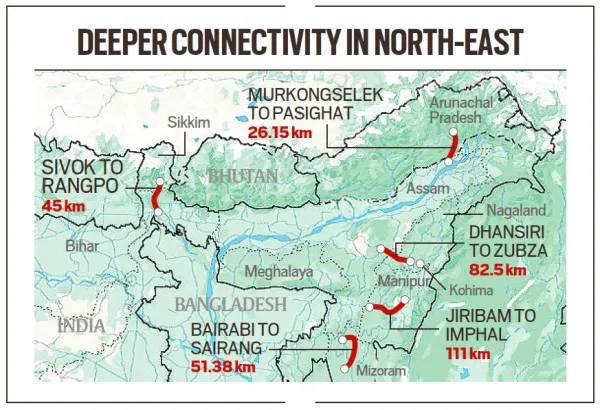
- In a major boost for connectivity in the North-East, Mizoram’s capital Aizawl is now linked to the national railway network via the Bairabi–Sairang line.
About the Bairabi–Sairang line
- The 51.38-km railway project extends rail services from Bairabi in Kolasib district—Mizoram’s only previous railhead—up to Sairang, a satellite town of Aizawl, around 20 km from the city.
- This development makes Mizoram the fourth North-Eastern state to have its capital connected by rail, after Assam, Tripura, and Arunachal Pradesh. Earlier, trains could only reach up to 1.5 km inside Mizoram.
- The Bairabi–Sairang line is part of a larger push by the Ministry of Railways to connect all North-East state capitals and improve regional infrastructure.
- This milestone is expected to bring greater economic opportunities, improve transport access, and strengthen integration between the North-East and the rest of India.
Source: IE
Viksit Krishi Sankalp Abhiyan
Syllabus: GS3/ Agriculture
Context
- The Union Agriculture Minister launched the Viksit Krishi Sankalp Abhiyan (VKSA-2025) at Central Institute of Freshwater Aquaculture, Bhubaneswar, aiming to empower more than 1.5 crore farmers across the country.
What is the Viksit Krishi Sankalp Abhiyan?
- It is a nationwide agricultural outreach campaign to promote sustainable agricultural development by integrating scientific knowledge, modern technology, and farmer feedback.
- The campaign aims to bridge the gap between “lab and land”, empowering farmers through direct interaction with over 16,000 agricultural scientists, Krishi Vigyan Kendras (KVKs), and government officials.
Key Features of the Campaign
- Nationwide Reach: Over 2,000 teams will visit 2,170 locations across 700+ districts, covering nearly 1.5 crore farmers over a 15-day period.
- Two-Way Communication Model: Scientists will provide customized advice on seed varieties, fertilizers, crop choice, and soil health.
- In return, they will collect data on farmer challenges for guiding future research and policy.
- Promotion of Diversified Income Sources: Encouragement for adoption of solar farming, beekeeping (Sweet Revolution), nutri-cereals (Shri Anna), Gobardhan Yojana, and agricultural waste-to-energy initiatives.
Source: PIB
Biostimulants
Syllabus: GS3/ S&T
In News
- In a move to boost India’s agri-input industry, the Government has registered 34 new biostimulants.
About Biostimulants
- Biostimulants are substances or microorganisms that enhance plant growth, yield, and stress tolerance, but do not directly provide nutrients like traditional fertilisers.
- Various types of biostimulants are seaweed extracts, humic and fulvic acids, amino acids & certain beneficial fungi and bacteria.
- They are incorporated under the Fertiliser Control Order (FCO) in 2021 as a distinct category of fertilisers.
Source: TH
Amazon Rain Forests
Syllabus: GS3/ Environment
Context
- The recent release of the book “How to Save the Amazon”, completed posthumously in honor of British journalist Dom Phillips, brings renewed global attention to the significance and fragility of the Amazon Rainforest.
Amazon Rain Forests
- Location: The region belongs to nine nations of the South American continent.
- It is bounded by the Guiana Highlands to the north, the Andes Mountains to the west, the Brazilian central plateau to the south, and the Atlantic Ocean to the east.
- Area Covered: The majority of the forest, 60%, is in Brazil, followed by Peru with 13%, Colombia with 10%, and with minor amounts in Bolivia, Ecuador, French Guiana, Guyana, Suriname and Venezuela.
- Climate: Hot and humid climate with temperatures of 26-30°C throughout the year.
- There are no periodic seasons.The precipitation ranges from 2,000 mm to 10,920 mm annually.
- Tribes: Yanomamo, Kayapo, Akuntsu, Matses, Tupi etc.
- Fauna: Anaconda, Jesus lizard, howler monkey, golden lion tamarin, jaguar, sloth, spider monkey, Amazon River dolphin, toucan and the scarlet macaw, poison dart frog and the glass frog.
- Flora: Moist broadleaf tropical rainforest like myrtle, laurel, palm, acacia, rosewood, Brazil nut, rubber tree, mahogany and Amazonian cedar.
Significance of the Rainforests
- Lungs of the planet: Rainforests generate about 20% of the world’s oxygen and its trees play a key role in reducing pollutant levels.
- Fight climate change: They act as a crucial buffer in the global fight against climate change as it holds tremendous capacity to store carbon.
- Medicinal Properties: Many of these plants contain bioactive compounds capable of treating diseases that are not yet curable, especially cancer.
Threat to the forests
- Climate Change: Due to climate change the forests are witnessing various challenges like changes in rainfall patterns,pollution etc.
- Deforestation: The size of the Amazon forest shrank dramatically as a result of settlers’ clearance of the land to obtain lumber and to create grazing pastures and farmland.
- Wildfires: It causes threat to the survival of ecosystems and biodiversity. The 2019 forest fires in the region have led to widespread devastation in the region.
