
Rise in Violent Crimes by Juveniles
Syllabus: GS1/ Society, GS2/ Governance
Context
- Recent global and domestic incidents, have sparked concern over the sharp rise in violent crimes committed by juveniles in India.
Rising Trend in Juvenile Violent Crimes in India
- Overall decline but growing violence: The total number of juveniles in conflict with the law declined from 37,402 in 2017 to 33,261 in 2022.
- However the share involved in violent crimes surged from 32.5% in 2016 to 49.5% in 2022 (NCRB, 2023).
- Nature of violent crimes: These include murder, rape, grievous hurt, assault, arson, robbery, and dacoity. Non-violent crimes like theft or cheating were excluded from this category.
- Geographic distribution: Madhya Pradesh accounted for 20% of all such cases between 2017 and 2022, followed by Maharashtra (18%), Rajasthan (9.6%), Chhattisgarh (8.4%), Tamil Nadu (5%), and Delhi (6.8%).
- Hotspot Regions: Central and Eastern India emerge as hotbeds of juvenile violence, barring exceptions like Odisha, where only 10% of juvenile crimes were violent.
Factors Contributing to the Rise in Heinous Juvenile Crimes
- Digital exposure: Rise in incel subculture, cyberbullying, and exposure to violent content, especially among adolescent boys.
- Excessive social media use can increase aggression, mimicry of violent behaviour, and reduce empathy.
- Familial and social neglect: Lack of emotional support and guidance during adolescence – a critical development stage.
- Poverty and unemployment: Juveniles from economically weaker backgrounds lack access to quality education, or employment.
- Peer pressure in informal settlements pushes youth towards gangs or criminal groups.
- Substance abuse: Easy access to alcohol, drugs, and inhalants contributes to impulsive and aggressive behaviour.
Steps Taken by India
- Juvenile Justice (Care and Protection of Children) Act, 2015: Allows juveniles aged 16–18 years to be tried as adults for heinous crimes after assessment by the Juvenile Justice Board.
- Focuses on rehabilitation and reintegration through child-friendly procedures.
- Integrated Child Protection Scheme (ICPS): Centrally sponsored scheme offering institutional and non-institutional care, focusing on the prevention of child offences, counselling, and family reintegration.
- Digital Literacy and Cyber Safety Campaigns: Conducted by CBSE, NCERT, and Ministry of Education to tackle online grooming, cyberbullying, and digital addiction among youth.
What are the Challenges?
- Ineffective policy implementation: Despite the Juvenile Justice (Care and Protection of Children) Act, 2015, there are gaps in rehabilitation, counselling, and monitoring mechanisms.
- Overburdened and under-resourced Juvenile Justice Boards and Child Welfare Committees.
- Stigmatisation and lifelong social exclusion of young offenders post-incarceration.
- Lack of gender-specific data and interventions, especially concerning girls involved in or victims of juvenile crimes.
Steps needed to curb juvenile crimes
- Strengthen Early Intervention: Mandatory psychosocial support systems in schools are required.
- Reform Juvenile Justice System: Increase funding and training for Juvenile Justice Boards and CWCs.
- Ensure individualised rehabilitation plans with mental health services, skill training, and family counselling.
- Community-Based Rehabilitation: Engage local NGOs, community leaders, and youth mentors.
- Promote restorative justice approaches that focus on repairing harm and reintegration rather than mere punishment.
- Regulate Digital Spaces: Implement age-appropriate content policies and promote digital literacy among adolescents.
- Data-Driven Policy Making: Disaggregated data by age, gender, region, and type of offence to tailor interventions.
Concluding remarks
- The steady rise in violent crimes committed by juveniles in India reflects deeper sociological, psychological, and systemic flaws.
- While tough laws alone cannot solve the issue, a holistic approach focusing on prevention, rehabilitation, education, and community engagement is the need of the hour.
Ninth Anniversary of the Pradhan Mantri Ujjwala Yojana (PMUY)
Syllabus: GS2/ Welfare Scheme
In News
- India marked the ninth anniversary of the Pradhan Mantri Ujjwala Yojana (PMUY).
About PMUY
- Launched: In 2016 by the Ministry of Petroleum & Natural Gas.
- Objective: To provide LPG (Liquefied Petroleum Gas) connections to women from Below Poverty Line (BPL) households to reduce the health risks associated with traditional cooking methods.
- Target Group: Adult women from BPL households, with a focus on women’s empowerment and improving their living standards.
- Eligibility Criteria: Women from Below Poverty Line (BPL) households, with priority given to SC, ST, PMAY (Gramin) families, forest dwellers, and tea garden workers. Migrant households can avail self-declaration for address proof.
- Phase I (2016-2020): 8 crore deposit-free LPG connections were provided to women from BPL households by 2020.
- Phase II (2021 onwards): An additional allocation of 1.6 crore LPG connections was made under the PMUY scheme by December 2022, with a special provision for migrant households.
- Achievements (As of March 1, 2025): Total number of active domestic LPG consumers in India stands at 32.94 crore, with 10.33 crore beneficiaries under PMUY.
Significance
- Health Benefits:
- Improved Health: PMUY aims to eliminate the use of traditional cooking methods like wood, coal, and crop residues, which lead to indoor air pollution.
- WHO Estimates: Around 5 lakh deaths in India occur annually due to the use of unclean cooking fuels.
- Women Empowerment:
- Freedom from Collecting Firewood: PMUY empowers women by reducing the time spent collecting firewood, often from faraway forests.
- Improved Lifestyle: Access to clean fuel saves time and energy, allowing women to focus on productive activities.
- Socio-Economic Benefits:
- Increased Productivity: Women are freed from labor-intensive cooking methods, enabling them to engage in economic activities.
- Control over Resources: LPG connections are issued in the name of women, promoting financial independence and decision-making power within households.
- Environmental Benefits:
- Reduced Air Pollution: Use of cleaner cooking fuel reduces the harmful emissions associated with burning wood or kerosene, contributing to environmental conservation.
Challenges
- Refilling Costs: While the initial connection is free, the refilling cost is a challenge. Poor households may struggle to afford regular refills due to limited financial resources.
- Bureaucratic Hurdles: Delays in documentation and approval processes can slow down the rollout of the scheme.
- Lack of Infrastructure: Rural areas often face challenges with the last-mile connectivity required for LPG delivery. Filling plants and distributors are often not present in remote areas.
- Habitual Practices: Despite having access to LPG, many beneficiaries still rely on firewood due to the cost-saving nature of traditional methods, especially in areas where LPG refilling is expensive.
Way Forward
- Strengthening the Supply Chain: Expand the LPG distribution network, especially in rural and remote areas, by setting up more distribution points and refilling stations.
- Ensure Affordability: Government subsidies or support for refilling costs would make LPG more accessible to low-income households.
Social Protection Cover in India Rises to Over 64% in 2025: ILO
Syllabus: GS 2/Governance
In News
- According to the latest data from International Labour Organization’s (ILO) ILOSTAT, India’s social security coverage in 2025 stood at 64.3 per cent, up from 19 per cent a decade ago.
Key Findings
- India now ranks second in the world in social security coverage, providing protection to more than 94 crore of its citizens.
- Nearly two out of three people in India are now covered under at least one social security benefit — which roughly translates into 950 million people.
- India is also the first country globally to update its 2025 social protection coverage data in the ILOSTAT database, reinforcing its leadership in digital governance and transparency in welfare systems.
- These include schemes like Atal Pension Yojana, Kisan Samman Nidhi, Mahatma Gandhi National Rural Employment Guarantee Act (MGNREGA), Janani Suraksha Yojana and PM POSHAN, among others.
What is Social Security?
- Social security refers to the protection provided by society to individuals and households to ensure access to healthcare and guarantee income security in situations such as old age, unemployment, sickness, maternity, and invalidity.
Key Initiatives in India for Social Protection
- Pradhan Mantri Shram Yogi Maan-Dhan Yojana (PM-SYM): To provide old age protection and social security to unorganized sector workers (e.g., street vendors, rickshaw pullers, construction workers, domestic workers).
- Pradhan Mantri Jeevan Jyoti Yojana (PMJJBY): To provide affordable life insurance cover.
- Atal Pension Yojana (APY): To provide a guaranteed pension for unorganized sector workers.
- Ayushman Bharat (Pradhan Mantri Jan Arogya Yojana – PMJAY): To provide health insurance coverage to the poorest and most vulnerable sections of society.
- Public Distribution System (PDS) / National Food Security Act (NFSA): To ensure food and nutritional security by providing subsidized food grains.
- Pradhan Mantri Awaas Yojana – Gramin (PMAY-G): To provide “Housing for All” by ensuring a pucca house with basic amenities to all houseless households and those living in kutcha and dilapidated houses in rural areas.
33% Seat Reservation for Women in Polls in India
Syllabus:GS2/Social Justice; Issues Related To Women
Context
- The Indian government is preparing to implement a 33% reservation for women in the Lok Sabha and state assemblies, aiming for the 2029 general elections.
| Historical Context – The demand for political reservation for women dates back to the freedom movement, with leaders like Sarojini Naidu and Begum Shah Nawaz advocating for equal political rights. 1. However, the Constituent Assembly rejected the idea, assuming democracy would naturally ensure fair representation. – 1970s and 1980s: Women’s political participation remained limited, prompting policy debates. 1. It eventually led to the 73rd and 74th Constitutional Amendments, which reserved one-third of seats in Panchayati Raj Institutions and urban local bodies for women. – Later, the Women’s Reservation Bill in 1996 was introduced, but it failed to gain consensus. 1. Subsequent efforts in 1998, 1999, and 2008 also faced political hurdles. – September 2023: The Women’s Reservation Bill was passed with near-unanimous support, officially known as the Constitution (106th Amendment) Act, 2023 (Nari Shakti Vandan Adhiniyam). |
Constitution (106th Amendment) Act, 2023 (Nari Shakti Vandan Adhiniyam)
- It mandates 33% reservation for women in the Lok Sabha and state legislative assemblies including Delhi, aiming to enhance female representation in governance.
- Currently, women constitute only about 15% of the Lok Sabha and less than 10% in many state assemblies.
- Key Provisions:
- The quota extends to seats already reserved for SCs and STs women.
- The reservation aims to take effect after the next Census and subsequent delimitation exercise, ensuring fair seat allocation.
- The quota aims to remain in place for 15 years, with the possibility of extension through Parliamentary action.
Concerns and Challenges
- Delayed Implementation: The reservation aims to take effect only after the Census in 2027 and delimitation process.
- Impact of Delimitation: The delimitation process has raised concerns among southern states.
- Since northern states have experienced higher population growth, they may gain more seats, potentially reducing the political influence of southern states.
- Demand for OBC Sub-Quota: Some political groups advocate for reservation within reservation for OBCs.
- They argue that without a separate quota, upper-caste women may disproportionately benefit from the policy.
- Rotation of Reserved Seats: The Act mandates that reserved seats aim to be rotated after each delimitation exercise.
- It could create uncertainty for political parties and candidates, making long-term electoral planning difficult.
Conclusion & Way Ahead
- The Women’s Reservation Act, 2023 aims to empower women, strengthen democracy, and pave the way for more inclusive governance.
- However, addressing concerns related to delimitation, sub-quotas, and implementation delays will be essential to ensure its success.
- The upcoming Census and delimitation process will play a decisive role in determining how soon this vision becomes a reality.
50 Years of Emergency
Syllabus: GS2/ Polity and Governance
Context
- The Allahabad High Court’s June 12, 1975 verdict invalidating then Prime Minister Indira Gandhi’s 1971 election for electoral malpractices led to the proclamation of National Emergency on June 25, 1975.
Constitutional Provisions for National Emergency
- Grounds for Proclamation: As per Article 352, a National Emergency can be declare by the President if the security of India or any part is threatened by;
- War and External aggression (External Emergency)
- Armed rebellion (Internal Emergency): Internal disturbance was substituted with Armed rebellion by the 44th Amendment Act, 1978.
Procedure and Safeguards
- Cabinet Advice Requirement: The 44th Amendment Act mandates written recommendation by the Council of Ministers before the President can proclaim Emergency.
- Parliamentary Approval: Approval needed by both Houses within one month.
- If Lok Sabha is dissolved, Emergency continues until 30 days after reconstitution, provided Rajya Sabha has approved.
- If approved by both the Houses of Parliament, the emergency continues for six months, and can be extended to an indefinite period with an approval of the Parliament for every six months.
- Every resolution approving the proclamation of emergency or its continuance must be passed by either House of Parliament by a special majority, that is,
- A majority of the total membership of that house, and
- A majority of not less than two-thirds of the members of that house present and voting.
- Revocation: The President can revoke Emergency by a subsequent proclamation.
- Further, the President must revoke a proclamation if the Lok Sabha passes a resolution disapproving its continuation.
Effect on Fundamental Rights
- Article 358: Automatic Suspension of Article 19;
- Applies only during Emergency due to war or external aggression (not armed rebellion)
- Fundamental Rights under Article 19 cease automatically without need for separate order.
- Article 359: Suspension of enforcement (not the rights themselves) of other Fundamental Rights, excluding Articles 20 and 21;
- The President may issue a separate order and Parliament must approve such orders.
- In Minerva Mills Case (1980), the Supreme Court ruled that the validity of Emergency proclamation is subject to judicial review, if it is Malafide, Based on extraneous/irrelevant facts, or Perverse in nature.
Historical Instances of National Emergency in India
| Grounds | Duration |
| External aggression (China) | 1962-1968 |
| External aggression (Pakistan) | 1971-1977 |
| Internal disturbance | 1975-1977 |
Criticism of Emergency period
- The Emergency period in India (June 25, 1975 – March 21, 1977) is often referred to as a “dark phase” in the history of Indian democracy due to
- Several fundamental rights were suspended, including the right to freedom of speech, assembly, and expression.
- Press freedom was curtailed through pre-censorship and government control.
- Under preventive detention laws such as the Maintenance of Internal Security Act (MISA), thousands of political leaders, activists, and dissenters were arrested without trial.
- Judicial Independence Weakened: The 39th Amendment placed the election of the Prime Minister beyond judicial review, raising concerns about checks and balances.
- Decision-making became heavily centralized, with greater concentration of power in the executive.
Lessons for Democratic Governance
- Constitutional amendments (44th CAA) post-1975 have introduced crucial safeguards—such as mandatory cabinet advice and periodic parliamentary approval—to avoid unilateral actions.
- Preserving Fundamental Rights: Articles 20 and 21 were protected even during emergencies by later amendments, reinforcing core human rights.
- The judiciary’s role in upholding the Basic Structure Doctrine and enabling review of Emergency proclamations serves as a constitutional check on executive overreach.
MISCELLANEOUS
UNESCO ‘Creative City of Gastronomy’
Syllabus: GS1/ Culture
Context
- A proposal for Creative City Lucknow under the category Gastronomy for Awadhi Cuisine has been submitted to the World Heritage Centre recently.
UNESCO Creative Cities Network (UCCN)
- The UNESCO Creative Cities Network (UCCN) is a global network of cities that recognize culture and creativity as drivers of sustainable urban development.
- UCCN was created in 2004.
- The network focuses on seven creative fields: Crafts and Folk Art, Design, Film, Gastronomy, Literature, Media Arts, and Music.
Indian cities in UCCN
- India has several cities recognized by UNESCO as part of the Creative Cities Network.
- The network currently includes;
- Jaipur and Srinagar (Crafts and Folk Arts),
- Varanasi, Chennai and Gwalior (Music),
- Mumbai (Film),
- Hyderabad (Gastronomy),
- Kozhikode (Literature).
Shipki La
Syllabus: GS1/ Geography and GS3/ Internal Security
Context
- Recently, the Chief Minister of Himachal Pradesh launched border tourism activities at Shipki-La.
About Shipki La
- Location: A high-altitude motorable mountain pass (3,930 m) in Kinnaur district, Himachal Pradesh, on the India-China border.
- Strategic & Cultural Significance:
- Situated on the ancient Silk Route, blending geopolitical importance, cultural heritage, and Himalayan landscapes.
- Historically served as a trade route between India and Tibet, until it was closed for trade in 2020.
- The Sutlej River (Tibetan name: Langqen Zangbo) enters India through this pass.
- Kailash Mansarovar Yatra Potential: Shipki La has been proposed by the Himachal Pradesh government as the easiest route for the Kailash Mansarovar Yatra, pending approval from the Centre.
Lokpal
Syllabus: GS2/ Polity
In News
- The Full Bench of Lokpal of India has adopted a new motto “Empower Citizens, Expose Corruption”.
Lokpal
- About: It is an anti-corruption authority or ombudsman in India that was established to address grievances regarding corruption in public offices.
- Legal Status: The Lokpal is not a constitutional body but a statutory body created through legislation Lokpal and Lokayuktas Act 2013.
- Chairperson: Retired Chief Justice of India or a Supreme Court judge.
- Appointment of Lokpal: Appointed by a selection committee consisting of Prime Minister, Chief Justice of India (CJI), Leader of the Opposition (LoP) in Lok Sabha & One Eminent Jurist (appointed by the above members).
- Tenure: The Lokpal is appointed for a 5-year term or until they attain the age of 70 years.
- Powers and Functions: To investigate and prosecute corruption cases against public servants, including government officials, ministers, and the Prime Minister (except on matters related to national security).
- The Lokpal has supervision over CBI’s investigations in corruption cases.
Malta’s Golden Passport Scheme
Syllabus: GS2/ International Relations
Context
- The European Court of Justice ruled that Malta may no longer sell citizenship through its ‘golden passports’ scheme, as it is contrary to European law.
About
- Launched in 2014, Malta’s Individual Investor Programme (IIP), known as the Golden Passport scheme, allowed wealthy foreigners to acquire Maltese citizenship, and by extension EU citizenship, through financial contributions.
- Applicants were required to:
- Contribute €600,000–€750,000 to Malta’s national development fund.
- Purchase or lease real estate in Malta.
- Make a €10,000 donation to a registered NGO.
- It attracted investors from Russia, China, the Middle East, and others, including politically exposed persons and celebrities.
Why the Scheme Was Controversial
- Security concerns: Citizenship grants included access to the EU’s visa-free Schengen Area, raising risks of money laundering and infiltration by criminal networks.
- Lack of transparency: Many successful applicants remained unnamed.
Hortoki-Sairang line
Syllabus: GS3/Infrastructure
In News
- The Commission of Railway Safety (CRS) has approved the Hortoki-Sairang line .
Hortoki-Sairang line
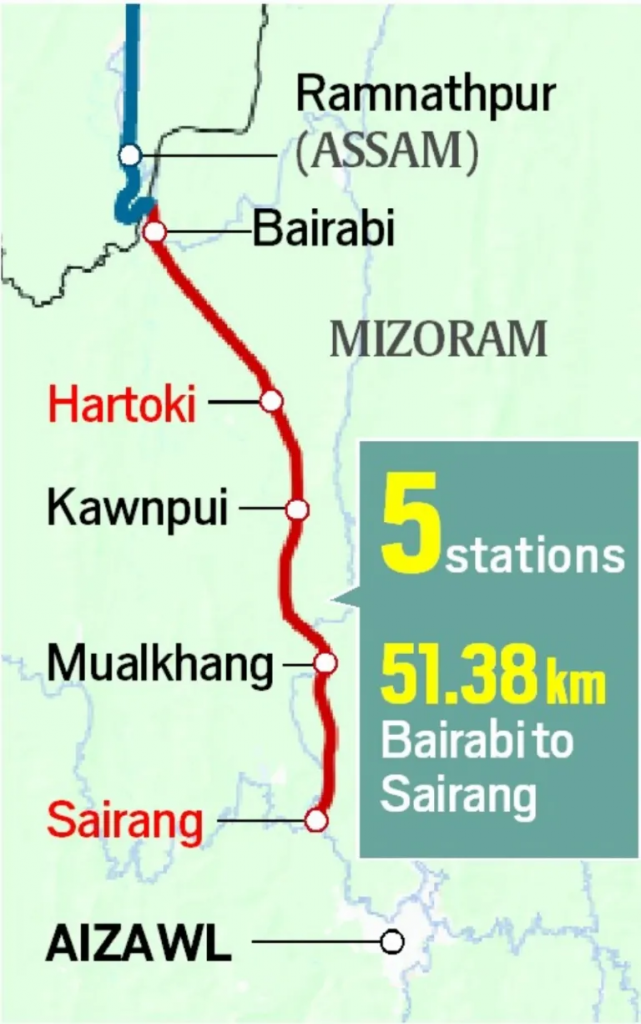
- It is the final leg of the Bairabi-Sairang railway project in Mizoram.
- It enables the first-ever rail connection to the state capital, Aizawl, via the 33.86-km Hortoki–Sairang section.
- It lies in hilly terrain and includes 32 tunnels and 35 major bridges.
- Sairang is a satellite town of Aizawl, around 20 km from the city.
- Bairabi in Kolasib district, near the border with Assam, has so far been the only railhead in Mizoram.
- Sairang is a satellite town of Aizawl, around 20 km from the city.
Importance
- The Bairabi-Sairang project is part of a broader push by the Ministry of Railways to connect all northeast state capitals by rail.
- This involves numerous new line and doubling projects across Assam, Nagaland, Arunachal Pradesh, Sikkim, Manipur and Tripura.
- It is a key infrastructure initiative under the Centre’s Act East Policy to enhance connectivity and economic integration in the northeast region.
Symposium on ‘Discovery and Development of Monoclonal Antibody Therapeutics’
Syllabus: GS3/ Science & Technology
Context
- The Translational Health Science and Technology Institute (THSTI) hosted a national symposium on the Discovery and Development of Monoclonal Antibody (mAb) Therapeutics, to foster collaboration in advancing India’s Biopharmaceutical sector.
What are Monoclonal Antibodies (mAbs)?
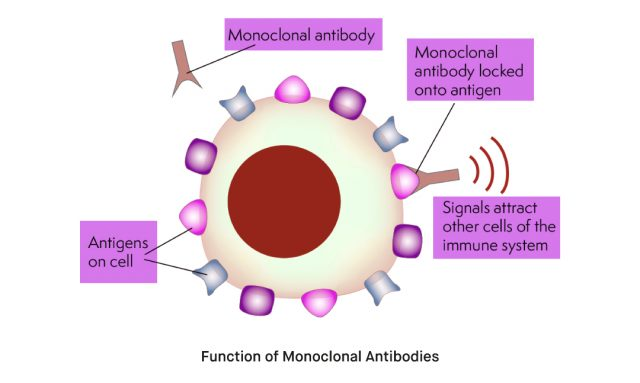
- Monoclonal antibodies are lab-engineered proteins designed to target specific antigens (foreign substances like viruses, bacteria, or cancer cells).
- They are derived from a single clone of a B-cell and hence are identical in structure and specificity.
- mAbs mimic the natural immune response but are highly specific, making them powerful tools in treating diseases.
Applications of mAbs
- Healthcare and Medicine:
- Infectious diseases (e.g., mAbs used for COVID-19 therapy like Casirivimab and Imdevimab).
- Organ transplantation (preventing rejection).
- Diagnostics: Used in pregnancy tests, ELISA kits, and disease markers.
International Organisation of Aids to Marine Navigation (IALA)
Syllabus: GS3/ Environment
In News
- India, as the Vice President of the International Organization for Marine Aids to Navigation (IALA), actively participated in the 2nd Session of the IALA Council, held in Nice, France.
About IALA
- Established: In 1957, originally as the International Association of Marine Aids to Navigation and Lighthouse Authorities (IALA).
- Headquarters: Based in Saint-Germain-en-Laye, near Paris, France.
- Members: IALA currently has 39 members.
- Status: Transitioned from a Non-Governmental Organisation (NGO) to an Intergovernmental Organisation (IGO) in August 2024, following ratification by 30 states through a Convention.
- Objective: IALA aims to improve safety at sea, reduce marine accidents, and protect the marine environment by developing common practices, technical standards, and recommendations for maritime navigation.
Eco-Sensitive Zone (BESZ)
Syllabus: GS3/ Environment
Context
- A municipal solid-waste incinerator set up in Gangotri (Uttarkashi, Uttarakhand) within the Bhagirathi Eco-Sensitive Zone (BESZ) has triggered criticism among environmental activists.
What are Eco-Sensitive Zones (ESZs)?
- Eco-Sensitive Zones (ESZs) are areas notified by the Ministry of Environment, Forests and Climate Change (MoEFCC) under the Environment (Protection) Act, 1986.
- ESZs are designated areas around protected areas like national parks and wildlife sanctuaries.
- Their primary purpose is to protect the fragile ecosystems of these protected areas by regulating human activities in the surrounding areas.
- The extent of ESZ can go up to 10 km around the protected area. In exceptional cases, even beyond 10 km.
- Activities in ESZs are classified as:
- Prohibited: commercial mining, setting up of major hydroelectric projects, setting up of polluting industries (red category).
- Regulated: construction, tourism, tree felling, vehicular traffic.
- Permitted: agriculture, organic farming, local community use.
- In June 2022, the Supreme Court of India mandated that all national parks and wildlife sanctuaries within protected forests must have a minimum Eco-Sensitive Zone (ESZ) of 1 km.
Exercise ‘Khaan Quest’
Syllabus: GS3/Defence
In News
- The Indian Army contingent arrived in Ulaanbaatar, Mongolia to participate in the multinational military Exercise Khaan Quest.
Exercise ‘Khaan Quest’
- It began as a bilateral initiative between the United States and the Mongolian Armed Forces in 2003, evolved into a multinational peacekeeping endeavour from 2006 onwards.
- It is an annual exercise that brings together military forces from across the globe to collaborate and enhance their peacekeeping capabilities.
- It will enable the participating countries to share their best practices in Tactics, Techniques and Procedures for conduct of joint operations.
- It aims to prepare the Indian armed forces for peacekeeping operations in a multinational setting, thereby “increasing interoperability and military readiness in peace support operations under Chapter VII of the United Nations Charter.”
