
Air India Plane Crash in Ahmedabad
Syllabus: GS3/Disaster Management
Context
- The Aircraft Accident Investigation Bureau (AAIB) has initiated a formal investigation into the Air India plane crash in Ahmedabad.
About
- An Air India Boeing 787 Dreamliner crashed into a college hostel in Ahmedabad, causing more than 200 casualties.
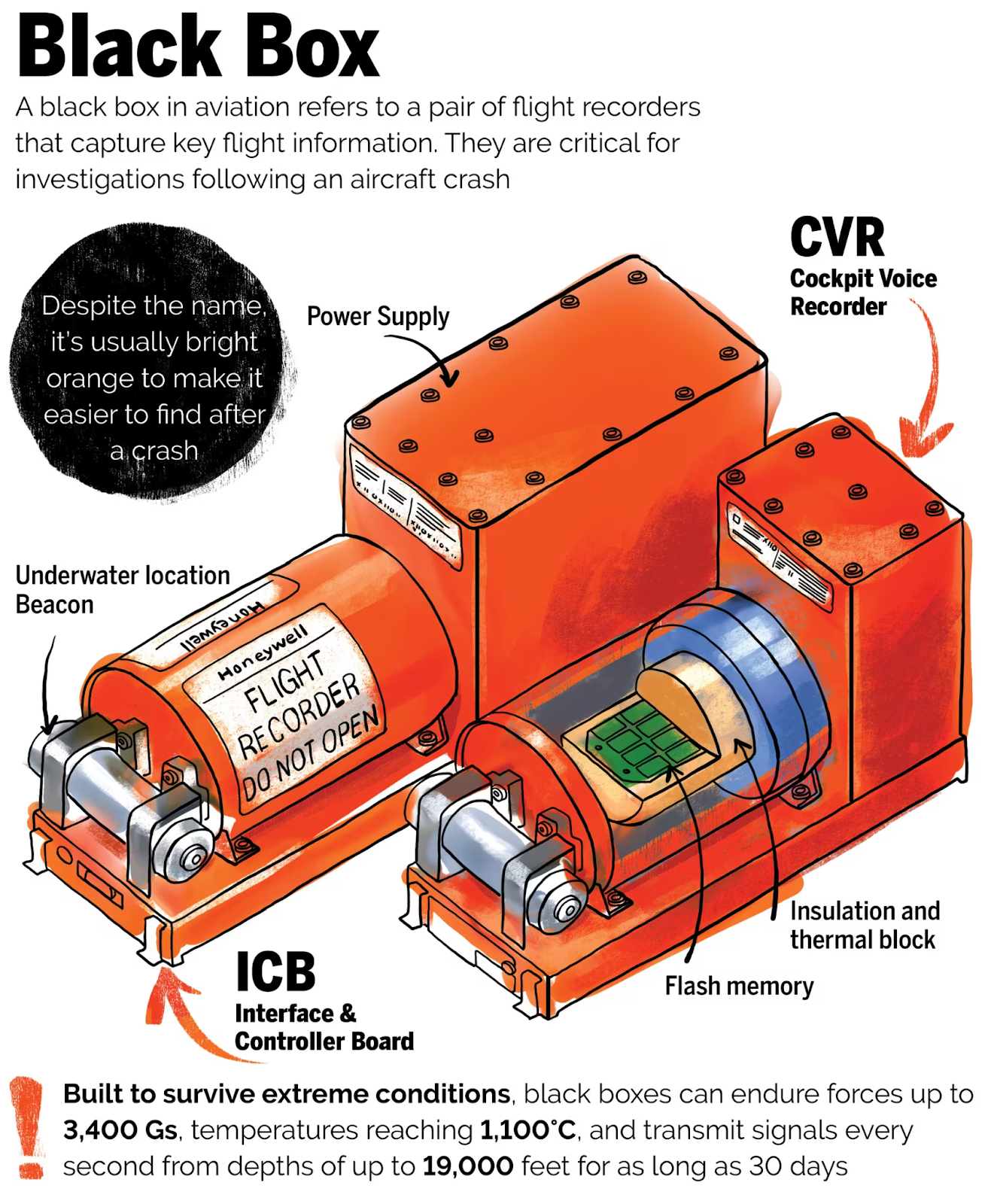
- The two black boxes will help in revealing what triggered the tragic crash of the Air India plane.
- This disaster could rewrite aviation safety norms, especially for India, now the world’s 3rd-largest domestic aviation market.
India’s Aviation Growth Trajectory
- Passenger Traffic: India handled over 152 million domestic passengers in FY 2023-24, growing 21% year-on-year.
- Cargo Market: India is the sixth-largest air cargo market globally, handling 3.33 million tonnes of freight in 2022-23.
- Airport Infrastructure: Over 150 operational airports, with 75 added in the last 9 years under the UDAN (Udein Desh Ke Aam Nagrik) Scheme.
- Employment: The sector supports over 4 million jobs directly and indirectly.
Challenges in the Indian Aviation Sector
- Market Concentration: Duopoly Structure: IndiGo (~60%) and Tata Group airlines (~30%) control ~90% of the domestic market.
- Barriers to Entry: High operational costs, predatory pricing, algorithmic coordination, and opaque slot allocation mechanisms hinder new entrants.
- Financial Instability: Many airlines remain chronically loss-making.
- Air India posted a net loss of ₹9,556 crore in FY22.
- Safety Concerns: IndiGo was fined ₹1.2 crore in 2023 for security violations.
- Akasa Air and Air India have both been penalised by DGCA for lapses in safety and engineering checks.
- Anti-Competitive Practices: Gun-jumping (premature mergers), collusive pricing (two or more airlines coordinate to fix ticket prices), and slot misuse (Airports allocate landing and takeoff slots to airlines) remain inadequately addressed.
- Institutional Weakness: Regulatory bodies like DGCA (Directorate General of Civil Aviation), AAIB (Aircraft Accident Investigation Bureau), and BCAS (Bureau of Civil Aviation Security) suffer from:
- Staff shortages, lack of specialised technical personnel, and delayed decision-making.
- Many are headed by non-aviation experts, creating a gap between regulation and ground realities.
Concluding remarks
- While India’s aviation sector is flying high, structural fragilities threaten its safe and sustainable growth.
- Addressing financial stress, market distortion, safety issues, and regulatory inertia is imperative for India to transition from a fast-growing to a truly world-class aviation ecosystem.
| International Civil Aviation Organisation (ICAO) – ICAO is a specialized agency of the United Nations that coordinates the principles and techniques of international air navigation, and fosters the planning and development of international air transport to ensure safe and orderly growth. – History: The Convention on International Civil Aviation (Chicago Convention), drafted in 1944. 1. The convention was ratified by the required number of nations, leading to the official inauguration of ICAO on April 4, 1947. – Member States: 193 (India is a member of the ICAO) – Headquarters: Montreal, Quebec, Canada. – The Air Navigation Commission (ANC) is the technical body within ICAO. The commission is composed of 19 commissioners, nominated by the ICAO’s contracting states and appointed by the ICAO Council. |
Global Gender Gap Index 2025: WEF
Syllabus: GS2/Issues Related To Women
Context
- Recently, the World Economic Forum (WEF) released its 19th edition of Global Gender Gap Report 2025.
Global Overview
- Overall Gender Parity: The world has closed 68.5% of the gender gap, a marginal improvement from the previous year.
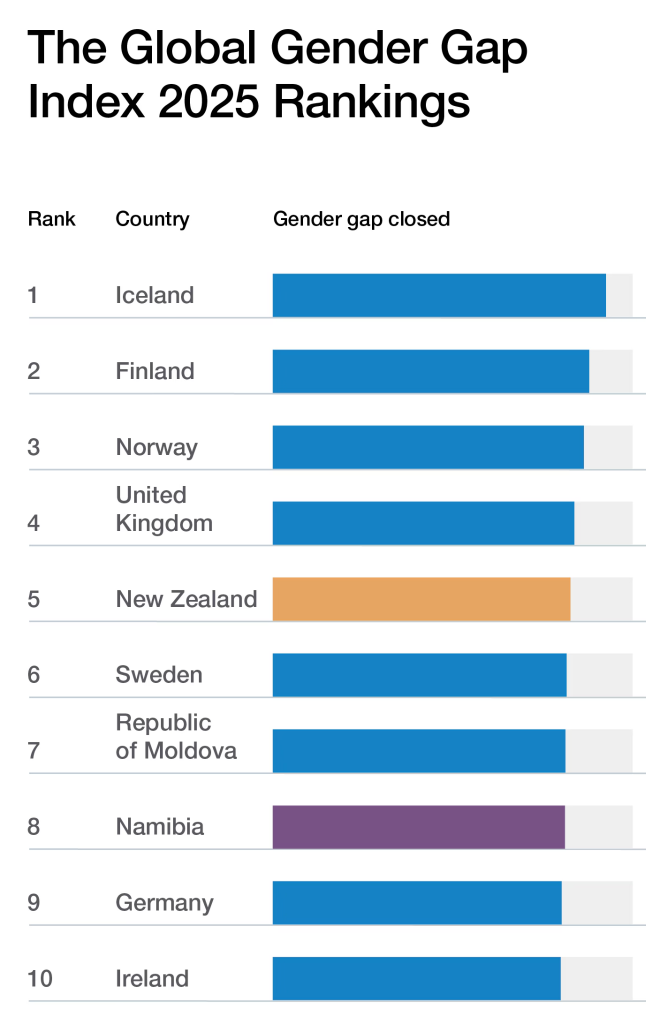
- Top Performers:Iceland remains the most gender-equal country for the 16th consecutive year, achieving over 90% parity.
- Other top-ranking nations include Finland, Norway and the United Kingdom etc.
India’s Performance
- Overall Rank: India slipped to 131st out of 148 countries, with a parity score of 64.1%.
- Economic Participation: Improved slightly to 40.7%, with a rise in estimated earned income parity from 28.6% to 29.9%.
- Educational Attainment: Scored 97.1%, reflecting strong gains in literacy and higher education enrollment.
- Health and Survival: Showed modest improvement in sex ratio at birth and healthy life expectancy.
- Political Empowerment: Declined, with women’s representation in Parliament dropping from 14.7% to 13.8%, and ministerial roles falling from 6.5% to 5.6%, marking a continued decline from the 2019 peak of 30%.
Regional Insights
- South Asia: India ranks below Bangladesh (24), Nepal (125), and Sri Lanka (130), but above Maldives (138), Bhutan (119) and Pakistan (148).
- Europe: Leads globally with 76.3% parity, surpassing North America.
- Middle East and North Africa: Remains the furthest from parity at 62.6%.
Key Concerns Highlighted in Report
- Time to Full Parity: At the current pace, it will take 123 years to close the global gender gap, highlighting the need for accelerated efforts.
- Economic Disparities: Despite progress, women still earn significantly less than men, with wage gaps persisting across industries.
- Regional Inequalities: Certain regions, particularly South Asia and the Middle East, continue to lag behind in gender parity, facing structural and cultural barriers.
| Other Key Reports by WEF – Global Competitiveness Report: Assesses the economic competitiveness of countries based on productivity and innovation. – Future of Jobs Report: Examines trends in employment, automation, and workforce transformation. – Global Risks Report: Identifies emerging global risks, including economic instability, climate change, and geopolitical tensions. – Technology and Innovation Reports: Covers advancements in AI, digital transformation, and the Fourth Industrial Revolution. |
India’s Growth Paradox
Syllabus: GS3/ Economy
Context
- Despite India’s rise as the world’s fourth-largest economy with a nominal GDP of $3.9 trillion, concerns persist over the lack of inclusivity in economic growth.
The Illusion of Growth
- GDP vs. Per Capita Reality: Although India’s GDP has expanded significantly, the average per capita income stands at just $2,800 (₹2.33 lakh/year), far below countries like Vietnam ($4,300) and China ($12,500).
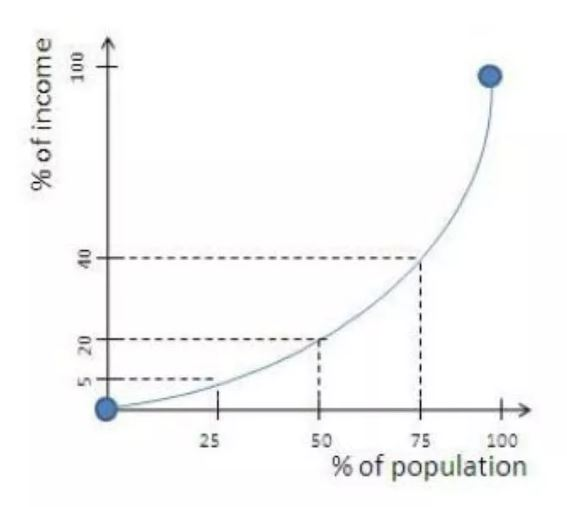
- Extreme Wealth Concentration: The top 1% of Indians own over 40% of the nation’s wealth. The top 5% control 62%.
- If their wealth is excluded, the effective per capita income for the rest falls to ₹5,600 per month, barely above subsistence level.
- Global Comparisons: India ranks 111th out of 125 on the Global Hunger Index, and 134th on the Human Development Index — lower than peers like Vietnam or Sri Lanka.
- 80 crore people in India rely on free ration schemes under the NFSA. 230 million Indians live in multidimensional poverty.
- 35% of Indian children are stunted, indicating chronic undernutrition.
- Exchange Rate Distortion: India’s GDP in dollar terms is nominal, and heavily influenced by exchange rates.
- A weakening rupee can shrink India’s dollar-based economy without any real decline in domestic production.
- Employment Crisis: Female Labour Force Participation Rate (LFPR) is among the lowest in the world. Youth unemployment, especially among graduates, remains alarmingly high.
Reasons for wealth concentration
- Historical Factors: India’s history, including colonization and feudalism, has led to the accumulation of wealth in the hands of certain groups.
- These historical inequalities have persisted over time, influencing wealth distribution patterns.
- Economic policies, including liberalization and privatization measures implemented since the 1990s, have spurred economic growth in certain sectors, benefitting those with access to capital and resources.
- Urban-Rural Divide: Urban centers tend to attract more investment and offer better job opportunities, leading to the concentration of wealth in these regions.
- Access to Education and Opportunities: Disparities in access to education persist, particularly among marginalized communities, exacerbating wealth inequality.
Way Ahead
- Shift to Human-Centric Metrics: Focus on Human Development Indicators (HDI), Nutrition, Education, and Gender Equality alongside GDP.
- Focus on Labour-Intensive Sectors: Promote MSMEs, rural industries, and social infrastructure to create broad-based employment.
- Decentralized Planning: Empower local bodies, cooperatives, and community-based governance.
- Ecological Justice: Align growth with sustainability, climate action, and environmental protection.
Moody’s Downgrade and U.S. Fiscal Reality
Syllabus :GS 3/Economy
In News
- The recent Moody’s downgrade of the U.S. credit rating marks a quiet but significant shift signaling the end of U.S. fiscal dominance, driven by rising national debt and political paralysis.
U.S. Fiscal Challenges
- The downgrade reflects declining confidence in U.S. political and economic stability, shaking the foundation of global trust in the U.S. Treasury bonds.
- Historically, U.S. Treasury bonds symbolized safety and trust, backed by America’s strong institutions and political stability.
- However, rising national debt—now over 120% of GDP—and persistent reliance on deficit spending since 2008 have weakened that trust.
- Political polarization has stalled fiscal discipline, undermining confidence and leading Moody’s to finally withdraw its unquestioning faith in U.S. creditworthiness.
Impact : Globally
- The Moody’s downgrade signals a deeper global shift as confidence in the U.S. dollar’s dominance quietly wanes.
- Central banks are diversifying away from the U.S. Treasuries, turning to gold, the euro, and digital currencies.
- This change reflects a slow but significant recalibration of trust in the global financial system, not an immediate crisis.
- The world hasn’t abandoned the dollar yet but is increasingly exploring alternatives.
- This moment marks a new era of fiscal realism with broad implications, especially for countries like India that rely on American financial stability, highlighting the need to reassess economic strategies in a changing global landscape.
Suggestions for India
- India must view the U.S. credit downgrade as a warning and a mirror reflecting its own fiscal vulnerabilities.
- With debt nearing 80% of GDP and rising global interest rates, India remains exposed to capital flight and inflation risks.
- Beyond external pressures, India faces a deeper issue of fiscal populism—excessive election-time spending and freebies—that strains budgets and crowds out productive investment.
- There is a need to focus on long-term investments in infrastructure, skills, and resilient systems.
India’s Rare Earth Magnets Crisis
Syllabus: GS3/ Science and Technology
Context
- Amidst China’s export curbs on rare earth magnets, India’s automobile sector are raising alarms over potential production disruptions.
What are Rare Earth Magnets?
- Rare earth magnets are powerful permanent magnets made using rare earth elements, including 17 different elements from the periodic table.
- The two main types are Neodymium (Nd-Fe-B) and Samarium Cobalt (SmCo) magnets.
- Despite the name, rare earth elements are not geologically rare but are difficult to extract economically due to their dispersed occurrence and the environmental cost of mining.
Importance of Rare Earth Magnets
- In Electric Vehicles (EVs), Rare earth magnets are essential in;
- Permanent Magnet Synchronous Motors (PMSMs), the core of EV propulsion systems.
- Ensuring high torque density, energy efficiency, and reduced size of EV motors.
- In Internal Combustion Engine (ICE) Vehicles: Power steering systems, Electric windows, Windshield wipers and Cooling fans and sensors.
- Defense: Guidance systems, missile actuators, radar systems.
- Consumer Electronics: Smartphones, speakers, hard drives.
Availability of Rare Earth magnets
- China controls over 85% of global rare earth magnet production, and dominates the supply chain from mining to refining to magnet manufacturing.
- India, despite having rare earth reserves (especially in monazite sands in Kerala, Tamil Nadu, Odisha), lacks;
- Advanced refining capabilities
- Downstream magnet manufacturing industry
- R&D and private sector participation
Science Behind Right AC Temperature
Syllabus: GS 3/Science
In News
- The Union Ministry of Power is considering mandating that new air conditioners (ACs) in India operate only within a temperature range of 20°C to 28°C.
| Do you know? – In 2018, the International Energy Agency estimated there were 2 billion ACs in use around the world and that the number of residential units tripled from 2000 to 2022, to 1.5 billion. – The agency also said that as of 2022, 43% of people in the Asia Pacific region were still in need of additional cooling. – India is currently adding 10 to 15 million ACs each year, with another 150 million expected over the next decade. |
Functioning of Air conditioner
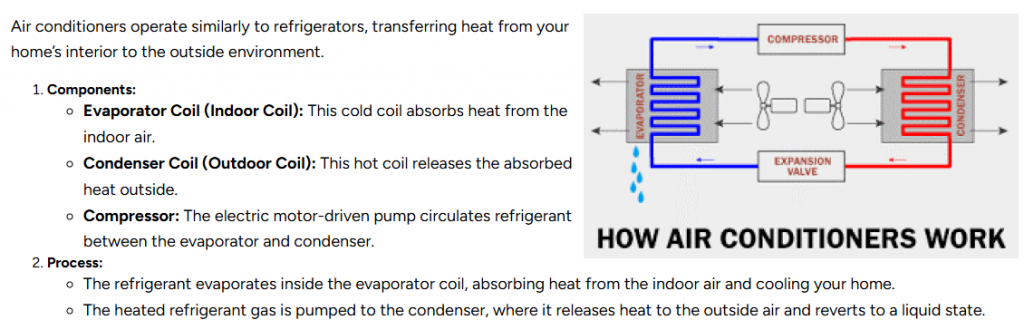
- It works by transferring heat from one place to another using a refrigerant in a vapour-compression cycle.
- It absorbs heat from indoor air via an evaporator, where the refrigerant boils and dehumidifies the air.
- The refrigerant, now a superheated vapour, is compressed—raising its temperature and consuming most of the AC’s power.
- It then releases heat to the outside through the condenser, condenses back into a liquid, and is expanded to a low-pressure mix before returning to the evaporator.
- It is most efficient when the refrigerant operates within its optimal temperature range for heat absorption and release.
Concerns related to low temperatures
- Health experts and international guidelines highlight that temperatures below 18°C are not only uncomfortable but also harmful, increasing risks of hypertension, asthma, respiratory infections, and mental health issues, particularly among the elderly and children.
- Technically, ACs consume the most power during compression, and they operate most efficiently within certain thermal ranges that align with the proposed limits.
- The World Health Organization and various studies have confirmed that indoor temperatures below 18°C can negatively impact cardiovascular and respiratory health, lead to higher cholesterol, lower vitamin D levels, and even contribute to depression and anxiety.
Proposed restriction of Government
- The Restriction was previously proposed in 2018 and 2021, aims to conserve energy and promote public health.
- The new restriction would apply to homes, hotels, and cars.
- The move aims to promote energy efficiency and public health, with India’s AC load projected to hit 200 GW by 2030.
Relevence
- Studies by the Bureau of Energy Efficiency (BEE) show that raising the AC temperature by just 1°C can save about 6% in electricity consumption, and setting ACs at a default temperature of 24°C could save up to 20 billion units annually.
- The proposed restriction supports both energy efficiency and health, making a strong case for regulation.
MISCELLANEOUS:
India’s 1st Silver Notice From Interpol
Syllabus: GS2/ International Agencies
In News
- The Central Bureau of Investigation (CBI) has got India’s first ‘silver notice’ issued by Interpol, which will enable the probe agency to trace proceeds of crime related to the French embassy visa ‘fraud’ case, allegedly parked in different countries.
About Interpol
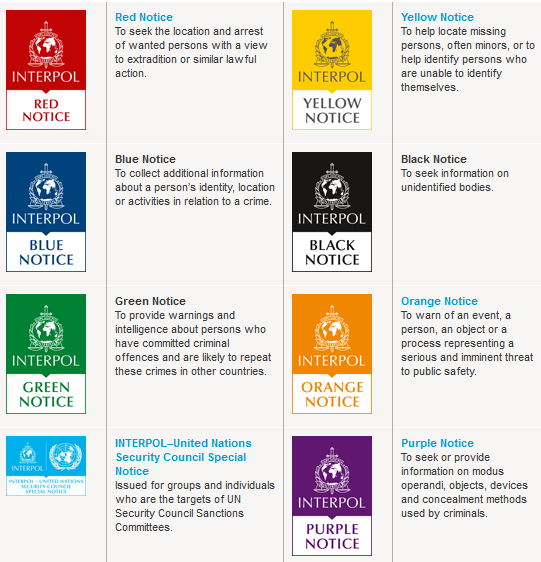
- Origin: Formed as the International Criminal Police Commission (ICPC) at the 2nd International Police Congress, Vienna, 1923.
- Became INTERPOL after the adoption of its Constitution in 1956 during its 25th General Assembly.
- Membership: 196 countries, India is a founding member.
- Headquarters: Lyon, France.
- National Central Bureau (NCB): Every member state has one and India’s NCB is the Central Bureau of Investigation (CBI).
- Organizational Structure: General Assembly (Supreme governing body; meets annually), Executive Committee (supervises execution of General Assembly decisions) & General Secretariat (Permanent staff handling day-to-day operations).
BHARATPOL Portal
- BHARATPOL is a dedicated online portal developed by the Central Bureau of Investigation (CBI).
- It facilitates international police cooperation between Indian law enforcement agencies and INTERPOL.
PM GatiShakti Plan
Syllabus :GS 3/Economy
In News
- The 95th meeting of the Network Planning Group (NPG) under PM Gatishakti was held to evaluate infrastructure projects in metro rail and road, transport and highways and logistics parks.
PM Gati Shakti’ initiative
- It was launched by Prime Minister Narendra Modi in October 2021.
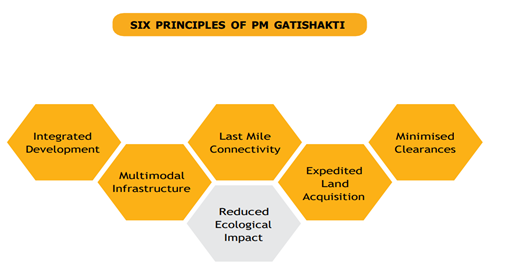
- It is an approach for growth accelerating trustworthy infrastructure through synchronized, holistic, integrated and comprehensive planning based on knowledge, technology and innovation.
- It is a National Master Plan for Multi-modal Connectivity aimed at integrating infrastructure planning and execution across various Ministries and State Governments.
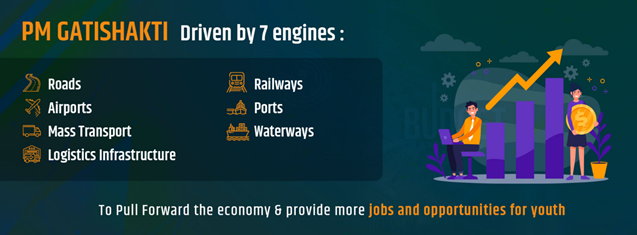
- It coordinates projects related to Railways, Roadways, and other transport modes to enhance seamless connectivity, reduce travel time, and improve last-mile access.
- It integrates major schemes like Bharatmala, Sagarmala, inland waterways, dry/land ports, and UDAN.
RBI Bond Buyback
Syllabus: GS3/ Economy
In News
- The Reserve Bank of India (RBI) recently conducted its second bond buyback auction of the current fiscal (FY26).
What Is a Bond Buyback?
- A buyback is when the RBI, on behalf of the government, repurchases existing government securities (G-Secs) from the market before maturity to infuse durable liquidity into the banking system.
Mayday Call
Syllabus: GS3/ S&T
In News
- An Air India pilot of a London-bound Air India plane has issued a Mayday call to Air Traffic Control (ATC).
What is a Mayday call?
- The term “Mayday” comes from the French phrase m’aider, meaning “help me”.
- A Mayday call is the highest-level radio distress signal used in aviation and maritime communication to indicate a life-threatening emergency. It signals that immediate assistance is required.
- It was introduced in the early 1920s by Frederick Stanley Mockford, a radio officer at Croydon Airport in London.
- It was officially adopted in 1927, alongside the Morse code signal “SOS”.
- According to established conventions, a pilot or a mariner in duress needs to repeat the word three times in a row (Mayday, Mayday, Mayday) to trigger emergency response protocol.
CROPIC
Syllabus: GS3/ Agriculture, Science and Technology
Context
- The Ministry of Agriculture and Farmers Welfare plans to launch CROPIC, a study to gather crop information using field photographs and AI-based models.
What is CROPIC?
- CROPIC stands for Collection of Real Time Observations & Photo of Crops.
- It is an innovative digital initiative aimed at revolutionising how India monitors its crops and assesses losses.
- Implemented by: Ministry of Agriculture and Farmers Welfare
- The study will be carried out for two seasons initially, kharif 2025 and rabi 2025-26.
How Will CROPIC Work?
- Data Collection: Farmers will upload field photographs using a mobile application during different stages of crop growth.
- App Development: The CROPIC mobile app is designed to simplify data entry and enable geo-tagged photo submissions.
- Images will be analysed to determine: Crop type, Crop stage and Extent and type of damage.
- Dashboard: A web-based visualisation dashboard will help officials monitor real-time crop health data.
- The agriculture ministry plans to conduct this study for the Pradhan Mantri Fasal Bima Yojana (PMFBY).
Emperor Penguins
Syllabus :GS 3/Species
In News
- Climate change is causing Antarctic sea ice to melt early, threatening the survival of Emperor Penguins.
Emperor Penguin (Aptenodytes forsteri)
- It breeds at about 54 colonies around Antarctica, with the largest colonies in the Ross Sea and Weddell Sea.
- It is the biggest in the 18 species of Penguin found today, and one of the largest of all birds.
- It is uniquely adapted to survive harsh conditions, with temperatures plunging to a bone-chilling -50°C and winds reaching up to 200 km/h.
- They are threatened by climate change, which reduces sea ice concentration, thickness, and duration, influenced by factors like wind and ocean conditions.
- IUCN Red List Status is Near Threatened
Penguin
- They are a group of aquatic flightless birds. Every year the 25th of April is observed as World Penguin Day.
- Live primarily in the Southern Hemisphere with only one species, the Galapagos penguin, found north of the equator.
Exercise Shakti-2025
Syllabus: GS3/Defence
Context
- The 8th edition of Exercise Shakti-2025, a bilateral joint military exercise between India and France is going to be held at La Cavalerie, France.
About
- Exercise SHAKTI is a biennial Indo-French joint military exercise, launched in 2011. The 7th edition was held in May 2024 in Meghalaya, India.
- The aim of the exercise is to enhance the joint military capability of both sides to undertake multi-domain operations in a sub-conventional scenario under Chapter VII of the United Nations Mandate.
Do you know?
- Exercise VARUNA is a bilateral naval exercise between the Indian Navy and the French Navy.
- Exercise GARUDA is a joint air exercise between the Indian Air Force (IAF) and the French Air and Space Force (FASF).
