
New Chief Secretary Appointed in Manipur Amidst Ongoing Challenges
Syllabus: GS2/ Governance (State Administration, Centre-State Relations); Polity (President’s Rule, Bureaucracy)
In Context
In a significant administrative development, Puneet Kumar Goel (IAS: 1991: AGMUT cadre) has been appointed as the new Chief Secretary of Manipur. The appointment, made by the Appointments Committee of the Cabinet (ACC) on July 16, 2025, comes at a critical juncture for the state, which continues to grapple with prolonged ethnic violence and is currently under President’s Rule. Goel replaces Prashant Kumar Singh (IAS: 1993: Manipur cadre), who has been moved to the position of Secretary, National Commission for Scheduled Tribes (NCST).
Details of the Appointment:
- New Chief Secretary: Puneet Kumar Goel, a 1991-batch Indian Administrative Service (IAS) officer from the Arunachal Pradesh-Goa-Mizoram and Union Territories (AGMUT) cadre. He was previously serving as Secretary, National Commission for Scheduled Tribes (NCST).
- Previous Chief Secretary: Prashant Kumar Singh, a 1993-batch IAS officer of the Manipur cadre. He had taken charge as Chief Secretary in January 2025.
- Inter-Cadre Deputation: Goel’s appointment involves an “inter-cadre deputation” from the AGMUT cadre to the Manipur cadre, with his central deputation tenure being curtailed. He will serve until his superannuation on August 31, 2026.
- Context: This marks the fourth change in the Chief Secretary post in Manipur since ethnic violence erupted in May 2023. The state has been under President’s Rule since February 13, 2025, following the resignation of Chief Minister N. Biren Singh. The imposition of President’s Rule under Article 356(3) of the Constitution typically lasts six months and can be extended with parliamentary approval. A proclamation to extend President’s Rule beyond August 13, 2025, is expected to be tabled in the Monsoon Session of Parliament, which commenced on July 21, 2025.
The Role and Significance of a Chief Secretary
The Chief Secretary is the highest-ranking civil servant in a state’s administrative hierarchy and holds a pivotal position in its governance.
- Principal Advisor to the Chief Minister/Governor: The Chief Secretary serves as the chief advisor to the Chief Minister (or the Governor, during President’s Rule) on all administrative and policy matters.
- Head of the State Secretariat: He/she is the administrative head of the entire state secretariat, overseeing all departments and ensuring smooth functioning.
- Secretary to the Cabinet: The Chief Secretary acts as the ex-officio Secretary to the State Cabinet, coordinating cabinet meetings, preparing agendas, and ensuring the implementation of cabinet decisions.
- Head of State Civil Services: The Chief Secretary is the head of the state civil services, responsible for matters related to postings, transfers, promotions, and overall morale and discipline of IAS and state service officers within the state cadre.
- Chief Coordinator: Plays a crucial role in inter-departmental coordination, resolving conflicts between various ministries and ensuring the cohesive functioning of the government machinery.
- Crisis Manager: In times of emergencies, natural disasters, or law and order situations, the Chief Secretary leads the state’s administrative response, providing guidance and leadership to field officers.
- Interface with Central Government: Acts as the principal channel of communication between the state government and the Central government, particularly concerning centrally sponsored schemes and inter-state matters.
- Residual Legatee: Handles any administrative matter that does not fall under any specific department.
Appointment Process:
The Chief Secretary is chosen by the Chief Minister (with the formal appointment in the Governor’s name) from among the senior IAS officers of the state cadre. The selection is typically based on:
- Seniority: While not strictly based on seniority alone, it is a significant factor.
- Service Record and Merit: The officer’s performance, integrity, and track record are crucial.
- Trust and Confidence: The Chief Minister’s personal trust and confidence in the officer’s abilities are paramount, as the Chief Secretary acts as a close confidant and advisor.
- No Fixed Tenure: Unlike some other positions, the Chief Secretary does not have a fixed tenure, and their term can be extended or curtailed based on the Chief Minister’s discretion, subject to central government approval for extensions beyond superannuation.
Significance of Goel’s Appointment in Manipur:
Goel’s appointment carries significant weight given Manipur’s current challenges:
- Stabilizing Administration under President’s Rule: As Manipur is under President’s Rule, Goel will play a crucial role in assisting the Governor in running the state’s civilian administration, which has been under intense scrutiny due to the ethnic violence.
- Addressing the Crisis: He is the fourth Chief Secretary since the violence erupted, indicating a consistent effort by the Centre to bring in administrative leadership that can effectively manage the crisis, facilitate dialogue, and restore normalcy.
- Bringing External Perspective: An officer from an inter-cadre deputation (AGMUT cadre) might bring a fresh perspective and perhaps perceived neutrality, which could be seen as beneficial in a deeply polarized state.
- Focus on Law and Order and Rehabilitation: The new Chief Secretary will be central to efforts related to restoring law and order, recovery of looted weapons, ensuring movement on national highways, and facilitating the rehabilitation of displaced persons.
The success of Puneet Kumar Goel’s tenure will be closely watched as Manipur navigates a complex period of administrative, political, and social challenges.
BIMSTEC Ports Conclave: Navigating the Future of Maritime Cooperation in the Bay of Bengal
Syllabus: GS2/ International Relations (Regional Groupings, India’s Neighbourhood Policy, Act East Policy); GS3/ Indian Economy (Infrastructure, Trade, Logistics, Blue Economy)
In Context
India recently hosted the 2nd BIMSTEC Ports Conclave in Visakhapatnam, Andhra Pradesh, on July 14-15, 2025. The high-profile event, inaugurated by Union Minister of Ports, Shipping & Waterways Shri Sarbananda Sonowal, brought together ministerial delegations, port authorities, maritime experts, private sector leaders, and regional development partners from all seven BIMSTEC member states. The conclave underscored India’s commitment to fostering deeper maritime collaboration in the Bay of Bengal region, aligning with its ‘Neighbourhood First’ and ‘Act East’ policies.
What is BIMSTEC?
BIMSTEC, or the Bay of Bengal Initiative for Multi-Sectoral Technical and Economic Cooperation, is a regional organization established in 1997 with the signing of the Bangkok Declaration. It serves as a unique bridge connecting South Asia with Southeast Asia.
- Member Countries: BIMSTEC comprises seven member states:
- South Asia: Bangladesh, Bhutan, India, Nepal, Sri Lanka
- Southeast Asia: Myanmar, Thailand
- Significance: The region accounts for 22% of the world’s population and has a combined economy of approximately $5.2 trillion, making it strategically vital for trade, connectivity, and security.
Objectives of the BIMSTEC Ports Conclave
The 2nd BIMSTEC Ports Conclave, themed “Navigating the Future: Blue Economy, Innovation and Sustainable Partnerships,” aimed to:
- Operationalize the BIMSTEC Agreement on Maritime Transport Cooperation (AMTC): This agreement, recently adopted at the 6th BIMSTEC Summit, is a key focus, aiming to facilitate efficient and harmonized maritime trade and transport across the region. India was the first country to ratify this agreement.
- Strengthen Regional Port Connectivity: Enhance port-to-port links, coastal shipping, and multimodal transport corridors to boost intra-regional trade and logistics efficiency.
- Facilitate Dialogue on Sustainable Maritime Practices: Promote green shipping, decarbonization pathways (e.g., green hydrogen integration, shore-to-ship power supply), and sustainable port operations, aligning with the concept of ‘Harit Sagar’ (Green Ports).
- Promote Cruise Tourism: Identify and develop coastal tourism circuits and heritage cruise lines to unlock the region’s vast potential in this sector.
- Enhance Cooperation in Logistics and Skill Development: Discuss smart logistics corridors, port-linked industrial zones, Special Economic Zones (SEZs), and initiatives for upskilling the maritime workforce across member states.
- Attract Strategic Investments: Foster Public-Private Partnerships (PPPs) and private sector investment in maritime infrastructure development across BIMSTEC ports.
- Digital Integration: Advance port digitalization through initiatives like regional Port Community Systems to enhance coordination and efficiency.
- Knowledge Sharing: Serve as a platform for sharing best practices, promoting regional collaboration, and aligning strategic priorities for maritime cooperation.
Key Discussions and Outcomes of the 2nd Conclave:
- Emphasis on Blue Economy: The Conclave heavily emphasized the concept of the Blue Economy, which seeks to balance economic growth from ocean resources with their sustainable use and environmental protection.
- PM Modi’s Vision: Prime Minister Narendra Modi, in a special message, highlighted BIMSTEC’s role in transforming the region into a “seamless economic corridor” driven by modern ports, trade, and logistics.
- India’s Leadership: Union Minister Sarbananda Sonowal reiterated India’s commitment to leading regional maritime cooperation, showcasing national initiatives under the Sagarmala Programme.
- BIMSTEC Centre of Excellence on Sustainable Maritime Transport: India announced its intention to establish this center in Mumbai, under the Indian Ocean Centre of Excellence for Sustainable Maritime Transport (IOCE-SMarT), to serve as a regional hub for research, training, and best practices in green and resilient maritime logistics.
- Accelerating Kaladan Project: Discussions highlighted the Kaladan Multi-Modal Transit Transport Project (connecting Kolkata Port to Sittwe Port in Myanmar, then via inland waterway to Paletwa and road to Mizoram) as a model for regional multimodal connectivity.
- Harmonizing Procedures: The conclave called for efforts to harmonize customs procedures and enhance logistical links to boost intra-regional trade, including discussions on a regional single-window clearance mechanism.
- Focus on Private Investment: Strategies to unlock private investment and infrastructure partnerships across BIMSTEC ports were a key theme, including the proposed creation of a regional PPP facilitation platform.
- Upskilling Maritime Workforce: Recognizing the need for future-ready talent, the conclave stressed cross-border training programs and industry-academia collaboration.
Significance for India and the Region:
- Reinforcing Act East and Neighbourhood First: The Conclave strengthens India’s ‘Act East’ policy, which aims for deeper engagement with Southeast Asia, and its ‘Neighbourhood First’ policy, particularly by improving maritime access for landlocked Bhutan and Nepal through Indian ports.
- Regional Maritime Leadership: By hosting the conclave in Visakhapatnam, a strategically important eastern port, India further asserts its role as a maritime leader in the Bay of Bengal.
- Economic Integration: Enhanced port connectivity and trade facilitation are crucial for boosting economic growth and integration within the BIMSTEC region.
- Security and Stability: Maritime cooperation extends to areas like Maritime Domain Awareness, Humanitarian Assistance and Disaster Relief (HA/DR), and oil pollution response, contributing to the overall security and stability of the Bay of Bengal.
- Countering Geopolitical Competition: India’s proactive engagement in BIMSTEC maritime initiatives helps in mitigating the growing influence of other global powers (e.g., China’s BRI) in the region.
Challenges Ahead:
Despite the positive momentum, several challenges remain in translating the vision into concrete outcomes:
- Infrastructure Asymmetry: Significant disparities exist in port and transport infrastructure among member countries.
- Institutional and Regulatory Divergences: Differing customs regulations, maritime safety standards, and documentation requirements create operational bottlenecks.
- Delayed Ratification of Agreements: While the AMTC has been adopted, its full impact depends on timely ratification by all member states.
- Financial and Capacity Constraints: Smaller BIMSTEC countries may face limitations in financial resources and human capital for large-scale port development and digital upgrades.
- Geopolitical Complexities: The Bay of Bengal is a region of increasing geopolitical interest, and navigating these dynamics requires careful diplomacy.
The BIMSTEC Ports Conclave serves as a vital platform for addressing these challenges and fostering a more connected, resilient, and prosperous Bay of Bengal region through enhanced maritime cooperation.
Share of Clean Energy in India’s Electricity: The Capacity vs. Generation Conundrum
Syllabus: GS3/ Indian Economy (Energy, Infrastructure, Growth & Development); Environment (Climate Change, Renewable Energy); GS2/ Government Policies & Interventions (Energy Security, Sustainable Development Goals)
In Context
India has recently achieved a significant milestone, with approximately 50% of its total installed electricity generation capacity now stemming from non-fossil fuel sources. This accomplishment, reached five years ahead of its 2030 target set under the Paris Agreement, is a testament to the nation’s aggressive push for renewable energy. However, despite this impressive installed capacity, the actual electricity generated from clean sources remains significantly lower, contributing less than 30% of India’s total power supply. This disparity highlights the complex challenges and ongoing transition in India’s energy landscape.
Understanding the Key Terms: Capacity vs. Generation
To fully grasp this divergence, it’s crucial to differentiate between two fundamental concepts in power generation:
- Installed Capacity (or Nameplate Capacity): This refers to the maximum potential power output a plant can produce under ideal operating conditions. It’s the sum of the rated power of all generating units connected to the grid. For example, a solar farm might have an installed capacity of 100 MW, meaning it can generate 100 MW of power when the sun is at its brightest.
- Actual Generation (or Electricity Supplied): This is the amount of electricity actually produced and fed into the grid over a specific period (e.g., a day, a month, a year). It represents the real energy output that powers homes and industries.
The Discrepancy Explained: The Capacity Utilisation Factor (CUF)
The primary reason for the significant gap between installed clean energy capacity and its actual generation share lies in the Capacity Utilisation Factor (CUF), also known as Plant Load Factor (PLF). CUF measures how efficiently a power plant operates over a period, or the ratio of actual energy produced to the maximum possible energy it could produce if it ran at full capacity continuously.
- Intermittency of Renewables:
- Solar Power: Solar panels only generate electricity when the sun is shining. Their CUF in India typically ranges from 20% to 25%. This means a solar plant operates at its maximum potential for only a few hours a day and produces no power at night or significantly less on cloudy days.
- Wind Power: Wind turbines depend on wind speed. Their CUF generally falls between 25% to 35% in India, as wind patterns are variable throughout the day and year.
- High CUF of Conventional Sources (Baseload Power):
- Coal and Nuclear Power: Thermal power plants (primarily coal-fired) and nuclear power plants are designed to provide “baseload” power. This means they can operate continuously and reliably for long periods, providing a stable and predictable supply of electricity. Their CUFs are significantly higher:
- Coal-fired plants often operate at 60% to 80% CUF.
- Nuclear plants can achieve very high CUFs, often exceeding 80% to 90%.
- This continuous operation means that even with a lower installed capacity compared to the total non-fossil fuel capacity, coal plants still contribute a much larger share to the actual electricity generated.
- Coal and Nuclear Power: Thermal power plants (primarily coal-fired) and nuclear power plants are designed to provide “baseload” power. This means they can operate continuously and reliably for long periods, providing a stable and predictable supply of electricity. Their CUFs are significantly higher:
- Hydropower (Large): While large hydropower is a clean, non-fossil fuel source, its generation is dependent on water availability, which can be seasonal. Its contribution to the non-fossil capacity is substantial, but its CUF also varies.
Key Statistics (as of July 2025):
- Total Installed Electricity Capacity: Approximately 484-485 GW.
- Non-Fossil Fuel Installed Capacity: Around 242 GW (just over 50%). This includes:
- Renewable Energy (solar, wind, biomass, small hydro): ~185 GW (Solar: ~116 GW, Wind: ~51 GW)
- Large Hydropower: ~49 GW
- Nuclear Power: ~9 GW
- Thermal (Fossil Fuel) Installed Capacity: Around 242 GW (just under 50%), predominantly coal.
- Actual Electricity Generation Mix:
- Fossil Fuels (primarily coal): Account for ~70-78% of total electricity generated.
- Non-Fossil Fuels (renewables, large hydro, nuclear): Account for ~22-30% of total electricity generated.
Challenges and the Way Forward:
The discrepancy between capacity and generation highlights India’s ongoing energy transition challenges:
- Grid Stability and Integration: The intermittent nature of solar and wind power poses challenges for grid stability. The grid needs to be robust enough to handle fluctuations in renewable supply and ensure continuous power.
- Baseload Requirement: India’s rapidly growing economy and industrial demand require a constant, reliable supply of electricity. Until sufficient large-scale, dispatchable clean energy alternatives (like advanced storage, pumped hydro, or nuclear) are readily available, conventional thermal power continues to be crucial for meeting baseload demand.
- Energy Storage Solutions: To increase the actual generation share of renewables, massive investments in energy storage solutions (e.g., Battery Energy Storage Systems – BESS, Pumped Hydro Storage Projects – PSPs) are critical. These systems can store excess renewable energy during peak generation hours and release it when demand is high or renewable generation is low.
- Flexible Thermal Power: While reducing reliance on coal, existing thermal plants are increasingly being adapted to operate in a more flexible manner to complement intermittent renewables, ramping up and down as needed.
- Smart Grid Technologies: Implementing smart grid technologies, Artificial Intelligence (AI)-driven load management, and demand-side management can optimize the utilization of renewable energy and enhance grid efficiency.
- Policy and Investment: Continued policy support, financial incentives (like Production Linked Incentive – PLI schemes for manufacturing), and attracting significant domestic and foreign investment are crucial for scaling up renewable energy capacity and associated infrastructure.
India’s achievement of 50% non-fossil fuel installed capacity is a significant milestone, demonstrating its commitment to a greener future. The next phase of this energy transition will focus on bridging the gap between installed capacity and actual generation, ensuring a stable, affordable, and truly clean electricity supply for the nation’s growing needs.
Cabinet Approves Pradhan Mantri Dhan-Dhanya Krishi Yojana: A Game-Changer for Agriculture in 100 Districts
Syllabus: GS3/ Indian Economy (Agriculture, Farm Productivity, Rural Development); GS2/ Government Policies & Interventions (Farmers’ Welfare, Inclusive Growth)
In Context
In a significant move aimed at transforming India’s agricultural landscape, the Union Cabinet, chaired by Prime Minister Narendra Modi, on Wednesday, July 16, 2025, approved the “Pradhan Mantri Dhan-Dhanya Krishi Yojana” (PMDDKY). This ambitious scheme, with an annual outlay of ₹24,000 crore, is designed to run for a period of six years, commencing from the financial year 2025-26, and will focus intensively on 100 identified districts across the country to fast-track development in agriculture and allied sectors.
Background and Genesis
The Pradhan Mantri Dhan-Dhanya Krishi Yojana was a key announcement in the Union Budget for 2025-26. It draws inspiration from the successful Aspirational Districts Programme (ADP), which aimed at rapid and effective transformation of 112 underdeveloped districts across various socio-economic indicators. PMDDKY is the first of its kind to focus exclusively on agriculture and allied sectors, applying a similar convergence-driven model.
Key Objectives of Pradhan Mantri Dhan-Dhanya Krishi Yojana (PMDDKY)
The scheme is envisioned as a multi-dimensional rural development intervention with five core objectives:
- Enhance Agricultural Productivity: Improve crop yields through the adoption of modern technology, quality seeds, better land utilization, and efficient farming practices.
- Increase Adoption of Crop Diversification and Sustainable Agricultural Practices: Encourage farmers to grow diverse crops to ensure income stability, promote climate-resilient agriculture, and foster eco-friendly methods like natural and organic farming, along with soil and water conservation.
- Augment Post-Harvest Storage at the Panchayat and Block Levels: Develop robust storage infrastructure, including warehouses and cold chains, to minimize post-harvest losses, improve price realization for farmers, and ensure food security.
- Improve Irrigation Facilities: Expand and modernize irrigation infrastructure, including micro-irrigation and watershed development, to ensure reliable water access, increase crop intensity, and reduce dependence on erratic rainfall.
- Facilitate Availability of Long-term and Short-term Credit: Ensure easier access to institutional credit for farmers, enabling them to invest in modern equipment, quality inputs, and advanced farming techniques, thereby reducing reliance on informal moneylenders.
Key Features and Implementation Strategy
- Targeted Approach: The scheme will initially cover 100 districts identified based on three key parameters:
- Low agricultural productivity
- Low cropping intensity
- Less credit disbursement
- To ensure balanced geographic inclusion, a minimum of one district will be selected from each State/Union Territory. The number of districts per state/UT will be proportional to its share of Net Cropped Area and operational holdings.
- Convergence Model: A defining feature of PMDDKY is its implementation through the convergence of 36 existing schemes across 11 Central Departments/Ministries. This approach aims to avoid duplication of efforts, optimize resource utilization, and ensure holistic development. It will also integrate with State schemes and local partnerships, including the private sector.
- Public-Private Partnerships (PPP): The scheme explicitly promotes local partnerships with the private sector, leveraging their expertise, technology, and investment capacity for faster and more efficient implementation.
- District-Level Planning and Monitoring:
- A comprehensive District Agriculture and Allied Activities Plan will be finalized for each selected district by a “District Dhan Dhaanya Samiti,” which will include progressive farmers as members.
- These district plans will be aligned with national goals, such as crop diversification, water and soil health conservation, and promotion of natural and organic farming.
- Progress will be rigorously monitored on a monthly basis using 117 key Performance Indicators (KPIs) through a dedicated digital dashboard. NITI Aayog will review and guide the district plans, and Central Nodal Officers will also conduct regular reviews.
- Focus on Vulnerable Groups: The scheme will pay special attention to small and marginal farmers, rural women, young farmers, rural youth, and landless families, aiming to improve their economic stability and create local livelihood opportunities.
Expected Impact and Significance
The Pradhan Mantri Dhan-Dhanya Krishi Yojana is poised to deliver a multi-faceted impact:
- Increased Farm Incomes: By enhancing productivity, reducing post-harvest losses, and improving market access, the scheme is expected to significantly boost the income of approximately 1.7 crore farmers in the targeted districts.
- Enhanced Food Security and Self-Reliance: By improving domestic production in low-yield areas, the scheme will contribute to national food security and move towards ‘Atmanirbhar Bharat’ (self-reliant India) in agriculture.
- Sustainable Agriculture: Promotion of crop diversification, climate-resilient practices, and efficient resource management will lead to more sustainable and eco-friendly farming systems.
- Rural Economic Growth and Employment: The scheme aims to address underemployment in agriculture by driving investments, creating new job opportunities in allied sectors (like food processing, storage, logistics), and empowering rural entrepreneurship, thereby reducing distress migration.
- Balanced Regional Development: By focusing on underperforming agricultural districts, the scheme aims to reduce regional disparities and ensure that the benefits of agricultural growth are distributed more equitably across the country.
- Model for Replication: The success in these 100 districts is expected to create a blueprint for future agricultural development efforts across other regions of the country.
The PM Dhan-Dhanya Krishi Yojana represents a strategic shift towards targeted, outcome-oriented agricultural development, aiming to unlock the full potential of India’s farming sector and ensure the prosperity of its farmers.
Artificial Intelligence (AI) Appreciation Day: Recognizing a Transformative Force
Syllabus: GS3/ Science & Technology (Developments in AI, IT); GS2/ Governance (Digital Governance); Ethics (Ethical Use of Technology)
In Context
July 16th is annually celebrated as Artificial Intelligence (AI) Appreciation Day, a global recognition of the profound and rapidly expanding impact of artificial intelligence on various aspects of modern life. In 2025, this day holds particular significance as generative AI, robotics, and intelligent automation continue to reshape how we work, communicate, learn, and innovate. India, in particular, observes this day with a focus on its growing role in the global AI landscape, from tech hubs to rural areas, and its commitment to an “AI for All” vision.
Origin and Purpose of AI Appreciation Day
Artificial Intelligence Appreciation Day was established in May 2021 by A.I. Heart LLC, a company specializing in smart technology. The day was created to:
- Celebrate AI Milestones and Innovations: Acknowledge the remarkable breakthroughs and advancements in AI technology, from its early theoretical foundations in the 1950s to the current era of deep learning and generative AI.
- Raise Awareness of AI Ethics and Governance: Spark crucial conversations around the responsible and ethical development and deployment of AI systems, addressing concerns about bias, transparency, data privacy, and societal impact.
- Promote Education and Responsible Development: Encourage learning about AI, its capabilities, and its implications, inspiring the next generation of AI professionals and fostering a collective understanding of its potential.
- Showcase AI’s Positive Contributions: Highlight how AI is actively supporting humans and improving lives across diverse sectors, making tasks easier, enhancing efficiency, and driving innovation.
Why Celebrate AI in 2025?
In 2025, AI Appreciation Day feels more relevant than ever due to several key factors:
- Ubiquitous Impact Across Industries: AI is no longer a futuristic concept but a tangible part of daily life, transforming almost every sector. From enhancing healthcare diagnostics, personalizing education, optimizing supply chains, and aiding in agricultural practices (e.g., pest detection, soil analysis) to streamlining governance through chatbots and e-courts, AI is driving efficiency and accuracy.
- Rise of Generative AI: The rapid evolution of generative AI tools (like large language models for content creation, code development, and design) is empowering individuals and businesses to be more creative and efficient, fundamentally redefining work processes.
- Ethical Considerations are Paramount: As AI becomes more powerful and pervasive, discussions around AI ethics, bias, fairness, and regulation are at the forefront. Days like AI Appreciation Day serve as a timely reminder to prioritize these vital conversations and ensure AI benefits all of humanity.
- Driving the Future of Work: AI is not just replacing jobs but reshaping them, creating new roles and augmenting human capabilities. It’s allowing humans to focus on tasks requiring creativity, critical thinking, and empathy, while automating mundane or dangerous duties.
- Global Collaboration and Innovation: The day emphasizes the collaborative efforts of researchers, engineers, and visionaries worldwide who are pushing the boundaries of AI technologies.
How is AI Appreciation Day Celebrated?
The celebration of AI Appreciation Day is diverse and spans various activities:
- Conferences and Webinars: Industry leaders, academics, and policymakers participate in events to discuss the latest AI advancements, future trends, and policy frameworks.
- Workshops and Tutorials: Interactive sessions are held to provide hands-on experience with AI tools and techniques, catering to different skill levels, from beginners to advanced users.
- Innovation Showcases: Startups, research institutions, and tech giants present cutting-edge AI projects and products, demonstrating real-world applications in various sectors.
- Online Campaigns: Social media campaigns using hashtags like #AIApreciationDay encourage individuals and organizations to share their insights, experiences, and appreciation for AI.
- Educational Initiatives: People are encouraged to take AI courses, explore generative AI tools, and engage in discussions about the technology. India, for instance, has government programs like the Skill India AI Portal and National AI Skilling Programme to promote AI literacy and training.
- Focus on Ethical AI: Many discussions revolve around ensuring responsible AI development, addressing concerns related to data quality, privacy, cybersecurity, and deepfakes.
- Celebrating AI Talent: The day also acknowledges the contributions of the vast talent pool, including developers, data scientists, and researchers, who are driving AI innovation. India’s growing developer population and its ranking in public generative AI projects on GitHub are highlighted in this context.
As we move deeper into the AI-powered age, Artificial Intelligence Appreciation Day serves as a crucial reminder that while machines are powerful, it is human ingenuity, foresight, and ethical considerations that ultimately shape the future. It’s a day not just to appreciate the technology, but also the collective human effort that guides its development for the betterment of society.
Miscellaneous
West Bank
Syllabus: GS1/Places in News
Context
- The UN warned that mass displacement in the West Bank had hit levels not seen since the start of Israel’s occupation of the Palestinian territory nearly 60 years ago.
West Bank
- The West Bank lies to the west of the Jordan River, bordered by Israel to the west, Jordan to the east, and Jerusalem to the south-west.
- Major cities include Ramallah (administrative capital of the Palestinian Authority), Hebron, Nablus, Jenin, and Bethlehem.
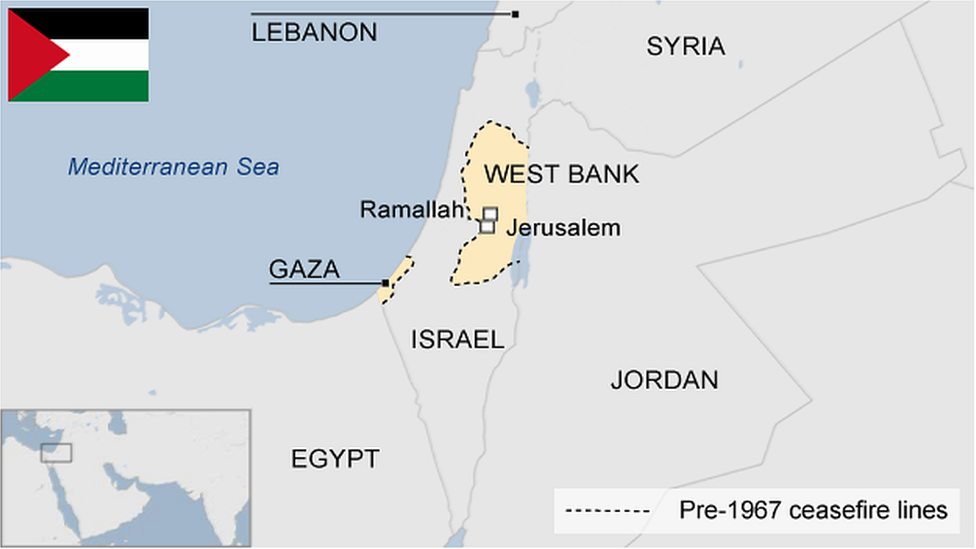
- 1948: After the Arab-Israeli War, the West Bank was occupied and later annexed by Jordan (1949–1967).
- 1967: During the Six-Day War, Israel captured the West Bank from Jordan, and it has remained under varying degrees of Israeli control since.
- 1993–1995 Oslo Accords: These agreements created the Palestinian Authority (PA) and divided the West Bank into three areas:
- Area A: Full Palestinian civil and security control.
- Area B: Palestinian civil control and joint Israeli–Palestinian security.
- Area C: Full Israeli control (about 60% of the West Bank).
Euthanasia
Syllabus :GS 2/Governance
In News
- The Kerala government has decided to allow local bodies to carry out euthanasia of diseased stray dogs by making use of the provisions of the Prevention of Cruelty to Animals (Animal Husbandry Practices and Procedures) Rules 2023.
| Do you know? – Under Section 8 of the Animal Husbandry Rules, euthanasia of an animal is allowed if it is severely diseased and poses a risk of spreading the disease, or if it is mortally or severely injured. – A registered veterinary practitioner must certify that keeping the animal alive would be cruel. |
Euthanasia
- It refers to the practice of an individual deliberately ending their life, oftentimes to get relief from an incurable condition, or intolerable pain and suffering.
- It can be administered only by a physician, and can be either ‘active’ or ‘passive’.
- Active euthanasia involves an active intervention to end a person’s life with substances or external force, such as administering a lethal injection.
- Passive euthanasia refers to withdrawing life support or treatment that is essential to keep a terminally ill person alive
Supreme Courts Observations
- In 2011, the Supreme Court of India allowed passive euthanasia for the first time in the case of Aruna Shanbaug, distinguishing it from active euthanasia and permitting it in certain situations.
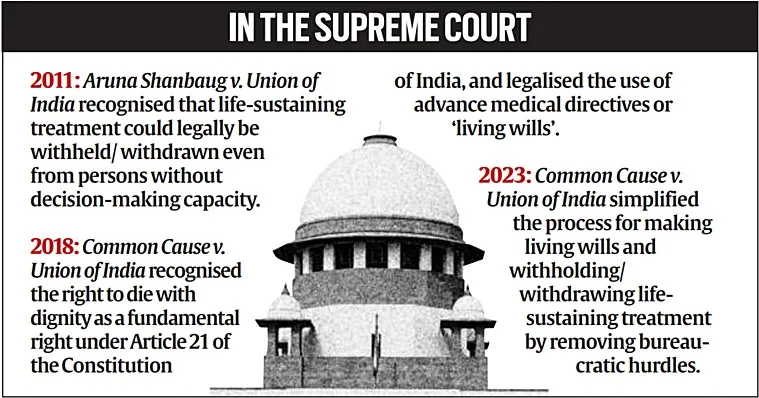
- In 2018, the court further recognized the legality of passive euthanasia for terminally ill patients, affirming the ‘right to die with dignity’ under Article 21 of the Constitution.
- It provided guidelines for withdrawing life support based on advance directives or in their absence.
- The Supreme Court and draft guidelines clarify that withholding or withdrawing life-sustaining treatment, including do-not-resuscitate orders, is legal in India when it no longer benefits the patient or only prolongs suffering.
HIV Pre-exposure Prophylaxis (PrEP)
Syllabus: GS2/ Health
In News
- Generic drugmakers Aurobindo Pharma, Cipla and Viatris will develop, manufacture and supply long-acting injectable cabotegravir (CAB LA) for HIV treatment in 133 countries.
- It builds on the voluntary license for CAB LA for HIV pre-exposure prophylaxis (PrEP).
About Pre-exposure prophylaxis (PrEP)
- It is a preventive strategy where HIV-negative individuals take antiretroviral medication to reduce their risk of acquiring HIV infection.
- PrEP blocks the HIV life cycle, preventing the virus from taking hold and spreading in the body after exposure.
- Forms of PrEP:
- Daily oral pills: Truvada (TDF/FTC) and Descovy (TAF/FTC) are approved options.
- Long-acting injectables: Apretude (cabotegravir) is administered every two months, and Yeztugo every six months.
NATO
Syllabus: GS2/Regional Groupings
Context
- The NATO Secretary said that countries like India, China and Brazil could be hit very hard by secondary sanctions if they continued to do business with Russia.
About
- India and China are the top importers of Russian crude.
- India depends on imports to meet around 88 per cent of its crude oil needs.
- Oil imports from Russia were at 87.4 million tonnes in the financial year 2024-25, accounting for almost 36 per cent of India’s total oil imports of 244 million tonnes.
- Prior to the war in Ukraine, Russia’s share in India’s oil import basket was less than 2 per cent.
About NATO
- NATO, or the North Atlantic Treaty Organization, is a military alliance of countries.
- Establishment: It was founded in 1949 with the signing of the North Atlantic Treaty, more popularly known as the Washington Treaty.
- Aim: To ensure the security and defense of its member countries through collective defense.
- Founding Members: The original members of NATO were Belgium, Canada, Denmark, France, Iceland, Italy, Luxembourg, the Netherlands, Norway, Portugal, the United Kingdom, and the United States.
- Collective Defense: The cornerstone of NATO is Article 5 of the North Atlantic Treaty, which states that an armed attack against one or more of its members is considered an attack against all members.
- Decision-Making: Decisions within NATO are made on the basis of consensus among member countries.
- The North Atlantic Council, which includes the ambassadors of all member countries, is the principal political decision-making body.
- Members: It has 32 member countries, Finland and Sweden became the 31st and 32nd members respectively.
- On signing the Treaty, countries voluntarily commit themselves to participating in the political consultations and military activities of the Organization.
