
Topic 1: Governance & Hung Assembly in Tamil Nadu (Polity / Regional)
Syllabus
- GS Paper 2: Appointment to various Constitutional posts, powers, functions and responsibilities of various Constitutional Bodies; State Legislature.
Context
On May 8, 2026, Tamil Nadu faced a historic political situation as the assembly election results led to a Hung Assembly. The Tamilaga Vettri Kazhagam (TVK) emerged as the single largest party but fell short of a majority, prompting outgoing CM M.K. Stalin to urge the Governor for immediate steps in government formation.
Main Body: Multi-Dimensional Analysis
- Constitutional Discretion of the Governor: In a hung assembly, the Governor’s role becomes pivotal under Article 163. The Governor must decide whom to invite first—the leader of the single largest party or a pre-poll/post-poll alliance leader.
- Coalition Dynamics: TVK, led by Vijay, secured unconditional support from the Left parties (CPI and CPM) and Congress on May 8, bringing them closer to the majority mark.
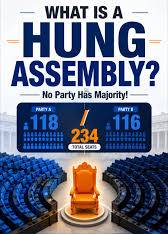
- The Floor Test Precedent: According to the S.R. Bommai case (1994), the majority must be proved on the floor of the House, not at the Governor’s residence (Raj Bhavan).
- Democratic Stability: The delay in appointing a Chief Minister can lead to administrative paralysis. Protests erupted in Chennai on May 8, demanding the Governor invite the single largest entity to prove its majority.
Positives, Negatives, & Government Schemes
| Dimension | Details |
| Positives | Reflects a diverse mandate; forces parties to build consensus and inclusive policies. |
| Negatives | Risk of political instability, “horse-trading,” and delayed policy implementation. |
| Associated Articles | Article 163 (Discretionary powers), Article 174 (Dissolution), Article 356 (President’s Rule). |
Topic 2: Enhanced Strategic Partnership with Vietnam (International Relations)
Syllabus
- GS Paper 2: Bilateral, regional and global groupings and agreements involving India and/or affecting India’s interests.
Context
On May 7, 2026, India and Vietnam elevated their relationship to an “Enhanced Comprehensive Strategic Partnership” during a high-level diplomatic visit, focusing on maritime security and digital economy.
Main Body: Multi-Dimensional Analysis
- Strategic Defense Ties: India extended a $500 million defense credit line to Vietnam for maritime security. This is crucial for Vietnam’s capabilities in the South China Sea.
- Indo-Pacific Oceans Initiative (IPOI): Vietnam officially joined the IPOI, aligning with India’s vision of a free, open, and inclusive Indo-Pacific region.
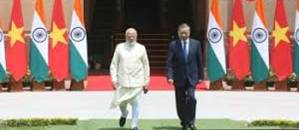
- Digital Public Infrastructure (DPI): An MoU was signed between the RBI and the State Bank of Vietnam to integrate QR-based cross-border payments, similar to the UPI model.
- Supply Chain Resilience: Both nations agreed to cooperate on rare earth minerals and semiconductor supply chains to reduce dependency on a single geographic source.
Positives, Negatives, & Government Schemes
| Dimension | Details |
| Positives | Strengthens “Act East Policy,” boosts defense exports, enhances regional maritime stability. |
| Negatives | Potential diplomatic friction with China due to increased naval cooperation in contested waters. |
| Associated Initiatives | Act East Policy, SAGAR (Security and Growth for All in the Region), IPOI. |
Topic 3: Expansion of Supreme Court Bench Strength (Polity / Judiciary)
Syllabus
- GS Paper 2: Structure, organization and functioning of the Judiciary.
Context
The Union Cabinet on May 7, 2026, approved the Supreme Court (Number of Judges) Amendment Bill, 2026, to increase the sanctioned strength of judges from 33 to 37 (excluding the CJI).
Main Body: Multi-Dimensional Analysis
- Addressing Judicial Pendency: With over 80,000 cases pending in the Supreme Court, increasing the bench strength is a functional necessity to ensure the “Right to Speedy Justice.”
- Constitutional Benches: More judges allow for the simultaneous functioning of multiple Constitution Benches to settle complex legal questions without halting regular appeals.
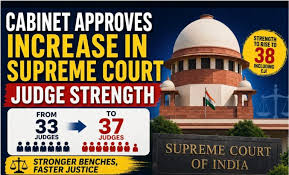
- Infrastructure Challenges: While the number of judges increases, there is a parallel need for courtrooms, digital infrastructure, and research assistants to support them.
- Appointment Process: The expansion puts the spotlight back on the Collegium system and the need for timely recommendations and government clearances to fill these new vacancies.
Positives, Negatives, & Government Schemes
| Dimension | Details |
| Positives | Reduces case backlog, allows for specialized benches (Tax, Criminal, Civil). |
| Negatives | Mere increase in numbers without procedural reform (like a National Judicial Appointments Commission) may not solve systemic delays. |
| Associated Laws | Article 124(1) (Parliament’s power to increase judge count). |
Topic 4: ISM 2.0 & New Semiconductor Units (Economy / Technology)
Syllabus
- GS Paper 3: Changes in industrial policy and their effects on industrial growth.
Context
On May 7, 2026, the Union Cabinet approved two major semiconductor projects worth ₹3,936 crore under the India Semiconductor Mission (ISM) 1.0/2.0, including the country’s first commercial Gallium Nitride (GaN) technology-based facility.
Main Body: Multi-Dimensional Analysis
- Technological Leap: The focus on GaN technology (mini/micro-LEDs) positions India in the high-end display market, moving beyond basic assembly.
- Self-Sufficiency Goals: Under ISM 2.0, the government aims to achieve 70-75% semiconductor self-sufficiency by 2029.
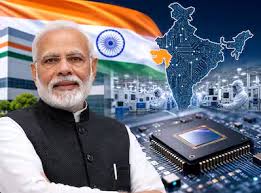
- Strategic Autonomy: By securing the “packaging and testing” (OSAT) segment through new units in Gujarat and Odisha, India reduces its vulnerability to global supply chain shocks.
- Job Creation: These two units alone are expected to generate over 2,200 high-skilled engineering jobs, fostering a specialized ecosystem.
Positives, Negatives, & Government Schemes
| Dimension | Details |
| Positives | Attracts FDI, boosts high-tech exports, reduces electronic import bill. |
| Negatives | High capital intensity; requires massive, uninterrupted water and power supply. |
| Associated Schemes | India Semiconductor Mission (ISM), PLI for IT Hardware, SPECS. |
Topic 5: Procurement of GBMES for Indian Army (Defence)
Syllabus
- GS Paper 3: Indigenization of technology and developing new technology; Security challenges and their management in border areas.
Context
The Ministry of Defence signed a ₹1,476 crore contract with Bharat Electronics Limited (BEL) on May 7, 2026, for five Ground-Based Mobile Electronic Systems (GBMES).
Main Body: Multi-Dimensional Analysis
- Electronic Warfare (EW) Capabilities: The GBMES is designed for signal intelligence and electronic countermeasures, crucial for modern “silent” battlefields where jamming enemy communications is key.
- Buy Indian-IDDM: The contract falls under the highest priority procurement category, requiring at least 72% indigenous content.
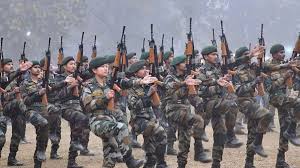
- Modernization of IA: These systems will replace aging EW equipment, providing the Army with better situational awareness and the ability to intercept sophisticated digital transmissions.
- Border Management: Specifically designed for rugged terrains, these mobile units are critical for monitoring activities across the Line of Control (LoC) and Line of Actual Control (LAC).
Positives, Negatives, & Government Schemes
| Dimension | Details |
| Positives | Promotes ‘Atmanirbhar Bharat’ in defense; enhances tactical superiority in electronic warfare. |
| Negatives | Rapid technological obsolescence in EW requires constant software and hardware upgrades. |
| Associated Initiatives | Defence Acquisition Procedure (DAP) 2020, Positive Indigenisation Lists. |
Topic 6: NITI Aayog Report on School Education Reforms (National Issues / Education)
Syllabus
- GS Paper 2: Issues relating to development and management of Social Sector/Services relating to Education.
Context
On May 8, 2026, NITI Aayog released a comprehensive report analyzing a decade of India’s school education (2014-2025), providing a roadmap for Viksit Bharat @2047.
Main Body: Multi-Dimensional Analysis
- Quality vs. Access: While India has achieved near-universal enrollment, the report highlights a “Learning Crisis” where outcomes in reading and math remain stagnant.
- Infrastructure Gap: 20% of rural schools still lack functional computer labs, hindering the implementation of the National Education Policy (NEP) 2020 goals.
- Equity and Inclusivity: The report notes a decline in crime against SC/ST students in schools but calls for better mental health screening under the RBSK 2.0 guidelines.
- Teacher Training: Recommends a shift from rote-learning training to “AI-assisted pedagogical tools” to help teachers manage large, diverse classrooms.
Positives, Negatives, & Government Schemes
| Dimension | Details |
| Positives | Data-driven roadmap; focus on early childhood care and education (ECCE). |
| Negatives | Significant inter-state disparities in learning outcomes (South vs. North). |
| Associated Schemes | Samagra Shiksha, PM-SHRI, Rashtriya Bal Swasthya Karyakram (RBSK) 2.0. |
Topic 7: NCRB Report: Rising Cybercrime & Declining Traditional Crime (National Issues / Security)
Syllabus
- GS Paper 3: Challenges to internal security through communication networks, role of media and social networking sites in internal security challenges, basics of cyber security.
Context
The latest data released on May 7, 2026, shows that while overall cognizable crimes in India declined by 6%, cybercrime rose by 17.9%.
Main Body: Multi-Dimensional Analysis
- Shifting Crime Patterns: Traditional crimes (theft, physical assault) are decreasing, but financial frauds and online scams are surging as India goes digital.
- Demographic Vulnerability: Cybercrimes are no longer limited to urban areas; rural populations are increasingly targeted due to low digital literacy.
- Crimes Against the State: Cases under the “Prevention of Damage to Public Property Act” rose by 6.6%, indicating lingering issues with internal public order.
- Institutional Gaps: The report highlights massive pendency in cyber labs and a low conviction rate for online frauds due to the cross-jurisdictional nature of digital crimes.
Positives, Negatives, & Government Schemes
| Dimension | Details |
| Positives | Decline in crimes against SCs/STs; better reporting through digital portals. |
| Negatives | Rapidly growing digital vulnerability; shortage of trained cyber-policing personnel. |
| Associated Agencies | I4C (Indian Cyber Crime Coordination Centre), NCRB. |
Topic 8: India’s Shifting Energy Basket & Oil Imports (Economy)
Syllabus
- GS Paper 3: Indian Economy; Infrastructure: Energy.
Context
Economic data released on May 7, 2026, highlights that Russia now accounts for 36% of India’s crude oil imports, a massive shift from just 2% in 2022.
Main Body: Multi-Dimensional Analysis
- Tactical Flexibility: India successfully diversified its import basket (Russia, Iraq, UAE, USA) to leverage discounted prices during global conflicts.
- Strategic Chokepoint Risks: With 45% of imports passing through the Strait of Hormuz, recent tensions there have necessitated naval escorts (Operation Sankalp).
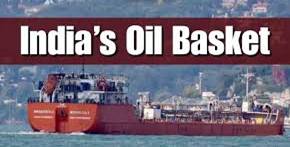
- Structural Risks: Domestic production remains stagnant at around 28.7 million metric tons, keeping India 85%+ dependent on imports.
- Energy Transition: While oil demand remains high (projected 6 mb/d by 2026), the shift to EVs is creating a new dependency on critical minerals like lithium and cobalt.
Positives, Negatives, & Government Schemes
| Dimension | Details |
| Positives | Lowered inflation (compared to global averages) due to discounted crude; successful energy diplomacy. |
| Negatives | High sensitivity to currency fluctuations; new “Green Energy” import dependencies. |
| Associated Initiatives | Operation Sankalp, Strategic Petroleum Reserves (SPR), FAME Scheme. |
Conclusion
The events of May 7 and 8, 2026, underscore a nation in transition. From the political uncertainty of a hung assembly in Tamil Nadu to the strategic high-tech push in semiconductors and defense, India is balancing internal democratic complexity with the external pursuit of “Strategic Autonomy.”
Practice Mains Question:
“The rising trend of cybercrime and the strategic vulnerability of maritime chokepoints present a dual challenge to India’s internal and external security.” Discuss in the light of recent developments. (250 words)
