
Topic 1: Tamil Nadu Political Transition & Formation of First Coalition Government
Syllabus
- GS Paper 2: Indian Constitution—Appointment of Chief Minister, Role of Governor, Coalition Politics, Article 164.
Context
In a historic shift in Tamil Nadu’s political landscape, Governor Rajendra Vishwanath Arlekar appointed C. Joseph Vijay, president of the Tamilaga Vettri Kazhagam (TVK), as the Chief Minister-designate today. This marks the state’s first formal coalition government since 1952.
Main Body: Multi-Dimensional Analysis
- Constitutional Mandate: The Governor acted under Article 164, inviting the leader of the single largest party following a hung assembly. The Governor has directed a vote of confidence to be held on or before May 13, 2026.
- Coalition Dynamics: Breaking a decades-old tradition of single-party rule, the Congress party and other smaller outfits like VCK and IUML have extended support. This creates a new power-sharing model in a state historically dominated by monolithic Dravidian majors.

- Federal Implications: Outgoing CM M.K. Stalin urged the new administration to ensure the continuity of welfare schemes, highlighting the importance of administrative stability during a democratic transition.
- Legal Challenges: Petitions have already reached the Supreme Court regarding the Governor’s “duty-bound” obligation to invite the single largest party, underscoring the tension between gubernatorial discretion and democratic norms.
Positives, Negatives, & Government Schemes
| Dimension | Details |
| Positives | Reflects a diverse mandate; promotes consensus-based governance; breaks political stagnation. |
| Negatives | Potential for policy paralysis due to conflicting interests of alliance partners; risk of instability in a hung house. |
| Associated Laws | Article 164 of the Constitution, Anti-Defection Law (10th Schedule), Sarkaria Commission Recommendations. |
Way Forward
- Draft a Common Minimum Programme (CMP) to align the ideologies of the TVK and Congress-led coalition.
- Strengthen the role of the State Cabinet to ensure that smaller alliance partners have a meaningful voice in policy implementation.
Conclusion
The transition on May 9, 2026, marks the end of “bi-polar” dominance in Tamil Nadu, ushering in an era of multi-party cooperation that will test the resilience of the state’s legislative framework.
Topic 2: Appointment of New Chief of Defence Staff (CDS)
Syllabus
- GS Paper 3: Role of Civil Services in a Democracy, Various Security Forces and Agencies, Defence Reforms.
Context
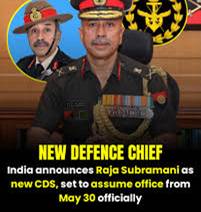
The Government of India today announced the appointment of Lieutenant General NS Raja Subramani (Retd) as the new Chief of Defence Staff (CDS), filling the critical vacancy in the nation’s highest military office.
Main Body: Multi-Dimensional Analysis
- Institutional Continuity: The CDS serves as the permanent Chairman of the Chiefs of Staff Committee and the principal military advisor to the Defence Minister. This appointment is crucial for the ongoing “Theaterisation” drive.
- Strategic Integration: The new CDS is tasked with synchronizing the logistics, transport, and training across the Army, Navy, and Air Force to prepare for multi-domain modern warfare.
- Atmanirbharta in Defence: A key mandate for the incoming CDS is to accelerate the induction of indigenous platforms like the ‘Zorawar’ light tanks and ‘TARA’ glide weapons into active service.
- Geopolitical Resilience: In light of the 2026 “Project Freedom” analysis of the Strait of Hormuz crisis, the CDS will play a pivotal role in securing India’s maritime and energy interests in the Indo-Pacific.
Positives, Negatives, & Government Schemes
| Dimension | Details |
| Positives | Unified military advice to political leadership; enhanced inter-service synergy; streamlined procurement. |
| Negatives | Potential friction between the CDS office and individual Service Chiefs over operational control. |
| Associated Schemes | Department of Military Affairs (DMA), Theater Commands Initiative, Agnipath Scheme. |
Way Forward
- Expedite the creation of Integrated Battle Groups (IBGs) to enhance border response times.
- Focus on “Cyber and Space Commands” to address non-kinetic threats from regional adversaries.
Conclusion
The appointment of a new CDS is a strategic necessity for India to move away from legacy “silo-based” structures toward a lean, technologically advanced, and integrated fighting force.
Topic 3: Supreme Court Critique on Election Commission Appointment Law
Syllabus
- GS Paper 2: Appointment to various Constitutional posts, Separation of Powers, Judiciary vs. Executive.
Context
The Supreme Court today intensified its scrutiny of the Chief Election Commissioner and Other Election Commissioners Act, 2023, describing the delay in creating a truly independent secretariat as a potential “tyranny of the elected.”
Main Body: Multi-Dimensional Analysis
- Judicial Intervention: The court is revisiting the Anoop Baranwal ruling (2023), questioning if the current selection panel (PM, Cabinet Minister, and LoP) restores executive dominance by removing the Chief Justice of India.
- Institutional Independence: The bench emphasized that the EC requires financial and administrative autonomy from the Law Ministry to conduct “free and fair” elections without executive pressure.
- Transparency in Selection: The two-stage process—a search committee followed by a selection committee—is being critiqued for lack of public criteria in shortlisting candidates.
- Constitutional Democracy: The case highlights the “Separation of Powers” doctrine, where the judiciary seeks to ensure that the “referee” of democracy (the ECI) is not chosen solely by the “players” (the ruling party).
Positives, Negatives, & Government Schemes
| Dimension | Details |
| Positives | Encourages institutional reform; ensures public trust in the electoral process. |
| Negatives | Creates executive-judicial friction; could lead to legislative-judiciary standoffs over policy-making. |
| Associated Laws | Article 324, CEC and Other ECs Act 2023, Model Code of Conduct. |
Way Forward
- Establish an independent secretariat for the ECI with its own budget, similar to the Lok Sabha or Rajya Sabha secretariats.
- Reconsider the inclusion of a judicial member or a neutral eminent citizen in the selection panel to ensure a 1:1:1 balance.
Conclusion
The ongoing debate over EC appointments is a litmus test for India’s constitutional health, emphasizing that the independence of democratic institutions must be both actual and perceived.
Topic 4: NITI Aayog Report on ‘Cylindrical Schooling’ and Student Retention
Syllabus
- GS Paper 2: Issues relating to development and management of Social Sector/Services relating to Education.
Context
NITI Aayog today released a comprehensive report flagging low student retention and the “Pyramid Problem” in Indian education, recommending a shift to a “Cylindrical Schooling Model.”
Main Body: Multi-Dimensional Analysis
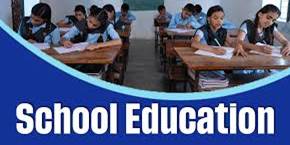
- The Pyramid Problem: Currently, India has high primary enrollment but sharp dropouts after elementary education. The “Pyramid” needs to become a “Cylinder” where every child entering Grade 1 completes Grade 12.
- Composite Schools: The report suggests merging small, fragmented schools into “Composite Schools” (Grades 1–12 under one roof) to reduce transitions that often trigger dropouts.
- Learning Outcomes: Flags that “textbook completion” is being prioritized over “foundational learning,” leading to a crisis where students reach higher grades without basic literacy.
- AI Integration: Proposes a “Sushikshit Bharat Abhiyaan” with balanced AI integration to provide personalized remedial learning for students at risk of falling behind.
Positives, Negatives, & Government Schemes
| Dimension | Details |
| Positives | Reduces infrastructure gaps; optimizes teacher utilization; supports smoother academic progression. |
| Negatives | Challenges in transporting students from remote areas to centralized “composite” hubs. |
| Associated Schemes | Samagra Shiksha, National Education Policy (NEP) 2020, NIPUN Bharat. |
Way Forward
- Prioritize teacher reforms and training in foundational numeracy rather than just digital infrastructure.
- Use UDISE+ data to track individual student “at-risk” markers in real-time to prevent dropouts.
Conclusion
Moving toward a cylindrical education model is essential for India to reap its demographic dividend, ensuring that enrollment translates into actual human capital.
Topic 5: Successful Trial of ‘TARA’ Glide Weapon & Air Power Indigenisation
Syllabus
- GS Paper 3: Science and Technology—developments and their applications, Defence R&D.
Context
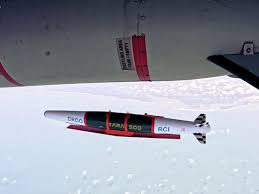
DRDO and the Indian Air Force (IAF) today successfully conducted the maiden flight trial of TARA (Tactical Advanced Range Augmentation), an indigenous glide weapon, off the Odisha coast.
Main Body: Multi-Dimensional Analysis
- Precision-Guided Warfare: TARA is a low-cost, stand-off weapon that allows aircraft to strike targets from a distance without entering the range of enemy air defenses.
- Avionics & Guidance: The weapon integrates indigenous INS/GPS guidance systems, proving India’s capability in sophisticated guidance and navigation technology.
- Aerial Modernisation: It fills a critical gap in the IAF’s inventory for precision munitions that can be mass-produced locally, reducing the cost of aerial warfare.
- Strategic Deterrence: Successful trials of such “glide bombs” enhance India’s tactical options in localized border skirmishes where full-scale missile usage might be escalatory.
Positives, Negatives, & Government Schemes
| Dimension | Details |
| Positives | Low-cost alternative to missiles; reduces aircrew risk; boosts domestic aerospace ecosystem. |
| Negatives | Limited range compared to cruise missiles; performance is highly dependent on launch altitude and speed. |
| Associated Schemes | Atmanirbhar Bharat in Defence, Innovations for Defence Excellence (iDEX). |
Way Forward
- Integrate TARA with frontline fighters like the Tejas Mk1A and Rafale.
- Develop extended-range variants with propulsion systems for varied tactical scenarios.
Conclusion
TARA’s success marks a milestone in India’s journey toward becoming a global hub for cost-effective, high-precision defense equipment.
Topic 6: The Strait of Hormuz Crisis & India’s Energy Diplomacy
Syllabus
- GS Paper 2: International Relations—Effect of policies and politics of developed and developing countries on India’s interests.
Context
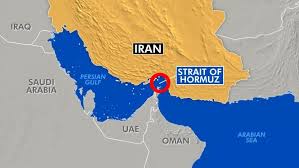
A major geopolitical standoff in the Strait of Hormuz today, following the rejection of a US-backed draft resolution by regional powers, has sent global oil prices surging, impacting the Indian economy.
Main Body: Multi-Dimensional Analysis
- Maritime Chokepoint: The Strait handles nearly 20% of global oil trade. For India, which depends heavily on Middle Eastern imports, any disruption triggers immediate fiscal instability and inflation.
- Energy Security: The crisis highlights the vulnerability of India’s energy supply chains, necessitating a faster transition to strategic oil reserves and alternative trade routes.
- Diaspora Safety: With a massive Indian population in the Gulf, the crisis raises the need for “contingency evacuation plans” and high-level diplomatic engagement.
- Geopolitical Balancing: India must navigate between its strategic partnership with the US and its crucial energy ties with West Asian nations to maintain “Strategic Autonomy.”
Positives, Negatives, & Government Schemes
| Dimension | Details |
| Positives | Accelerates India’s push for “Green Hydrogen” and renewables; strengthens ties with non-Hormuz suppliers like Russia and Brazil. |
| Negatives | Severe inflation risks; rupee depreciation; potential evacuation costs for the diaspora. |
| Associated Laws/Concepts | UNCLOS, Strategic Petroleum Reserves (SPR), India-Middle East-Europe Economic Corridor (IMEC). |
Way Forward
- Diversify oil import sources to West Africa and the Americas to reduce “chokepoint dependency.”
- Strengthen the Indian Navy’s “Mission Based Deployments” to ensure safe passage for Indian-flagged tankers.
Conclusion
The Hormuz crisis is a stark reminder that India’s domestic economic stability is deeply intertwined with maritime security and proactive energy diplomacy.
Topic 7: NCRB Report on Organized Cybercrime Hubs
Syllabus
- GS Paper 3: Challenges to internal security through communication networks, Role of media and social networking sites in internal security challenges.
Context
The National Crime Records Bureau (NCRB) today released its “Crime in India 2024-25” report, highlighting the rise of institutionalized cybercrime hubs in Mewat and Jamtara and their threat to critical infrastructure.
Main Body: Multi-Dimensional Analysis
- Institutionalised Fraud: Cybercriminals are increasingly using “mule accounts” and forged SIMs to create complex financial layers, making it harder for police to trace the “money trail.”
- Critical Infrastructure Risk: The report noted over 68 lakh attack attempts on power grids and telecom systems during the recent election cycle, indicating state-sponsored or organized sabotage.

- AI-Enabled Crime: Deepfakes and AI-driven phishing are now standard tools for large-scale disruption, moving cybercrime from individual theft to “national security threats.”
- CCTNS Gaps: While the Crime and Criminal Tracking Network & Systems (CCTNS) connects 15,000+ stations, the report flags a lack of specialized cyber-forensic training at the constable level.
Positives, Negatives, & Government Schemes
| Dimension | Details |
| Positives | Data-driven policing allows for targeted crackdowns; increases public awareness about digital hygiene. |
| Negatives | Low conviction rates in cybercrime; rapid evolution of hacker tactics outpaces legislation. |
| Associated Schemes | Cyber Surakshat Bharat, Indian Cyber Crime Coordination Centre (I4C), CCTNS. |
Way Forward
- Amend the IT Act to provide stricter penalties for those hosting “Cybercrime hubs.”
- Establish “Cyber-Police Stations” in every district with dedicated digital forensic labs.
Conclusion
Cybersecurity is no longer a niche IT issue; it is a frontline internal security challenge that requires a holistic, technology-first policing strategy.
Topic 8: Bi-Parental Healthcare: Shifting Focus to Paternal Health
Syllabus
- GS Paper 2: Issues relating to development and management of Social Sector/Services relating to Health.
Context
A new National Health Mission (NHM) directive today called for a shift from “Maternal-Centric” care to a “Bi-Parental Healthcare” approach, citing rising male infertility and environmental toxins.
Main Body: Multi-Dimensional Analysis
- Breaking the Weismann Barrier: Modern science shows that paternal health and lifestyle choices (smoking, obesity, toxin exposure) directly impact fetal health, challenging the old theory that only maternal cells transmit environmental information.
- Policy Design: Existing programs like Antenatal Care (ANC) focus almost entirely on women. The new directive suggests systematic screening for prospective fathers to improve overall birth outcomes.
- Environmental Impact: Growing exposure to endocrine disruptors (plastics, pesticides) is significantly lowering sperm counts in Indian urban populations, necessitating a public health intervention.
- Gender Dynamics: The policy aims to involve men more actively in reproductive responsibility, moving them from “passive observers” to “active participants” in family health.
Positives, Negatives, & Government Schemes
| Dimension | Details |
| Positives | Improves national health metrics; reduces neonatal complications; promotes gender-equal parenting. |
| Negatives | Difficulty in changing long-standing cultural mindsets; requires retraining healthcare workers. |
| Associated Schemes | National Health Mission, Pradhan Mantri Surakshit Matritva Abhiyan (PMSMA) – Expansion. |
Way Forward
- Introduce “Preconception Counseling” for couples instead of only women.
- Invest in large-scale longitudinal studies on paternal health impacts in the Indian context to build data-driven policies.
Conclusion
A bi-parental approach recognizes that a healthy generation requires a holistic focus on both parents, bridging the gap between biological reality and public policy.
Practice Mains Question
“The transition to coalition governance in Tamil Nadu and the restructuring of national defense leadership represent a pivotal shift in India’s political and security architecture.” Analyze this statement in the context of events occurring on May 9, 2026. (250 words)
