
Topic 1: Strategic Deployment of ‘Varuna-II’ Autonomous Undersea Vehicles (AUVs)
Subject: Defence & Security
Syllabus
- GS Paper 3: Role of external state and non-state actors in creating challenges to internal security. Science and Technology—developments and their applications.
Context
The Indian Navy officially inducted the ‘Varuna-II’ class of indigenously developed Autonomous Undersea Vehicles (AUVs) into the Eastern Naval Command today to bolster maritime domain awareness in the Bay of Bengal.
Main Body: Multi-Dimensional Analysis
- Technological Sovereignty: Represents a breakthrough in “Deep Ocean Mission” technologies, featuring AI-driven sonar mapping that operates without GPS at depths of up to 3,000 meters.
- Strategic Deterrence: Enhances India’s “Anti-Access/Area Denial” (A2/AD) capabilities against foreign submarine incursions in the Indian Ocean Region (IOR).

- Operational Efficiency: Reduces the risk to human divers in mine-clearing operations and provides real-time data for “Sea Lines of Communication” (SLOC) security.
- Economic Advantage: Indigenous production through a Public-Private Partnership (PPP) has reduced acquisition costs by 40% compared to imported Western alternatives.
- Environmental Monitoring: Beyond combat, these AUVs are equipped with sensors to monitor coral reef health and underwater tectonic shifts.
Positives, Negatives, & Government Schemes
| Dimension | Details |
| Positives | Enhanced sub-surface surveillance, boost to ‘Atmanirbhar Bharat’ in defence, high-endurance monitoring. |
| Negatives | High initial maintenance costs for sensor arrays, vulnerability to cyber-hijacking/electronic warfare. |
| Associated Schemes | Deep Ocean Mission, iDEX (Innovations for Defence Excellence), SAGAR Initiative. |
Topic 2: Tamil Nadu’s Global Semi-Conductor Design Policy 2026
Subject: Economy & State Governance
Syllabus
- GS Paper 2: Government policies and interventions for development.
- GS Paper 3: Indian Economy and issues relating to planning, mobilization of resources, and growth.
Context
The Government of Tamil Nadu launched its “Global Semi-Conductor Design & Talent Policy 2026” on May 11, aiming to capture 25% of India’s chip design market by 2030.
Main Body: Multi-Dimensional Analysis
- Fiscal Incentives: The policy offers a 50% capital subsidy on EDA (Electronic Design Automation) tools for startups based in Chennai and Hosur.
- Knowledge Hub Creation: Mandates the establishment of “Chip-Design Labs” in top state universities to bridge the industry-academia gap.
- Diversification of Industry: Shifts Tamil Nadu’s image from “Detroit of Asia” (Automobiles) to a high-tech electronics value-addition hub.

- Global Supply Chain Integration: Aims to attract “Fabless” companies from Taiwan and the US, providing an alternative to the China-plus-one strategy.
- Employment Generation: Targeted to create 50,000 high-paying engineering jobs within the next four years.
Positives, Negatives, & Government Schemes
| Dimension | Details |
| Positives | Massive boost to State GDP, high-skill job creation, reduces national reliance on chip imports. |
| Negatives | Intense competition from Karnataka and Gujarat, high electricity and water requirements for related infrastructure. |
| Associated Schemes | India Semiconductor Mission (ISM), PLI 2.0 for Electronics, Naan Mudhalvan Scheme. |
Topic 3: SC Ruling on Article 200: Timelines for Gubernatorial Assent
Subject: Polity & Constitution
Syllabus
- GS Paper 2: Appointment to various Constitutional posts, powers, functions, and responsibilities of various Constitutional Bodies.
Context
In a landmark judgment delivered today, the Supreme Court of India interpreted Article 200, setting a “reasonable timeframe” for Governors to act on bills passed by State Legislatures.
Main Body: Multi-Dimensional Analysis
- Constitutional Clarity: The Court ruled that “as soon as possible” in Article 200 implies that a Governor cannot sit on a bill indefinitely, which undermines the mandate of the elected government.
- Federal Balance: Aims to resolve the recurring friction between State Cabinets and Raj Bhavans in states like Tamil Nadu, Kerala, and West Bengal.
- Legislative Supremacy: Reaffirmed that if a bill is repassed by the house, the Governor must grant assent, emphasizing the titular nature of the Governor’s office.
- Judicial Oversight: Opens a narrow window for judicial review of “inordinate delays” by constitutional functionaries.
- Safeguarding Democracy: Ensures that time-sensitive social welfare legislations are not stalled due to political disagreements.
Positives, Negatives, & Government Schemes
| Dimension | Details |
| Positives | Strengthens cooperative federalism, ensures legislative efficiency, reduces executive-judiciary-legislature deadlock. |
| Negatives | Potential for increased litigation over the definition of “reasonable time,” may be perceived as judicial overreach. |
| Associated Concepts | Article 200, Article 201, Sarkaria Commission Recommendations, Punchhi Commission Report. |
Topic 4: India-EU Green Hydrogen Trade Corridor Agreement
Subject: International Relations
Syllabus
- GS Paper 2: Bilateral, regional and global groupings and agreements involving India and/or affecting India’s interests.
Context
India and the European Union signed a memorandum today to establish a “Green Hydrogen Trade Corridor,” facilitating the export of Indian-produced green ammonia to Europe.
Main Body: Multi-Dimensional Analysis
- Energy Diplomacy: Positions India as a global exporter of clean energy, leveraging its low-cost solar power to produce competitive Green Hydrogen.
- Carbon Border Adjustment Mechanism (CBAM): Helps Indian industries bypass EU carbon taxes by adopting certified green fuel standards.
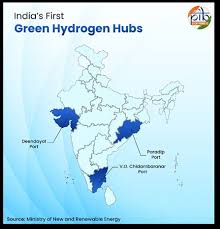
- Technology Transfer: The EU will provide high-efficiency electrolyzer technology in exchange for assured supply chains.
- Geopolitical Resilience: Reduces dependency on fossil fuel imports from volatile regions, enhancing energy security for both blocs.
- Standardization: Establishes a common “Green Certification” framework to prevent “greenwashing” in international energy markets.
Positives, Negatives, & Government Schemes
| Dimension | Details |
| Positives | Earns foreign exchange, accelerates India’s Net Zero 2070 goal, creates a global green energy benchmark. |
| Negatives | Risk of diverting domestic renewable energy for exports, high cost of hydrogen transport infrastructure. |
| Associated Schemes | National Green Hydrogen Mission, SIGHT Programme, G20 Biofuel Alliance. |
Topic 5: Introduction of the Digital Competition Bill, 2026
Subject: National Issues & Economy
Syllabus
- GS Paper 2: Statutory, regulatory and various quasi-judicial bodies.
- GS Paper 3: Effects of liberalization on the economy.
Context
The Ministry of Corporate Affairs tabled the Digital Competition Bill, 2026 in Parliament today to regulate “Systemically Important Digital Intermediaries” (SIDIs).
Main Body: Multi-Dimensional Analysis
- Ex-Ante Regulation: Shifts from reactive to proactive regulation, preventing Big Tech firms from favoring their own products (self-preferencing).
- Data Privacy: Restricts the cross-use of personal data between different services owned by the same conglomerate without explicit consent.
- Market Fair Play: Aims to protect small Indian startups from predatory pricing and “killer acquisitions” by global tech giants.
- Interoperability: Mandates that major platforms allow third-party applications to interact with their ecosystems to prevent “walled gardens.”
- Penalty Structure: Proposes fines up to 10% of global turnover for non-compliance, signaling a tough stance on digital monopolies.
Positives, Negatives, & Government Schemes
| Dimension | Details |
| Positives | Promotes innovation, protects consumer choice, creates a level playing field for domestic IT firms. |
| Negatives | May stifle venture capital inflow, risk of excessive compliance burden for growing tech firms. |
| Associated Laws | Competition Act 2002, Digital Personal Data Protection Act (DPDP) 2023, CCI (Competition Commission of India). |
Topic 6: TN Agriculture Department’s ‘Millet Mission 2.0’
Subject: National Issues & Environment
Syllabus
- GS Paper 3: Major crops-cropping patterns in various parts of the country. Issues related to direct and indirect farm subsidies and minimum support prices.
Context
On May 11, the Tamil Nadu Agriculture Department announced ‘Millet Mission 2.0’, focusing on the “Seed-to-Plate” value chain for climate-resilient crops like Ragi and Cumbu.
Main Body: Multi-Dimensional Analysis
- Climate Adaptation: Promotes millets as a solution to the depleting groundwater levels in districts like Dharmapuri and Virudhunagar.
- Nutritional Security: Focuses on integrating millet-based meals into the state’s Noon Meal Scheme to combat adolescent anemia.
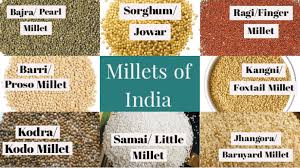
- Value Addition: Provides 40% subsidy for FPOs (Farmer Producer Organizations) to set up millet processing and packaging units.
- Market Access: Links local millet farmers with global retail chains through the “TN-Millet” brand.
- Sustainability: Millets require 70% less water than paddy, making them vital for the state’s long-term food security under erratic monsoon conditions.
Positives, Negatives, & Government Schemes
| Dimension | Details |
| Positives | Water conservation, improved farmer income, health benefits for the public. |
| Negatives | Lower consumer preference compared to rice/wheat, lack of large-scale harvesting machinery. |
| Associated Schemes | International Year of Millets (Legacy), PM-POSHAN, Tamil Nadu Millet Mission. |
Topic 7: RBI’s New ‘CBDC-Retail’ Interoperability Guidelines
Subject: Economy
Syllabus
- GS Paper 3: Indian Economy and issues relating to planning, mobilization of resources, growth, development and employment.
Context
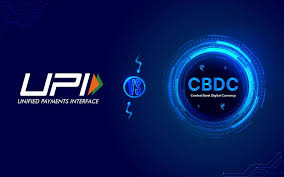
The Reserve Bank of India (RBI) today issued new guidelines allowing full interoperability between Central Bank Digital Currency (CBDC) and existing UPI QR codes.
Main Body: Multi-Dimensional Analysis
- Financial Inclusion: Allows users without traditional bank accounts to hold digital cash and transact at any local merchant.
- Reduction in Currency Costs: Diminishes the physical cost of printing, transporting, and storing paper currency.
- Transaction Transparency: Enables “Programmable Money” where government subsidies (DBT) can be earmarked for specific uses (e.g., fertilizer only).
- Monetary Policy Efficacy: Provides the RBI with real-time data on velocity of money, aiding in more accurate inflation targeting.
- Security: CBDC transactions are final and settled on a blockchain-inspired ledger, reducing the risk of payment failures seen in traditional banking gateways.
Positives, Negatives, & Government Schemes
| Dimension | Details |
| Positives | Seamless digital transition, lower transaction failures, direct government-to-citizen interface. |
| Negatives | Cyber-security risks, digital illiteracy in rural areas, potential disintermediation of commercial banks. |
| Associated Schemes | e-RUPI, Digital India, UPI (Unified Payments Interface). |
Topic 8: UNESCO Recognition for Tamil Nadu’s ‘Living Root Bridges’ Proposal
Subject: International & Environment
Syllabus
- GS Paper 1: Salient features of world’s physical geography.
- GS Paper 3: Conservation, environmental pollution and degradation.
Context
UNESCO’s World Heritage Centre today accepted a preliminary proposal to include the bio-engineered structures of the Eastern Ghats (specifically in the Kolli Hills) in its tentative list of heritage sites.
Main Body: Multi-Dimensional Analysis
- Indigenous Knowledge: Recognizes the traditional wisdom of local tribes in shaping living trees into functional infrastructure.
- Eco-Tourism Boost: Global recognition will drive sustainable tourism, providing alternative livelihoods for tribal communities.

- Conservation Status: Granting heritage status provides legal protection against road expansion and industrial encroachment in sensitive zones.
- Bio-Engineering Model: Serves as a global case study for “Nature-Based Solutions” (NbS) to combat climate change and soil erosion.
- Cultural Identity: Preserves the intangible heritage of the “Malayali” tribes of the Eastern Ghats.
Positives, Negatives, & Government Schemes
| Dimension | Details |
| Positives | Global prestige, protection of biodiversity, promotion of sustainable engineering. |
| Negatives | Risk of over-tourism damaging the living structures, restriction on local developmental activities. |
| Associated Concepts | UNESCO World Heritage Sites, Nature-Based Solutions, Tribal Sub-Plan. |
Conclusion
The events of May 11, 2026, reflect India’s dual focus on high-technology indigenization (AUVs and Semi-conductors) and the strengthening of democratic and constitutional norms (SC ruling on Article 200). For a state like Tamil Nadu, the pivot towards chip design and climate-resilient agriculture (Millet Mission) demonstrates a forward-looking approach to both economic growth and environmental sustainability.
Practice Mains Question:
“The shift from reactive to ex-ante regulation in the digital economy is essential for protecting domestic innovation.” Critically analyze this statement in the context of the Digital Competition Bill, 2026. (250 words)
