
Topic 1: BRICS Foreign Ministers’ Meeting 2026 in New Delhi
Syllabus
- GS Paper 2: Bilateral, regional, and global groupings and agreements involving India and/or affecting India’s interests.
Context
The Union Government is currently hosting the BRICS Foreign Ministers’ Meeting in New Delhi (May 14–15) under India’s 2026 Chairship, focusing on “Reformed Multilateralism” and Global South cooperation.
Main Body: Multi-Dimensional Analysis
- Strategic & Diplomatic Leadership: India utilized the platform to call for an urgent expansion of the UN Security Council, emphasizing that the current structure does not reflect 21st-century realities.
- Economic Stability & NDB: Discussions centered on the New Development Bank (NDB) and its role in providing local-currency financing to member nations to mitigate exchange rate volatility against the US Dollar.
- Counter-Terrorism & Security: India proposed a “BRICS Integrated Cyber-Security Framework” to combat cross-border digital threats and the use of crypto-assets for terror financing.
- Energy & Food Security: A joint commitment was made to stabilize global supply chains for fertilizers and crude oil, which have been disrupted by the ongoing West Asia crisis.
- Digital Public Infrastructure (DPI): India shared its success with the “India Stack” (UPI, Aadhaar) as a model for other BRICS+ nations to achieve rapid financial inclusion.
Positives, Negatives, & Government Schemes
- Positives: Enhances India’s role as the “Voice of the Global South”; promotes non-Western financial alternatives.
- Negatives: Internal friction between member states (e.g., India-China border issues) can occasionally dilute the grouping’s collective output.
- Associated Schemes: BRICS Chairship 2026, Global South Excellence Centre, India Stack.
Topic 2: Cabinet Approves ₹37,500 Crore Coal Gasification Scheme
Syllabus
- GS Paper 3: Indian Economy and issues relating to planning, mobilization of resources, growth, and development.
Context
The Union Cabinet has sanctioned a massive financial outlay of ₹37,500 crore to promote Surface Coal/Lignite Gasification projects to achieve energy self-reliance.
Main Body: Multi-Dimensional Analysis
- Economic & Import Substitution: The scheme aims to convert domestic coal into “syngas,” which serves as a feedstock for producing methanol, ammonia, and urea, significantly reducing the import bill for natural gas.
- Technological Leap: It promotes Clean Coal Technology, which is essential for India to utilize its vast coal reserves while adhering to carbon emission reduction targets.
- Industrial Feedstock Security: Provides the chemical and fertilizer sectors with a stable, indigenous source of raw materials, insulating them from global price shocks.
- Revenue Generation: The government announced a 50% rebate on the revenue share for coal used specifically for gasification purposes, incentivizing private miners.
- Employment & Regional Development: Projects are primarily targeted at coal-bearing regions (Odisha, Chhattisgarh, Jharkhand), expected to generate over 2 lakh indirect jobs in logistics and maintenance.
Positives, Negatives, & Government Schemes
- Positives: Promotes Atmanirbhar Bharat in the chemical sector; utilizes indigenous resources efficiently.
- Negatives: High capital intensity of gasification plants; potential water-intensive nature of the process.
- Associated Schemes: National Coal Gasification Mission, PM Gati Shakti, PLI for Chemicals.
Topic 3: Tamil Nadu Ranked “Top Achiever” in LEADS 2026 Report
Syllabus
- GS Paper 3: Infrastructure: Energy, Ports, Roads, Airports, Railways etc.
Context
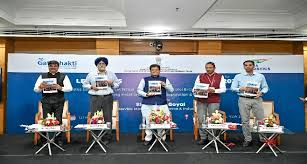
The Ministry of Commerce and Industry released the LEADS 2026 (Logistics Ease Across Different States) report, where Tamil Nadu has secured the “Top Achiever” rank for the third consecutive year.
Main Body: Multi-Dimensional Analysis
- Infrastructure Excellence: Tamil Nadu’s performance was driven by the operationalization of the Multi-Modal Logistics Park (MMLP) at Mappedu and the widening of the Chennai-Kanyakumari Industrial Corridor.
- Port Efficiency: The “Turn Around Time” (TAT) at Chennai and Thoothukudi ports saw a 15% improvement due to the implementation of automated gate systems and paperless documentation.
- Regulatory Simplification: The state’s “Single Window Portal 2.0” has integrated 100+ logistics-related clearances, making it the easiest state for warehouse setup.
- Manufacturing Synergy: The logistics boom has directly supported TN’s goal of becoming a $1 Trillion Economy by facilitating the seamless export of automobiles and electronic hardware.
- Skill Development: The report noted TN’s specialized “Logistics Skill Council” initiatives that have trained thousands of rural youth in warehouse management and supply chain analytics.
Positives, Negatives, & Government Schemes
- Positives: Attracts Foreign Direct Investment (FDI); reduces the “Cost of Doing Business.”
- Negatives: Congestion in urban periphery areas near Chennai still poses a challenge for last-mile delivery.
- Associated Schemes: PM Gati Shakti National Master Plan, LEADS Report, Sagarmala, TN Logistics Policy 2023.
Topic 4: Foundation of AMCA (5th Gen Stealth Fighter) Integration Facility
Syllabus
- GS Paper 3: Indigenization of technology and developing new technology; Defence Infrastructure.
Context
The Defence Minister today laid the foundation for the Advanced Medium Combat Aircraft (AMCA) Flight Test and Integration Facility, marking a critical step toward India’s 5th-generation fighter jet.
Main Body: Multi-Dimensional Analysis
- Strategic Sovereignty: The AMCA program aims to reduce dependence on foreign vendors (like Russia or the US) for advanced stealth aircraft, ensuring “Strategic Autonomy.”
- Advanced Avionics & Stealth: The new facility will specialize in integrating “Serpentine Air Intakes” and “Radar Absorbent Materials” (RAM) to ensure low radar signatures.

- Public-Private Partnership: The project uses a Special Purpose Vehicle (SPV) model, involving DRDO and private giants like HAL and Tata, fostering a robust defence industrial ecosystem.
- Engine Co-development: Parallelly, India is finalizing a deal with France’s Safran to co-develop the 110kN engines that will eventually power the AMCA Mark-II.
- Tactical Edge: Once inducted, the AMCA will provide the Indian Air Force with “first-look, first-kill” capabilities, essential for modern air superiority.
Positives, Negatives, & Government Schemes
- Positives: Massive boost to Aatmanirbharta in defence; creates high-tech aerospace engineering jobs.
- Negatives: Long development gestation periods; risks of cost overruns common in 5th-gen programs.
- Associated Schemes: Innovations for Defence Excellence (iDEX), Make in India, Strategic Partnership Model.
Topic 5: Supreme Court Verdict on “Right to be Forgotten”
Syllabus
- GS Paper 2: Structure, organization and functioning of the Judiciary; Fundamental Rights.
Context
A landmark Supreme Court judgment delivered today balanced the Right to Privacy (Right to be Forgotten) against the public’s Right to Information (RTI).
Main Body: Multi-Dimensional Analysis
- Individual Privacy: The Court ruled that individuals (especially those acquitted of crimes) can request search engines to de-index links to past cases that hamper their “Right to live with Dignity.”
- Constitutional Basis: The ruling draws from Article 21 (Right to Life) and the Puttaswamy judgment, asserting that an individual’s past should not haunt their digital future indefinitely.
- Public Interest Caveats: The Court clarified that this right is not absolute and cannot be used to erase records of public officials, financial scammers, or serious criminal convicts.

- Administrative Mandate: The Ministry of Electronics and IT (MeitY) has been directed to frame rules under the Digital Personal Data Protection (DPDP) Act to handle such requests.
- Impact on Media: Digital news archives may now face “unlinking” requests, necessitating a new protocol for online journalism and historical record-keeping.
Positives, Negatives, & Government Schemes
- Positives: Protects citizens from “digital stigma”; aligns Indian law with global standards (like EU’s GDPR).
- Negatives: Potential for misuse by individuals trying to hide relevant professional or ethical history.
- Associated Laws: Article 21, Digital Personal Data Protection Act (DPDP) 2023.
Topic 6: India-EU Green Hydrogen Corridor Agreement
Syllabus
- GS Paper 2 & 3: International agreements; Conservation, environmental pollution and degradation.
Context
India and the European Union signed an MoU to establish a Green Hydrogen Supply Chain, identifying Tamil Nadu’s Thoothukudi Port as a primary export hub.
Main Body: Multi-Dimensional Analysis
- Climate Diplomacy: The agreement helps India meet its “Green Hydrogen Mission” targets while helping the EU diversify its energy sources away from Russian gas.
- Technological Exchange: India will gain access to high-efficiency electrolyzer technology from European firms, reducing the cost of production per kg of hydrogen.
- Standardization: The MoU establishes common “Green Hydrogen Standards,” ensuring that Indian-produced hydrogen is certified for use in European heavy industries.
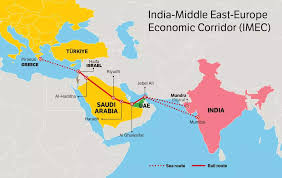
- Economic Inflow: The EU’s “Global Gateway” fund will provide low-interest financing for solar and wind farms in Tamil Nadu and Gujarat to power these hydrogen plants.
- Energy Sovereignty: By becoming a net exporter of green energy, India shifts its position from a “fuel importer” to a “global energy provider.”
Positives, Negatives, & Government Schemes
- Positives: Huge FDI potential; accelerates Net Zero 2070 goal; positions TN as a global green hub.
- Negatives: High cost of hydrogen storage and transport infrastructure.
- Associated Schemes: National Green Hydrogen Mission, FAME-II, Global Gateway Initiative.
Topic 7: Expansion of PM-KUSUM Scheme (Component-C)
Syllabus
- GS Paper 3: Issues related to direct and indirect farm subsidies and MSP; Renewable energy.
Context
The Union Government announced an expansion of the PM-KUSUM scheme to achieve 100% solarization of agricultural electricity feeders by 2027.
Main Body: Multi-Dimensional Analysis
- Farmer Income Augmentation: Farmers can now install solar panels on barren lands and sell the surplus power back to the grid, creating a “second source of income.”
- Discom Financial Health: Solarizing feeders allows Discoms to provide free/subsidized power to farmers during the day, eliminating the need for expensive night-time power procurement.
- Water-Energy Nexus: The scheme encourages the use of high-efficiency micro-irrigation systems integrated with solar pumps to prevent groundwater depletion.
- Rural Electrification: Ensures 24/7 reliable power for farm operations, removing the dependency on erratic grid supply in remote villages.
- Decarbonization of Agriculture: Replaces thousands of diesel-powered pumps, significantly reducing the carbon footprint of the Indian agriculture sector.
Positives, Negatives, & Government Schemes
- Positives: Reduces the state subsidy burden; promotes clean energy at the grassroots level.
- Negatives: Initial high cost of solar equipment for small and marginal farmers; maintenance issues in rural areas.
- Associated Schemes: PM-KUSUM, PM Surya Ghar: Muft Bijli Yojana, Agriculture Infrastructure Fund (AIF).
Topic 8: Integration of ‘BHASHINI’ AI in Madras High Court
Syllabus
- GS Paper 2: e-Governance- applications, models, successes, limitations, and potential.
Context
The Chief Justice of India today launched the integration of the ‘BHASHINI’ AI Real-Time Translation tool in the Madras High Court to facilitate proceedings in Tamil.
Main Body: Multi-Dimensional Analysis
- Judicial Accessibility: The AI tool provides real-time speech-to-text translation of court arguments from English to Tamil, allowing litigants to follow their cases directly.
- Linguistic Empowerment: It bridges the “Language Divide” in higher judiciary, where English is the primary language, ensuring that justice is not just done, but seen to be understood.
- Efficiency in Documentation: Automated translation of past judgments into 22 scheduled languages will help lawyers and students access legal precedents in their mother tongue.
- Cost Reduction: Litigants will no longer need to pay for unofficial translators, making the legal process more affordable for the underprivileged.
- Data Sovereignty: BHASHINI is a completely indigenous AI model, ensuring that sensitive legal data remains within Indian sovereign servers.
Positives, Negatives, & Government Schemes
- Positives: Democratizes the legal system; showcases India’s AI prowess in public service.
- Negatives: Accuracy of complex legal terminology in regional translations needs constant human oversight.
- Associated Schemes: Digital India, National Bhashini Mission, e-Courts Project Phase III.
Conclusion
The developments of May 15, 2026, highlight India’s dual focus on Strategic Autonomy (AMCA & BRICS) and Technological Inclusivity (BHASHINI & Green Hydrogen). For a Tamil Nadu-based aspirant, the state’s dominance in Logistics (LEADS) and its emergence as a Green Hydrogen Hub are pivotal points for both Preliminary and Mains examinations.
Practice Mains Question:
“The success of India’s ‘Net Zero’ transition depends as much on technological innovation as it does on cooperative federalism.” Discuss this statement in light of the Coal Gasification Scheme and the LEADS 2026 report. (250 words)
