
Topic 1: The AI-Powered “ABHAY” System by CBI
Subject: Polity and Governance (GS Paper 2)
Context
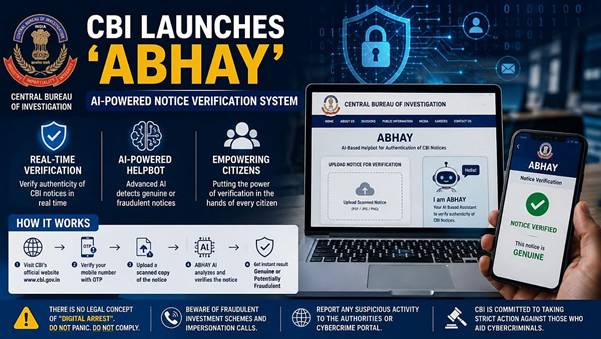
The Central Bureau of Investigation (CBI) launched a real-time, artificial intelligence-based helpbot called “ABHAY” (AI-Based Helpbot for Authentication of Your Notice) to insulate citizens from the exponential rise in cyber-enabled fraud and impersonation scams.
Main Body: Multi-Dimensional Analysis
- Combating Digital Arrest Scams: The system is explicitly engineered to tackle the “digital arrest” phenomenon, where cybercriminals impersonate law enforcement officers, issue forged warrants, and extort money from unsuspecting citizens through prolonged video calls.
- Real-Time Verification Architecture: Users who receive suspicious legal notices, summons, or letters in the name of the CBI can upload scanned copies or PDF documents onto the secure ABHAY platform after undergoing a secure OTP verification.
- AI-Driven Cryptographic & Pattern Analysis: The helpbot utilizes optical character recognition (OCR), metadata parsing, and cryptographic cross-referencing against the CBI’s central administrative repository to instantly flag the document as either “Genuine” or “Potentially Fraudulent.”
- Public Grievance and Institutional Trust: By offering a public-facing verification mechanism, the system bridges the communication gap between investigative agencies and civilians, preventing the weaponization of institutional fear.
- Data Integrity and Anonymization: To ensure trust, the system integrates localized data anonymization filters, stripping away personal sensitive identification data from the document during the parsing phase to maintain user privacy.
Positives, Negatives, & Government Schemes
- Positives: Drastically cuts the response time to verify legal communications; builds an immediate psychological defense against cyber extortion; minimizes panic among technical novices.
- Negatives: System efficacy depends entirely on rural internet penetration and smartphone literacy; sophisticated deepfakes with legitimate old serial numbers may initially bypass structural filters.
- Associated Schemes/Initiatives: Indian Cyber Crime Coordination Centre (I4C), National Cyber Crime Reporting Portal, Digital India Mission.
Way Forward
- Integrate the ABHAY verification system with state police departments and other central agencies like the Enforcement Directorate (ED) to create a unified anti-fraud portal.
- Launch regional language interfaces for the helpbot to ensure deep penetration across tier-2, tier-3 cities, and rural areas.
Conclusion
The ABHAY system marks a definitive transition in law enforcement from reactive criminal investigation to proactive tech-driven citizen defense, demonstrating how artificial intelligence can safely secure the rule of law in an increasingly digitized civic landscape.
Topic 2: Global Crude Oil Spikes and Domestic Fuel Price Disruption
Subject: Economy (GS Paper 3)
Context
Triggered by severe geopolitical conflicts in West Asia and logistical blockades around vital maritime check-points like the Strait of Hormuz, global crude oil prices surged, forcing domestic oil marketing companies (OMCs) to execute a uniform Rs. } 3 per litre hike for petrol and diesel.
Main Body: Multi-Dimensional Analysis
- End of a Low-Price Cycle: The sudden price surge breaks a multi-year window of relatively stable energy pricing for India. The Indian basket of crude oil averaged close to 106-115 per barrel in the initial phase of the current financial year, representing a nearly 40% jump over historic operational baselines.
- Macroeconomic Strain on the Trade Deficit: Since India imports over 85% of its crude oil requirements, an uncontrolled price spike severely widens the merchandise trade deficit, exerting depreciary pressure on the Indian Rupee against the US Dollar.
- OMC Under-Recoveries and Fiscal Balance: The price revision represents a tactical move to cushion India’s public sector OMCs, which were absorbing massive daily under-recoveries to prevent economic shocks from passing directly into retail markets.
- Cascading Inflationary Trajectory: Energy inflation directly influences logistics costs. The elevated cost of diesel is expected to generate a second-round inflationary effect on the consumer price index (CPI), raising the cost of essential commodities like vegetables, dairy, and agricultural inputs.
- Monetary Policy Implications: Persistent high global crude prices constrain the Reserve Bank of India’s (RBI) monetary policy space, making interest rate cuts highly improbable in the short-term due to upside risks to core inflation.
Positives, Negatives, & Government Schemes
- Positives: Protects the financial health and credit ratings of public sector oil units; forces market-driven focus toward alternative green energy infrastructure.
- Negatives: Increases the financial burden on middle-class and agrarian households; threatens fiscal deficit targets due to potential increases in fuel subsidies.
- Associated Schemes/Initiatives: Strategic Petroleum Reserves (SPR) Programme, SATAT (Sustainable Alternative Towards Affordable Transportation), FAME India Scheme.
Way Forward
- Strategically draw down from India’s underground Strategic Petroleum Reserves in Visakhapatnam, Mangaluru, and Padur to cool temporary domestic supply shocks.
- Accelerate the mandatory 20% ethanol blending program across all oil distribution networks to structurally insulate the country from foreign supply lines.
Conclusion
India’s current energy shock underscores the strategic imperative of aggressive diversification away from fossil fuel vulnerabilities, demanding a synchronized balance between short-term fiscal containment and long-term renewable autonomy.
Topic 3: The India-UAE Strategic Partnership Expansion
Subject: International Relations (GS Paper 2)
Context
Following high-level bilateral discussions, India and the United Arab Emirates (UAE) formally elevated their comprehensive strategic partnership, focusing heavily on maritime supply chain safety, a landmark 5 billion} sovereign investment commitment, and high-performance computing cooperation.
Main Body: Multi-Dimensional Analysis
- Securing Energy Supply Corridors: Amid rising tensions in the Gulf region, India secured a vital diplomatic commitment from the UAE to guarantee that the Strait of Hormuz remains “free, open, and safe,” protecting India’s uninterrupted energy lanes.
- Strategic Petroleum Storage Collaborations: A critical outcome includes the ISPRL (Indian Strategic Petroleum Reserves Limited) and ADNOC (Abu Dhabi National Oil Company) framework agreement, expanding commercial-strategic oil storage partnerships on Indian soil.
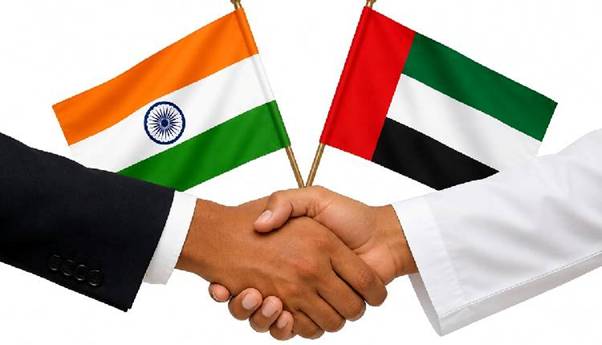
- Infrastructure Asset Mobilization: The UAE announced a targeted investment of up to 5 billion} via the Abu Dhabi Investment Authority (ADIA) and India’s National Investment and Infrastructure Fund (NIIF) to directly bankroll mega-transport and green energy corridors.
- Maritime Infrastructure and Industrial Clustering: The bilateral talks formalized the creation of an advanced ship-repair cluster at Vadinar, Gujarat, alongside offshore fabrication projects under India’s Maritime Development Fund Scheme.
- Geopolitical Alignment in West Asia: The expansion signals India’s deep strategic maneuvering in the Gulf, utilizing economic and security interlinkages to protect non-alignment principles while insulating its economy from regional conflicts.
Positives, Negatives, & Government Schemes
- Positives: Infuses long-term foreign capital into core infrastructure; strengthens maritime domain awareness in the Indian Ocean Region (IOR); provides concrete backups for technology transfers.
- Negatives: Execution risks due to regional political vulnerabilities; heavy reliance on a single geographic block for West Asian strategic balancing.
- Associated Schemes/Initiatives: Comprehensive Economic Partnership Agreement (CEPA), Maritime India Vision 2030, Make in India.
Way Forward
- Expedite the operationalization of the India-Middle East-Europe Economic Corridor (IMEC) using the newly reinforced UAE infrastructure linkages.
- Establish joint tech-incubators to transform the agreed-upon high-performance computing frameworks into localized climate modeling solutions.
Conclusion
The updated India-UAE framework marks a transition from a traditional buyer-seller energy relationship to a multi-layered, modern strategic alliance that blends fiscal investments with geopolitical survival strategies.
Topic 4: First Satellite Tagging of Endangered Ganges Soft-Shell Turtle
Subject: Environment, Ecology and Biodiversity (GS Paper 3)
Context
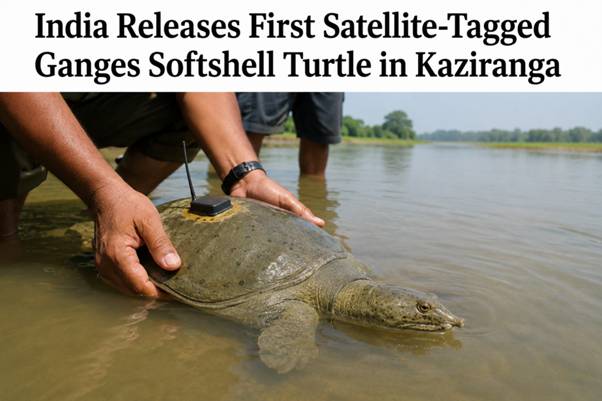
In a major milestone for freshwater conservation, India’s first satellite-tagged Ganges Soft-Shell Turtle (Nilssonia gangetica) was successfully released into the Kaziranga National Park and Tiger Reserve in Assam to track migration patterns and habitat use.
Main Body: Multi-Dimensional Analysis
- Biological Profile of the Species: The Ganges Soft-Shell Turtle is one of the largest freshwater turtle species in the world, characterized by its distinct soft leathery shell, mud-burrowing habits, and structural role as an apex river cleaner.
- Ecological Sentinels: These turtles inhabit deep rivers, streams, and canals, preferring sandy or muddy riverbeds. By consuming organic waste and dead matter, they maintain the biological purity of riverine ecosystems like the Ganges and Brahmaputra basins.
- Satellite Telemetry in Freshwater Conservation: Freshwater telemetry faces unique challenges due to turbidity and depth. This project utilizes a specialized, lightweight satellite transmitter affixed to the carapace to monitor real-time spatial movements across Kaziranga’s wetland networks.
- Anthropogenic Threats: The species faces critical survival threats from illegal poaching for meat markets, commercial sand mining that destroys nesting banks, and accidental entanglement in heavy fishing nets.
- Legal Protections Status: The turtle is granted the highest level of legal security in India under Schedule I of the Wildlife Protection Act, 1972, and is classified as Endangered on the IUCN Red List.
Positives, Negatives, & Government Schemes
- Positives: Provides unprecedented data on seasonal migration routes; improves trans-boundary river conservation planning; boosts the profile of non-mammalian river species.
- Negatives: Satellite hardware can suffer signal dampening in deep muddy habitats; high cost limits large-scale tracking operations across multiple river systems.
- Associated Schemes/Initiatives: Project Carbon/Freshwater Biodiversity Initiatives, Namami Gange Programme, Integrated Development of Wildlife Habitats.
Way Forward
- Utilize the telemetry data to demarcate “No-Fishing Zones” and “No-Mining Zones” along the critical river corridors identified by the turtle’s movements.
- Train community-led volunteer groups along the river banks to guard known nesting sites during breeding seasons.
Conclusion
By mapping the hidden paths of the Ganges Soft-Shell Turtle, this telemetry project transitions wildlife management from speculative enforcement to precise, data-driven habitat preservation.
Topic 5: Sikkim Celebrates 50th Statehood Day
Subject: Indian Polity and History (GS Paper 1 & 2)
Context
Sikkim marked its historic 50th Statehood Day, celebrating five decades since its official integration as the 22nd state of the Indian Union through the 36th Constitutional Amendment Act in 1975.
Main Body: Multi-Dimensional Analysis
- Constitutional Evolution: Sikkim’s journey from an Indian protectorate ruled by the Chogyal dynasty to a full-fledged state involved landmark legal evolutions. The 35th Constitutional Amendment (1974) first introduced it as an ‘Associate State’, a unique category, before the 36th Amendment (1975) granted it full statehood.
- Geostrategic Frontier Security: Bordering Tibet, Bhutan, and Nepal, Sikkim holds massive strategic importance for India’s defense architecture. The state acts as a geographical shield guarding the Siliguri Corridor (Chicken’s Neck), making its political stability and development directly linked to national security.
- Pioneer in Green Economy: Sikkim stands as a global reference point for ecological governance, being recognized as the world’s first 100% organic state. This transition has fostered sustainable ecotourism and resilient agricultural models.

- Aviation and Connectivity Breakthroughs: The operationalization of high-altitude infrastructure like Pakyong Airport and strategic border roads has ended decades of geographic isolation, weaving the state into the mainstream national economy.
- Special Constitutional Safeguards: Under Article 371F of the Indian Constitution, Sikkim enjoys special provisions designed to protect its ancient land laws, distinct cultural identity, and the rights of its diverse ethnic populations (Lepchas, Bhutias, and Nepalis).
Positives, Negatives, & Government Schemes
- Positives: Reinforces the success of Indian cooperative federalism; highlights ecological governance models; honors the cultural integration of border populations.
- Negatives: High vulnerability to climate-induced disasters like glacial lake outburst floods (GLOFs); fragile connectivity due to landslides along National Highway 10.
- Associated Schemes/Initiatives: Vibrant Villages Programme, PM-DevINE (Prime Minister’s Development Initiative for North Eastern Region), Paramparagat Krishi Vikas Yojana.
Way Forward
- Build climate-resilient communication and transport corridors to insulate the state from catastrophic seasonal weather events.
- Leverage Sikkim’s organic brand to establish high-value international export pipelines for medicinal plants and indigenous horticulture.
Conclusion
Sikkim’s 50-year journey stands as a brilliant testament to how a strategic border region can blend deep cultural preservation with vanguard environmental models, enriching the diverse fabric of the Indian Union.
Topic 6: Discovery of the “Common Bronzeback” in Dudhwa Tiger Reserve
Subject: Environment and Biodiversity (GS Paper 3)
Context
Wildlife biologists and forest officials confirmed the rare sighting and documentation of the Common Bronzeback Tree Snake (Dendrelaphis tristis) within the Belrayan range of the Dudhwa Tiger Reserve in Uttar Pradesh.
Main Body: Multi-Dimensional Analysis
- Taxonomic and Morphological Profile: The Common Bronzeback is a slender, diurnal, non-venomous tree snake characterized by a striking bronze-colored dorsal stripe running from head to tail, contrasted by bright yellowish-white lateral undersides.
- Arboreal Specialization: The species is completely adapted to tree-dwelling lifestyles, possessing an extraordinary ability to leap across branches with agility. It feeds primarily on tree frogs, small lizards, and avian eggs.

- Indicator of Terai Ecosystem Health: The presence of this arboreal predator in the Dudhwa Terai landscape indicates a healthy, undisturbed upper canopy structure, which is crucial for maintaining micro-climatic balance inside dense sal forests.
- The Threat of Habitat Fragmentation: Being strictly arboreal, the species is exceptionally vulnerable to canopy fragmentation caused by forest roads, linear infrastructure, and illegal logging, which isolate populations and limit foraging areas.
- Conservation Status Baseline: While currently listed as Least Concern on many global assessments due to wide distribution across South Asia, its specific localized micro-populations in protected northern Indian reserves demand close monitoring due to intensifying climate fluctuations.
Positives, Negatives, & Government Schemes
- Positives: Enriches the biodiversity inventory of the Dudhwa Tiger Reserve; underscores the ecological value of conserving non-flagship reptilian species.
- Negatives: High risk of roadkill mortality along highways cutting through protected reserves; difficulties in monitoring low-density canopy-dwelling reptiles.
- Associated Schemes/Initiatives: Project Tiger and Elephant (Integrated Guidelines), National Biodiversity Action Plan, CAMPA (Compensatory Afforestation Fund Management and Planning Authority).
Way Forward
- Construct natural and artificial canopy bridges across all internal forest roads within the Belrayan range to facilitate safe arboreal wildlife crossings.
- Incorporate specialized herpetological surveys into the standard annual management plans of Terai-landscape tiger reserves.
Conclusion
The documentation of the Common Bronzeback serves as a reminder that the health of India’s apex tiger reserves relies heavily on the survival of minor canopy species that quietly sustain the forest web.
Topic 7: Tamil Nadu Chief Minister Directs Fast-Track Welfare Delivery
Subject: State Governance and Public Administration (GS Paper 2)
Context
In a high-level review meeting held in Chennai, the Tamil Nadu state administration issued strict directives to line ministries to expedite welfare distribution channels, emphasizing real-time digital monitoring to eliminate administrative delays.
Main Body: Multi-Dimensional Analysis
- Focus on Grassroots Administrative Efficiency: The directive emphasizes cutting down bureaucratic red tape across key departments including Revenue, Social Welfare, and Agricultural Support, mandating zero-pendency timelines for public petitions.
- Data-Driven Governance Models: The state is augmenting its centralized command systems to track the delivery of flagship schemes, ensuring benefits reach targeted beneficiaries without intermediate leakages.
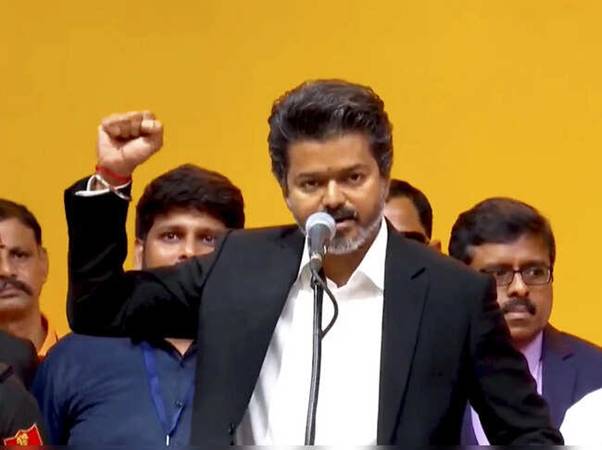
- Strengthening Rural Economic Buffers: The push comes as an administrative buffer to protect rural and semi-urban households from the economic pressures of recent fuel price increases, safeguarding local purchasing power.
- Decentralized Coordination Strategies: District Collectors have been ordered to conduct direct ground-level inspections and weekly monitoring camps, shifting public service delivery from static government offices to citizens’ doorsteps.
- Optimizing the Social Safety Net: By prioritizing direct benefit transfers (DBT) and public distribution system (PDS) efficiency, the administrative mandate aims to address localized socio-economic inequities.
Positives, Negatives, & Government Schemes
- Positives: Minimizes public grievances; cuts down corruption risks through automated tracking; improves public delivery systems across rural districts.
- Negatives: Puts heavy work pressure on under-staffed village-level administrative bodies; runs the risk of tech-exclusion if digital servers face downtime.
- Associated Schemes/Initiatives: Makkalai Thedi Maruthuvam, Pudhumai Penn Scheme, Tamil Nadu e-Governance Agency (TNeGA) initiatives.
Way Forward
- Conduct continuous capacity-building and soft-skills training programs for frontline block development and village administrative officers (VAOs).
- Create offline-compatible tracking modules to ensure seamless grievance redressal even in remote hilly terrains of the state.
Conclusion
The state’s focus on fast-tracking welfare highlights a governance model that prioritizes rapid public care, demonstrating that administrative agility is the true measure of welfare state policies.
Topic 8: Strategic Upgrades to Indian Coastal Electronic Warfare Infrastructure
Subject: Defence and National Security (GS Paper 3)
Context
The Ministry of Defence initiated a comprehensive deployment phase for advanced, indigenous Mobile Electronic Warfare Systems (MEWS) along India’s peninsular coastline to counter growing sub-surface and electronic threats in the Indian Ocean Region.
Main Body: Multi-Dimensional Analysis
- Securing the Littoral Frontier: The deployment provides defensive layers for India’s massive coastline, transforming vulnerable coastal zones into active electronic defense fortresses capable of tracking hostile emissions.
- Advanced Spectrum Dominance: These indigenously manufactured systems are equipped to perform real-time signal intelligence (SIGINT), electronic intelligence (ELINT), and radar jamming, effectively neutralizing adversary surveillance networks.
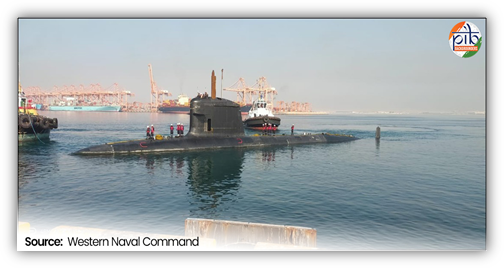
- Countering Non-Traditional Hybrid Threats: Beyond standard naval forces, these mobile units are optimized to track gray-zone threats, including unidentified automated vessels, pirate communication bands, and suspicious commercial maritime arrays.
- Network-Centric Naval Interoperability: The MEWS architecture is fully integrated into the Indian Navy’s secure data networks and coastal radar hubs, allowing for immediate target handovers to airborne maritime strike assets.
- Boosting Defence Self-Reliance: Developed through collaboration between defense research organizations and domestic manufacturing firms, the system underlines India’s technological maturation in complex microwave and electronic warfare domains.
Positives, Negatives, & Government Schemes
- Positives: Greatly increases littoral situational awareness; minimizes dependence on foreign electronic warfare components; mobile nature prevents targeting by adversary long-range missiles.
- Negatives: High maintenance costs due to continuous exposure to corrosive saline coastal environments; high training requirements for specialized handling teams.
- Associated Schemes/Initiatives: Innovations for Defence Excellence (iDEX), Technology Development Fund (TDF), Sagarmala Project (Security Dimension).
Way Forward
- Expand the deployment to cover all island territories, particularly the Andaman & Nicobar and Lakshadweep archipelagos, to secure deep-ocean chokepoints.
- Incorporate AI-driven predictive jamming algorithms to counter autonomous swarm drone technologies in maritime environments.
Conclusion
The structural fortifying of India’s coastal electronic lines ensures that the nation’s rising blue economy is shielded by an unbreachable, indigenous electronic defense net.
Practice Mains Question
Evaluate how geopolitical shocks in West Asia cascade into India’s domestic macroeconomic framework. Discuss the policy options available to India to achieve long-term structural insulation from global energy supply disruptions. (250 Words)
