
Topic 1: President Promulgates Ordinance to Expand Supreme Court Strength
Syllabus
- GS Paper 2: Structure, organization, and functioning of the Executive and the Judiciary; Ordinance-making power of the President.
Context
President Droupadi Murmu promulgated the Supreme Court (Number of Judges) Amendment Ordinance, 2026, officially raising the sanctioned strength of the apex court from 34 to 38 judges (including the Chief Justice of India).
Main Body: Multi-Dimensional Analysis
- Addressing Judicial Pendency: The backlog of cases before the Supreme Court has crossed an unprecedented 93,000 cases. A larger bench infrastructure is critical to handle the post-COVID surge in e-filings, public interest litigations (PILs), and complex constitutional disputes.
- Constitutional Mechanism of Expansion: Under Article 124(1) of the Constitution, the power to prescribe a larger number of judges rests with Parliament. As Parliament is not in session, the Union Cabinet recommended the emergency executive route under Article 123.
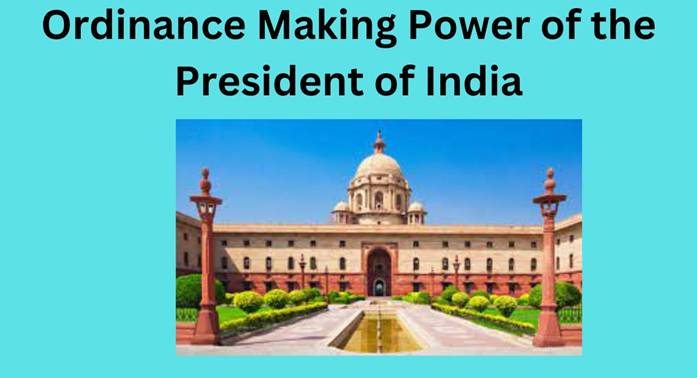
- Constitutional Check on Executive Decrees: In landmark cases like D.C. Wadhwa v. State of Bihar (1987), the Supreme Court ruled that the repeated re-promulgation of ordinances without legislative passage is a subversion of democratic processes. This ordinance must be replaced by a parliamentary bill within six weeks of Parliament’s reassembly.
- Call for Broad Structural Reforms: While expanding judge capacity helps, judicial experts highlight that vacancies in High Courts and subordinate judiciaries remain unaddressed. To achieve long-term uniformity, the operationalization of an All India Judicial Service (AIJS) under Article 312 remains pending.
Positives, Negatives, & Government Schemes
| Dimension | Details |
| Positives | Mitigates judicial pendency, accelerates the formation of dedicated constitutional benches, and ensures speedy disposal of long-pending appeals. |
| Negatives | The ordinance mechanism circumvents immediate parliamentary debate; expanding the bench does not address the deeper systemic vacancies in lower trial courts. |
| Associated Laws / Concepts | Article 123 (Ordinance Power), Article 124(1), Supreme Court (Number of Judges) Act 1956, R.C. Cooper v. Union of India (1970). |
Examples
The rapid escalation of commercial disputes and transnational legal filings in 2025–2026 serves as a key example of why the Supreme Court required immediate structural expansion to prevent judicial gridlock.
Way Forward
- Introduce and pass the Supreme Court (Number of Judges) Amendment Bill, 2026, in the upcoming parliamentary session without delay.
- Concurrently establish regional benches of the Supreme Court for appellate matters to reduce the geographical burden on litigators traveling to New Delhi.
Conclusion
Expanding the Supreme Court’s bench via ordinance acts as a vital short-term relief for an overburdened judiciary. Long-term systemic efficiency requires institutionalized appointment timelines and structural modifications across all tiers of the justice system.
Practice Mains Question
Evaluate the constitutional validity and structural utility of utilizing the President’s ordinance-making power under Article 123 to expand the judge strength of the Supreme Court. Discuss in light of rising judicial pendency. (250 words)
Topic 2: Historic Realignment in Tamil Nadu Governance Post-Election
Syllabus
- GS Paper 2: Salient features of the Representation of People’s Act; Executive-Legislative relations; Coalition governance at the State level.
Context
Following a fractured mandate in the 17th Tamil Nadu Legislative Assembly elections, newly sworn-in Chief Minister C. Joseph Vijay initiated core bureaucratic restructuring, appointing senior IAS officers to steer policy coordination across the state.
Main Body: Multi-Dimensional Analysis
- End of a Duopoly: The 2026 assembly election marks a watershed moment in Tamil Nadu’s political history, breaking a 59-year unbroken cycle where power alternated strictly between the two dominant Dravidian parties (DMK and AIADMK).
- The Hung Assembly Challenge: With the leading party securing 108 seats—just short of the 118 simple majority mark—the state transitioned into a unique coalition paradigm. Major adjustments are underway as traditional allies seek legislative realignment.
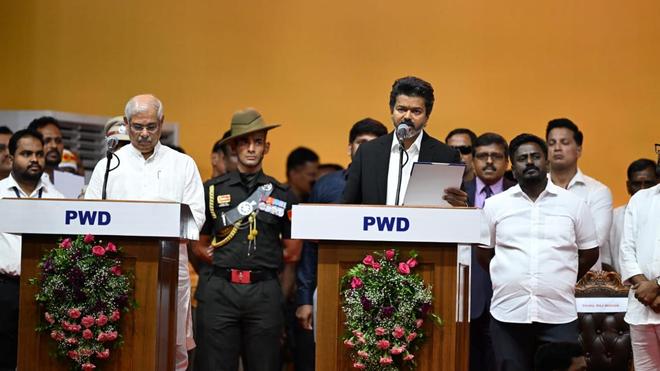
- Administrative Anchoring: To insulate state machinery from political transition adjustments, the Chief Minister’s Secretariat appointed veteran bureaucrats. Dr. P. Senthilkumar (1995-batch) was assigned as Additional Chief Secretary to ensure administrative stability.
- Grassroots Factional Friction: Concurrently, the post-election landscape has triggered severe leadership disputes within the principal opposition party, the AIADMK. Grassroots party offices across districts like Dindigul and Villupuram have been locked down by security personnel due to internal clashes over party control.
Positives, Negatives, & Government Schemes
| Dimension | Details |
| Positives | Introduces a multi-polar political alternative, signals high youth and first-time voter mobilization, and prompts administrative adjustments toward depoliticized governance. |
| Negatives | Fractured mandates bring inherent coalition vulnerabilities, delay comprehensive budget rollouts, and lead to political gridlock at the local level. |
| Associated Laws / Concepts | Representation of the People Act, 1951; Tenth Schedule (Anti-Defection Law dynamics regarding party whips); Article 164 of the Constitution. |
Examples
The locking down of the Dindigul AIADMK district headquarters amid direct operational standoffs between local faction leaders highlights how electoral defeats can ripple downward into grassroots structural instability.
Way Forward
- Convene a swift, structured floor test to decisively prove legislative support and establish policy continuity.
- Keep the senior bureaucracy focused on vital summer water management and welfare delivery schemes to prevent governance paralysis.
Conclusion
The political realignment in Tamil Nadu marks the dawn of a new administrative era. Balancing multi-party legislative alliances with an experienced, professional bureaucracy will determine how effectively the state navigates this uncharted political terrain.
Practice Mains Question
“Fractured electoral mandates at the state level present unique opportunities for democratic diversification, alongside significant challenges for executive stability.” Analyze this statement with recent political developments in Tamil Nadu. (250 words)
Topic 3: The Forest Rights Act Dispute Over the Great Nicobar Project
Syllabus
- GS Paper 1: Geographical features and their location, changes in critical geographical features; Protection of vulnerable tribal groups.
- GS Paper 3: Environmental Impact Assessment (EIA); Conservation and tribal rights under the Forest Rights Act (FRA), 2006.
Context
The Port Blair circuit bench of the Calcutta High Court agreed to hear a Public Interest Litigation (PIL) challenging the ₹81,000 crore Great Nicobar Infrastructure Project over alleged violations of tribal consent mandates.
Main Body: Multi-Dimensional Analysis
- Core Legal Challenge: The petition contends that environmental and forest clearances for the mega-project were granted unlawfully. It alleges that not a single forest rights claim has been formally settled on the island, violating the Forest Rights Act (FRA), 2006.
- Deficiencies in Local Committees: A primary issue raised is the improper constitution of the Sub-Divisional Level Committee (SDLC). FRA rules mandate the inclusion of at least two Scheduled Tribe members, including one woman, but reports allege only a single tribal representative was included.

- Threat to Particularly Vulnerable Tribes: The infrastructure footprint overlaps directly with the ancestral hunting grounds of the Shompen tribe, an isolated Particularly Vulnerable Tribal Group (PVTG). The reduction of protective buffer zones around Galathea and Campbell Bay National Parks threatens their survival.
- Strategic vs. Ecological Balance: The Union Government defends the project—which includes a transshipment port, a dual-use military-civilian airport, and a power plant—as a vital strategic asset to counter maritime expansionism in the Indian Ocean.
Positives, Negatives, & Government Schemes
| Dimension | Details |
| Positives | Promotes India’s blue economy, enhances naval surveillance near the Malacca Strait, and creates a global transshipment hub. |
| Negatives | Irreversibly alters pristine rainforest ecosystems, displaces fragile PVTGs, and bypasses local tribal body consent. |
| Associated Laws / Schemes | Scheduled Tribes and Other Traditional Forest Dwellers (Recognition of Forest Rights) Act, 2006; Environmental Protection Act, 1986. |
Examples
The legal challenge filed by environmentalists highlights how industrial expansion can face systemic legal roadblocks if local indigenous bodies are marginalized during planning phases.
Way Forward
- Suspend project execution until the SDLC is legally reconstituted with appropriate tribal representation to evaluate community impacts fairly.
- Redraw infrastructure footprints to restore the protective buffer zones around Galathea and Campbell Bay National Parks.
Conclusion
The Great Nicobar dispute highlights the difficult balance between national security infrastructure and ecological-tribal preservation. Lasting strategic development cannot occur at the expense of India’s statutory commitments to its most vulnerable indigenous populations.
Practice Mains Question
Examine the legal and ethical conflicts surrounding the Great Nicobar Project. How can India harmonize its maritime defense requirements with its obligations under the Forest Rights Act, 2006? (250 words)
Topic 4: India’s Geopolitical Dilemma Following the Barakah Nuclear Plant Strike
Syllabus
- GS Paper 2: India and its neighborhood-relations; Bilateral, regional, and global groupings involving India; Effect of policies and politics of countries on India’s interests.
Context
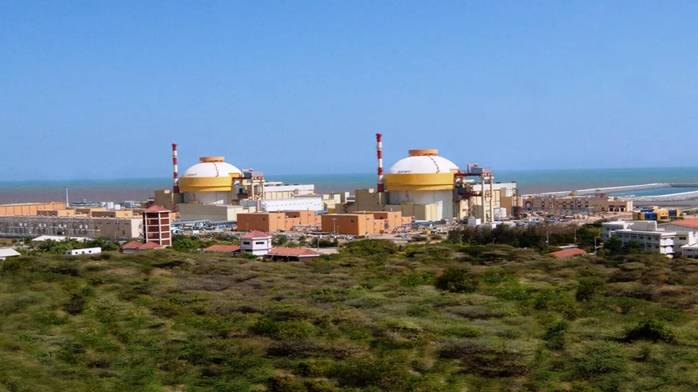
India’s Ministry of External Affairs (MEA) issued an urgent statement expressing deep concern over a drone strike that targeted an external generator at the Barakah Nuclear Power Plant in Abu Dhabi, UAE.
Main Body: Multi-Dimensional Analysis
- A New Maritime Security Threat: The strike, which hit an electrical generator outside the inner perimeter of the facility, represents a dangerous escalation in West Asian drone warfare. It directly threatens energy infrastructure throughout the Persian Gulf.
- Securing Energy Corridors: India relies heavily on West Asian stability for its energy security. Any volatility near crucial choke points, such as the nearby Strait of Hormuz, causes instant fluctuations in global crude oil prices, impacting Indian domestic fuel rates.
- Protecting the Indian Diaspora: The UAE hosts over 3.5 million Indian expatriates. Escalating regional hostilities or strikes on critical infrastructure raise immediate concerns regarding human security and potential evacuation planning.
- India’s Diplomatic Balancing Act: New Delhi maintains deep strategic ties with both the Gulf Cooperation Council (GCC) nations and Iran. As regional tensions rise, India must navigate these relationships carefully, calling for immediate restraint and diplomacy without alienating either side.
Positives, Negatives, & Government Schemes
| Dimension | Details |
| Positives | Active diplomacy highlights India’s status as a responsible, stabilizing global power that opposes attacks on nuclear infrastructure. |
| Negatives | Prolonged conflict creates energy instability, increases domestic inflation via crude oil spikes, and threatens expatriate remittances. |
| Associated Frameworks | India-UAE Comprehensive Strategic Partnership, Look West Policy, International Atomic Energy Agency (IAEA) safety protocols. |
Examples
The sudden long lines seen at domestic petrol pumps across several Indian states demonstrate how quickly geopolitical events in West Asia impact the economic sentiment of regular Indian consumers.
Way Forward
- Utilize multilateral forums like the mid-tier I2U2 Grouping (India, Israel, UAE, USA) to establish joint security protocols for critical commercial infrastructure.
- Accelerate domestic strategic crude oil reserves storage to cushion the economy against unexpected supply chain blockades in the Persian Gulf.
Conclusion
The drone strike on the Barakah facility underscores the vulnerability of global energy networks. For India, preserving peace in West Asia is a strategic necessity, requiring proactive diplomatic engagement to prevent localized conflicts from disrupting global stability.
Practice Mains Question
“The security of critical infrastructure in West Asia is directly linked to India’s domestic economic stability.” Evaluate this statement in light of the recent drone strike on the Barakah nuclear facility. (250 words)
Topic 5: Strategic Imperatives of India’s Clean Energy Storage Expansion
Syllabus
- GS Paper 3: Infrastructure: Energy; Science and Technology- developments and their applications in everyday life; Indigenization of technology.
Context
With India aggressively expanding its renewable energy capacity to meet its climate commitments, a new policy report highlighted the country’s critical dependence on imported components for energy storage systems.
Main Body: Multi-Dimensional Analysis
- The Grid Stability Challenge: Solar and wind energy are inherently intermittent. As renewable energy integration grows, large-scale Energy Storage Systems (ESS) are essential to maintain grid stability and manage peak demand periods.
- Technological Dual-Track Focus: India’s current strategy focuses on two distinct storage methods: Battery Energy Storage Systems (BESS) for rapid, short-duration grid balancing, and Pumped Hydro Storage Projects (PSP) for long-duration bulk storage.

- The Lithium Import Vulnerability: A key concern is that India currently imports 75–80% of its lithium-ion cells, which account for nearly 80% of total battery assembly costs. This creates a supply chain vulnerability similar to traditional oil dependence.
- Geopolitical and Supply Line Risks: With global supply chains for critical minerals highly concentrated, domestic manufacturing initiatives like the Production Linked Incentive (PLI) scheme for Advanced Chemistry Cells (ACC) face execution delays due to raw material access.
Positives, Negatives, & Government Schemes
| Dimension | Details |
| Positives | Reduces long-term carbon emissions, provides reliable round-the-clock (RTC) renewable power, and positions India well for clean energy self-reliance. |
| Negatives | High initial capital costs, heavy reliance on imported cell components, and environmental concerns regarding large-scale pumped hydro construction. |
| Associated Schemes | PLI Scheme for Advanced Chemistry Cell (ACC) Battery Storage, National Programme on ESS, Renewable Purchase Obligations (RPO). |
Examples
The recent vulnerability of domestic electric vehicle (EV) and battery grid manufacturers to international trade restrictions emphasizes the need for domestic mineral processing capabilities.
Way Forward
- Fast-track bilateral critical mineral acquisition agreements with resource-rich nations like Australia, Chile, and Argentina via Khanij Bidesh India Ltd (KABIL).
- Incentivize domestic alternatives like sodium-ion or zinc-air batteries, which use materials that are readily available within India.
Conclusion
Achieving green energy self-reliance requires looking beyond solar panels and wind turbines. India must build a robust, self-sustaining energy storage ecosystem to secure its clean energy transition against international geopolitical disruptions.
Practice Mains Question
Analyze the structural challenges India faces in securing supply chains for its Battery Energy Storage Systems (BESS). Suggest policy measures to reduce import dependence on critical minerals. (250 words)
Topic 6: Diplomatic and Industrial Engagement at the India-Nordic Summit
Syllabus
- GS Paper 2: Bilateral agreements involving India and/or affecting India’s interests; International treaties and industrial diplomacy.
Context
Prime Minister Narendra Modi commenced a high-level diplomatic visit to Sweden and Norway, participating in the 3rd India-Nordic Summit and a European CEO roundtable focused on bilateral industrial investments.
Main Body: Multi-Dimensional Analysis
- Attracting European Industrial Capital: The visit comes as major European corporations show renewed interest in India, driven by continuous domestic economic and regulatory reforms designed to ease the cost of doing business.
- Fostering Technological Alliances: The Nordic countries are global leaders in green technology, sustainable urban design, and clean transport. India aims to leverage these capabilities to modernize its domestic infrastructure through clean technology transfers.
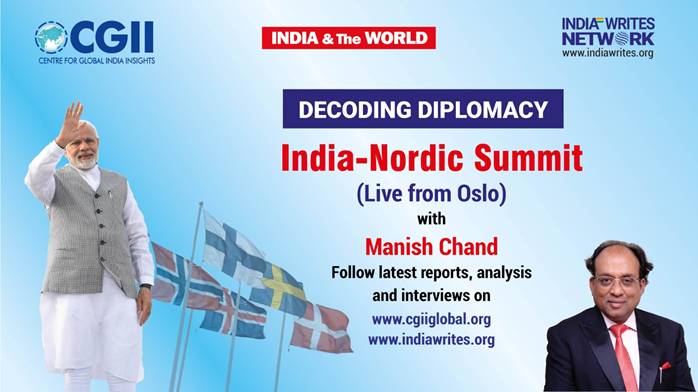
- Deepening Cultural and Soft Power Connections: The engagement highlighted shared cultural heritages, with diplomatic exchanges celebrating historical figures like Nobel Laureate Rabindranath Tagore, reinforcing deep institutional goodwill.
- Geopolitical Alignment on Sustainable Goals: Beyond commercial trade, the summit provides a platform for India to align with Nordic partners on Arctic research climate adaptation, maritime safety, and green hydrogen supply networks.
Positives, Negatives, & Government Schemes
| Dimension | Details |
| Positives | Diversifies incoming Foreign Direct Investment (FDI), accelerates technology transfers for green tech, and strengthens ties with key European economies. |
| Negatives | Complex European regulatory and ESG (Environmental, Social, and Governance) compliance frameworks can slow down initial project implementation. |
| Associated Frameworks | India-Nordic Summit Framework, Make in India, Atmanirbhar Bharat, European CEO Round Table Engagements. |
Examples
The European CEO roundtable, hosted by major industrial groups like Volvo, shows how Western heavy-industry firms are looking to integrate Indian engineering into their international supply chains.
Way Forward
- Establish a fast-track single-window clearance mechanism specifically for Nordic clean-tech investments in India.
- Set up joint academic and industrial research centers focused on developing affordable climate-resilient engineering solutions.
Conclusion
Engaging with the Nordic countries helps India move toward advanced, ecologically sustainable manufacturing. These partnerships blend international green technology with domestic manufacturing capacity, supporting a cleaner, more resilient economy.
Practice Mains Question
Assess the strategic importance of the India-Nordic partnership in advancing India’s green transition and sustainable development goals. (250 words)
Topic 7: The Delimitation Bill, 2026 and Its Constitutional Implications
Syllabus
- GS Paper 2: Indian Constitution—historical underpinnings, evolution, features, amendments, significant provisions, and basic structure; Issues and challenges pertaining to the federal structure.
Context
Legislative debate intensified over the provisions of the newly introduced Delimitation Bill, 2026, which seeks to lift the multi-decade freeze on altering Lok Sabha seat allocations across states based on updated population metrics.
Main Body: Multi-Dimensional Analysis
- The Demography vs. Representation Dilemma: The Bill proposes increasing the maximum number of Lok Sabha members from 550 to 850. Seats will be allocated in proportion to population, meaning constituencies across all states will have roughly equal population sizes.
- The Federal Strain on Southern States: Southern states like Tamil Nadu and Kerala have successfully implemented national family planning and population control policies over the past 50 years. Consequently, direct population-based reallocation could see Tamil Nadu’s seats drop from 39 to 32, while less successful states gain representation.
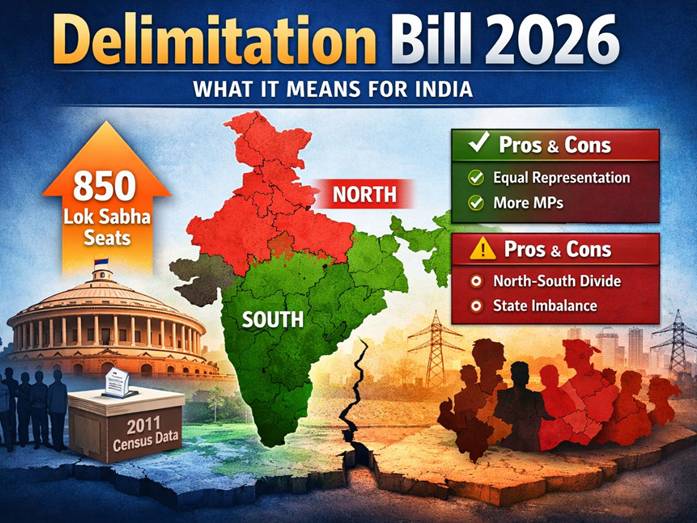
- Changing Legislative Discretion: The Bill authorizes Parliament to pass laws determining when delimitation is carried out and which census will be used, introducing significant procedural flexibility compared to older, rigid constitutional mandates.
- Impact on Bicameral Balance: Leaving the Rajya Sabha’s maximum strength frozen at 250 while expanding the Lok Sabha alters the traditional 2.2:1 seat ratio to 3.3:1. This change significantly reduces the relative influence of Rajya Sabha members in joint sittings and presidential elections.
Positives, Negatives, & Government Schemes
| Dimension | Details |
| Positives | Restores the principle of equal democratic representation (“one citizen, one vote value”) and updates outdated constituency boundaries. |
| Negatives | Penalizes demographically progressive southern states, risking regional political alienation and straining cooperative federalism. |
| Associated Laws / Concepts | Article 81 (Composition of Lok Sabha), Article 82 (Delimitation), 84th Constitutional Amendment Act, Delimitation Commission Act. |
Examples
Projections showing that northern states could gain substantial legislative majorities while southern representation declines highlight the sensitive nature of the ongoing federal debate.
Way Forward
- Introduce a constitutional balancing mechanism that rewards or protects the legislative weight of states achieving national development and population targets.
- Consider expanding the Rajya Sabha proportionately to preserve the bicameral balance and ensure smaller states retain a strong voice in Parliament.
Conclusion
While updating constituency boundaries is important for democratic representation, implementing the Delimitation Bill, 2026, requires careful consensus-building. The process must be managed thoughtfully to protect India’s federal balance and ensure no region feels marginalized.
Practice Mains Question
“The impending delimitation exercise threatens to create a constitutional imbalance between demographically progressive and demographically expanding states.” Critical evaluate the provisions of the Delimitation Bill, 2026, in this context. (250 words)
Topic 8: Corporate Earnings and the Divestment of Coal India Subsidiaries
Syllabus
- GS Paper 3: Indian Economy and issues relating to planning, mobilization of resources, growth, development, and employment; Investment models.
Context
The Department of Investment and Public Asset Management (DIPAM) processed a major public proposal approving the listing and 25% divestment of Mahanadi Coalfields Ltd (MCL), a highly profitable subsidiary of state-owned Coal India Limited (CIL).
Main Body: Multi-Dimensional Analysis
- Strategic Asset Monetization: The decision to list Mahanadi Coalfields through an Initial Public Offering (IPO) reflects the government’s ongoing strategy of public asset monetization to raise non-tax revenue without sacrificing state ownership.
- Booster for Capital Markets: Introducing a profitable public sector enterprise into domestic stock markets provides institutional and retail investors with stable options, helping deep-set capital liquidity during volatile trading periods.

- Corporate Governance and Autonomy: Listing requires adherence to SEBI’s strict compliance, transparency, and quarterly disclosure rules. This transition encourages public sector undertakings (PSUs) to improve operational efficiency and adopt modern corporate governance practices.
- Balancing Fossil Revenues with Green Transitions: While CIL subsidiaries report strong earnings from industrial operations, the government must balance fossil fuel asset monetization with its long-term financial commitments to clean energy alternatives.
Positives, Negatives, & Government Schemes
| Dimension | Details |
| Positives | Generates non-tax revenue for public infrastructure projects, improves PSU operational transparency, and deepens domestic capital markets. |
| Negatives | Can lead to market concerns over the partial privatization of strategic energy resources and potential pushback from public labor unions. |
| Associated Schemes / Bodies | DIPAM, Alternative Mechanism (AM) for Disinvestment, National Monetisation Pipeline (NMP), SEBI Listing Regulations. |
Examples
MCL’s successful financial performance, which helped drive a significant rise in Coal India’s overall earnings, highlights why profitable state subsidiaries are attractive options for public listing.
Way Forward
- Ensure a fixed portion of the capital raised from the IPO is reinvested directly into green energy research and mining safety upgrades.
- Maintain a clear communication channel with labor unions to address structural transition concerns regarding institutional equity changes.
Conclusion
The strategic listing of Mahanadi Coalfields shows how public asset monetization can build fiscal space while improving corporate transparency. Properly balancing state oversight with market accountability helps key public enterprises contribute effectively to national development.
Practice Mains Question
Discuss the economic rationale behind the strategic disinvestment and public listing of highly profitable central public sector enterprise (CPSE) subsidiaries. (250 words)
