
Topic 1: 3rd India-Nordic Summit Resumes After Geopolitical Pause
Syllabus
- GS Paper 2: Bilateral, Regional, and Global Groupings and Agreements involving India and/or affecting India’s interests.
- Subject Focus: International Relations
Context
On May 19, 2026, Prime Minister Narendra Modi participated in the 3rd India-Nordic Summit in Oslo, Norway, alongside the leaders of Norway, Sweden, Finland, Iceland, and Denmark. The summit resumed after a year-long hiatus following previous security disruptions in South Asia, signaling India’s deep diplomatic pivot toward the Arctic region and Northern Europe.
Main Body: Multi-Dimensional Analysis
- Strategic Pivot to the North: The resumption of the India-Nordic summit highlights India’s institutionalized shift toward Northern Europe, viewing the Nordic states as critical partners for clean technology, maritime security, and sustainable blue economy frameworks.
- Arctic Council & Geopolitical Synergy: With climate change rapidly altering Arctic shipping lanes, India’s enhanced cooperation with Nordic states safeguards its scientific and strategic footprint in the Arctic circle under the official India-Arctic Policy.
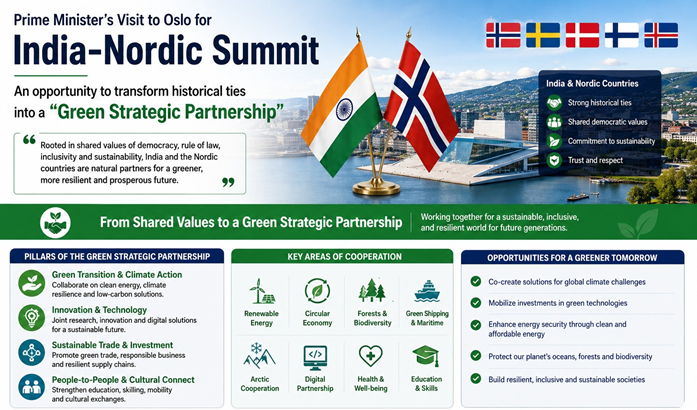
- Green Transition Partnerships: The summit focuses on scaling up renewable energy technology transfers—particularly offshore wind, green hydrogen, and advanced waste management systems where Nordic countries are global pioneers.
- Securing Critical Mineral Supply Chains: Discussions tied directly into integrating India into high-tech manufacturing ecosystems, as the Nordic region holds massive deposits of rare earth elements critical for electronic manufacturing and battery storage.
- Addressing Global Monopolies: Collaborative frameworks developed during the summit intend to reduce semiconductor and critical green-tech reliance on singular East Asian manufacturing hubs.
Positives, Negatives, & Government Schemes
| Dimension | Details |
| Positives | Access to advanced clean-tech patents, joint research in deep-sea oceanography, expansion of India’s strategic influence in the Arctic. |
| Negatives | Diplomatic friction with other geopolitical blocs over Arctic militarization; stringent European environmental standards can impede fast-track trade execution. |
| Associated Policies | India’s Arctic Policy, National Green Hydrogen Mission, Deep Ocean Mission. |
Examples
The signature of green strategic partnerships, similar to the existing India-Denmark Green Strategic Partnership, serves as an operational template for India’s broader engagement with all five Nordic nations.
Way Forward
- Establish a dedicated India-Nordic Green Investment Fund to fast-track municipal-level clean tech implementation across Indian tier-2 cities.
- Create institutional academic exchanges between Indian institutes (like IITs) and Nordic tech hubs for specialized cold-climate and maritime research.
- Align sovereign standards on maritime logistics to allow Indian seafarers smoother employment transitions into Nordic merchant fleets.
Conclusion
The 3rd India-Nordic Summit bridges the gap between India’s massive sustainable development scale and Nordic technological expertise, asserting India’s role as an active stakeholder in the future governance of polar and maritime resources.
Practice Mains Question
The India-Nordic partnership serves as a vital template for moving beyond traditional geopolitical alignments toward functional, technology-driven diplomacy. Analyze the statement in light of India’s economic and strategic goals in the Arctic and sub-Arctic regions. (250 words)
Topic 2: Historic Reshuffle of India’s Defence Top Brass
Syllabus
- GS Paper 3: Various Security Forces and Agencies and their Mandate, Security challenges and their management.
- Subject Focus: Defence & Security
Context
India is undergoing an unprecedented leadership transition within its security establishment. In May 2026, a structural reset is occurring with the simultaneous appointment and transition of almost the entire top brass, including the Chief of Defence Staff (CDS) Lt Gen N S Raja Subramani and Chief of Naval Staff Vice Admiral Krishna Swaminathan, alongside multiple top theatre commanders.
Main Body: Multi-Dimensional Analysis
- Unprecedented Institutional Transition: The simultaneous transition of the topmost military power centers within a 30-day window presents an extraordinary administrative challenge, testing the institutional resilience and continuity protocols of the Ministry of Defence.
- Accelerating Theatre Command Reforms: The incoming leadership takes charge at a critical juncture when India is fast-tracking the creation of integrated, geography-based Theatre Commands, shifting away from service-specific legacy command structures.
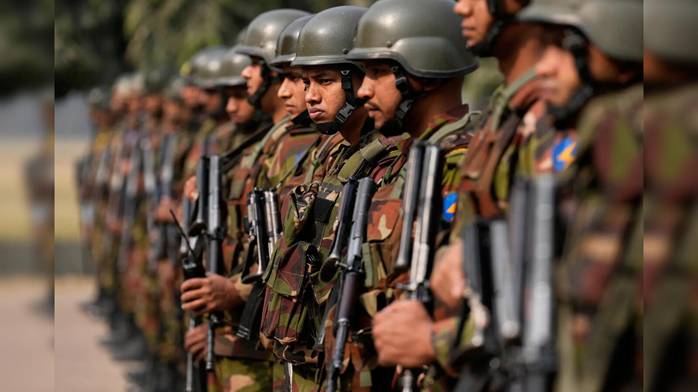
- Push for Jointness and Integration: The new appointments are structured to systematically erode inter-service rivalries between the Army, Navy, and Air Force, standardizing doctrines for future multi-domain warfare.
- Atmanirbharta in Military Procurement: The strategic leadership shift coincides with intense domestic pressure to fully phase out reliance on foreign weapon platforms, forcing the new chiefs to heavily back indigenous development systems (like AMCA and local electronic warfare systems).
- Adapting to New Warfare Paradigms: The top-brass reset will directly dictate India’s strategic posture regarding asymmetric threats, drone swarms, space warfare, and cyber-offensive capabilities.
Positives, Negatives, & Government Schemes
| Dimension | Details |
| Positives | Breaks administrative inertia, infuses fresh strategic vision tailored to modern asymmetric warfare, forces rapid integration across branches. |
| Negatives | Temporary vulnerabilities in institutional memory during overlapping handovers; operational continuity risks amid heightened regional borders tensions. |
| Associated Initiatives | Theaterisation Reforms, Department of Military Affairs (DMA), Positive Indigenisation Lists. |
Examples
The rapid coordination required during the recent maiden trials of the TARA Glide Weapon System and Agni-MIRV capabilities exemplifies the inter-service integration expected of the new military command structure.
Way Forward
- Institutionalize a permanent overlapping transition protocol where outgoing and incoming chiefs co-chair strategic planning sessions for at least 45 days.
- Codify the statutory rules governing the financial and operational powers of the CDS to prevent command friction with individual service chiefs.
- Fast-track the deployment of the joint logistics and communications nodes to provide the new top brass with immediate integrated operational capabilities.
Conclusion
The historic military leadership reset provides an optimal window to shatter legacy silos and institutionalize modern, integrated, and self-reliant defense command structures capable of handling complex multi-front security environments.
Practice Mains Question
Evaluate the challenges and opportunities associated with a comprehensive structural reset in the top military leadership of a nation. How can the Department of Military Affairs ensure uninterrupted operational continuity during large-scale transitions? (250 words)
Topic 3: India Excludes Oil Sourcing from Sanctions Regime After Waiver Expiry
Syllabus
- GS Paper 3: Indian Economy and issues relating to planning, mobilization of resources, growth, and development.
- Subject Focus: Economy / Geopolitics
Context
Following the official expiry of the temporary United States sanctions waiver on May 16, 2026, senior officials from India’s Ministry of Petroleum and Natural Gas confirmed on May 18-19, 2026, that India will systematically continue purchasing Russian seaborne crude based strictly on commercial viability and domestic energy security needs, defying extra-territorial economic restrictions.
Main Body: Multi-Dimensional Analysis
- Prioritization of Energy Security: India’s policy stance asserts that sovereign energy security and inflationary controls override unilateral Western sanctions regimes, ensuring stability in domestic fuel supply chains.
- De-dollarization and Alternate Payment Channels: Continuous sourcing from sanctioned markets has accelerated India’s experimentation with non-dollar payment systems, utilizing local currency settlements (INR-Ruble/Dirham) and alternative banking messaging networks.
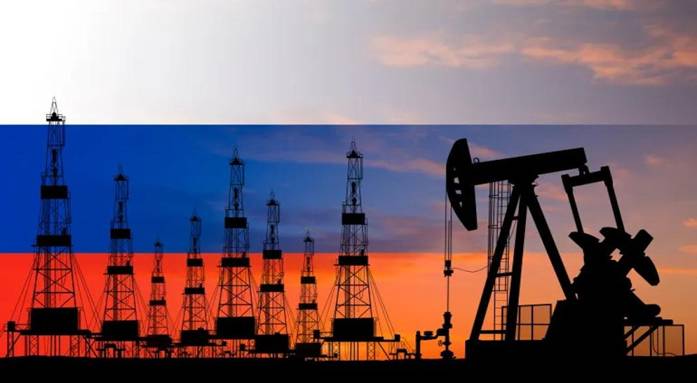
- Macroeconomic Cushion Against Global Spikes: The sourcing of discounted crude oil acts as a structural buffer for India’s Current Account Deficit (CAD) and protects fiscal space that would otherwise be depleted by volatile global crude benchmarks.
- Strategic Autonomy in Foreign Policy: By decoupling its trade decisions from Western regulatory timelines, India exercises its strategic autonomy, demonstrating that its economic partnerships are strictly bilateral and non-aligned.
- Supply Chain Diversification: While retaining sanctioned oil imports, the state has simultaneously locked in multi-year long-term volume arrangements with non-sanctioned Middle Eastern and African suppliers to mitigate sudden supply shocks.
Positives, Negatives, & Government Schemes
| Dimension | Details |
| Positives | Mitigates imported inflation, safeguards foreign exchange reserves, solidifies long-term diversified energy procurement channels. |
| Negatives | Potential secondary sanctions risk on Indian banking institutions; diplomatic friction with G7 trading blocs over sanctions enforcement compliance. |
| Associated Frameworks | Rupee Vostro Account System, National Energy Security Strategy, LSTMS (Local Currency Settlement System). |
Examples
India’s sustained sourcing of crude throughout both the imposition and subsequent expiration of international regulatory waivers serves as a textbook example of realpolitik guiding economic policy.
Way Forward
- Accelerate the expansion of the Strategic Petroleum Reserves (SPR) to store cheap crude during global market dips.
- Deepen institutional safeguards for domestic shipping lines and maritime insurance pools to completely bypass Western-dominated insurance cartels.
- Leverage crude purchasing power to negotiate preferential trade agreements in non-energy sectors with oil-exporting nations.
Conclusion
India’s decisive stance on oil imports underscores a mature geopolitical transition where commercial pragmatism and domestic welfare take absolute precedence over external geopolitical pressure, setting a precedent for global south resource autonomy.
Practice Mains Question
“Strategic autonomy in international relations is heavily contingent upon a country’s ability to safeguard its economic and energy security interests independently.” Critically analyze this statement in light of India’s crude oil import choices. (250 words)
Topic 4: The Impact of Sovereign Fuel Fiscal Adjustments
Syllabus
- GS Paper 3: Mobilization of resources, Fiscal Policy, Inflationary trends and management.
- Subject Focus: Economy
Context
On May 19, 2026, fuel retailers executed a second consecutive price hike within a week, pushing petrol and diesel prices up by 90 paise per liter following a sharp ₹3 hike on May 15. The state adjusted fuel pricing to preserve foreign exchange reserves and protect the current account deficit from widening for a third consecutive fiscal year, triggering administrative work-from-home directives across various sectors.
Main Body: Multi-Dimensional Analysis
- Fiscal Prudence vs. Inflationary Pressures: The price hike reflects the state’s choice to prioritize fiscal conservation and maintain macroeconomic balance sheets over absorbing the rising costs via state subsidies.
- Cascading Impact on Primary Inflation: Since diesel drives the logistics and agricultural transport sectors in India, back-to-back fuel price increases directly translate to higher food and consumer goods inflation.
- Administrative and Operational Interventions: The central advisory encouraging work-from-home (WFH) practices and optimized official travel highlights an innovative, non-monetary policy intervention to curb national fuel demand.
- Impact on Private Infrastructure and Retailers: The move creates a wider margin for private fuel retailers who have been operating under compressed margins, stabilizing the retail downstream energy market.
- Push Toward Alternate Mobility: Prolonged elevated fuel costs change the consumer cost-benefit analysis, acting as an unintended catalyst that accelerates the adoption of electric vehicles (EVs) and CNG alternatives.
Positives, Negatives, & Government Schemes
| Dimension | Details |
| Positives | Prevents the widening of the current account deficit, forces resource conservation, enhances fiscal revenue for public infrastructure projects. |
| Negatives | Increases the cost of living index, strains low-income transport workers, can trigger secondary price hikes in perishable food items. |
| Associated Initiatives | FAME-III Scheme, National Biofuels Policy, SATAT Initiative (Sustainable Alternative Towards Affordable Transportation). |
Examples
The rapid shift of IT and state administrative offices to hybrid remote work models during the mid-2026 fuel cost spike serves as a concrete example of systemic adaptation to resource conservation.
Way Forward
- Implement targeted fuel subventions or direct benefit transfers (DBT) specifically for public transport operators and primary farmers using diesel pumps.
- Rationalize central and state taxes (Excise and VAT) on petroleum products by progressively discussing the integration of fuel under the GST framework.
- Aggressively scale up the mass transport infrastructure, particularly electric bus fleets in metropolitan and tier-2 urban centers.
Conclusion
While retail fuel adjustments impose immediate socio-economic strain, they emphasize the critical necessity for structural decoupling from fossil fuel dependencies and transitioning toward a more resilient, digitally-optimized, and electrified economy.
Practice Mains Question
Examine the macroeconomic trade-offs between maintaining fiscal deficits through deregulated fuel pricing and controlling retail inflation. Assess the utility of behavioral and administrative measures like ‘Work from Home’ in managing national resource crises. (250 words)
Topic 5: Tamil Nadu Transitions to a Multipolar Legislative Assembly
Syllabus
- GS Paper 2: Salient features of the Representation of People’s Act, Structure, organization, and functioning of the Executive and the Legislature.
- Subject Focus: Polity & Governance
Context
Following the historic May 4, 2026, election results that led to the state’s first hung assembly, the newly formed Tamil Nadu government, led by Chief Minister C. Joseph Vijay, successfully passed its critical legislative floor test on May 13, 2026. By May 19, 2026, the assembly entered an entirely new operational paradigm as political parties adjusted to a highly fragmented, multipolar legislative environment.
Main Body: Multi-Dimensional Analysis
- De-monopolization of Regional Politics: The 2026 election broke a 59-year unbroken cycle of bipolar dominance between the two traditional Dravidian legacy parties, ushering in a multipolar era that alters the state’s political sociology.
- The Dynamics of a Hung Assembly: Operating within a hung assembly format forces the ruling party to shift away from unilateral executive decisions toward a culture of consensus-building and compromise to ensure legislative stability.
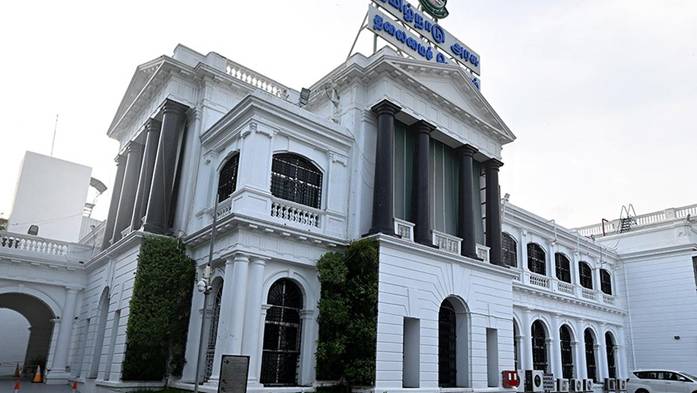
- Role of the Speaker and Anti-Defection Nuances: The sharp internal splits and the emergence of distinct legislative factions within established opposition blocks put immense constitutional focus on the Speaker’s neutrality under the Tenth Schedule.
- Grassroots Coalition Politics: The successful execution of the floor test highlights a structural shift where regional micro-alliances and minor political parties hold disproportionate leverage over policy execution and state stability.
- Implications for Governance Stability: While multipolar assemblies enhance descriptive representation, they risk legislative gridlock, where long-term developmental policies might be compromised for short-term political survival.
Positives, Negatives, & Government Schemes
| Dimension | Details |
| Positives | Enhances democratic pluralism, gives marginalized regional factions a direct legislative voice, creates strict checks and balances on executive action. |
| Negatives | High risk of administrative instability, potential for horse-trading, vulnerability to sudden mid-term policy reversals. |
| Associated Constitutional Tools | Article 175 (Right of Governor to address Assembly), Tenth Schedule (Anti-Defection), Rule 66 of TN Legislative Assembly. |
Examples
The intense procedural debates over floor speaking arrangements between the principal opposition and breakaway factions during the May 13 floor test illustrate the complex legislative management now required in the assembly.
Way Forward
- Formulate clear, written Common Minimum Programmes (CMP) between the ruling party and supporting legislative blocs to guarantee policy consistency.
- Strengthen the role of department-related standing committees in the Tamil Nadu assembly to vet bills neutrally before they face a divided house.
- Codify transparent legislative conventions regarding the recognition of split factions to avoid repetitive and time-consuming judicial litigations.
Conclusion
The transition of the Tamil Nadu legislature into a multipolar arena marks a profound maturation of the regional democratic process, requiring a shift in political craftsmanship from absolute executive dominance to sophisticated consensus-driven governance.
Practice Mains Question
“The emergence of a hung assembly and a multipolar legislature challenges executive stability but deepens democratic deliberation.” Evaluate this statement in the context of the changing political landscape of Tamil Nadu. (250 words)
Topic 6: Financial Relief and Welfare Re-alignments in State Expenditures
Syllabus
- GS Paper 2: Welfare schemes for vulnerable sections of the population by the Centre and States and the performance of these schemes.
- Subject Focus: National Issues / State Economy
Context
In mid-May 2026, major state administrations executed wide-ranging fiscal realignments. The West Bengal Cabinet gave in-principle approval for its 7th Pay Commission while simultaneously restructuring its welfare model by cutting non-educational direct benefit transfers (DBT) to offset an intensive ₹3,000 monthly universal women’s basic income scheme (Annapurna Bhandar). Concurrently, Tamil Nadu expanded its fiscal commitments by implementing a 2% Dearness Allowance (DA) hike for 16 lakh employees.
Main Body: Multi-Dimensional Analysis
- The Universal Basic Income Trend: The introduction of large-scale cash transfer models like the ₹3,000 monthly allowance signals a growing shift toward direct state-sponsored economic safety nets for women.
- Fiscal Consolidation and Welfare Pruning: To finance high-payout universal schemes, states are forced to terminate smaller, fragmented departmental DBT schemes, marking a transition toward unified, high-impact welfare structures.
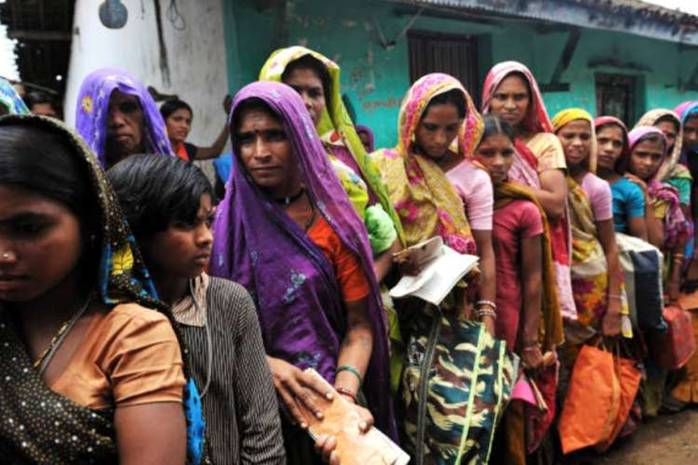
- Managing the State Exchequer Debt Burden: The simultaneous implementation of Pay Commissions and expanded welfare commitments severely strains state-level capital expenditure (CapEx), risking a reduction in funds available for physical infrastructure.
- Administrative Wage-Inflation Adjustments: Periodic modifications like Tamil Nadu’s 2% DA hike (costing ₹1,230 crore annually) are critical structural tools to safeguard public sector purchasing power against rising inflationary benchmarks.
- Inclusion of Marginalized and Legal Applicants: Integrating applicants under specialized citizenship provisions (like the CAA) into state-level welfare programs creates a unique convergence between central legal status frameworks and state welfare rollouts.
Positives, Negatives, & Government Schemes
| Dimension | Details |
| Positives | Increases rural consumption through immediate cash injection, enhances gender financial autonomy, systematic pruning of redundant administrative schemes. |
| Negatives | Exacerbates the state revenue deficit, compresses the fiscal space required for long-term health and education asset building. |
| Associated Frameworks | 7th Pay Commission, Article 282 (Discretionary grants), Direct Benefit Transfer (DBT) optimization. |
Examples
The immediate reallocation of funds away from cultural and minority department cash handouts to support macro-welfare schemes demonstrates a strategic, structural consolidation of welfare budgets.
Way Forward
- Establish strict legislative fiscal caps matching state welfare payouts directly to specific non-tax revenue generation targets.
- Utilize advanced digital data analytics to clean beneficiary registries, filtering out tax-paying households to keep cash schemes strictly targeted.
- Shift a portion of cash assistance into structured asset-building coupons (e.g., skill development credits or green energy micro-subsidies).
Conclusion
Modern provincial welfare architecture requires a precise, scientific balancing act between short-term political populism, grassroots income security, and long-term fiscal sustainability to prevent structural debt traps.
Practice Mains Question
“The expansion of universal cash transfer schemes by state governments often comes at the cost of capital expenditure on infrastructure.” Critically examine the socio-economic consequences of this fiscal shift. (250 words)
Topic 7: The Foreign Policy Push into Indo-Pacific Mini-Lateralisms
Syllabus
- GS Paper 2: India and its neighborhood- relations, Effect of policies and politics of developed and developing countries on India’s interests.
- Subject Focus: International Relations
Context
On May 18-19, 2026, India’s Ministry of Defence executed a vital strategic outreach across East and Southeast Asia, with leadership departing for high-level bilateral and industrial defense talks with Vietnam and South Korea. This strategic engagement coincided with the historic birth anniversary of Ho Chi Minh, cementing defense industrial partnerships and maritime safety frameworks in the volatile Indo-Pacific region.
Main Body: Multi-Dimensional Analysis
- Operationalization of Act East Policy: This high-level defense outreach converts diplomatic rhetoric into active military interoperability, strengthening security networks with middle powers located on the periphery of the South China Sea.
- Defense Industrial Co-Production: The transition from a buyer-seller relationship to joint co-production of naval assets, missile components, and advanced electronic warfare kits allows India to build an export market for its domestic defense platforms.
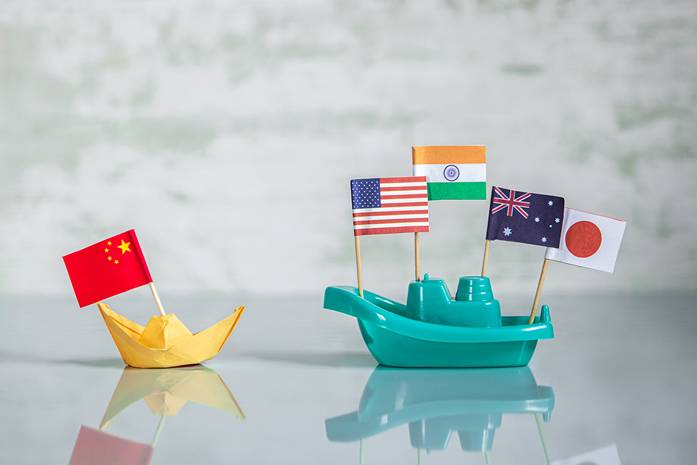
- Maritime Security and Sea Lines of Communication (SLOCs): Joint maritime security understandings with Vietnam and South Korea help secure vital shipping choke points through which more than 55% of India’s trade passes.
- Strategic Counter-Balancing: Enhancing deep military and logistical partnerships with countries adjacent to major maritime flashpoints allows India to assert its status as a net security provider in the broader Indo-Pacific geography.
- Cultural and Historic Diplomacy: Fusing hardcore defense negotiations with historical commemorations (such as Ho Chi Minh’s 136th anniversary) forms a sophisticated, multi-layered diplomatic approach that builds deep institutional trust.
Positives, Negatives, & Government Schemes
| Dimension | Details |
| Positives | Diversifies defense manufacturing partnerships, creates external export markets for Indian defense public sector undertakings (DPSUs), ensures maritime monitoring. |
| Negatives | Heightens immediate tactical friction with neighboring regional superpowers; navigating complex non-aligned diplomatic positions during localized maritime skirmishes. |
| Associated Initiatives | Act East Policy, SAGAR (Security and Growth for All in the Region), Indo-Pacific Oceans Initiative (IPOI). |
Examples
The deployment and scientific interactions of the Indian Navy’s oceanographic research vessel, INS Sagardhwani, across ports in Malaysia and Vietnam in May 2026 illustrate active scientific maritime diplomacy.
Way Forward
- Finalize comprehensive mutual logistics support agreements (MLSA) with South Korea and Vietnam to allow deep-sea replenishment for Indian naval vessels.
- Establish dedicated joint defense technology incubation centers in Chennai or Hyderabad in partnership with South Korean aerospace firms.
- Conduct regular trilateral naval exercises involving India, Vietnam, and South Korea to build seamless tactical operational continuity.
Conclusion
By intentionally strengthening military and industrial ties with critical middle powers in the Indo-Pacific, India successfully moves away from passive regional observation toward actively building a balanced, rules-based multipolar maritime order.
Practice Mains Question
Assess the strategic significance of India’s deepening defense and industrial partnerships with Southeast and East Asian nations in maintaining a multipolar Indo-Pacific security architecture. (250 words)
Topic 8: Advanced Technological Interventions in Defence Aviation
Syllabus
- GS Paper 3: Indigenization of technology and developing new technology, Science and Technology- developments and their applications in everyday life.
- Subject Focus: Defence / Science & Technology
Context
On May 15, 2026, the Ministry of Defence, in collaboration with regional state governments, officially laid the foundation stones for India’s Advanced Medium Combat Aircraft (AMCA) Core Integration & Flight Testing Centre, alongside a dedicated Naval Systems Manufacturing Facility. This milestone accelerates the domestic engineering timeline for India’s proprietary 5th-generation stealth fighter infrastructure.
Main Body: Multi-Dimensional Analysis
- Achieving 5th-Generation Aerodynamic Sovereignty: The construction of a dedicated flight testing and core integration facility transitions the AMCA project from theoretical blueprints to tangible, advanced structural assembly.
- Synergy of Public-Private Ecosystems: The development of advanced aerospace facilities acts as an economic multiplier, forcing the creation of high-precision micro, small, and medium enterprise (MSME) supply chains to feed components into the core integration center.
- Self-Reliance in Stealth and Avionics: Overcoming reliance on external military aerospace cartels ensures that India’s future combat fleets possess uncompromised cyber-security, locally encrypted data-links, and indigenous radar-evading coatings.
- Integration of Advanced Computational Testing: The facility is designed to incorporate real-time digital-twin modeling and artificial intelligence diagnostics, shortening the traditional structural certification pipeline for experimental aircraft.
- Strategic Maritime Aviation Parity: The simultaneous development of specialized Naval Systems Manufacturing facilities addresses the critical structural adjustments required to operate advanced combat platforms off carrier-borne ski-jumps and catapult networks.
Positives, Negatives, & Government Schemes
| Dimension | Details |
| Positives | Drastically reduces timelines for domestic fifth-generation fighter deployment, eliminates foreign software dependencies, fosters high-end precision engineering jobs. |
| Negatives | Exceptionally high initial capital expenditure requirements; risks of project delays due to initial difficulties in domestic high-thrust engine co-development. |
| Associated Frameworks | AMCA Programme, Technology Development Fund (TDF), Make in India in Defence, SRIJAN Portal. |
Examples
The successful implementation of stealth and high-altitude materials tested during recent hypersonic scramjet combustor trials by the DRDO provides foundational technology for the integration center.
Way Forward
- Frame an independent, long-term non-lapsable defense aerospace fund to shield the AMCA integration timeline from annual fiscal budgeting fluctuations.
- Induct private-sector technology conglomerates directly into the software development loop for the aircraft’s mission computers and electronic warfare suites.
- Develop a specialized aerospace engineering corridor adjacent to the integration facility to optimize the physical supply chain of advanced components.
Conclusion
The creation of specialized, high-tier integration and testing centers for 5th-generation systems transforms India’s defense sector, shifting it from a license-manufacturing hub to a primary source of cutting-edge global aerospace engineering.
Practice Mains Question
“The transition toward fifth-generation indigenous combat aircraft programs represents a shift from basic military manufacturing to advanced scientific innovation.” Discuss the structural hurdles India must overcome to achieve self-reliance in stealth aerospace technology. (250 words)
