
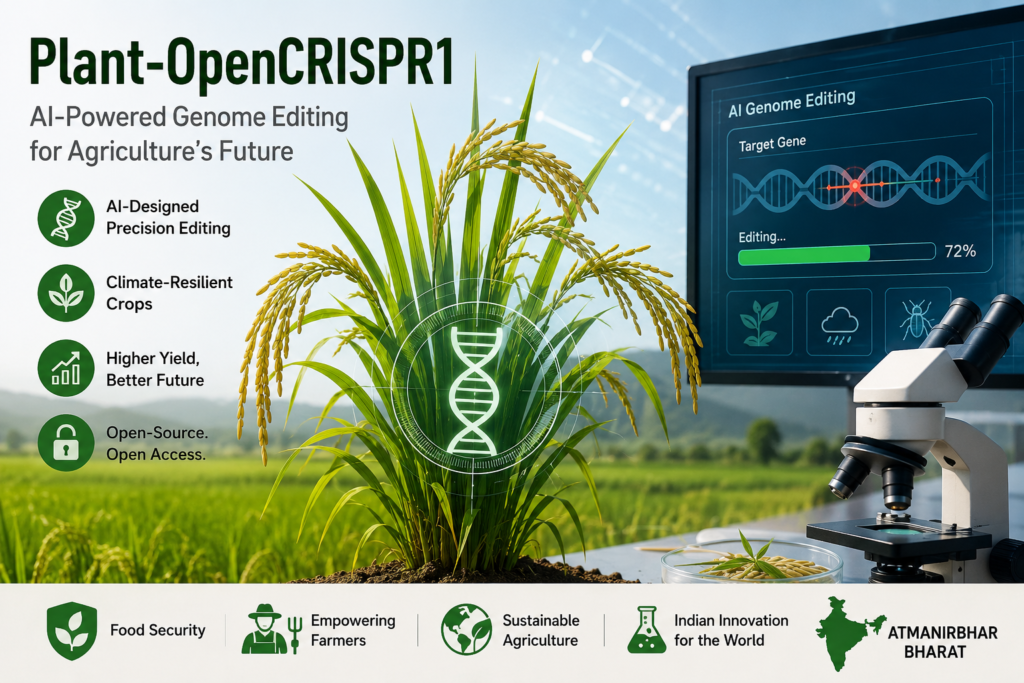
Topic 1: AI-Designed Genome-Editing Platform for Plants (Plant-OpenCRISPR1)
Syllabus:
- General Studies Paper III: Science and Technology- developments and their applications and effects in everyday life; Awareness in the fields of IT, bio-technology; Major crops-cropping patterns in various parts of the country.
Context:
- Scientists at the Indian Council of Agricultural Research’s (ICAR) Central Rice Research Institute (CRRI) have successfully developed Plant-OpenCRISPR1 (POC1).
- It is the world’s first artificial intelligence-designed genome-editing platform explicitly tailored for agricultural crops, successfully validated using rice as a biological model.
Main Body: Multi-Dimensional Analysis
- Scientific & Technological Dimension:
- Precision Agriculture 2.0: Unlike traditional CRISPR-Cas9, an AI-designed platform drastically reduces “off-target” mutations by predicting the exact genomic sequence to alter.
- Accelerated Trait Discovery: AI algorithms can simulate millions of genetic combinations in days, identifying the precise gene knockouts required for drought tolerance or pest resistance, a process that traditionally took decades of cross-breeding.
- Open-Source Innovation: Being an “Open” platform suggests decentralized access, allowing regional agricultural universities to customize crops for local agro-climatic zones without paying exorbitant patent royalties to Western agro-tech giants.
- Agricultural & Ecological Dimension:
- Climate Resilience: With shifting monsoons and rising temperatures, POC1 enables the rapid development of heat-tolerant and flood-resistant rice varieties, safeguarding food security.
- Input Efficiency: Genome editing can create crop varieties that efficiently fix nitrogen or require fewer chemical pesticides, mitigating soil degradation and groundwater pollution.
- Biodiversity Concerns: The rapid proliferation of highly efficient, edited crops might lead to mono-cropping, inadvertently threatening native seed varieties and agricultural biodiversity if not carefully managed.
- Economic Dimension:
- Export Competitiveness: Genetically optimized, high-yield crops can lower domestic food prices while boosting India’s agricultural export surplus, especially in premium rice varieties.
- Farmer Income: By reducing crop losses to pests and extreme weather, the net realization for farmers increases, directly aligning with the objective of doubling farmers’ income.
- Regulatory & Ethical Dimension:
- Gene-Edited vs. Transgenic: India recently relaxed regulations for SDN-1 and SDN-2 categories of genome-edited plants (which do not introduce foreign DNA). POC1 leverages this, bypassing the heavy regulatory bottlenecks faced by traditional GMOs like Bt Brinjal.
- Bio-ethics: The integration of AI in genetic engineering raises questions about the predictability of long-term ecological impacts and the need for robust bio-safety protocols.
Positives, Negatives, and Government Schemes
| Category | Key Points |
| Positives | • Exponentially speeds up crop improvement cycles. • Reduces reliance on chemical fertilizers and pesticides. • Ensures national food security amidst climate change. • Democratizes high-end biotech research for domestic institutions. |
| Negatives | • Risk of unintended genetic consequences (pleiotropy). • High initial R&D and infrastructure costs for regional labs. • Potential pushback from civil society due to conflation with GMOs. • Risk of corporate monopolies if AI models become proprietary later. |
| Relevant Govt Schemes | • National Mission on Agricultural Extension and Technology (NMAET): For disseminating new crop tech. • Paramparagat Krishi Vikas Yojana (PKVY): Must be balanced with modern tech. • Biotech-KISAN: To connect science laboratories with farmers. |
Examples:
- Creating a rice strain utilizing POC1 that survives submergence for 20 days during floods (similar to the Swarna Sub1 variety but developed in a fraction of the time).
- Editing the genome of mustard to reduce pungency and increase oil yield without introducing foreign genes.
Way Forward:
- Establish a Regulatory Sandbox: Create controlled, regional testing environments to study the ecological impact of AI-edited crops across different soil profiles before commercial release.
- Capacity Building: Upgrade infrastructure and train researchers at State Agricultural Universities (SAUs) to utilize the POC1 platform effectively.
- Public Trust Deficit Management: Launch nationwide awareness campaigns distinguishing between transgenic GMOs (foreign DNA) and cisgenic/edited crops (native DNA tweaks) to prevent socio-political backlash.
- Seed Sovereignty Protection: Ensure the seeds developed via POC1 remain in the public domain or are patent-free for marginal farmers to prevent corporate exploitation.
Conclusion:
- The advent of Plant-OpenCRISPR1 represents a paradigm shift from traditional agriculture to “Agri-Tech 4.0”. While it offers a silver bullet for climate-induced agricultural stagnation, its success hinges on an agile, transparent regulatory framework that prioritizes farmer welfare and ecological balance over mere yield maximization.
Practice Mains Question:
- “The integration of Artificial Intelligence with genome editing, as seen in the Plant-OpenCRISPR1 platform, offers unprecedented opportunities but raises complex regulatory challenges.” Analyze this statement in the context of India’s agricultural sector and food security. (250 words)
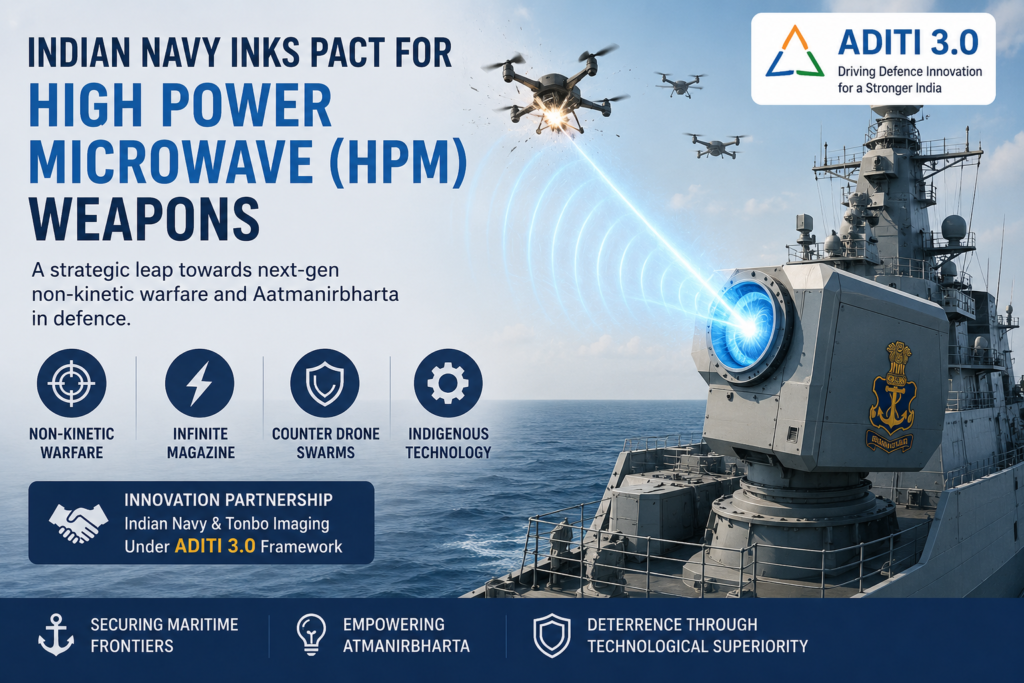
Topic 2: Indian Navy Inks Pact for High Power Microwave (HPM) Weapons
Syllabus:
- General Studies Paper III: Security challenges and their management in border areas; Indigenization of technology and developing new technology; Role of external state and non-state actors in creating challenges to internal security.
Context:
- Under the ADITI 3.0 defense innovation framework, the Indian Navy has awarded a strategic contract to Tonbo Imaging to develop and integrate High Power Microwave (HPM) systems into naval platforms.
- HPMs are directed-energy weapons (DEWs) that use electromagnetic waves to non-kinetically disable enemy electronics and drone swarms.
Main Body: Multi-Dimensional Analysis
- Strategic & Security Dimension:
- Asymmetric Warfare: The modern maritime battlefield is increasingly defined by cheap, lethal drone swarms (as seen in the Red Sea/Houthi attacks). HPM weapons provide an asymmetric advantage, frying the circuits of multiple drones simultaneously without expending costly kinetic interceptor missiles.
- Non-Kinetic Escalation Control: HPMs allow the Navy to disable hostile assets (like pirate skiffs or adversary surveillance vessels) without causing lethal damage or physical explosions, giving commanders flexible options on the escalation ladder.
- Stealth and Speed: Operating at the speed of light, these weapons require only power generation, offering an “infinite magazine” as long as the ship’s generators are running, eliminating the logistical nightmare of restocking missiles at sea.
- Technological & Indigenization Dimension:
- Aatmanirbharta in Defence: Partnering with a domestic firm (Tonbo Imaging) under the ADITI 3.0 framework marks a shift from importing legacy hardware to co-developing frontier technologies locally.
- Platform Integration Challenges: Retrofitting HPMs onto existing naval vessels requires massive onboard power generation (directed energy) and advanced cooling systems, posing significant naval architectural challenges.
- Geopolitical Dimension:
- Indo-Pacific Deterrence: With the PLA Navy expanding its footprint and electronic warfare capabilities in the Indian Ocean Region (IOR), deploying DEWs signals India’s readiness to protect sea lines of communication (SLOCs) using next-gen tech.
- Export Potential: Successfully demonstrating indigenous HPM capabilities positions India as a net security provider and a potential exporter of advanced defense tech to ASEAN nations facing similar maritime threats.
Positives, Negatives, and Government Schemes
| Category | Key Points |
| Positives | • “Infinite magazine” capacity—cost per kill is virtually zero after initial installation. • Simultaneous engagement of multiple targets (drone swarms). • Boosts domestic defense manufacturing ecosystem and private sector R&D. • Reduces dependency on expensive surface-to-air missiles for point defense. |
| Negatives | • Limited range compared to kinetic missiles; requires targets to be relatively close. • Highly dependent on atmospheric conditions (humidity/rain can attenuate microwaves). • Colossal power and thermal management requirements on ships. • Risk of “friendly fire” disabling allied electronics if not precisely targeted. |
| Relevant Govt Schemes | • ADITI (Acing Development of Innovative Technologies with iDEX): For frontier tech. • iDEX (Innovations for Defence Excellence): Fostering MSMEs and startups. • Make in India (Defence): Capital acquisition route for indigenous design. |
Examples:
- Deploying an HPM system on a destroyer to instantly disable a swarm of 20 incoming loitering munitions, a scenario where traditional Phalanx CIWS (Close-In Weapon Systems) might run out of ammunition or be overwhelmed.
- Disrupting the navigation and communication arrays of a hostile submarine periscope temporarily breaking the surface.
Way Forward:
- Naval Architecture Upgrades: Future surface combatants must be designed with Integrated Electric Propulsion (IEP) to meet the massive power demands of directed energy weapons.
- Joint Doctrine Development: Formulate clear Standard Operating Procedures (SOPs) and Rules of Engagement (RoE) for the deployment of non-kinetic weapons in grey-zone conflicts.
- Private Sector Synergy: Expand the ADITI framework to create consortiums between DRDO, private tech firms, and academia to solve specific bottlenecks like thermal management.
- Counter-DEW Shielding: Simultaneously invest R&D in hardening our own naval electronics and communication arrays against adversarial electromagnetic pulses (EMP) and HPM attacks.
Conclusion:
- The induction of High Power Microwave weapons transitions the Indian Navy from conventional ballistics to the era of electromagnetic warfare. By leveraging private sector innovation through ADITI 3.0, India is not just modernizing its fleet but proactively securing its maritime perimeter against the evolving asymmetric threats of the 21st century.
Practice Mains Question:
- “Directed Energy Weapons (DEWs) like High Power Microwaves are not just tactical upgrades, but strategic necessities in modern asymmetric maritime warfare.” Discuss this statement highlighting the significance of the ADITI 3.0 framework in achieving self-reliance in defense technology. (250 words)
Topic 3: UNDESA Lowers India’s GDP Forecast to 6.4% for FY27
Syllabus:
- General Studies Paper III: Indian Economy and issues relating to planning, mobilization, of resources, growth, development and employment; Inclusive growth and issues arising from it.
Context:
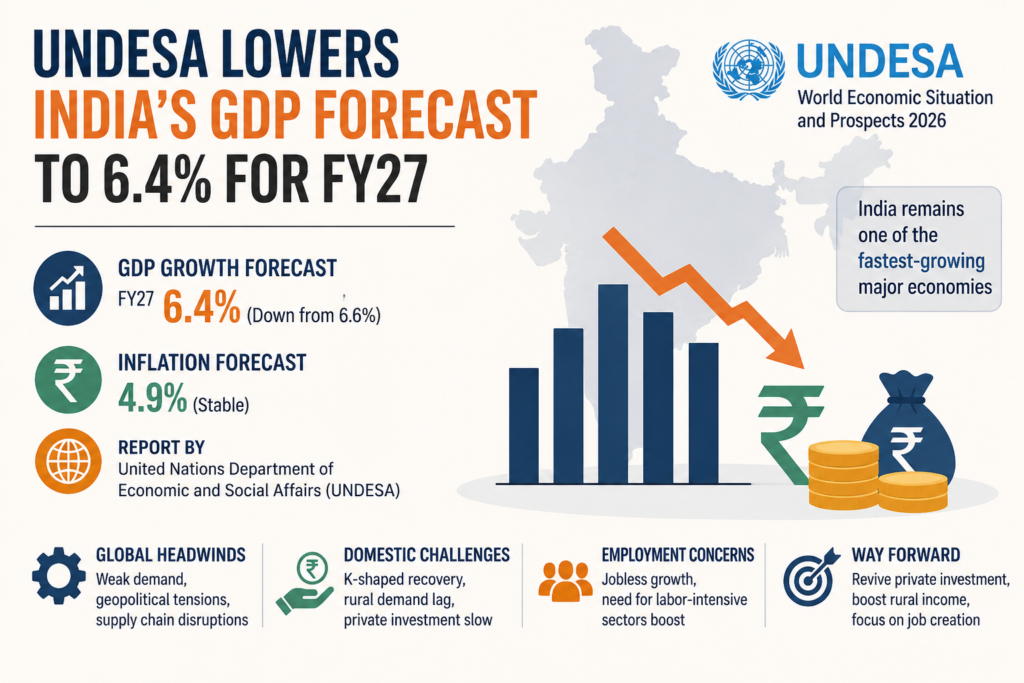
- The United Nations Department of Economic and Social Affairs (UNDESA) released its World Economic Situation and Prospects 2026 report.
- It revised India’s GDP growth forecast for FY27 down to 6.4% (from 6.6%), while projecting inflation to remain stable at 4.9%.
Main Body: Multi-Dimensional Analysis
- Macroeconomic Dimension:
- Growth-Inflation Dynamics: A 6.4% growth rate, though a slight downgrade, still positions India as the fastest-growing major economy. An inflation rate of 4.9% indicates that the RBI’s monetary tightening has successfully anchored inflation within the 2-6% tolerance band.
- Base Effect Normalization: The moderation from the high growth rates of previous post-pandemic years indicates a stabilization of the economy to its long-term potential growth rate.
- Global & Geopolitical Dimension:
- External Headwinds: The downgrade reflects weakened global demand, sluggish recovery in the Eurozone, and geopolitical fragmentations which collectively depress India’s export potential.
- Supply Chain Realignment: Despite the downgrade, India continues to benefit from the “China Plus One” strategy, though the realization of foreign direct investment (FDI) into actual manufacturing output is taking longer than anticipated.
- Domestic & Structural Dimension:
- K-Shaped Recovery Concerns: While urban consumption and premium segment sales remain robust, rural demand and mass-market consumption might still be lagging, contributing to the downward revision.
- Capex Driven Growth: The government’s continued thrust on capital expenditure (infrastructure) remains the primary engine of growth, offsetting the sluggishness in private corporate investment.
- Social & Employment Dimension:
- Jobless Growth: A growth rate of 6.4% must be analyzed against the employment elasticity of growth. If the growth is driven by capital-intensive sectors rather than labor-intensive ones (like textiles or MSMEs), the demographic dividend may turn into a liability.
Positives, Negatives, and Government Schemes
| Category | Key Points |
| Positives | • India remains a global growth outlier despite the downgrade. • Inflation is contained, providing macroeconomic stability. • Stable sovereign outlook attracts long-term foreign institutional investors (FIIs). • Room for the RBI to potentially ease interest rates if growth slows further. |
| Negatives | • 6.4% might be insufficient to absorb the millions entering the workforce annually. • Over-reliance on government Capex; private investment remains subdued. • Vulnerability to volatile global oil prices and currency fluctuations. • Stagnant rural wage growth impacting aggregate domestic demand. |
| Relevant Govt Schemes | • National Infrastructure Pipeline (NIP) / Gati Shakti: To sustain the Capex push. • PLI (Production Linked Incentive) Scheme: To boost private manufacturing and exports. • MGNREGA: Crucial for supporting rural income and demand. |
Examples:
- The slowdown in IT service exports to the US and Europe directly impacting urban consumption and real estate in tech hubs.
- The success of the PLI scheme in electronics manufacturing (e.g., Apple’s supply chain) acting as a buffer against broader global manufacturing stagnation.
Way Forward:
- Revive Private Investment: Shift focus from purely government-led infrastructure spending to creating a more conducive environment for private capital expenditure through ease of doing business and predictable tax regimes.
- Boost Rural Consumption: Increase investment in rural infrastructure, irrigation, and agro-processing to raise farm incomes, thereby stimulating mass-market demand.
- Labor-Intensive Export Push: Pivot policy support towards labor-intensive sectors like textiles, leather, and gems & jewelry to ensure growth translates into massive job creation.
- Skilling & Human Capital: Realign the Skill India initiative to meet the demands of a high-tech economy (AI, green energy) to prevent structural unemployment.
Conclusion:
- UNDESA’s revised forecast is a realistic recalibration rather than a cause for alarm. It underscores the transition of the Indian economy from a phase of post-pandemic rebound to sustained, structural growth. To achieve its developed nation aspirations, India must now pivot from capital-led growth to consumption and employment-led expansion.
Practice Mains Question:
- “Despite external headwinds, India remains one of the fastest-growing major economies, yet concerns over the quality of this growth persist.” In light of the recent UNDESA growth projections, critically evaluate the structural bottlenecks hindering inclusive economic expansion in India. (250 words)
Topic 4: India & South Korea Inaugurate Indian War Memorial in Seoul
Syllabus:
- General Studies Paper III: Bilateral, regional, and global groupings and agreements involving India and/or affecting India’s interests; Effect of policies and politics of developed and developing countries on India’s interests.
Context:
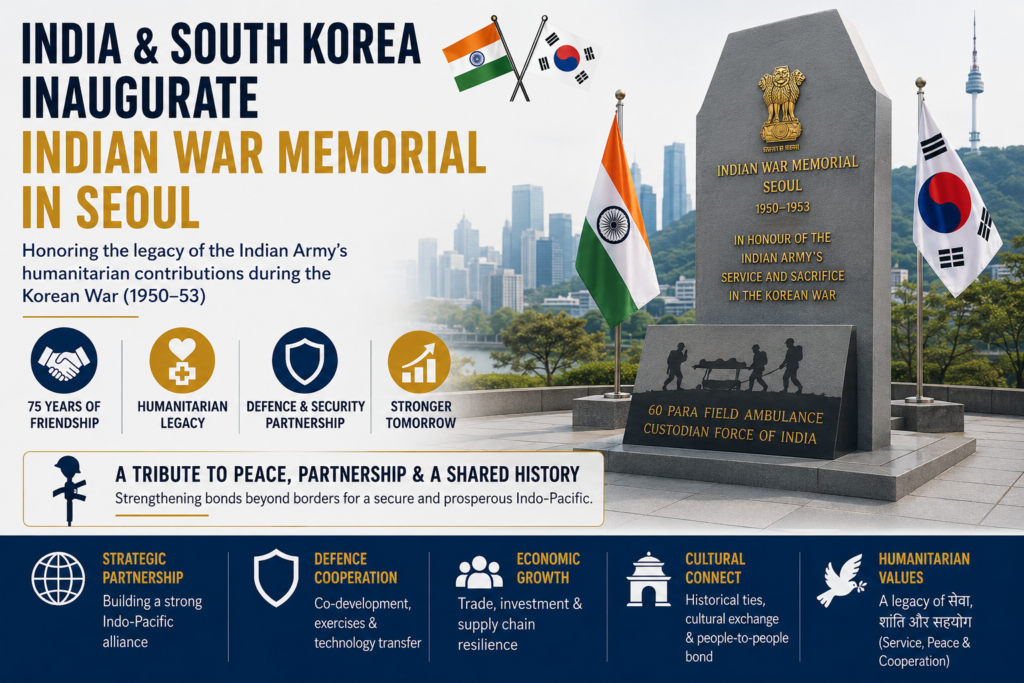
- Defence Minister Rajnath Singh and South Korea’s Minister of Patriots and Veterans Affairs inaugurated the Indian War Memorial at Imjingak Park in Seoul.
- Built to mark the 75th anniversary of the Korean War, the memorial honors the landmark humanitarian contributions of the Indian Army’s 60 Para Field Ambulance and the Custodian Force of India (CFI).
Main Body: Multi-Dimensional Analysis
- Geopolitical & Strategic Dimension:
- Indo-Pacific Alignment: This institutionalized memory cements India’s role as a historically neutral yet proactive security actor in East Asia, aiding India’s Act East Policy.
- Countering Regional Hegemony: As China’s assertion increases across the Taiwan Strait and East China Sea, strengthening ties with a technologically advanced maritime power like South Korea (ROK) adds a layer of strategic deterrence.
- Strategic Autonomy: Historically, India’s intervention in the Korean War (1950–53) proved its commitment to an independent foreign policy, maintaining communication channels between competing Cold War blocs.
- Defense & Security Cooperation Dimension:
- Co-development and Technology Transfer: The defense relationship has evolved from buyer-seller to co-producers, exemplified by the acquisition of the K9 Vajra self-propelled howitzers (based on South Korean design).
- Maritime Security: Both nations share vital Sea Lines of Communication (SLOCs) in the Indian and Pacific Oceans, making joint naval exercises and anti-piracy operations critical for regional stability.
- Soft Power & Historical Diplomacy Dimension:
- Historical Anchors: Beyond the modern K-wave (Hallyu) and Bollywood, highlighting shared historical milestones like the ancient link of Princess Suriratna (Queen Heo Hwang-ok) and the medical support during the Korean War deepens civilizational bonds.
- Diaspora and Cultural Exchange: Memorials serve as physical touchpoints that foster mutual respect, which directly assists in smoother immigration and working environments for Indian tech professionals in South Korea.
- Economic Dimension:
- CEPA Upgradation: The celebration provides the political capital needed to expedite the long-pending upgradation of the Comprehensive Economic Partnership Agreement (CEPA) to address India’s trade deficit.
- Supply Chain Resilience: South Korea is a global hub for semiconductors, hardware, and automotive manufacturing. Closer ties aid India’s Semiconductor Mission by attracting Korean fabrication units.
Positives, Negatives, and Government Schemes
| Category | Key Points |
|---|---|
| Positives | • Elevates India’s reputation as a historical provider of global humanitarian aid. • Generates immense goodwill to balance economic negotiations. • Diversifies defense technology procurement streams beyond traditional partners. • Validates India’s constructive role in East Asian security affairs. |
| Negatives | • Risk of provoking negative diplomatic pushback from North Korea or China. • Historical soft power has not yet successfully corrected the skewed trade balance. • Cultural diplomacy remains underutilized compared to South Korea’s aggressive global outreach. |
| Relevant Govt Schemes | • Act East Policy: Framing East Asia as a priority economic and security pillar. • Make in India (Defence): Utilizing Korean tech transfers for indigenous defense manufacturing. • Pravasi Bharatiya Divas / Cultural Diplomacy initiatives: Capitalizing on historical ties. |
Examples:
- The deployment of the 60 Para Field Ambulance during the 1950s, which treated over 200,000 wounded personnel without bias, setting a gold standard for medical neutrality.
- The K9 Vajra-T gun system manufactured by Larsen & Toubro in Gujarat with technology transferred from South Korea’s Hanwha Aerospace, a model for defense manufacturing.
Way Forward:
- Elevate Joint Military Exercises: Transition from basic naval exercises to complex multi-domain cyber, space, and electronic warfare simulations with South Korean forces.
- Expedite CEPA Renegotiation: Address non-tariff barriers faced by Indian pharmaceutical and agricultural products in South Korean markets to balance trade.
- Establish a Semiconductor Corridor: Create dedicated industrial parks with fast-tracked clearances specifically tailored for South Korean electronics giants.
- Institutionalize Track II Diplomacy: Launch academic exchange programs focused on shared maritime challenges in the Indo-Pacific region between leading think-tanks.
Conclusion:
- The inauguration of the war memorial in Seoul is more than an exercise in military nostalgia; it is a calculated deployment of soft power. By bridging historical humanitarianism with modern defense and supply-chain realities, India and South Korea are building a strategic matrix capable of maintaining equilibrium in an increasingly volatile Indo-Pacific.
Practice Mains Question:
- “Defense diplomacy combined with historical soft power forms the cornerstone of India’s modern engagement with East Asian powers.” Evaluate this statement in light of India’s strengthening bilateral ties with South Korea. (250 words)
Topic 5: Launch of JEEVAN App and SHATAYU Dashboard for Eldercare
Syllabus:
- General Studies Paper II: Welfare schemes for vulnerable sections of the population by the Centre and States and the performance of these schemes; Mechanisms, laws, institutions and Bodies constituted for the protection and betterment of these vulnerable sections.
Context:
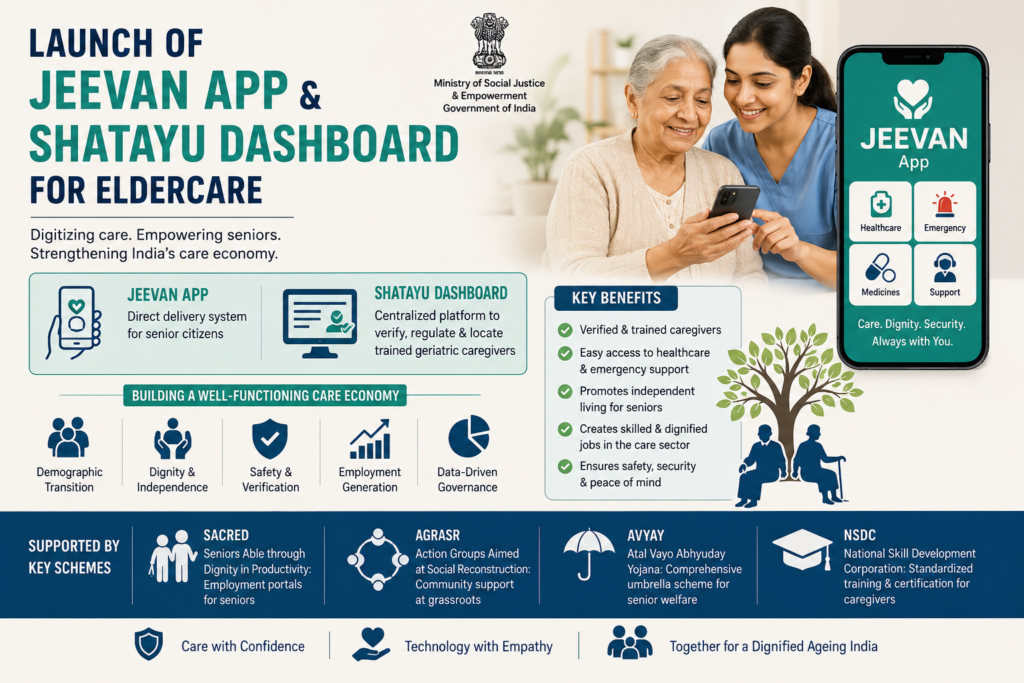
- The Ministry of Social Justice & Empowerment hosted a national program on “Creating a Well-Functioning Care Economy.”
- During the event, two crucial digital initiatives were launched: the JEEVAN App (a direct delivery system for senior citizens) and the SHATAYU Dashboard (a centralized platform to verify, regulate, and locate trained geriatric caregivers).
Main Body: Multi-Dimensional Analysis
- Demographic & Societal Dimension:
- Demographic Transition: India is rapidly transitioning from a young nation to a graying society, with the elderly population projected to reach nearly 20% of the total population by 2050.
- Disintegration of Joint Family Systems: Urbanization and global migration have accelerated the rise of nuclear families, leaving millions of senior citizens physically isolated without conventional familial safety nets.
- Feminization of Aging: Elderly women tend to live longer than men but often lack financial independence or property ownership, making digital interventions for healthcare access a gender-justice issue.
- Economic & Employment Dimension:
- Formalizing the Care Economy: The care economy has historically been an unorganized, underpaid sector mostly relegated to untrained domestic workers. The SHATAYU dashboard creates a formal marketplace for certified skills.
- Employment Generation: Standardizing geriatric care opens a massive employment avenue for rural and semi-urban youth, particularly women, transforming a social burden into an economic engine.
- Governance & Digital Inclusivity Dimension:
- Overcoming the Digital Divide: While tech interventions like the JEEVAN app streamline access to medicine and emergency aid, senior citizens often suffer from low digital literacy, requiring assisted-tech models.
- Data-Driven Policy Making: The centralized SHATAYU dashboard gives the government precise data on regional demand-supply gaps in healthcare workers, allowing for targeted resource allocation.
- Healthcare & Geriatric Infrastructure Dimension:
- Specialized Medical Shortage: India’s healthcare system is structurally tuned toward maternal and child care, leaving a stark deficit in specialized geriatric oncology, psychiatry, and palliative care.
Positives, Negatives, and Government Schemes
| Category | Key Points |
|---|---|
| Positives | • Standardizes health tracking and worker verification to prevent elder abuse. • Empowers the elderly to live independently with dignity. • Creates regulated, certified blue-collar job pathways in healthcare. • Simplifies emergency medical responses via geotagged app triggers. |
| Negatives | • Low smartphone penetration and high digital illiteracy among rural elderly. • Data privacy vulnerabilities concerning sensitive senior health profiles. • Initial lack of strict enforcement mechanisms for unregistered private agencies. |
| Relevant Govt Schemes | • Seniors Able through Dignity in Productivity (SACRED): Employment portal for elders. • Action Groups Aimed at Social Reconstruction (AGRASR): Local community support. • Atal Vayo Abhyuday Yojana (AVYAY): Comprehensive umbrella scheme for senior welfare. |
Examples:
- A senior citizen living alone in an urban tier-2 city utilizing the JEEVAN app to instantly summon a verified, police-cleared medical attendant via the SHATAYU dashboard during a midnight cardiac emergency.
- State-level implementation where self-help groups (SHGs) under the National Rural Livelihoods Mission are trained as geriatric caregivers and onboarded onto the national dashboard.
Way Forward:
- Integrate with Common Service Centres (CSCs): Use village-level CSCs to assist non-tech-savvy rural elderly in registering and utilizing the JEEVAN app.
- Mandatory Background Verification: Ensure the SHATAYU dashboard is integrated with the national police database (CCTNS) to guarantee the safety of vulnerable seniors against criminal elements.
- Introduce Care Economy Subsidies: Provide tax incentives or direct benefit transfers (DBT) to families utilizing certified caregivers to offset costs for lower-income groups.
- Curriculum Standardization: Partner with the National Skill Development Corporation (NSDC) to create a uniform, multi-lingual curriculum for geriatric care across India.
Conclusion:
- The JEEVAN app and SHATAYU dashboard mark a critical evolutionary step from passive welfare to active, tech-driven infrastructure for India’s silver generation. The ultimate success of these platforms will depend on bridging the digital literacy gap and ensuring that the care economy is treated as a vital pillar of national social infrastructure.
Practice Mains Question:
- “As India approaches a significant demographic shift toward an aging population, formalizing and digitizing the care economy is no longer optional but a socio-economic imperative.” Critically analyze the statement with special reference to the challenges faced by elderly citizens in contemporary India. (250 words)
Topic 6: International Big Cat Alliance (IBCA) Summit Postponed Due to Ebola Concerns
Syllabus:
- General Studies Paper III: Conservation, environmental pollution and degradation, environmental impact assessment; General Studies Paper II: Issues relating to development and management of Social Sector/Health.
Context:
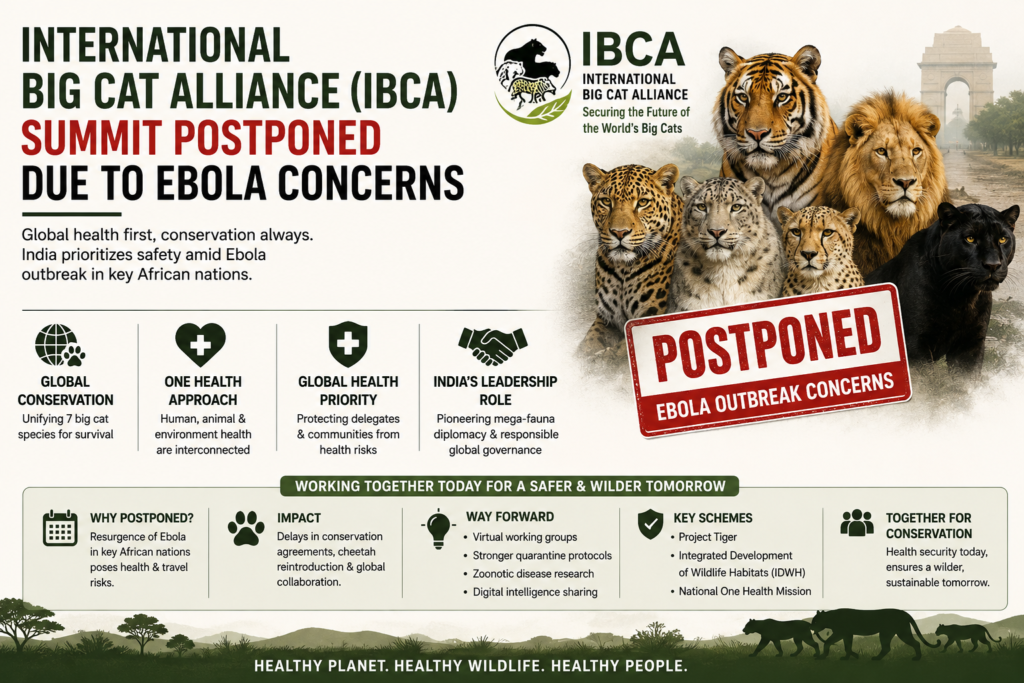
- The Indian government has officially postponed the high-profile International Big Cat Alliance (IBCA) summit, initially scheduled for June 1 in New Delhi.
- The decision follows global health advisories and logistical concerns surrounding a recent resurgence of the Ebola virus in key African nation states whose delegations were central to the summit’s objectives.
Main Body: Multi-Dimensional Analysis
- Environmental & Conservation Dimension:
- Global Translocation Frameworks: The IBCA aims to create a cohesive survival framework for seven major big cats (Tiger, Lion, Leopard, Snow Leopard, Puma, Jaguar, and Cheetah). The postponement temporarily stalls critical cross-continental conservation pacts.
- Cheetah Reintroduction Synchronization: India’s ongoing Project Cheetah relies deeply on technical cooperation, genetic sharing, and physical animal transfers from South Africa and Namibia. Delays in diplomatic interaction slow down corrections in the reintroduction strategy.
- Habitat Management Sharing: Sharing standardized practices on anti-poaching technology and community-led conservation between India and global partners faces a temporary setback.
- Global Health Governance & One Health Dimension:
- The One Health Nexus: The postponement highlights the undeniable connection between human health, animal health, and environmental management. Zooming out, viral outbreaks like Ebola directly impede global conservation diplomacy.
- Zoonotic Vulnerabilities: Big cat conservation cannot occur in isolation from wildlife health management. Understanding how viral spillover events affect apex predators is vital for long-term ecological stability.
- Geopolitical & Leadership Dimension:
- Global South Leadership: Through the IBCA, India has positioned itself as the pioneer of mega-fauna diplomacy, exporting its successful Project Tiger framework to countries lacking fiscal and technical capability.
- Health Diplomacy Interface: By taking a cautious stance on the Ebola outbreak, New Delhi prioritizes bio-safety and global biosecurity, setting a responsible precedent as an international host.
- Economic & Administrative Dimension:
- Sunk Capital: Postponing international mega-summits incurs administrative losses regarding venue curation, secure transport logistics, and synchronization of high-level ministerial schedules.
- Ecotourism Directives: Delays in signing multi-lateral conservation agreements put a hold on standardized international frameworks for sustainable wildlife tourism, which is an economic lifeline for buffer-zone local communities.
Positives, Negatives, and Government Schemes
| Category | Key Points |
|---|---|
| Positives | • Avoids any potential biological hazard or virus introduction into the domestic population. • Reaffirms India’s alignment with global health mandates and WHO guidelines. • Gives more time to refine bilateral conservation agreements prior to actual signing. • Protects India’s existing wildlife reserves from potential foreign zoonotic paths. |
| Negatives | • Stalls momentum for critical cross-border cheetah and leopard conservation pacts. • Demonstrates how external health crises can derail domestic environmental leadership schedules. • Postpones collaborative global anti-poaching intelligence updates. |
| Relevant Govt Schemes | • Project Tiger / Project Elephant: The bedrock models being exported via IBCA. • Integrated Development of Wildlife Habitats (IDWH): Funding local ecosystem resilience. • National One Health Mission: Harmonizing human, animal, and environmental health structures. |
Examples:
- The stall in importing the next batch of cheetahs earmarked for alternative Indian sanctuaries like Gandhi Sagar Wildlife Sanctuary due to travel restrictions and health protocols.
- The historical delay of global environmental goals during the COVID-19 pandemic, illustrating how public health collapses systematically halt climate and conservation agreements.
Way Forward:
- Virtual Interim Frameworks: Convert the critical legislative and ministerial components of the IBCA summit into virtual working groups to avoid complete policy stagnation.
- Establish Wildlife Quarantine Protocols: Develop highly advanced, specialized biosafety-level veterinary quarantine facilities to handle future animal translocations without fear of external viral variants.
- Institutionalize Zoonotic Research: Create a dedicated wing within the IBCA framework that looks exclusively into emerging infectious diseases (EIDs) affecting wild felids.
- Strengthen Digital Intelligence Sharing: Launch an encrypted cloud-based network for alliance members to share real-time anti-poaching coordinates and genetic tracking data while physical meetings are delayed.
Conclusion:
- The postponement of the IBCA summit serves as a stark reminder that modern conservation does not exist in an ecological vacuum; it is highly vulnerable to global public health realities. India’s decision to pause underscores a mature appreciation of the ‘One Health’ model, choosing to delay diplomatic victories to ensure absolute biosecurity across borders.
Practice Mains Question:
- “The postponement of international environmental summits due to public health emergencies emphasizes the urgent need to mainstream the ‘One Health’ approach into global governance.” Discuss this statement in light of India’s leadership in the International Big Cat Alliance (IBCA). (250 words)
Topic 7: PM Modi Reviews Reform Agenda with Council of Ministers
Syllabus:
- General Studies Paper II: Government policies and interventions for development in various sectors and issues arising out of their design and implementation.
- General Studies Paper III: Indian Economy and issues relating to planning, mobilization, of resources, growth, development and employment.
Context:
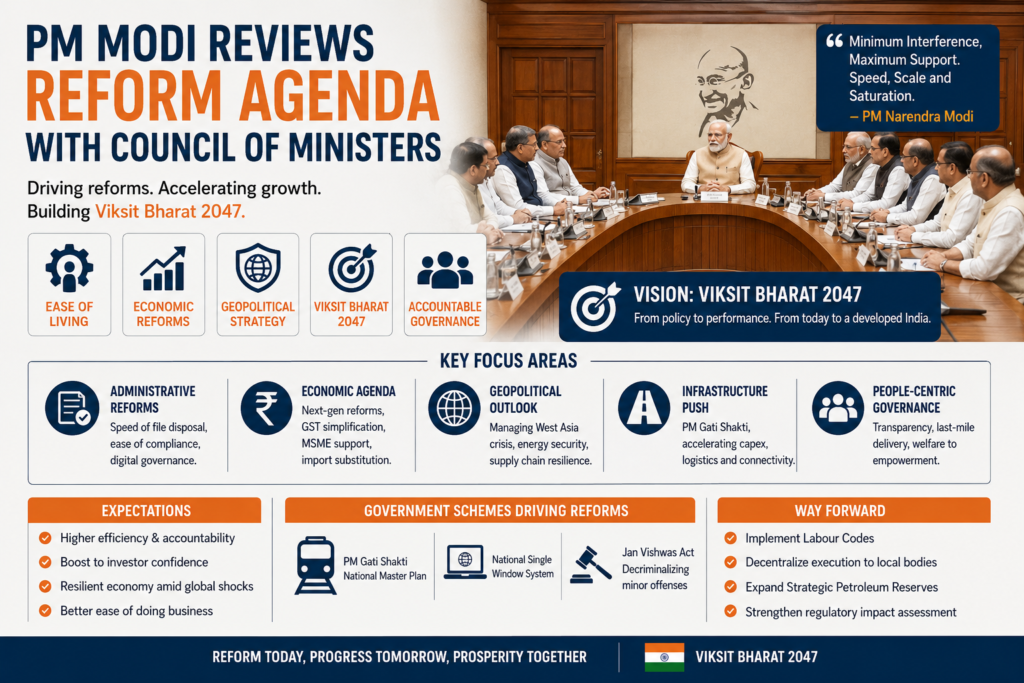
- Prime Minister Narendra Modi chaired an extensive mid-term meeting of his full Council of Ministers in New Delhi.
- The agenda focused on reviewing the government’s economic reform progress, accelerating the “Viksit Bharat 2047” vision, and managing domestic growth amidst an escalating West Asia geopolitical crisis.
Main Body: Multi-Dimensional Analysis
- Administrative & Governance Dimension:
- Minimum Interference, Maximum Support: A core theme of the review was reducing the state’s unnecessary regulatory footprint. The focus is shifting from simply launching schemes to ensuring “Ease of Living” by deregulating everyday citizen-state interactions.
- Bureaucratic Efficiency: The Prime Minister emphasized the “speed of file disposal” as a metric for ministerial performance. Timely decision-making is recognized as critical to avoiding cost overruns in massive infrastructure projects.
- Digital Governance: Expanding platforms like DigiLocker and the unified citizen portal to eliminate physical compliance burdens for MSMEs and taxpayers.
- Economic & Fiscal Dimension:
- Next-Generation Structural Reforms: Transitioning beyond basic welfare, the mandate requires second-generation reforms like land leasing digitization, labor code implementation, and recalibrating the Goods and Services Tax (GST) to a simplified slab structure.
- Supply Chain Resilience: With ongoing conflicts disrupting global shipping (e.g., Red Sea and Strait of Hormuz), the economic strategy involves aggressive import substitution, particularly focusing on energy and critical minerals.
- Geopolitical & Strategic Dimension:
- Insulating the Domestic Economy: The review highlighted the necessity of protecting Indian consumers from imported inflation. A high-powered Group of Ministers (GoM) is already monitoring crude oil volatility triggered by U.S.-Iran tensions.
- Leveraging Global Alignments: Following the PM’s recent five-nation European and Middle Eastern tour, ministries were directed to fast-track bilateral trade agreements and attract fleeing foreign capital into the “China Plus One” manufacturing space.
- Long-Term Visionary Dimension:
- Viksit Bharat 2047: The government is shifting its administrative posture from a 5-year electoral cycle to a 20-year civilizational timeline, aiming to achieve developed nation status by India’s 100th year of independence. This requires ministries to plan capital expenditure and educational policies extending far beyond 2026.
Positives, Negatives, and Government Schemes
| Category | Key Points |
| Positives | • Ensures accountability and mid-course correction in ministerial functioning. • Signals policy stability and commitment to structural reforms to foreign investors. • Prioritizes the de-criminalization of minor corporate offenses to boost MSMEs. • Proactively manages external economic shocks before they hit the domestic market. |
| Negatives | • Top-down target setting can sometimes lead to rushed, superficial compliance by departments. • High dependence on the central executive limits decentralized policy experimentation. • Global crude oil prices remain an unpredictable vulnerability despite domestic planning. |
| Relevant Govt Schemes | • PM Gati Shakti National Master Plan: For coordinated infrastructure execution. • National Single Window System (NSWS): To improve Ease of Doing Business. • Jan Vishwas (Amendment of Provisions) Act: To decriminalize minor offenses. |
Examples:
- The recalibration of the GST regime discussed during the meeting, aiming to reduce the number of tax slabs to lower the compliance burden on small traders.
- The strategic directive to scale up domestic biogas and ethanol blending capacities as a direct buffer against Middle Eastern oil supply disruptions.
Way Forward:
- Implement Labor Codes: State governments must be incentivized to notify the rules under the four new Labour Codes to formalize the workforce and attract manufacturing FDI.
- Decentralize Execution: Empower local administrative bodies (Panchayats and Municipalities) with adequate funds and functionaries to execute the “Ease of Living” mandates at the grassroots level.
- Establish a Strategic Petroleum Reserve (SPR) Expansion: Accelerate the building of phase-II SPRs under public-private partnerships to cushion against prolonged geopolitical shocks in West Asia.
- Continuous Regulatory Impact Assessment: Mandate an independent audit of all new business regulations to ensure they do not inadvertently increase the compliance burden on MSMEs.
Conclusion:
- The Council of Ministers’ review reflects a maturing governance model that seeks to balance immediate crisis management with long-term strategic goals. By pivoting from basic welfare delivery to systemic, next-generation reforms, the executive branch is laying the administrative groundwork required for the “Viksit Bharat 2047” aspiration.
Practice Mains Question:
- “To achieve the vision of Viksit Bharat by 2047, the state must pivot from being a regulator to an enabler.” Discuss this statement in the context of recent administrative reforms emphasizing ‘Ease of Living’ and ‘Ease of Doing Business’. (250 words)
Topic 8: Tamil Nadu Cabinet Expansion by CM Joseph Vijay
Syllabus:
- General Studies Paper II: Functions and responsibilities of the Union and the States; State Legislature – structure, functioning, conduct of business, powers & privileges; Devolution of powers and finances up to local levels.
Context:
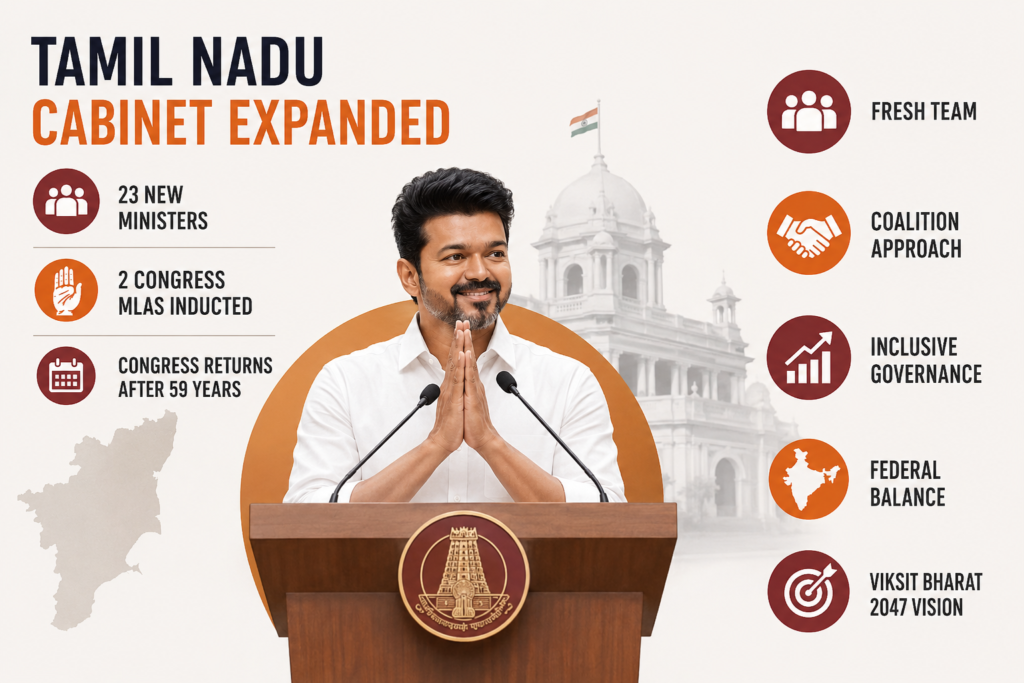
- Tamil Nadu Chief Minister C. Joseph Vijay expanded his Tamilaga Vettri Kazhagam (TVK) Cabinet by inducting 23 new ministers.
- Crucially, the expansion included two Congress MLAs, marking the political return of the Indian National Congress to the Tamil Nadu state cabinet after a 59-year hiatus.
Main Body: Multi-Dimensional Analysis
- Political & Electoral Dimension:
- Breaking the Dravidian Duopoly: The rise of TVK and its subsequent cabinet formation represents a historic disruption of the alternating DMK-AIADMK power structure that has dominated Tamil Nadu politics for decades.
- Coalition Dynamics: By inducting Congress legislators, the TVK is signaling a shift toward inclusive coalition politics rather than a single-party dominant model, ensuring broader representation and national-level alliances.
- The 59-Year Gap: Congress’s return to state governance since 1967 gives the national party a rare opportunity to rebuild its grassroots administrative credibility in a vital southern state.
- Constitutional & Administrative Dimension:
- Article 164 & Cabinet Size: The expansion brings the cabinet to its optimal strength, carefully navigating the 91st Constitutional Amendment (which caps the Council of Ministers at 15% of the total strength of the Legislative Assembly).
- Portfolio Allocation: Assigning critical portfolios requires balancing regional representation (Kongu Nadu, Delta, Southern districts) to ensure equitable economic development across the state.
- Socio-Cultural Dimension:
- Generational Shift: The TVK cabinet reportedly features a high percentage of younger leaders and first-time ministers, reflecting a demographic shift and the aspirations of the youth who mobilized behind the new party.
- Caste and Gender Calculus: Successful governance in Tamil Nadu requires meticulous social engineering to ensure marginalized communities and women have an adequate voice in executive decision-making.
- Federal Relations Dimension:
- Center-State Dynamics: A non-traditional ruling party introduces new variables in cooperative federalism. The TVK government must negotiate complex issues like GST compensation, NEET exemptions, and language policy with the Union Government without the historical baggage of legacy Dravidian parties.
Positives, Negatives, and Government Schemes
| Category | Key Points |
| Positives | • Introduces fresh administrative perspectives, breaking decades of political stagnation. • Strengthens cooperative federalism by integrating national parties into regional governance. • Highly representative of the state’s younger demographic. • Forces legacy parties to internally reform and focus on merit-based leadership. |
| Negatives | • Inexperience of first-time ministers could initially slow down bureaucratic functioning. • Managing a coalition involves constant political compromises, potentially diluting hard policy decisions. • Risk of populism overshadowing fiscal prudence to maintain early popularity. |
| Relevant Govt Schemes | • Chief Minister’s Comprehensive Health Insurance Scheme: Needs sustained funding under the new regime. • Pudhumai Penn Scheme: Ensuring continuity in female education welfare. • State Autonomy Resolutions: Likely to be a continuing point of friction with the Center. |
Examples:
- The induction of Congress leaders into the cabinet mirrors historical precedents like the alliance governments in Maharashtra (MVA) or Bihar (Mahagathbandhan), but is unique in Tamil Nadu’s deeply regionalized context.
- Reallocating the crucial Industries portfolio to a younger minister to specifically target next-generation investments in AI, electric vehicles, and deep-tech around the Chennai-Hosur corridor.
Way Forward:
- Fiscal Prudence Over Populism: The new cabinet must publish a white paper on the state’s finances and prioritize debt reduction and capital expenditure over unsustainable freebie culture.
- Capacity Building for New Ministers: Institute a mandatory governance and administrative training module for first-time ministers to understand legislative procedures and bureaucratic navigation.
- Decentralized Industrialization: Shift the focus of industrial growth from the saturated Chennai and Coimbatore regions to Tier-2 and Tier-3 cities in the southern districts to prevent urban collapse.
- Strengthen State Finance Commission: Ensure timely devolution of funds to urban and rural local bodies, an area where previous governments often lagged, to empower grassroots democracy.
Conclusion:
- The cabinet expansion by CM Joseph Vijay is not merely a political reshuffle but a fundamental realignment of Tamil Nadu’s political landscape. Its success will rely heavily on whether the fresh political capital can be translated into mature, fiscally responsible, and inclusive governance, setting a new benchmark for regional politics in India.
Practice Mains Question:
- “The transition from a single-party dominant model to coalition governance in regional politics presents both administrative challenges and opportunities for democratic deepening.” Analyze this statement with reference to the changing political landscape in South India. (250 words)
