
Topic 1: India-Oman Comprehensive Economic Partnership Agreement (CEPA)
Syllabus
- GS Paper 2: Bilateral, regional and global groupings and agreements involving India and/or affecting India’s interests.
- GS Paper 3: Indian Economy and issues relating to planning, mobilization of resources, growth, development and employment.
Context
The landmark India-Oman Comprehensive Economic Partnership Agreement (CEPA) formally entered into force, making India only the second country in the world—after the United States—to secure a deep, bilateral free trade pact with the Sultanate of Oman.
Main Body: Multi-Dimensional Analysis
- Transformative Trade Access & Duty Ellimination: Oman has extended immediate zero-duty market access to 99.38% of India’s exports by value, spanning over 98% of its total tariff lines. This is an exponential leap from the pre-CEPA Most Favored Nation (MFN) framework, where a mere 15.33% of Indian goods entered Oman duty-free.
- Fast-Tracking the Indian Pharmaceutical Export Sector: The trade deal contains a highly strategic fast-track clause for pharmaceuticals. Indian medicines, generic drugs, and vaccines approved by global regulatory bodies (such as the USFDA or EMA) will now secure Omani market authorization within 90 days, bypassing redundant testing and clearing steep regulatory entry barriers.
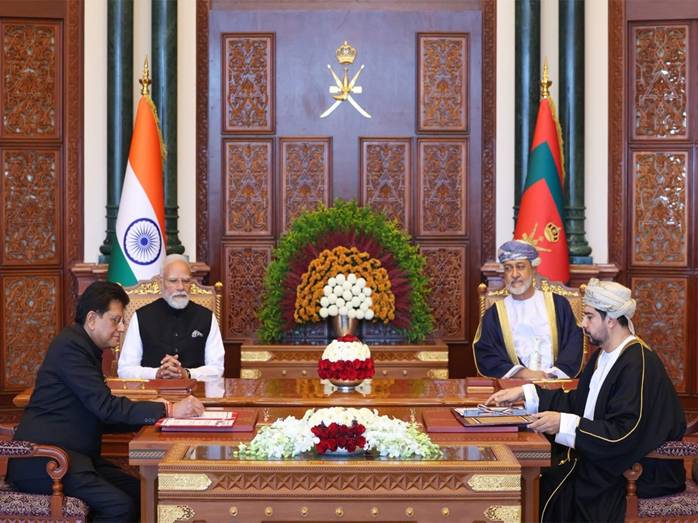
- Strategic Energy Corridors Outside Chokepoints: Amid growing geopolitical volatility around the Strait of Hormuz, the CEPA builds concrete economic depth with Oman, which sits strategically on the Arabian Sea coast. This agreement reinforces preliminary infrastructure studies for the proposed Middle East-India Deep-water Pipeline (MEIDP) designed to move natural gas from Oman directly to Gujarat.
- Boosting Manufacturing and Employment: Sectors like Indian textiles, jewelry, electronics, and engineering goods face an immediate zero-tariff regime, driving greater export volumes that directly align with domestic Production Linked Incentive (PLI) manufacturing expansions.
Positives, Negatives, & Associated Frameworks
- Positives: Overnight surge to 99% duty-free access, fast-tracked generic drug licensing, protection of energy trade paths, and enhanced access to West Asian service markets.
- Negatives: Potential local inversion of tariffs on select petrochemical raw materials, and tough compliance mandates concerning rules-of-origin to prevent third-party goods from leaking in.
- Associated Pacts/Concepts: CEPA Framework, Rules of Origin, Most Favored Nation (MFN) Status, Middle East-India Deep-water Pipeline (MEIDP).
Way Forward
- Establish strict, real-time blockchain tracking of rules-of-origin certificates to eliminate third-country re-routing.
- Encourage small and medium textile/engineering enterprises to actively utilize the new zero-tariff lines via targeted trade desks.
- Coordinate with the Omani Ministry of Health to seamlessly deploy India’s digital health solutions under the fast-track services model.
Conclusion
The India-Oman CEPA stands as a cornerstone of India’s look-west economic policy, masterfully transforming a historical defense partnership into a sophisticated, structural trade alliance that secures critical supply alternatives in a volatile world.
Practice Mains Question
The newly enforced India-Oman Comprehensive Economic Partnership Agreement (CEPA) goes beyond standard tariff reductions to establish strategic geographic and regulatory advantages. Analyze the socio-economic and geopolitical implications of this trade deal for India’s export economy. (250 words)
Topic 2: Political Realignment in Tamil Nadu and Regional Party Trajectories
Syllabus
- GS Paper 2: Salient features of the Representation of People’s Act; Functions and responsibilities of the Union and the States; Regional political dynamics.
Context
The political landscape of Tamil Nadu witnessed a major shakeup as prominent leader K. Annamalai formally resigned from the national ruling party, announcing plans to launch a new socio-political movement slated to transition into a regional political party.
Main Body: Multi-Dimensional Analysis
- The Shift Toward Regionalism vs. National Centricity: The development underscores the enduring preference for localized, regional command structures within Tamil Nadu’s political ecology. Despite national parties attempting vertical penetration, political actors continue to pivot toward local autonomy to champion state-specific rights.
- De-alignment of Traditional Bilateral Power Blocks: For decades, Tamil Nadu’s polity was tightly polarized around established Dravidian giants. The introduction of fresh political movements—following the recent rise of entities like the Tamizhaga Vettri Kazhagam (TVK)—is fragmenting the conventional vote share, leading to a multi-polar electorate.
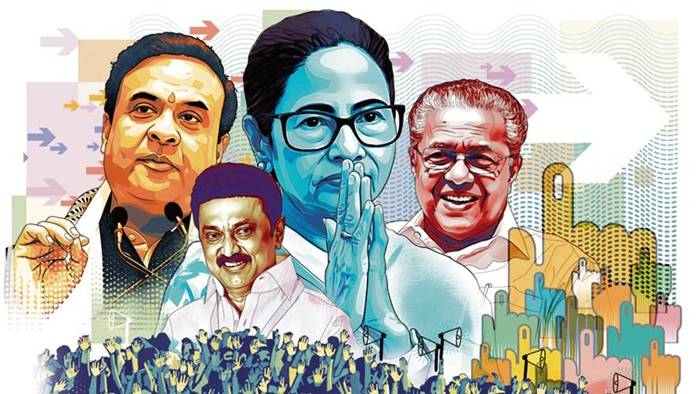
- Socio-Political Mobilization on Local Grievances: Emerging regional movements frequently structure their core agendas around immediate state challenges, such as federal fiscal autonomy, inter-state river water sharing, and regional linguistic identity.
- Impact on Coalition Engineering: The emergence of distinct regional factions forces national parties to rely on localized seat-sharing arrangements rather than operating as independent, dominant forces within the state assembly matrices.
Positives, Negatives, & Associated Frameworks
- Positives: Broadens democratic choices for voters, brings local, hyper-regional grassroots issues to mainstream political desks, and reinforces democratic decentralization.
- Negatives: Electorate fragmentation can trigger highly unstable coalition governance, and localized identity-based mobilization can occasionally overshadow national strategic planning.
- Associated Statutes: Representation of the People Act, 1951; Tenth Schedule (Anti-Defection Law); Federal Structure of the Indian Constitution.
Way Forward
- Emerging political movements must prioritize institutional governance blueprints over personality-driven campaigns.
- Ensure that federal cooperation and national integration remain core pillars within state-focused regional manifestos.
- Strengthen internal intra-party democracy frameworks right from the initial registration and movement-building stages.
Conclusion
The fluid political re-alignments in Tamil Nadu point to a highly dynamic phase of cooperative federalism, proving that while national narratives shape central matrices, regional aspirations and local leadership remain the true anchors of state politics.
Practice Mains Question
“The persistent growth of regional political movements in southern India reflects a structural demand for localized governance within a federal framework.” Discuss this statement in light of recent political shifts in Tamil Nadu. (250 words)
Topic 3: Leadership Transition in Karnataka and Federal Impacts
Syllabus
- GS Paper 2: Appointment to various Constitutional posts, powers, functions and responsibilities of various Constitutional Bodies; Inter-State relations.
Context
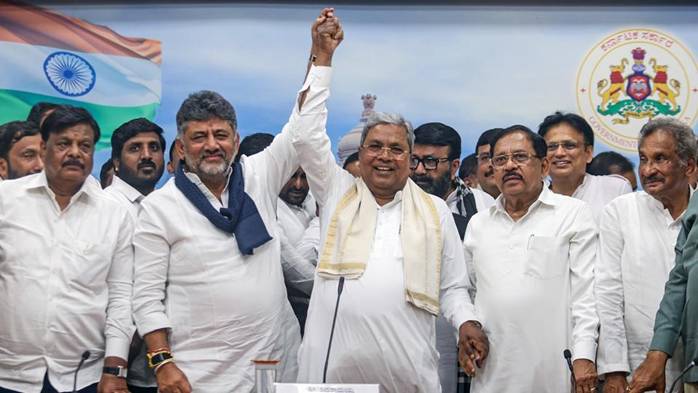
Completing a structured executive leadership transition, D.K. Shivakumar took the oath of office as the 34th Chief Minister of Karnataka at Lok Bhavan in Bengaluru, signaling a new chapter in the state’s governance.
Main Body: Multi-Dimensional Analysis
- Constitutional Sovereignty and the Oath: The Chief Minister assumed office by carrying a copy of the Constitution of India during the formal oath-taking ceremony administered by the Governor. This highlights the foundational rule of law and the constitutional accountability of the state’s highest executive office.
- Executive Continuity and Policy Stability: Smooth internal political transitions ensure that state-level welfare programs, ongoing infrastructure pipelines, and long-term industrial policies proceed with minimal bureaucratic inertia or policy paralysis.
- Inter-State Resource and Infrastructure Coordination: A fresh political executive in Karnataka fundamentally alters the negotiating dynamics for sensitive inter-state issues with neighboring Tamil Nadu, particularly regarding the Cauvery water releases and the proposed Mekedatu balancing reservoir.
- Fiscal Federalism Challenges: The new state leadership inherits immediate fiscal challenges, including balancing localized welfare guarantees with capital infrastructure expenditure demands, while navigating central tax devolution negotiations.
Positives, Negatives, & Associated Frameworks
- Positives: Avoids administrative paralysis through an organized transition, preserves continuity of state developmental schemes, and signals internal political stabilization.
- Negatives: Transitional periods can briefly pause high-level policy sign-offs, and internal cabinet structuring can stir regional or caste-based balancing friction.
- Associated Provisions: Article 164 of the Constitution (Appointment of Chief Minister), Inter-State River Water Disputes Act 1956, Article 263 (Inter-State Council).
Way Forward
- Prioritize early, constructive institutional dialogue with neighboring riparian states to resolve river water allocations outside of political spaces.
- Maintain a balanced fiscal policy that ensures long-term capital wealth creation alongside running welfare safety nets.
- Leverage technology platforms to institutionalize transparent grievance redressal mechanisms across both rural and urban governance units.
Conclusion
The orderly executive transition in Karnataka reinforces institutional stability, proving that mature constitutional mechanisms can smoothly manage leadership handovers while keeping state development goals firmly on track.
Practice Mains Question
Examine the role of the state executive in maintaining policy continuity during internal leadership transitions. How do these political dynamics influence inter-state relations and cooperative federalism in India? (250 words)
Topic 4: The Great Nicobar Island Project and Environmental Clearance Disputes
Syllabus
- GS Paper 3: Conservation, environmental pollution and degradation, environmental impact assessment (EIA).
- GS Paper 2: Government policies and interventions for development in various sectors.
Context
A significant environmental dispute re-emerged as institutional objections were formally raised against the Great Nicobar Island Strategic Project, alleging that the environmental clearances were based on a “single seasonal cycle” rather than rigorous three-season primary baseline data.
Main Body: Multi-Dimensional Analysis
- The Conflict Between Strategy and Ecology: The Great Nicobar Project holds immense maritime value for India, sitting near the Malacca Strait chokepoint. It features a transshipment port, a strategic military airfield, and a greenfield city. However, this directly threatens a pristine tropical rainforest ecosystem and critical nesting sites of the Leatherback turtle.
- Methodological Gaps in Environmental Impact Assessments (EIAs): Environmental guidelines dictate that baseline primary data should encompass three distinct seasonal cycles to accurately record biodiversity shifts. Relying on short-term baseline studies risks missing critical ecological vulnerabilities, leading to severe institutional friction.
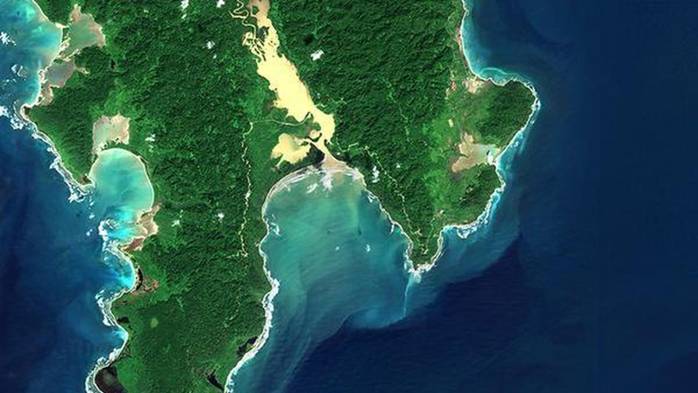
- Threat to Indigenous Shompen and Nicobarese Tribes: The massive infrastructure blueprint alters the natural habitat of the particularly vulnerable tribal groups (PVTGs) living on the island, raising serious issues regarding tribal displacement, cultural dilution, and autonomous forest rights.
- The Global Transshipment Economy: From an economic perspective, building a deep-water transshipment terminal allows India to intercept global shipping traffic moving along the East-West trade route, drastically reducing reliance on foreign hubs like Colombo or Singapore.
Positives, Negatives, & Associated Frameworks
- Positives: Tremendous maritime power projection capabilities, multi-billion dollar economic transshipment revenues, and a strong security presence in the Bay of Bengal.
- Negatives: Irreversible loss of vast hectares of virgin rain forest, endangerment of unique endemic species, and disruption of PVTG tribal habitats.
- Associated Regulations: Environmental Impact Assessment (EIA) Notification, Forest Conservation Act, Scheduled Tribes and Other Traditional Forest Dwellers (Recognition of Forest Rights) Act.
Way Forward
- Commission an independent, multi-institutional, three-season scientific study to fully map the long-term ecological risks before executing heavy construction.
- Create strictly enforced buffer zones around tribal settlements to fully protect the autonomy and lifestyle of the Shompen community.
- Invest in advanced eco-engineering solutions, including artificial coral reef restoration and specialized wildlife bypass corridors.
Conclusion
The Great Nicobar dispute highlights the difficult balance India must strike between maritime defense requirements and ecological preservation. Strategic projects must not run on compromised ecological audits, as long-term national security is deeply linked with environmental resilience.
Practice Mains Question
“Rushing environmental clearances via single-season baseline studies undermines the core tenets of sustainable development.” Critically analyze this statement in the context of the strategic infrastructure push in the Great Nicobar Island. (250 words)
Topic 5: Parliamentary Scrutiny Over CBSE On-Screen Marking (OSM) Irregularities
Syllabus
- GS Paper 2: Structure, organization and functioning of the Executive; Accountability and administrative reforms; Issues relating to development and management of Education.
Context
A Parliamentary Standing Committee on Education, chaired by senior legislators, convened a specialized session to investigate alleged tendering irregularities in the Central Board of Secondary Education’s (CBSE) computerized On-Screen Marking (OSM) system.
Main Body: Multi-Dimensional Analysis
- The Power of Parliamentary Oversight: The standing committee’s active intervention demonstrates how parliamentary panels enforce accountability on executive bodies and autonomous educational boards, acting as a crucial check against systemic administrative lapses.
- Digitalization and Vulnerabilities in Public Evaluations: The transition to an On-Screen Marking (OSM) system was intended to streamline answer sheet evaluations and eliminate manual errors. However, structural flaws or biased tendering processes expose high-stakes public examinations to evaluation delays, software glitches, and security risks.
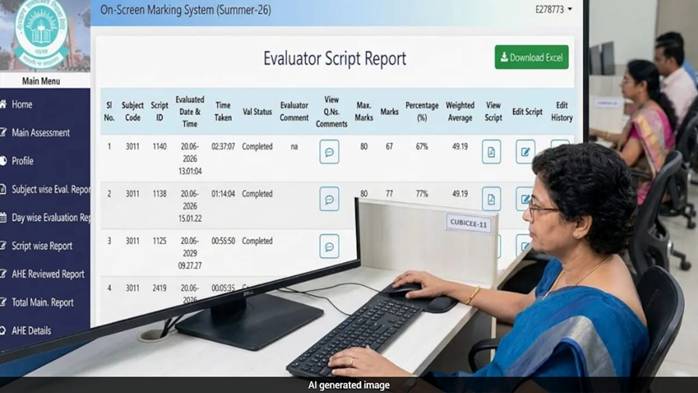
- Protecting Student Welfare and Institutional Trust: Irregularities in evaluating Grade 12 board examinations can directly impact the academic and career paths of hundreds of thousands of students. Maintaining absolute transparency in evaluation systems is vital to preserving trust in national boards.
- The Role of Citizen Whistleblowers: The parliamentary panel took up the matter after a youth-led investigation flagged systematic bidding anomalies. This highlights the growing role of open-source data scrutiny and youth engagement in strengthening administrative transparency.
Positives, Negatives, & Associated Frameworks
- Positives: Quick, data-driven parliamentary scrutiny, protection of student academic records, and a push for greater transparency in tech procurement.
- Negatives: Exposes vulnerabilities within automated public education setups, and risks undermining the credibility of national assessment metrics.
- Associated Frameworks: Parliamentary Standing Committees, Central Vigilance Commission (CVC) Procurement Guidelines, National Education Policy (NEP) digital evaluation goals.
Way Forward
- Mandate a comprehensive third-party security and technical audit of all software platforms used by national examination boards.
- Standardize public procurement processes across all educational boards by adhering strictly to Central Vigilance Commission (CVC) guidelines.
- Implement open, transparent feedback portals where students and evaluators can securely report software errors or assessment discrepancies.
Conclusion
Transitioning public examination structures to digital formats requires strong administrative safeguards. Active parliamentary scrutiny ensures that technology serves as a reliable tool for transparency, rather than a mask for procurement irregularities.
Practice Mains Question
Examine the role of Parliamentary Standing Committees in ensuring the accountability of autonomous executive bodies. Discuss this in light of the technological and administrative challenges facing digital evaluation systems in India’s education sector. (250 words)
Topic 6: The Middle East-India Deep-Water Pipeline (MEIDP) Proposal
Syllabus
- GS Paper 3: Infrastructure: Energy, Ports, Roads etc.; Security challenges and their management in border areas.
- GS Paper 2: Effect of policies and politics of developed and developing countries on India’s interests.
Context
In tandem with newly executed trade agreements, the technical feasibility of the ambitious Middle East-India Deep-water Pipeline (MEIDP)—an undersea pipeline linking Oman’s gas fields directly to the coast of Gujarat—has moved to an active diplomatic review phase.
Main Body: Multi-Dimensional Analysis
- Bypassing Volatile Maritime Chokepoints: The MEIDP seeks to transport natural gas along a deep-sea route across the Arabian Sea, deliberately bypassing overland paths and the geopolitically sensitive Strait of Hormuz. This provides India with a direct, uninterrupted supply line for natural gas.
- Transitioning the Domestic Energy Matrix: India aims to increase the share of natural gas in its primary energy mix from around 6% to 15% to support cleaner industrial growth. Securing dedicated undersea pipeline routes is essential to meet this target and reduce reliance on volatile spot-market liquefied natural gas (LNG) imports.
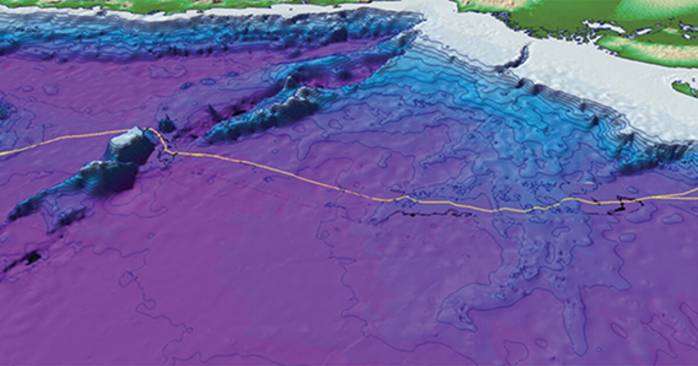
- Deep-Sea Engineering Milestones: Constructing an undersea pipeline across the Arabian Sea requires laying infrastructure at depths exceeding 3,000 meters under intense hydrostatic pressure and navigating active underwater tectonic topography. This positions the project at the absolute frontier of global ocean engineering.
- Strengthening Long-Term Geopolitical Ties: Moving from flexible LNG shipping contracts to permanent, physical pipeline infrastructure creates a deep, multi-decade economic partnership between New Delhi and Muscat, anchoring India’s presence in the Western Indian Ocean.
Positives, Negatives, & Associated Frameworks
- Positives: Direct, long-term supply of clean fuel, insulation from maritime piracy and chokepoint conflicts, and lower transport costs compared to shipping LNG.
- Negatives: Immense upfront capital expenditure, complex deep-sea repair challenges in the event of structural damage, and exposure to marine seismic hazards.
- Associated Initiatives: Hydrocarbon Vision, United Nations Convention on the Law of the Sea (UNCLOS), National Hydrogen Mission links.
Way Forward
- Conduct comprehensive marine seismic mapping to chart a safe, stable pipeline path across the Arabian Sea floor.
- Structure a balanced international financial framework featuring multilateral development banks to mitigate high initial capital risks.
- Integrate the pipeline’s landing facilities directly with India’s domestic National Gas Grid to ensure immediate, nationwide distribution.
Conclusion
The Middle East-India Deep-water Pipeline represents a bold leap forward in transnational energy infrastructure, combining cutting-edge deep-sea engineering with clear geopolitical strategy to secure India’s clean energy future.
Practice Mains Question
Assess the strategic and economic significance of the proposed Middle East-India Deep-water Pipeline (MEIDP) for India’s long-term energy security. What major technical and geopolitical challenges must be addressed for its successful execution? (250 words)
Topic 7: Coalition Stability and Rajya Sabha Allocations in Tamil Nadu
Syllabus
- GS Paper 2: Structure, organization and functioning of the Legislature; Elections and democratic processes; Indian Constitution—historical underpinnings, evolution, features, amendments.
Context
In a significant domestic political development ahead of the upcoming legislative elections, the Tamilaga Vettri Kazhagam (TVK) officially allocated its quota for the impending Rajya Sabha seat from Tamil Nadu to its alliance partner, the Indian National Congress.
Main Body: Multi-Dimensional Analysis
- The Dynamics of Coalition Maintenance: The allocation of a coveted Rajya Sabha seat to an alliance partner highlights how political coalitions use strategic compromises to maintain stability, build trust, and protect long-term legislative alliances.
- The Mathematics of the Upper House: The Election Commission’s notification for biennial elections across multiple states directly impacts the balance of power in the Rajya Sabha. Because key national legislation requires approval from both houses, state-level seat allocations directly influence national legislative outcomes.
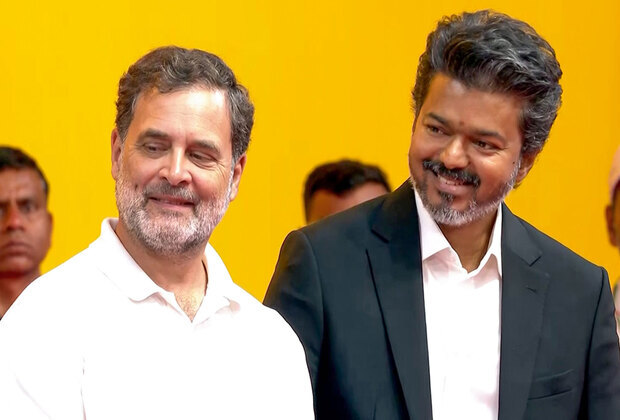
- The Evolution of Regional Political Blocs: The emergence of new political actors changing the traditional DMK-AIADMK binary in Tamil Nadu alters the distribution of state assembly votes. This shift changes how Rajya Sabha seats are calculated and distributed among regional alliances.
- Federal Representation in Parliament: The Rajya Sabha embodies the federal principle of the Indian Constitution, ensuring that state-specific interests are articulated at the national level. The choice of candidates by regional coalitions shapes how effectively a state’s concerns are represented in parliament.
Positives, Negatives, & Associated Frameworks
- Positives: Strengthens coalition cohesion, ensures balanced representation for minor alliance partners, and maintains stable legislative coordination across state and central levels.
- Negatives: Can restrict leadership opportunities for grassroots workers within the primary regional party due to strategic seat-sharing compromises.
- Associated Constitutional Provisions: Article 80 of the Constitution (Composition of Rajya Sabha), Fourth Schedule (Allocation of Seats), Proportional Representation by means of Single Transferable Vote.
Way Forward
- Establish institutionalized coordination committees within political alliances to transparently manage seat-sharing and policy agendas.
- Ensure selected candidates possess strong policy and legislative expertise to effectively present state development needs in the Upper House.
- Focus party manifestos on long-term institutional governance goals rather than short-term electoral math.
Conclusion
The strategic allocation of Upper House seats highlights the complex interplay of coalition politics in India’s federal structure, where local adjustments directly influence the legislative balance of national institutions.
Practice Mains Question
“The allocation of Rajya Sabha seats by regional parties to national partners highlights the complex interdependence within India’s multi-party coalition frameworks.” Analyze this statement in the context of recent political developments in Tamil Nadu. (250 words)
Topic 8: India-Nepal Bilateral Mechanisms and Border Management Policy
Syllabus
- GS Paper 2: India and its neighborhood- relations; Bilateral groupings and agreements involving India and/or affecting India’s interests.
- GS Paper 3: Security challenges and their management in border areas.
Context
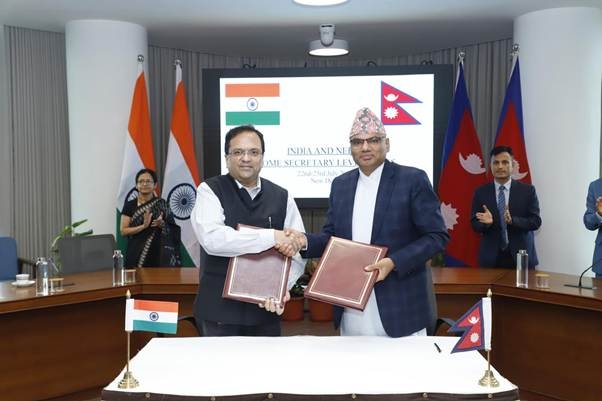
The Ministry of External Affairs (MEA) firmly reiterated that India and Nepal maintain exclusive bilateral mechanisms to address border and boundary issues, explicitly rejecting any role or intervention for third-party nations.
Main Body: Multi-Dimensional Analysis
- Upholding Strict Bilateralism in the Neighborhood: India’s foreign policy consistently emphasizes strict bilateralism when resolving territorial matters with immediate neighbors. Rejecting external mediation or third-party interventions prevents regional boundary issues from becoming internationalized or complicated by external geopolitical rivalries.
- The Susta, Kalapani, and Lipulekh Structural Disputes: The boundary discussions primarily center on historical territorial alignments along regions like Kalapani, Lipulekh, and Susta. Divergent interpretations of the historical 1816 Treaty of Sugauli, often influenced by shifting river courses over time, require joint boundary working groups to resolve.
- Managing Open Borders and Internal Security: Unlike most international boundaries, the India-Nepal border is open and porous under the 1950 Treaty of Peace and Friendship. While this fosters deep socio-economic and cultural ties, it presents internal security challenges, including counterfeit currency transit, human trafficking, and third-country cross-border infiltration.
- Countering External Geopolitical Pressures: The border dispute is further complicated by growing external economic and infrastructure footprints in the Himalayan region. India’s focus on structured bilateral mechanisms helps ensure that neighborhood border management remains free from external strategic pressure.
Positives, Negatives, & Associated Frameworks
- Positives: Prevents the internationalization of neighborhood border disputes, protects historical bilateral security arrangements, and leverages existing joint technical boundaries committees.
- Negatives: Shifted river channels create recurring geographical ambiguities on the ground, and delayed boundary demarcations can be used to fuel domestic political rhetoric.
- Associated Frameworks: 1816 Treaty of Sugauli, 1950 India-Nepal Treaty of Peace and Friendship, Joint Border Technical Committee.
Way Forward
- Reconvene the Joint Technical Level Boundary Committee to deploy high-resolution satellite imagery and GPS mapping to fix permanent border coordinates.
- Strengthen local border infrastructure and increase coordination between India’s Sashastra Seema Bal (SSB) and Nepal’s Armed Police Force to secure porous areas.
- Deepen economic connectivity through integrated check posts (ICPs) to emphasize the shared benefits of smooth, peaceful trade over territorial disputes.
Conclusion
Maintaining exclusive bilateral dialogue remains the most effective path for India and Nepal to resolve historical border alignment issues, ensuring that localized boundary friction does not undermine the deep cultural and strategic ties between the two nations.
Practice Mains Question
“Territorial disputes in the sub-continental neighborhood are best resolved through institutionalized bilateral mechanisms rather than external internationalization.” Evaluate this statement in light of recent diplomatic discussions regarding the India-Nepal border alignments. (250 words)
