
Topic 1: CCPA Enforces Dark Pattern Guidelines on Digital Commerce
Syllabus
- GS Paper 2: Governance, Government Policies, and Interventions for Development in various sectors; Digital Governance.
- GS Paper 3: E-Commerce Regulation, Consumer Protection, and Challenges to Internal Security (Cyber Security).
Context
On June 4, 2026, the Central Consumer Protection Authority (CCPA) initiated suo motu punitive actions against prominent EdTech and subscription-based digital commerce platforms for violating the statutory Guidelines for Prevention and Regulation of Dark Patterns, 2023, marking India’s first major multi-platform enforcement action against deceptive user interfaces.
Main Body: Multi-Dimensional Analysis
- Technological Exploitation via UI/UX Design: Dark patterns represent predatory user interface or user experience (UI/UX) architectures intentionally engineered to trick, coerce, or manipulate digital consumers into taking unintended actions—such as making covert purchases, surrendering personal data, or getting locked into recurring subscription loops.
- The Principle of Explicit Affirmative Consent: The CCPA’s core legal ruling establishes that consumer consent cannot be assumed through pre-selected check-boxes or default settings. Consent must be obtained strictly through an explicit, active, and affirmative act by the consumer, aligning with the principles laid out in the Digital Personal Data Protection (DPDP) Act, 2023.
- Socio-Economic Vulnerability of Minors: The enforcement highlighted that EdTech platforms disproportionately exploit information asymmetry and fear among students and minors. Deceptive tactics like “Forced Action” (advertising courses as free but locking them behind mandatory, non-essential data collection) infringe upon consumer rights.
- Regulatory Paradigm Shift: This move transitions India’s digital governance framework from a reactive, complaint-driven mechanism to a proactive, state-led enforcement model. It bridges the enforcement gap under the Consumer Protection Act, 2019, setting a binding legal precedent for all e-commerce entities operating within the domestic market.
Positives, Negatives, & Associated Frameworks
- Positives: Heightened data sovereignty for citizens, mitigation of financial fraud via hidden costs (“Basket Sneaking”), and protection of vulnerable student demographics from predatory commercial traps.
- Negatives: Increased compliance and user-experience engineering overheads for domestic startups, and a lack of standardized clarity on what separates aggressive digital marketing from statutory dark patterns.
- Associated Statutes/Frameworks: Consumer Protection Act 2019, Guidelines for Prevention and Regulation of Dark Patterns 2023, Digital Personal Data Protection Act 2023, Jago Grahak Jago Campaign.
Way Forward
- Implement mandatory periodic third-party UX/UI audits for large digital platforms exceeding a specific user threshold.
- Establish a formal, joint oversight mechanism connecting the CCPA and the Data Protection Board of India to synchronize regulatory actions.
- Expand the Jagriti consumer grievance platform to include dedicated reporting portals for algorithmic and interface manipulations.
Conclusion
Regulating dark patterns is essential to ensuring a fair, safe, and transparent digital marketplace. Fusing strict UI/UX guidelines with data protection frameworks allows India to foster a consumer-centric digital economy that respects individual autonomy over corporate algorithmic exploitation.
Practice Mains Question
Examine the regulatory challenges posed by “Dark Patterns” in India’s booming digital commerce and EdTech sectors. Evaluate the efficacy of the current institutional frameworks in protecting vulnerable consumers from predatory interface designs. (250 words)
Topic 2: Strategic Energy Integration: India-Venezuela Head of State Summit
Syllabus
- GS Paper 2: Bilateral, Regional, and Global Groupings and Agreements involving India and/or affecting India’s Interests; Effect of Policies of Developed and Developing Countries on India’s Interests.
- GS Paper 3: Energy Security, Infrastructure, and Mobilization of Resources.
Context
Amid deep operational disruptions in traditional West Asian maritime transit routes, Prime Minister Narendra Modi held a high-level bilateral summit in New Delhi on June 4, 2026, with Venezuela’s acting President Delcy Rodriguez, formalizing a massive expansion of crude oil imports and strategic investments in South American critical mineral blocks.
Main Body: Multi-Dimensional Analysis
- Bypassing Geopolitical Chokepoints: India imports approximately 90% of its crude oil requirements, with roughly half traditionally passing through the Strait of Hormuz. With that corridor facing severe security vulnerabilities due to regional West Asian conflicts, diversifying supply lines toward the Western Hemisphere has transformed from a commercial choice into an absolute national survival directive.
- Elevating Venezuela in the Energy Matrix: Driven by a rapid surge in imports over the last two quarters, Venezuela has officially become India’s third-largest supplier of crude oil. The summit finalized mechanisms to scale up this trade through long-term delivery architectures that insulate India from spot-market price shocks.
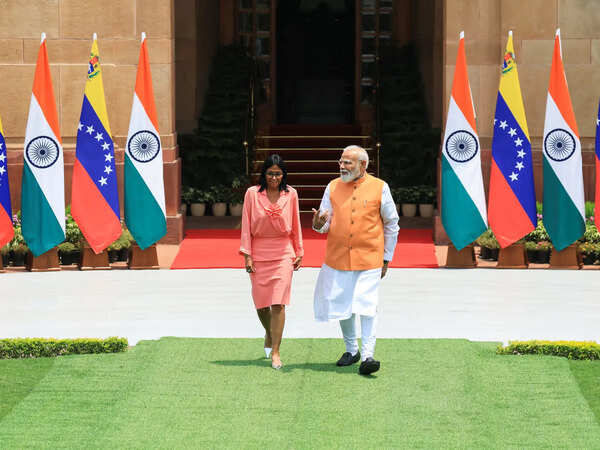
- Upstream Investments & Critical Minerals: Moving beyond a buyer-seller relationship, the summit opened up pathways for public and private Indian consortiums (led by OVL) to inject capital into Venezuela’s Orinoco Belt oil fields. Crucially, it secured exploration concessions for Indian entities in Venezuela’s unmapped mining tracts containing lithium, nickel, and cobalt.
- Counter-Cyclical Trade Frameworks: To circumvent international banking restrictions and dollar liquidity bottlenecks, both nations reviewed alternative financial transaction architectures, including local-currency trade settlements and specialized crude-for-pharmaceuticals clearing mechanisms.
Positives, Negatives, & Associated Frameworks
- Positives: Drastic reduction in geographical supply risks, securing upstream assets in the world’s largest proven oil reserves, and creating direct export lanes for Indian generic drugs and automobiles.
- Negatives: High logistical freight costs across trans-Atlantic routes, structural refinement difficulties associated with Venezuela’s extra-heavy crude, and exposure to secondary international sanctions.
- Associated Concept/Policies: Strategic Crude Oil Buffers, Net-Zero 2070, Energy Diplomacy, Hydrocarbon Vision.
Way Forward
- Upgrade public sector refineries on India’s western coast with advanced coking units specifically optimized to process heavy, sour Venezuelan crude efficiently.
- Institutionalize a non-dollar, rupee-denominated trade mechanism to insulate multi-billion dollar energy transactions from Western banking sanctions.
- Diversify joint ventures to prioritize the rapid acquisition of lithium and critical mineral mining blocks to feed India’s domestic battery manufacturing industries.
Conclusion
The India-Venezuela energy alignment marks a realist shift in India’s neighborhood-plus energy diplomacy. By embedding its industrial footprint directly into South American extraction sectors, New Delhi is actively insulating its macro-economy from the geopolitical turbulence destabilizing traditional energy corridors.
Practice Mains Question
“The diversification of crude oil procurement away from traditional chokepoints is a core pillar of India’s contemporary strategic autonomy.” Discuss this statement in light of India’s expanding energy and critical mineral ties with Venezuela. (250 words)
Topic 3: The Arrival of the Southwest Monsoon and the Deployment of the Pulses Buffer
Syllabus
- GS Paper 3: Issues related to Direct and Indirect Farm Subsidies and Minimum Support Prices; Public Distribution System (PDS)- Objectives, Functioning, Limitations, Revamping; Buffer Stocks and Food Security; Agriculture- Kharif Sowing.
- GS Paper 1: Important Geophysical Phenomena- Southwest Monsoon, El Niño, and their socio-economic impacts.
Context
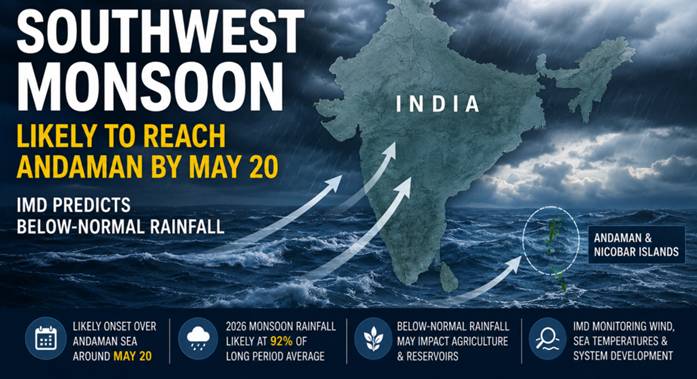
On June 4, 2026, the India Meteorological Department (IMD) officially confirmed the onset of the Southwest Monsoon over the Kerala coast—marking a brief three-day delay from the standard baseline. Concurrently, the Ministry of Consumer Affairs deployed an unprecedented 43 lakh tonne strategic pulses buffer to insulate the domestic economy from El Niño-induced price shocks.
Main Body: Multi-Dimensional Analysis
- The Structural Delay and Kharif Vulnerabilities: While the IMD had initially forecast an early onset, the monsoon arrived slightly behind schedule. This delay compresses the temporal window available for the sowing of water-intensive Kharif crops (paddy, pulses, oilseeds), making the spatial and temporal distribution of rainfall across Central and North-West India highly critical over the next 30 days.
- Deploying the Record 43-Lakh Tonne Cushion: To counteract potential supply-side shocks triggered by a lingering El Niño anomaly, the Union Government’s decision to maintain a buffer stock more than double that of 2025 (18 lakh tonnes) represents a profound paradigm shift in food security management. It shifts strategy from market-reactive pricing to proactive volume-based market insulation.
- Countering Food Inflation and Speculation: Pulses form the primary protein base for a vast majority of the Indian population. By holding a massive, unreleased stock, the state possesses the market intervention capacity to flood wholesale centers instantly at subsidized rates, effectively crushing speculative hoarding and urban retail inflation.
- The Long-Period Average (LPA) Projections: The IMD has retained its forecast that India will receive roughly 90% of the Long-Period Average rainfall this year. While categorizing it within the lower bound of ‘normal,’ this skewed distribution requires immediate micro-irrigation management and regional agricultural advisories.
Positives, Negatives, & Associated Frameworks
- Positives: Unprecedented state capacity to control protein-source inflation, robust buffers to support PDS and nutritional welfare schemes, and immediate relief to rain-dependent agricultural belts in South India.
- Negatives: High fiscal storage costs and storage losses, localized shortfalls in Kharif sowing yields, and extreme urban-rural price disparities if open-market releases are mistimed.
- Associated Schemes/Portals: Price Stabilization Fund (PSF), PM-AASHA, National Food Security Act (NFSA), INSAT Weather Imagery Tracking.
Way Forward
- Transition from uniform national sowing advisories to hyper-local, block-level agro-meteorological crop recommendations based on real-time INSAT-3D satellite data.
- Use a phased, decentralized release of the pulses buffer through state-run cooperative channels to prevent sudden price crashes that harm farmers.
- Expand the construction of modern, scientific silo networks dedicated to pulse preservation to reduce high storage degradation losses.
Conclusion
The convergence of a delayed monsoon with India’s largest-ever strategic food buffer emphasizes the necessity of climate-adaptive governance. True agricultural resilience is achieved by matching space-based predictive meteorology with robust, macro-level market intervention mechanisms.
Practice Mains Question
Evaluate the role of strategic food buffers in protecting India’s domestic economy from climate-induced supply chain disruptions. Analyze how a skewed Southwest Monsoon impacts agricultural inflation and food security. (250 words)
Topic 4: Tamil Nadu Inks ₹18,600-Crore Milestone Investment Pact with L&T
Syllabus
- GS Paper 3: Indian Economy and issues relating to Planning, Mobilization of Resources, Growth, Development, and Employment; Infrastructure- Energy, Digital, and Industrial Hubs.
- GS Paper 2: Functions and Responsibilities of the Union and the States (State Government industrial governance).
Context
Marking the first major industrial policy initiative under the newly elected state government, the Tamil Nadu government signed a Memorandum of Understanding (MoU) with Larsen & Toubro (L&T) on June 4, 2026, for three high-tech projects valued at ₹18,600 crore, highlighting a structural pivot toward advanced AI infrastructure and electronics manufacturing.
Main Body: Multi-Dimensional Analysis
- The Digital Infrastructure Leap via Hyperscale AI: The anchor piece of the investment pact is a ₹15,000-crore Hyperscale and Edge AI Data Centre to be established in Kancheepuram district. As artificial intelligence models demand massive compute resources, this facility positions Tamil Nadu as a primary sub-continental digital hub, drawing upstream tech giants and SaaS developers to the region.
- Decentralizing High-Tech Assembly to Coimbatore: The allocation of a ₹2,500-crore advanced electronics manufacturing hub to Coimbatore accelerates the geographic decentralization of high-tech industries away from the saturated Chennai-Sriperumbudur corridor. It capitalizes on Coimbatore’s existing precision engineering ecosystem to build a robust semiconductor and component assembly supply chain.
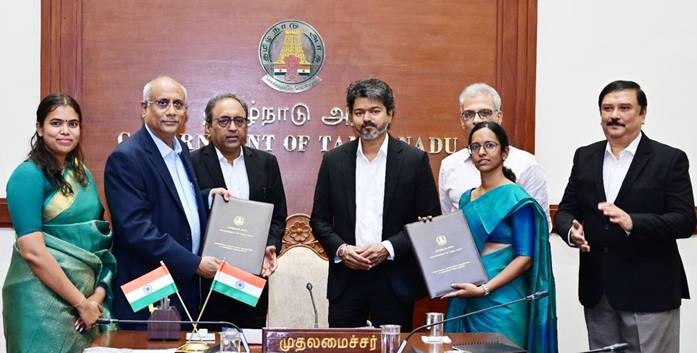
- The Revenue Maximization Strategy: Faced with fiscal consolidation targets, the state government’s explicitly stated strategy aims to maximize non-tax revenues through large-scale capital investments and high-value job creation, rather than resorting to regressive industrial tax hikes.
- Employment Multipliers and the Gig Economy: While the data center is capital-intensive and creates direct tech employment for 500 high-skilled process engineers, the downstream electronics manufacturing hub in Coimbatore is expected to create thousands of structural, long-term assembly positions, boosting female labor force participation in western Tamil Nadu.
Positives, Negatives, & Associated Frameworks
- Positives: Strong momentum for the state’s 1-Trillion Dollar economy target, rapid expansion of domestic AI hosting capabilities, and geographical diversification of industrial clusters.
- Negatives: Heavy real-time grid power consumption and cooling-water overheads for hyperscale data centers, and a wide skill gap between local graduates and advanced AI infrastructure jobs.
- Associated Policies: Tamil Nadu Electronics Hardware Manufacturing Policy, National Policy on Electronics (NPE), PLI Scheme for IT Hardware, Guidance Tamil Nadu.
Way Forward
- Mandate that the Kancheepuram Hyperscale Data Centre sources at least 60% of its massive baseload power from dedicated off-grid captive solar and wind farms.
- Launch specialized advanced diploma courses in precision electronics assembly across polytechnics in western Tamil Nadu to feed the Coimbatore manufacturing hub.
- Create a dedicated single-window regulatory clearing desk within ‘Guidance Tamil Nadu’ to track the execution timelines of these high-value projects.
Conclusion
Tamil Nadu’s multi-billion-crore pact with L&T reflects a calculated transition from low-margin manufacturing to high-value AI infrastructure and digital assets. By anchoring foundational computing power and component assembly within its borders, the state is creating a sustainable blueprint for regional economic growth in the digital age.
Practice Mains Question
“The transition toward capital-intensive AI infrastructure and electronic hubs is critical for states seeking to maximize revenue without expanding tax burdens.” Critically analyze this in the context of Tamil Nadu’s industrial governance. (250 words)
Topic 5: Passing of Dr. Subhash C. Kashyap: A Loss to Constitutional Scholarship
Syllabus
- GS Paper 2: Indian Constitution—Historical Underpinnings, Evolution, Features, Amendments, Significant Provisions, and Basic Structure; Structure, Organization, and Functioning of the Executive and the Legislature.
Context
On June 4, 2026, India’s parliamentary and constitutional architecture lost one of its most definitive voices with the passing of Dr. Subhash C. Kashyap, the former Secretary-General of the Lok Sabha and a legendary constitutional scholar whose treatises shaped decades of legislative jurisprudence.
Main Body: Multi-Dimensional Analysis
- Architect of Parliamentary Bureaucracy: Serving as the Secretary-General of the Lok Sabha, Dr. Kashyap was not merely an administrative head but a key custodian of parliamentary conventions, privileges, and procedural rulebooks. He institutionalized the structural independence of the Lok Sabha Secretariat, ensuring it functioned as a non-partisan technical body serving the legislature.
- Democratizing Constitutional Literacy: Through seminal literary works such as “Our Constitution”, “Our Parliament”, and “Constitutional History of India”, Dr. Kashyap translated complex constitutional legalese into highly accessible political philosophy. He transformed constitutional studies from an elite legal preserve into a foundational element of public civic consciousness.

- Defending Legislative Intent and Autonomy: Throughout his career, Dr. Kashyap consistently advocated for maintaining the fine constitutional balance of powers between the Judiciary, the Executive, and the Legislature. His expert commentaries frequently cautioned against judicial overreach while underscoring the absolute accountability of the executive to the floor of the House.
- Contribution to Institutional Reform: As a key member of the National Commission to Review the Working of the Constitution (NCRWC), his recommendations focused heavily on stabilizing electoral processes, strengthening the anti-defection law framework, and improving the working hours and productivity metrics of parliamentary sessions.
Positives, Negatives, & Associated Frameworks
- Positives: Leaving behind an exhaustive legal literature base that serves as a baseline for legislative procedural disputes, and setting an enduring standard for non-partisan civil service execution within parliament.
- Negatives: His passing emphasizes a growing deficit in contemporary legal scholarship capable of bridging deep constitutional history with rapidly changing digital-era legislative challenges.
- Associated Institutions/Reports: Lok Sabha Secretariat, Article 98 (Secretariat of Parliament), Venkatachaliah Commission (NCRWC Report, 2002), Inter-Parliamentary Union.
Way Forward
- Digitalize and open-source the complete archives of Dr. Kashyap’s parliamentary rulings and research papers to serve as an instant reference tool for state legislative assemblies.
- Establish dedicated chairs of Constitutional Studies and Parliamentary Procedures in central universities to honor his legacy and train future legislative counsels.
- Incorporate his foundational texts on parliamentary conventions into the mandatory induction training modules for newly elected legislators across all states.
Conclusion
Dr. Subhash C. Kashyap’s legacy is deeply embedded within the operational mechanics of Indian democracy. His life’s work serves as a powerful reminder that the endurance of a republic depends not just on the written text of its Constitution, but on the continuous procedural integrity and intellectual rigor of its democratic institutions.
Practice Mains Question
Evaluate the contributions of Dr. Subhash C. Kashyap to the institutional evolution of the Lok Sabha Secretariat and Indian constitutional scholarship. Discuss his views on maintaining the balance of powers among the organs of state. (250 words)
Topic 6: Strategic Shift in Border Management: India-Nepal Bilateralism
Syllabus
- GS Paper 2: India and its Neighborhood- Relations; Bilateral, Regional, and Global Groupings and Agreements involving India and/or affecting India’s Interests.
- GS Paper 3: Security Challenges and their Management in Border Areas.
Context
On June 4, 2026, the Ministry of External Affairs (MEA) firmly reiterated that boundary demarcation and management along the Susta, Kalapani, and Lipulekh sectors remain strictly within the purview of exclusive India-Nepal bilateral working groups, formally rejecting external geopolitical posturing or third-party mediation offers.
Main Body: Multi-Dimensional Analysis
- Upholding Strict Bilateralism as a Strategic Shield: India’s diplomatic stance across the sub-continental neighborhood consistently prioritizes localized, bilateral institutional mechanisms. Preventing the internationalization of border discussions isolates sensitive territorial contentions from broader global geopolitical rivalries and proxy interventions.
- The Hydro-Geographic Fluidity of Susta and Kalapani: The core technical disputes along sectors like Susta (Bihar-Nepal border) are deeply complicated by riverine morphology. Shifting river channels (primarily of the Gandak/Narayani river) over the last two centuries have created overlapping territorial claims based on divergent interpretations of the historical 1816 Treaty of Sugauli.
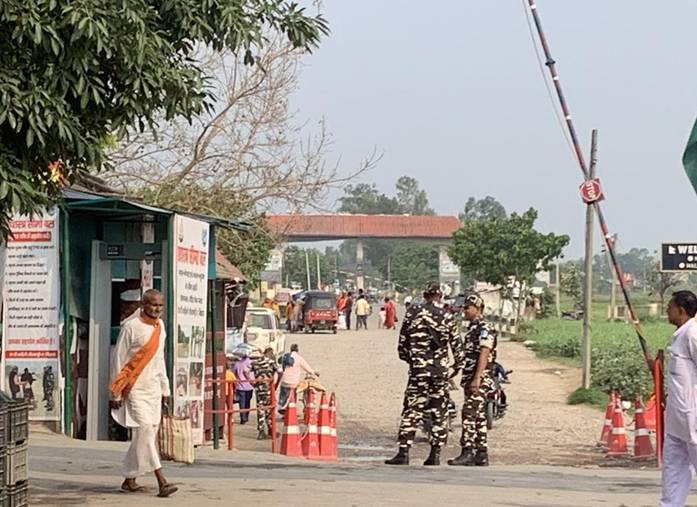
- The Inherent Security Dynamics of an Open Border: Under the foundational 1950 Treaty of Peace and Friendship, the 1,850-kilometer India-Nepal border remains open and porous. While this supports deep transnational kinship ties (Roti-Beti rishta), it presents persistent internal security vulnerabilities, including human trafficking networks, counterfeit currency movement, and third-country cross-border infiltration routes.
- Countering the Infrastructure Competition: The border management policy is shifting away from purely defensive military posturing toward economic integration. By accelerating the building of Integrated Check Posts (ICPs) and cross-border rail links, India aims to neutralize external economic leverage in the Himalayan region by offering Nepal superior, streamlined trade access.
Positives, Negatives, & Associated Frameworks
- Positives: Isolation of neighborhood issues from third-party interference, preservation of historical bilateral security ties, and an increased reliance on high-resolution GPS mapping via Joint Technical Level Boundary Committees.
- Negatives: Delayed final boundary settlements can be utilized by populist political elements to fuel anti-India rhetoric, and shifting river paths present ongoing challenges for fixed law enforcement jurisdiction.
- Associated Treaties/Agencies: Treaty of Sugauli 1816, 1950 Treaty of Peace and Friendship, Sashastra Seema Bal (SSB), Boundary Working Group (BWG).
Way Forward
- Deploy permanent, satellite-linked coordinate markers along riverine border sectors like Susta to establish unchanging legal jurisdictions irrespective of natural river movements.
- Strengthen real-time intelligence-sharing mechanisms between India’s Sashastra Seema Bal (SSB) and Nepal’s Armed Police Force to combat cross-border cyber and financial crimes.
- Accelerate the completion of inland container depots along the border to transform border security from a law-enforcement barrier into an economic trade corridor.
Conclusion
Resolving border alignments with Nepal requires a careful balance of geographical precision and diplomatic sensitivity. By keeping border management firmly within bilateral institutional channels, both nations can ensure that localized boundary disputes do not undermine their deep cultural, economic, and strategic partnerships.
Practice Mains Question
“The management of porous, riverine borders in the sub-continental neighborhood requires a transition from traditional security posturing to technology-driven economic corridors.” Analyze this statement in the context of India-Nepal border management. (250 words)
Topic 7: The Security Implications of the Strait of Hormuz Crisis on Global Trade
Syllabus
- GS Paper 2: Effect of Policies and Politics of Developed and Developing Countries on India’s Interests; Indian Diaspora.
- GS Paper 3: Security Challenges and their Management in Strategic Maritime Corridors; Energy Security and Logistics Infrastructure.
Context
Deepening maritime security reviews on June 4, 2026, highlighted that the effective closure of key shipping lanes around the Strait of Hormuz due to regional West Asian conflicts has forced a complete reorganization of global shipping, severely impacting India’s export competitiveness and import logistics.
Main Body: Multi-Dimensional Analysis
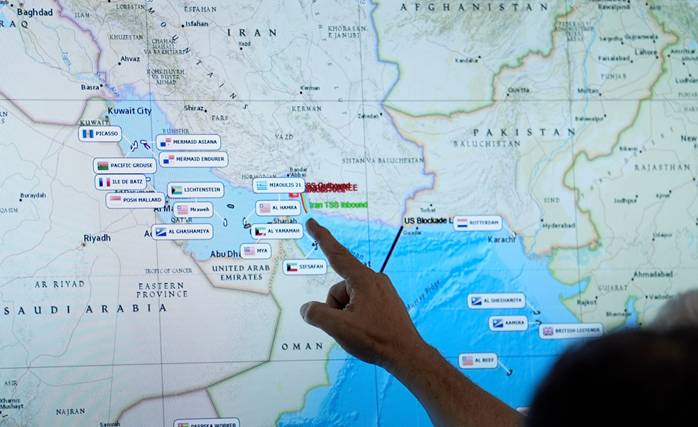
- The Critical Vulnerability of the Energy Chokepoint: The Strait of Hormuz is the world’s most critical maritime energy artery, through which more than one-fifth of global petroleum liquids pass daily. A prolonged disruption in this narrow corridor forces tankers to take massive, expensive alternative routes, driving up global maritime insurance premiums (War Risk Surcharges) exponentially.
- Socio-Economic Impact on Indian Exports: For India’s manufacturing sectors, the closure translates into a multi-fold increase in container freight rates and severe delays in securing critical components. Long-distance detours around Africa’s Cape of Good Hope add 10 to 14 days to transit times, draining working capital for Indian exporters shipping to European and North American markets.
- Expatriate Safety and Remittance Pipelines: The broader West Asian region hosts over 8.5 million non-resident Indians who contribute more than half of India’s annual 100-billion-dollar inward remittance flow. Prolonged maritime conflicts elevate regional security risks, forcing the Ministry of External Affairs to maintain active contingency evacuation plans for the diaspora.
- Accelerating Alternative Transcontinental Corridors: This maritime crisis has created an urgent strategic imperative to fast-track alternate, multi-modal transport infrastructure. It has renewed focus on developing the International North-South Transport Corridor (INSTC) and operationalizing the India-Middle East-Europe Economic Corridor (IMEC) to build land-sea supply alternatives that bypass vulnerable maritime chokepoints.
Positives, Negatives, & Associated Frameworks
- Positives: Accelerates the long-delayed structural shift toward domestic energy self-reliance, drives investment into national strategic petroleum reserves, and highlights the value of alternate trade routes like the INSTC.
- Negatives: Severe inflationary pressures on domestic fuel prices, loss of export competitiveness for Indian MSMEs due to high freight costs, and heightened security risks for commercial mariners.
- Associated Initiatives: International North-South Transport Corridor (INSTC), IMEC, Sagarmala Project, Indian Navy’s Project Seabird.
Way Forward
- Provide temporary, targeted fiscal freight subsidies to export-oriented MSMEs to buffer them against soaring global shipping container rates.
- Deploy dedicated Indian Navy naval escorts under Operation Sankalp to protect Indian-flagged merchant vessels navigating accessible sectors of the Western Indian Ocean.
- Expand domestic strategic petroleum reserve (SPR) capacities from the current 9-day cushion to a robust 30-day baseline to better insulate the economy from global maritime shocks.
Conclusion
The crisis in the Strait of Hormuz underscores the vulnerability of relying heavily on centralized maritime supply lines. To protect its economic growth from distant geopolitical conflicts, India must build resilient trade networks by combining blue-water naval protection with diversified, transcontinental land-sea infrastructure corridors.
Practice Mains Question
Assess the socio-economic and logistical implications of the Strait of Hormuz maritime crisis on India’s export economy and energy security. Suggest strategic interventions to insulate the domestic supply chain from such global maritime disruptions. (250 words)
Topic 8: Parliamentary Accountability: Standing Committee Examines Exam Software Procurements
Syllabus
- GS Paper 2: Structure, Organization, and Functioning of the Executive and the Legislature; Parliamentary Committees; Accountability and Administrative Reforms; Issues relating to the Development and Management of Education.
Context
On June 4, 2026, the Parliamentary Standing Committee on Education launched a formal investigation into the Central Board of Secondary Education’s (CBSE) automated On-Screen Marking (OSM) systems, following whistle-blower disclosures that exposed systemic tendering irregularities and software evaluation glitches in public examinations.
Main Body: Multi-Dimensional Analysis
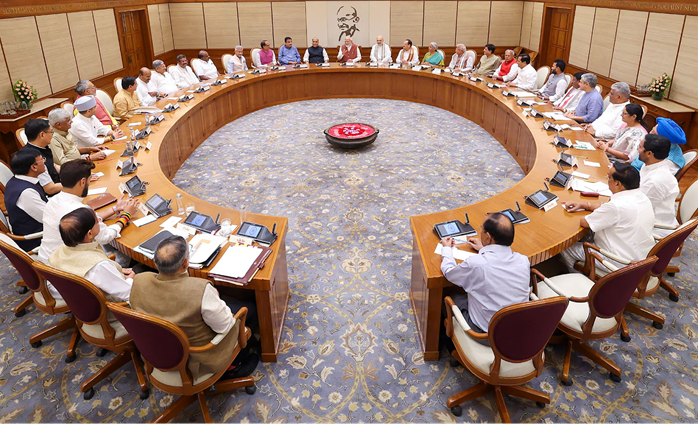
- The Power of Committee-Led Executive Oversight: This investigation demonstrates how Department-Related Standing Committees enforce continuous accountability on executive ministries and autonomous boards outside of regular parliamentary sessions. Operating away from daily political debates, these panels can conduct deep, data-driven cross-examinations of administrative procurement processes.
- Vulnerabilities in Automated Public Evaluations: Transitioning high-stakes national examinations to computerized On-Screen Marking (OSM) systems was designed to eliminate manual calculation errors and speed up results. However, biased tendering processes that award contracts to technically deficient vendors can introduce software glitches, compromised evaluation scripts, and data security risks.
- Protecting Student Welfare and Meritocracy: Grade 12 board evaluations serve as the primary gateway for higher education admissions and career opportunities. Systemic irregularities or technical failures within these digital platforms can impact the future of hundreds of thousands of students, making absolute administrative transparency vital to preserving trust in national educational metrics.
- The Role of Citizen Whistleblowers in Governance: The standing committee took up this investigation after a youth-led open-source data audit flagged anomalies in the board’s technical bidding processes. This highlights how citizen engagement and open data transparency can act as crucial tools for checking bureaucratic overreach and corporate corruption.
Positives, Negatives, & Associated Frameworks
- Positives: Quick deployment of legislative oversight to protect student academic records, a push for greater transparency in tech procurement, and the reinforcement of anti-corruption standards within autonomous educational bodies.
- Negatives: Exposes vulnerabilities within automated public education infrastructures, and risks undermining the institutional credibility of national testing and assessment metrics.
- Associated Agencies/Guidelines: Central Vigilance Commission (CVC) Procurement Guidelines, National Education Policy (NEP) digital evaluation frameworks, General Financial Rules (GFR) 2017.
Way Forward
- Mandate a comprehensive, independent security and technical audit of all proprietary software models deployed by national and state examination boards.
- Standardize public procurement processes across all educational secretariats by strictly adhering to the Central Vigilance Commission’s (CVC) open-tendering and reverse-auction protocols.
- Implement a secure, blockchain-verified student grievance system where evaluation anomalies or software calculation errors can be reviewed transparently.
Conclusion
The shift toward digital evaluation systems in public education requires strong administrative and procurement safeguards. Active parliamentary scrutiny ensures that technology serves as a reliable tool for transparency, rather than a mask for procurement irregularities and administrative mismanagement.
Practice Mains Question
Examine the role of Parliamentary Standing Committees in ensuring the accountability of autonomous administrative bodies. Discuss this in light of the technological and administrative challenges facing digital evaluation systems in India’s public education sector. (250 words)
