
Topic 1: The First ‘INDIA Janbandhan’ Block Meeting Post-Setbacks
Syllabus
- GS Paper 2: Polity & Governance — Appointment to various Constitutional posts, powers, functions and responsibilities of various Constitutional Bodies; Salient features of the Representation of People’s Act.
Context
On June 8, 2026, leaders of 23 opposition political parties convened at the Constitution Club in New Delhi for the first major huddle of the “INDIA Janbandhan” bloc, aiming to recalibrate strategic unity following recent electoral shifts and rising internal structural tensions.
Main Body: Multi-Dimensional Analysis
- Coalition Dynamics & Friction points: The alliance met against a backdrop of deep strategic fault lines. Tensions escalated as regional giants like the DMK skipped the meeting, citing friction with the Congress over political developments in Tamil Nadu, while the CPI(M) sought formal clarifications regarding cross-allegations in Kerala.
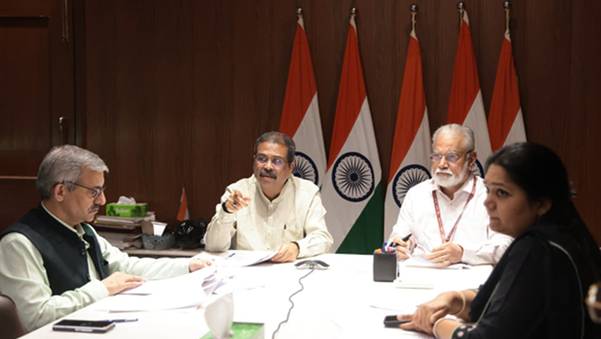
- Core Governance Critique: The unified resolution targeted federal issues, primarily accusing the central administration of using investigative agencies to systematically weaken opposition structures and daily “assaults on constitutional mandates.”
- Electoral Integrity Framework: A primary axis of discussions focused on electoral reforms, with leaders moving to collaboratively build a counter-narrative against alleged systematic attempts to marginalize voting rights across vulnerable demographics.
- Strategic Geopolitical Discourse: The bloc moved beyond domestic friction to heavily criticize the Centre’s recent economic and foreign policy adjustments, arguing that current frameworks compromise localized indigenous livelihoods and escalate systemic inflation.
Positives, Negatives, & Government Schemes
| Dimension | Details |
| Positives | Formalizes a healthy multi-party opposition framework, deepens accountability, and checks structural majoritarian legislative pushes. |
| Negatives | Highlights fragmentation inside regional fronts, increases instability within alternative governance models, and Risks policy paralysis if elected. |
| Associated Laws/Concepts | Tenth Schedule (Anti-Defection Law), Representation of the People Act, 1951, Federalism as a Basic Structure (S.R. Bommai Case). |
Way Forward
- Establish an institutionalised, standing “Coordination Council” within multi-party alliances to iron out regional disputes before they fracture national alignment.
- Shift the alliance focus from purely anti-incumbency campaigns to a concrete, written Common Minimum Programme (CMP) addressing core issues like structural inflation and unemployment.
- Strengthen grassroots consensus mechanisms rather than relying strictly on top-down high-command dictates.
Conclusion
While multi-party alliances represent the diverse, polyphonic reality of India’s federal polity, their longevity relies heavily on moving past transactional regional politics to champion systemic constitutional accountability.
Practice Mains Question: “The stability of multi-party coalitions in India is constantly challenged by the asymmetric aspirations of national and regional parties.” Analyze this statement in the context of recent developments in the opposition alliance structures. (250 words)
Topic 2: Land Pooling Frameworks Gain Momentum Over Land Acquisition
Syllabus
- GS Paper 3: National Issues & Infrastructure — Land Reforms in India, Infrastructure development models.
Context
A comprehensive tracking of infrastructure projects on June 7, 2026, highlighted a policy paradigm shift as multiple state governments moved away from aggressive land acquisitions, heavily favoring ‘Land Pooling’ models to expedite development corridors.
Main Body: Multi-Dimensional Analysis
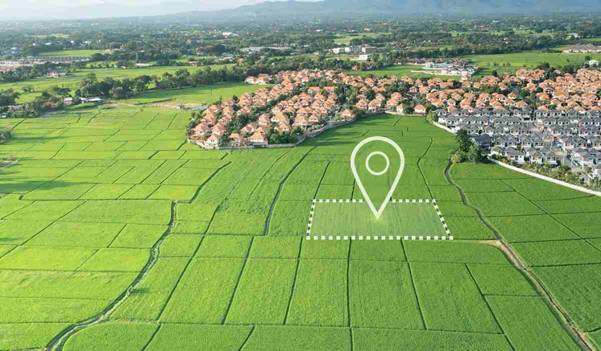
- Mechanisms of Land Pooling: Unlike compulsory state acquisition where ownership is permanently severed for cash, land pooling treats landowners as equity partners. Private owners voluntarily surrender land parcels to a public agency, which develops local infrastructure and returns a smaller, hyper-valued commercial plot back to the owner.
- Bypassing the Legal Gridlock: By eliminating the adversarial nature of the Right to Fair Compensation and Transparency in Land Acquisition, Rehabilitation and Resettlement (LARR) Act, 2013, pooling minimizes long-duration judicial injunctions and compensation disputes that bottleneck major public works.
- The Gestation Lag Deficit: A critical socioeconomic barrier identified is the long multi-year lag between the surrender of agricultural assets and the actual return of developed commercial spaces. This temporal gap leaves farm laborers and sub-tenants completely devoid of temporary alternative rural livelihoods.
- Technological Integrity Requirements: For pooling to remain transparent, states are rapidly integrating advanced Drone Surveys matched with Geographic Information Systems (GIS) to execute flawless, digitized land verification before initiating contracts.
Positives, Negatives, & Government Schemes
| Dimension | Details |
| Positives | Reduces state capital requirements for upfront compensation, eliminates long-drawn litigation, and turns farmers into long-term commercial beneficiaries. |
| Negatives | High trust deficit due to project delays, exclusion of landless agrarian laborers from downstream benefits, and risks of speculative real estate asset bubbles. |
| Associated Schemes | PM GatiShakti National Master Plan, Digital India Land Records Modernization Programme (DILRMP), AMRUT 2.0. |
Way Forward
- Introduce legally binding “Gestation Allowance” clauses to provide monthly financial safety nets to landless laborers during the interim development phase.
- Standardize land-sharing ratios across states to ensure that at least 40-50% of the ultra-developed commercial zones are cleanly returned to the original pooled stack.
- Implement decentralized, fast-track tribunals exclusively dedicated to settling boundary disputes arising post-development.
Conclusion
Land pooling represents an evolutionary leap in infrastructure economics, changing the state’s role from an aggressive acquirer to an infrastructure facilitator, safely aligning community capital with national growth.
Practice Mains Question: Critically examine how ‘Land Pooling’ serves as a progressive alternative to standard Land Acquisition frameworks in India. Detail the structural vulnerabilities it poses to landless agrarian labor forces. (250 words)
Topic 3: India and Nepal Jointly Launch UPI-NPI Cross-Border Linkage
Syllabus
- GS Paper 2: International Relations — India and its neighborhood relations; Bilateral, regional and global groupings and agreements involving India.
Context
On June 6, 2026, during the official high-level visit of Nepal’s Foreign Minister Shisir Khanal to New Delhi, India and Nepal formally operationalized a Peer-to-Peer (P2P) cross-border linkage connecting India’s Unified Payments Interface (UPI) with Nepal’s National Payments Interface (NPI).
Main Body: Multi-Dimensional Analysis
- Fintech Diplomacy & Neighborhood First: The physical integration of UPI and NPI signifies a profound push in India’s ‘Neighbourhood First’ tech diplomacy, establishing deep digital financial integration across the open border without depending on Western banking channels.
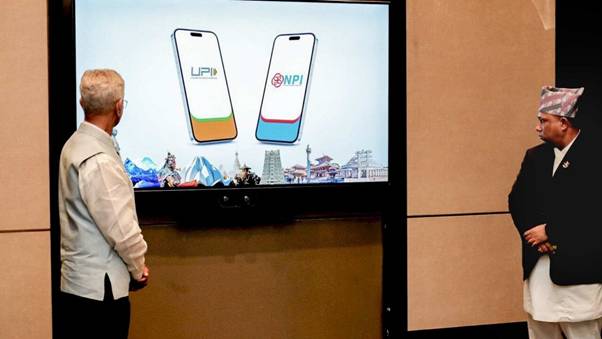
- Remittance Economics: Thousands of citizens cross the Indo-Nepal border daily for trade and labor. This real-time linkage slashes the transaction costs and processing times associated with institutional cross-border banking remittances, securing immediate liquid cash flow for rural households.
- The ‘Voice First’ Linguistic Initiative: Alongside the financial platform, Digital India Bhashini signed a historic MoU with Kathmandu University to co-create cross-border digital voice-translation interfaces, removing language barriers in technology adoption.
- Geopolitical & Reconstruction Portfolios: Deflecting third-party mediation pressures on long-standing border disputes, India simultaneously handed over 72 healthcare facilities and 12 monumental cultural heritage projects built under its post-2015 ‘Earthquake Reconstruction Assistance’ to Nepal.
Positives, Negatives, & Government Schemes
| Dimension | Details |
| Positives | Drastically formalizes cross-border informal financial flows, expands India’s global digital public infrastructure (DPI) footprint, and bypasses third-party friction. |
| Negatives | Increases systemic cyber-vulnerability across interconnected financial systems, requires harmonized cross-border data protection laws, and potential exchange rate volatility. |
| Associated Schemes | Digital India BHASHINI, Neighborhood First Policy, India’s Act East Framework, UPI Global Expansion Plan. |
Way Forward
- Formulate a joint Indo-Nepal Cybersecurity Taskforce to continually monitor real-time transaction nodes against illicit money laundering strings.
- Expand the peer-to-peer (P2P) framework into merchant-to-merchant (P2M) retail channels to fully capture the vast bilateral tourism market.
- Scale up the Bhashini voice translation models to cover hyper-localized tribal dialects spoken across the Terai borders.
Conclusion
By embedding economic cooperation directly into the smartphones of everyday citizens, the UPI-NPI platform transitions the India-Nepal bilateral matrix from high-level state diplomacy to deeply structural, daily digital integration.
Practice Mains Question: “Fintech diplomacy has emerged as a vital pillar of India’s ‘Neighbourhood First’ foreign policy.” Assess this statement using the recent UPI-NPI linkage with Nepal as a benchmark. (250 words)
Topic 4: State of India’s Digital Economy Report 2026 Released
Syllabus
- GS Paper 3: Economy — Indian Economy and issues relating to planning, mobilization of resources, growth, development, and employment; Digital Public Infrastructure (DPI).
Context
On June 7, 2026, the ICRIER-Prosus Center for Internet and Digital Economy (IPCIDE) released the comprehensive State of India’s Digital Economy (SIDE) 2026 report, benchmarking 71 global economies and ranking India as the 5th most digitalized nation in the world.
Main Body: Multi-Dimensional Analysis
- The CHIPS Analytical Framework: The report benchmarked nations utilizing five fundamental pillars: Connect, Harness, Innovate, Protect, and Sustain (CHIPS). India’s rapid rise just behind the US, China, Singapore, and the UK showcases a massive tech leap.
- The Global Tripolar Tech Shift: The data reflects a structural shift toward a tripolar digital order, where the Indo-Pacific region is actively counterbalancing the historical North Atlantic technology dominance.
- Demographics of Artificial Intelligence: Developing nations now account for 72% of active global AI users. Remarkably, India and China combined currently make up nearly two-fifths of entire global AI system adoption rates.
- AI Capability Index Success: Driven by the world’s second-largest AI talent pool, booming domestic tech startups, and deep internet penetration, India climbed to the 4th spot globally on the specific AI Capability Index.
Positives, Negatives, & Government Schemes
| Dimension | Details |
| Positives | Validates India’s Digital Public Infrastructure (DPI) model on the world stage, attracts higher foreign investment, and cements India’s position as a software talent powerhouse. |
| Negatives | Highlights deep domestic digital divides in rural internet stability, structural cyber-protection deficits, and high carbon footprints from expanding data centers. |
| Associated Initiatives | IndiaAI Mission, Digital India, National Data Governance Framework, National Strategy for Artificial Intelligence. |
Way Forward
- Deepen investments in localized semiconductor and hardware infrastructure to ensure complete technological sovereignty over the domestic AI layer.
- Enact hyper-targeted digital literacy initiatives in Tier-3 towns to transition the user base from passive media consumers to active digital wealth generators.
- Create a robust, green data center policy that mandates the direct integration of renewable power systems to run massive algorithmic server farms.
Conclusion
India’s status as a top global digital economy proves that strategic public investments in scalable, open-source Digital Public Infrastructure can quickly propel a developing nation into an international technology trendsetter.
Practice Mains Question: Analyze the findings of the State of India’s Digital Economy (SIDE) Report 2026. How is the Indo-Pacific emerging as an essential node in counterbalancing traditional global tech monopolies? (250 words)
Topic 5: India Joins Anthropic’s ‘Project Glasswing’
Syllabus
- GS Paper 3: Defence & Cybersecurity — Security challenges and their management in border areas; Linkages of organized crime with cyber-terrorism; Basics of cyber security.
Context
In a major defensive technological leap on June 6, 2026, India formally joined ‘Project Glasswing’, a critical global cybersecurity alliance led by Anthropic PBC, granting the nation exclusive state access to the ‘Claude Mythos AI’ engine.
Main Body: Multi-Dimensional Analysis
- AI-Driven Vulnerability Hunting: Claude Mythos AI is custom-engineered to scour millions of lines of defensive and open-source software code simultaneously to flag deep, hidden vulnerabilities and zero-day exploits before malicious non-state actors can deploy them.

- Shielding Critical National Infrastructure (CNI): The deployment directly targets securing vulnerable national operational arrays, including national nuclear command networks, regional electrical grids, satellite tracking telemetry, and massive public rail transit communications.
- The Threat of Cyberbiosecurity: A major focus of Project Glasswing is mitigating cyberbiosecurity threats, where hostile threat actors hack into automated bio-foundries or digital DNA databases to alter genetic pathogens remotely.
- Global Threat Intelligence Sharing: By joining this elite cohort, India moves away from reactive patch-management to an active, real-time international intelligence-swapping framework on emergent malware strains.
Positives, Negatives, & Government Schemes
| Dimension | Details |
| Positives | Drastically reduces human time lags in detecting network exploits, establishes advanced cyber-deterrence, and secures highly sensitive defense networks. |
| Negatives | Creates a strategic software dependence on external private tech entities, exposes sensitive codebases to AI learning models, and demands immense processing hardware. |
| Associated Initiatives | National Cyber Security Strategy, Indian Cyber Crime Coordination Centre (I4C), National Critical Information Infrastructure Protection Centre (NCIIPC). |
Way Forward
- Co-develop isolated, localized air-gapped instances of Claude Mythos AI within Indian military commands to prevent external algorithmic leaks.
- Train a dedicated cadre of Indian military cyber-warriors specifically in advanced “Prompt Injection Defenses” and neural network architecture.
- Introduce strict legislative guidelines on the sovereign control of codebases evaluated by third-party private AI firms.
Conclusion
As warfare rapidly transitions into the digital ether, weaponizing advanced automated AI engines like Claude Mythos through Project Glasswing is no longer a luxury, but a strategic imperative to secure national sovereignty.
Practice Mains Question: Discuss the strategic importance of integrating generative AI models like Claude Mythos into India’s critical information infrastructure protection protocols. Highlight the security risks of trusting foreign private AI frameworks. (250 words)
Topic 6: High-Temperature Coastal Shift and Wet-Bulb Risks Projecting Over South India
Syllabus
- GS Paper 3: Environment — Conservation, environmental pollution and degradation, environmental impact assessment; Climate Change.
Context
According to comprehensive climate research modeling released on June 7, 2026, severe modifications in climate patterns are projecting intense socioeconomic updates for India’s coastline, with Tamil Nadu and Kerala emerging as extreme high-risk zones for dangerous ‘Wet-Bulb’ temperature anomalies.
Main Body: Multi-Dimensional Analysis
- The Mechanics of Wet-Bulb Thresholds: Wet-bulb temperature combines ambient air heat with relative humidity. When this measurement breaches 31°C to 35°C, the human body can no longer cool itself down via sweating, leading to rapid heat stroke and systemic organ failure even in healthy individuals resting in the shade.
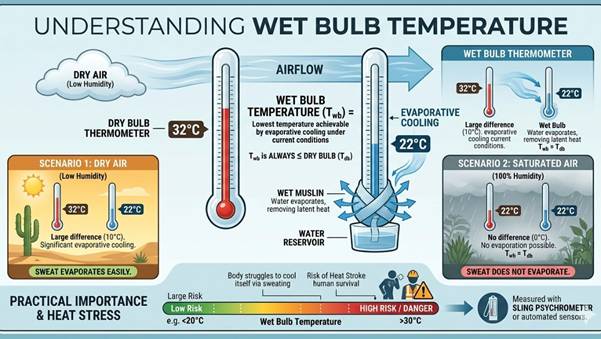
- The South-Indian Coastal Heat Trap: Around 40 densely populated coastal districts are projected to cross a permanent temperature spike exceeding 1°C by 2040. The maritime humidity of the Arabian Sea and the Bay of Bengal combined with this spike turns coastal Kerala and Tamil Nadu into high-risk zones.
- Monsoonal Asymmetry: The modeling predicts erratic behavioral shifts in the Southwest and Northeast monsoons. While western coasts like Gujarat and Maharashtra are slated for excess rainfall, crucial agricultural bands across Tamil Nadu and Andhra Pradesh face high volatility during baseline farming cycles.
- Socioeconomic Vulnerability: This climatological shift acts as a regressive economic tax on outdoor labor systems, including construction crews, traditional fishers, and rural smallholders who have no access to temperature-controlled workplaces.
Positives, Negatives, & Government Schemes
| Dimension | Details |
| Positives | Granular localized modeling allows state planners to redesign urban zoning codes, create public cooling grids, and rewrite labor safety laws preemptively. |
| Negatives | Threatens a massive drop in working-hour productivity, heavily burdens the state healthcare apparatus, and risks structural crop failures due to thermal stress. |
| Associated Schemes | National Action Plan on Climate Change (NAPCC), Heat Action Plans (HAPs) at district levels, PRITHVI Scheme, Mission Mausam. |
Way Forward
- Mandate the architectural inclusion of passive cooling designs and Cool Roof Coatings across all public housing projects in coastal Tamil Nadu.
- Legally modify labor regulations to ban open-air manual labor between 11:00 AM and 4:00 PM during declared extreme wet-bulb alert weeks.
- Deploy localized, village-level ‘Cooling Centers’ equipped with basic rehydration infrastructure powered by dedicated off-grid solar arrays.
Conclusion
The arrival of wet-bulb challenges proves that climate adaptation can no longer be treated as a distant ecological goal; it is an immediate public health emergency requiring localized, climate-resilient urban governance.
Practice Mains Question: “The rise of wet-bulb temperature anomalies poses an existential threat to public health and labor productivity in coastal India.” Discuss with special focus on the climate vulnerabilities of the southern peninsula. (250 words)
Topic 7: Supreme Court Orders Encroachment Demolition in Agasthyamalai Biosphere Reserve
Syllabus
- GS Paper 3 & TN State Issues: Environment & Ecology — Biodiversity, Protected Areas, Conservation of ecosystems.
Context
On June 6, 2026, the Supreme Court of India issued a stringent judicial directive ordering the immediate eviction of all unauthorized encroachers and the demolition of commercial illegal structures across the hyper-fragile Agasthyamalai Biosphere Reserve (ABR) along the Kerala-Tamil Nadu border.
Main Body: Multi-Dimensional Analysis
- Ecological Profile of ABR: Nestled at the southern tip of the Western Ghats, the Agasthyamalai Biosphere Reserve is a globally recognized tropical biodiversity hotspot. It serves as a vital genetic reservoir for rare medicinal plants, pristine evergreen forests, and crucial elephant and tiger migratory corridors.

- The Threat of Unchecked Anthropogenic Pressure: The court noted that illegal commercial resorts, unauthorized structural expansions, and speculative farming encroachments have severely fragmented local wildlife corridors, leading to a sharp rise in deadly human-wildlife conflicts inside Tamil Nadu border villages.
- The Public Trust Doctrine: By enforcing absolute clearances, the Supreme Court invoked the ‘Public Trust Doctrine’ and the ‘Precautionary Principle’, holding that the state is the legal custodian of fragile ecosystems and cannot permit commercial greed to degrade public ecological wealth.
- Inter-State Operational Coordination: Because ABR physically straddles the borders of both Tamil Nadu and Kerala, the court mandated the setting up of a unified joint-enforcement committee to ensure that evictions are synchronous and do not lead to displacement across state lines.
Positives, Negatives, & Government Schemes
| Dimension | Details |
| Positives | Restores critical wildlife migration corridors, protects endangered flora/fauna from systemic degradation, and sends a strong judicial deterrent to illegal eco-tourism cartels. |
| Negatives | Triggers immediate local socio-economic dislocation, risks overlapping with the forest rights of genuine indigenous tribal communities if not carefully audited. |
| Associated Laws/Schemes | Wildlife Protection Act, 1972; Forest Conservation Amendment Act; UNESCO Man and the Biosphere (MAB) Programme. |
Way Forward
- Conduct a strict, transparent digital mapping check using historical satellite data to distinguish recent illegal commercial structures from long-standing indigenous tribal settlements protected under the Forest Rights Act (FRA).
- Transform the evicted zones into community-led active reforestation plots managed entirely by local tribal youths funded through green employment allocations.
- Install integrated, AI-enabled smart camera traps along the outer boundaries of the reserve to automatically flag unauthorized construction material movements in real-time.
Conclusion
Safeguarding the structural integrity of pristine biosphere reserves like Agasthyamalai is non-negotiable for long-term water security and climate resilience in Southern India, demanding uncompromising environmental governance over short-term commercial gains.
Practice Mains Question: In light of the Supreme Court’s recent eviction directives regarding the Agasthyamalai Biosphere Reserve, analyze the conflict between commercial infrastructure development and biodiversity conservation in fragile mountain ecosystems. (250 words)
Topic 8: The Economic Crisis and Challenges of the Indian Middle Class
Syllabus
- GS Paper 1 & 3: Polity & Economy — Poverty and developmental issues, Indian Economy and issues relating to planning, mobilization of resources, and growth.
Context
Detailed socio-economic indicators analyzed on June 6, 2026, highlighted a growing structural challenge within the Indian middle class: despite robust headline macroeconomic growth numbers, near-stagnant real wages and soaring household debt are squeezing disposable incomes.
Main Body: Multi-Dimensional Analysis
- Defining the Middle-Class Stack: In India, there is no single consensus definition of the middle class. The National Council of Applied Economic Research (NCAER) defines it as households earning between ₹2 lakh to ₹10 lakh annually (indexed at historical baselines), representing the primary engine of national domestic consumption.
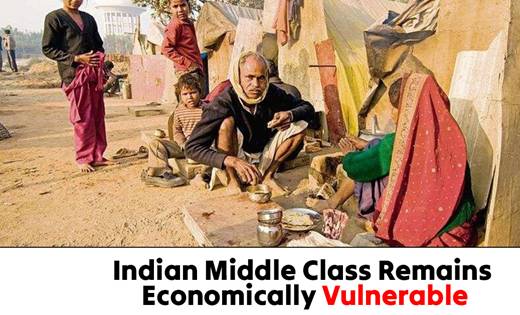
- The Credit-Driven Consumption Trap: A worrying macroeconomic trend is the sharp escalation of household debt, which climbed to 41.3% of India’s GDP. This reveals a major, widespread structural shift where families are increasingly relying on personal loans and credit cards to sustain basic lifestyle expectations.
- Real Wage Stagnation: Over a five-year period, real wage growth for salaried professionals has remained near-stagnant at approximately 0.01%. This lack of growth directly erodes the real purchasing power of families against rising core inflation in healthcare, housing, and higher education.
- Decentralization to Tier-2 & Tier-3 Towns: Conversely, a major structural shift shows that nearly 93% of all urban consumption growth has decentralized away from mega-metros into 500 Tier-2 and Tier-3 cities, signaling an expansion of regional middle-class pockets across states like Tamil Nadu.
Positives, Negatives, & Government Schemes
| Dimension | Details |
| Positives | Decentralized consumption creates balanced regional urban growth, reduces migration pressure on over-congested mega-metros, and opens up new localized markets. |
| Negatives | High vulnerability to sudden health shocks, long-term wealth erosion via high-interest consumer debt, and reduction in personal domestic savings rates. |
| Associated Initiatives | PM Surya Ghar Muft Bijli Yojana (Rooftop Solar Subsidies), Ayushman Bharat (Senior Citizen 70+ Expansion), PMAY-Urban 2.0. |
Way Forward
- Introduce structural personal income tax tier reforms that directly index standard deductions against rising urban cost-of-living indicators.
- Expand the regulatory ambit of the Reserve Bank of India (RBI) over unsecured micro-lending apps to prevent predatory loan trapping of middle-income consumers.
- Deepen public sector investments in high-quality public healthcare and affordable schooling to organically reduce the heavy out-of-pocket spending that drains middle-class savings.
Conclusion
The true long-term health of the Indian economy depends on the real purchasing power of its middle class. Moving from credit-fueled consumption to wage-driven growth is essential to escape the middle-income trap and build a resilient consumer market.
Practice Mains Question: “The Indian middle class is currently experiencing an asymmetric squeeze characterized by stagnant real wages and accelerating household debt.” Critically evaluate this structural challenge and its implications for the broader Indian economy. (250 words)
