
Topic 1: PM Modi Becomes India’s Longest-Serving Elected Prime Minister
Syllabus
- GS Paper 2: Indian Constitution—historical underpinnings, evolution, features, and significant provisions. Role of executive leadership in a parliamentary democracy.
Context
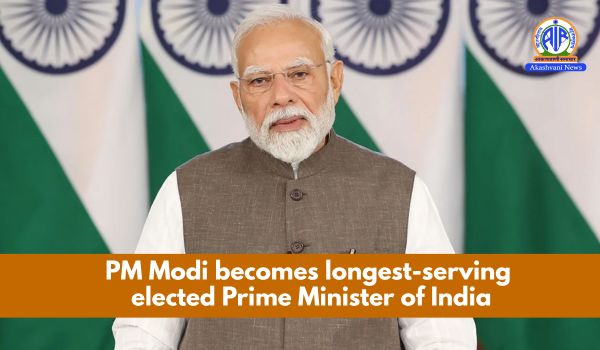
On June 10, 2026, Prime Minister Narendra Modi reached a historic milestone by serving 4,399 continuous days as an elected Prime Minister of India, officially surpassing the previous record of 4,398 days held by independent India’s first Prime Minister, Pandit Jawaharlal Nehru (from 1952 to 1964).
Main Body: Multi-Dimensional Analysis
- Democratic Continuity and Public Trust: Achieving this milestone reflects a rare era of continuous political stability in a country of 1.4 billion people. The tenure spans across three successive democratic mandates (2014, 2019, and the 2024 coalition setup), indicating robust voter trust.
- Evolution of Governance Models: The past 12 years have seen a transition from a security-heavy approach to an infrastructure-and-welfare delivery model, moving nearly 250 million citizens out of multidimensional poverty via target-based welfare networks.
- Enactment of Decades-Pending Reforms: This long-term executive continuity facilitated critical, complex legislative overhauls including the transition to the modern criminal code (Bharatiya Nyaya Sanhita), the implementation of the Goods and Services Tax (GST), and the Citizenship Amendment Act (CAA).
- Federal vs. Executive Balance: While international democratic indexes consistently rank the leadership high on global popularity, domestic critics raise concerns regarding a heavy concentration of executive power in the PMO, impacting the traditional decentralization of federal systems.
- Socio-Economic Infrastructure Leap: The milestone is marked by the ubiquitous expansion of Digital Public Infrastructure (DPI) like UPI and Jan Dhan architectures, establishing structural frameworks that decoupled financial assistance from bureaucratic leakages.
Positives, Negatives, & Government Schemes
| Dimension | Details |
| Positives | Ensures complete policy certainty for foreign investors, eliminates leadership gridlocks, and allows the execution of long-term global commitments (e.g., Net Zero 2070). |
| Negatives | Risks systemic institutional insularity; high personalization of politics can minimize secondary leadership structures within the ruling coalitions. |
| Associated Laws/Schemes | Representation of the People Act 1951, PM-KISAN, Digital India Mission, Bharatiya Nyaya Sanhita (BNS) 2023. |
Examples
- The execution of massive cross-border evacuations under Operation Ganga and Operation Indravati highlights how centralized executive decision-making enables prompt global state responses.
Way Forward
- Institutionalize checks and balances within the parliamentary system to keep legislative scrutiny robust despite executive longevity.
- Balance the high centralization of federal schemes by empowering state components under a cooperative federalism architecture.
Topic 2: Deployment of ‘VINIMAY’ & Smart Border Infrastructure
Syllabus
- GS Paper 3: Security challenges and their management in border areas; linkages of organized crime with terrorism. Infrastructure developments.
Context
Coinciding with the expansion of India’s border strategy, the Union Home Ministry officially operationalized the Land Port Management System (LPMS) named ‘VINIMAY’ to implement a “Smart Borders” framework across multi-national trade transit checkposts.
Main Body: Multi-Dimensional Analysis
- Pivot from Security-Centric to Trade-Centric Borders: The system transitions India’s land ports from mere defensive outposts to dynamic economic gateways, enhancing cross-border connectivity with neighboring nations like Bangladesh, Nepal, and Bhutan.
- Technological Integration (Digitization): ‘VINIMAY’ builds an integrated digital platform that digitizes nearly 90% of cross-border paperwork for cargo, passenger traffic, and transport logistics.
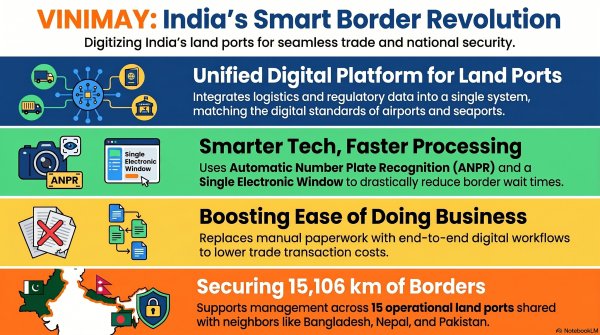
- Operational Efficiency Gains: Integrating Automatic Number Plate Recognition (ANPR) and Single Electronic Windows is projected to scale down truck waiting periods at international border lines by 40% to 60%.
- Combating Unregulated Migration & Illicit Trade: By linking immigration portals with biometrics and real-time scanning tools, the framework systematically limits the infiltration of contraband and undetected migration into border communities.
- Socio-Cultural Resilience: Modernizing land ports reduces isolation in peripheral border villages, generating localized employment hubs and directly lowering migration rates from vulnerable frontline border districts.
Positives, Negatives, & Government Schemes
| Dimension | Details |
| Positives | Drastically slashes logistics costs for South Asian trade, reduces manual corruption routes via automated gate processing, and strengthens regional mutual trust. |
| Negatives | Highly reliant on consistent power and regional digital connectivity; security vulnerabilities to cyber-intrusions on the central digital ledger. |
| Associated Initiatives | Smart Border Initiative, Border Infrastructure and Management (BIM) Scheme, Land Ports Authority of India (LPAI) Framework. |
Examples
- The successfully functioning Integrated Check Posts (ICPs) at Petrapole (India-Bangladesh) serve as an operational proof-of-concept for ‘VINIMAY’ scaling economic volumes.
Way Forward
- Extend the automated architecture to more remote outposts on the complex Myanmar and Pakistan boundaries.
- Ensure interoperable data pipelines with matching immigration/customs systems of friendly neighboring countries.
Topic 3: RBI Special Dispensations for FCNR(B) Dollar Deposits
Syllabus
- GS Paper 3: Indian Economy and issues relating to planning, mobilization of resources, growth, development, and external sector management.
Context
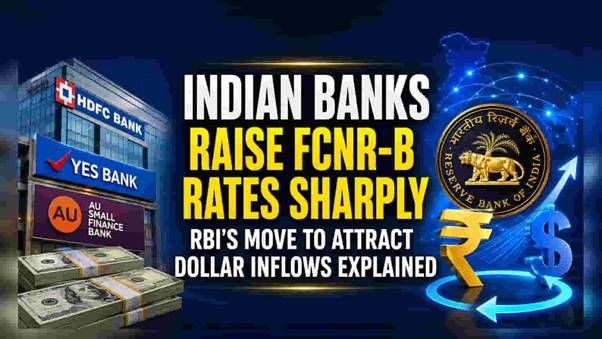
To check a severe 86% drop in foreign currency inflows witnessed in the previous fiscal year, the Reserve Bank of India (RBI) introduced a special dispensation for Foreign Currency Non-Resident (Bank) [FCNR(B)] deposits allowing maturities of 3–5 years until September 2026.
Main Body: Multi-Dimensional Analysis
- External Sector Stabilization: With non-resident dollar inflows dropping to $946 million from $7.1 billion previously, the move aims to shield India’s balance of payments from external shocks and volatile global market cycles.
- Concessional Swaps to Eliminate Risk: The RBI has allowed commercial banks to swap these fresh long-term deposits at concessional rates. This structurally eliminates the heavy cost of hedging foreign exchange risks for Indian financial entities.
- Global Liquidity Dynamics: The policy directly counters high US Federal Reserve interest rates, which had previously lured NRI capital away from developing markets toward safe-haven US dollar deposits.
- Projected Capital Inflow: Economists estimate that neutralizing currency depreciation risks through this facility could potentially draw $50 billion to $70 billion in foreign capital back into the domestic ecosystem.
- Impact on Rupee Valuation: Providing structural incentives for dollar accumulation creates a buffer for the RBI to defend the Indian Rupee against speculative deprecation trends in the open currency market.
Positives, Negatives, & Government Schemes
| Dimension | Details |
| Positives | Boosts forex reserves without adding to external commercial debt, keeps the domestic banking channel highly liquid, and offers tax-free gains to NRIs/OCIs. |
| Negatives | Success rests entirely on banks matching competitive foreign interest rates; temporary concessional swaps place long-term financial liabilities on the central bank’s balance sheet. |
| Associated Concepts | FCNR(B) Account Rules, Foreign Exchange Management Act (FEMA), Capital Account Convertibility, RBI Monetary Policy Tools. |
Examples
- Similar historical interventions in 2013 during the “Taper Tantrum” successfully stabilized a volatile rupee via massive NRI deposit mobilization.
Way Forward
- Banks must design customized financial products for high-net-worth Overseas Citizens of India (OCIs) to fully exploit the window.
- Monitor global macroeconomic indicators to prevent rapid, speculative outflows when these deposits mature in 3-5 years.
Topic 4: Enforcing the India-Nepal Mutual Legal Assistance Agreement
Syllabus
- GS Paper 2: India and its neighborhood- relations. Bilateral, regional and global groupings and agreements involving India and/or affecting India’s interests.
Context
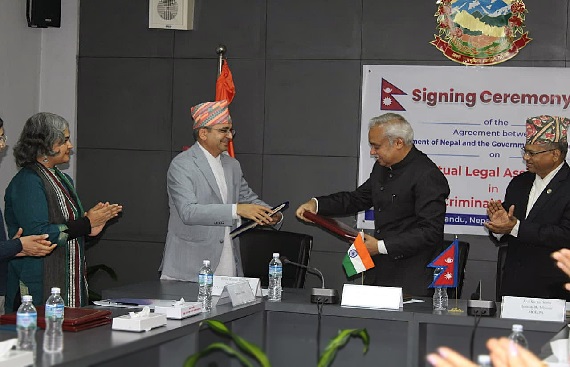
Following high-level bilateral talks between the External Affairs Minister of India and the newly established Nepalese leadership, both nations completed internal constitutional procedures to formally enforce the Mutual Legal Assistance Agreement (MLAA) in Criminal Matters.
Main Body: Multi-Dimensional Analysis
- Securing the Porous Border: The open, unregulated nature of the 1,850-km India-Nepal border makes it highly vulnerable to utilization by transnational criminal networks, human traffickers, and smugglers.
- Institutionalizing Judicial Cooperation: The MLAA creates a legal pipeline for tracking, investigating, and extraditing fugitives, eliminating long bureaucratic delays in sharing critical evidence.
- Combatting Fake Indian Currency Notes (FICN): The treaty sets up immediate data-sharing desks to intercept organized cartels utilizing Nepalese territory as a transit hub for pumping economic contraband into India.
- Geopolitical Balancing Act: Engaging with the new government in Kathmandu (led by PM Balendra Shah) preserves India’s neighborhood-first strategic equity amidst increasing infrastructure pushes by China in the Himalayan terrain.
- Protecting Regional Security Fabrics: Improved criminal intelligence coordination acts as a force multiplier for state police departments across Bihar, Uttar Pradesh, and West Bengal.
Positives, Negatives, & Government Schemes
| Dimension | Details |
| Positives | Closes judicial loopholes for cross-border fugitives, fast-tracks human trafficking rescue lines, and reinforces institutional security architecture without restricting the free movement of citizens. |
| Negatives | Local political volatility in Nepal can periodically delay ground-level intelligence sharing; risk of bilateral friction over sovereignty interpretations. |
| Associated Frameworks | Neighborhood First Policy, SAARC Convention on Mutual Assistance in Criminal Matters, Extradition Treaty frameworks. |
Examples
- Joint investigations tracking insurgent networks hiding out in the Terai region highlight how unstructured coordination fails without an active, binding MLAA.
Way Forward
- Establish direct, real-time cyber-links between India’s CBI and Nepal’s central investigative agencies.
- Conduct regular joint training modules for border policing personnel to streamline asset freezing protocols under the treaty.
Topic 5: Cabinet Approves Ahmedabad Metro Phase 2A Integration
Syllabus
- GS Paper 3: Infrastructure: Energy, Ports, Roads, Airports, Railways etc. Urban planning and sustainable city transformation.
Context
The Union Cabinet formally approved an allocation of ₹2,169 crore for Ahmedabad Metro Phase 2A, a project specifically designed to connect the city’s key economic hubs directly with its international airport.
Main Body: Multi-Dimensional Analysis
- Transit-Oriented Development (TOD): The extension introduces integrated urban planning models where high-density public transport nodes align with major entry-and-exit logistics infrastructure.
- Decarbonizing Urban Metros: Shifting airport-bound commuters from private cabs and fossil-fuel vehicles to an electrified metro line cuts down the metropolitan carbon footprint and eases city traffic congestion.
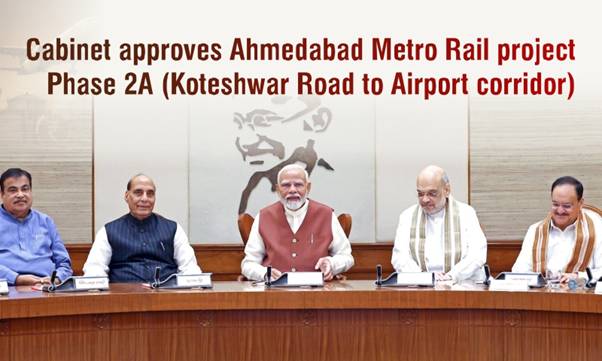
- Boosting Last-Mile Connectivity: Phase 2A expands metro accessibility into northern peripheral sub-towns, accelerating economic integration between residential zones and manufacturing areas.
- Enhancing Business Infrastructure Competitiveness: Providing predictable, high-speed rail access to the airport increases Ahmedabad’s ranking as an attractive hub for domestic and foreign business investment.
- Socio-Economic Cost Mitigation: Urban traffic gridlocks consume substantial productive man-hours. Metro expansions structurally return economic time to the workforce.
Positives, Negatives, & Government Schemes
| Dimension | Details |
| Positives | Drastically minimizes commuter travel time to transit hubs, reduces particulate matter pollution in city centers, and stimulates local construction employment. |
| Negatives | Massive upfront capital intensive; potential short-term civil disruptions and business displacement along the alignment corridors during build phases. |
| Associated Initiatives | National Urban Transport Policy (NUTP), PM GatiShakti National Master Plan, Metro Rail Policy 2017. |
Examples
- The direct airport connectivity models of the Delhi Metro (Airport Express Line) and Chennai Metro serve as clear operational benchmarks for successful Phase 2A execution.
Way Forward
- Ensure multi-modal integration by building seamless physical interfaces with local bus rapid transit (BRTS) and railway stations.
- Introduce unified digital ticketing cards that work across metros, local buses, and parking facilities.
Topic 6: Ministry of Environment Outlines Airshed Management for Cooler Cities
Syllabus
- GS Paper 3: Conservation, environmental pollution and degradation, environmental impact assessment. Urban heat island management.
Context
Moving past temporary emergency responses, the Ministry of Environment, Forest and Climate Change (MoEF&CC) introduced a structured directive for Airshed-level climate planning across major Tier-1 and Tier-2 Indian cities to combat localized thermal anomalies and winter air crises.
Main Body: Multi-Dimensional Analysis
- Moving Beyond Administrative Boundaries: Traditional environmental plans stop at municipal borders. “Airshed Management” looks at the entire geographical zone over which pollutants disperse, demanding multi-district cooperation.
- Mitigating the Urban Heat Island (UHI) Effect: Rapid urbanization replaces natural green cover with concrete, trapping solar radiation. The framework mandates urban forestry and cool roofing architectures to lower ambient temperatures.
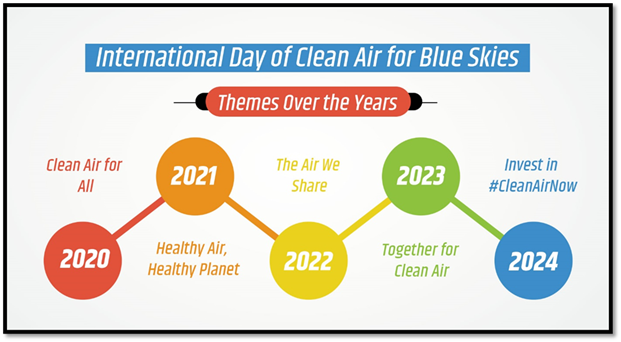
- Integration with Clean Mobility: The policy pairs city planning with regional schemes like the Delhi-NCR clean mobility initiative, which subsidizes the phasing out of older heavy commercial vehicles.
- Public Health Vulnerabilities: Sustained heat and micro-pollution damage vulnerable demographics (slum populations, outdoor workers) who lack access to climate-controlled spaces.
- Cooperative Environmental Federalism: Airshed management forces inter-state entities (e.g., municipalities of neighboring states) to code-enforce emission standards collectively rather than pushing blame across borders.
Positives, Negatives, & Government Schemes
| Dimension | Details |
| Positives | Addresses the root scientific causes of regional pollution traps, protects marginalized labor from heat fatigue, and improves long-term urban livability indexes. |
| Negatives | High legal and operational friction when coordinate mandates cross different political administrations; monitoring micro-airsheds demands dense sensor networks. |
| Associated Platforms | National Clean Air Programme (NCAP), Graded Response Action Plan (GRAP), Urban Forestry (Nagar Van) Scheme. |
Examples
- The seasonal winter smog over the landlocked Indo-Gangetic plain illustrates why city-isolated pollution plans fail without a regional airshed approach.
Way Forward
- Formally constitute statutory Airshed Management Councils armed with legal powers to fine violating districts across state lines.
- Mandate climate-resilient building codes (like reflective roofs and passive cooling architectures) for all upcoming commercial complexes.
Topic 7: Synchronization of Nilgiri Tahr Protection Frameworks (Tamil Nadu)
Syllabus
- GS Paper 3: Conservation, wildlife protection, Western Ghats ecology. State-level environmental interventions.
Context
Following the latest data release of the third synchronized Nilgiri Tahr population estimation indicating a 4.68% population increase (to 1,364 individuals), the Tamil Nadu government has rolled out specific multi-forest protection corridors.
Main Body: Multi-Dimensional Analysis
- Preservation of an Endangered Species: The Nilgiri Tahr (Nilgiritragus hylocrius), the state animal of Tamil Nadu, is restricted to isolated sub-alpine grassland fragments of the Western Ghats, making targeted conservation highly critical.
- Ecological Health Indicator: The species acts as a vital keystone for high-altitude mountain ecosystems. A stabilizing population indicates healthy nutrient cycling and intact grassland-shrubland balances.
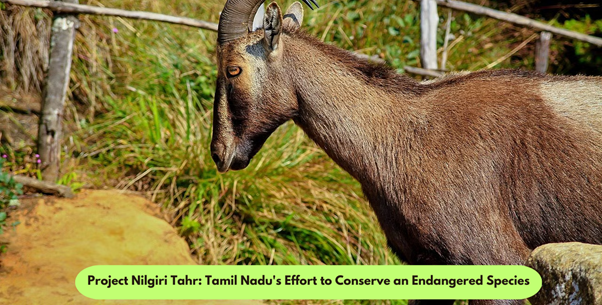
- Mitigating Climate Shocks: Climate change is constricting high-altitude grasslands, pushing the species higher up into shrinking zones. The new framework maps out specific landscape corridors to link isolated herds.
- Socio-Ecological Conflict Mitigation: As cash-crop plantations (e.g., eucalyptus, tea) expand toward forest boundaries, tracking Tahr movement prevents habitat fragmentation and subsequent local wildlife distress.
- Community-Led Ecotourism: The protection plan integrates local indigenous communities into monitoring networks, converting anti-poaching operations into sustained livelihood models for tribal youth.
Positives, Negatives, & Government Schemes
| Dimension | Details |
| Positives | Prevents genetic bottlenecking by connecting fragmented groups, elevates Tamil Nadu’s leadership in Western Ghats biodiversity preservation, and stabilizes critical high-altitude watersheds. |
| Negatives | Grassland restoration demands aggressive removal of invasive exotic tree species, which is a slow, highly resource-intensive administrative task. |
| Associated Initiatives | Project Nilgiri Tahr, Wildlife Protection Act 1972 (Schedule I), Western Ghats Ecology Expert Panel Frameworks. |
Examples
- Successful protection zones within the Anamalai Tiger Reserve and Eravikulam National Park show how intensive grassland monitoring directly translates into rising population numbers.
Way Forward
- Formulate standardized cross-border monitoring teams with neighboring Kerala to safeguard herds moving across state forest boundaries.
- Deploy low-impact drone surveillance models to track high-altitude movements without disrupting natural mating and feeding patterns.
Topic 8: Tamil Nadu Accorded State Honours to Cinema Visionary Bharathiraja
Syllabus
- GS Paper 1 / State Polity: Indian Culture – salient aspects of Art Forms, Literature and Architecture from ancient to modern times. State executive honors.
Context
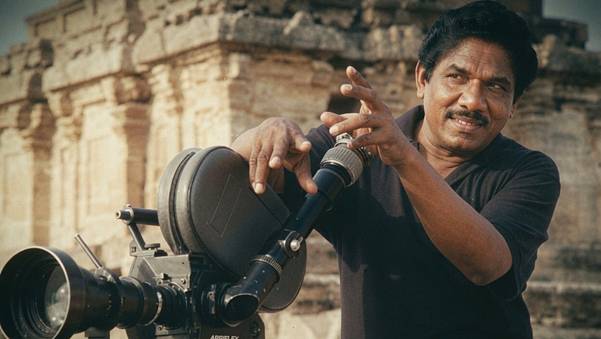
Following the demise of legendary filmmaker Bharathiraja in Chennai at the age of 84, the Chief Minister of Tamil Nadu announced that the veteran director would be accorded full State Honours for his transformative contributions to Indian art and socio-cultural documentation.
Main Body: Multi-Dimensional Analysis
- Democratization of Cultural Mediums: Bharathiraja, widely referred to as Iyakkunar Imayam (Pinnacle of Directors), historically shifted Tamil cinema from elite, artificial studio-bound setups to realistic, rural landscapes (“Yen Iniya Tamil Makkale”).
- Social Realism as a Policy Mirror: His cinematic portfolio directly challenged entrenched rural social evils, addressing complex themes like caste discrimination, female infanticide, and agrarian poverty, thereby influencing public consciousness.
- Protocol and Prerogative of State Honours: The state executive holds the statutory discretion to award state funerals to individuals who have made extraordinary contributions to public life, literature, and culture under specific state protocol codes.
- Inclusion and Talent Mentorship: He structurally expanded the creative economy by discovering, mentoring, and introducing generations of actors and technicians from diverse, non-privileged socio-economic backgrounds.
- Preserving Regional Identity: His artistic creations served as an archival record of rural Tamil folk traditions, dialects, and customary practices, helping shield native cultural art forms from globalized standardization.
Positives, Negatives, & Government Schemes
| Dimension | Details |
| Positives | Validates the deep intersection of art and social reform, encourages local creative industries, and formally archives regional history through state recognition. |
| Negatives | Subject to political debates regarding the criteria used to balance state honors between cultural icons and formal public servants. |
| Associated Frameworks | Tamil Nadu State Film Awards, Padma Awards Selection Criteria, State Funeral Protocol Rules. |
Examples
- Classic works like 16 Vayathinile and Karuthamma serve as academic and socio-cultural case studies on how mass entertainment media can be used to challenge regressive patriarchal customs.
Way Forward
- Set up a state-funded institutional archive or digital museum to preserve historical rural cinematic screenplays and folk music collections for future cultural research.
- Establish creative fellowships named after cultural reformers to support independent documentarians capturing changing rural dynamics.
