
Topic 1: Indian Seafarers Casualties in Gulf of Oman & Diplomatic Summon
Syllabus
- GS Paper 2: Effect of policies and politics of developed and developing countries on India’s interests, Indian diaspora.
- GS Paper 3: Security challenges and their management in border areas, maritime security.
Context
On June 11, 2026, the Union Government officially confirmed that three missing Indian seafarers died following a U.S. military airstrip strike on a merchant vessel in the Gulf of Oman, prompting India to summon the U.S. Deputy Chief of Mission and register a strong diplomatic protest.
Main Body: Multi-Dimensional Analysis
- Geopolitical Spillover on Diaspora: The escalation of the military conflict between the United States and Iran has directly impacted civilian merchant shipping corridors, resulting in tragic collateral damage among Indian maritime professionals.

- Diplomatic Assertion: By summoning the U.S. Deputy Chief of Mission in New Delhi, India has demonstrated its zero-tolerance policy toward unregulated military strikes that threaten international commercial shipping lines.
- Maritime Sovereignty and Transit Risks: Iran’s subsequent threat to target shipping traffic and shut the Strait of Hormuz completely emphasizes the extreme vulnerability of India’s crude energy import lifelines.
- Economic Chokehold: The operational closure of the strategic Strait of Hormuz forces Indian cargo to take alternate, longer routes, drastically escalating freight insurances and supply chain delays.
Positives, Negatives, & Government Schemes
| Dimension | Details |
| Positives | Prompt and independent diplomatic action by India signals proactive diaspora protection; international mediation efforts by partners like Qatar and Pakistan are underway. |
| Negatives | Tragic loss of civilian lives; rapid inflation of maritime shipping costs; risk of acute crude oil price volatility in domestic markets. |
| Associated Laws/Frameworks | United Nations Convention on the Law of the Sea (UNCLOS), Ministry of External Affairs Diaspora Safety Protocols, UNSC Merchant Shipping Protection Framework. |
Examples
The recent targeted missile strikes on commercial vessels like the MT Jalveer and Settebello near the coast of Oman highlight how localized West Asian conflicts cause immediate global supply-chain vulnerabilities.
Way Forward
- Establish an institutionalized, real-time intelligence-sharing mechanism between the Indian Navy’s Information Fusion Centre (IFC-IOR) and global commercial shipping fleets.
- Advocate for strict compliance with international humanitarian laws protecting neutral merchant vessels in contested global maritime bottlenecks.
Conclusion
Securing the lives of Indian seafarers amidst volatile geopolitical friction requires assertive diplomatic intervention coupled with an active maritime presence to safeguard India’s trade and diaspora interests.
Practice Mains Question
The expanding theater of conflict in West Asia poses an existential threat to the safety of the Indian diaspora and international merchant shipping. Critically evaluate India’s strategic options to mitigate maritime security threats in the Indian Ocean Region. (250 words)
Topic 2: NITI Aayog’s 11th Governing Council Meeting on Inclusive Development
Syllabus
- GS Paper 2: Statutory, regulatory, and various quasi-judicial bodies; Functions and responsibilities of the Union and the States.
Context
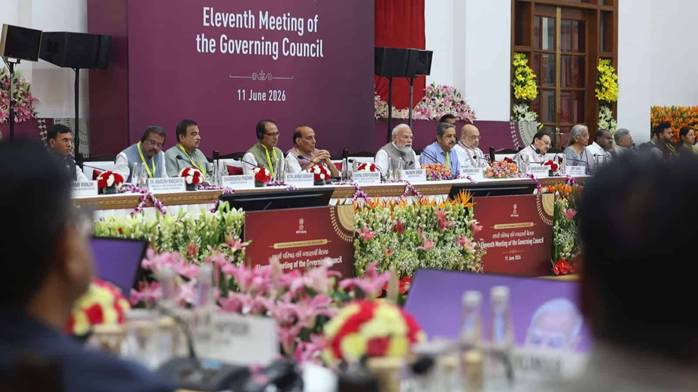
Prime Minister Narendra Modi chaired the 11th Governing Council Meeting of NITI Aayog on June 11, 2026, focusing on the theme “Inclusive Human Development for Viksit Bharat @ 2047” across the pillars of human capital, productive employment, and social security.
Main Body: Multi-Dimensional Analysis
- Cooperative Federalism in Action: The Governing Council meeting brings together Chief Ministers and Union leadership to co-create national development goals under the “Team India” model.
- Human Capital Re-engineering: The emphasis on foundational human capital addresses persistent structural deficits in rural education and primary healthcare.
- Productive Employment Generation: Shifting the narrative from mere jobs to “productive employment” emphasizes high-value skilling aligned with future technological industries.
- Social Security Modernization: The 2026 framework targets the formalization of gig workers and creating robust social security nets for an aging demography.
Positives, Negatives, & Government Schemes
| Dimension | Details |
| Positives | Fosters consensus-driven policymaking between the Centre and States; aligns decentralized state targets with macroeconomic milestones. |
| Negatives | Political differences between state governments and the Centre occasionally stall the grassroot execution of NITI Aayog resolutions. |
| Associated Schemes | Viksit Bharat @ 2047 Strategy, Skill India Mission, Ayushman Bharat Digital Mission, National Social Assistance Programme (NSAP). |
Examples
The collaborative design of the Aspirational Districts Programme stands as an active example of how NITI Aayog’s structural interventions elevate backward regions via competitive federalism.
Way Forward
- Create institutional institutionalized state-level sub-councils within NITI Aayog to address region-specific economic developmental issues.
- Tie a portion of central performance grants directly to the state’s progress on NITI Aayog’s foundational human development indices.
Conclusion
Achieving the goal of a developed nation requires NITI Aayog to effectively bridge the gap between central policy planning and the implementation capacity of diverse state machineries.
Practice Mains Question
“NITI Aayog’s success relies heavily on its ability to transform competitive federalism into a tool for inclusive human capital development.” Analyze this statement in light of the agenda set during the 11th Governing Council meeting. (250 words)
Topic 3: Launch of LPMS ‘VINIMAY’ Digital Platform
Syllabus
- GS Paper 2: Government policies and interventions for development in various sectors and issues arising out of their design and implementation.
- GS Paper 3: Linkages of organized crime with terrorism, border areas management.
Context
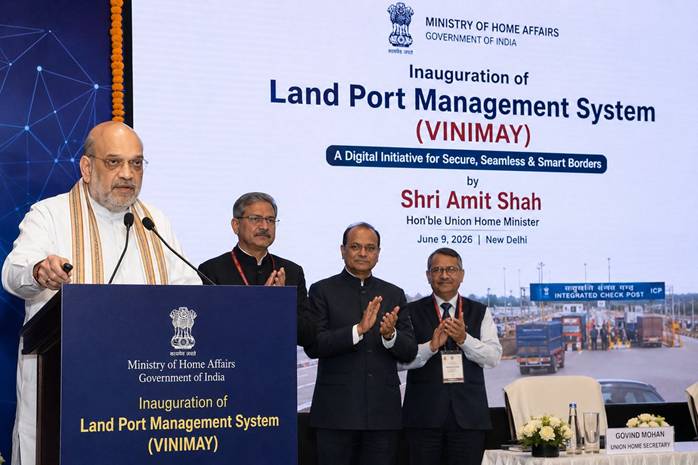
Union Home Minister Amit Shah launched the Land Port Management System (LPMS) named ‘VINIMAY’ on June 11, 2026, aimed at completely digitizing cargo and passenger processing across India’s land ports.
Main Body: Multi-Dimensional Analysis
- Border Management Infrastructure: VINIMAY modernizes cross-border trade checkpoints by replacing paper-heavy, slow physical processing with single-window digital verification.
- Security Integration: The software links directly with national security databases, tracking passenger profiles and biometric manifests to prevent cross-border illicit trade.
- Trade Facilitation Efficiency: Digitizing the cargo clearance pipeline slashes container turnaround times, lowering transaction costs for cross-border logistics.
- Geopolitical Commerce: This system optimizes trade corridors with friendly neighboring countries like Bangladesh, Nepal, and Bhutan, strengthening regional economic ties.
Positives, Negatives, & Government Schemes
| Dimension | Details |
| Positives | Dramatically reduces corruption and leakage points at borders; builds unified digital cross-border data structures; enhances export velocity. |
| Negatives | Vulnerable to cross-border cyberattacks; system dependencies require high-speed rural connectivity which is often weak at borders. |
| Associated Initiatives | Land Ports Authority of India (LPAI), Digital India Enterprise, PM Gati Shakti National Master Plan, National Logistics Policy. |
Examples
The Integrated Check Post (ICP) at Petrapole on the India-Bangladesh border serves as a template where digital tracking systems drastically cut transit friction.
Way Forward
- Integrate blockchain-based smart ledger technology into the VINIMAY platform to secure international shipping bills from tampering.
- Conduct joint bilateral capacity-building workshops with customs officials of neighboring countries to align cross-border digital platforms.
Conclusion
The VINIMAY platform transitions India’s land boundaries from traditional defensive security lines into highly secured, electronically integrated gateways of regional economic growth.
Practice Mains Question
Examine how digital trade interventions like the ‘VINIMAY’ Land Port Management System help balance the dual objectives of national border security and cross-border trade facilitation. (250 words)
Topic 4: Government Caps Corporate Ownership Multiplicity in Airport Privatization
Syllabus
- GS Paper 3: Infrastructure: Energy, Ports, Roads, Airports, Railways etc., Effects of liberalization on the economy.
Context
On June 11, 2026, the Ministry of Civil Aviation formally proposed capping the maximum number of airport bundles awarded to a single bidder at two to three bundles (about 5 to 6 airports) for the upcoming third round of airport privatization.
Main Body: Multi-Dimensional Analysis
- Preventing Market Monopolies: The policy explicitly aims to prevent an “oligopoly” or market concentration in the strategic aviation sector, encouraging healthier public-private competition.
- Democratizing Infrastructure Capital: By setting structural caps, the state opens options for mid-sized infrastructure entities and international consortiums to enter Indian aviation.
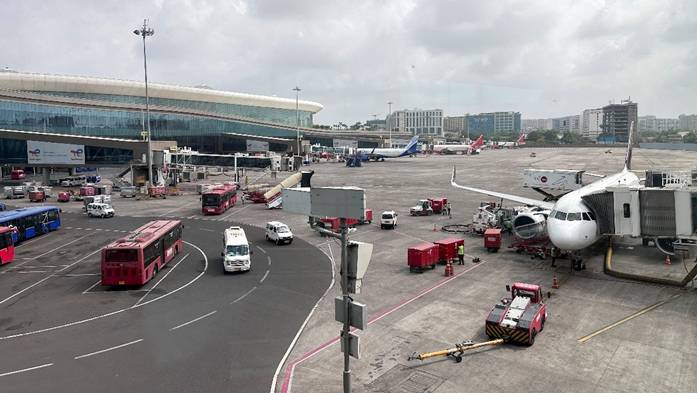
- Diversifying Asset Vulnerabilities: Spreading critical transport assets across multiple operational corporations reduces systemic risk in the event of private-sector financial distress.
- Ensuring Consumer Welfare: Increased competition among airport operators naturally incentivizes competitive aeronautical tariffs and superior passenger services.
Positives, Negatives, & Government Schemes
| Dimension | Details |
| Positives | Safeguards antitrust principles in public utility management; builds a diverse ecosystem of domestic aviation infrastructure developers. |
| Negatives | Might deter ultra-large infrastructure conglomerates that prefer extensive, centralized economies of scale for capital deployment. |
| Associated Policies | National Civil Aviation Policy (NCAP), Asset Monetisation Pipeline, PPP (Public-Private Partnership) Guidelines, Competition Act, 2002. |
Examples
The previous dominance of single large entities over major metro airports created long-term regulatory friction, pushing the government to opt for diversification in the latest rounds.
Way Forward
- Standardize the performance-linked monitoring frameworks across different private operators to guarantee consistent service levels.
- Ensure the revenue-share models built into the privatization bundles directly fund regional connectivity airports in Tier-3 locations.
Conclusion
Capping airport bundle allocation marks a mature shift in India’s asset monetization philosophy, prioritizing market diversity over swift, single-party capital mobilization.
Practice Mains Question
“While infrastructure privatization accelerates capital mobilization, unregulated asset concentration creates significant market risks.” Analyze this statement in light of the Ministry of Civil Aviation’s recent bidding caps. (250 words)
Topic 5: Industrial Accident Spikes and Safety Inspection Gaps
Syllabus
- GS Paper 3: Disaster and disaster management, Infrastructure risks, Challenges to industrial growth.
Context
A comprehensive environmental and safety data analysis released on June 11, 2026, highlighted widening enforcement gaps in India, showing sharp declines in factory inspections across industrialized states like Tamil Nadu and Gujarat.
Main Body: Multi-Dimensional Analysis
- The Inspection Deficit: Factory inspection coverages nationally have slid down significantly over the last decade, dropping beneath international standards and leaving dangerous infrastructure unchecked.
- Institutional Deficiencies: The Directorate General Factory Advice Service and Labour Institutes (DGFASLI) continues to suffer from nearly 50% staff vacancies in safety enforcement cadres.
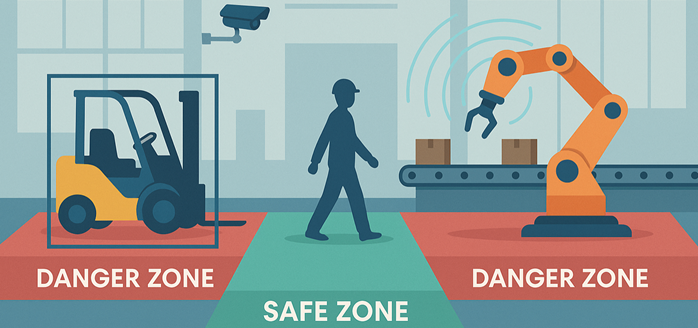
- The High Toll on Labor: Outdated manufacturing machinery and poor corporate safety standards result in over 2,000 fatal workplace injuries annually, exposing deep regulatory gaps.
- Data Deficiencies: Several major states fail to routinely submit accurate, granular industrial accident registries, hampering the design of predictive national workplace safety architectures.
Positives, Negatives, & Government Schemes
| Dimension | Details |
| Positives | Publication of independent audits forces states to confront structural regulatory failures and pushes for digital transparency. |
| Negatives | Severe compromise of worker safety rights; high financial losses from sudden industrial explosions and facility shutdowns. |
| Associated Initiatives | Occupational Safety, Health and Working Conditions Code, 2020; DGFASLI Mandate; National Disaster Management Authority (NDMA) Industrial Guidelines. |
Examples
Data released showed extreme regulatory dilution; for instance, Tamil Nadu possesses over 46,000 registered factories but conducted just 416 comprehensive inspections over a calendar year.
Way Forward
- Immediately fill all technical engineering vacancies within central and state factory inspectorates through specialized fast-track recruitments.
- Mandate annual third-party, automated safety audits for high-risk hazardous sectors like petrochemicals and heavy metallurgy.
Conclusion
Sustaining India’s manufacturing momentum requires a regulatory framework that treats industrial worker safety as an absolute, non-negotiable component of ease of doing business.
Practice Mains Question
Analyze the factors contributing to recurring industrial accidents in India. Critically evaluate the structural and institutional gaps in the existing factory inspection mechanism. (250 words)
Topic 6: Strategic Procurement of ECGNSS Jammers for the Indian Navy
Syllabus
- GS Paper 3: Indigenization of technology and developing new technology, Security challenges.
Context
The Ministry of Defence (MoD) signed a critical strategic partnership contract on June 11, 2026, to supply the Indian Navy with indigenously designed Electronic Counter-Global Navigation Satellite System (ECGNSS) Jammers.
Main Body: Multi-Dimensional Analysis
- Electronic Warfare Edge: The deployment of ECGNSS Jammers protects frontline naval warships by disrupting enemy satellite navigation guidance systems during maritime operations.
- True Indigenization (Aatmanirbharta): Designing and manufacturing specialized electronic warfare equipment domestically ensures that our operational algorithms remain completely hidden from foreign intelligence.

- Countering Asymmetric Threats: Modern maritime threats rely heavily on GPS-guided drones and loitering munitions; localized jamming capabilities render these precision weapons blind and ineffective.
- Boosting Domestic High-Tech Manufacturing: The capital deployment directly infuses funds into specialized Indian defense technology labs, boosting local ecosystem capabilities.
Positives, Negatives, & Government Schemes
| Dimension | Details |
| Positives | Drastically reduces strategic dependency on foreign defense electronic suppliers; guarantees immediate tactical protection for naval assets. |
| Negatives | Highly technical and evolving domain; requires continuous, expensive R&D updates as adversarial satellite arrays upgrade their signals. |
| Associated Initiatives | Defence Acquisition Procedure (DAP 2020), Make in India in Defence, Innovations for Defence Excellence (iDEX). |
Examples
The current reliance on satellite guidance systems in global conflicts highlights how critical electronic jamming infrastructure is to preserving naval surface asset survivability.
Way Forward
- Expand the ECGNSS technology architecture to create portable variants capable of protecting coastal radar outposts and mobile batteries.
- Build institutional linkages between defense electronic labs and premium Indian academic institutions to develop next-generation quantum-resistant jamming codes.
Conclusion
The procurement of indigenous ECGNSS jammers reflects India’s tactical transition toward mastering the electronic and electromagnetic spectrums in modern maritime defense.
Practice Mains Question
“Electronic warfare capabilities are becoming the primary determinant of naval asset survivability in modern conflict zones.” Discuss this statement in light of India’s push for indigenous jamming technologies. (250 words)
Topic 7: Unveiling of the ‘VB-GRAM G’ Rural Livelihood Framework
Syllabus
- GS Paper 3: Indian Economy and issues relating to planning, mobilization of resources, growth, development and employment.
- GS Paper 2: Welfare schemes for vulnerable sections of the population by the Centre and States.
Context
The Ministry of Rural Development officially unveiled the Viksit Bharat – Guarantee for Rozgar and Ajeevika Mission (Gramin) (VB-GRAM G) framework on June 11, 2026, with a massive initial budget allocation of ₹1.25 lakh crore.
Main Body: Multi-Dimensional Analysis
- Livelihood Diversification: VB-GRAM G attempts to move beyond simple, manual labor generation by integrating rural communities directly into agro-processing, rural tourism, and green energy maintenance jobs.
- Mitigating Agrarian Distress: By providing a structured, long-term non-farm livelihood guarantee, the scheme cushions rural families from unpredictable crop losses and climate-induced income drops.
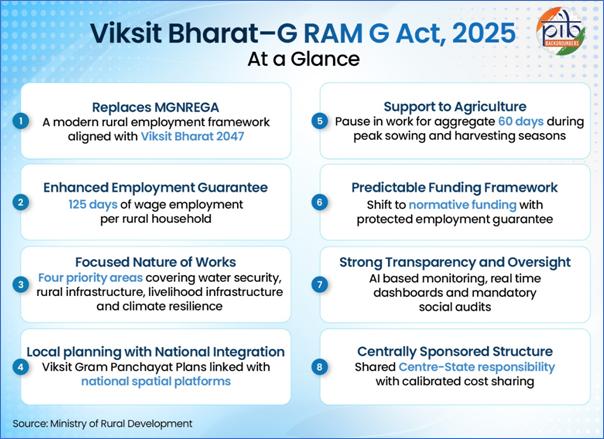
- Stopping Distressed Migration: Creating high-value economic opportunities within rural areas alleviates extreme infrastructure and population strains on metropolitan areas.
- Empowering Rural Women: The framework channels a large percentage of its funds through established Self-Help Group (SHG) networks, promoting true grassroots financial independence.
Positives, Negatives, & Government Schemes
| Dimension | Details |
| Positives | Unprecedented fiscal infusion targeting the base of the economic pyramid; emphasizes sustainable asset creation over simple cash doles. |
| Negatives | Potential for administrative leakage at the panchayat level; matching urban skill demands with rural training programs is difficult. |
| Associated Schemes | MGNREGA, Deendayal Antyodaya Yojana – National Rural Livelihoods Mission (DAY-NRLM), PM Kaushal Vikas Yojana (PMKVY). |
Examples
The success of early digital training models in rural parts of India highlights how rural communities can successfully pivot toward digital services and localized micro-enterprise management.
Way Forward
- Enforce mandatory, real-time social audits conducted by local Gram Sabhas to verify funds used under the VB-GRAM G framework.
- Partner with agri-tech startups to introduce modern training modules on precision farming and drone piloting to rural youth.
Conclusion
The VB-GRAM G framework represents a structural shift in rural development, transforming traditional rural welfare initiatives into a strategic, long-term human resource investment.
Practice Mains Question
“The transition from basic wage-employment schemes to comprehensive livelihood guarantee missions is critical for rural economic self-reliance.” Critically analyze the potential of the VB-GRAM G framework in this context. (250 words)
Topic 8: Tamil Nadu Industrial Power Infrastructure Maintenance Drive
Syllabus
- GS Paper 3: Infrastructure (Energy), State of the Regional Economy.
Context
On June 11, 2026, the Tamil Nadu Generation and Distribution Corporation (TANGEDCO) executed a massive, synchronized infrastructure maintenance shutdown across multiple grid zones, emphasizing structural issues in state distribution networks.
Main Body: Multi-Dimensional Analysis
- Grid Resilience Strategies: Periodic, extensive shutdowns are technically mandatory to overhaul aging substation transformers, preventing major transmission failures during peak monsoon or summer months.
- Economic Cost of Short-term Power Interruptions: While essential for safety, extended daylight power cuts impact small and medium enterprises (MSMEs) that lack capital for heavy diesel backup systems.
- Transition to Smart Grids: The repetitive need for manual shutdowns highlights the absence of automated, self-healing grid architectures across the state’s distribution utilities.
- Financial Burden of State DISCOMs: Heavy maintenance expenses combined with technical transmission and commercial losses (AT&C) continue to stress TANGEDCO’s long-term financial viability.
Positives, Negatives, & Government Schemes
| Dimension | Details |
| Positives | Proactive preventive maintenance minimizes long-term emergency blackouts; protects valuable industrial distribution assets from sudden surges. |
| Negatives | Causes temporary micro-economic disruption; high dependency on manual ground labor poses operational safety risks during massive repair runs. |
| Associated Policies | Revamped Distribution Sector Scheme (RDSS), Ujwal DISCOM Assurance Yojana (UDAY), Tamil Nadu State Energy Policy. |
Examples
The deployment of automated SCADA (Supervisory Control and Data Acquisition) systems in specific Chennai smart zones demonstrates how modern monitoring reduces the need for widespread manual power cuts.
Way Forward
- Accelerate the deployment of smart electronic meters and ring-fenced distribution networks to isolate repairs without affecting entire industrial districts.
- Utilize advanced thermal imaging drones to locate transformer weak spots before planning complete physical line shutdowns.
Conclusion
Modernizing Tamil Nadu’s industrial base requires a transformation of its power distribution model, shifting from traditional manual maintenance shutdowns to a smart, uninterrupted, data-driven power grid.
Practice Mains Question
Examine the structural and financial challenges crippling state-run power distribution utilities (DISCOMs) in India, and suggest technological solutions to achieve uninterrupted industrial power supply. (250 words)
