
Topic 1: Quad Summit in Manila: Leaders Unveil Maritime, AI and Business Initiatives
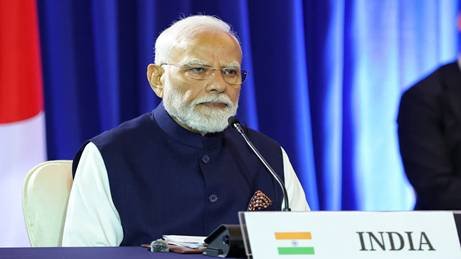
Prime Minister Narendra Modi at the Quad Leaders Meeting in Manila (photo: DD News).
Subject: International Relations – Groupings and the Indo-Pacific
Paper: GS Paper 2: India and its neighbourhood, bilateral and regional groupings; GS Paper 3: Security
UPSC Relevance: Meeting in Manila on the sidelines of the East Asia Summit on 17 November 2026, the leaders of India, the United States, Japan and Australia announced the inaugural Quad Business Leaders Forum in Mumbai in early 2027, an Indo-Pacific Maritime Surveillance Collaboration under which P-8 and P-3C patrol aircraft will fly together in a 2027 exercise, a new Quad AI accelerator, enhanced cybersecurity cooperation and a joint condemnation of cross-border terrorism. It was the first meeting of Quad leaders since 2024.
Why in News
Prime Minister Narendra Modi recalled that the Quad was first started in 2007 and revived in 2017 in Manila itself, and described it as a constructive and trusted partnership delivering trusted solutions across maritime security, supply chains, new technologies and disaster response for the entire Indo-Pacific.
US President Donald Trump said his phone and the Oval Office are always open to the Quad leaders, announced that the Quad will conduct an exercise featuring maritime patrol aircraft, and said the grouping is spending more than 85 million dollars to expand access to trusted AI ecosystems across the Indo-Pacific.
The joint statement expressed grave concern about economic coercion, including arbitrary export restrictions, opposed unilateral actions that change the status quo by force, and committed to open, safe and resilient maritime transit corridors.
Japan’s Prime Minister Sanae Takaichi said the Quad would shape the future of the Indo-Pacific by strengthening regional resilience, while Australia’s Anthony Albanese said the grouping has a critical role in making the world safer.
The Ministry of External Affairs spokesperson Randhir Jaiswal said Modi reaffirmed India’s commitment to a constructive and reliable Quad partnership advancing peace, prosperity and resilience through cooperation in maritime security, economic security, critical technologies and disaster response, and confirmed that Mumbai will host the inaugural Quad Business Leaders Forum in 2027.
The joint statement called the Quad a force for good and a partnership of action, and said the members are securing critical supply chains, protecting freedom of navigation and overflight, driving growth through future technologies including trusted artificial intelligence, and responding to disasters with life-saving assistance.
Background
The Quad began as a four-nation coordination after the 2004 Indian Ocean tsunami, took shape in 2007, went dormant, and was revived in 2017 on the sidelines of the ASEAN meetings in Manila; it was raised to leaders’ level in 2021.
The 30th Malabar naval exercise, conducted near Japan with all four navies, recently completed anti-submarine and anti-surface warfare drills, providing the military layer beneath the diplomatic track.
The Manila meeting came days before a planned trilateral between Trump, Xi Jinping and Vladimir Putin, giving the Quad announcements added signalling value toward Beijing.
The meeting preceded a planned trilateral between Trump, Xi Jinping and Vladimir Putin later in the week, so the Manila announcements were also read as a coordinated signal to Beijing about the grouping’s cohesion.
Key Dimensions
1. Maritime domain awareness: The Indo-Pacific Maritime Surveillance Collaboration takes the Quad beyond consultations into shared information and coordinated patrol-aircraft flying, a concrete operational step for domain awareness in contested waters.
2. Technology and supply chains: The AI accelerator, critical-minerals deals and trusted-ecosystem funding target the economic-security agenda, reducing vulnerability to coercion by any single foreign supplier.
3. Institutionalisation: The Mumbai Business Leaders Forum adds a private-sector pillar, moving the Quad from a leaders’ dialogue toward structured economic cooperation.
4. Signalling to Beijing: The Indian Express noted that a united Quad front ahead of the Trump-Xi-Putin trilateral counters China’s assertions in the Indo-Pacific, with joint maritime patrols, critical-mineral supply chains and AI ecosystems signalling intent to contain territorial ambitions and trade leverage.
5. Counterterrorism language: The unequivocal condemnation of cross-border terrorism in the joint statement carries particular weight for Delhi given Pakistan’s active promotion of cross-border terrorism, and mirrors language India has sought in every multilateral forum since 2019.
Significance
1. Reaffirms India’s multi-aligned Indo-Pacific strategy: cooperation on security and technology without a formal alliance.
2. Gives India a platform to anchor condemnation of cross-border terrorism in a four-nation joint statement.
3. Signals continuity of the Quad across leadership changes in member countries.
4. Marks the first leaders-level Quad meeting since 2024, ending a two-year gap that had fed doubts about the grouping’s momentum.
5. Anchors India’s preference for issue-based coalitions over treaty alliances in its Indo-Pacific engagement.
Challenges
1. The Quad has no secretariat or treaty basis; delivery depends on sustained political will in four capitals.
2. Members differ in how directly they name China, constraining how far joint messaging can go.
3. Translating announcements like the 2027 patrol-aircraft exercise into routine practice requires bureaucratic follow-through.
4. Divergent threat perceptions, especially on how explicitly to confront China, limit the ceiling of joint action.
5. Announcements such as the AI accelerator require financing and standards work that can stall between summits.
Way Forward
1. Track the convening of the Mumbai Quad Business Leaders Forum in early 2027 and the deals it produces.
2. Watch the design of the 2027 maritime patrol-aircraft exercise and India’s P-8I participation.
3. Follow the AI accelerator’s funding disbursement and India’s role in trusted-AI standards.
4. Note how the Quad positions itself after the Trump-Xi-Putin trilateral.
5. Track the composition and agenda of the Mumbai business forum’s Indian delegation.
6. Note follow-on working-group meetings on cybersecurity and critical minerals announced at Manila.
Prelims Value Addition
- Quad members: India, United States, Japan, Australia; revived 2017 in Manila; first leaders’ summit 2021.
- Malabar exercise began as an India-US bilateral in 1992 and now includes all four Quad navies.
- P-8 and P-3C are maritime patrol aircraft; India operates the P-8I from INS Rajali and other bases.
- The Quad’s four members first coordinated humanitarian relief after the December 2004 Indian Ocean tsunami.
- The grouping was revived in 2017 in Manila itself, a symmetry Modi underlined in his remarks.
- Trump described the four countries as the four corners of a free, open, stable and prosperous Indo-Pacific.
Mains Value Addition
- “The Quad is evolving from a dialogue into a delivery mechanism.” Examine with reference to the Manila announcements.
- Discuss how minilateral groupings like the Quad fit within India’s stated commitment to a free, open and inclusive Indo-Pacific.
- Evaluate the Indo-Pacific Maritime Surveillance Collaboration as a model of minilateral security cooperation short of alliance.
Topic 2: Japan Offers ASEAN Access to its Crude Oil Storage under POWERR Asia
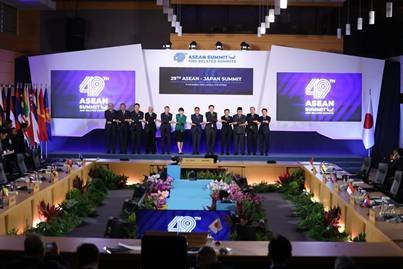
The 29th ASEAN-Japan Summit in Manila (photo: Prime Minister’s Office of Japan).
Subject: International Relations – Energy Security and East Asia
Paper: GS Paper 2: International relations; GS Paper 3: Infrastructure, energy security
UPSC Relevance: Japan announced on 17 November 2026, at the ASEAN meetings in Manila, that Southeast Asian nations will be able to access its crude oil storage facilities under the POWERR Asia initiative, a joint stockpiling arrangement intended to prepare the region for future energy crises after the West Asia conflict squeezed crude flows to Asia.
Why in News
Prime Minister Sanae Takaichi told regional leaders that Japan’s hydro-tanks would be available for use under the proposed cooperation on oil stockpiling.
Japan’s Foreign Ministry press secretary Toshihiro Kitamura described the plan as a kind of joint stockpiling system: unused Japanese facilities would hold other countries’ crude for release in a crisis.
Japan holds 254 days’ worth of oil reserves, while some ASEAN countries had less than a month’s worth at the outbreak of the West Asia war in February.
The Philippines has already signed a memorandum of cooperation with Japan, covering assistance to build more storage for diesel, gas and crude; an ASEAN-backed study has also recommended using facilities in Thailand and Indonesia, with no final decision yet.
Kitamura told reporters on the sidelines of the ASEAN summit that by utilising unused facilities in Japan, other countries’ crude oil could be stockpiled for release in case of crisis, adding that as a government Japan is ready to work with ASEAN countries to utilise its own facilities.
Philippine Energy Secretary Sharon Garin said a memorandum of cooperation signed with Japan on 16 November included assistance to put up many more facilities to store oil, whether diesel, gas or crude, so that the Philippines would be better prepared to ensure adequate oil for homes and businesses, whatever the situation.
Background
ASEAN members have faced fuel shortages and price hikes after the West Asia conflict disrupted crude flows; the bloc has called for unimpeded passage through the Strait of Hormuz, which was closed following US-Israeli strikes on Iran.
Japan, almost entirely dependent on imported crude, built one of the world’s largest strategic petroleum reserve systems after the 1970s oil shocks, much of it in underground and offshore tank sites.
International Energy Agency members are required to hold emergency stocks equal to at least 90 days of net imports; joint stockpiling extends such buffers to partners without large facilities.
The Strait of Hormuz, through which about a fifth of global crude normally passes, was closed following US-Israeli strikes on Iran, and ASEAN has repeatedly called for unimpeded passage through it since the war began in February.
Japan’s reserve system mixes government-held stocks with mandatory private-sector holdings, a design built after the 1973 oil shock taught Tokyo the cost of dependence on West Asian crude.
Key Dimensions
1. Energy security as public good: By opening spare capacity, Japan converts a national asset into regional insurance, deepening its strategic role in Southeast Asia.
2. Logistics of joint stockpiling: Questions of ownership, release triggers, transport and cost-sharing decide whether the offer becomes a working system.
3. Longer-term capacity building: Tokyo’s plan to help ASEAN states build their own stockpiling facilities shifts the region from dependence toward distributed resilience.
4. Precedent value: If operationalised, the arrangement would be Asia’s first large cross-border public stockpile, creating a template India could study for its own neighbourhood energy diplomacy.
5. Storage geography: An ASEAN-backed study recommending facilities in Thailand and Indonesia shows the plan is regional in design, not merely bilateral, though Kitamura said a final decision is under specific discussion.
Significance
1. First large Asian joint-stockpiling offer of its kind, responding directly to a live supply crisis.
2. Strengthens Japan-ASEAN ties at a moment when energy vulnerability is reshaping regional alignments.
3. Complements Quad economic-security efforts to reduce exposure to coercive supply disruptions.
4. Converts Japan’s 254-day reserve cushion into a diplomatic instrument in Southeast Asia.
5. Responds to a demonstrated vulnerability: some ASEAN states held under a month of reserves when the war began.
6. Opens a new arena of Japan-Philippines cooperation beyond their growing defence ties.
7. For India, the model is directly relevant: Indian refiners faced the same Hormuz disruption, and a regional stockpiling architecture could complement India’s own reserves.
Challenges
1. Allocation disputes during a real crisis: whose oil is released first, and at what price.
2. Financing new storage in fiscally constrained ASEAN states.
3. Physical vulnerability of concentrated storage sites in conflict or disaster scenarios.
4. Legal and commercial terms for storing another country’s crude, including ownership and release pricing, are unsettled.
5. ASEAN states must still finance their own longer-term storage build-out.
6. Transport logistics and shipping insurance in a conflict zone add cost and risk to any joint-stockpile release.
7. Political turnover in member states could stall a multi-year build-out before facilities are ready.
Way Forward
1. Watch whether Thailand and Indonesia facilities join the scheme after the ASEAN-backed study.
2. Track the implementing agreements under the Japan-Philippines memorandum as a template.
3. Note India’s own strategic petroleum reserve programme at Visakhapatnam, Mangaluru and Padur for comparison.
4. Follow crude price and Hormuz developments that will test the urgency of the plan.
5. Watch for the first crude deliveries under the scheme and the release-trigger rules.
6. Note parallel ASEAN work on a regional oil security framework proposed by Japan.
7. Track how the West Asia ceasefire talks affect the urgency of stockpiling.
8. Follow whether the proposed Asian energy framework takes shape at subsequent ASEAN-Japan ministerial meetings.
Prelims Value Addition
- IEA members must hold emergency oil stocks of at least 90 days of net imports.
- Japan’s reserves stand at 254 days, among the highest in the world.
- India’s Strategic Petroleum Reserves are managed by Indian Strategic Petroleum Reserves Limited at Visakhapatnam, Mangaluru and Padur.
- The initiative is named POWERR Asia.
- Japan’s offer covers excess national capacity described as hydro-tanks by Prime Minister Takaichi.
- At the outbreak of the West Asia war in February, some ASEAN countries held less than a month of oil reserves.
- The Japan-Philippines memorandum of cooperation on storage facilities was signed on 16 November 2026.
Mains Value Addition
- “Joint stockpiling can convert energy interdependence into energy security.” Discuss in the Asian context.
- Examine the strategic petroleum reserve approach of India in the light of the Japanese offer to ASEAN.
- Compare Japan’s stockpile-sharing model with the International Energy Agency’s coordinated release mechanism, and assess what India could adapt.
Topic 3: Bilkis Bano Vows to Challenge Bail Granted to Two Convicts by Supreme Court
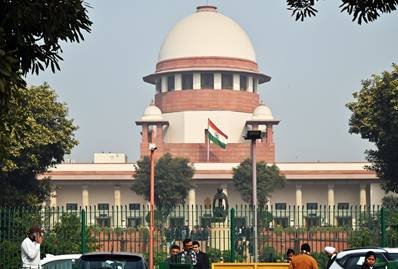
Illustrative image: the Supreme Court of India (DD News file photo).
Subject: Polity and Governance – Judiciary, Victims’ Rights and Criminal Justice
Paper: GS Paper 2: Judiciary and social justice; GS Paper 1: Social empowerment
UPSC Relevance: Bilkis Bano, survivor of gangrape and the murder of 14 family members during the 2002 Gujarat riots, issued a statement on 17 November 2026 expressing pain, shock and disbelief at the Supreme Court’s 28 October order suspending the life sentences and granting bail to two convicts, Bipinchand Kanaiyalal Joshi and Pradip Ramanlal Modhiya, and said she would fight the order.
Why in News
Speaking through senior advocate Shobha Gupta, Bilkis Bano said she was neither informed nor heard before the order was passed and learnt of it through press reports, calling it the second time the court had passed an order without hearing her.
A Bench of Justices M.M. Sundresh and Prasanna B. Varale had reasoned that the two men had undergone more than 17 years in prison and that one of them suffered a severe handicap.
The convicts had arraigned only the States of Gujarat and Maharashtra in their appeal; the survivor was not a party and had no notice of the hearing.
In her statement she said she had rebuilt her life from rubble but was scared once again, and would fight for her children and for women everywhere, since no survivor should face an eternal test of belonging and equality.
The October 28 order came in the convicts’ appeal against the Bombay High Court’s May 2017 judgment that upheld the 2008 CBI court conviction and life sentences of the 11 men.
Bilkis Bano’s statement asked how the Supreme Court could simply suspend the sentence of the men who did this to her, and how they could not even inform her or make sure her voice was heard in their courtroom.
She said she had rebuilt from the rubble of her life and learned to smile, but the order had made her scared once again, and that she must fight for her children, who do not deserve to live haunted by these fears and scars.
Background
A CBI court in Mumbai convicted 11 men in 2008 and sentenced them to life; the Bombay High Court upheld the convictions in May 2017; the Supreme Court had transferred the trial out of Gujarat in 2004.
In 2024 the Supreme Court quashed the Gujarat government’s August 2022 en masse remission of the 11 convicts, holding it was obtained by suppression of material facts, and returned the men to prison.
The court in 2024 had empathised with Bilkis Bano, noting she had been coerced to live the life of a nomad and an orphan and that the violence left an indelible imprint on her mind.
The 11 convicts were found guilty of gangraping the then 19-year-old Bilkis Bano and murdering 14 members of her family, including her infant daughter, during the 2002 Gujarat riots.
In the earlier round of litigation, senior counsel for the convicts had argued that one of them was not named in the FIR and was implicated nearly three years later, while the prosecution had opposed bail citing the gravity of the offence.
Key Dimensions
1. The victim’s right to be heard: The case raises whether a survivor must be notified and heard before sentences are suspended in crimes of this gravity, a question criminal procedure does not answer uniformly.
2. Bail pending appeal: Suspension of sentence weighs custody length, health and arguable appeal points against the gravity of the offence; it is not an acquittal, yet it changes the survivor’s lived reality.
3. Institutional memory: The 2024 remission quashing shapes how every subsequent release order in this case is read by the public.
4. Notice as a fairness minimum: The survivor’s complaint that she learnt of the order from the press frames notice and hearing as the minimum content of victims’ rights in post-conviction proceedings.
5. Recidivism of procedure: Her statement that this is the second time an order was passed without hearing her links the 2022 remission and the 2026 bail as a pattern, strengthening the case for a statutory victim-notice rule.
Significance
1. Puts victims’ procedural rights at the centre of the bail-versus-justice debate.
2. Tests public confidence in the justice system’s handling of riot-era crimes against women.
3. Shows how appellate longevity, two decades on, keeps reopening settled convictions.
4. Keeps the standards of the 2024 remission judgment alive in public law discourse.
5. Tests whether appellate courts will fold victim impact into suspension-of-sentence reasoning.
Challenges
1. No uniform rule ensures victim notice before suspension of sentence in appeals.
2. Balancing the appellate rights of long-incarcerated convicts with survivors’ security and dignity.
3. Ensuring the promised legal challenge receives an early hearing.
4. The legal route, review or curative petition, faces narrow grounds and uncertain timelines.
5. Ensuring the survivor’s security while the convicts remain out on bail.
Way Forward
1. Watch for the review or curative application Bilkis Bano’s counsel has said she will file.
2. Note any move toward codifying victim participation at the suspension-of-sentence stage.
3. Track the main appeal’s hearing schedule before the Supreme Court.
4. Observe whether Parliament considers victim-notice provisions in criminal procedure reform.
5. Watch for the filing of the promised challenge and the Bench assigned.
6. Note whether the court issues any general direction on victim notice in such appeals.
Prelims Value Addition
- Section 389 of the CrPC (now corresponding provisions in the BNSS) governs suspension of sentence pending appeal.
- The case was transferred from Gujarat to Mumbai by the Supreme Court in 2004 to ensure a fair trial.
- The 2022 remission was granted under the Gujarat government’s remission policy and quashed by the Supreme Court in 2024.
- The 28 October 2026 order was passed by a Bench of Justices M.M. Sundresh and Prasanna B. Varale.
- The trial was conducted by a CBI court in Greater Mumbai after the Supreme Court transferred the case out of Gujarat in August 2004.
- The Gujarat government’s 2022 remission of the 11 convicts was quashed by the Supreme Court in 2024 as obtained by suppression of material facts.
Mains Value Addition
- “Justice to the victim is as much a part of a fair trial as the rights of the accused.” Discuss in the light of the Bilkis Bano case.
- Examine the case for statutory victim-participation rights at the bail and remission stages in India.
- “Bail jurisprudence for heinous crimes must internalise the victim’s right to be heard.” Critically examine.
Topic 4: GRAP Stage III Revoked in Delhi-NCR as Air Quality Improves
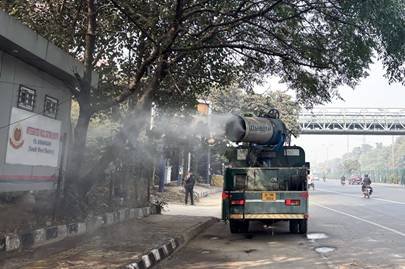
Representative image: an anti-smog gun at work in Delhi (DD News archive photo).
Subject: Environment and Health – Urban Air Pollution Governance
Paper: GS Paper 3: Environment, pollution; GS Paper 2: Governance
UPSC Relevance: The Commission for Air Quality Management revoked Stage III of the Graded Response Action Plan across Delhi-NCR on 17 November 2026 after the air quality index improved; Delhi’s AQI stood at 198 at 9 pm, in the Moderate category, after about ten days in the Severe and Very Poor bands. Stage I and II measures remain in force.
Why in News
Stage III had been invoked on 6 November; its withdrawal ends the requirement of hybrid classes up to Class V and lifts restrictions on BS-III petrol and BS-IV diesel light motor vehicles in Delhi and the high-density districts of Gurugram, Faridabad, Sonipat, Ghaziabad and Gautam Buddha Nagar.
Restrictions on dust-generating construction and demolition continue, as does the direction that offices ensure 50 per cent of staff work from home; the Delhi government’s Winter Action Plan runs until 31 January.
The improvement came from favourable meteorology: a ventilation index of 6,200 square metres per second, mixing depth around 1,500 metres, and southwesterly surface winds up to 20 kmph that also kept stubble-burning smoke away.
The relief may be short-lived: the IMD forecasts wind speeds falling to about 10 kmph and the ventilation index declining to 4,000 on Wednesday, 2,500 on Thursday and 1,200 square metres per second on Friday.
Among NCR cities, Noida and Ghaziabad recorded Moderate AQI at 155 and 173 respectively, while Gurugram at 278 and Faridabad at 222 remained in the Poor category even as Delhi improved.
Stage I and II measures continuing include a ban on burning coal and firewood, curbs on diesel generator sets, higher parking fees, road-dust control and penalties for vehicles without valid Pollution Under Control certificates.
Delhi’s AQI had remained in the Severe and Very Poor categories for around ten days before the improvement, with Stage III in force from 6 November.
The IMD expects the mixing depth to decline from 1,500 metres to around 1,100-1,200 metres in the following days, reducing the atmosphere’s capacity to disperse pollutants.
CAQM officials said all measures under Stages I and II remain in force even after Stage III was revoked, so the relaxation is partial and reversible rather than a return to normal.
Officials attributed the improvement to stronger surface winds, favourable wind direction and a higher mixing depth, which together aided the dispersion of accumulated pollutants over the capital.
Background
GRAP, framed under the CAQM Act of 2021, links escalating curbs to AQI bands: Stage I for Poor, Stage II for Very Poor, Stage III for Severe and Stage IV for Severe Plus air.
Delhi’s winter pollution arises from a mix of vehicular, industrial, dust and biomass sources, trapped by low winds and temperature inversion; episodic farm-fire smoke adds to the load.
The Supreme Court has repeatedly pressed the CAQM and NCR states to act pre-emptively rather than wait for air to turn severe.
The CAQM is a statutory body created by a 2021 Act of Parliament specifically to coordinate air-quality action across Delhi and the adjoining states, replacing the earlier EPCA.
Southwesterly winds during this episode kept Delhi relatively less exposed to stubble-burning emissions, which reach the city mainly on sustained northwesterly winds from the farm-fire regions.
Key Dimensions
1. Meteorology versus mitigation: The episode shows dispersion, not emission cuts, drove the recovery; structural sources remain unaddressed.
2. Graded governance: GRAP operationalises proportionate, reversible restrictions; its design lets curbs relax quickly when indices improve, limiting economic disruption.
3. Health protection: School and vehicle measures target exposure of children and commuters, the most affected groups during severe episodes.
4. Data-triggered governance: GRAP’s AQI-band triggers convert pollution control from discretionary announcements into rule-bound action, a governance model other Indian airsheds are studying.
5. Exposure equity: Hybrid classes up to Class V and vehicle curbs are designed around children and daily commuters, whose exposure per day is the highest.
Significance
1. Demonstrates GRAP’s ratchet working in both directions, tightening and relaxing with measured air quality.
2. Keeps attention on the forecast-driven nature of winter air management in the NCR.
3. Underlines the role of the CAQM as a permanent statutory coordinator across Delhi and four states.
4. Shows the ratchet can relax as quickly as it tightens, which is essential for public acceptance of GRAP.
5. Confirms that meteorological dispersion, not emission reduction, still decides Delhi’s winter AQI swings.
6. The episode is a live demonstration that emergency measures buy time but cannot substitute for emission cuts at source.
Challenges
1. A forecast of falling ventilation means Stage III may have to return within days, testing public compliance fatigue.
2. Long-term sources, vehicles, industry, construction dust and waste burning, need year-round control, not episodic bans.
3. Stubble-burning coordination with Punjab and Haryana remains incomplete.
4. Compliance fatigue if Stage III returns within the same week.
5. Addressing year-round sources rather than winter firefighting.
6. Enforcing the continuing Stage I and II measures, from diesel-generator curbs to PUC penalties, demands sustained field staffing that typically thins once headlines fade.
Way Forward
1. Watch AQI bulletins through the week as the ventilation index declines.
2. Note whether the CAQM reimposes Stage III and on what AQI trigger.
3. Track enforcement data on construction bans and PUC penalties under Stages I and II.
4. Follow the Winter Action Plan measures that continue until 31 January.
5. Track the daily AQI and ventilation-index forecasts through the week for re-imposition triggers.
6. Note enforcement reports on the continuing construction and demolition curbs.
Prelims Value Addition
- AQI bands: 0-50 Good, 51-100 Satisfactory, 101-200 Moderate, 201-300 Poor, 301-400 Very Poor, 401-500 Severe.
- CAQM was constituted in 2021 as a statutory body for air quality management in the NCR and adjoining areas.
- GRAP Stage III includes curbs on BS-III petrol and BS-IV diesel four-wheelers and a halt to most construction and demolition.
- GRAP has four stages keyed to AQI bands from Poor to Severe Plus.
- Delhi’s Winter Action Plan remains in force until 31 January.
- The ventilation index combines mixing depth and wind speed to indicate dispersion capacity.
- Stage III of GRAP was invoked in Delhi-NCR on 6 November 2026 and revoked on 17 November 2026.
Mains Value Addition
- “Delhi’s air crisis is managed each winter but never solved.” Analyse with reference to GRAP.
- Discuss the institutional design of the CAQM and its effectiveness in coordinating multi-state airshed governance.
- Assess GRAP as an instrument of cooperative federalism in the National Capital Region airshed.
Topic 5: Cyclone Akvan: 540 km of Andhra and Yanam Coast Braces for 20 November Landfall
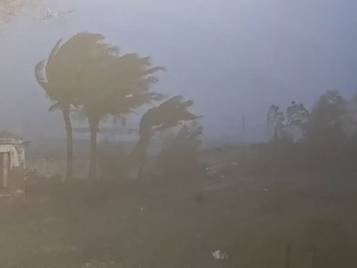
Cyclone Akvan’s approach to the Andhra coast (photo: ANI via DD News, 17 November 2026).
Subject: Geography and Disaster Management – Tropical Cyclones
Paper: GS Paper 1: Geography; GS Paper 3: Disaster management
UPSC Relevance: The IMD said on 17 November 2026 that Cyclone Akvan over the west-central Bay of Bengal would intensify into a severe cyclonic storm by Tuesday night and a very severe cyclonic storm by the evening of 19 November, crossing the Andhra Pradesh and Yanam coasts around noon on 20 November, with the probable landfall point anywhere on the 540-km stretch between Nellore and Tuni.
Why in News
At 5:30 a.m. on 17 November the system lay about 610 km east of Chennai, 660 km southeast of Machilipatnam, 670 km south-southeast of Visakhapatnam and 790 km south of Gopalpur, moving north-northwestwards very slowly.
Chief Minister N. Chandrababu Naidu reviewed preparedness, directed continuous public warnings through Swarna Gram and Swarna Ward staff, and ordered that fishermen be kept from venturing to sea; he said there was no need to panic.
Akvan is the third cyclone to threaten the State within a month, after Arnab and Murasu, which together caused losses estimated at about Rs 7,000 crore.
The Health Department has identified 282 of 994 government healthcare facilities as potentially vulnerable and listed 3,478 pregnant women with expected delivery dates between 14 and 24 November for shifting to government hospitals.
Officials of the Real-Time Governance Society warned that the system could intensify into a severe cyclonic storm by the evening of 17 November, and said heavy rainfall was expected on 19 and 20 November.
Officials told the Chief Minister the cyclone was moving at about 3 kmph and that there would be clarity on its intensity by the evening; the State reported no rainfall on 16 November and none was forecast for 17 November, with rain likely to begin on 18 November.
Naidu said Akvan was the third cyclone to hit the State in recent times, asked officials to communicate weather warnings continuously to the public in the areas likely to be affected, and said measures should ensure the public was not adversely affected.
The same Nellore-Tuni region suffered extensive damage during Arnab and Murasu, making this the third preparation cycle for the same coastal belt within a month.
The IMD’s morning observation placed the system about 630 km northeast of Trincomalee in Sri Lanka, underlining how far the storm still had to travel across open water before the coast.
Background
The Bay of Bengal’s October-November season peaks when warm seas and low wind shear favour intensification; three systems in a month is unusual and has been flagged by meteorologists.
The Nellore-Tuni belt suffered extensive damage during Arnab and Murasu, so recovery and preparedness now overlap.
The name Akvan, contributed by Iran, is a Persian word meaning demon; systems are named only at the cyclonic-storm stage under the WMO/ESCAP panel.
The State’s losses from Arnab and Murasu together are estimated at around Rs 7,000 crore, and compensation processes from those storms are still under way even as Akvan approaches.
The Swarna Gram and Swarna Ward programmes place government staff in direct contact with households, and the Chief Minister ordered that they be used to pass cyclone information directly to people in the threatened areas.
Key Dimensions
1. Slow-moving systems: A cyclone advancing at 3 kmph prolongs uncertainty and rain exposure; slow tracks complicate the timing of evacuation and warning fatigue.
2. Health-system readiness: Pre-identifying vulnerable facilities and expectant mothers shows impact-based planning moving beyond generic alerts to named-risk lists.
3. Compound disaster risk: A third landfall while earlier compensation is pending tests fiscal and administrative endurance.
4. Named-risk public health: Listing 282 vulnerable facilities and 3,478 expectant mothers converts a general alert into an actionable roster, a maturing of impact-based disaster management in the State.
5. Slow-track dilemma: At 3 kmph the system gives more preparation time but prolongs uncertainty and extends the period fishermen must stay ashore, deepening livelihood losses.
Significance
1. Confirms the IMD’s intensification ladder forecasts in near-real time across successive bulletins.
2. Puts nearly half of Andhra’s coastline inside the landfall envelope, requiring statewide pre-positioning.
3. Adds evidence to the emerging debate on serial cyclones on India’s east coast.
4. The 540-km Nellore-to-Tuni window covers nearly half of the State’s coastline, demanding statewide readiness.
5. Third landfall in a month makes Akvan a test of serial-disaster governance rather than single-event response.
6. The pre-identification of 3,478 pregnant women for hospital shifting is among the most granular public-health preparations seen in an Indian cyclone response.
Challenges
1. Landfall-point uncertainty inside a 540-km window until late in the approach.
2. Warning fatigue among coastal communities facing their third alert in a month.
3. Protecting livelihoods, especially fishing, during repeated multi-day sea closures.
4. Maintaining public attention through a slow approach after two recent storms.
5. Simultaneously running relief assessments for Arnab and Murasu and preparedness for Akvan.
Way Forward
1. Track IMD bulletins of 18-19 November for the narrowing landfall window and wind forecasts.
2. Watch NDRF and SDRF pre-positioning, shelter readiness and the fishermen advisories.
3. Note the health system’s shifting of identified pregnant women and the protection of flagged facilities.
4. Follow the post-landfall damage assessment against the Rs 7,000-crore losses of the earlier storms.
5. Watch the 18 and 19 November IMD bulletins for the landfall window to narrow.
6. Track evacuation orders, shelter occupancy and the shifting of the identified pregnant women.
7. Note port warnings and the suspension of marine activity along the Nellore-Tuni stretch.
8. Follow the fisheries department’s compensation decisions for the enforced no-fishing days as a measure of livelihood protection.
Prelims Value Addition
- IMD wind-scale: cyclonic storm 34-47 knots, severe 48-63, very severe 64-89 knots.
- Yanam is an enclave of Puducherry on the Andhra coast, inside the warned stretch.
- Naming of cyclones follows the WMO/ESCAP panel for the North Indian Ocean; Akvan was suggested by Iran.
- Akvan is a Persian word meaning demon, contributed by Iran to the WMO/ESCAP naming list.
- The probable landfall window is around noon on 20 November between Nellore and Tuni.
- Andhra Pradesh’s Real-Time Governance Society integrates weather, field and departmental data for disaster response.
- The system was moving north-northwestwards at about 3 kmph on the morning of 17 November.
Mains Value Addition
- “India’s cyclone preparedness must now assume serial events.” Discuss with reference to the November 2026 Bay of Bengal systems.
- Examine how impact-based forecasting, as in the Akvan bulletins, changes disaster management practice.
- “Impact-based forecasting is only as good as the last mile of communication.” Discuss with reference to the Akvan preparations.
Topic 6: Rupee Climbs 43 Paise to a Seven-Month High of 93.51 Against the Dollar

Representative image: the rupee symbol (DD News archive graphic).
Subject: Economy – External Sector and Exchange Rates
Paper: GS Paper 3: Indian economy, external sector
UPSC Relevance: The rupee appreciated 43 paise to close provisionally at 93.51 against the US dollar on 17 November 2026, its strongest level in about seven months, helped by softer crude oil prices, upbeat domestic equities and foreign fund inflows, even as a strong dollar and elevated US bond yields capped the upside.
Why in News
At the interbank market the rupee opened at 93.72, traded between a high of 93.40 and a low of 93.73, and settled 43 paise higher; it had already gained 25 paise on the previous session to 93.94.
Foreign institutional investors bought equities worth Rs 4,864.68 crore on 16 November, and the Sensex rose 427.40 points to 82,532.19 while the Nifty gained 96.30 points to 25,387.40.
Brent crude traded 0.38 per cent lower at 92.79 dollars a barrel, easing the import bill and the dollar demand of refiners.
Analysts expect a positive bias with a trading range of 93.20 to 93.75, but flag the strong dollar index at 103.54 and rising US Treasury yields as limits to sharp appreciation.
The gain followed a 25-paise rise in the previous session to 93.94, taking the two-day appreciation to about 68 paise and marking the rupee’s strongest close in roughly seven months.
Anuj Choudhary of Mirae Asset Sharekhan said the rupee is expected to trade with a positive bias on declining crude prices and positive domestic markets, with sustained foreign inflows adding support, though a strong greenback and rising US Treasury yields may cap sharp upside.
Traders are expected to take cues from upcoming US retail sales and industrial production data, with the spot price expected in a range of 93.20 to 93.75.
The dollar index, which gauges the greenback against six major currencies, was marginally lower at 103.54, while Brent futures traded at 92.79 dollars a barrel, down 0.38 per cent.
The two-day rally of about 68 paise is among the sharpest short bursts of appreciation for the rupee in recent months, and it came without any announced central-bank action.
Exchange data showing FII purchases of Rs 4,864.68 crore on 16 November gave the currency rally a concrete flow anchor rather than leaving it to sentiment alone.
Background
The rupee’s exchange rate is market-determined, with the Reserve Bank of India intervening to smooth volatility rather than defend any level, a managed float in practice.
Crude oil is India’s largest import item; every sustained fall in Brent reduces dollar demand and supports the rupee.
Foreign portfolio flows into equities and debt are a swing factor for the currency, sensitive to US yields and global risk appetite.
Foreign institutional investors turned net buyers with Rs 4,864.68 crore of equity purchases on 16 November, reversing a patch of outflows and directly adding dollar supply to the market.
Domestic equities rallied in parallel, the Sensex closing at 82,532.19 and the Nifty at 25,387.40, reflecting the same risk-on sentiment that supported the currency.
A softer crude complex matters doubly for India: it cuts the refiners’ dollar demand that weighs on the rupee and it cools the imported-inflation channel that constrains monetary policy.
The rupee had spent much of the year under pressure from the oil shock and portfolio outflows, which makes a seven-month high a notable inflection even if it proves temporary.
Key Dimensions
1. Terms-of-trade relief: Cheaper crude improves the trade balance, lowers imported inflation and supports the currency simultaneously.
2. Flow-driven strength: Equity inflows of the scale seen on 16 November can move the rupee in a single session, which also makes the gain reversible.
3. Global headwinds: A firm dollar index and high US yields pull capital toward American assets, setting the ceiling on rupee gains.
4. Imported-inflation channel: A firmer rupee lowers the landed cost of crude, electronics and fertilisers, feeding directly into wholesale and retail price moderation.
5. Reversibility: Flow-led currency strength can unwind within sessions if global risk appetite shifts, so the level matters less than the durability of inflows.
Significance
1. A stronger rupee softens imported inflation just as the festive-season demand cycle peaks.
2. Signals returning foreign investor confidence in Indian markets after months of outflows.
3. Eases pressure on the RBI’s reserve-management strategy.
4. Marks a seven-month high, a psychological marker for markets after a weak patch.
5. Reduces the RBI’s need to sell dollars to smooth depreciation, conserving reserves.
Challenges
1. Reversal risk if US data or yields push the dollar higher.
2. Oil-price volatility from the West Asia conflict can undo the terms-of-trade gain quickly.
3. Export competitiveness concerns if appreciation persists.
4. Elevated US yields keep the dollar attractive and limit further rupee gains.
5. Any flare-up in the West Asia conflict could reverse the crude-price relief.
6. A sustained rally invites importer hedging and exporter complaints, both of which can feed back into the exchange rate’s path.
7. If US data surprises on the upside, Treasury yields could climb further and pull flows back out of emerging markets like India.
Way Forward
1. Watch US retail sales and industrial production data flagged by traders as the next cues.
2. Track FII flow data for confirmation that 16 November buying is a trend.
3. Note Brent movements around the West Asia ceasefire negotiations.
4. Follow the RBI’s daily reference rate and any shift in its intervention posture.
5. Watch the US retail sales and industrial production releases flagged by traders.
6. Track FII flow persistence over the rest of the week.
7. Note the RBI’s reference rates for signs of a changed intervention stance.
8. Watch commentary from exporters’ bodies on competitiveness if the appreciation persists into the following week.
Prelims Value Addition
- The rupee opened at 93.72 and closed at 93.51 provisional on 17 November 2026.
- The dollar index measures the greenback against a basket of six currencies.
- FII net buying of Rs 4,864.68 crore was recorded on 16 November, per exchange data.
- The rupee closed at 93.51 provisional on 17 November 2026, up 43 paise.
- Brent crude traded at 92.79 dollars per barrel, down 0.38 per cent.
- The dollar index stood at 103.54, marginally lower by 0.01 per cent.
- The rupee’s intra-day range on 17 November was 93.40 to 93.73 against the dollar.
- Foreign institutional investors bought equities worth Rs 4,864.68 crore on 16 November 2026, per exchange data.
Mains Value Addition
- “A managed float serves India better than either extreme of currency policy.” Discuss.
- Analyse the transmission from crude oil prices to the rupee’s exchange rate and domestic inflation.
- “Exchange-rate strength driven by portfolio flows is fragile.” Discuss in the Indian context with recent evidence.
Topic 7: Export Promotion Mission: DGFT Widens Compliance Support for MSME Exporters

File image: the launch of additional interventions under the Export Promotion Mission, New Delhi, February 2026 (photo: ANI via DD News); the scheme whose support the DGFT has now widened.
Subject: Economy – Trade Policy and MSME Exports
Paper: GS Paper 3: Indian economy and issues relating to planning, mobilisation of resources, growth and development; changes in industrial policy and their effects on industrial growth
UPSC Relevance: The Directorate General of Foreign Trade issued trade notices on 17 November 2026 widening compliance support for MSME exporters under the Export Promotion Mission: the list of eligible testing, inspection and certification items under the Trade Regulations, Accreditation and Compliance Enablement scheme grew from 462 to 600, freight and market-access guidelines were relaxed, and airfare support was extended to firms with export turnover up to Rs 50 crore.
Why in News
The eligible list under the compliance enablement scheme now covers 600 global trade regulations, including the European Union’s Carbon Border Adjustment Mechanism, the Restriction of Hazardous Substances directive and the REACH chemicals regulation, so the costs small firms incur to meet these standards qualify for support.
Compliance costs fall hardest on micro and small exporters: a single international certification or testing cycle can cost more than a small firm’s margin on an order, so reimbursing part of it decides whether a firm attempts regulated markets at all.
The relaxed freight guidelines now cover all exportable merchandise of eligible MSMEs for freight-cost reimbursement, replacing a narrower earlier list under which only some MSME exports could claim the benefit.
Airfare support for participation in trade fairs and buyer-seller meets now reaches firms with export turnover up to Rs 50 crore, against a ceiling of Rs 75 lakh earlier, bringing mid-sized MSMEs into the market-access fold.
The changes were made through trade notices by the DGFT, the administrator of the Foreign Trade Policy, so they take operational effect immediately without new legislation or budgetary approval.
Because the notices relax guidelines rather than rewrite the mission, they show a scheme being iteratively calibrated against exporter feedback within its first year of operation.
The widened list covers testing and certification across a range of export sectors, so labour-intensive lines such as textiles, engineering goods and food products all gain from the expansion.
The carbon border adjustment alone touches India’s steel, aluminium and cement exports; without support, certification and reporting costs could push small suppliers out of European supply chains before the definitive phase begins.
Background
The Export Promotion Mission is the Centre’s flagship export-support framework for MSMEs, combining financial enablers under the Niryat Protsahan component with trade ecosystem support under Niryat Disha, delivered through a unified and digitally monitored framework.
The Mission is implemented by the Department of Commerce in coordination with the Ministry of MSME, the Ministry of Finance, EXIM Bank, the Credit Guarantee Fund Trust for Micro and Small Enterprises, the National Credit Guarantee Trustee Company, regulated lending institutions, Indian missions abroad and export promotion councils.
Seven additional interventions were launched under the Mission in February 2026 to address the cost of capital, trade finance gaps, compliance burdens, logistics disadvantages and market-entry barriers, alongside overseas warehousing initiatives such as Bharat Mart in Dubai.
India’s trade diplomacy has widened the demand side for these interventions: nine concluded free trade agreements, including the first tranche of the bilateral trade agreement with the United States, give Indian exporters preferential access to economies covering nearly 70 per cent of global GDP.
MSMEs are estimated to account for around 45 per cent of India’s merchandise exports and are among the largest employers outside agriculture, which is why recent export-support design has been built around them.
Export promotion councils act as the interface between the DGFT and small exporters, disseminating trade notices and helping firms document claims; their district outreach decides how far widened eligibility actually travels.
Key Dimensions
1. Standards as market access: CBAM, RoHS and REACH show that entry into rich markets now depends on meeting carbon, safety and chemicals standards; subsidising compliance converts a regulatory wall into a manageable cost.
2. Scheme design: Moving from narrow eligibility lists to near-universal coverage of MSME merchandise reduces discretion, paperwork and the exclusion errors that plague small-firm schemes.
3. Scale ladder: Raising the airfare ceiling from Rs 75 lakh to Rs 50 crore turnover recognises that export readiness is a continuum, and that firms between micro and medium size face the steepest relative costs.
Significance
1. Directly lowers the cost of selling into the European market at the moment its carbon and chemicals regimes tighten.
2. Signals a shift from announcing export schemes to continuously widening their eligibility based on exporter feedback.
3. Strengthens the MSME share of exports, a stated government priority given the sector’s employment intensity.
4. The expansion brings India’s export-support architecture closer to the standards-compensation models used by several competing exporters.
5. Treats trade competitiveness as a standards-and-compliance problem rather than only a tariffs-and-market-access problem.
Challenges
1. Awareness among small exporters remains thin; trade notices reach industry bodies faster than first-generation exporters in tier-two towns.
2. Reimbursement models depend on documentation quality, which is precisely where micro units are weakest.
3. Compliance support treats the symptom; building domestic accredited testing capacity is the deeper fix.
4. Ensuring that reimbursement timelines stay short enough to matter for firms with thin working capital.
Way Forward
1. Track utilisation data for the widened TRACE list to see whether smaller firms actually claim the new items.
2. Watch for district-level facilitation through export promotion councils and the proposed local support personnel for exporters.
3. Note whether domestic testing and certification infrastructure is expanded so compliance costs fall structurally.
4. Follow CBAM’s definitive phase to see how Indian MSMEs in steel, aluminium and cement adapt.
5. Track the next round of trade notices to see whether compliance support extends to services exporters, who remain outside most merchandise-focused schemes.
6. Watch the carbon border mechanism’s definitive-phase implementation and its knock-on reporting demands on Indian MSMEs in steel and aluminium.
Prelims Value Addition
- The DGFT, under the Ministry of Commerce and Industry, administers the Foreign Trade Policy and issues trade notices that operationalise export-support measures.
- The EU Carbon Border Adjustment Mechanism began its transitional reporting phase in October 2023 and moves to its definitive financial-adjustment phase from 2026.
- REACH is the EU’s regulation on registration, evaluation, authorisation and restriction of chemicals; RoHS restricts hazardous substances in electrical and electronic equipment.
- Niryat Protsahan covers financial enablers such as credit and interest support; Niryat Disha covers trade ecosystem support including compliance, logistics and market access.
- The Foreign Trade Policy is announced by the DGFT under the Ministry of Commerce and Industry; trade notices are its instrument for course corrections between policy editions.
- EXIM Bank and the Credit Guarantee Fund Trust for Micro and Small Enterprises anchor the financial side of the mission, while export promotion councils anchor outreach.
Mains Value Addition
- “Standards, not tariffs, are the new barriers to trade.” Discuss with reference to the compliance support extended to MSME exporters under the Export Promotion Mission.
- Examine the design of the Export Promotion Mission as an instrument for raising the MSME share of India’s exports.
Topic 8: ONGC Controls Gas Leak at Tatipaka Well in Andhra After Ten Hours; 800 Evacuated
Archive image: Union Petroleum Minister reviewing ONGC well-control operations (photo: DD News); from an earlier incident.
Subject: Disaster Management and Energy – Industrial Safety
Paper: GS Paper 3: Disaster management, energy infrastructure; internal security of critical assets
UPSC Relevance: Oil and Natural Gas Corporation controlled a gas leak at its Tatipaka well in B.R. Ambedkar Konaseema district of Andhra Pradesh on 17 November 2026, after about ten hours of well-control operations; the leak began around 5 a.m. during workover operations, nearly 800 residents of Geddada village were evacuated, and no injuries or casualties were reported.
Why in News
The leak was reported around 5 a.m. during workover operations; ONGC activated its disaster management team and mobilised personnel, equipment and resources from regional crisis management facilities, bringing the flow under control around 3 p.m.
An area within roughly 500 metres was cordoned off, traffic on the affected stretch of National Highway 216 was diverted, local power supply was temporarily shut and a water blanket was established around the well as a precaution.
Gas concentrations in the vicinity were continuously monitored, and ONGC said it informed the district administration about withdrawing the cordon after site assessment.
This was at least the fourth reported gas leak involving ONGC in the district this year, raising questions about ageing well infrastructure and maintenance cycles.
ONGC said the gas flow was successfully controlled around 3 p.m. after sustained well-control operations, and that its disaster management team coordinated with the district administration and state authorities to contain the situation and ensure an effective response.
Precautions included cordoning an area of nearly 500 metres radius, diverting traffic on the affected stretch of National Highway 216, temporarily shutting local power supply and establishing a water blanket around the well, with continuous monitoring of gas concentrations in the vicinity.
The company said that following the successful control of the flow it continued to maintain a vigilant watch, and upon completion of observations and site assessment it informed the district administration regarding withdrawal of the precautionary cordon and other restrictions.
According to reports, this was at least the fourth reported gas leak involving ONGC in the Konaseema district this year, pointing to a pattern rather than an isolated failure.
Personnel, equipment and resources were mobilised from ONGC’s regional crisis management facilities, indicating that the response drew on pre-positioned institutional capacity rather than ad-hoc assembly.
The company said it would maintain a vigilant watch over the well even after control, with all necessary safety and monitoring measures kept in place.
Background
The Konaseema region of the Krishna-Godavari basin hosts dense onshore oil and gas infrastructure alongside habitations and aquaculture, making leak response a recurring local concern.
Workover operations, maintenance jobs on producing wells, are among the higher-risk routine activities in upstream production, requiring blowout-preventer and well-control discipline.
India’s offshore and onshore safety regime is overseen by the Oil Industry Safety Directorate, with crisis management plans mandated for every installation.
The Tatipaka area lies in the Krishna-Godavari basin, one of India’s oldest and densest onshore hydrocarbon provinces, where producing wells, pipelines and processing facilities sit amid villages, paddy fields and aquaculture ponds.
Workover operations involve intervening in a live well for maintenance or enhancement, and demand strict blowout-prevention discipline; loss of well control during such jobs is a known upstream hazard worldwide.
India’s upstream safety framework requires every installation to maintain an on-site disaster management plan with defined escalation to district authorities, the chain that operated at Geddada.
Key Dimensions
1. Emergency response: Evacuation of 800 people, cordoning, power shutdown and a water blanket within hours shows the district-industry protocol functioning.
2. Repeat-incident pattern: A fourth leak in a year shifts the issue from accident response to systemic integrity management of old wells.
3. Community risk: Habitations within hundreds of metres of wells need land-use buffers and continuous monitoring, not only post-incident evacuation.
4. Protocol performance: The ten-hour containment with evacuation, cordon, power shutdown and water blanket shows the crisis-management chain working as designed.
5. Systemic signal: Four leaks in a year in one district shifts the policy question from emergency response to asset integrity, audit frequency and transparent reporting of near-misses.
Significance
1. Demonstrates that rehearsed well-control capability can avert a major disaster.
2. Renews scrutiny of ageing Krishna-Godavari basin assets and workover safety.
3. Relevant to debates on siting energy infrastructure near populated areas.
4. Averted a potential major industrial disaster in a densely settled coastal district.
5. Renews attention on the safety of ageing wells in the Krishna-Godavari basin.
Challenges
1. Verifying that repeated minor leaks are not precursors to a major blowout.
2. Compensating and rehabilitating repeatedly evacuated communities.
3. Maintaining transparency in incident reporting to build local trust.
4. Rebuilding community confidence after repeated evacuations.
5. Ensuring independent verification of the company’s safety claims and monitoring data.
6. Repeated evacuations impose real costs on villagers, from lost workdays to disrupted schooling, which compensation frameworks rarely capture.
Way Forward
1. Note the inquiry into the cause of the workover leak and its public findings.
2. Track OISD or directorate-level safety audits of Konaseema wells.
3. Watch for a district-level review of buffer zones and monitoring around wells.
4. Follow ONGC’s asset-integrity investments announced after this incident.
5. Watch for the inquiry report on the workover failure and any OISD directives.
6. Track whether a district-level safety audit of all ONGC wells in Konaseema is ordered.
7. Note any policy move on habitation buffers around active wells.
8. Note whether the State government orders an independent technical audit alongside ONGC’s internal inquiry.
Prelims Value Addition
- ONGC is a Maharatna public sector undertaking under the Ministry of Petroleum and Natural Gas.
- The Oil Industry Safety Directorate frames safety standards for India’s oil and gas installations.
- National Highway 216 runs through the coastal Konaseema region of Andhra Pradesh.
- The Tatipaka well lies in B.R. Ambedkar Konaseema district of Andhra Pradesh.
- Nearly 800 people were evacuated from Geddada village during the operation.
- The Oil Industry Safety Directorate is the safety standards body for India’s oil and gas sector.
- The leak at the Tatipaka well began around 5 a.m. during workover operations and was controlled around 3 p.m. the same day.
Mains Value Addition
- “Industrial disaster management in India must shift from response to prevention.” Discuss with reference to oil and gas installations.
- Examine the land-use and safety challenges of co-locating energy infrastructure and habitations, with the Krishna-Godavari basin as an example.
- “Repeat near-misses are early warnings, not proof of safety.” Discuss with reference to industrial disaster governance in India.
