
Topic 1: Repay Crop Loan by November 30 and Pay Zero Interest: Tamil Nadu’s Interest Waiver Push
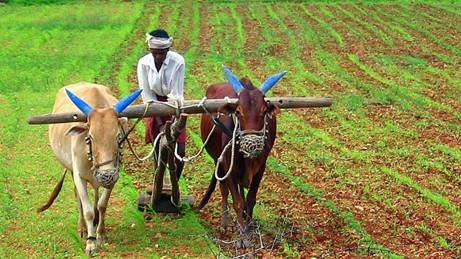
Representative image: a farmer ploughing his field with bullocks. Farmers who settle crop loan dues by 30 November pay zero interest, restoring eligibility for fresh loans (image: DT Next).
Subject: State Economy – Agriculture and Cooperative Credit
Syllabus
TNPSC Group I/II/IV: agriculture in Tamil Nadu; cooperative movement and rural credit; farmer welfare schemes; financial inclusion
Context
The Tamil Nadu government has announced a full interest waiver for farmers who settle their outstanding crop loan dues, after adjusting the eligible loan waiver amount, by 30 November, enabling them to regularise their accounts and obtain fresh crop loans. As reported in news coverage, a Government Order issued by the Cooperation, Food and Consumer Protection Department on 6 November set the deadline, and 5,70,942 farmers have received crop loans totalling Rs 5,190 crore during the current financial year.
Main Body: Multi-Dimensional Analysis
1. The incentive: The offer is simple and time-bound: repay the remaining crop loan by 30 November and the interest on it is waived in full, turning an accumulating burden into a clean slate for farmers who can mobilise the principal.
2. Regularisation goal: Settling the dues regularises the loan account, which restores eligibility for fresh crop loans from cooperative societies, so the scheme is less a giveaway than a restart of the formal credit cycle for stressed borrowers.
3. The GO behind it: As reported in news coverage, the operative order was issued on 6 November by the department that administers cooperatives; the primary text has not been independently read, so the scheme’s terms are stated here as reported.
4. Scale of lending: The government’s figures put current-year crop lending at Rs 5,190 crore to 5,70,942 farmers, a reminder that the cooperative network remains the backbone of seasonal farm credit in the State.
5. Adjusted waiver amount: The condition that repayment follows ‘adjusting the eligible loan waiver amount’ indicates earlier waiver benefits are netted off first, so farmers pay only the residual principal to qualify for the interest concession.
6. Logistical support: Cooperative credit societies will stay open on 28 and 29 November despite the weekend, an operational detail that shows the government treating the deadline seriously rather than symbolically.
7. Grievance channel: Farmers can approach district joint registrars of cooperative societies or use the WhatsApp helpline 98400 65423, a small but telling sign of digital service delivery entering cooperative administration.
8. Why deadlines matter: Interest waivers with a hard date create urgency and bring money back into societies quickly, improving their liquidity for the next cropping season without waiting for a budget reimbursement cycle.
9. Cooperative credit structure: Primary agricultural credit societies, district central cooperative banks and the State cooperative bank form the three-tier structure through which crop loans flow, and waiver arithmetic lands first on these institutions.
10. Fiscal dimension: Waived interest is a cost someone must bear; whether the government reimburses societies or societies absorb it affects their health, a question exam answers should flag even when news reports focus on the farmer benefit.
11. Moral hazard debate: Repeated waiver and interest-concession cycles can weaken repayment discipline if borrowers come to expect them, which is why such schemes are usually framed as one-time regularisation windows.
12. Timing with the monsoon: The scheme lands as the samba season faces rain deficiency in several districts, so restored credit eligibility may decide whether farmers can fund the next crop’s inputs on time.
13. Exam focus: Aspirants should note the department involved, the 30 November deadline, the Rs 5,190 crore figure and the 5,70,942 farmer count, all of which are the kind of specifics State-level questions test.
14. Credit culture: The scheme implicitly recognises that piling interest is what pushes a repayable crop loan into default, so waiving it at settlement attacks the problem at its compounding edge.
Positives, Negatives, & Government Schemes
| Category | Dimension / initiative | Explanation |
| Positive | Interest relief | Full waiver of interest on settlement removes the fastest-growing component of small farm debt. |
| Positive | Credit restoration | Regularised accounts make farmers eligible for fresh crop loans, keeping cultivation financed. |
| Positive | Operational effort | Weekend opening of societies and a helpline show administrative follow-through. |
| Negative | Liquidity strain | Farmers unable to raise principal by the deadline are excluded from the benefit precisely when they are most stressed. |
| Scheme | Cooperative framework | The three-tier cooperative structure implements the scheme, linking it to the cooperative movement syllabus area. |
Examples
1. Earlier farm loan waiver schemes in Tamil Nadu similarly routed benefits through cooperative societies, with joint registrars as the district-level contact point.
2. Keeping societies open on 28 and 29 November mirrors past drives where deadlines were matched with extended banking hours.
3. The WhatsApp helpline 98400 65423 continues the pattern of grievance redress channels attached to recent cooperative department announcements.
4. Farmers who regularised accounts under earlier interest-waiver windows regained access to fresh crop loans within the same season, as cooperative records showed.
5. States such as Telangana and Punjab have used settlement windows to clean cooperative books before new seasonal lending, a comparable approach.
6. The netting off of earlier waiver amounts before repayment mirrors the settlement design used in the cooperative housing loan one-time settlement notified earlier this month.
7. The 6 November order gave farmers a little over three weeks to respond, a lead time comparable to earlier settlement windows.
8. Farmers who miss the 30 November date lose only the interest concession, not the loan itself; the design rewards early settlement rather than penalising delay.
Way Forward
1. Publish district-wise figures of farmers who settle under the window so the scheme’s reach is verifiable rather than assumed.
2. Ensure societies receive prompt reimbursement of waived interest so their own liquidity for fresh lending is not squeezed.
3. Add a restructuring option for farmers who genuinely cannot mobilise principal by 30 November, so the window does not exclude the most distressed.
4. Track fresh loans issued to regularised accounts after the deadline to measure whether regularisation actually restored credit access.
5. Keep the helpline and joint registrar channels active beyond the deadline to handle disputes over waiver calculations.
6. Communicate clearly that settlement regularises the loan account while each farmer’s future borrowing remains subject to normal lending criteria.
7. Study how many societies’ liquidity actually improves after the settlement window closes, and use that data to plan the next season’s lending targets.
Conclusion
The zero-interest window is a compact, executable intervention: a clear deadline, a clear benefit and visible administrative support. Its success will be measured by how many of the 5,70,942 borrowing farmers actually regularise, and whether fresh crop loans flow to them in time for the next season.
Practice Mains Question
Discuss the role of interest waivers and settlement windows in managing farm debt in Tamil Nadu, and the safeguards needed to protect both farmers and cooperative institutions.
Topic 2: Amid Drought Fears, Tamil Nadu Deploys 19 District Monitoring Officers to Safeguard Farmers

Representative image: cracked, parched earth. Tamil Nadu has deployed 19 district monitoring officers as the deficient northeast monsoon threatens samba crops (image: Hindustan Times).
Subject: State Administration – Agriculture and Disaster Preparedness
Syllabus
TNPSC Group I/II/IV: agriculture and irrigation in Tamil Nadu; monsoons and rainfall pattern; drought management; administrative machinery at district level
Context
The Tamil Nadu government has deployed 19 senior officials of the Agriculture and Farmers Welfare Department as district monitoring officers in the wake of inadequate rainfall from a poor northeast monsoon season, with demands from some quarters that the Cauvery delta districts be declared drought-hit. The officers will coordinate field-level work across agriculture, horticulture, agricultural marketing and allied departments.
Main Body: Multi-Dimensional Analysis
1. The deployment: Nineteen senior agriculture department officials have been named district monitoring officers, each covering one to three districts, creating a direct reporting line between fields and the Secretariat during a rainfall emergency.
2. The trigger: The move responds to a deficient northeast monsoon, the season on which Tamil Nadu’s samba paddy depends, compounded by what officials describe as El Nino conditions affecting rainfall behaviour.
3. Mandate: The officers are to monitor and report on farmer registration and the digital crop survey, the status of samba crops, measures to rescue crops withering from water scarcity, implementation of Union and State schemes, and agricultural operations generally.
4. Field coordination: The officers are instructed to ensure coordination among the departments of agriculture, horticulture and plantation crops, agricultural marketing and agri-business, so that scheme benefits actually reach farmers rather than stall between offices.
5. Direct contact: Instructions emphasise meeting farmers directly and finding solutions to cultivation challenges, a governance style that substitutes inspection for paperwork during stress periods.
6. Delta anxiety: Political parties, including the Left, have demanded that the delta districts of Tiruvarur, Thanjavur, Thiruthuraipoondi and Nagapattinam be declared drought-affected, citing dried-up paddy; these demands are reported as political claims, and the government has not announced such a declaration.
7. Mettur dependence: Legislators from the delta have pointed to inadequate inflows into the Mettur dam along with monsoon failure, underlining the delta’s structural dependence on Cauvery releases when rains fail.
8. Samba stakes: Samba is the delta’s principal paddy crop, planted from late summer and harvested into winter; water stress at this stage threatens both yield and the State’s procurement targets.
9. Drought declaration process: A formal drought declaration follows norms involving rainfall, crop condition and moisture indicators, and unlocks specific relief, which is why the demand for declaration carries both symbolic and material weight.
10. Monitoring as policy: Dedicated monitoring officers are a standard disaster-administration instrument: they compress information delay, let the government see district-level distress early and create accountability for follow-up.
11. Digital crop survey: The inclusion of the digital crop survey in the mandate ties field observation to the State’s data systems, which matters for any future compensation calculation.
12. Scheme delivery under stress: Watching implementation of Union and State schemes during scarcity is deliberate: insurance enrolment, input subsidies and credit rescheduling all become time-critical when a crop is failing.
13. Exam focus: Key facts to retain are the 19 monitoring officers, the departments they coordinate, and the samba crop context, along with the El Nino framing of the season’s deficiency.
14. Institutional lesson: Pre-emptive deployment of senior officers before a crisis matures is an administrative practice worth citing in answers on disaster preparedness.
15. Relief chain: Once a drought is formally declared, relief flows through defined channels, input subsidies, rescheduled loans and insurance claims, so the declaration decision governs the entire chain that follows.
Positives, Negatives, & Government Schemes
| Category | Dimension / initiative | Explanation |
| Positive | Early warning | Nineteen officers reporting from the field give the government near-real-time visibility of crop stress. |
| Positive | Coordination | Cross-departmental coordination reduces the fragmentation that typically slows drought response. |
| Positive | Farmer interface | Direct meetings with farmers surface local problems that file-based administration misses. |
| Negative | Declaration gap | Farmers seeking formal drought declaration and its relief package face uncertainty until norms-based assessment concludes. |
| Scheme | Digital crop survey | The monitoring mandate plugs into the State’s digital crop survey, improving the data basis for relief. |
Examples
1. The officers’ coverage of one to three districts each mirrors the deployment pattern used in earlier monsoon-deficiency years.
2. Delta legislators’ demand to declare Tiruvarur, Thanjavur and Nagapattinam drought-affected echoes similar demands made in past rain-failure years.
3. The digital crop survey, already used for insurance and compensation, now becomes the monitoring backbone for the samba season.
4. Past droughts saw monitoring officers flag input shortages, prompting targeted seed and fodder supply through agricultural depots.
5. Mettur inflow anxiety recalls earlier years when kuruvai and samba sowing hinged on timely Cauvery releases.
6. Field inspections during previous rain deficits led to revised crop-cutting experiment schedules for insurance claims.
7. The officers’ instruction to meet farmers directly recalls the field-visit protocols used in earlier monsoon-deficiency monitoring rounds.
8. Coordination across agriculture, horticulture and agri-marketing departments mirrors the convergence model used in the State’s earlier drought mitigation efforts.
9. Monitoring rounds in earlier rain-failure years recorded drinking-water and fodder stress alongside crop loss, widening the response beyond paddy.
10. The monitoring mandate’s inclusion of Union scheme implementation reflects how relief now runs through both State and national programmes.
Way Forward
1. Complete a transparent, norms-based drought assessment quickly and publish district-wise findings so the declaration question is settled on evidence.
2. Use the monitoring reports to prioritise water-saving advisories, alternate crop guidance and micro-irrigation support where samba cannot be saved.
3. Fast-track crop insurance enrolment verification and claim preparation so compensation does not lag the distress.
4. Coordinate with the Water Resources Department on optimising available Mettur storage for standing crops.
5. Document each district’s input and credit gaps so a supplementary demand can be placed before the Assembly if needed.
6. Keep farmer grievance camps running in the affected blocks until the season closes, with the monitoring officers accountable for disposal.
7. Set up a public dashboard of rainfall deficiency and crop condition by district so the declaration debate proceeds on shared data.
8. Prepare fodder and water-supply contingencies for livestock in the affected blocks alongside crop-focused measures.
Conclusion
The deployment of monitoring officers is prudent early action: it buys information and coordination before distress peaks. The harder decisions, drought declaration, relief quantum and water allocation, remain ahead, and the officers’ field reports will decide how credibly the government makes them.
Practice Mains Question
Examine the role of field-level monitoring machinery in drought management in Tamil Nadu, and the criteria that should govern a formal drought declaration.
Topic 3: India’s First Human Metabolic Chamber Inaugurated at CMC Vellore
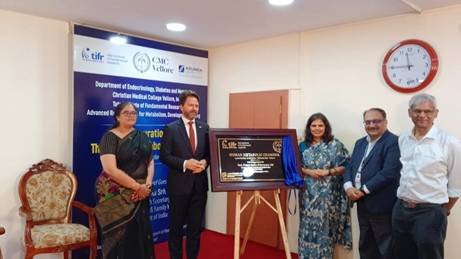
Current-event image: the inauguration plaque of the Human Metabolic Chamber at CMC Vellore, a TIFR-CMC facility opened by the Union Health Secretary (image: The Hindu).
Subject: Science and Health – Research Infrastructure in Tamil Nadu
Syllabus
TNPSC Group I/II/IV: science and technology developments in Tamil Nadu; health and nutrition; medical research institutions; diabetes and lifestyle diseases
Context
A state-of-the-art Human Metabolic Chamber, reported in news coverage as India’s first such facility, has been inaugurated at Christian Medical College, Vellore, in collaboration with the Tata Institute of Fundamental Research. The facility was opened by the Union Secretary, Health and Family Welfare, Punya Salila Srivastava.
Main Body: Multi-Dimensional Analysis
1. The facility: The Human Metabolic Chamber is a room-sized calorimeter: a volunteer lives, eats and sleeps inside for 24 hours or longer while instruments measure oxygen consumption and carbon dioxide production, revealing exactly how much energy the body uses.
2. What it measures: From gas exchange, researchers derive total energy expenditure and watch the body switch between burning fat and carbohydrates across meals, activity and sleep, a continuous picture no short test can provide.
3. The partnership: The chamber is a joint initiative of TIFR and CMC Vellore, pairing a premier fundamental-science institution with one of India’s leading clinical and metabolic research centres.
4. Anchors: On the TIFR side the work is anchored by the Advanced Research Unit on Metabolism, Development and Aging, known as ARUMDA; on the CMC side by the Department of Endocrinology, Diabetes and Metabolism.
5. Complementary facility: The chamber complements the National Analytical Facility for Nutrition and Metabolism Research, which ARUMDA established last year; together they link molecular measurements with whole-body energy use.
6. Why India needs it: Indian populations, diets and lifestyles remain under-represented in global reference data, so energy-requirement norms are often borrowed from populations unlike India’s; the chamber can generate Indian evidence.
7. Who inaugurated: The facility was opened by Punya Salila Srivastava, Union Secretary in the Ministry of Health and Family Welfare, signalling national-level interest in the research agenda.
8. Disease relevance: India faces a heavy burden of diabetes and obesity alongside persistent malnutrition; precise metabolism data strengthens the evidence behind strategies for both ends of that double burden.
9. Research applications: Findings can refine estimates of energy and nutrient requirements, inform dietary guidelines and support studies of metabolic disease and aging in Indian conditions.
10. Vellore’s research ecosystem: CMC Vellore’s long-standing strengths in endocrinology and community health make it a natural host, and the chamber adds a national facility to Tamil Nadu’s medical research map.
11. Institutional model: The collaboration is an example of cross-institution facility sharing, a research ministry body and a private medical college pooling strengths, that policy increasingly encourages.
12. Calibration care: Calorimetry is exacting science: results depend on protocol discipline, volunteer diversity and long study runs, so the facility’s value will build over years, not weeks.
13. Exam focus: Remember the host institution, the collaborating institute, the unit ARUMDA and the inauguration by the Union Health Secretary, details that factual questions are likely to probe.
14. Long view: Facilities of this kind repay investment slowly, through papers, trained researchers and eventually guidelines, so patience in evaluation is part of the science policy lesson.
15. Capacity building: A national facility also trains the technicians and researchers who will run the next generation of such laboratories, an outcome as important as the data itself.
16. Ethics of long stays: Round-the-clock studies on volunteers demand informed consent, medical monitoring and data privacy, disciplines as important to the facility as the instrument itself.
Positives, Negatives, & Government Schemes
| Category | Dimension / initiative | Explanation |
| Positive | Research capacity | India gains a room-sized calorimeter able to study metabolism over full daily cycles in Indian volunteers. |
| Positive | Institutional partnership | TIFR’s fundamental science and CMC’s clinical expertise combine in one facility. |
| Positive | Evidence base | Locally generated data can correct borrowed assumptions in nutrition and diabetes guidance. |
| Negative | Data gap today | Until studies accumulate, guidelines will continue to rely on non-Indian reference data. |
| Initiative | ARUMDA | TIFR’s metabolism unit anchors the science, building on last year’s National Analytical Facility. |
Examples
1. A volunteer spending 24 hours in the chamber yields a full record of energy use across meals, activity and sleep, the facility’s core product.
2. The National Analytical Facility for Nutrition and Metabolism Research, set up last year, already provides molecular-level measurements the chamber now complements.
3. The Vellore medical college contributes patient cohorts and clinical questions, which is why the chamber sits in a teaching hospital rather than a physics laboratory.
4. Global calorimetry centres abroad have shaped dietary reference values; India’s facility can now attempt the same for Indian populations.
5. The inauguration by the Union Health Secretary mirrors the pattern of national facilities being opened with ministry-level participation.
6. ARUMDA’s focus on metabolism, development and aging frames the chamber’s research questions, from childhood growth to age-related metabolic decline.
7. The pairing of the chamber with last year’s National Analytical Facility shows how research infrastructure is built in complementary layers.
8. CMC Vellore’s endocrinology department has decades of metabolic research behind it, which is why it anchors the clinical side of the facility.
9. A 24-hour chamber record can show how a rice-based meal pattern shifts the body’s fuel use compared with a wheat-based one, the kind of question the facility is built to answer.
10. If early studies recruit volunteers from different States and dietary patterns, the reference curves that emerge will fit India’s diversity better than imported ones.
Way Forward
1. Recruit study volunteers across ages, regions and dietary patterns so the reference data genuinely represent India’s diversity.
2. Publish protocols and early findings openly so other Indian research centres can build on the facility’s methods.
3. Link chamber studies to national nutrition surveys so laboratory measurements inform policy directly.
4. Develop a sustainable funding plan for long-duration studies, which are costlier than conventional clinical measurements.
5. Train researchers from other institutions on the facility to multiply its national value.
6. Integrate findings into medical curricula so future clinicians understand Indian metabolic data rather than imported norms.
7. Set quality benchmarks, calibration routines and standardised protocols so results from this chamber remain comparable with global calorimetry data.
8. Set an independent scientific advisory committee to prioritise studies and review protocols as the facility’s programme grows.
9. Publish periodic summaries of chamber studies in accessible language so the public sees what the facility is learning about Indian metabolism.
Conclusion
The chamber is a small facility with a large promise: the first direct, round-the-clock measurements of how Indian bodies use energy. If the studies that follow are as careful as the instrument, India’s nutrition and metabolic-disease policies will finally stand on Indian data.
Practice Mains Question
Discuss the significance of indigenous research infrastructure such as the Human Metabolic Chamber for India’s public health and nutrition policy.
Topic 4: T. Tamizhselvi Appointed Vice-Chairperson of Cauvery Technical Cell-cum-Inter-State Waters Wing
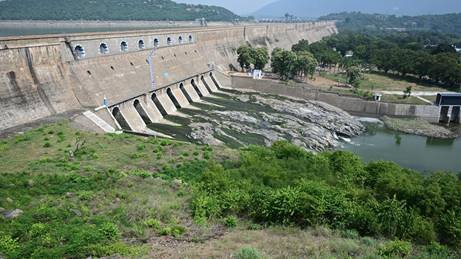
Representative image: the Mettur dam on the Cauvery. The Cauvery Technical Cell-cum-Inter-State Waters Wing handles Tamil Nadu’s inter-State water matters (image: The Hindu).
Subject: State Administration – Water Resources and Appointments
Syllabus
TNPSC Group I/II/IV: water resources of Tamil Nadu; Cauvery dispute and inter-State river issues; State administration and appointments; public sector organisation
Context
The Tamil Nadu government has appointed T. Tamizhselvi as vice-chairperson of the Cauvery Technical Cell-cum-Inter-State Waters Wing, Chennai, through a Government Order of the Water Resources Department. As reported in news coverage, the post at Chief Engineer level had been vacant since 28 January, following the resignation of M. Selvaraj, and has now been revived and filled.
Main Body: Multi-Dimensional Analysis
1. The appointment: T. Tamizhselvi, who was serving as Chief Engineer of the State Ground and Surface Water Resources Centre at Taramani, takes over as vice-chairperson of the Cauvery Technical Cell-cum-Inter-State Waters Wing.
2. The office: The Cauvery Technical Cell-cum-Inter-State Waters Wing is the State’s specialist body for Cauvery matters and inter-State water issues, the technical backbone of Tamil Nadu’s position in river disputes.
3. Vacancy and revival: As reported, the post fell vacant on 28 January when M. Selvaraj resigned, and the appointment followed orders approving the revival of the post and the filling of the permanent position at the level of Chief Engineer.
4. Why the post matters: With Karnataka moving the Supreme Court against the Cauvery-South Vellar-Vaigai-Gundar Link Project, the State’s inter-State waters wing is at the centre of active litigation preparation.
5. Technical continuity: River disputes run on data: gauge records, dependability calculations, cropping patterns and tribunal awards. A specialist cell preserves institutional memory across the decades such disputes span.
6. Chief Engineer level: Fixing the post at Chief Engineer rank signals that the cell’s leadership must command both engineering depth and administrative standing within the Water Resources Department.
7. Inter-State agenda: Beyond the Cauvery, the wing handles other inter-State water questions touching Tamil Nadu, from the Mullaperiyar and Parambikulam-Aliyar arrangements to newer link proposals.
8. Litigation support: The cell prepares the technical affidavits, status reports and dependability studies on which the State’s counsel rely in the Supreme Court and before tribunals.
9. Filling specialist vacancies: A ten-month vacancy in a post of this sensitivity illustrates a general administrative lesson: specialist positions in dispute-critical wings should not wait on routine transfer cycles.
10. The Taramani connection: The appointee’s previous charge, the State Ground and Surface Water Resources Centre, is the data agency for water assessment, so the move keeps data expertise close to dispute strategy.
11. Gender in engineering administration: The appointment adds a woman to the senior ranks of the State’s water resources establishment, a small but noteworthy marker in a technically male-dominated service.
12. Accountability ahead: The new vice-chairperson’s immediate test will be the State’s response in the CVG litigation, where Karnataka alleges unauthorised Phase-I works and seeks restraints.
13. Exam focus: Note the appointee’s name and prior post, the level of the position at Chief Engineer rank, the vacancy date of 28 January and the department that issued the order.
14. Training pipeline: A specialist cell also schools the next line of water engineers in dispute methods, a role ad hoc teams assembled per case cannot perform.
15. Administrative placement: The wing sits inside the Water Resources Department, so its technical advice feeds directly into the department that executes irrigation policy.
16. Public dimension: Inter-State water outcomes shape farmer fortunes across the delta, so the cell’s work, though technical, carries a public and electoral weight.
Positives, Negatives, & Government Schemes
| Category | Dimension / initiative | Explanation |
| Positive | Specialist leadership | The technical cell regains a full-time head after a ten-month vacancy. |
| Positive | Data continuity | The appointee’s background in the water resources data centre aligns with the cell’s evidence-heavy work. |
| Negative | Long vacancy | The post lay vacant from late January, a gap in a wing handling live inter-State litigation. |
| Negative | Litigation load | The cell faces immediate pressure from Karnataka’s injunction application on the CVG Link. |
| Institution | WRD structure | The appointment runs through the Water Resources Department, which administers the cell. |
Examples
1. The cell’s work surfaces in court as status reports and dependability calculations, such as the Mettur surplus placed at about 8.60 TMC at 50 percent dependability, cited in Karnataka’s Supreme Court plea in the CVG dispute.
2. The State Ground and Surface Water Resources Centre at Taramani, the appointee’s earlier charge, produces the water assessment data the cell uses.
3. Past Cauvery litigation, from the tribunal to the 2018 Supreme Court judgment, relied on technical material prepared by this wing.
4. The revival of the post by GO shows how specialist positions are restored through explicit orders rather than automatic succession.
5. Water-user associations and delta farmers track the cell’s court filings because dependability studies decide how much water a year will bring.
6. Karnataka’s latest Supreme Court application in the CVG dispute, filed on 20 November, is likely to come up for hearing on 10 December.
7. Gauge and rainfall records maintained over decades form the raw material the cell turns into the dependability studies filed in court.
8. Other riparian States maintain comparable technical units of their own, since tribunals expect data-backed claims from every party.
9. Dependability calculations decide how much Cauvery water a year can promise, which is why every side contests the arithmetic.
10. A Madras High Court order of August 2024, which extracted a Tamil Nadu status report saying Phase-I CVG works had continued since January 2021, set off the present round of litigation.
Way Forward
1. Maintain a succession plan for specialist water-dispute posts so vacancies are filled within weeks, not months.
2. Strengthen the cell’s data systems so every claim filed in court traces to verifiable gauge and crop records.
3. Document the institutional memory of senior officers before they leave, since dispute continuity depends on it.
4. Coordinate the cell’s litigation calendar with the Advocate General’s office so technical material is ready ahead of hearings.
5. Publish periodic summaries of inter-State water issues handled by the wing to inform public debate on facts.
6. Invest in hydrological modelling capacity within the cell to support future dependability and surplus-water studies.
7. Track vacancy timelines for dispute-critical posts and report delays to Secretary level, so gaps trigger escalation rather than drift.
8. Pair senior engineers nearing retirement with junior officers on live dispute files so experience transfers before exits.
Conclusion
The appointment restores specialist leadership to the office that anchors Tamil Nadu’s inter-State water strategy at a moment of active litigation. Its value will show in the quality of the State’s technical response in the CVG case and beyond.
Practice Mains Question
Discuss the role of specialised technical bodies such as the Cauvery Technical Cell in protecting Tamil Nadu’s interests in inter-State river water disputes.
Topic 5: Tamil Nadu to Onboard All Tourism Products on the National Digital Tourism Stack
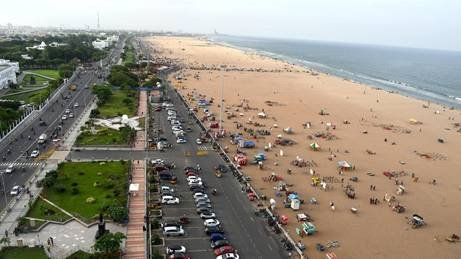
Representative image: Marina Beach, Chennai, one of the State’s busiest tourist spots. TTDC is working with ONDC to onboard all tourism products on the National Digital Tourism Stack (image: The Hindu).
Subject: State Economy – Tourism and Digital Platforms
Syllabus
TNPSC Group I/II/IV: tourism in Tamil Nadu; digital economy and e-governance; Central sector and Central sector schemes; public sector undertakings
Context
The Tamil Nadu Tourism Development Corporation is working with the Open Network for Digital Commerce to onboard all tourism products of the Tamil Nadu Tourism Department onto the National Digital Tourism Stack, following discussions in Chennai between officials of TTDC and ONDC. The move would make the department’s rooms, tickets and tour packages bookable through open digital networks.
Main Body: Multi-Dimensional Analysis
1. The proposal: As reported in news coverage, TTDC officials met ONDC representatives in Chennai to work out onboarding every tourism product of the department onto the National Digital Tourism Stack, the open-network layer being built for travel services.
2. NDTS explained: The National Digital Tourism Stack is conceived as open digital infrastructure for tourism, modelled on the same network philosophy as ONDC for retail: any authorised app can discover and book inventory published on the stack.
3. What gets listed: The department’s products include hotel rooms run by TTDC, entry tickets to its facilities, tour packages and experiences; onboarding means these become visible and bookable across buyer-side apps rather than only on departmental portals.
4. TTDC’s role: The Tamil Nadu Tourism Development Corporation is the commercial arm of the tourism department, running hotels, boat houses and package tours, so its inventory is the core of what the stack would carry.
5. ONDC’s role: ONDC, the not-for-profit company backed by the Department for Promotion of Industry and Internal Trade, provides the network protocols and registry that let sellers and buyer applications interoperate without exclusive platforms.
6. Why it matters: Open-network listing could multiply the visibility of Tamil Nadu’s tourism inventory, since travel apps and agents plugged into the network would surface TTDC products alongside private ones.
7. Small operator inclusion: The architecture is designed to let small hotels, homestays and tour operators join without platform commissions of the private kind, which could widen participation beyond TTDC itself.
8. Data and discoverability: Onboarding forces inventory digitisation: real-time room availability, pricing and ticketing, which itself is a governance gain even before network effects kick in.
9. Implementation work ahead: The Chennai discussion is a starting point; actual onboarding requires cataloguing products, standardising rate and cancellation data, and integrating TTDC’s booking systems with network protocols.
10. National context: The tourism stack is part of the Union government’s digital public infrastructure push, extending the ONDC model from goods to services such as travel.
11. Customer experience: For travellers, the promise is simple: book a TTDC room or a Tamil Nadu tour from whichever app they already use, with transparent prices.
12. Risks to manage: Inventory accuracy, refund handling across apps and customer grievance redress across a multi-party network are operational questions the pilot must answer.
13. Exam focus: Retain the two institutions involved, TTDC and ONDC, the stack’s name and the Chennai venue of the discussions, all likely fodder for objective questions.
14. Policy link: The onboarding plan ties Tamil Nadu’s tourism economy to the national digital public infrastructure agenda, a connection answers on e-governance should make explicit.
15. Seasonality test: Tourism demand swings by season and festival, so the stack’s pricing and availability feeds must keep pace to stay trustworthy.
16. Supply-side test: The stack’s value will be judged by how much of TTDC’s scattered inventory, from boat houses to hill-station rooms, actually appears on it and stays updated.
Positives, Negatives, & Government Schemes
| Category | Dimension / initiative | Explanation |
| Positive | Visibility | TTDC rooms, tickets and tours become discoverable across network-connected apps. |
| Positive | Small operators | The open architecture can carry small hotels and operators onto digital rails without heavy commissions. |
| Positive | Governance | Onboarding forces digitisation of inventory, improving management information within the department. |
| Negative | Execution load | Cataloguing, data standards and system integration are non-trivial work between announcement and reality. |
| Scheme | ONDC linkage | The stack builds on ONDC’s open-network model, linking the item to the digital economy syllabus area. |
Examples
1. ONDC’s retail network, which grew from a 2022 pilot to national scale, is the template the tourism stack follows.
2. TTDC operates hotels, boat houses and youth hostels across the State; their rooms are the inventory first in line for onboarding.
3. Entry tickets for department-run attractions would become bookable on network apps, as the plan describes.
4. The Chennai meeting between TTDC and ONDC officials is reported as the first concrete step toward onboarding.
5. Similar open-network thinking underlies the Unified Logistics Interface Platform for freight, another DPI extension.
6. Private hotel aggregators showed the demand for online travel booking; the stack seeks to open that channel rather than leave it with a few platforms.
7. State tourism corporations elsewhere have listed inventory on private travel portals; the open stack differs in not owning the customer channel.
8. Room tariffs and package prices published on the stack must match what TTDC charges at its own counters, a discipline digitisation enforces.
9. Tour packages that bundle transport and stays need every component live on the network, which is why packages are harder to onboard than rooms.
10. Common Service Centres and app-based travel agents could become booking points for departmental rooms once the stack carries them.
Way Forward
1. Publish a phased onboarding roadmap naming which TTDC products go live on the stack and when.
2. Standardise cancellation, refund and grievance rules for network bookings before scaling, so customers are not stranded between apps.
3. Run a pilot with one circuit or property cluster to test inventory accuracy end to end.
4. Onboard private small operators alongside TTDC inventory so the network reflects Tamil Nadu’s full tourism supply.
5. Track bookings, occupancy and revenue effects after onboarding to judge whether the network actually expands demand.
6. Train TTDC property managers on network operations, since front-desk practices must match real-time digital inventory.
7. Keep departmental portal bookings running in parallel until network volumes stabilise, so travellers are not stranded mid-transition.
8. Review pricing quarterly against demand, so stack-listed rooms stay competitive with private alternatives.
Conclusion
The NDTS onboarding plan is a sensible next step in Tamil Nadu’s digital tourism journey: the inventory exists, the network is national, and the gains, visibility for small operators and easier booking for travellers, are real. Delivery now depends on unglamorous integration work.
Practice Mains Question
Examine the potential of open digital networks such as ONDC and the National Digital Tourism Stack to transform tourism services in Tamil Nadu.
Topic 6: Tamil Nadu to Vaccinate 1.29 Lakh High-Risk Workers Against Rabies Under State Action Plan
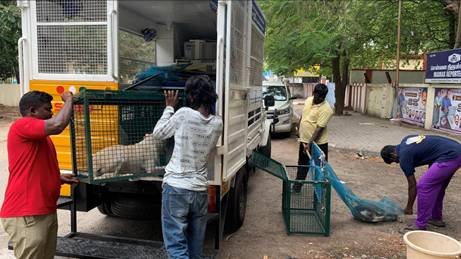
Representative image: workers catching a stray dog for vaccination and relocation. 1.29 lakh high-risk workers will receive pre-exposure anti-rabies shots across 38 districts (image: The Hindu).
Subject: Health – Disease Prevention and Public Health
Syllabus
TNPSC Group I/II/IV: health and hygiene; communicable diseases and immunisation; National Health Mission; occupational health
Context
The Tamil Nadu government has sanctioned Rs 2.22 crore from the National Health Mission to administer pre-exposure prophylaxis anti-rabies vaccines to 1,29,009 high-risk beneficiaries across all 38 districts under the State Action Plan for Rabies Elimination. The programme follows the Centre’s launch of the National Action Plan for Animal-Mediated Rabies Elimination.
Main Body: Multi-Dimensional Analysis
1. The programme: Pre-exposure prophylaxis shifts rabies control from treatment after a bite to protection before one, the first such occupational coverage of its kind in the State, financed through National Health Mission funds rather than a standalone State scheme. WHO cautions that PrEP does not replace post-exposure care: a vaccinated worker who is bitten must still wash the wound with soap and water for at least 15 minutes and seek medical assessment and post-exposure vaccination without delay.
2. SAPRE: The initiative sits under the State Action Plan for Rabies Elimination, the State arm of the Centre’s national plan, which aims to eliminate dog-mediated human rabies deaths by 2030.
3. Who qualifies: The drive covers workers whose daily duties involve routine contact with potentially rabid animals: sanitation staff in solid waste and sewage work, animal handlers in institutions, and veterinary personnel.
4. The numbers: As reported, beneficiaries break down as 1,21,844 sanitation workers, 3,324 animal handlers in government veterinary and other institutions, and 3,841 veterinary staff of the Animal Husbandry Department.
5. PrEP versus PEP: Pre-exposure prophylaxis vaccinates a person before any bite. Under WHO guidance, someone who has completed a full vaccination course and is later exposed still needs immediate wound washing and two vaccine doses on days 0 and 3, but no rabies immunoglobulin in most cases, a lighter schedule than the full course a first exposure demands. WHO also notes that immunocompromised persons receive a full course with immunoglobulin even if they were previously vaccinated.
6. Why sanitation workers: Workers handling municipal solid waste and sewage routinely encounter stray dogs scavenging at dumps and streets, placing them among the highest occupational risk groups for bites.
7. Administration route: The Directorate of Public Health and Preventive Medicine will administer the vaccine through primary health centres, urban primary health centres and government hospitals, using the existing immunisation network.
8. Rabies burden: Rabies is nearly 100 percent fatal once symptoms appear, yet entirely preventable by vaccination; India accounts for a large share of global deaths, which is why the national plan targets elimination by 2030.
9. Occupational health angle: The programme recognises workplace safety for some of the State’s lowest-paid workers, extending a protection long available to veterinarians to sanitation staff.
10. One Health framing: Rabies control needs dog vaccination, animal birth control and human prophylaxis together; the State plan’s PrEP drive is the human arm of that One Health approach.
11. NHMs role: Funding through the National Health Mission shows the programme riding an established financing channel rather than a one-off State budget line.
12. Cold chain and schedule: The vaccine requires cold-chain handling and a defined schedule, so the drive tests the primary health network’s logistics as much as its intent.
13. Exam focus: The figure 1,29,009 beneficiaries, the Rs 2.22 crore sanction, the 38 districts and the NHM funding source are the retention points for this topic.
14. Equity angle: Free vaccination through government facilities matters most to workers who could least afford a private course, a distributive point answers can make.
15. Records and registers: Tracking 1.29 lakh courses to completion needs reliable registers at primary health centres, since protection depends on the full schedule.
16. Sequencing logic: Protecting workers before exposure reduces the later load on post-exposure treatment, which is costlier per case and depends on immunoglobulin availability.
Positives, Negatives, & Government Schemes
| Category | Dimension / initiative | Explanation |
| Positive | Prevention first | Pre-exposure vaccination protects 1.29 lakh high-risk workers before bites occur, when prevention is cheapest and surest. |
| Positive | Equity | Sanitation workers, among the most exposed and least protected, form the bulk of beneficiaries. |
| Positive | Delivery network | PHCs, UPHCs and government hospitals across all 38 districts give the drive an existing backbone. |
| Negative | Coverage gap | The drive covers occupational groups; the wider stray-dog and bite-burden problem still needs the animal-side measures. |
| Scheme | NHMs funding | Rs 2.22 crore from the National Health Mission funds the programme, linking it to the national health financing architecture. |
Examples
1. Sanitation workers at waste processing sites and sewage facilities face dog encounters daily, which is why they top the beneficiary list at 1,21,844.
2. Government veterinary institutions employ 3,324 animal handlers whose routine work involves restraining animals for treatment.
3. The 3,841 Animal Husbandry Department staff include veterinarians and para-vets who handle field vaccinations and treatments.
4. Post-exposure prophylaxis after a bite involves multiple doses and, for severe exposures, rabies immunoglobulin, costlier and harder to access than PrEP.
5. The national plan’s 2030 target aligns with the global goal of zero human deaths from dog-mediated rabies by 2030.
6. PHCs and UPHCs already run routine immunisation, so the rabies PrEP drive uses trained vaccinators and cold-chain points that exist.
7. The drive spans all 38 districts, so even remote blocks must reach their sanitation staff through local primary health centres.
8. The Centre’s national plan frames the State drive, so the Tamil Nadu programme doubles as a test of the national strategy.
9. Local-body dog-catching and sterilisation capacity determines how quickly bite incidents fall, making municipal animal-birth-control work part of the same chain.
10. Rabies is almost always fatal once symptoms appear, which is why the strategy invests in protecting the most exposed workers rather than only in treatment.
Way Forward
1. Verify completion of the full PrEP schedule for each beneficiary, since partial courses weaken protection.
2. Pair the human vaccination drive with intensified dog vaccination and animal birth control, without which exposure risk stays high.
3. Register beneficiaries so that a later bite triggers the simplified post-exposure schedule rather than the full one.
4. Extend risk assessment to other exposed groups, such as municipal park staff and postal workers, in future phases.
5. Ensure rabies immunoglobulin availability at district hospitals for severe exposures regardless of PrEP status.
6. Publish district-wise coverage of the drive so the Rs 2.22 crore spend can be audited against outcomes.
7. Track bite incidents among vaccinated workers after the drive to measure the programme’s real protective effect.
8. Coordinate with municipalities to schedule sessions around sanitation shifts, so workers do not lose wages to get vaccinated.
Conclusion
The PrEP drive is sound public health: it protects those most exposed, uses money already in the system and serves the 2030 elimination goal. Its success depends on completing schedules and matching the human effort with equal vigour on the animal side.
Practice Mains Question
Discuss the strategy of pre-exposure rabies vaccination for high-risk occupational groups and its place in India’s rabies elimination plan.
Topic 7: GCC Assures ID Cards and Safety Gear to Sanitary Workers; Core Demands Pending
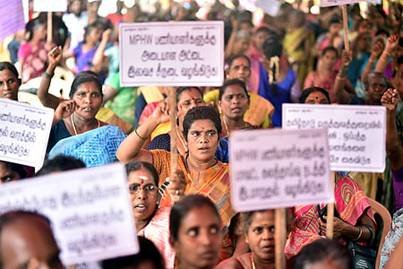
Representative image: women workers at a protest with placards. GCC has assured ID cards and safety gear to sanitary workers, with core wage and regularisation demands pending (image: The New Indian Express).
Subject: Labour and Urban Administration – Sanitation Workers’ Rights
Syllabus
TNPSC Group I/II/IV: labour welfare; urban local bodies and municipal administration; welfare boards and social security; unorganised workers
Context
The Greater Chennai Corporation has assured sanitary workers that it will provide identity cards, masks and gloves, and that a committee headed by a woman official will examine their demands, following talks with a joint action committee of workers and unions. Key demands on wages, regularisation and mechanisation remain pending, with the next round of talks expected in ten days.
Main Body: Multi-Dimensional Analysis
1. The talks: The corporation chose low-cost, high-visibility assurances first: identity cards and safety gear can be issued within days, while the structural demands on pay and regularisation were deferred to a committee and a ten-day timeline.
2. Who the workers are: Chennai’s sanitary workforce numbers in the thousands, many of them women and a large share employed through contractors, collecting waste and cleaning streets across the city’s fifteen zones.
3. The immediate assurances: Identity cards formalise the worker’s link to the civic body; masks and gloves address the most visible occupational hazard, daily contact with hazardous waste without protection.
4. The committee: A committee headed by a woman official is to examine the demands, significant because the workforce is predominantly female and past grievance mechanisms were not.
5. Pending demands: The joint action committee’s core asks, regularisation of contract workers, a daily wage of Rs 832, mechanised cleaning to end manual scavenging conditions, and a weekly off, were not settled and carry into the next round.
6. Welfare board enrolment: Enrolment in the Tamil Nadu Manual Workers Welfare Board, which unlocks accident assistance, education aid and pension-linked benefits, was among the demands pressed at the talks.
7. TAHDCO housing: The workers also sought inclusion in housing assistance routed through the Tamil Nadu Adi Dravidar Housing and Development Corporation, reflecting that many sanitary workers come from Scheduled Caste communities.
8. Union landscape: The talks involved the joint action committee including the Uzhaippor Urimai Iyakkam, which has organised conservancy workers in Chennai for years on regularisation and wage issues.
9. Contractor system: Most GCC sanitary work is outsourced to contractors zonal-wise, a structure that keeps workers off the corporation’s rolls, at lower wages and without service security; regularisation strikes at that model.
10. The wage figure: The Rs 832 daily wage demand corresponds to what workers describe as parity with permanent staff doing identical work, turning the dispute into an equal-pay question.
11. Mechanisation demand: The call for mechanised cleaning links to the national prohibition of manual scavenging: workers want machines to take over hazardous entry and handling, with workers trained to operate them.
12. What was not conceded: The corporation has not committed to regularisation or the wage figure, so the assurances, while real, address the margins of the dispute rather than its core.
13. Exam focus: Remember the assurances given, ID cards, masks, gloves and the woman-headed committee, the pending demands including the Rs 832 wage figure, and the ten-day timeline for the next round.
14. Structural view: The dispute is ultimately about whether essential urban services should rest on contract labour, a question that goes beyond one corporation’s negotiation.
15. Precedent risk: Concessions or refusals in Chennai set expectations for sanitary workers in the State’s other municipal corporations.
16. Budget arithmetic: Regularisation and wage parity carry a recurring cost the corporation’s budget must absorb, which is why the wage demand meets institutional resistance.
Positives, Negatives, & Government Schemes
| Category | Dimension / initiative | Explanation |
| Positive | Formal identity | ID cards give contract workers a recognised link to the civic body, easing access to welfare enrolment. |
| Positive | Safety gear | Assured masks and gloves address an immediate, visible occupational hazard. |
| Positive | Representative process | A woman-headed committee matches a predominantly female workforce with a responsive grievance channel. |
| Negative | Core demands open | Regularisation, the Rs 832 wage, mechanisation and weekly off remain unresolved after this round. |
| Issue | Contract outsourcing | The contractor model that underpins low pay and insecurity stays untouched until regularisation is decided. |
Examples
1. GCC’s conservancy operations run through zonal contractors, the structure the regularisation demand challenges.
2. The strike’s timing, during the northeast monsoon season, raised the stakes: waterlogged streets make conservancy work both more urgent and more hazardous.
3. TAHDCO housing schemes have covered urban poor families; the workers seek a formal route into them.
4. The Rs 832 figure matches the daily wage workers cite for permanent conservancy staff, the basis of the parity claim.
5. Mechanised desilting and sweeping machines procured by GCC in recent years show the technology path the mechanisation demand seeks to extend.
6. Uzhaippor Urimai Iyakkam has led earlier agitations by Chennai conservancy workers, including sit-ins at Ripon Buildings.
7. Ripon Buildings, the GCC headquarters, has been the venue of repeated conservancy worker representations over the years.
8. A weekly off, among the pending demands, would align conservancy work with the basic labour norms other municipal staff enjoy.
9. The ten-day timeline to the next round gives the woman-headed committee a near-term deadline to work against.
10. TAHDCO housing inclusion was sought because many sanitary worker families come from Scheduled Caste communities, as the talks recorded.
Way Forward
1. Set a clear timeline for the woman-headed committee’s report and publish its recommendations.
2. Begin welfare board enrolment immediately using the new ID cards, so benefits start before the larger disputes settle.
3. Commission an independent wage-parity study to settle the Rs 832 claim on evidence.
4. Phase in mechanisation with worker training, converting hazardous manual tasks into machine-assisted jobs without job losses.
5. Frame a regularisation pathway with seniority and wage protection, addressing the contractor issue structurally.
6. Keep the ten-day negotiation cycle alive and transparent, with minutes shared with the joint action committee.
7. Equip mechanisation with maintenance budgets and spare-part supply so machines do not idle after procurement.
8. Publish zone-wise contractor and permanent staff wage data so the parity debate rests on public figures rather than competing claims.
Conclusion
The assurances are a start, not a settlement: identity cards and safety gear cost little and matter, but wages, regularisation and mechanisation decide whether Chennai’s sanitary workers gain dignity or only documentation. The next round of talks is the real test.
Practice Mains Question
Discuss the issues of contract sanitation workers in urban local bodies in Tamil Nadu and the measures needed to secure their labour rights and safety.
Topic 8: Notices to 381 Establishments in Krishnagiri for Not Constituting Internal Complaints Committees Under PoSH Act

Representative image: a judge’s gavel and law books. Krishnagiri district has warned 381 establishments for not forming Internal Complaints Committees under the PoSH Act (image: The New Indian Express).
Subject: Social Issues – Workplace Safety and Women’s Rights
Syllabus
TNPSC Group I/II/IV: welfare of women; legislations relating to women; sexual harassment at workplace; social justice administration
Context
The Krishnagiri district administration has issued show-cause notices to 381 private establishments for failing to constitute Internal Complaints Committees as mandated by the Sexual Harassment of Women at Workplace (Prevention, Prohibition and Redressal) Act, 2013. The notices follow a compliance review of establishments employing ten or more persons.
Main Body: Multi-Dimensional Analysis
1. The action: As reported in news coverage, the Krishnagiri district administration has warned 381 private establishments of action for not forming Internal Complaints Committees, issuing show-cause notices that require them to explain the lapse.
2. The legal duty: Section 4 of the PoSH Act, 2013 obliges every employer with ten or more employees to constitute an ICC by a written order, making the committee a statutory organ, not an optional HR initiative.
3. ICC composition: The Act prescribes the committee’s structure: a presiding officer who is a senior woman employee, at least two members committed to women’s causes or with relevant experience, and one external member from an NGO or with legal familiarity.
4. District-wide picture: The review found 1,920 ICCs constituted across the district, 676 in government offices and 1,244 in private establishments, while the 381 notices target the defaulters remaining.
5. Below the threshold: The department also recorded 3,016 establishments that reported employing fewer than ten persons, which places them outside the ICC duty; the ten-employee mark decides where the Act reaches.
6. Enforcement roles: The District Social Welfare Officer, R. Sakthi Subashini, coordinated the compliance exercise, while District Collector C. Dinesh Kumar warned that fines would follow continued default, as reported.
7. Penalty framework: Non-compliance with the ICC obligation attracts a fine under the Act, and repeated default can lead to higher fines and even cancellation of licences or registration, which is what makes show-cause notices consequential.
8. Why compliance matters: An ICC is the first forum a complainant approaches; its absence leaves women workers with only police or courts, raising the cost of complaining and suppressing reporting.
9. The decade gap: The PoSH Act has been in force since December 2013; establishments still without ICCs twelve years on illustrate how statute books and workplace practice diverge without enforcement.
10. The head-office plea: Some firms told the department that an ICC existed at their corporate or regional head office, so the local workplace needed none; the Act, however, attaches the duty to each establishment that crosses the threshold.
11. Local Committees: For workplaces with fewer than ten employees and for complaints against employers themselves, the Act provides Local Committees at district level, which district administrations must also maintain.
12. Wider significance: District-level drives like Krishnagiri’s convert a national law into local reality and are the mechanism by which PoSH compliance spreads beyond large companies.
13. Exam focus: Key details are the 381 notices, the ten-employee threshold, the 1,920 ICCs split between 676 government and 1,244 private, and the officials named in the report.
14. Complaint boxes and displays: The department found offices that had not installed complaint boxes or displayed the names and details of ICC members, the basic visibility on which the redress mechanism depends.
15. Awareness before enforcement: The district’s 1,920 ICCs followed awareness programmes and formal letters from the social welfare department, showing persuasion running ahead of penalty in this drive.
16. A public register: The department has asked government offices to update their ICC details on the State government’s official website, moving compliance from paper files to a verifiable public record.
Positives, Negatives, & Government Schemes
| Category | Dimension / initiative | Explanation |
| Positive | Enforcement action | 381 show-cause notices put defaulters on formal record, a necessary first step to compliance. |
| Positive | Coverage mapped | The review counted 1,920 ICCs, giving the district a verifiable compliance baseline. |
| Positive | Official accountability | Named officers, the DSWO and the Collector, anchor the drive, making responsibility traceable. |
| Negative | Persistent default | Hundreds of establishments remain non-compliant more than a decade after the Act. |
| Legal | Section 4 duty | The ICC obligation under the PoSH Act, 2013 applies to every workplace with ten or more employees. |
Examples
1. The Act’s Section 4 duty was the direct basis of the Krishnagiri notices, which asked 381 establishments to explain their default.
2. Of the district’s 1,920 ICCs, the review itself, a door-to-door count of which establishments had formed committees, is the administrative groundwork that made the notices possible.
3. A shop with nine employees owes no ICC while one with ten owes a full committee, a cliff edge at the threshold that employers near the mark must watch.
4. External members from NGOs sit on ICCs to guard against employer capture, a design the Act mandates.
5. Large companies formed ICCs early under corporate compliance regimes; small establishments, as Krishnagiri shows, lag without enforcement.
6. The fine provisions invoked by the Collector flow from the Act’s penalty clause for failure to constitute an ICC.
7. Police stations, banks, schools and colleges figure in the government tally, underlining that the duty binds public employers as firmly as private ones.
8. The 1,244 private-sector ICCs already on record show that compliance is possible at scale when establishments treat it as routine.
9. The show-cause step comes before penalties: firms get an opportunity to comply, which makes the drive corrective rather than punitive in design.
10. The Act’s stated object is a safe and secure work environment for all women, and the ICC is the mechanism it chooses to deliver it.
Way Forward
1. Publish a compliance dashboard for the district showing ICC formation and annual reporting, updating it quarterly.
2. Run training for newly formed ICC members so committees function rather than exist only on paper.
3. Strengthen the district Local Committee so workers in small establishments and informal workplaces have a forum.
4. Verify establishments that report fewer than ten employees, since the exemption rests on self-declared headcounts.
5. Use trade licence renewals to verify ICC compliance, embedding the check in routine administration.
6. Publicise the complaint mechanism so women workers know the ICC exists and how to approach it.
7. Close the head-office loophole by requiring each unit to produce its own ICC order during inspections, since some firms cited a distant corporate committee.
8. Pair every awareness programme with a formation deadline and a follow-up visit, so outreach converts into committees within a fixed period.
9. Report the outcomes of the show-cause notices publicly so citizens can see whether warnings convert into actual committees.
Conclusion
Krishnagiri’s notices are enforcement doing its job: counting, warning and preparing to penalise. The measure of success will not be notices issued but committees that meet, members who are trained and women who trust the process enough to use it.
Practice Mains Question
Discuss the framework of the PoSH Act, 2013 for preventing workplace sexual harassment and the challenges in enforcing Internal Complaints Committee compliance.
