
Topic 1: India-Vietnam Enhanced Comprehensive Strategic Partnership (International Relations)
Syllabus
- GS Paper 2: Bilateral, Regional and Global Groupings and Agreements involving India and/or affecting India’s interests.
Context
- During a state visit by Vietnamese President To Lam to New Delhi on May 6, 2026, both nations officially elevated their relationship to an “Enhanced Comprehensive Strategic Partnership” and set an ambitious annual trade target of $25 billion by 2030.
Main Body: Multi-Dimensional Analysis
- Strategic Convergence: The elevation marks 10 years of their partnership, focusing on a “shared vision” for a free and open Indo-Pacific, countering unilateral shifts in regional maritime boundaries.
- Defense & Security Pillar: Both leaders agreed to establish a “2+2” Strategic Diplomacy-Defense Dialogue, aimed at expanding maritime security cooperation and defense industrial ties.
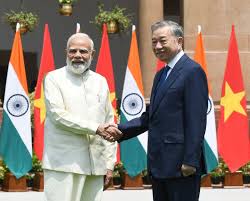
- Economic Integration: Beyond the $25 billion trade goal, the joint statement emphasized cooperation in critical sectors such as semiconductors, rare earth minerals, and atomic energy.
- Global South Leadership: PM Modi and President To Lam discussed strengthening multilateralism and representing the interests of the Global South at forums like the UN and ASEAN.
- Connectivity & Space: Discussions included the launch of joint satellite missions and enhancing ICT infrastructure to bridge digital divides in the Southeast Asian region.
Positives, Negatives, & Government Schemes
| Dimension | Details |
| Positives | Strengthens India’s “Act East” policy; provides a strategic counter-balance in the South China Sea; opens markets for Indian pharmaceuticals and tech. |
| Negatives | Potential friction with regional competitors; slow pace of past project implementations in energy (Oil exploration). |
| Associated Concepts | Act East Policy, Indo-Pacific Oceans Initiative (IPOI), UNCLOS compliance. |
Way Forward
- Expedite the “Plan of Action for 2024–2028” and finalize long-standing LNG and oil exploration contracts to ensure the energy security component of the partnership is realized.
Topic 2: Political Transition in Tamil Nadu: 16th Assembly Dissolved (Polity)
Syllabus
- GS Paper 2: Appointment to various Constitutional posts, powers, functions and responsibilities of various Constitutional Bodies.
Context
- Governor Rajendra Vishwanath Arlekar officially dissolved the 16th Tamil Nadu Legislative Assembly on May 6, 2026, following the state elections. TVK President C. Joseph Vijay met the Governor to stake a claim to form the next government.
Main Body: Multi-Dimensional Analysis
- End of Duopoly: The 2026 election results mark a historic shift, as the nascent Tamilaga Vettri Kazhagam (TVK) disrupted the decades-old dominance of the DMK and AIADMK.
- Constitutional Discretion: The Governor is currently reviewing the “claim of majority” as TVK won 108 seats (short of the 118 majority mark) and is seeking support from allies like Congress.
- Alliance Realignment: In a major move, the Congress party officially broke its two-decade-long ties with the DMK to support the TVK, citing a “new public mandate.”
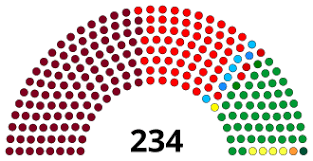
- Role of the Governor: Under Article 174, the Governor has the power to dissolve the assembly; however, the invite to form the government remains a discretionary power when no single party has an absolute majority.
- Administrative Transition: Current CM M.K. Stalin has been asked to continue as a caretaker until the new government is sworn in, ensuring continuity in state administration.
Positives, Negatives, & Government Schemes
| Dimension | Details |
| Positives | Fresh political narrative; potential for a “third front” governance model; high voter engagement. |
| Negatives | Volatile political phase due to lack of a clear single-party majority; risk of “horse-trading” or political instability. |
| Associated Laws | Article 174 (Dissolution), Article 164 (Appointment of CM), Anti-Defection Law (10th Schedule). |
Way Forward
- The Governor must ensure a transparent floor test process to uphold the democratic mandate while maintaining constitutional neutrality in a hung-assembly-like situation.
Topic 3: The Ecocide International Law Debate (National/International Issue)
Syllabus
- GS Paper 3: Environmental Pollution and Degradation; GS Paper 2: Important International institutions, agencies and fora.
Context
- On May 6, 2026, legal experts in India and at the International Criminal Court (ICC) intensified the debate on recognizing “Ecocide” (mass environmental destruction) as a separate international crime.
Main Body: Multi-Dimensional Analysis
- Definition & Origin: Ecocide refers to unlawful or reckless acts committed with the knowledge that there is a substantial likelihood of severe and widespread or long-term damage to the environment.
- Current Gaps: Existing international laws primarily address environmental damage only during “armed conflicts.” Activists argue for a peacetime law to hold corporations and states accountable for industrial disasters.

- India’s Stance: While India has strict domestic environmental laws, it has not yet formally supported the inclusion of Ecocide in the Rome Statute of the ICC.
- Global Precedents: Countries like France, Belgium, and Vietnam have already incorporated Ecocide-related provisions into their domestic criminal codes.
- Judicial Overreach vs. Accountability: Critics of the bill argue that a vague definition could stifle economic development and infrastructure projects in developing nations like India.
Positives, Negatives, & Government Schemes
| Dimension | Details |
| Positives | Increases accountability for “environmental terrorism”; prioritizes planetary health; strengthens global conservation efforts. |
| Negatives | Difficulty in proving “intent”; potential for legal harassment against infrastructure projects; sovereignty concerns. |
| Associated Laws | Environment Protection Act 1986 (India), Rome Statute, COP-31 goals. |
Way Forward
- India should lead the creation of a balanced “Environmental Justice Framework” that distinguishes between necessary development and reckless ecological destruction.
Topic 4: Cabinet Approval for Supreme Court Judge Strength Increase (Polity/National Issue)
Syllabus
- GS Paper 2: Structure, organization and functioning of the Judiciary.
Context
- The Union Cabinet on May 5-6, 2026, approved the Supreme Court (Number of Judges) Amendment Bill, 2026, seeking to increase the judge strength from 34 (including CJI) to 37.
Main Body: Multi-Dimensional Analysis
- Pendency Crisis: With over 80,000 cases pending in the apex court, the increase is a functional necessity to ensure the timely delivery of justice.
- Constitution Benches: Extra judges will allow the Supreme Court to form more permanent Constitution Benches to settle complex legal questions without halting regular appellate work.
- Article 124(1): The Constitution gives Parliament the power to prescribe the number of judges; this is the first increase since 2019.
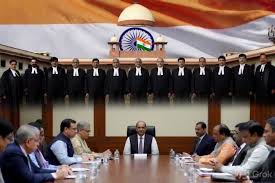
- Access to Justice: More judges facilitate faster disposal of Special Leave Petitions (SLPs), reducing the wait time for litigants from years to months.
- Infrastructure Support: The increase must be matched by equivalent support staff and digital infrastructure (AI-driven case management) to be truly effective.
Positives, Negatives, & Government Schemes
| Dimension | Details |
| Positives | Reduced case backlog; improved judge-to-population ratio; specialized benches for tax, criminal, and civil matters. |
| Negatives | Mere increase in numbers doesn’t address “adjournment culture”; appointment delays in the Collegium remain a bottleneck. |
| Associated Laws | Supreme Court (Number of Judges) Act 1956, Article 124 of the Constitution. |
Way Forward
- Implement a streamlined “Judicial Appointment Timeline” alongside the increased strength to ensure the new posts do not remain vacant for long.
Topic 5: New SOP for Foreign Direct Investment (FDI) Approvals (Economy)
Syllabus
- GS Paper 3: Indian Economy and issues relating to planning, mobilization of resources, growth, development and employment.
Context
- The Department for Promotion of Industry and Internal Trade (DPIIT) issued a new Standard Operating Procedure (SOP) on May 6, 2026, to fast-track FDI proposals, mandating a decision within 12 weeks.
Main Body: Multi-Dimensional Analysis
- Investment Climate: The move comes after India recorded a net outflow of capital recently due to West Asian geopolitical tensions and rising risk aversion.
- Monitoring Mechanism: Each ministry will now establish a dedicated FDI Cell headed by a Joint Secretary rank officer to monitor pending proposals every 4-6 weeks.
- Sensitive Sectors: Strategic sectors like Defense, Telecommunications, and Space will still require mandatory security clearance from the Ministry of Home Affairs within the same timeframe.
- Global Competition: With Vietnam and Malaysia offering 15-day and 3-day fast-track systems respectively, India’s move is a bid to remain competitive in the global manufacturing supply chain.
- Impact on Rupee: Stable FDI inflows are crucial to curbing the depreciation of the Indian Rupee against the Dollar, which has been under pressure due to weak capital flows.
Positives, Negatives, & Government Schemes
| Dimension | Details |
| Positives | Improved Ease of Doing Business (EoDB); attracts high-quality manufacturing capital; boosts “Viksit Bharat” goals. |
| Negatives | Global risk aversion (due to conflicts) might still deter investors despite domestic procedural ease. |
| Associated Schemes | Make in India, PLI Schemes, PM Gati Shakti. |
Way Forward
- Focus on reducing “hidden costs of business” like land acquisition and electricity tariffs to complement the faster approval process.
Topic 6: Emerging Risks in India’s Energy Transition (Economy/Security)
Syllabus
- GS Paper 3: Energy; Infrastructure; Security challenges and their management.
Context
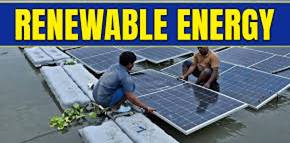
- A new working paper released on May 6, 2026, warns that while India’s shift to renewables is vital, it introduces new “Import Dependencies” on critical minerals like lithium and cobalt.
Main Body: Multi-Dimensional Analysis
- Shift in Dependency: India’s crude oil import dependence is near 90%. Transitioning to EVs and Solar shifts this dependence to minerals where China controls over 90% of processing.
- Domestic Processing Gap: India currently possesses less than 5% of the projected processing capacity needed for rare earth elements by 2035.
- Strategic Reserves: Similar to Japan’s 254-day oil reserve, experts are calling for a “Critical Mineral Reserve” to protect against supply chokepoints.
- Macroeconomic Stability: High price volatility in global lithium markets can adversely affect the exchange rate and inflation, similar to oil price shocks.
- Technological Alternatives: The paper pushes for accelerated research into Sodium-ion and Fluoride-ion batteries to reduce reliance on the Lithium-Cobalt supply chain.
Positives, Negatives, & Government Schemes
| Dimension | Details |
| Positives | Long-term carbon neutrality; reduced air pollution; technological leadership in green hydrogen. |
| Negatives | New geopolitical vulnerabilities; high cost of domestic processing technology; recycling infrastructure gaps. |
| Associated Schemes | National Green Hydrogen Mission, FAME-III, KABIL (Khanij Bidesh India Ltd). |
Way Forward
- Strengthen mineral-diplomacy through the Mineral Security Partnership (MSP) and incentivize the “Circular Economy” for battery recycling.
Topic 7: North Tech Symposium: Focusing on High-Tech Warfare (Defence)
Syllabus
- GS Paper 3: Science and Technology; Security challenges and their management.
Context
- At the North Tech Symposium concluded on May 6, 2026, the Defense Minister emphasized the transition from “Forged in Defense” to “Leading in Innovation” for the Indian Armed Forces.
Main Body: Multi-Dimensional Analysis
- Dual-Use Satellites: Focus on protecting satellite networks against cyber-attacks and GPS spoofing, which have become common in modern asymmetric warfare.
- Indigenous Might: Highlights included the integration of AI-driven drones for border surveillance and “Project 17A” stealth frigates for the Indian Navy.
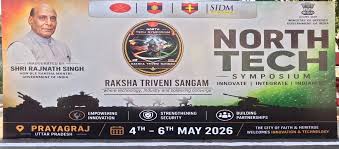
- Space Warfare: The symposium highlighted gaps in space-based intelligence and the need for dedicated “Military Grade” orbital data centers.
- Private-Public Partnership: A call for AI startups and space-tech firms to co-develop the “Pathfinder” orbital satellite for the Indian military.
- High-Altitude Operations: New cutting-edge gear for soldiers in the Himalayas, including smart thermal suits and portable oxygen generation systems.
Positives, Negatives, & Government Schemes
| Dimension | Details |
| Positives | Reduced import bill for defense; technological edge over adversaries; boosts “Atmanirbhar Bharat.” |
| Negatives | High R&D costs; long gestation periods for deep-tech projects; cybersecurity vulnerabilities. |
| Associated Schemes | iDEX (Innovations for Defence Excellence), Make-II category projects, DTIS (Defence Testing Infrastructure Scheme). |
Way Forward
- Increase the allocation for the “Defence Technology Fund” and simplify the procurement process for defense-tech startups to ensure rapid field deployment.
Topic 8: EAC-PM Paper on “The Care Economy” (National Issue/Economy)
Syllabus
- GS Paper 1: Role of women and women’s organization, population and associated issues.
- GS Paper 2: Issues relating to development and management of Social Sector/Services.
Context
- The Economic Advisory Council to the Prime Minister (EAC-PM) released a working paper on May 6, 2026, calling for a shift in treating “care work” as foundational social infrastructure.
Main Body: Multi-Dimensional Analysis
- Economic Contribution: Care work (elderly care, childcare, domestic work) is often unpaid and excluded from GDP, yet it is essential for the formal economy’s functioning.
- Gender Gap: Women in India perform nearly 10 times more unpaid care work than men, hindering their participation in the formal labor force.
- Infrastructure Status: The paper suggests granting “Infrastructure Status” to care services (like creches and geriatric centers) to attract private investment and subsidies.
- Formalization: Proposes a “Care-Skill Certification” program to professionalize domestic and health-aide workers, ensuring better wages and safety.
- Demographic Dividend: As India’s population ages, a robust care economy is vital to maintaining social stability and economic productivity.
Positives, Negatives, & Government Schemes
| Dimension | Details |
| Positives | Increases Female Labour Force Participation Rate (FLFPR); creates millions of jobs; addresses the “care crisis” in urban India. |
| Negatives | Significant fiscal burden for subsidies; difficulty in regulating the vast informal domestic sector. |
| Associated Schemes | Mission Shakti, Palna (National Creche Scheme), Atal Vayo Abhyuday Yojana (AVYAY). |
Way Forward
- Incorporate “Time-Use Surveys” into regular economic planning and implement tax incentives for corporations providing comprehensive care facilities for employees.
Practice Mains Question:
“The year 2026 has witnessed significant Erasures of traditional political duopolies and a parallel shift toward high-tech dependencies in energy and defense. In this light, evaluate the constitutional and strategic challenges facing the Indian state.” (250 words)
