
Topic 1: The National Testing Agency (NTA) Restructuring Bill, 2026
Subject: Polity & Governance (GS Paper 2) Context Following widespread disruptions in the NEET-UG and UGC-NET cycles earlier this year, the Union Government introduced a landmark Bill on May 12 to fundamentally restructure the NTA into a statutory body with enhanced judicial oversight.
Main Body: Multi-Dimensional Analysis
- Statutory Transition: Proposes moving NTA from a registered society to a statutory authority, making it directly accountable to Parliament and subject to CAG audits.
- Decentralized Examination Hubs: Mandates the creation of permanent, government-run “Secure Test Centers” to replace the current reliance on private third-party service providers.
- Technological Integrity: Introduces “Hybrid Mode” testing, where question papers are transmitted via encrypted satellite links and decrypted only minutes before the exam using biometric keys.

- Criminal Liability: The Bill incorporates the “Public Examinations Act” clauses, proposing life imprisonment and ₹10 crore fines for organized paper-leak syndicates.
- State-Center Coordination: Establishes a “National Exam Council” including State Education Secretaries to ensure parity between regional boards and national entrance criteria.
Positives, Negatives, & Government Schemes
| Dimension | Details |
| Positives | Restores public trust, reduces litigation in High Courts, ensures data privacy of millions of aspirants. |
| Negatives | Increased administrative costs for permanent centers, potential delays in the transition phase. |
| Associated Schemes | National Education Policy (NEP) 2020, Public Examinations (Prevention of Unfair Means) Act, 2024. |
Topic 2: Tamil Nadu’s ‘Green Hydrogen Valley’ Initiative
Subject: Economy & Environment (GS Paper 3) Context On May 13, the Tamil Nadu government signed a Memorandum of Understanding (MoU) with a global consortium to establish India’s first “Green Hydrogen Valley” in Thoothukudi, aiming to decarbonize the state’s industrial belt.
Main Body: Multi-Dimensional Analysis
- Economic Hub Creation: Positions Thoothukudi as a global export hub for Green Ammonia and Green Hydrogen, leveraging its proximity to major sea routes.
- Energy Transition: Aims to replace grey hydrogen in fertilizer and petrochemical industries with green variants, contributing to India’s “Net Zero” target of 2070.

- FDI & Infrastructure: The project expects a capital inflow of ₹18,000 crore, boosting the state’s manufacturing GDP and creating high-skill technical jobs.
- Offshore Wind Synergy: The valley will utilize power from upcoming offshore wind farms in the Gulf of Mannar, creating a localized circular energy economy.
- Logistical Edge: Integration with the VOC Port allows for seamless bunkering services for green-fuel-powered international vessels.
Positives, Negatives, & Government Schemes
| Dimension | Details |
| Positives | Reduces carbon footprint, attracts high-tech FDI, strengthens Tamil Nadu’s lead in renewable energy. |
| Negatives | High initial cost of electrolyzers, massive freshwater requirements for hydrogen production. |
| Associated Schemes | National Green Hydrogen Mission, TN Hydrogen Policy 2024, PLI for Advanced Chemistry Cells. |
Topic 3: India-Vietnam Comprehensive Strategic Partnership (Defence Export)
Subject: International Relations & Defence (GS Paper 2 & 3) Context On May 12, India officially handed over the first batch of BrahMos Supersonic Cruise Missiles to Vietnam as part of a $375 million deal, marking a new era in India’s defence diplomacy.
Main Body: Multi-Dimensional Analysis
- Shift in Defence Posture: India moves from being a top global importer to a significant exporter of high-precision offensive platforms.
- Indo-Pacific Balance of Power: Strengthening Vietnam’s maritime security acts as a strategic deterrent in the South China Sea, aligning with India’s ‘Act East’ policy.
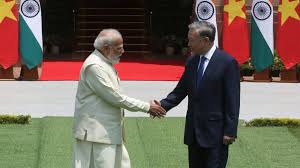
- Technical Cooperation: Includes a long-term maintenance contract and training for Vietnamese personnel, ensuring “Sustainment Diplomacy.”
- Geopolitical Signal: The move asserts India’s role as a “Net Security Provider” in the region, independent of traditional power blocs.
- Industrial Boost: The success of the BrahMos export paves the way for potential sales of LCA Tejas and Akash Missile systems to other ASEAN nations.
Positives, Negatives, & Government Schemes
| Dimension | Details |
| Positives | Boosts “Make in India” for Defence, earns foreign exchange, strengthens strategic ties in ASEAN. |
| Negatives | Potential diplomatic friction with regional competitors, risk of reverse engineering. |
| Associated Schemes | Defence Acquisition Procedure (DAP) 2020, Export Promotion Council for Defence. |
Topic 4: The 2026 Monsoon ‘Predictive Intelligence’ Report
Subject: National Issues & Science (GS Paper 3) Context The India Meteorological Department (IMD) on May 13 released its second stage forecast using the new “Prithvi AI” model, predicting a “Normal to Above Normal” monsoon for 2026.
Main Body: Multi-Dimensional Analysis
- AI-Driven Accuracy: The move from traditional statistical models to deep-learning neural networks has improved district-level rainfall accuracy by 25%.
- Food Security Implications: A favorable monsoon is critical for the Kharif crop (Rice, Soya, Pulses), which is essential to curb domestic food inflation.
- Water Management: High-intensity rainfall events predicted for Central India necessitate early desilting of dams and urban drainage systems.
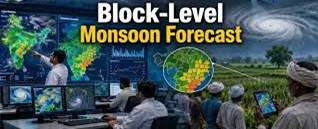
- Energy Security: Predicts high inflow into hydroelectric reservoirs, potentially reducing India’s reliance on coal-fired power during the peak summer months.
- Disaster Preparedness: Early warnings allow states like Kerala and Himachal Pradesh to activate “SDRF” (State Disaster Response Force) protocols for potential landslides.
Positives, Negatives, & Government Schemes
| Dimension | Details |
| Positives | Enables better crop planning, stabilizes commodity markets, improves disaster mitigation. |
| Negatives | Risks of flash floods in urban “heat islands,” potential for “Monsoon Break” periods causing crop stress. |
| Associated Schemes | PM Fasal Bima Yojana, Mission Amrit Sarovar, National Monsoon Mission. |
Topic 5: Expansion of the ‘Open Network for Digital Commerce’ (ONDC)
Subject: Economy (GS Paper 3) Context On May 12, the Ministry of Commerce announced that ONDC has successfully onboarded 500,000 MSMEs, signaling a massive shift in India’s e-commerce landscape towards a decentralized model.
Main Body: Multi-Dimensional Analysis
- Market Democratization: Breaks the duopoly of giant e-commerce platforms by allowing small neighborhood kirana stores to compete on a level playing field.
- Consumer Choice: Enables users to discover local sellers across different apps, reducing delivery costs and encouraging hyper-local logistics.
- Interoperability: Creates a standard protocol for digital registries, identity verification, and payments, similar to what UPI did for finance.
- Rural Penetration: Aims to bring “One District One Product” (ODOP) artisans directly to national and international consumers.
- Data Sovereignty: Shifts control of consumer data from private platforms to a public digital infrastructure, preventing predatory pricing and algorithmic bias.
Positives, Negatives, & Government Schemes
| Dimension | Details |
| Positives | Empowers small businesses, reduces “platform fees” for sellers, promotes digital literacy. |
| Negatives | Steep learning curve for rural vendors, initial logistics and grievance redressal bottlenecks. |
| Associated Schemes | Digital India, MSME SAMADHAAN, Startup India Initiative. |
Topic 6: The ‘Viksit Bharat’ Infrastructure Bond Launch
Subject: Economy & Infrastructure (GS Paper 3) Context The Finance Ministry on May 13 approved the issuance of “Viksit Bharat Sovereign Bonds” to fund mega-projects like the India-Middle East-Europe Economic Corridor (IMEC).
Main Body: Multi-Dimensional Analysis
- Alternative Financing: Reduces the burden on the fiscal deficit by tapping into domestic retail and global institutional savings for long-term Capex.
- Strategic Corridors: Funding is earmarked for the “Golden Multimodal Grid,” connecting inland waterways with high-speed rail and dedicated freight corridors.
- Retail Participation: Small investors can now buy these bonds via the “RBI Retail Direct” portal, offering a safe, long-term investment alternative to FDs.
- Global Benchmarking: These bonds are expected to be listed on international indices, attracting “Patient Capital” (Pension and Sovereign Wealth Funds).
- Asset Monetization: Revenue from existing toll roads and airports will be used to service the interest on these infrastructure bonds.
Positives, Negatives, & Government Schemes
| Dimension | Details |
| Positives | Accelerates infrastructure growth, creates a deeper bond market, reduces external debt reliance. |
| Negatives | Crowding out of private investment if interest rates are too high, long gestation periods of projects. |
| Associated Schemes | PM Gati Shakti, National Infrastructure Pipeline (NIP), Asset Monetization Pipeline. |
Topic 7: The Supreme Court Ruling on ‘Right to be Forgotten’
Subject: Polity & Judiciary (GS Paper 2) Context In a landmark judgment on May 12, the Supreme Court of India officially recognized the “Right to be Forgotten” as an integral part of the Right to Privacy under Article 21.
Main Body: Multi-Dimensional Analysis
- Constitutional Interpretation: Expands the scope of the Justice K.S. Puttaswamy (Retd.) vs Union of India judgment to include the erasure of digital footprints that are no longer relevant.
- Balancing Rights: The court emphasized a balance between the “Right to Information” (Public Records) and an individual’s right to move on from past mistakes.

- Social Impact: Specifically protects victims of “revenge porn” and those acquitted in criminal cases from permanent digital stigma.
- Intermediary Responsibility: Social media platforms and search engines are now mandated to establish “Grievance Officers” to handle erasure requests within 72 hours.
- Legal Precedent: This ruling will directly influence the implementation of the Digital Personal Data Protection (DPDP) Act, 2023.
Positives, Negatives, & Government Schemes
| Dimension | Details |
| Positives | Protects individual dignity, prevents cyber-bullying, aligns Indian law with EU’s GDPR. |
| Negatives | Potential for “erasing history” or suppressing news reports on public figures, implementation complexity. |
| Associated Schemes | Digital Personal Data Protection Act (DPDP), IT Rules 2021, Cyber Surakshit Bharat. |
Topic 8: India’s First Indigenous Deep-Sea Mining Vehicle ‘Samudrayaan’
Subject: Science & Technology / National Issues (GS Paper 3) Context On May 13, the Ministry of Earth Sciences successfully completed the shallow-water trials of ‘Matsya-6000’, the submersible for the Samudrayaan mission, off the Chennai coast.
Main Body: Multi-Dimensional Analysis
- Resource Sovereignty: Aimed at exploring polymetallic nodules (containing Nickel, Cobalt, Copper) in the Central Indian Ocean Basin.
- Strategic Metals: These minerals are crucial for the “Energy Transition,” specifically for EV batteries and renewable energy storage.
- Deep-Sea Diplomacy: Asserts India’s rights within the 75,000 sq km area allocated by the International Seabed Authority (ISA).

- Indigenous Engineering: Developed by NIOT Chennai, it showcases India’s capability to build titanium-hulled pressure vessels capable of withstanding 600 times atmospheric pressure.
- Blue Economy: Aligns with the national vision to sustainably utilize ocean resources for economic growth, improved livelihoods, and jobs.
Positives, Negatives, & Government Schemes
| Dimension | Details |
| Positives | Reduces import dependency on rare earth elements, boosts maritime technology, explores the “Final Frontier.” |
| Negatives | Ecological concerns regarding deep-sea biodiversity, high technological risk at extreme depths. |
| Associated Schemes | Deep Ocean Mission (DOM), Blue Economy Policy, Sagarmala Project. |
