
Topic 1: SC Recognition of the ‘Right to be Forgotten’ under Article 21
Subject: Indian Polity (GS Paper 2)
Syllabus
- GS Paper 2: Indian Constitution—significant provisions and basic structure; Judiciary—structure, organization, and functioning.
Context
On May 14, 2026, the Supreme Court of India, in a landmark judgment, officially recognized the “Right to be Forgotten” (RTBF) as an integral part of the Right to Privacy under Article 21 of the Constitution.
Main Body: Multi-Dimensional Analysis
- Constitutional Evolution: The court expanded the Puttaswamy judgment, ruling that an individual’s right to dignity includes the right to erase digital footprints that are no longer relevant or are personally damaging.
- Balancing Fundamental Rights: The judgment establishes a delicate balance between Article 19 (Freedom of Speech/Information) and Article 21 (Right to Life/Privacy), mandating that information remain public only if it serves a “demonstrable public interest.”

- Impact on Intermediaries: Search engines and social media platforms are now legally obligated to establish transparent mechanisms to handle “erasure requests” within a 72-hour window.
- Protection of the Vulnerable: The ruling specifically highlights protections for victims of non-consensual intimate imagery and individuals acquitted of crimes, preventing “permanent digital stigmatization.”
- Legal Precedent for DPDP: This serves as a judicial directive for the implementation of the Digital Personal Data Protection (DPDP) Act, providing clarity on the “right to erasure.”
Positives, Negatives, & Government Schemes
| Dimension | Details |
| Positives | Restores individual dignity; protects against cyber-bullying; aligns Indian law with global standards like EU’s GDPR. |
| Negatives | Potential for “rewriting history”; risk of suppressing legitimate journalistic reports on public figures. |
| Associated Laws | Article 21, Digital Personal Data Protection (DPDP) Act 2023, IT Rules 2021. |
Way Forward
- Define strict “public interest” criteria to prevent politicians and criminals from misusing the law to hide past records.
- Ensure judicial oversight over the removal requests to prevent private platforms from becoming “censors.”
Topic 2: Strategic Handover of BrahMos Missiles to Vietnam
Subject: Defence & International Relations (GS Paper 2 & 3)
Syllabus
- GS Paper 2: India and its neighborhood—relations; Effect of policies of developed and developing countries on India’s interests.
- GS Paper 3: Indigenization of technology and developing new technology.
Context
Coinciding with the Defence Minister’s visit on May 14, India officially completed the first major delivery of the BrahMos Supersonic Cruise Missile system to Vietnam, marking India’s emergence as a significant defence exporter.
Main Body: Multi-Dimensional Analysis
- Shift in Defence Posture: This delivery signifies India’s transition from the world’s largest importer to a credible supplier of high-end offensive platforms.
- Indo-Pacific Strategic Balance: Strengthening Vietnam’s anti-access/area-denial (A2/AD) capabilities acts as a deterrent in the South China Sea, directly supporting the “Act East” policy.
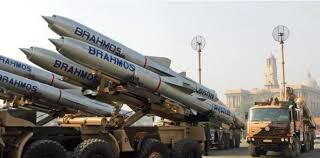
- Strategic Autonomy & Partnership: Unlike traditional military alliances, this sale emphasizes “Security and Growth for All in the Region” (SAGAR) through capacity building.
- Economic Diplomacy: The $375 million deal provides a blueprint for further exports of the LCA Tejas and Akash missile systems to ASEAN and African nations.
- Industrial Momentum: The export success validates the PLI schemes in defence manufacturing, encouraging private sector participation in high-tech aerospace.
Positives, Negatives, & Government Schemes
| Dimension | Details |
| Positives | Earns foreign exchange; boosts “Make in India” branding; enhances strategic depth in Southeast Asia. |
| Negatives | Potential diplomatic friction with regional adversaries; requirement for long-term technical support. |
| Associated Schemes | Defence Acquisition Procedure (DAP) 2020, Export Promotion Council for Defence. |
Way Forward
- Establish dedicated “Maintenance and Repair Hubs” in partner countries to ensure long-term operationality.
- Fast-track the development of ‘BrahMos-NG’ (Next Generation) for wider aircraft integration.
Topic 3: Launch of India’s First ‘Green Hydrogen Valley’ in Tamil Nadu
Subject: Economy & Environment (GS Paper 3)
Syllabus
- GS Paper 3: Indian Economy and issues relating to planning, mobilization of resources; Conservation, environmental pollution, and degradation.
Context
The Government of Tamil Nadu, in collaboration with the Centre, inaugurated the Thoothukudi Green Hydrogen Valley on May 14, 2026, aimed at creating a localized ecosystem for green fuel production and export.
Main Body: Multi-Dimensional Analysis
- Decarbonizing Heavy Industry: The valley aims to replace grey hydrogen in the state’s fertilizer and petrochemical industries, contributing to the “Net Zero 2070” goal.
- Leveraging Renewable Synergy: The project utilizes offshore wind energy from the Gulf of Mannar to power the electrolysis process, ensuring 100% green energy input.
- Logistical Advantage: Integration with the VOC Port in Thoothukudi allows for the cost-effective export of Green Ammonia to international markets.
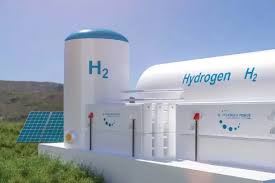
- Economic Hub Creation: The initiative is expected to attract ₹20,000 crore in investments and create 50,000 “green jobs” in the Southern Tamil Nadu region.
- Circular Economy Model: The project includes treated wastewater utilization for electrolysis, addressing the water-scarcity concerns associated with hydrogen production.
Positives, Negatives, & Government Schemes
| Dimension | Details |
| Positives | Reduces dependence on fossil fuel imports; positions TN as a global green energy leader. |
| Negatives | High initial capital expenditure (CAPEX); challenges in storage and transport infrastructure. |
| Associated Schemes | National Green Hydrogen Mission, TN Green Hydrogen Policy, PM Gati Shakti. |
Way Forward
- Provide “viability gap funding” for initial projects to bring down the cost of green hydrogen to $1-2/kg.
- Develop a dedicated “Green Hydrogen Pipeline” corridor connecting major industrial clusters.
Topic 4: NTA Restructuring and the National Exam Council Bill
Subject: Governance (GS Paper 2)
Syllabus
- GS Paper 2: Government policies and interventions for development in various sectors; Issues relating to education.
Context
In response to recent examination irregularities, the Union Cabinet on May 14 approved the National Testing Agency (NTA) Restructuring Bill, which proposes a “Hybrid-Digital” model for all national-level entrance exams.
Main Body: Multi-Dimensional Analysis
- Statutory Autonomy: The Bill elevates the NTA from a society to a statutory authority with its own cadre, reducing its dependence on outsourced private staffing.
- Hybrid-Digital Delivery: To prevent paper leaks, question papers will now be transmitted via encrypted satellite links and printed “on-demand” at the center just 10 minutes before the exam.

- Decentralized Coordination: The creation of a “National Exam Council” including state education boards ensures that national exams (NEET/JEE) are better aligned with regional school curricula.
- Stringent Penalties: The Bill incorporates the Public Examinations Act, providing for a minimum 10-year prison term and ₹1 crore fine for organized malpractice.
- Student Support Systems: Mandates a permanent “Grievance Redressal Ombudsman” for students to challenge technical or administrative glitches without litigation.
Positives, Negatives, & Government Schemes
| Dimension | Details |
| Positives | Restores public trust; prevents localized paper leaks; ensures transparency through AI-proctoring. |
| Negatives | Digital divide may disadvantage rural students; high cost of technological infrastructure. |
| Associated Laws | National Education Policy (NEP) 2020, Public Examinations Act 2024. |
Way Forward
- Invest in permanent government-run “Test Cities” to eliminate the risk of private center complicity.
- Ensure the “Hybrid-Digital” software is tested for high-volume traffic to prevent server crashes.
Topic 5: IMD’s ‘Prithvi AI’ Forecast for the 2026 Monsoon
Subject: National Issues & Geography (GS Paper 1 & 3)
Syllabus
- GS Paper 1: Important Geophysical phenomena (Monsoon); GS Paper 3: Science and Technology—developments.
Context
On May 14, 2026, the India Meteorological Department (IMD) released its second-stage forecast using the “Prithvi AI” model, predicting a “Normal to Above-Normal” monsoon for the year.
Main Body: Multi-Dimensional Analysis
- Technological Leap: Moving beyond traditional statistical models, the AI-driven system analyzes 50 years of oceanic and atmospheric data to provide district-level rainfall accuracy.
- Agricultural Planning: The forecast is critical for the Kharif crop cycle, particularly for water-intensive crops like Rice and Sugarcane in the Indo-Gangetic plain.

- Water Resource Management: Anticipated high rainfall in Central India necessitates the early desilting of dams and the preparation of canal networks.
- Inflation Control: A healthy monsoon is expected to keep food inflation (CPI) within the RBI’s 4% target by stabilizing vegetable and pulse prices.
- Disaster Resilience: The model predicts a high probability of flash floods in urban “heat islands,” allowing city administrations to activate drainage protocols.
Positives, Negatives, & Government Schemes
| Dimension | Details |
| Positives | Improved “Nowcasting” (short-term) accuracy; better disaster mitigation; economic stability. |
| Negatives | Risks of “Monsoon Breaks” causing localized droughts despite overall normal rainfall. |
| Associated Schemes | PM Fasal Bima Yojana, National Monsoon Mission, Mission Amrit Sarovar. |
Way Forward
- Integrate AI weather data with the PM-KUSUM portal to give farmers real-time irrigation advice.
- Develop state-specific “Monsoon Contingency Plans” for regions predicted to receive excess rainfall.
Topic 6: ONDC Expansion and MSME Digital Integration
Subject: Economy (GS Paper 3)
Syllabus
- GS Paper 3: Indian Economy and issues relating to mobilization of resources; MSMEs.
Context
The Ministry of Commerce announced on May 14 that the Open Network for Digital Commerce (ONDC) has successfully onboarded 1 million small merchants, signaling a shift toward a decentralized e-commerce ecosystem.
Main Body: Multi-Dimensional Analysis
- Market Democratization: ONDC breaks the “platform-centric” monopoly of e-commerce giants, allowing a local kirana store to be discoverable by any buyer app.
- Reducing Transaction Costs: By unbundling logistics, payments, and inventory, ONDC reduces the commission burden on small sellers from 25-30% to roughly 5-8%.
- Interoperability: The network uses open-source protocols, creating a “UPI for E-commerce” that encourages hyper-local logistics and delivery.
- Data Sovereignty: Unlike private platforms, ONDC prevents predatory pricing and “self-preferencing” (where platforms promote their own brands).
- Rural Reach: The network is being used to promote “One District One Product” (ODOP) artisans, providing them direct access to metropolitan markets.
Positives, Negatives, & Government Schemes
| Dimension | Details |
| Positives | Lowers entry barriers for MSMEs; increases consumer choice; promotes digital literacy. |
| Negatives | Logistics bottlenecks in Tier-3 cities; complexity in grievance redressal across different apps. |
| Associated Schemes | Digital India, Startup India, MSME SAMADHAAN. |
Way Forward
- Standardize “Return and Refund” policies across the network to build consumer trust.
- Launch “ONDC Academy” to train small vendors on digital cataloging and inventory management.
Topic 7: The ‘Viksit Bharat’ Sovereign Infrastructure Bonds
Subject: Economy (GS Paper 3)
Syllabus
- GS Paper 3: Mobilization of resources; Growth and Development.
Context
The Ministry of Finance on May 14 approved the issuance of ₹1 Lakh Crore in ‘Viksit Bharat’ Sovereign Infrastructure Bonds to finance the India-Middle East-Europe Economic Corridor (IMEC) projects.
Main Body: Multi-Dimensional Analysis
- Alternative Financing: These bonds allow the government to fund long-gestation infrastructure projects without increasing the immediate fiscal deficit.
- Global Participation: The bonds are specifically designed to attract “Patient Capital” from global pension funds and sovereign wealth funds.
- Asset Linkage: The revenue generated from the operational ports and rail corridors of the IMEC will be used to service the interest on these bonds.
- Retail Direct Access: Individual Indian investors can participate through the “RBI Retail Direct” portal, offering a safe alternative to fixed deposits.
- Strategic Corridors: Funds are earmarked for multimodal logistics parks and port modernization along the western coast.
Positives, Negatives, & Government Schemes
| Dimension | Details |
| Positives | Deepens the Indian bond market; reduces reliance on external debt; accelerates Capex. |
| Negatives | Crowding out of private corporate bonds; risk of project delays impacting repayment. |
| Associated Schemes | PM Gati Shakti, National Infrastructure Pipeline (NIP). |
Way Forward
- Ensure strict data-driven monitoring of project milestones to maintain bond ratings.
- Create a “Secondary Market” for these bonds to ensure liquidity for retail investors.
Topic 8: Successful Trials of ‘Samudrayaan’ (Matsya-6000)
Subject: Science & Technology (GS Paper 3)
Syllabus
- GS Paper 3: Science and Technology—developments and their applications in everyday life; Awareness in the field of Oceanography.
Context
On May 14, 2026, the National Institute of Ocean Technology (NIOT) successfully concluded the Deep-Sea trials of the Matsya-6000 submersible, part of India’s Samudrayaan mission, off the Chennai coast.
Main Body: Multi-Dimensional Analysis
- Resource Sovereignty: The mission aims to explore “Polymetallic Nodules” (Nickel, Cobalt, Copper) in the Central Indian Ocean Basin, essential for India’s EV battery industry.
- Indigenous Engineering: India is now among the elite club of nations (USA, Russia, France, Japan, China) with a self-developed manned submersible for deep-sea exploration (6,000 meters).
- Blue Economy: Aligns with India’s policy to sustainably harness 10% of its GDP from maritime and ocean resources.

- Environmental Monitoring: The vehicle is equipped with sensors to study the impact of deep-sea mining on benthic biodiversity to ensure sustainable practices.
- Strategic Metals: Securing Cobalt and Nickel is vital for India’s “Strategic Autonomy” in the global electronics and clean energy supply chains.
Positives, Negatives, & Government Schemes
| Dimension | Details |
| Positives | Reduces import dependency for rare earth minerals; demonstrates high-end manufacturing capability. |
| Negatives | Extremely high operational risk; ecological sensitivity of the seabed. |
| Associated Schemes | Deep Ocean Mission (DOM), Blue Economy Policy. |
Way Forward
- Collaborate with international agencies to establish global “Deep-Sea Mining Ethics” protocols.
- Utilize the data for building localized models of climate change based on ocean thermal patterns.
