
1. First Taiwanese Bank Branch at GIFT City
Syllabus GS Paper II: International Relations (Bilateral Agreements, Regional Groupings) GS Paper III: Indian Economy (Investment Models, Growth & Development)
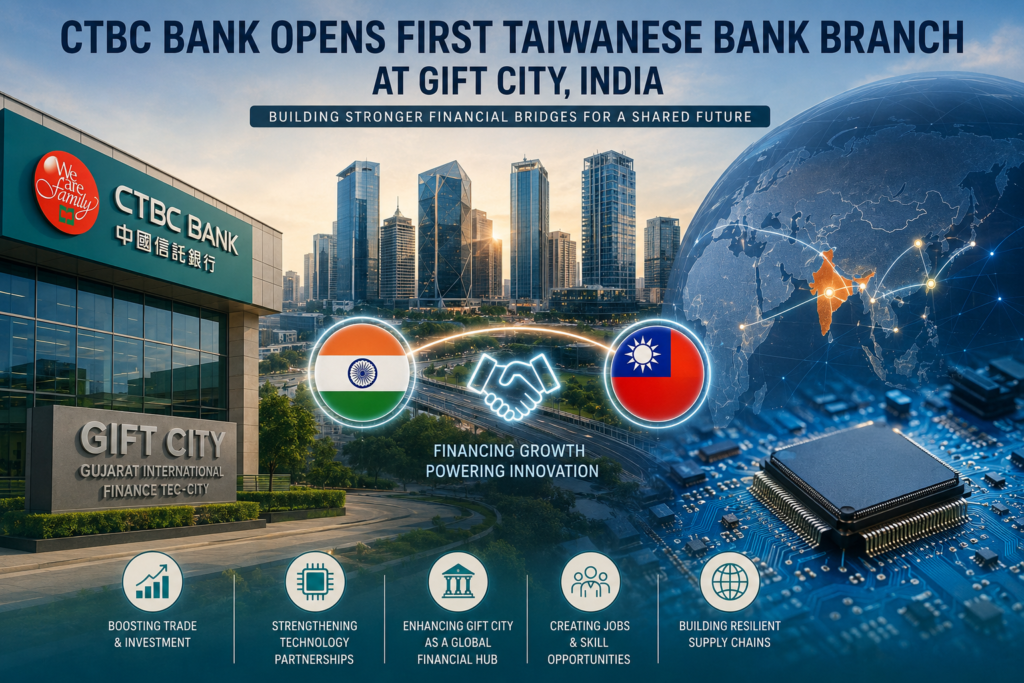
Context CTBC Bank has officially inaugurated its branch at the Gujarat International Finance Tec-City (GIFT City), establishing the first physical presence of a Taiwanese bank in India. This structural shift highlights deepening economic cooperation amidst evolving geopolitical dynamics in the Indo-Pacific.
Main Body: Multi-Dimensional Analysis
- Economic Dimension: The establishment of physical banking infrastructure dramatically reduces the friction in cross-border financial transactions between India and Taiwan. It provides a dedicated financial corridor for Taiwanese foreign direct investment (FDI), particularly in capital-intensive sectors. By offering localized corporate banking services, trade financing, and forex management, it acts as a catalyst for integrating Indian manufacturing units into global value chains, specifically supporting the “China Plus One” diversification strategy adopted by multinational corporations.
- Strategic & Geopolitical Dimension: While maintaining the traditional “One China” policy diplomatically, India is strategically expanding its substantive economic engagement with Taiwan. This banking presence is a pragmatic tool of soft diplomacy that aligns perfectly with India’s Act East Policy. It signals a mutual willingness to build robust economic interdependence, which serves as a stabilizing factor against regional hegemony and secures critical supply chains in the Indo-Pacific theatre.
- Technological & Semiconductor Dimension: Taiwan holds a near-monopoly on high-end semiconductor manufacturing. For India to successfully execute the India Semiconductor Mission (ISM) and build a domestic fabrication ecosystem, frictionless financial flow from Taiwanese tech giants is non-negotiable. Dedicated banking channels allow companies to execute rapid capital deployments, fund joint ventures, and manage the complex capital expenditures required for setting up domestic fabrication plants and testing facilities.
- Institutional & Regulatory Dimension: Opening a foreign branch within GIFT City validates the regulatory framework of the International Financial Services Centres Authority (IFSCA). It demonstrates that India’s offshore financial center can provide a competitive, predictable, and globally aligned legal environment. This successful onboarding acts as a proof-of-concept, potentially attracting a wave of other East Asian financial institutions seeking an alternative to traditional financial hubs like Hong Kong or Singapore.
- Supply Chain & SME Dimension: Beyond massive tech conglomerates, the real backbone of Taiwan’s economy is its highly specialized Small and Medium Enterprises (SMEs). Historically, Taiwanese SMEs faced steep hurdles navigating India’s banking landscape. A familiar home-country bank operating in India drastically lowers the barrier to entry, encouraging these critical component manufacturers to establish ancillary units in India, thereby deepening the domestic industrial base.
- Human Capital & Employment Dimension: Increased corporate presence inevitably drives demand for specialized human capital. The financial integration will spur the creation of high-skill jobs in corporate finance, international law, and technology consulting. It also necessitates greater cross-cultural management training and bilateral academic exchanges to bridge the operational gap between Indian talent and Taiwanese corporate culture.
Positives, Negatives, and Government Schemes
| Positives | Negatives / Challenges | Government Schemes & Initiatives |
|---|---|---|
| Accelerates Taiwanese FDI and technology transfers in strategic sectors. | Sensitivities and potential diplomatic pushback regarding the One China policy. | India Semiconductor Mission (ISM). |
| Reduces hedging costs and forex risks for bilateral trade operations. | Differing corporate cultures and complex local labor compliance for incoming SMEs. | Production Linked Incentive (PLI) Scheme for Large Scale Electronics. |
| Enhances the global credibility and institutional depth of GIFT City. | Infrastructural bottlenecks outside the immediate GIFT City ecosystem. | International Financial Services Centres Authority (IFSCA) Act. |
| Facilitates the establishment of localized electronic component supply chains. | Risk of volatile capital flights if geopolitical tensions in the Taiwan Strait escalate. | Act East Policy / Invest India. |
Examples The joint venture between Taiwan’s Powerchip Semiconductor Manufacturing Corp (PSMC) and India’s Tata Group to build a semiconductor fabrication plant in Dholera, Gujarat, exemplifies the type of massive capital project that will benefit heavily from streamlined institutional banking and direct financial corridors.
Way Forward
- Expedite the negotiation of a comprehensive Free Trade Agreement (FTA) or a broader Bilateral Investment Treaty (BIT) with Taiwan to provide overarching legal protection.
- Establish dedicated “plug-and-play” industrial parks tailored specifically for Taiwanese component manufacturers, heavily integrating them with the new banking facilities.
- Enhance dispute resolution mechanisms within GIFT City to match international arbitration standards, giving foreign investors absolute legal certainty.
- Promote track-two diplomacy and academic partnerships to build a talent pool proficient in Mandarin and familiar with East Asian business practices.
Conclusion The inauguration of the CTBC Bank branch in GIFT City transcends a mere financial milestone; it is a strategic anchor securing India’s position in global technology supply chains. By establishing direct financial arteries, India and Taiwan are moving from transactional trade to deep structural integration, essential for navigating the economic complexities of the 21st century.
Practice Mains Question Evaluate the strategic and economic implications of deepening institutional financial ties between India and Taiwan. How does the development of GIFT City facilitate India’s integration into global technology supply chains? (250 words)
2. MoU Between Ayush Ministry and BHASHINI
Syllabus GS Paper II: Governance (E-governance, Health, Vulnerable Sections) GS Paper III: Science and Technology (Artificial Intelligence, Indigenization of Technology)
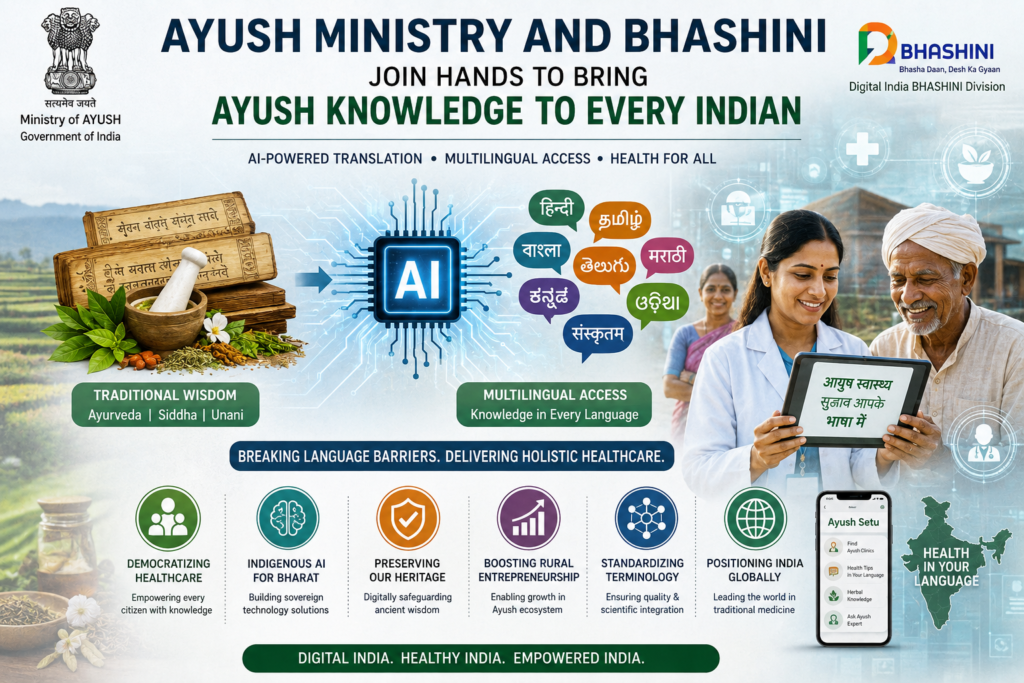
Context The Ministry of Ayush signed a Memorandum of Understanding (MoU) with the Digital India BHASHINI Division. This initiative leverages advanced Artificial Intelligence (AI) and Natural Language Processing (NLP) to translate complex traditional medicine knowledge and health services into diverse Indian regional languages.
Main Body: Multi-Dimensional Analysis
- Healthcare Democratization Dimension: Traditional medical knowledge, largely codified in Sanskrit, Hindi, or specialized academic English, remains structurally inaccessible to the broader rural populace. AI-driven translation breaks down this linguistic barrier, allowing grassroots health workers, local practitioners, and citizens to access standardized, scientifically validated Ayush protocols in their native tongues, significantly improving localized preventive healthcare.
- Technological & AI Dimension: This collaboration represents a critical use-case for scaling Digital Public Goods (DPGs). Training AI models on the highly specific and nuanced lexicon of Ayurveda, Siddha, and Unani requires sophisticated machine learning techniques. It forces the evolution of NLP models to handle context-heavy medical terminology rather than just conversational language, pushing the boundaries of indigenous AI capabilities.
- Cultural Preservation Dimension: Indigenous medical literature is a repository of generational knowledge. Translating these texts digitally preserves them against the erosion of oral traditions. It ensures that the epistemic foundations of systems like Siddha or Ayurveda are cross-pollinated across different linguistic states, fostering a unified national heritage of wellness and traditional medicine.
- Economic & Entrepreneurial Dimension: By localizing Ayush knowledge, the initiative directly stimulates rural entrepreneurship. Local manufacturers of herbal products and wellness practitioners can access standard operating procedures, pharmacopoeia guidelines, and regulatory compliance documents in their own languages. This empowers MSMEs in the Ayush sector to scale operations, maintain quality standards, and participate in the rapidly growing global wellness economy.
- Administrative & Standardization Dimension: A major hurdle in integrating Ayush into mainstream public health is the lack of standardized terminology across different states. AI translation helps create a unified, multi-lingual medical dictionary. This harmonization is vital for integrating Ayush treatments into national insurance schemes (like PM-JAY) and for the smooth functioning of national health registries.
- Global Positioning Dimension: As India positions itself as the global hub for alternative medicine, having a robust digital translation infrastructure allows for the rapid export of this knowledge. It facilitates medical tourism by eventually allowing foreign patients to interact with Ayush systems in multiple international languages translated via the same AI backbone.
Positives, Negatives, and Government Schemes
| Positives | Negatives / Challenges | Government Schemes & Initiatives |
|---|---|---|
| Ensures equitable access to traditional healthcare knowledge across linguistic divides. | High risk of critical mistranslations involving complex medical dosages or botanical names. | National Ayush Mission (NAM). |
| Strengthens India’s sovereign AI capabilities by building massive vernacular datasets. | Digital illiteracy and lack of internet penetration in remote target areas. | Digital India BHASHINI (Bhasha Daan). |
| Standardizes Ayush terminology, aiding research and integration with modern medicine. | Nuances of ancient texts (e.g., Sanskrit root words) may be lost in direct algorithmic translation. | Ayush Grid Project. |
| Empowers grassroots workers (ASHAs) with localized preventive care guidelines. | Over-reliance on AI without continuous human-in-the-loop validation by medical experts. | e-Sanjeevani (Telemedicine). |
Examples The technological framework applied here echoes the UDAAN project, which successfully utilized machine learning and Optical Character Recognition (OCR) to translate complex engineering and higher education textbooks into multiple Indic languages, vastly improving pedagogical outcomes for students in regional mediums.
Way Forward
- Implement a rigorous “Human-in-the-Loop” validation system where seasoned Ayush practitioners cross-verify AI-translated texts before public dissemination.
- Expand the data collection efforts (Bhasha Daan) specifically targeting tribal dialects and undocumented folk medicine traditions to enrich the AI training corpus.
- Integrate the multilingual output directly into the Ayush Grid and the e-Sanjeevani portal to provide real-time, vernacular tele-consultations.
- Develop robust API linkages so private health-tech startups can utilize these translation engines to build localized wellness and diagnostic applications.
Conclusion The intersection of ancient medical wisdom and frontier AI technology through BHASHINI is a transformative step for public health. By ensuring that language is no longer a barrier to healing, the government is not only reviving traditional sciences but also architecting a more inclusive, digitally empowered healthcare ecosystem.
Practice Mains Question Discuss the potential of Artificial Intelligence in bridging the linguistic divide in India’s healthcare sector. How can the integration of traditional Ayush systems with initiatives like BHASHINI transform rural public health delivery? (250 words)
3. RBI Relaxes Outward Remittance Norms
Syllabus GS Paper III: Indian Economy (Resource Mobilization, Banking Sector, Liberalization)
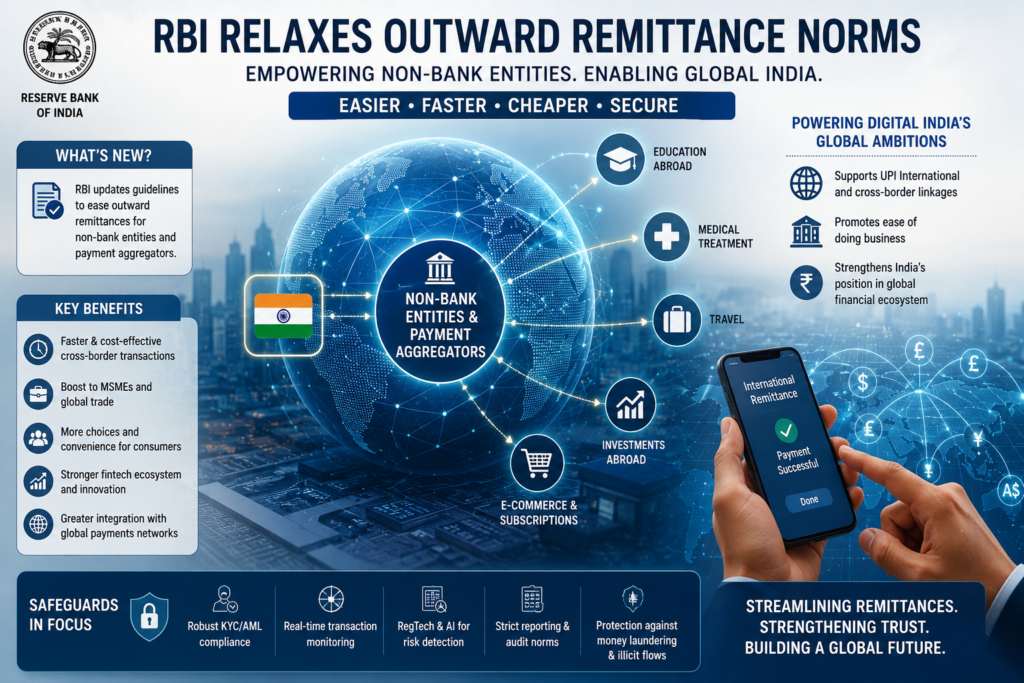
Context The Reserve Bank of India (RBI) updated guidelines to ease outward remittances specifically for non-bank entities and payment aggregators. This regulatory recalibration aims to streamline cross-border financial flows, reduce friction in international trade, and improve the broader ease of doing business.
Main Body: Multi-Dimensional Analysis
- Macroeconomic & Forex Dimension: The relaxation indicates the central bank’s confidence in the stability of India’s foreign exchange reserves and the overall macroeconomic fundamentals. It represents a calibrated step toward broader capital account convertibility. By allowing non-banks greater operational freedom, it decentralizes forex outflows, shifting the regulatory posture from strict control to agile management and monitoring.
- Business & Trade (MSME) Dimension: Micro, Small, and Medium Enterprises (MSMEs) increasingly engage in digital exports, dropshipping, and global SaaS subscriptions. Traditional banking channels are often too slow, expensive, and compliance-heavy for high-volume, low-value transactions. Empowering non-bank payment aggregators reduces transaction costs, accelerates settlement times, and allows Indian MSMEs to remain highly competitive in agile global supply chains.
- Regulatory & Fintech Dimension: This move legitimizes and formalizes the growing power of the Indian fintech ecosystem. By bringing non-bank entities into the formal outward remittance fold with clear guidelines, the RBI is expanding the digital public infrastructure. It forces fintechs to upgrade their internal compliance, API integrations, and cybersecurity frameworks, maturing the sector as a whole.
- Consumer & Retail Dimension: For retail consumers, this translates to frictionless outward mobility of capital. Whether funding a dependent’s overseas education, paying for medical treatments abroad, or making retail investments in foreign equities, individuals can now use intuitive non-bank platforms rather than navigating the bureaucratic hurdles of traditional branch banking.
- Risk Management & Security Dimension: While relaxing the operational friction, the decentralization of remittance channels simultaneously increases the surface area for money laundering and illicit financial flows. The analysis of this dimension requires a focus on how non-banks implement robust Know Your Customer (KYC) and Anti-Money Laundering (AML) protocols. The RBI must rely heavily on automated reporting and reg-tech to monitor these dispersed transactions.
- Global Financial Integration Dimension: Easier outward remittances facilitate the global expansion of the Unified Payments Interface (UPI). By allowing non-bank payment platforms to handle overseas transfers efficiently, India can more easily negotiate reciprocal payment linkages with other nations, projecting its financial technology infrastructure as a global standard.
Positives, Negatives, and Government Schemes
| Positives | Negatives / Challenges | Government Schemes & Initiatives |
|---|---|---|
| Significantly reduces transaction costs and time for MSMEs engaged in global trade. | Increased risk of capital flight during periods of global macroeconomic volatility. | Liberalised Remittance Scheme (LRS). |
| Fosters competition in the financial sector, breaking the monopoly of traditional banks. | Heightened vulnerability to money laundering and terrorism financing through digital channels. | Foreign Exchange Management Act (FEMA) updates. |
| Enhances consumer convenience for overseas education, travel, and healthcare expenses. | Regulatory arbitrage if non-banks are not subjected to stringent compliance audits. | UPI International linkages (e.g., India-Singapore PayNow). |
| Encourages the growth and maturity of indigenous fintech startups and payment aggregators. | Strain on the RBI’s supervisory capacity to monitor millions of micro-transactions. | Cross-Border Payment Aggregator (PA-CB) guidelines. |
Examples The integration of India’s UPI with Singapore’s PayNow system allows retail users to make cross-border remittances instantly and at a fraction of the cost of traditional transfers. Easing norms allows non-bank payment apps to fully leverage such bilateral financial corridors.
Way Forward
- Mandate the adoption of advanced Regulatory Technology (RegTech) and AI-driven anomaly detection by all non-bank entities to flag suspicious cross-border transactions in real-time.
- Harmonize domestic non-bank regulations with the standards set by the Financial Action Task Force (FATF) to ensure global compliance and mitigate AML/CFT risks.
- Launch targeted financial literacy campaigns to educate MSMEs and retail investors about the tax implications (like Tax Collected at Source) and forex risks associated with outward remittances.
- Establish a centralized, interoperable registry for outward remittances to give the RBI a real-time macroeconomic dashboard of capital outflows across both banks and non-banks.
Conclusion Relaxing outward remittance norms for non-bank entities is a progressive leap toward integrating India’s vibrant digital economy with global markets. While it acts as a force multiplier for ease of doing business and consumer convenience, its long-term success hinges on the central bank’s ability to enforce unyielding digital surveillance against financial malfeasance.
Practice Mains Question Analyze the economic rationale behind the RBI’s decision to relax outward remittance norms for non-bank entities. What regulatory safeguards must be prioritized to manage the associated macroeconomic and security risks? (250 words)
4. Expansion of EV Infrastructure under PM E-Drive Scheme
Syllabus GS Paper III: Infrastructure (Energy, Roads), Economic Development, Environmental Pollution & Degradation
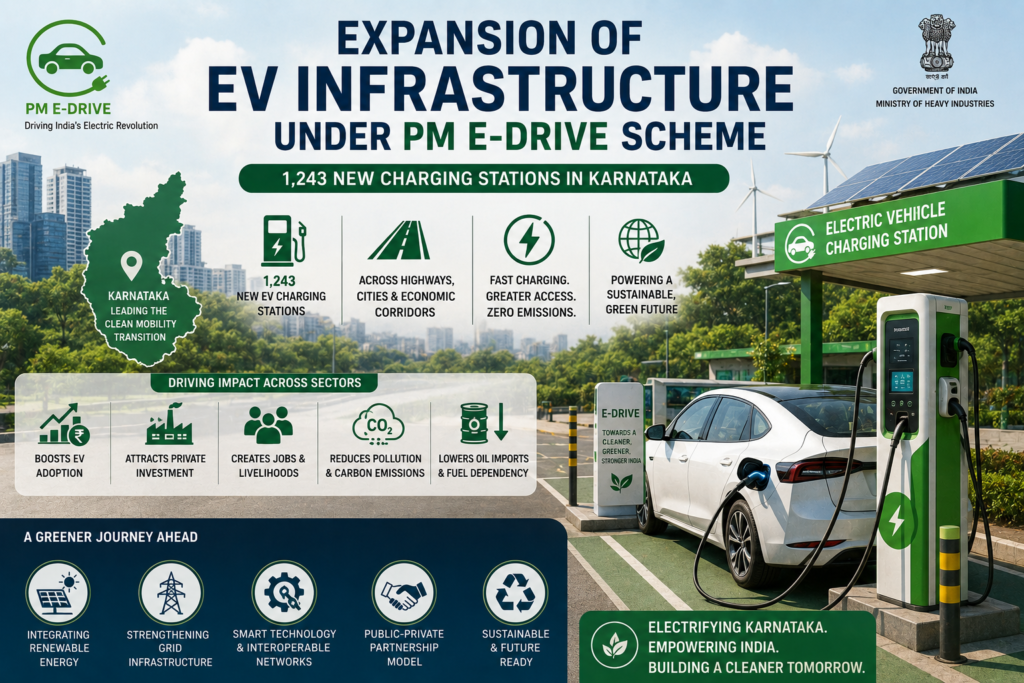
Context Under the newly launched PM Electric Drive Revolution in Innovative Vehicle Enhancement (PM E-Drive) scheme, Karnataka has been allocated 1,243 new electric vehicle (EV) charging stations. This represents a significant push to address range anxiety and scale public EV infrastructure across critical economic corridors.
Main Body: Multi-Dimensional Analysis
- Infrastructure & Grid Capacity Dimension: The deployment of over a thousand fast-charging stations places a heavy structural load on the state’s electricity distribution companies (DISCOMs). This shift requires transitioning from traditional grids to smart grids capable of handling peak-load variations. Upgrading transformers, installing localized sub-stations, and integrating renewable energy sources at charging nodes are critical to prevent grid instability and ensure the power supplied is truly “green.”
- Economic & Investment Dimension: Public charging infrastructure acts as an economic multiplier for the clean mobility ecosystem. By de-risking EV ownership, it accelerates consumer demand for electric two-wheelers, three-wheelers, and commercial fleets. This predictable demand encourages private sector investments in battery manufacturing, localized component sourcing, and charging station operations, fostering a robust downstream automotive economy.
- Environmental & Decarbonization Dimension: Urban centers in Karnataka, particularly Bengaluru, face severe vehicular pollution and traffic congestion. Accelerating public transit and commercial fleet electrification directly cuts tailpipe emissions, reduces particulate matter (PM2.5 and PM10), and aids India in meeting its Nationally Determined Contributions (NDCs) under the Paris Agreement. However, the net environmental benefit depends heavily on shifting the state’s energy mix away from coal-fired thermal power.
- Urban Planning & Land Resource Dimension: Integrating thousands of charging stations into already congested urban spaces demands smart land-use planning. Municipal corporations must reform zoning laws, mandate charging points in commercial real estate building bylaws, and utilize public-private partnerships (PPP) to leverage underutilized municipal land, highway slip lanes, and metro station parking lots.
- Technological & Interoperability Dimension: The EV ecosystem faces challenges from fragmented technology, such as varying plug standards (CCS2, CHAdeMO, Type 2) and proprietary software protocols. The PM E-Drive infrastructure rollout emphasizes open-source charging protocols and unified payment interfaces. This ensures that a single mobile application can discover, reserve, and pay across different charging networks, significantly improving the user experience.
- Logistics & Commercial Fleet Dimension: The e-commerce and last-mile delivery sectors are the fastest adopters of commercial EVs. Establishing a dense public charging network along delivery routes lowers operational costs for logistics companies. This cost efficiency can reduce overall supply chain expenses, ultimately benefiting retail consumers and boosting digital commerce efficiency.
Positives, Negatives, and Government Schemes
| Positives | Negatives / Challenges | Government Schemes & Initiatives |
|---|---|---|
| Mitigates range anxiety, accelerating the mass adoption of electric vehicles. | Increases peak-load stress on already financially strained DISCOMs. | PM E-Drive Scheme (successor to FAME). |
| Attracts private capital through attractive Public-Private Partnership (PPP) models. | High initial capital expenditure for installing advanced DC fast chargers. | National Mission on Strategic Mobility. |
| Stimulates local employment in EV servicing, installation, and maintenance. | Lack of clean, renewable energy sources to power the charging grid uniformly. | Production Linked Incentive (PLI) for Advanced Chemistry Cell (ACC). |
| Reduces India’s crude oil import bill by replacing fossil fuels with electricity. | Rapidly evolving technology risks making early charging infrastructure obsolete. | State-specific EV Policies (e.g., Karnataka EV Policy). |
Examples The Bangalore Electricity Supply Company (BESCOM) has set an industry benchmark by establishing dedicated EV charging hubs across major metro stations and public offices, serving as a functional model for municipal-led charging infrastructure integration.
Way Forward
- Mandate the integration of solar rooftops and captive battery storage systems at all new public charging stations to minimize direct strain on the thermal grid.
- Introduce dynamic, time-of-day (ToD) electricity pricing for EV charging to incentivize users to charge their vehicles during off-peak hours.
- Implement strict electronic waste recycling frameworks specifically targeting the decommissioning and recycling of heavy charging station components and transformers.
- Establish a single-window clearance mechanism at the state level to compress the approval timelines for land allocation and power connections.
Conclusion The targeted expansion of EV infrastructure under the PM E-Drive scheme moves India’s transition to clean mobility from a policy ideal to a structural reality. By systematically resolving range anxiety, this initiative builds the foundation for a sustainable, low-carbon transport network capable of driving green economic growth.
Practice Mains Question Evaluate how the PM E-Drive scheme addresses structural bottlenecks in India’s electric vehicle ecosystem. What steps are required to ensure that the expansion of charging infrastructure does not compromise grid stability? (250 words)
5. Third Kalam & Kavach Conference on Defence Indigenization
Syllabus GS Paper III: Security Challenges & their Management, Science & Technology (Indigenization of Technology, Defence Equipment)
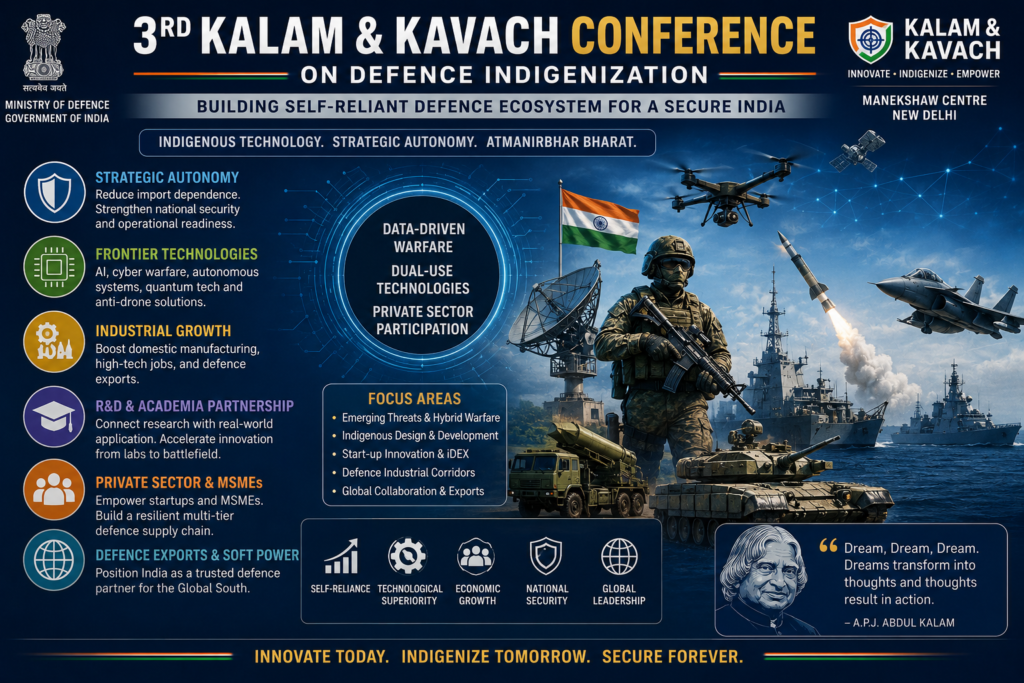
Context The third edition of the Kalam & Kavach Conference was convened at the Manekshaw Centre in New Delhi. Inaugurated by the Ministry of Defence, the national conclave focused heavily on incorporating data-driven warfare, indigenous dual-use technologies, and accelerating private sector participation in India’s defense industrial complex.
Main Body: Multi-Dimensional Analysis
- Strategic Autonomy Dimension: India’s historical reliance on foreign Original Equipment Manufacturers (OEMs) for critical defense platforms presents a significant vulnerability during geopolitical crises. Achieving self-reliance through the “Aatmanirbhar Bharat” paradigm ensures that India’s defense supply chains remain secure from external sanctions, conditional technology transfers, or spare-parts diplomacy, thereby preserving sovereign strategic decision-making.
- Technological & Frontier Warfare Dimension: Modern conflicts are increasingly defined by asymmetric threats, cyber warfare, autonomous systems, and AI-driven battle management systems. The conference highlighted the need to move past traditional metallurgy and mechanical manufacturing toward software-defined defense architectures. Developing indigenous algorithms, secure quantum communications, and anti-drone counter-measures is vital to defending against modern hybrid threats.
- Economic & Industrial Dimension: The defense manufacturing sector possesses immense potential as an engine for industrial growth. Transitioning from an import-dependent model to a manufacturing and export hub stimulates heavy engineering, electronics, and specialized chemical industries. The capital deployed within the domestic economy creates a skilled technical workforce and drives high-value industrial manufacturing.
- R&D and Academia Integration Dimension: A persistent challenge in India’s defense ecosystem is the disconnect between premier research institutions (like DRDO, IITs), academia, and actual production lines. The Kalam & Kavach platform emphasizes creating a collaborative innovation model. By funding defense-focused incubators and aligning university research with the operational requirements of the armed forces, India can shorten the timeline from conceptual design to battlefield deployment.
- Private Sector & MSME Inclusion Dimension: Historically, defense production was the exclusive domain of Defense Public Sector Undertakings (DPSUs). Opening the sector to private defense startups and MSMEs brings agility, cost-competitiveness, and rapid innovation. This creates a multi-tiered supply ecosystem where agile startups develop specialized components, components are integrated by larger private firms, and final systems are delivered efficiently.
- Defense Exports & Soft Power Dimension: Indigenization is the prerequisite for becoming a net exporter of defense equipment to friendly foreign countries, particularly in the Global South. Exporting cost-effective, ruggedized platforms like the BrahMos missile, Akash air defense systems, and advanced light helicopters enhances India’s geostrategic leverage, establishes long-term security partnerships, and repositions India as a reliable security provider in the Indian Ocean Region.
Positives, Negatives, and Government Schemes
| Positives | Negatives / Challenges | Government Schemes & Initiatives |
|---|---|---|
| Minimizes external dependencies for critical military hardware and spares. | Prolonged gestation periods and high development failure rates in defense R&D. | Innovations for Defence Excellence (iDEX). |
| Catalyzes high-tech domestic manufacturing and engineering job creation. | Bureaucratic delays in procurement cycles and trial evaluation processes. | Defence Acquisition Procedure (DAP 2020). |
| Expands India’s high-value export portfolio toward friendly nations. | Reluctance of major global OEMs to transfer core, cutting-edge technology. | Positive Indigenisation Lists (Embargo Lists). |
| Fosters a vibrant ecosystem of agile domestic defense startups and MSMEs. | Limited venture capital interest for long-term, capital-intensive defense projects. | Defence Industrial Corridors (UP & Tamil Nadu). |
Examples The global success and subsequent export orders for the indigenous BrahMos supersonic cruise missile stand as a premier example of how domestic collaborative engineering can produce world-class defensive assets.
Way Forward
- Create a dedicated, non-lapsable defense modernization fund to ensure consistent financial support for long-gestation R&D projects.
- Streamline the trial and testing procedures within the Defence Acquisition Procedure to prevent cutting-edge technology from becoming obsolete before induction.
- Expand the corporatization of DPSUs to enhance operational efficiency, cost accountability, and market competitiveness.
- Deepen international co-development models, such as the India-US Defence Acceleration Ecosystem (INDUS-X), to secure strategic technology access.
Conclusion The Kalam & Kavach Conference underscores that defense indigenization is a core component of comprehensive national power. Transitioning from a major global arms importer to a self-reliant creator of defense technologies secures India’s borders while cementing its status as an advanced industrial economy.
Practice Mains Question “True strategic autonomy is impossible without comprehensive defense indigenization.” In light of recent global conflicts, analyze the critical challenges faced by India’s private sector in contributing to domestic defense manufacturing. (250 words)
6. India-UAE Strategic Defence and Energy Agreements
Syllabus GS Paper II: Bilateral, Regional and Global Groupings and Agreements involving India and/or affecting India’s interests
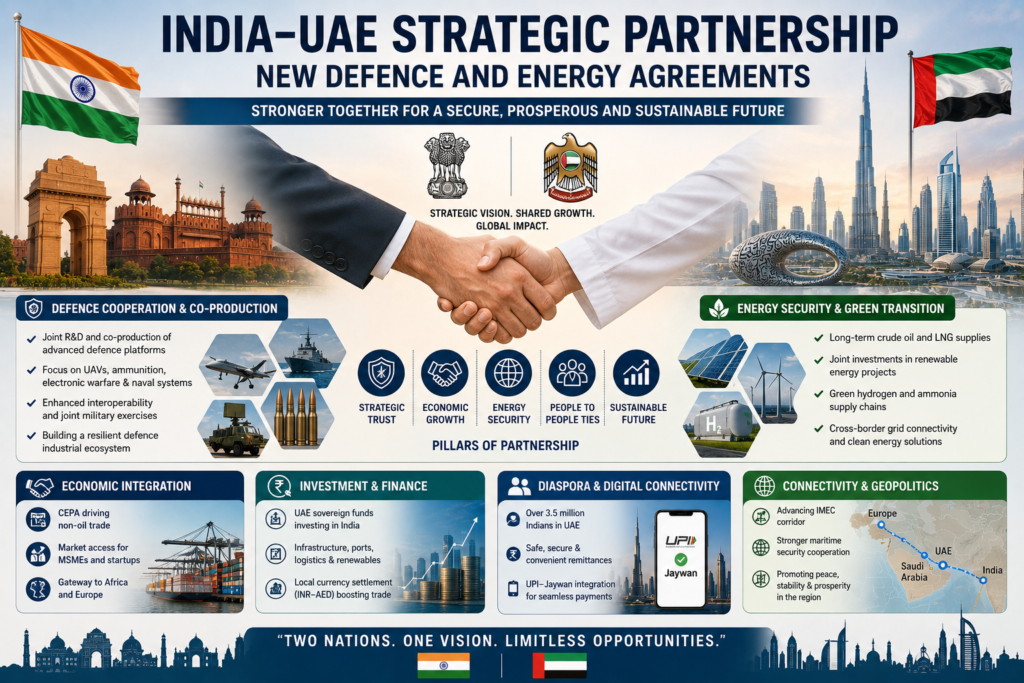
Context Building on high-level bilateral visits, India and the United Arab Emirates (UAE) have signed a series of landmark agreements targeted at deepening co-production in defense hardware and establishing long-term strategic energy partnerships, including renewable energy grids and green hydrogen supply chains.
Main Body: Multi-Dimensional Analysis
- Geopolitically Strategic Dimension: The relationship between India and the UAE has shifted from a transactional buyer-seller dynamic to a deep strategic partnership. Positioned as key pillars within the West Asian security architecture, both nations share a direct interest in maritime security, counter-terrorism, and keeping critical sea lanes like the Strait of Hormuz open. This bilateral alignment is further strengthened by minilateral frameworks like I2U2 (India, Israel, UAE, USA) and the India-Middle East-Europe Economic Corridor (IMEC).
- Energy Security & Transition Dimension: While the UAE remains a foundational supplier of crude oil for India’s Strategic Petroleum Reserves (SPR), the focus of bilateral energy cooperation is shifting toward the green transition. Joint investments in utility-scale solar projects, green hydrogen production, and cross-border grid connectivity support both nations’ net-zero targets. This diversification helps insulate India from the price volatility of the global fossil fuel market.
- Defense Co-Production & Interoperability Dimension: Moving beyond joint military exercises like ‘Desert Cyclone’, the new defense agreements focus on joint research, development, and co-production of military hardware. By combining India’s industrial manufacturing capacity with the UAE’s capital resources, the partnership can develop advanced ammunition, unmanned aerial vehicles (UAVs), and electronic warfare systems tailored for arid operating conditions.
- Economic Integration & CEPA Dimension: The Comprehensive Economic Partnership Agreement (CEPA) signed between India and the UAE has led to a significant increase in non-oil trade. The new strategic agreements leverage this institutional framework to streamline customs duties, protect bilateral investments, and facilitate the integration of Indian MSMEs into the UAE’s industrial supply chains, positioning the Gulf nation as a gateway to African and European markets.
- Financial & Investment Corridor Dimension: The UAE’s sovereign wealth funds (such as the Abu Dhabi Investment Authority – ADIA) are major institutional investors in India’s national infrastructure. Directing these funds into strategic sectors like ports, logistics corridors, and renewable energy zones provides India with steady, long-term foreign capital required to bridge its domestic infrastructure financing gap.
- Diaspora & Remittance Safety Dimension: The UAE hosts over 3.5 million Indian expatriates, who contribute significantly to India’s inbound remittance flows. Strengthening bilateral security, legal frameworks, and digital payment systems (like linking UPI with the UAE’s Jaywan platform) protects the welfare of this diaspora and ensures frictionless, low-cost capital transfers back to India.
Positives, Negatives, and Government Schemes
| Positives | Negatives / Challenges | Government Schemes & Initiatives |
|---|---|---|
| Secures long-term access to capital and strategic crude reserves. | Regional geopolitical volatility in West Asia can disrupt long-term infrastructure corridors. | Comprehensive Economic Partnership Agreement (CEPA). |
| Opens lucrative export avenues for Indian defense platforms in the Middle East. | Strong competition from other global powers seeking influence in the Gulf. | India-Middle East-Europe Economic Corridor (IMEC). |
| Accelerates the deployment of green hydrogen and renewable technology. | Complex regulatory compliance across differing legal jurisdictions for businesses. | National Green Hydrogen Mission. |
| Strengthens maritime security cooperation in the Western Indian Ocean. | Over-reliance on a single region for critical energy imports poses concentration risks. | Think West Policy / Link West Policy. |
Examples The successful operationalization of the local currency settlement (LCS) system, allowing transactions to be settled in Indian Rupees (INR) and UAE Dirhams (AED), demonstrates a practical mechanism to reduce reliance on third-party global reserve currencies like the US dollar.
Way Forward
- Accelerate the implementation of the India-Middle East-Europe Economic Corridor (IMEC) to build reliable, high-capacity rail and shipping links that secure bilateral trade.
- Establish a dedicated joint venture defense fund to finance early-stage aerospace and maritime security startups in both countries.
- Harmonize carbon credit accounting frameworks to facilitate the transparent cross-border trading of green energy certificates.
- Deepen institutional intelligence-sharing and cyber-security protocols to protect critical financial and physical infrastructure from transnational digital threats.
Conclusion The evolving partnerships between India and the UAE indicate a significant realignment of West Asian geopolitics. By weaving together defense co-production, green energy integration, and robust institutional investment, both nations are building an economic corridor that enhances regional stability and advances India’s global economic ambitions.
Practice Mains Question Examine the strategic significance of the shifting dynamics in India-UAE relations from energy dependence to comprehensive defense and technology co-production. How does this partnership strengthen India’s “Think West” policy? (250 words)
7. Operation 777 and Kaal Bhairava Aircraft
Syllabus
- GS Paper III: Security Challenges & their Management (Border Area Management, Modernization of Armed Forces).
- GS Paper III: Science and Technology (Indigenization of Technology, Defence Platforms, Artificial Intelligence).
Context
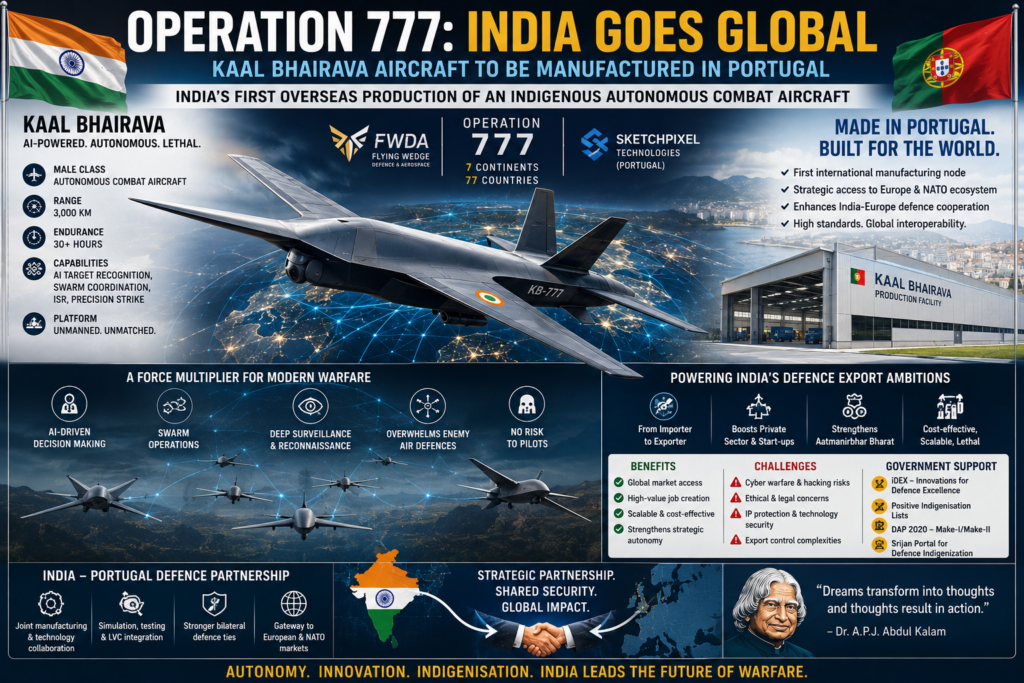
- Flying Wedge Defence & Aerospace (FWDA), an Indian AI warfare firm, has established its first international manufacturing node in Portugal to produce the “Kaal Bhairava” autonomous combat aircraft. This development, under the “Operation 777” initiative, marks India’s historic first overseas production of an indigenous autonomous military aircraft.
Main Body: Multi-Dimensional Analysis
- Technological Sovereignty and AI Warfare Dimension:
- Kaal Bhairava represents a critical paradigm shift from traditional manned platforms to autonomous, AI-driven Medium Altitude Long Endurance (MALE) systems.
- The platform’s integration of AI-enabled target recognition and swarm coordination demonstrates India’s maturing capability in next-generation, software-defined warfare.
- By retaining intellectual property (IP) rights over the core autonomous systems while collaborating with Portugal’s SKETCHPIXEL for simulation integration, India is successfully ring-fencing its strategic IP while leveraging foreign ecosystem expertise.
- Geostrategic and Defence Export Dimension:
- “Operation 777” aims to build global manufacturing partnerships across 7 continents and 77 countries, pivoting India from being the world’s largest arms importer to a formidable net exporter of advanced military technology.
- Setting up a manufacturing base in Portugal provides strategic access to European and NATO defence networks, enabling Indian platforms to be tested, certified, and integrated within complex Western military architectures.
- This initiative counters the traditional dominance of Western and Chinese OEMs in the global drone market, offering a cost-effective, scalable alternative to nations in the Global South and Europe.
- Economic and Industrial Ecosystem Dimension:
- The project validates the capability of India’s private sector and deep-tech start-up ecosystem in delivering critical defence hardware, breaking the historical monopoly of Defence Public Sector Undertakings (DPSUs).
- Expanding global supply chains for the Kaal Bhairava will inadvertently scale up domestic ancillary industries, as core airframe and autonomous modules will continue to be sourced and coded in India.
- This cross-border collaboration fosters massive job creation in high-value engineering, embedded systems design, and AI algorithm development within India’s tech corridors.
- Operational and Battlefield Asymmetry Dimension:
- With an operational range of 3,000 km and over 30 hours of endurance, platforms like Kaal Bhairava offer asymmetrical advantages in intelligence gathering, deep surveillance, and precision strikes without risking human pilots.
- Swarm capabilities allow these autonomous aircraft to overwhelm traditional enemy air defence systems through sheer volume and coordinated AI logic, fundamentally altering the tactical calculus in contested or denied airspaces.
- Diplomatic and Interoperability Dimension:
- Collaborative manufacturing in a NATO member state mandates that Indian systems meet stringent international interoperability standards, such as Live, Virtual, and Constructive (LVC) integration.
- This diplomatic leverage significantly strengthens India-Europe bilateral ties, transitioning the relationship from mere transactional trade to joint strategic military-industrial cooperation.
Positives, Negatives, and Government Schemes
| Positives | Negatives / Challenges | Government Schemes & Initiatives |
| Transforms India from a technology consumer to a global military tech exporter. | High vulnerability of AI systems to advanced electronic warfare and cyber-hacking. | Innovations for Defence Excellence (iDEX). |
| Provides strategic entry into lucrative NATO and European defence supply chains. | Ethical concerns and lack of international legal frameworks for autonomous lethal weapons. | Positive Indigenisation Lists (Embargo Lists). |
| Lowers the economic cost of modern warfare through scalable, unmanned aerial systems. | Risk of technology theft or IP leakage during overseas collaborative manufacturing. | Defence Acquisition Procedure (DAP 2020) – Make-I/Make-II. |
| Stimulates private sector R&D and venture capital interest in Indian defence tech. | Bureaucratic hurdles in obtaining timely export clearances for dual-use technologies. | Srijan Portal for Defence Indigenization. |
Examples
- The partnership between FWDA and Portugal’s SKETCHPIXEL mirrors successful international joint ventures like BrahMos Aerospace (India-Russia) but uniquely highlights the prowess of a purely private Indian start-up entering the highly regulated European defence market autonomously.
Way Forward
- Establish a robust, national-level policy framework governing the export of lethal autonomous weapons to ensure strategic technologies do not fall into the hands of non-state actors.
- Enhance diplomatic lobbying through Defense Attachés in Indian embassies to market the “Operation 777” platforms aggressively to friendly foreign nations.
- Invest heavily in indigenous quantum encryption and counter-electronic warfare capabilities to harden the communication links of autonomous swarms against sophisticated jamming.
- Create a specialized “Defence Export Promotion Council” dedicated exclusively to assisting private aerospace MSMEs in navigating complex international arms trade regulations.
Conclusion
- The manufacturing of the Kaal Bhairava aircraft in Europe under Operation 777 is a watershed moment for India’s military-industrial complex. It not only operationalizes the “Aatmanirbhar Bharat” vision but also projects India’s emerging soft and hard power as a credible, innovative architect of 21st-century autonomous warfare.
Practice Mains Question
- Evaluate the tactical and strategic significance of autonomous combat aircraft in modern warfare. How do initiatives like ‘Operation 777’ redefine India’s position in the global defence export market? (250 words)
8. Upcoming Release of the Book “Apnapan”
Syllabus
- GS Paper II: Governance (Transparency, Accountability, Models of Governance, Successes, and Limitations).
- GS Paper IV: Ethics, Integrity and Aptitude (Public Service Values, Leadership, Probity in Governance).
Context
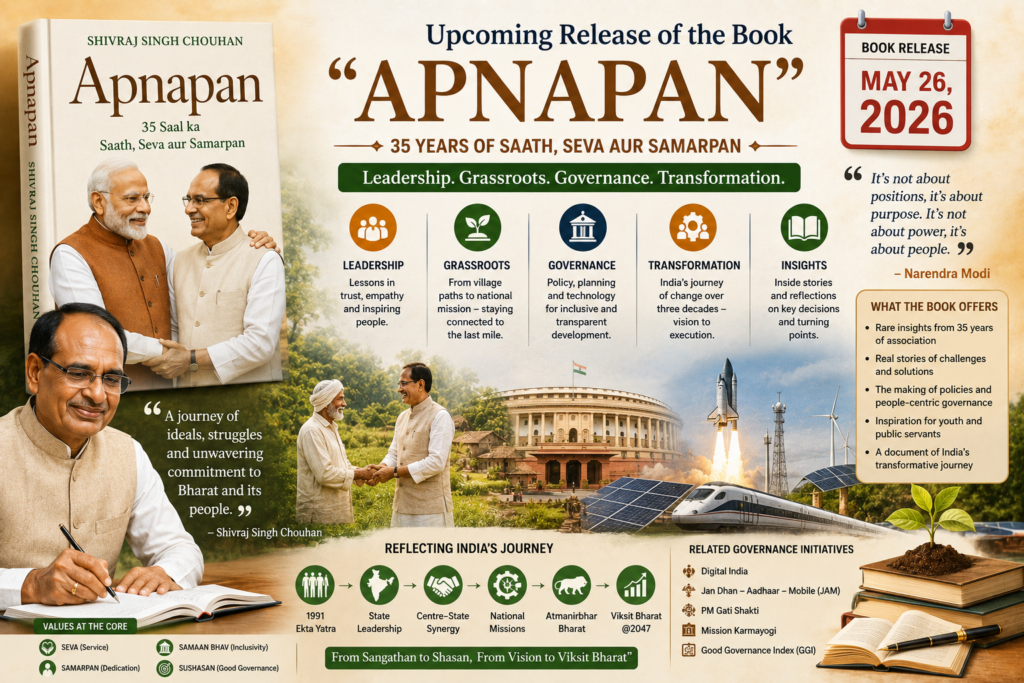
- Union Agriculture Minister Shivraj Singh Chouhan has authored “Apnapan,” a book chronicling his 35-year association with the Prime Minister. Scheduled for release on May 26, 2026, the book provides an insider’s exposition on leadership, grassroots organizational strategy, and transformative governance models in India.
Main Body: Multi-Dimensional Analysis
- Leadership and Organizational Ethics Dimension:
- The narrative underscores a fundamental ethical principle: effective political leadership is not forged merely through public rhetoric, but through sustained discipline, personal sacrifice, and an unbroken grassroots connection.
- It highlights the ethical dimension of public service, demonstrating how deep empathy for the marginalized (the “last mile” citizen) must dictate both policy formulation and ground-level execution.
- The evolution of leadership from organizing early ground-level campaigns (like the 1991 Ekta Yatra) to managing complex national crises illustrates the necessary fusion of ideological commitment and pragmatic governance.
- Governance and Policy Implementation Dimension:
- The book documents the complex transition from political mobilization to active governance, reflecting on how abstract political vision translates into concrete, cabinet-level decision-making.
- It emphasizes the critical role of foresight in administration, noting the early adoption of technology and e-governance strategies that later evolved into India’s robust national digital public infrastructures.
- The analysis of crisis management—such as decision-making during the Covid-19 pandemic—reveals the vital balance between centralized coordination and decentralized execution required for effective disaster response.
- Federalism and State-Center Synergy Dimension:
- Tracing the author’s tenure as a Chief Minister alongside the Prime Minister’s tenure in Gujarat, the text sheds light on the mechanics of cooperative federalism and the exchange of administrative best practices among states.
- It illustrates how successful state-level welfare models and administrative reforms act as laboratories of democracy, eventually scaling up to formulate comprehensive national schemes.
- Socio-Political Transformation Dimension:
- The text serves as a primary documentary of India’s socio-political transformation over three decades, capturing the systemic shift from fractured coalition politics to majority-led definitive governance.
- It conveys a motivational blueprint for youth entering public life, emphasizing that transformative nation-building requires immense resolve and a spirit of service rather than inherent elite privilege.
- Institutional Memory and Political History Dimension:
- First-hand documentation of this nature is vital for preserving institutional memory. It allows future administrators and scholars to analyze the psychological and strategic imperatives behind major national policies.
- It bridges the crucial gap between the public persona of top executives and their private, operational methodologies, demystifying the corridors of power for the average citizen.
Positives, Negatives, and Government Schemes
| Positives | Negatives / Challenges | Government Schemes & Initiatives |
| Preserves valuable institutional memory and first-hand insights into high-level policy making. | Risk of subjective bias and hagiography, potentially lacking critical, academic objectivity. | Mission Karmayogi (Civil Service Capacity Building). |
| Provides a practical blueprint of ethical leadership and grassroots political mobilization. | May oversimplify the complex socio-economic structural challenges faced during those decades. | Good Governance Index (GGI). |
| Highlights the critical importance of integrating technology proactively into public welfare schemes. | Political narratives can sometimes overshadow the silent contributions of the permanent civil service. | Digital India Initiative. |
| Inspires youth to participate in nation-building through discipline, sacrifice, and public service. | Historical events may be viewed entirely through a single ideological or partisan lens. | PM Gati Shakti (Coordination framework). |
Examples
- The book’s reflection on the foresight regarding technology adoption mirrors the actual trajectory of initiatives like the JAM Trinity (Jan Dhan, Aadhaar, Mobile), which evolved from early governance concepts into the world’s most robust national welfare delivery mechanism.
Way Forward
- Encourage the establishment of standardized political and administrative archives where the memoirs and notes of public figures are preserved systematically for objective academic research.
- Integrate rich case studies of indigenous political leadership and crisis management into the foundational training curriculum of the Lal Bahadur Shastri National Academy of Administration (LBSNAA).
- Promote non-partisan platforms where former and current administrators can debate policy evolution openly, ensuring a balanced, multi-faceted historical narrative.
- Foster a strong culture of writing among civil servants and public figures to continuously enrich India’s indigenous administrative literature and democratic discourse.
Conclusion
- Literature like “Apnapan” transcends standard political biography; it serves as a qualitative repository of India’s governance evolution. By documenting the intersection of human empathy, technological foresight, and resolute leadership, it provides enduring lessons for the ethical administration of the world’s largest democracy.
Practice Mains Question
- “Effective governance is the culmination of empathetic leadership and robust organizational discipline.” Discuss this statement in the context of India’s evolving administrative landscape over the past three decades. (250 words)
