
Topic 1: Macroeconomic Stability & FY27 Projections
Syllabus
- GS Paper III: Indian Economy and issues relating to planning, mobilization of resources, growth, development, and employment; Inclusive growth and issues arising from it.
Context
- Recent financial assessments and Economic Survey indicators projected for FY27 forecast India’s GDP growth at $6.8\% – 7.2\%$.
- This growth trajectory highlights the critical interplay between fiscal consolidation, robust private capital expenditure, and external macroeconomic vulnerabilities.

Main Body: Multi-Dimensional Analysis
- Economic Growth Engine & Drivers:
- Investment Resurgence: Public capital expenditure (CapEx) serves as the primary engine, crowd-in private investments across manufacturing, infrastructure, and green energy sectors.
- Consumption Dynamics: Premiumization trends boost urban demand, while a normal monsoon forecast drives structural recovery in rural disposable income and consumption.
- Service Sector Resilience: Digital public infrastructure (DPI), fintech, and Global Capability Centers (GCCs) continue to lead service exports, buffering merchandise export slowdowns.
- Fiscal Consolidation & Resource Mobilization:
- Deficit Targets: The government remains committed to trimming the fiscal deficit toward the target of $4.5\%$ of GDP or lower, anchoring long-term macroeconomic stability.
- Tax Buoyancy: Structural implementation of GST 2.0 (incorporating automated compliance and simplified rate structures) combined with enhanced direct tax compliance ensures steady revenue growth.
- Debt Sustainability: Prudent debt management stabilizes the general government debt-to-GDP ratio, reducing crowding-out effects in the domestic credit market.
- Monetary Policy Coordination & Inflation Control:
- Inflation Dynamics: The Reserve Bank of India (RBI) utilizes a calibrated approach to keep headline CPI within the $4 \pm 2\%$ band, navigating volatile food prices caused by climate shocks.
- Liquidity Management: Balancing system liquidity ensures productive sectors receive sufficient credit flow without stoking demand-pull inflationary pressures.
- External Sector Vulnerabilities:
- Global Headwinds: Sluggish growth in major Western economies and geopolitical friction in critical trade corridors present a persistent threat to India’s merchandise export growth.
- Current Account Deficit (CAD): While robust service remittances keep the CAD within manageable thresholds ($1.5\% – 2\%$ of GDP), volatile global crude oil and commodity prices remain structural wildcards.
- Employment and Inclusive Growth Structural Challenges:
- Jobless Growth Concerns: High capital intensity in booming sectors (Tech, specialized manufacturing) creates a mismatch with the massive influx of low-to-semi-skilled labor.
- K-Shaped Recovery Signals: Divergence between formal corporate profitability and informal sector recovery highlights lingering structural inequalities in income distribution.
Comparative Evaluation: Impacts & Frameworks
| Positives | Negatives | Government Schemes & Initiatives |
| * Investor Confidence: Strong GDP growth indicators attract robust Foreign Portfolio Investment (FPI) and stable Foreign Direct Investment (FDI). * Fiscal Space: Enhanced tax collections provide the state with structural buffers to spend on social safety nets without breaching deficit limits. | * Input Cost Pressures: High global commodity costs squeeze margins for micro, small, and medium enterprises (MSMEs). * Underemployment: Divergence between high growth rates and structural youth underemployment undermines the demographic dividend. | * Production Linked Incentive (PLI) Scheme: Spans multiple sectors to drive domestic manufacturing value addition. * PM Gatishakti National Master Plan: Integrated infrastructure planning to minimize logistics costs and enhance economic competitiveness. |
Examples
- Digital Public Infrastructure (DPI): The scale-up of UPI, ONDC, and account aggregators has formalized credit access for millions of nano-entrepreneurs, lowering the cost of doing business.
- Corporate Balance Sheets: De-leveraged balance sheets of India’s top corporate firms, alongside low Non-Performing Assets (NPAs) in the banking sector, demonstrate a highly resilient twin-balance-sheet advantage.
Way Forward
- Deepen Bond Market Reforms: Accelerate deep, liquid domestic corporate bond markets to lower corporate dependence on bank credit for long-gestation infrastructure projects.
- Rationalize GST Structures: Transition toward a simplified three-tier GST rate structure to reduce litigation, remove inversion anomalies, and minimize compliance overheads for small businesses.
- Skilling for the New Economy: Align educational curricula and vocational training with Industry 4.0 paradigms (AI, green tech, advanced manufacturing) to bridge the skill-employability gap.
- Boost Agricultural Productivity: Scale up climate-resilient farming techniques, micro-irrigation, and agro-processing clusters to insulate rural income streams from monsoon vagaries.
Conclusion
India’s structural macroeconomic projections for FY27 showcase a resilient economy weathering global headwinds through domestic policy stability. Sustaining this momentum requires translating high headline growth into structural, inclusive employment generation while maintaining tight fiscal discipline to secure long-term sovereign stability.
Practice Mains Question
Q. “While India’s macroeconomic growth projections reflect strong resilience against external economic shocks, achieving structural economic inclusivity and job-rich growth remains a critical challenge.” Critically analyze. (250 words, 15 marks)
Topic 2: Draft National Water Metro Policy 2026
Syllabus
- GS Paper III: Infrastructure: Energy, Ports, Roads, Airports, Railways etc.; Urbanization, their problems and their remedies.
- GS Paper II: Government policies and interventions for development in various sectors and issues arising out of their design and implementation.
Context
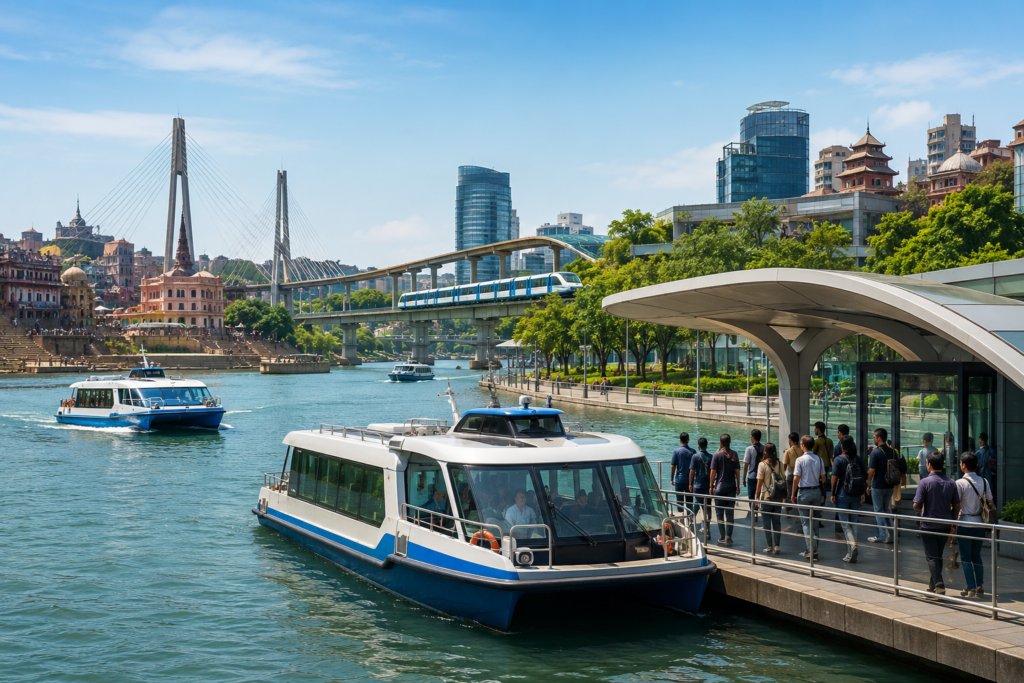
- The Union Government has circulated the Draft National Water Metro Policy 2026 to states for feedback.
- Aiming to duplicate successful localized models, the policy targets 18 initial cities situated along major rivers and coastal networks to integrate eco-friendly water transport into urban transit.
Main Body: Multi-Dimensional Analysis
- De-congesting Urban Agglomerations:
- Alternative Transit Corridors: Utilizes under-exploited inland waterways to bypass heavily congested overland road and rail networks in Tier-1 and Tier-2 cities.
- Last-Mile Connectivity: Connects isolated riverine, island, or coastal suburbs to main city commercial centers, fostering balanced regional urban growth.
- Environmental Sustainability & Climate Action:
- Decarbonizing Transport: Promotes electric, hybrid, or solar-powered vessels, drastically cutting down green-house gas emissions per passenger-kilometer compared to diesel buses or private vehicles.
- Low Wake and Noise Pollution: Mandates specialized hull designs to minimize shoreline erosion and underwater noise, preserving fragile aquatic ecosystems along urban riverbanks.
- Financial and Operational Structuring:
- Public-Private Partnership (PPP) Models: Encourages private sector participation in vessel operations, ticketing systems, and maintenance, while the state builds the core jetty and fairway infrastructure.
- Transit-Oriented Development (TOD): Envisages commercial development around water metro terminals (retail, food courts, parking spaces) to generate non-fare box revenue streams, ensuring financial viability.
- Multi-Modal Transport Integration:
- Unified Ticketing: Integrates water metro services into existing city metro, bus, and rail cards (e.g., National Common Mobility Card – NCMC) to ensure seamless passenger transfers.
- Physical Intermodal Hubs: Designs terminal layouts to sit directly adjacent to existing rail heads or bus bays, eliminating commuter friction during transfers.
- Governance and Federal Coordination Challenges:
- Jurisdictional Overlaps: Navigation requires smooth coordination across multiple administrative bodies, including State Maritime Boards, the Inland Waterways Authority of India (IWAI), and local municipal corporations.
- Environmental Clearances: Siltation management, continuous maintenance dredging, and jetty construction demand stringent Coastal Regulation Zone (CRZ) and environmental compliance.
Comparative Evaluation: Impacts & Frameworks
| Positives | Negatives | Government Schemes & Initiatives |
| * Cost-Effective Infrastructure: Developing fairways requires significantly lower capital outlay per kilometer compared to digging underground metro tunnels or constructing elevated flyovers. * Tourism Boost: Clean, modern water transit systems enhance urban aesthetics and serve as major tourist attractions. | * Seasonal Interruptions: Vulnerable to varying river water levels, heavy monsoon floods, and high siltation rates that disrupt regular services. * High Specific Capital Outlay: Initial procurement of advanced, zero-emission electric catamaran vessels requires significant upfront capital. | * Sagarmala Programme: Integrates coastal community development and port-led modernization. * National Waterways Act, 2016: Declared 111 inland waterways across India as National Waterways, laying the statutory framework for systematic development. |
Examples
- Kochi Water Metro: Serving as the global template for this policy, Kochi successfully integrated 10 island communities using a fleet of battery-powered electric catamarans, reducing city road congestion and cutting emissions.
- Guwahati and Srinagar Pilots: Emerging multi-modal blueprints on the Brahmaputra and Jhelum rivers demonstrate how geographic challenges can be converted into sustainable transit assets.
Way Forward
- Establish Unified Urban Transport Authorities (UUTAs): Statutory creation of UUTAs in all target cities to legally mandate single-point coordination among water, rail, and road transit boards.
- Develop Localized Fleet Manufacturing: Incentivize domestic shipyards through PLI schemes to build advanced electric and hydrogen-fuel-cell vessels, reducing import dependencies and operational costs.
- Mandate Eco-Dredging Frameworks: Use low-impact, continuous micro-dredging technologies that maintain navigable draft depth without destroying benthic riverbed habitats.
- Create Green Carbon Financing Mechanisms: Monetize the carbon emissions saved by shifting passengers to electric water metros, leveraging global green bonds to fund phase-2 infrastructure expansion.
Conclusion
The Draft National Water Metro Policy 2026 marks a paradigm shift in Indian urban planning, treating blue spaces as active transit corridors rather than passive barriers. Resolving jurisdictional overlaps and securing financial viability through commercial terminal development will be vital to unlocking its full potential as a sustainable urban mass transit solution.
Practice Mains Question
Q. “The Draft National Water Metro Policy 2026 offers an innovative blueprint for sustainable urban mass transit, yet its success hinges on overcoming complex federal governance and environmental challenges.” Discuss. (250 words, 15 marks)
Topic 3: Structural Weaknesses in Urban Local Bodies (ULBs)
Syllabus
- GS Paper II: Functions and responsibilities of the Union and the States, issues and challenges pertaining to the federal structure, devolution of powers and finances up to local levels and challenges therein.
Context
- The accelerating pace of India’s urbanization has brought renewed scrutiny to the systemic administrative and financial weaknesses plaguing Urban Local Bodies (ULBs).
- Decades after the landmark 74th Constitutional Amendment Act, municipal corporations continue to struggle with structural inefficiencies, choking sustainable urban development.

Main Body: Multi-Dimensional Analysis
- The Problem of the ‘3 Fs’ (Funds, Functions, Functionaries):
- Financial Starvation (Funds): ULBs remain intensely dependent on state government grants. Local revenue generation via property taxes, user charges, and municipal bonds remains abysmally low due to outdated valuation matrices and poor enforcement.
- Incomplete Devolution (Functions): Most state governments have not fully transferred all 18 functions listed under the 12th Schedule of the Constitution, often retaining control over high-value functions like urban planning and housing through parastatal agencies.
- Human Resource Crunch (Functionaries): Municipal cadres suffer from chronic staff shortages, a lack of specialized urban planners, engineers, and data analysts, alongside low training capacities.
- Erosion of Local Democratic Accountability:
- Weak Mayor System: Unlike global megacities where executive authority rests with a directly or indirectly elected, empowered Mayor, Indian mayors often hold purely ceremonial positions. Executive control remains vested in a State-appointed Municipal Commissioner, diluting democratic local governance.
- Delayed Elections: State Election Commissions frequently postpone municipal elections on arbitrary political grounds, leaving cities under bureaucratic administration for extended periods.
- Parastatal Encroachment on Local Domain:
- Overlapping Authorities: Development Authorities (e.g., BDA in Bengaluru, DDA in Delhi) and special purpose vehicles set up under the Smart Cities Mission often operate independently of the elected ULB, creating fragmentation, duplicity of work, and absolute lack of public accountability.
- Infrastructure Deficits & Climate Vulnerability:
- Unplanned Growth: Weak local execution of master plans drives haphazard urban sprawl, destruction of natural wetlands, and inadequate stormwater drainage infrastructure.
- Climate Adaptation Gaps: ULBs lack the technical and financial capacity to design and execute resilience strategies against urban heat island effects and recurrent flash flooding.
- Data and Technology Deficits:
- Invisible Economies: Poor mapping of informal settlements, slum populations, and floating labor forces leaves local city administrations ill-equipped to plan universal basic service delivery or equitably distribute civic amenities.
Comparative Evaluation: Impacts & Frameworks
| Positives | Negatives | Government Schemes & Initiatives |
| * Proximity to Citizens: ULBs are uniquely positioned to understand and rapidly address highly localized civic grievances and infrastructure needs. * Democratic Grassroots: Provides a vital training ground for leadership development and civic participation at the local community level. | * Severe Revenue Leakages: Massive under-collection of property taxes due to manual records, unmapped properties, and corruption. * Fragmented Accountability: Citizens are left confused about whether to hold the elected corporator, the parastatals, or the state government accountable for civic failures. | * AMRUT 2.0 (Atal Mission for Rejuvenation and Urban Transformation): Links central financial assistance directly to municipal governance reforms, including water secure cities and property tax improvements. * Smart Cities Mission: Introduced technological upgrades, GIS mapping, and Integrated Command and Control Centers (ICCCs) to upgrade municipal data monitoring. |
Examples
- Property Tax Reforms via GIS: The Bruhat Bengaluru Mahanagara Palike (BBMP) and municipal bodies in Madhya Pradesh deployed Geographic Information System (GIS) mapping to track unassessed properties, leading to a substantial boost in local tax revenues.
- Municipal Bond Issuances: A few progressive ULBs like Indore, Vadodara, and Ahmedabad successfully raised capital directly from public markets via green and municipal bonds, demonstrating an alternative pathway to self-reliance.
Way Forward
- Empower the Executive Mayor: Enact legislative amendments across states to institute a fixed, minimum 5-year tenure for Mayors with direct executive financial powers, placing them in charge of city administration over bureaucratic commissioners.
- Mandate Automatic Property Re-evaluation: Implement transparent, technology-driven property tax systems with automatic periodic adjustments tied to market valuations or inflation indices to eliminate political interference in rate setting.
- Absorb Parastatals into ULBs: Gradually merge independent urban development authorities and water boards into the elected municipal fold to establish a unified, democratically accountable command structure for city governance.
- Create a Dedicated Municipal Cadre: Establish a specialized state-level Municipal Services Cadre to recruit professional urban planners, climate resilience experts, and financial officers directly into local administration.
Conclusion
True urban transformation in India cannot be achieved solely through top-down central funding schemes; it fundamentally requires deep structural empowerment of local governance. For Indian cities to act as efficient engines of growth, state governments must urgently devolve financial autonomy and democratic executive authority to Urban Local Bodies.
Practice Mains Question
Q. “Three decades after the 74th Constitutional Amendment Act, Indian Urban Local Bodies (ULBs) remain structurally paralyzed, functioning more as extended arms of state governments than as autonomous institutions of local self-governance.” Critically comment. (250 words, 15 marks)
Topic 4: Jal Jeevan Mission 2.0 Expansion & Rural Water Governance
Syllabus
- GS Paper II: Welfare schemes for vulnerable sections; Issues relating to development and management of Social Sector/Services relating to Health, Education, Human Resources.
- GS Paper III: Infrastructure: Water and Sanitation.
Context
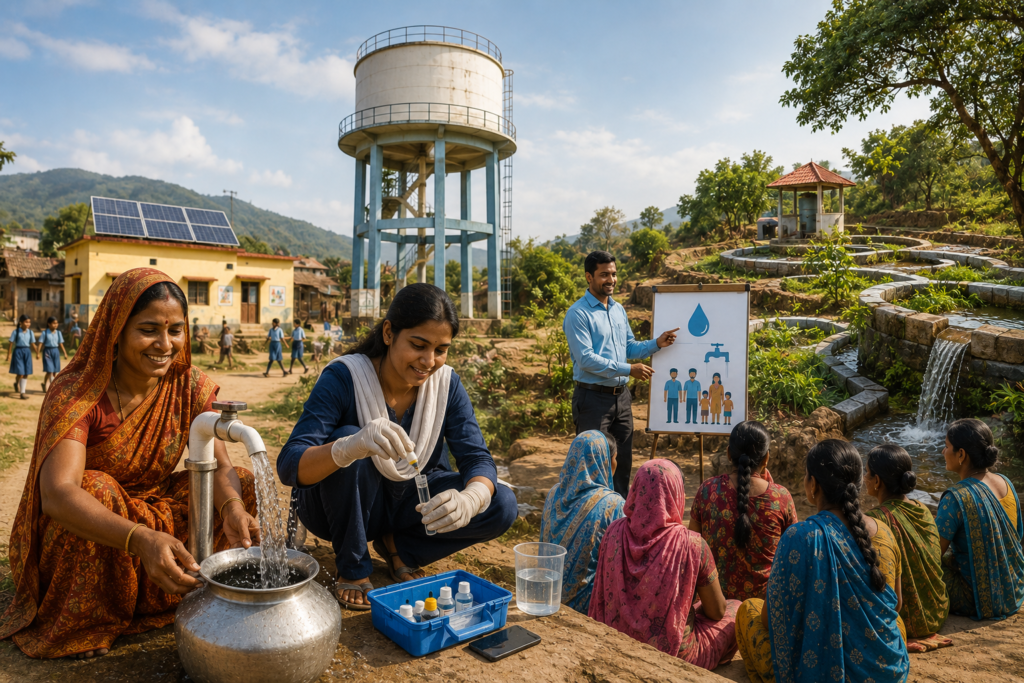
- On May 18, 2026, the Union Government signed reform-linked MoUs with West Bengal and the Andaman & Nicobar Islands under the newly launched Jal Jeevan Mission (JJM) 2.0.
- The mission’s deadline has been officially extended to December 2028, pivoting from pure infrastructure creation to ensuring long-term operational sustainability and community-led governance.
Main Body: Multi-Dimensional Analysis
- Shift from Infrastructure to Service Delivery:
- Phase 1 vs. Phase 2: While JJM 1.0 successfully expanded physical tap water coverage from $16.7\%$ in 2019 to over $81\%$ by early 2026, JJM 2.0 focuses entirely on sustaining the mandated delivery of 55 Litres Per Capita per Day (LPCD) of potable water.
- Source Sustainability: Addressing the rapid depletion of groundwater tables by integrating rainwater harvesting and aquifer recharge systems directly into village water action plans.
- Decentralized Community Governance:
- Empowering Gram Panchayats: The new reform-linked MoUs mandate a Gram Panchayat-led model, transferring the legal and operational responsibility of water infrastructure to Village Water and Sanitation Committees (VWSCs) or Paani Samitis.
- Financial Autonomy: VWSCs are now authorized to collect local water tariffs (user charges typically ranging from ₹50-₹100 per month) to fund recurring Operation and Maintenance (O&M) costs independently of state funds.
- Water Quality Monitoring & Surveillance (WQM&S):
- Institutional Testing: Expansion of water quality testing through over 2,800 laboratories, emphasizing the push for universal NABL accreditation to detect arsenic, fluoride, and bacterial contamination.
- Citizen-Led Surveillance: Training over 24 lakh rural women to use Field Test Kits (FTKs), democratizing water safety data and uploading results directly to the public JJM Dashboard.
- Socio-Economic and Health Dividends:
- Gender Empowerment: Eliminating the daily drudgery of fetching water, which the WHO estimates saves rural women approximately 5.5 crore hours daily, allowing reallocation of time to education and micro-enterprises.
- Disease Burden Reduction: Direct correlation with reduced incidence of water-borne diseases; credible estimates suggest universal safe water access can reduce under-five child mortality from diarrheal diseases by nearly $30\%$.
- Implementation Bottlenecks & Federal Challenges:
- Fund Utilization Deficits: Parliamentary reviews in early 2026 highlighted massive underutilization of allocated budgets by several state Public Health Engineering Departments (PHEDs).
- Topographical Barriers: Extending functional household tap connections (FHTCs) to highly dispersed tribal hamlets, mountainous terrains, and water-scarce arid zones remains technically challenging and capital-intensive.
Comparative Evaluation: Impacts & Frameworks
| Positives | Negatives | Government Schemes & Initiatives |
| * Universal Equity: Ensures non-discriminatory access to safe drinking water, bridging historical caste and class divides in rural civic infrastructure. * Job Creation: Generates millions of localized person-years of employment for plumbers, electricians, and pump operators. | * O&M Collection Resistance: Rural households habituated to free state resources often resist paying monthly user charges, risking system abandonment. * Source Failure: Heavy reliance on groundwater extraction threatens the viability of investments if the underlying aquifers run dry during severe summer droughts. | * Jal Shakti Abhiyan (Catch the Rain): Promotes collaborative, community-driven water conservation and artificial recharge of groundwater. * Swachh Bharat Mission (Grameen) Phase II: Synergizes with JJM by ensuring safe disposal of greywater generated by increased tap water usage. |
Examples
- Andaman & Nicobar Islands: Recently achieved $100\%$ rural tap water coverage and ‘Har Ghar Jal’ certification, successfully implementing fully funded financial models for O&M despite severe logistical island constraints.
- Integrated Grievance Redressal: The JJM portal’s “Citizen Corner” allows villagers to publicly report dry taps or contaminated water, establishing direct accountability against the local PHEDs.
Way Forward
- Enforce Ring-Fenced O&M Accounts: Mandate that state governments directly transfer untied finance commission grants to Gram Panchayats specifically for bridging any deficit in local water tariff collections.
- Technological Integration for Leak Detection: Deploy Internet of Things (IoT) based smart flow meters in bulk water distribution lines to monitor real-time supply hours and instantly detect pipeline leakages.
- Mandatory Greywater Management: Legally bind the approval of new village water schemes to the concurrent construction of localized greywater treatment and soak-pit infrastructure.
- Strengthen State-Level PMUs: Build technical capacity within state PHEDs by hiring external project management units (PMUs) to accelerate the drafting and execution of delayed Detailed Project Reports (DPRs).
Conclusion
- The transition to Jal Jeevan Mission 2.0 represents a necessary maturation of India’s rural water policy, shifting the metric of success from pipes laid to uninterrupted water delivered.
- Ensuring the financial viability of local Paani Samitis and securing raw water sources against climate-induced droughts will determine if this historic infrastructure push yields permanent socio-economic transformation.
Practice Mains Question
Q. “The success of the Jal Jeevan Mission 2.0 relies less on civil engineering and more on establishing robust, financially sustainable institutions of local self-governance.” Analyze the statement in the context of recent reform-linked MoUs. (250 words, 15 marks)
Topic 5: India-Vietnam Defence Diplomacy & Indo-Pacific Security
Syllabus
- GS Paper II: Bilateral, regional and global groupings and agreements involving India and/or affecting India’s interests; Effect of policies and politics of developed and developing countries on India’s interests.
Context
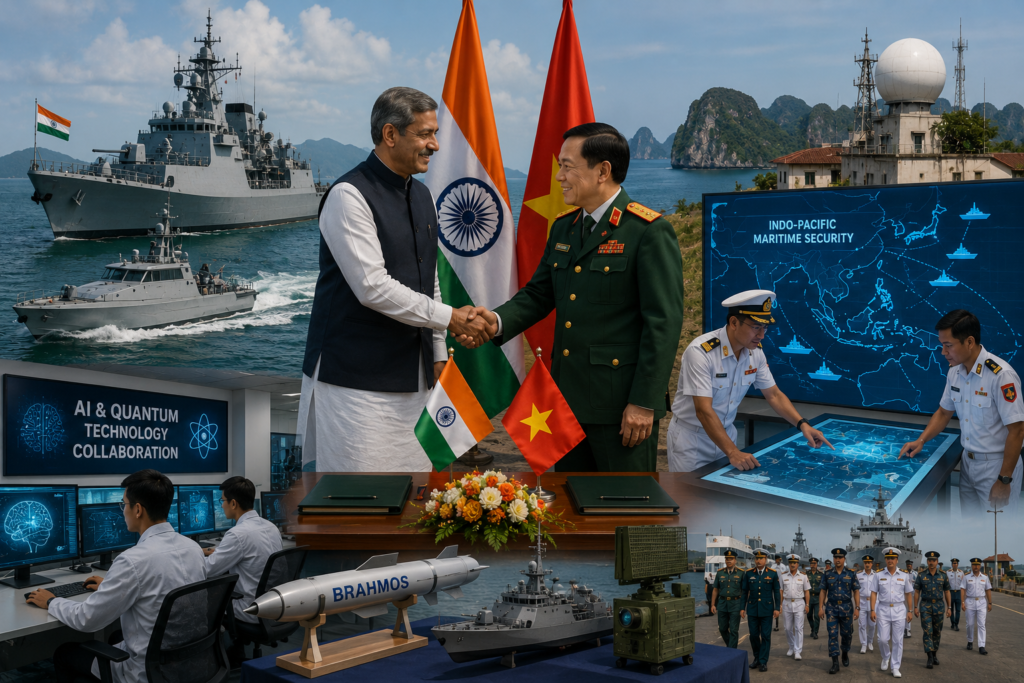
- In a major upgrade to the Enhanced Comprehensive Strategic Partnership, India’s Defence Minister visited Hanoi on May 18-19, 2026.
- The bilateral dialogue expanded traditional maritime security cooperation into cutting-edge frontiers, highlighted by new agreements in Artificial Intelligence (AI) and Quantum Technology.
Main Body: Multi-Dimensional Analysis
- Strategic Convergence in the Indo-Pacific:
- Counter-Balancing Assertiveness: Both nations share deep-seated concerns regarding unipolar dominance and unilateral alterations of the status quo in the South China Sea, driving a mutual need for multipolar deterrence.
- Act East Policy Anchor: Vietnam stands as the critical geographic and strategic lynchpin of India’s Act East Policy, facilitating deeper Indian naval and economic integration with the broader ASEAN bloc.
- Expansion into Emerging Technologies:
- AI and Quantum MoUs: The historic agreement between India’s Military College of Telecommunications Engineering and Vietnam’s Telecommunications University signifies a shift from buying hardware to co-developing next-generation warfare technologies.
- Institutional Capacity Building: India’s establishment of an Artificial Intelligence lab in Nha Trang and a language lab for Air Force officers demonstrates a commitment to soft-power diplomacy and interoperability.
- Defence Industrial Cooperation:
- Line of Credit Utilization: India has extended substantial defence Lines of Credit (LoC) to Vietnam, enabling the procurement of high-speed patrol boats and exploring acquisitions of Indian-made missile systems (like BrahMos) and radar tech.
- Atmanirbhar Bharat Export Push: Vietnam represents a primary target market for India’s burgeoning domestic defence manufacturing sector, aiding India’s goal of achieving self-reliance through scalable defence exports.
- Maritime Security & Freedom of Navigation:
- UNCLOS Adherence: The joint statements consistently emphasize the United Nations Convention on the Law of the Sea (UNCLOS) as the sole legal framework for resolving overlapping maritime territorial claims.
- Operational Interoperability: Increased frequency of coordinated patrols, complex joint naval exercises, and reciprocal logistics support arrangements enhance both navies’ capacity to secure vital Sea Lanes of Communication (SLOCs).
- Geopolitical Vulnerabilities:
- Economic Asymmetries: Vietnam’s deep economic integration and supply-chain dependence on its northern neighbor constrain how overtly it can balance against regional hegemony, forcing a careful tightrope walk.
- ASEAN Consensus Dilemma: The lack of a unified strategic posture within ASEAN limits the collective effectiveness of bilateral agreements in deterring aggressive grey-zone maritime tactics.
Comparative Evaluation: Impacts & Frameworks
| Positives | Negatives | Government Schemes & Initiatives |
| * Force Multiplier: Elevates India’s profile as a net security provider in the region rather than just a massive consumer of global defence tech. * Tech Synergy: Joint research in Quantum computing prevents both developing nations from falling behind in the global algorithmic arms race. | * Delivery Deficits: India’s historical track record of delayed project execution and bureaucratic hurdles in utilizing Lines of Credit damages its reputation as a reliable supplier. * Escalation Risks: Overtly arming littoral states in contested waters risks unpredictable diplomatic blowback from rival regional powers. | * Act East Policy: The overarching diplomatic framework driving economic, strategic, and cultural relations with the Asia-Pacific. * Joint Vision Statement 2030: A previously signed bilateral roadmap explicitly defining the trajectory for maritime, cyber, and military medicine cooperation. |
Examples
- Tech Diplomacy: The May 2026 MoU focused on pattern recognition, decision support systems (AI), and quantum sensing directly addresses the requirements of modern, data-driven asymmetric warfare.
- Naval Asset Transfers: India’s previous gifting of the active-duty missile corvette INS Kirpan to the Vietnam People’s Navy set a precedent for tangible capability enhancement over mere diplomatic rhetoric.
Way Forward
- Accelerate Defence Supply Chains: Streamline India’s defence export bureaucratic clearance mechanisms to ensure the timely delivery of critical platforms like anti-ship missiles and coastal radar systems.
- Establish Joint R&D Funds: Create a dedicated sovereign fund strictly for collaborative defense startups from both nations to rapidly prototype solutions in drone swarm logic and quantum communications.
- Expand Intelligence Sharing: Formalize white-shipping agreements into deeper real-time encrypted intelligence sharing regarding sub-surface (submarine) movements in the Indo-Pacific.
- Trilateral Mini-Laterals: Expand the bilateral framework into a trilateral dialogue by including aligned nations like Japan or the Philippines to create a more robust maritime deterrent network.
Conclusion
- The May 2026 defence agreements mark a critical evolution of India-Vietnam relations from a transactional buyer-seller dynamic to a collaborative technological partnership.
- By integrating AI and Quantum computing into their strategic framework, both nations are future-proofing their alliance against the rapidly changing character of multi-domain warfare in the Indo-Pacific.
Practice Mains Question
Q. “The recent agreements between India and Vietnam in emerging technologies like AI and Quantum computing indicate a strategic maturation of the Act East Policy.” Discuss the significance of this evolving defence partnership for Indo-Pacific stability. (250 words, 15 marks)
Topic 6: Climate Resilience & Record Power Demand
Syllabus
- GS Paper III: Infrastructure: Energy; Conservation, environmental pollution and degradation, environmental impact assessment; Disaster and disaster management.
Context
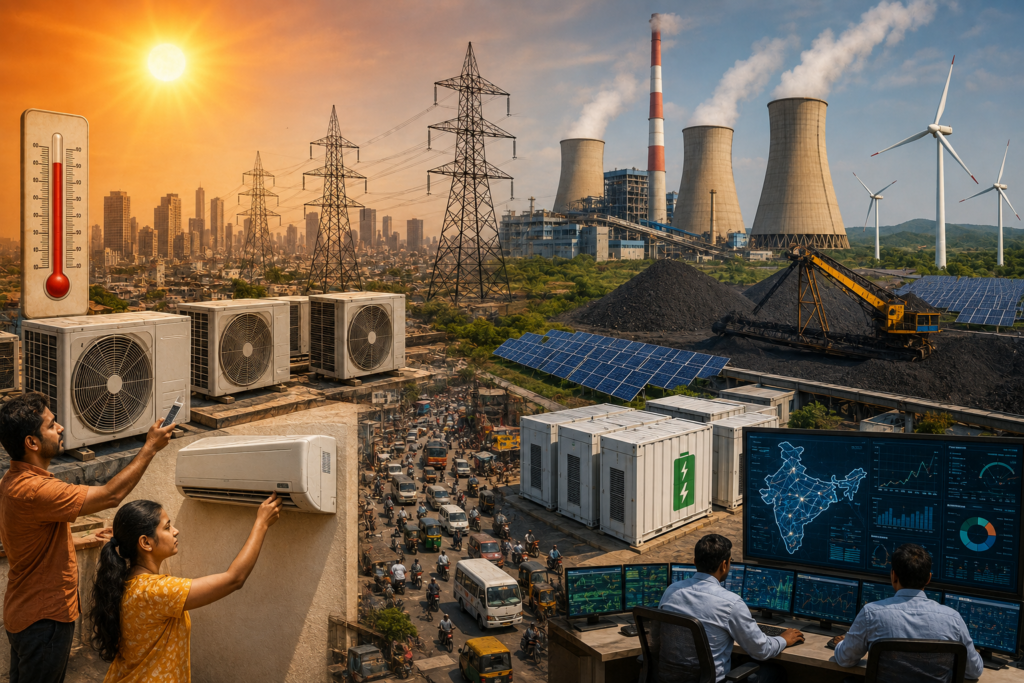
- Intense, prolonged heatwaves in the summer of 2026 have driven India’s national power demand to unprecedented, historic highs.
- This extreme weather event exposes the vulnerabilities of the national grid and highlights the urgent need for a climate-resilient energy transition.
Main Body: Multi-Dimensional Analysis
- The Demand Surge Dynamics:
- Cooling Load Explosion: Rapid urbanization and rising per capita incomes have exponentially increased the penetration of air conditioning units, creating massive, sustained spikes in residential daytime and nighttime power demand.
- Industrial Rebound: Post-pandemic structural economic recovery and heightened manufacturing activity under PLI schemes have simultaneously driven up base-load industrial power consumption.
- Grid Vulnerabilities & Base-Load Reliance:
- Coal’s Persistent Dominance: Despite aggressive renewable capacity additions, the grid remains heavily reliant on thermal power (coal) to provide the stable base-load required to prevent systemic blackouts during peak demand.
- Logistical Bottlenecks: Sustaining peak generation strains the domestic coal supply chain, requiring emergency imports and prioritized railway rakes, which disrupts passenger and freight rail networks.
- The Renewable Intermittency Challenge:
- The Evening Peak: Solar power generation peaks at noon but plummets by evening, perfectly coinciding with the daily surge in residential cooling demand, creating a severe supply-demand mismatch (the ‘Duck Curve’ problem).
- Transmission Gridlock: The bulk of utility-scale solar and wind generation is concentrated in western and southern states, severely testing the capacity of the national transmission grid to wheel power to high-demand northern states without transmission losses.
- The Climate-Energy Nexus:
- Water Stress on Thermal Plants: Extreme heatwaves accelerate the drying of reservoirs. Since thermal power plants require massive volumes of freshwater for cooling, severe droughts force plant shutdowns precisely when power is needed most.
- Hydro Generation Slump: Poor winter snowfall and erratic monsoon patterns severely deplete hydro-electric generation capacity, removing a critical buffer for meeting peak power demands.
- Economic and Social Impacts:
- Labor Productivity Loss: Severe heat forces the curtailment of outdoor construction and agricultural activities, resulting in significant macroeconomic losses and threatening the livelihoods of daily wage earners.
- Financial Health of DISCOMs: Purchasing expensive short-term power from energy exchanges to avoid load-shedding drastically degrades the financial balance sheets of state-owned distribution companies.
Comparative Evaluation: Impacts & Frameworks
| Positives | Negatives | Government Schemes & Initiatives |
| * Stress-Testing the Grid: Successfully managing record demand validates the investments made in integrating the national grid into a single, synchronized frequency. * Policy Catalyst: Forces an accelerated policy pivot toward grid-scale battery storage and energy efficiency mandates. | * Emissions Spike: Increased reliance on older, inefficient thermal plants to meet peak load temporarily derails India’s short-term carbon emission reduction targets. * Tariff Hikes: The high cost of emergency power procurement is inevitably passed onto consumers, fueling inflation. | * Green Energy Corridor: Dedicated transmission infrastructure for evacuating large-scale renewable power to the national grid. * National Action Plan on Climate Change (NAPCC): Framework encompassing missions on solar energy and sustainable habitats to build systemic resilience. |
Examples
- Battery Energy Storage Systems (BESS): Pilot deployments of large-scale BESS in states like Gujarat are proving critical in storing excess noon solar energy to dispatch during the crucial 6 PM – 10 PM peak load window.
- Demand Side Management: Implementing Time-of-Day (ToD) tariffs to financially incentivize industries to shift their heavy power consumption away from the grid’s peak hours.
Way Forward
- Accelerate Energy Storage Deployment: Transition from merely tendering renewable capacity to mandating “Round-the-Clock” (RTC) power tenders that seamlessly integrate solar/wind with Battery Storage or Pumped Hydro.
- Upgrade Grid Intelligence: Invest heavily in AI-driven smart grids capable of predictive load forecasting, automated demand-response, and dynamic management of distributed energy resources (like rooftop solar).
- Mandate Green Building Codes: Strictly enforce the Energy Conservation Building Code (ECBC) in all new commercial and residential real estate to mandate passive cooling designs, drastically reducing baseline AC demand.
- Decentralize Cooling Solutions: Subsidize district cooling systems for large commercial hubs and promote highly energy-efficient, super-standard appliances for the residential sector.
Conclusion
- The record power demand of 2026 is not an anomaly but a permanent structural shift driven by the harsh realities of climate change.
- Securing India’s energy future requires moving beyond the binary debate of coal versus renewables, focusing instead on building a highly flexible, modernized grid supported by massive utility-scale energy storage.
Practice Mains Question
Q. “India’s growing vulnerability to extreme heatwaves has transformed the challenge of grid management into a broader crisis of climate adaptation.” Critically analyze the challenges of meeting record power demand and suggest a resilient energy transition strategy. (250 words, 15 marks)
Topic 7: Urban Air Quality Management Innovations (Solar-Powered Microalgae Trees)
Syllabus
- GS Paper III: Conservation, environmental pollution, and degradation; Science and Technology – developments and their applications and effects in everyday life.
Context
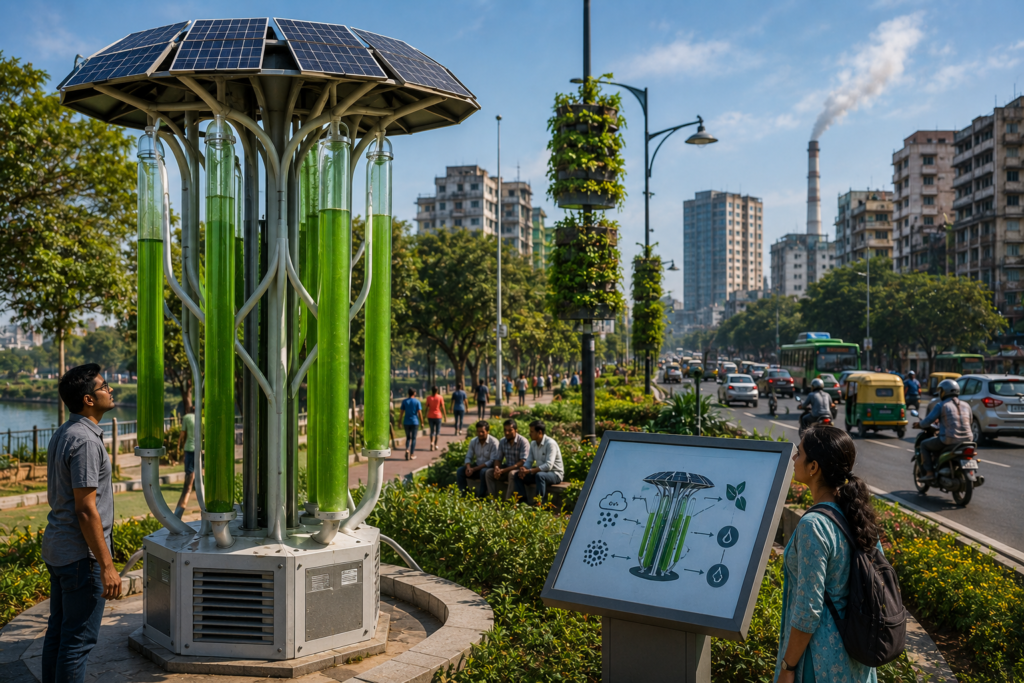
- India’s first solar-powered “Algae Tree” (a microalgae-based photobioreactor system) was installed in Bhopal’s Swami Vivekananda Park under a Smart Cities pilot project.
- The technology serves as a nature-inspired carbon-capture solution targeted at high-density, space-scarce urban pollution hotspots.
Main Body: Multi-Dimensional Analysis
- Technological Innovation & Biomimicry:
- Operates as an outdoor bioreactor utilizing single-celled green freshwater microalgae to accelerate natural photosynthesis.
- Dynamically draws in ambient polluted air, allowing the microalgae to capture carbon dioxide and trap airborne particulate matter (PM2.5 and PM10).
- Uses integrated solar panels to power internal circulation pumps, rendering the entire biochemical filtration system energetically self-sustaining.
- Carbon Sequestration Efficiency:
- Claims an annual absorption capacity of approximately 1.5 tonnes of CO2 per unit, which is roughly comparable to the carbon-scrubbing potential of 20 to 25 mature natural trees.
- Releases nearly one tonne of pure oxygen directly back into the immediate urban micro-environment annually.
- Exhibits a high surface-area-to-volume efficiency, generating significant ecological output from a physical footprint of just a few square meters.
- Urban Spatial Planning Dimensions:
- Solves the land-scarcity constraint in Tier-1 and Tier-2 megacities where traditional large-scale afforestation or green belt creation is restricted by concrete infrastructure.
- Optimized for localized deployment at heavy traffic intersections, busy bus terminals, industrial borders, and concrete commercial plazas.
- Serves as a modular, plug-and-play civic installation that avoids the decades-long gestation periods required for natural saplings to mature.
- Ecological Limitations vs. Natural Forests:
- Lacks the multi-layered ecological services of real trees, such as providing natural shade, reducing the broader urban heat island effect via evapotranspiration, and supporting urban biodiversity (birds, insects, and soil microbiomes).
- Does not absorb heavy acoustic pollution or contribute to soil moisture retention and groundwater recharge pathways.
- Operational & Economic Feasibility:
- Requires continuous maintenance cycles, including nutrient top-ups, regular water management, and bio-sludge harvesting to prevent algal crashes.
- Involves substantial upfront capital expenditures compared to planting traditional low-cost saplings, challenging its wide deployment across cash-strapped municipalities.
Comparative Evaluation: Impacts & Frameworks
| Positives | Negatives | Government Schemes & Initiatives |
| * Hyper-Local Purification: Drastically reduces particulate matter levels in dense urban choke points where traditional planting is physically impossible. * Space Efficiency: Maximum ecological output per square foot, bypassing city real estate constraints. | * High Maintenance Dependency: Susceptible to functional failures if solar pumps fail, or if water temperatures drop or spike drastically. * No Ecological Depth: Fails to provide shade or support urban wildlife habitats. | * National Clean Air Programme (NCAP): Targets a 20-30% reduction in particulate matter concentration in non-attainment cities. * Smart Cities Mission: Drives the funding and integration of technological innovations into urban civic design frameworks. |
Examples
- Bhopal Smart City Project: The active installation in Swami Vivekananda Park, developed after intensive research by the Mushroom World Group, serves as India’s foundational baseline.
- Global Precedents: The “Liquid 3” urban photobioreactor systems deployed in Belgrade, Serbia, which successfully proved that microalgae can remain highly resilient to heavy metal toxicity where normal trees struggle to survive.
Way Forward
- Integrate into NCAP Blueprints: Include bio-engineered technological solutions as recognized, fundable components under the National Clean Air Programme (NCAP) for non-attainment cities.
- Develop Biomass Monetization Pathways: Establish municipal supply chains to harvest the spent algal biomass from these trees, converting it into bio-fertilizers or biofuel feedstocks to offset operating costs.
- Execute Hybrid Urban Forestry: Deploy algae trees strictly as localized, high-intensity supplements at hyper-polluted junctions while continuing to expand natural urban tree canopies via Miyawaki forestry in open spaces.
- Standardize Smart City Tenders: Create generalized procurement and maintenance guidelines under the Ministry of Housing and Urban Affairs (MoHUA) to lower equipment costs through competitive domestic manufacturing.
Conclusion
- The installation of India’s first Algae Tree in Bhopal marks a forward-thinking fusion of biotechnology and urban planning.
- While artificial bioreactors can never replace the holistic ecological necessity of living forests, they offer a highly effective, space-saving tool to mitigate acute particulate and carbon loads in India’s most congested urban corridors.
Practice Mains Question
Q. “Bio-engineered environmental solutions like solar-powered photobioreactors offer critical stop-gap mechanisms for urban air purification, yet they cannot substitute the holistic ecosystem services of natural urban forests.” Discuss. (250 words, 15 marks)
Topic 8: AI Integration in Public Education
Syllabus
- GS Paper II: Issues relating to development and management of Social Sector/Services relating to Education, Human Resources.
- GS Paper III: Awareness in the fields of IT, Computers, Robotics, Artificial Intelligence.
Context
- At the Education World Forum in London, tech major Google announced a massive expansion of its free AI Educator Series (GES) to India.
- Operating via strategic alliances with state governments including Maharashtra and the Punjab School Education Board, the initiative aims to institutionalize responsible AI use across public school ecosystems.

Main Body: Multi-Dimensional Analysis
- Pedagogical Evolution & Administrative Efficiency:
- Empowers public school educators to utilize generative AI tools (such as Gemini and NotebookLM) to construct personalized lesson plans, interactive study guides, and multi-tier student quizzes.
- Recent global impact metrics indicate that structured AI integration can reduce an educator’s routine administrative workload by up to 70%.
- Reallocates critical teacher hours away from repetitive grading and documentation directly toward 1-on-1 student mentorship and motivational support counseling.
- Bridging the Linguistic and Digital Divide:
- Tailors modules to unique Indian classroom constraints by deploying a strictly mobile-first, lightweight learning architecture accessible on low-cost smartphones.
- Localizes training materials into six regional languages (including Marathi, Punjabi, Hindi, Telugu, Assamese, and Odia) during its pilot phase to bypass English-language barriers.
- Combines technical upskilling with UNICEF partnerships to target foundational literacy and numeracy outcomes in under-resourced, rural schools.
- Alignment with National Education Policy (NEP) 2020:
- Directly materializes the core mandates of NEP 2020, which explicitly highlights artificial intelligence as a necessary cross-disciplinary learning vertical and a tool for teacher enablement.
- Transforms teachers from rigid primary information-disseminators into adaptive, dynamic learning facilitators capable of navigating digital-era classrooms.
- Socio-Economic Inclusivity vs. Elite Polarization:
- Democratizes access to high-end digital tutoring assets, ensuring that students in state-run public schools benefit from the same technological affordances as elite private schools.
- Addresses systemic educational disparities by using automated diagnostic reading applications (like the India-first ReadAlong platform) to correct early learning deficits at the grassroots level.
- Ethical, Plagiarism, and Safety Safeguards:
- Focuses heavily on the core tenets of “Responsible AI,” training teachers to spot algorithmic biases, deepfakes, and hallucinations before utilizing AI outputs in classroom evaluations.
- Establishes strict data privacy guardrails to protect student identities and sensitive academic performance records from commercial profiling.
Comparative Evaluation: Impacts & Frameworks
| Positives | Negatives | Government Schemes & Initiatives |
| * Teacher Empowerment: Reduces administrative fatigue, allowing public school educators to focus on creative and interactive teaching methods. * Equity at Scale: Offers rural and vernacular-medium classrooms access to cutting-edge adaptive learning frameworks. | * Infrastructure Bottlenecks: Highly dependent on reliable electricity and stable internet connectivity, which remain uneven across rural India. * Risk of Over-reliance: Potential erosion of critical thinking if teachers or students use AI outputs uncritically without manual verification. | * National Education Policy (NEP) 2020: Promotes the structured integration of educational technology and AI literacy at all tiers. * PM SHRI Schools: Upgrading select institutions into exemplar schools showcasing modern, technology-driven pedagogical tools. |
Examples
- State-Level Strategic Alliances: The formal adoption of the Google AI Educator Series by the Maharashtra State Department of Education and the Punjab School Education Board to systematically train thousands of vernacular-medium teachers.
- AI State University Blueprint: India’s first AI-enabled state university model developed in collaboration with Chaudhary Charan Singh University, providing a foundational template for scaling vocational and digital higher education.
Way Forward
- Institutionalize B.Ed. Curricular Upgrades: Mandate the inclusion of basic prompt engineering, data privacy laws, and AI instructional design into all formal Bachelor of Education (B.Ed.) degree frameworks nationwide.
- Establish Decentralized AI Innovation Hubs: Setup dedicated digital learning cells within District Institutes of Education and Training (DIETs) to provide continuous technical troubleshooting for rural school teachers.
- Create Open-Source Localized LLMs: Sponsor the development of highly specialized, open-source educational Large Language Models trained on NCERT and state-board curricula to eliminate commercial software dependency.
- Formulate National AI Ethical Guidelines for K-12: Issue a binding regulatory framework via the Ministry of Education outlining safe boundaries for AI-generated student grading and data ownership in public schools.
Conclusion
- Integrating artificial intelligence into India’s public education system through large-scale teacher upskilling in states like Maharashtra and Punjab is a definitive step toward closing the digital divide.
- By shifting the focus from student-facing tools to empowering frontline educators with localized, mobile-first AI competencies, India can successfully execute the visionary technology-led mandates of NEP 2020.
Practice Mains Question
Q. “Empowering public school educators with artificial intelligence literacy is foundational to preventing technology from widening India’s existing educational divide.” Evaluate this statement in light of recent public-private partnerships in teacher training. (250 words, 15 marks)
