
Topic 1: Historic Cabinet Expansion in Tamil Nadu & The Return of Coalition Era
Syllabus
- GS Paper 2: Indian Constitution—historical underpinnings, evolution, features, amendments, significant provisions and basic structure; Functions and responsibilities of the Union and the States; Issues and challenges pertaining to the federal structure.
Context
- On May 21, 2026, the newly formed Tamilaga Vettri Kazhagam (TVK) government in Tamil Nadu, led by Chief Minister C. Joseph Vijay, underwent a massive expansion by inducting 23 new ministers (bringing the total cabinet strength to 33). This marks the official return of a formal coalition government in the state after nearly six decades.
Main Body: Multi-Dimensional Analysis
- Evolution of Political Dynamics: The induction of legislators from alliance partners, specifically two from the Congress party, brings a national player back into the state’s executive council for the first time since 1967. This ends a 59-year streak of single-party majority governance dominated by singular Dravidian entities.
- Constitutional Limits on Executive Council: The expansion respects the ceiling mandated by the 91st Constitutional Amendment Act, 2003, which limits the size of the Council of Ministers in a state to 15% of the total strength of the Legislative Assembly (Article 164(1A)).
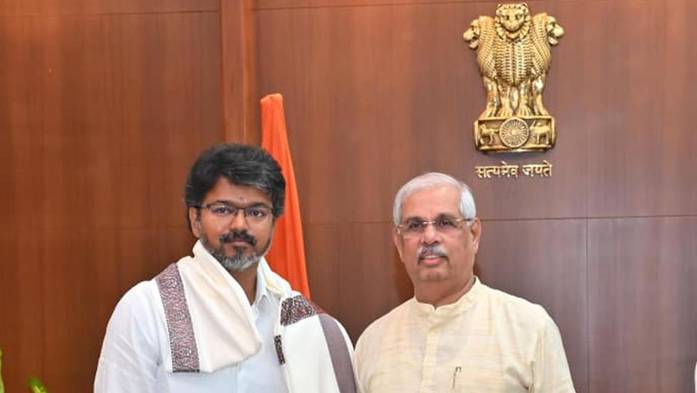
- Socio-Political Balancing Act: The expansion represents a highly calculated effort to balance regional representation across major districts (Chennai, Coimbatore, Salem, Cuddalore, and Kanyakumari), caste combinations, and gender equity, with the cabinet now including four women ministers.
- Institutional Framework of Coalitions: Legally, the Governor administers the oath of office and secrecy under Article 164 of the Constitution on the advice of the Chief Minister. This development illustrates how fractured mandate dynamics shape executive compositions at the sub-national level.
Positives, Negatives, & Government Schemes
| Dimension | Details |
| Positives | Promotes consensus-based governance, addresses diverse regional grievances, improves legislative-executive coordination among allied blocks. |
| Negatives | Potential for policy paralysis due to ideological differences among allies, increased pressure on the state exchequer, risks of instability. |
| Associated Concepts | Article 164, 91st Amendment Act, Coalition Politics, Cooperative Federalism. |
Way Forward
- Establish a formal Common Minimum Programme (CMP) to align the welfare agendas of the TVK, Congress, and other alliance factions.
- Strengthen the role of state cabinet sub-committees to expedite decision-making across overlapping portfolios.
- Ensure absolute transparency in the allocation of key portfolios like Revenue and Finance to minimize inter-party friction.
Conclusion
- The transition to a multi-party coalition executive in Tamil Nadu highlights the evolving maturity of state-level federalism, demanding a shift from top-down majoritarian execution to inclusive, consensus-driven policymaking.
Topic 2: Rupee Depreciation and RBI’s Contemplation of Monetary Policy Interventions
Syllabus
- GS Paper 3: Indian Economy and issues relating to planning, mobilization of resources, growth, development and employment; Growth, monetary policy, external sector dynamics.
Context
- Following the Indian Rupee hitting an all-time low of 96.95 against the US Dollar on May 20, internal high-level meetings at the Reserve Bank of India (RBI) on May 21, 2026, revealed that the central bank is actively weighing aggressive options, including an unscheduled interest rate hike, to arrest the currency’s slide.
Main Body: Multi-Dimensional Analysis
- Macroeconomic Vulnerability Drivers: The sharp depreciation is primarily fueled by a widening merchandise trade deficit (which surged to 28.4 billion dollars in April), persistent foreign portfolio investment (FPI) outflows, a strengthening global US Dollar Index, and volatile crude oil prices driven by geopolitical sensitivities.
- The Monetary Policy Dilemma: While a rate hike by the RBI would make Indian yields more attractive and counter capital flight to stabilize the rupee, it threatens domestic borrowing costs. This could potentially damp economic growth momentum by hardening credit for industries.
- Forex Reserve Depletion Risk: Prior to considering rate hikes, the central bank heavily relies on direct dollar-selling interventions in the spot and forward foreign exchange markets, which causes a significant drawdown on India’s national foreign exchange reserves.
- Imported Inflation Conundrum: A weaker rupee immediately increases the cost of imported essential commodities like crude oil, electronic components, and fertilizers, which passes through into domestic retail inflation (CPI), threatening to breach the RBI’s medium-term tolerance band of 4% (+/-2%).
Positives, Negatives, & Government Schemes
| Dimension | Details |
| Positives | A weaker rupee boosts the competitiveness of domestic software and merchandise exporters, making Indian goods cheaper abroad. |
| Negatives | Inflates the external commercial borrowing (ECB) repayment burden for Indian corporates, worsens fiscal deficits through higher import bills. |
| Associated Frameworks | RBI Act 1934, Monetary Policy Committee (MPC), Foreign Exchange Management Act (FEMA). |
Way Forward
- Utilize targeted, non-disruptive currency swap windows for oil marketing companies to keep bulk dollar demand off the open interbank forex market.
- Accelerate bilateral local currency trade settlement mechanisms (like the Rupee-Dirham or Rupee-Rouble frameworks) to cut reliance on the greenback.
- Review and selectively raise customs duties on non-essential luxury imports to compress the widening current account deficit.
Conclusion
- Defending the domestic currency amid global macroeconomic crosswinds requires the RBI to strike a delicate balance between aggressive monetary tightening and supporting domestic industrial credit lines.
Topic 3: India-Italy Elevation to ‘Special Strategic Partnership’ & The IMEC Push
Syllabus
- GS Paper 2: Bilateral, regional and global groupings and agreements involving India and/or affecting India’s interests; Effect of policies and politics of developed and developing countries on India’s interests.
Context
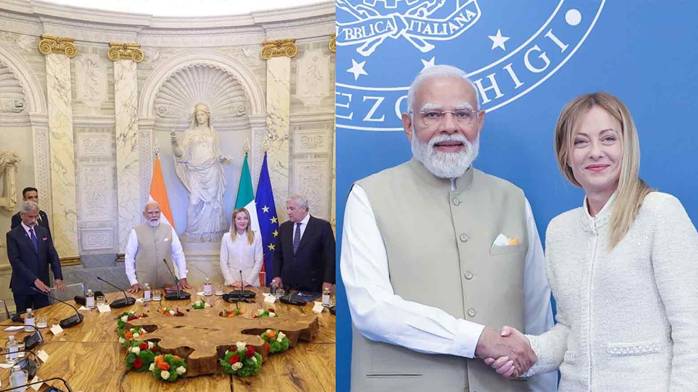
- As Prime Minister Narendra Modi concluded his official state visit to Rome, India and Italy formally upgraded their bilateral ties to a Special Strategic Partnership. The leaders finalized a comprehensive Joint Strategic Action Plan (2025–2029) spanning defense, space, AI, and trade connectivity.
Main Body: Multi-Dimensional Analysis
- Geopolitical Anchoring in the Mediterranean: For India, Italy serves as a vital gatekeeper within the European Union and the G7. Elevating ties counters shifting Eurasian alignments and anchors India’s institutional influence across the Indo-Mediterranean maritime corridor.
- Resuscitating the IMEC Corridor: A key focus of the upgraded partnership is the fast-tracking of the India-Middle East-Europe Economic Corridor (IMEC). Amid fluctuating West Asian stability, both nations emphasized developing alternative maritime-rail networks to bypass congested choke points.
- Critical Mineral and Technology Decoupling: The five-year action plan establishes strict institutional frameworks for semiconductor supply chains, artificial intelligence research, and joint exploration of critical minerals, aimed at building supply chain resilience outside of dominant monopolies.
- Migration and Mobility Integration: The full operationalization of the Migration and Mobility Partnership Agreement offers a legal, structured pipeline for Indian data scientists, engineers, and healthcare professionals to fill structural labor deficits in Italy’s aging industrial landscape.
Positives, Negatives, & Government Schemes
| Dimension | Details |
| Positives | Diversifies India’s defense import dependencies, expands trade toward a 20-billion-euro target, unlocks alternative logistical routes via IMEC. |
| Negatives | Geopolitical flare-ups in the Middle East present significant physical risks to the realization of the land-leg infrastructure of the IMEC. |
| Associated Initiatives | IMEC Initiative, Global Biofuels Alliance, India-EU Free Trade Agreement Negotiations. |
Way Forward
- Formulate a dedicated joint working group to iron out technical bottlenecks and clear private infrastructure investments for the IMEC project.
- Deepen maritime security co-production, linking India’s defense manufacturing capabilities with Italy’s advanced naval engineering sectors.
- Set up a bilateral venture fund specifically to scale deep-tech startups working on artificial intelligence and green hydrogen.
Conclusion
- The India-Italy Special Strategic Partnership transitions bilateral relations from mercantile exchange to a high-tech, strategic alliance capable of altering critical manufacturing supply chains across Eurasia.
Topic 4: Cabinet Foundations for the Fifth-Generation AMCA Project
Syllabus
- GS Paper 3: Indigenization of technology and developing new technology; Security challenges and their management; Defence infrastructure.
Context
- The Ministry of Defence officially advanced India’s aerospace capabilities by laying the foundation stone for the Advanced Medium Combat Aircraft (AMCA) development facility and the associated Core Integration and Flight Testing Centre at Puttaparthi, Andhra Pradesh.
Main Body: Multi-Dimensional Analysis
- Achieving Fifth-Generation Air Sovereignty: The AMCA is India’s premier indigenous program to develop a twin-engine, fifth-generation stealth multirole fighter. This technology puts India into an elite bracket of nations capable of manufacturing internal weapons bays and radar-absorbent materials.
- Strategic Self-Reliance (Atmanirbharta): Relying on foreign vendors for frontline air superiority fighters leaves India open to secondary supply chain sanctions during regional conflicts. The indigenous AMCA facility ensures long-term operational autonomy for both the Indian Air Force and Navy.

- The Technology Spin-off Matrix: Building a 5th-generation assembly line spurs a domestic high-tech manufacturing ecosystem. The development of advanced avionics, active electronically scanned array (AESA) radars, and complex composite materials yields valuable technological spin-offs for commercial aerospace and telecom sectors.
- Civil-Military Manufacturing Conglomeration: Concurrently, the establishment of a state-funded Naval Systems Manufacturing Facility by Bharat Dynamics Limited (BDL) highlights a broader push to cluster public and private tier-1 defense suppliers geographically, reducing long-term logistics costs.
Positives, Negatives, & Government Schemes
| Dimension | Details |
| Positives | Drastically cuts future defense import bills, creates high-skill defense engineering jobs, strengthens stealth design capabilities. |
| Negatives | Historically long gestation periods in indigenous aerospace programs risk cost overruns and technology obsolescence before induction. |
| Associated Programs | Technology Development Fund (TDF), Innovations for Defence Excellence (iDEX), Defense Production Policy. |
Way Forward
- Enforce a strict, milestone-based timeline for the Core Integration Facility to avoid the development delays that slowed down legacy fighter projects.
- Deepen public-private partnerships (PPP) by transferring non-core component manufacturing to domestic private defense MSMEs.
- Accelerate indigenous engine development projects via strategic joint ventures to ensure the production-variant AMCA is not dependent on foreign power plants.
Conclusion
- Investing in domestic fifth-generation combat aircraft infrastructure marks a decisive leap from importing defense hardware to mastering advanced military engineering, securing India’s airspace for the coming decades.
Topic 5: Comprehensive Reconnection of Out-of-School Youth via NIOS
Syllabus
- GS Paper 2: Issues relating to development and management of Social Sector/Services relating to Education, Human Resources; Government policies and interventions for development in various sectors.
Context
- Reviewing recent Periodic Labour Force Survey (PLFS) data that reveals over two crore children aged 14–18 remain out of school, the Department of School Education and Literacy launched a major review on May 21, 2026, deploying a new National Institute of Open Schooling (NIOS) mission titled “To Reach the Unreached.”
Main Body: Multi-Dimensional Analysis
- The Secondary Education Bottleneck: PLFS and school enrollment data highlight a steep dropout curve: out of every 100 children entering Class I, only 62 successfully reach Class XII. The steepest drop happens at the adolescent stage (14–18), caused by economic pressures and inadequate access to senior secondary institutions.
- Demographic Dividend vs. Liability Risk: Leaving millions of youth aged 14–18 without formal secondary certificates or functional vocational training creates a structural skills mismatch, risking turning India’s demographic dividend into a socio-economic liability.
- Flexibility of Open Distance Learning (ODL): The NIOS initiative uses a decentralized open distance framework to offer flexible testing timelines, vernacular study assets, and credit accumulation systems. This design accommodates working adolescents who cannot attend standard day schools.
- Aligning with NEP 2020: The mission directly advances the National Education Policy 2020 mandate of achieving a 100% Gross Enrolment Ratio (GER) in preschool to secondary levels by 2030, using non-formal education frameworks to bring marginalized youth back into mainstream learning.
Positives, Negatives, & Government Schemes
| Dimension | Details |
| Positives | Drastically expands alternative educational access for rural and marginalized youth, combines open schooling with practical vocational tracks. |
| Negatives | Distance certificates suffer from an unjust social stigma compared to regular schools; ensuring digital evaluation quality remains difficult. |
| Associated Policies | National Education Policy (NEP) 2020, Samagra Shiksha Abhiyan, Viksit Bharat 2047 Vision. |
Way Forward
- Integrate NIOS study centers with local ITIs (Industrial Training Institutes) to offer a unified certificate combining academic subjects with vocational trades.
- Launch localized, community-led tracking drives handled by ASHA and Anganwadi networks to locate and enroll out-of-school adolescents.
- Provide free digital access tokens or learning devices to open-school enrollees from Below Poverty Line (BPL) families to prevent a digital divide in ODL.
Conclusion
- Reconnecting the millions of disconnected youth in the 14-18 age bracket through flexible open-schooling networks is vital to building an equitable and skilled labor force for India’s long-term growth.
Topic 6: Institutional Push Against Cross-Border Terrorism at BRICS Meet
Syllabus
- GS Paper 2: Important International institutions, agencies and fora- their structure, mandate; Bilateral, regional and global groupings.
Context
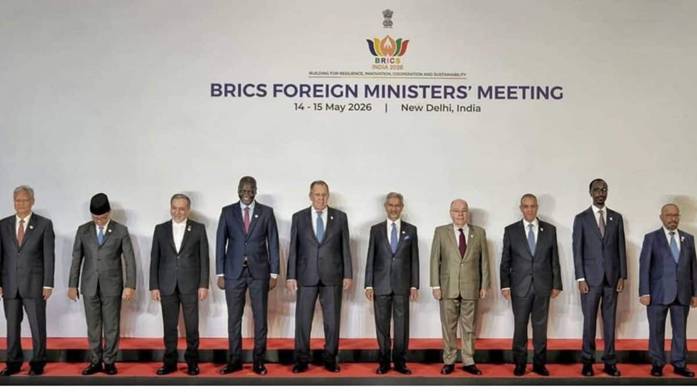
- At the high-level BRICS counter-terrorism working group meeting held on May 21, 2026, India issued a strong call for united global action against state-sponsored, cross-border terrorism, demanding the depoliticization of terrorist designations within international frameworks.
Main Body: Multi-Dimensional Analysis
- Leveraging Expanded BRICS Power: With BRICS expanding its membership, India is leveraging this platform to build a consensus on anti-terror protocols among major emerging economies, balancing Western-dominated security narratives.
- Countering Double Standards on Terror: India’s diplomatic position targeted the practice of blocking terrorist listings at the UN Security Council due to geopolitical calculations. It called for an objective, automated implementation of counter-terrorism sanctions.
- Focus on Terror Financing and Dark Web Networks: The Indian delegation presented evidence on how terror syndicates are exploiting emerging financial technologies, such as decentralized cryptocurrencies and encrypted darknet platforms, to bypass conventional banking intelligence.
- The Internal-External Security Link: Cross-border asymmetric warfare directly impacts India’s internal stability, requiring continuous deployment of resources along its borders and slowing down commercial development in sensitive boundary regions.
Positives, Negatives, & Government Schemes
| Dimension | Details |
| Positives | Builds strong institutional counter-terror cooperation across the Global South; strengthens intelligence-sharing infrastructure between BRICS members. |
| Negatives | Diverging strategic alignments among member nations can dilute the practical execution of joint counter-terror declarations. |
| Associated Frameworks | BRICS Counter-Terrorism Strategy, Financial Action Task Force (FATF), UN Comprehensive Convention on International Terrorism (CCIT). |
Way Forward
- Push for a unified, binding BRICS definition of terrorism to eliminate legal loopholes used by state actors to shelter designated individuals.
- Establish a permanent BRICS Cyber Intelligence Hub tasked with tracking cryptocurrency addresses linked to illicit transnational syndicates.
- Deepen joint training operations focused on counter-insurgency and urban tactical warfare among the armed forces of member states.
Conclusion
- India’s proactive security diplomacy within BRICS emphasizes that long-term global economic cooperation cannot be separated from a firm, shared commitment to dismantling terror networks.
Topic 7: Launch of the ‘Coffee of Nagaland’ Sustainable Agro-Mission
Syllabus
- GS Paper 3: Issues related to direct and indirect farm subsidies and minimum support prices; Public Distribution System; Technology missions; Economics of animal-rearing; Land reforms.
Context
- The Ministry of Development of North Eastern Region (MDoNER) launched the 175-crore ‘Coffee of Nagaland’ Mission. The project introduces a cluster-based agricultural model to shift local economies toward sustainable plantation crops.
Main Body: Multi-Dimensional Analysis
- Transitioning from Jhum (Slash-and-Burn) Cultivation: The ecological landscape of Nagaland faces soil erosion and deforestation due to traditional slash-and-burn farming (Jhum). Promoting permanent organic coffee plantations offers an eco-friendly alternative that restores forest canopies.
- The Micro-Climate Agro-Advantage: Nagaland’s varying high-altitude topographies provide ideal micro-climates for specialized coffee varieties, such as high-value Arabica in Kohima and robust Robusta in the Niuland districts, positioning the state for the global specialty coffee market.
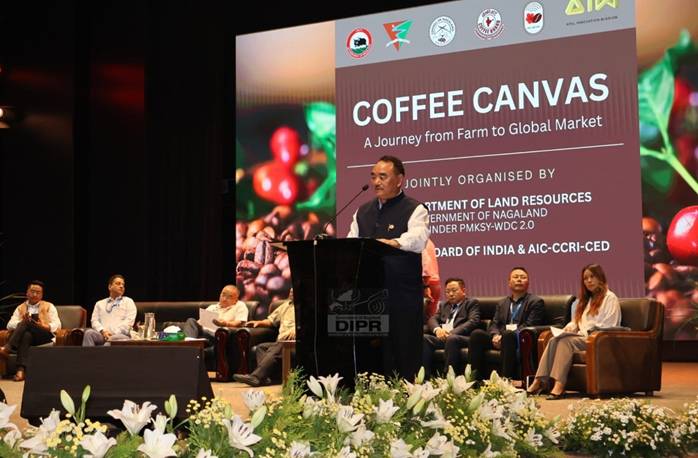
- Value Chain Inefficiency: Smallholder farmers in the North East often suffer from poor market access, leading to exploitation by middlemen. The mission addresses this by setting up localized processing units and farmer producer organizations (FPOs) to retain value within the state.
- Economic Integration of Border States: Improving farm livelihoods in remote areas helps reduce rural-to-urban migration and supports internal security by offering profitable, legal livelihoods to youth in border districts.
Positives, Negatives, & Government Schemes
| Dimension | Details |
| Positives | Creates sustainable, climate-resilient farm incomes, reduces soil degradation, builds a global brand for organic North Eastern agricultural products. |
| Negatives | Coffee plants require a three-to-four-year gestation period before yielding fruit, creating an immediate cash-flow gap for smallholders. |
| Associated Initiatives | Mission Organic Value Chain Development for Northeastern Region (MOVCDNER), Coffee Board of India Frameworks, PM-DevINE. |
Way Forward
- Provide direct cash-transfer inter-cropping subsidies (such as growing shade-loving spices like black pepper) to sustain farmers during the initial non-yielding years of coffee growth.
- Build direct partnerships between Nagaland Coffee FPOs and major e-commerce platforms to bypass middleman margins.
- Obtain geographical indication (GI) tagging for unique regional coffee profiles early to protect and maximize their international market valuation.
Conclusion
- The ‘Coffee of Nagaland’ mission serves as a model for ecological restoration and economic development, showing how targeted agro-technology missions can transform vulnerable hill economies.
Topic 8: Judicial Review and Supreme Court Position on Caste Census
Syllabus
- GS Paper 1: Salient features of Indian Society, Diversity of India.
- GS Paper 2: Statutory, regulatory and various quasi-judicial bodies; Welfare schemes for vulnerable sections of the population.
Context
- In a significant constitutional observation on May 21, 2026, the Supreme Court of India stated that there is no inherent legal wrong in executing a caste census. The court emphasized that any governing administration must have accurate data to identify and support backward classes.
Main Body: Multi-Dimensional Analysis
- Empirical Data vs. Arbitrary Policy: The apex court’s perspective strengthens the legal principle that welfare reservations and affirmative action policies under Articles 15 and 16 must be backed by quantifiable, empirical data to clear judicial review.
- The Indra Sawhney Precedent: Ever since the historic Indra Sawhney ruling, courts have consistently required regular assessments of backwardness to prevent both the exclusion of genuinely marginalized communities and the stagnation of reservation lists.

- Administrative and Enumeration Challenges: Running a comprehensive caste census requires classifying thousands of sub-castes, phonetic synonyms, and regional variations. Without a standardized classification system, the resulting data risks being too chaotic to use for policymaking.
- Socio-Political Concerns: Critics worry that publicizing detailed caste metrics might deepen existing caste identities and lead to competitive demands for increased quotas, potentially putting strain on the 50% reservation ceiling.
Positives, Negatives, & Government Schemes
| Dimension | Details |
| Positives | Supplies the precise data needed to design targeted welfare programs, helping to ensure benefits reach the most marginalized sub-castes. |
| Negatives | Risks being used for political polarization; could spark legal challenges over existing reservation quotas if data reveals imbalances. |
| Associated Constitutional Tools | Article 340 (Appointment of a Commission to investigate the conditions of backward classes), Rohini Commission, Article 15 & 16. |
Way Forward
- Utilize advanced data-analytics and natural language processing (NLP) systems to automatically group phonetic and regional variations of sub-castes into clean categories.
- Ensure the data collected is used to identify intersectional deprivation, combining social caste metrics with economic indicators like income, assets, and education levels.
- Maintain open, transparent discussions with constitutional experts to ensure any policy adjustments based on the data respect basic structure principles.
Conclusion
- A data-driven caste assessment, when focused on social justice rather than political gain, serves as an essential tool for building targeted, legally secure affirmative action policies.
Mains Practice Questions
- Evaluate the socio-economic and constitutional implications of the return of coalition governance in state executives, in light of the recent cabinet expansion in Tamil Nadu. (150 words)
- Examine the monetary and fiscal options available to the Reserve Bank of India to counter severe currency depreciation without harming domestic industrial growth. (250 words)
