
Topic 1: Meeting of the Quad Foreign Ministers in New Delhi
Subject: International Relations (GS Paper 2)
Context
External Affairs Minister S. Jaishankar is hosting the Quadrilateral Security Dialogue (Quad) Foreign Ministers’ meeting on May 26, 2026, at Hyderabad House in New Delhi, featuring significant participation from the United States, Australia, and Japan.
Main Body: Multi-Dimensional Analysis
- Strategic Geopolitical Posturing: The meeting marks the first high-level convergence of the Quad partners in nearly a year, occurring directly in the wake of the latest diplomatic developments in the Indo-Pacific, including recent high-profile international state visits to China.
- Securing Global Maritime Waterways: Central to the discussions is the growing challenge over maritime choke points, specifically handling unilateral tolling proposals and security provocations near the crucial Strait of Hormuz and surrounding Sri Lankan waters.
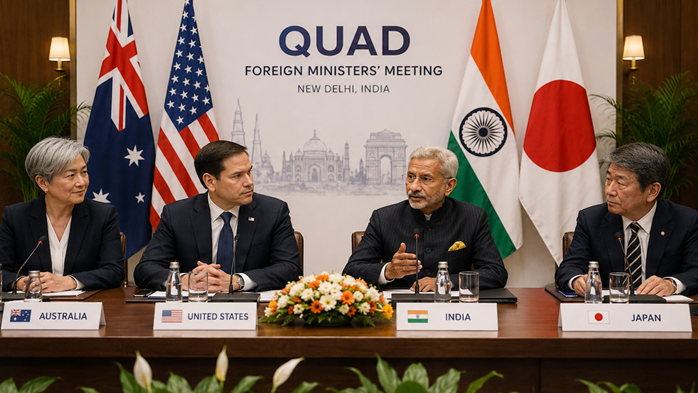
- Transition in American Diplomacy: The event serves as the first major multilateral engagement in India for the newly appointed US Secretary of State, Marco Rubio, solidifying continuity in the Indo-Pacific strategy across changing administrative mandates.
- Focus on Critical Supply Chains: Beyond defense, the ministers are negotiating frameworks to accelerate shared self-reliance in critical minerals and alternative oil export corridors to insulate the partner nations from regional trade blockades.
Positives, Negatives, & Government Schemes
| Dimension | Details |
| Positives | Reaffirms a free, open, and rules-based Indo-Pacific; creates collective diplomatic deterrence; enhances maritime security coordination. |
| Negatives | Intensifies the geopolitical friction with China; risks regional polarization; challenges India’s traditional multi-alignment posture. |
| Associated Initiatives | Indo-Pacific Maritime Domain Awareness (IPMDA), Quad Infrastructure Coordination Group, Supply Chain Resilience Initiative (SCRI). |
Examples
The coordinated regional response required after a recent military encounter with an unauthorized vessel in waters near Sri Lanka underscores the critical necessity of real-time intelligence pooling under the Quad framework.
Way Forward
- Institutionalize bi-monthly working-group level coordination on critical minerals to decouple supply dependencies completely from single-nation monopolies.
- Formulate a standardized maritime standard operating procedure (SOP) to jointly patrol key Sea Lines of Communication (SLOCs) during global logistical crises.
- Actively expand security and infrastructure development partnerships to include smaller Indian Ocean littoral states to counter checkbook diplomacy.
Conclusion
The New Delhi Quad meeting elevates the partnership from a purely consultative diplomatic forum into a robust, actionable security and economic architecture capable of safeguarding the equilibrium of the Indo-Pacific region.
Practice Mains Question
The shifting dynamics of global alliances demand that the Quad transcend from a security-centric alignment to a resilient economic and logistical matrix. Evaluate this statement in the context of the latest Quad Foreign Ministers’ Meet. (250 words)
Topic 2: Union Home Minister Launches Nationwide “Smart Border Project”
Subject: Internal Security & Defence (GS Paper 3)
Context
The Union Home Minister initiated a comprehensive, multi-state security tour across India’s sensitive international borders starting May 26, 2026, to actively operationalize the newly announced “Smart Border Project.”
Main Body: Multi-Dimensional Analysis
- Technological Overhaul of Border Infrastructure: The project aims to eliminate traditional vulnerabilities along roughly 6,000 kilometers of international borders by replacing manual patrolling loops with automated technological systems.
- Integrated Tactical Security Grid: The framework deploys a multi-layered surveillance network comprising high-altitude drones, ground-based thermal radars, specialized cameras, and underground motion sensors to form an impenetrable perimeter.
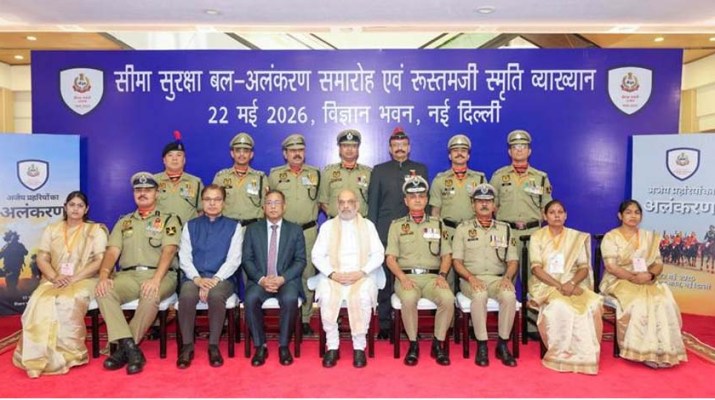
- Focus on Tough, Inaccessible Terrains: The immediate emphasis is on high-priority, geographically hostile zones such as the marshy, infiltration-prone tracts of Harami Nala in the Rann of Kutch (Gujarat) and the riverine borders of Tripura and West Bengal.
- Civil-Military Administrative Synergy: The tour establishes mandatory joint-review protocols requiring higher synchronicity between the Border Security Force (BSF), Central Home Ministry officials, and state police intelligence wings.
Positives, Negatives, & Government Schemes
| Dimension | Details |
| Positives | Drastically reduces human casualty risks during cross-border infiltration attempts; minimizes administrative blind spots in marshy terrains; creates real-time interception capabilities. |
| Negatives | High initial capital expenditure; vulnerability of electronics to severe weather conditions; continuous maintenance dependencies on specialized tech vendors. |
| Associated Initiatives | Comprehensive Integrated Border Management System (CIBMS), Border Infrastructure and Management (BIM) Scheme, Vibrant Villages Programme. |
Examples
The deployment of targeted technology in the challenging terrain of Harami Nala in Gujarat provides a direct template for how sensory data can replace human physical presence in extreme environments.
Way Forward
- Fast-track the establishment of localized solar-power backups at all border outposts to ensure the surveillance tech runs uninterrupted during grid failures.
- Build custom regional communication networks to protect data transmitted from edge sensors from foreign electronic jamming or interception.
- Provide specialized technical training to ground battalions to allow immediate diagnostic repair of high-tech gear at the frontline.
Conclusion
By shifting from personnel-heavy static guarding to a dynamic, tech-driven deterrence framework, the Smart Border Project modernizes India’s territorial defense infrastructure against modern asymmetry.
Practice Mains Question
Evaluate how the integration of AI-driven surveillance and automated sensory grids under the Smart Border Project addresses structural loopholes in policing India’s riverine and marshy border frontiers. (250 words)
Topic 3: The Macroeconomic Headwinds of Successive Fuel Price Hikes
Subject: Economy (GS Paper 3)
Context
On May 25–26, 2026, retail prices of petrol and diesel were increased across India for the fourth time in under two weeks, pushing petrol past the ₹100-per-litre threshold in New Delhi after a gap of four years.
Main Body: Multi-Dimensional Analysis
- Imported Inflationary Pressures: The adjustments mirror tightening global energy metrics, even as prospective international deals keep raw global crude values oscillating near $85.6 per barrel.
- Fiscal Trade-offs for the State: To insulate retail consumers from extreme economic shocks, the Union Government has absorbed a massive ₹1 lakh crore revenue hit by lowering Central excise duties by ₹10 per litre.

- Cascading Impact on Logistics: Diesel drives industrial freight across India; consecutive hikes create an immediate cascading effect on the transport costs of essential items, threatening to drive up core inflation indicators.
- Asymmetrical Strain on Rural Demand: Higher fuel costs increase farming input expenses (tractor usage, water pumping), reducing disposable incomes in rural areas and slowing overall consumer goods absorption.
Positives, Negatives, & Government Schemes
| Dimension | Details |
| Positives | Market-linked pricing shields oil marketing companies (OMCs) from balance-sheet collapses; encourages accelerated public transition toward green transport. |
| Negatives | Triggers inflationary cycles in food and commodities; strains the fiscal deficit due to duty cuts; reduces disposable urban and rural savings. |
| Associated Initiatives | National Biofuels Policy, Faster Adoption and Manufacturing of Hybrid and Electric Vehicles (FAME), Pradhan Mantri Ji-Van Yojana. |
Examples
The last time fuel crossed the ₹100-mark in Delhi was during the height of the international geopolitical crisis in May 2022, showcasing how external conflicts dictate domestic wallet stresses.
Way Forward
- Diversify oil sourcing channels by finalizing long-term, fixed-price supply contracts with emerging non-traditional energy exporters.
- Broaden the inclusion of natural gas and compressed biogas (CBG) in public transport fleets to decouple mass transit from crude price swings.
- Standardize a predictable tax band structure between states and the Centre to prevent sudden, steep spikes at the retail pumps.
Conclusion
Managing fuel volatility requires balancing the immediate financial health of public energy enterprises against the broader socioeconomic fallout of energy-driven inflation on the common citizen.
Practice Mains Question
“Uncontrolled retail fuel inflation acts as a regressive tax that disproportionately hurts the rural economy and industrial logistics.” Analyze the fiscal options available to the government to mitigate this challenge. (250 words)
Topic 4: Supreme Court Demands Broader Public Consultations to Define the Aravallis
Subject: Polity & Environment (GS Papers 2 & 3)
Context
The Supreme Court of India officially directed that the upcoming high-level expert committee tasked with legally defining the boundaries of the Aravalli hills must mandate wide public and stakeholder participation.
Main Body: Multi-Dimensional Analysis
- Judicial Protection of Ecological Buffers: The Aravallis act as a critical natural barrier preventing the eastward expansion of the Thar Desert into the fertile plains of northern India.
- Rights-Based Governance Model: By forcing public consultation, the judiciary is strengthening democratic environmental governance, ensuring that indigenous local populations and independent ecologists have a formal voice over land-use classification.

- The Development vs. Conservation Dilemma: Decades of unmapped mining and real estate urbanization have degraded the range, creating an urgent need for an unambiguous legal definition to halt unauthorized construction.
- Setting Precedents in Environmental Jurisprudence: This move transitions the definition process away from closed-door bureaucratic determinations toward a transparent, data-driven framework subject to public oversight.
Positives, Negatives, & Government Schemes
| Dimension | Details |
| Positives | Prevents arbitrary, industry-friendly boundary definitions; preserves depleting groundwater recharge zones; empowers grassroots environmental whistleblowers. |
| Negatives | Prolonged public consultation rounds may delay execution timelines; potential for intense litigation from legacy infrastructure projects located in disputed zones. |
| Associated Initiatives | National Green Tribunal (NGT) Directives, Green Wall Project of India, Compensatory Afforestation Fund Management and Planning Authority (CAMPA). |
Examples
The unchecked degradation of the eco-sensitive zones in the Gurugram-Faridabad belt serves as a prime warning of what happens when real estate expansion outpaces clear legal definitions of protected hills.
Way Forward
- Deploy advanced GIS mapping and satellite imagery alongside public hearings to create an unalterable, transparent digital registry of the Aravalli range.
- Formulate local eco-tourism and sustainable livelihood models for communities residing in the buffer zones to align economic interests with forest conservation.
- Create a fast-track judicial cell to handle compensation and relocation claims arising out of the newly demarcated forest borders.
Conclusion
The Supreme Court’s insistence on public consensus ensures that the preservation of ancient ecological assets like the Aravallis rests on collective democratic ownership rather than bureaucratic decree.
Practice Mains Question
Environmental democracy requires moving beyond top-down administrative mandates to inclusive stakeholder consultations. Discuss this in light of the Supreme Court’s latest directions on the demarcation of the Aravalli range. (250 words)
Topic 5: Tamil Nadu Transitions to a New Political Era with Historical Assembly Shifts
Subject: Polity & State Governance (GS Paper 2)
Context
Following the formal declaration of the historic April-May 2026 Assembly election results, Tamil Nadu’s political landscape has broken away from nearly six decades of dual-party alternation, leading to the formation of a new ministry under Chief Minister C. Joseph Vijay.
Main Body: Multi-Dimensional Analysis
- Electoral Paradigm Shift: The 2026 mandate broke a 59-year streak where state governance oscillated exclusively between the traditional Dravidian majors (DMK and AIADMK), resulting in the state’s first hung assembly.
- The Power of Digital Campaigning: The political transition is recognized as a milestone in Indian electoral history due to its near-total reliance on decentralized social media mobilization rather than classic structural party machinery.
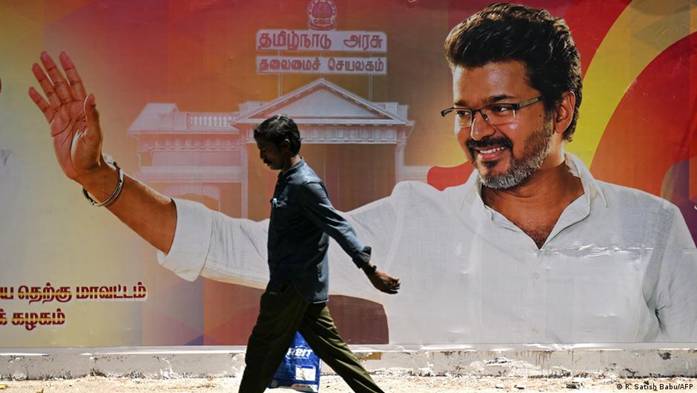
- Anti-Defection and Political Realignments: The immediate aftermath has triggered intense constitutional friction, with prominent opposition MLAs resigning their seats to change party allegiances, drawing criticism from the former treasury benches.
- Federal Reorientation: The rise of a new legislative majority shifts regional alliance calculations, altering Tamil Nadu’s traditional bargaining position with the Union Government on fiscal and linguistic autonomy.
Positives, Negatives, & Government Schemes
| Dimension | Details |
| Positives | Introduces multi-party choices to the electorate; challenges deeply entrenched political monopolies; encourages younger demographics to enter legislative politics. |
| Negatives | Risks systemic policy instability due to a hung assembly structure; potential for frequent by-elections; vulnerability of social-media driven mandates to targeted algorithms. |
| Associated Concepts | Article 164 (Appointment of CM), Tenth Schedule (Anti-Defection Law), Representation of the People Act, 1951. |
Examples
The resignation of three sitting legislators immediately prior to joining the ruling party highlights the persistent legal and ethical challenges associated with voluntary seat vacations under the Anti-Defection framework.
Way Forward
- Establish clear, transparent legislative floor-test timelines to ensure political stability without disrupting state welfare delivery systems.
- Focus on reinforcing institutional continuity within the state bureaucracy to insulate developmental schemes from executive realignments.
- Update rules surrounding digital campaigning expenditures to ensure transparent bookkeeping of decentralized online political advertisements.
Conclusion
The democratic realignment in Tamil Nadu underscores the evolving maturity of the electorate, demonstrating that long-standing regional political structures can be reorganized through digital-age voter mobilization.
Practice Mains Question
“The emergence of a hung assembly driven by social-media mobilization challenges conventional structural politics but tests the resilience of constitutional conventions.” Analyze this with reference to recent political developments in Tamil Nadu. (250 words)
Topic 6: Tamil Nadu Formulates Farm Loan Waivers via Cooperative Banks
Subject: Economy & Agriculture (GS Papers 2 & 3)
Context
In its initial major policy intervention, the new Tamil Nadu state administration announced a targeted cooperative bank crop loan waiver scheme to offer immediate relief to distressed small and marginal farmers.
Main Body: Multi-Dimensional Analysis
- Alleviating Rural Indebtedness: The policy addresses deep agrarian distress caused by irregular seasonal rainfall, directly erasing formal debt burdens accumulated over consecutive cultivation cycles.
- Restoring Cooperative Credit Cycles: By clearing outstanding defaults, the waiver allows marginal farmers to become eligible once again for fresh crop loans ahead of the crucial upcoming sowing season.

- Fiscal Pressure on State Coffers: The decision places an immediate funding burden on the state exchequer, requiring careful reallocation of capital expenditures to compensate primary agricultural cooperative credit societies (PACCS).
- Mitigating the Risk of Credit Culture Contraction: Economists warn that unconditional waivers can sometimes distort financial discipline, encouraging future strategic defaults by borrowers who expect recurring state write-offs.
Positives, Negatives, & Government Schemes
| Dimension | Details |
| Positives | Prevents debt-driven rural distress and exploitation by informal lenders; pumps immediate liquidity back into the rural economy; restores credit lines for marginal farmers. |
| Negatives | Strains state fiscal health metrics; potentially reduces the state’s capacity to invest in long-term rural infrastructure like cold chains and dams. |
| Associated Initiatives | Primary Agricultural Cooperative Societies (PACS) Computerization, Kalaignar All-Village Integrated Agricultural Development Programme, PM-KISAN. |
Examples
Past institutional studies on debt relief packages confirm that while loan waivers provide vital short-term survival breathing room to families, they do not eliminate structural climate vulnerabilities.
Way Forward
- Link the waiver disbursement directly to verified biometric data and land records to prevent non-cultivating landholders from misusing the benefit.
- Gradually transition from credit waivers to comprehensive, state-subsidized crop insurance frameworks to make climate relief institutional rather than discretionary.
- Increase state budgetary allocations for localized drip-irrigation networks to address the underlying water scarcity driving crop failures.
Conclusion
While farm loan waivers serve as a necessary socio-economic bandage during acute rural crises, long-term agrarian sustainability depends on structural reforms in irrigation, storage, and market access.
Practice Mains Question
Examine the economic trade-offs between short-term credit interventions, like cooperative farm loan waivers, and long-term public capital investment in agricultural infrastructure. (250 words)
Topic 7: Educational Portals Strained Over Class 12 Re-Evaluation Glitches
Subject: Governance & Social Justice (GS Paper 2)
Context
Widespread administrative and technical issues within the newly introduced On-Screen Marking (OSM) evaluation portal have drawn sharp focus from the Union Education Ministry, which has demanded an immediate structural report from examination boards.
Main Body: Multi-Dimensional Analysis
- Technological Vulnerabilities in Mass Testing: The crisis highlights the risks of executing digital transformations in public education tracking systems without undergoing rigorous, multi-tier load stress testing beforehand.
- Impact on Student Timelines: Delays and accessibility blackouts on re-evaluation portals create immense anxiety for higher secondary graduates as college admissions and competitive entrance schedules operate on rigid deadlines.
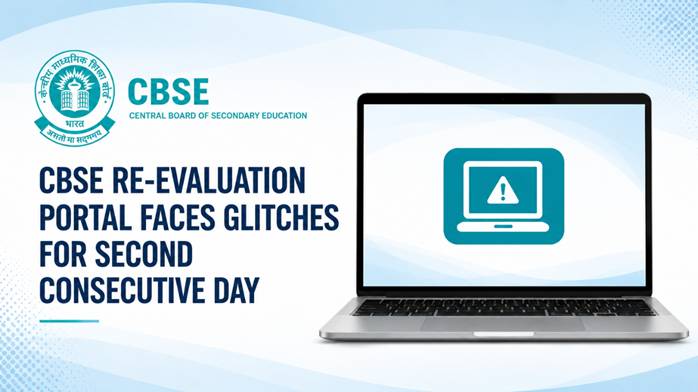
- Transparency in Public Evaluation: The shift to On-Screen Marking was intended to reduce human errors and standardize grading metrics; however, software bottlenecks have temporarily undermined public trust in automated checking.
- Digital Infrastructure Deficits: The breakdown exposes the sharp regional disparities in digital delivery, where students in remote regions face prolonged barriers in accessing corrected answer scripts online.
Positives, Negatives, & Government Schemes
| Dimension | Details |
| Positives | Direct accountability pushed by the Ministry ensures systemic loopholes are fixed; standardizes the push toward long-term digitization of academic records. |
| Negatives | Disrupts critical university admission timelines; induces immense psychological stress on students; compromises the credibility of the automated evaluation framework. |
| Associated Initiatives | National Education Policy (NEP) 2020 Tech Integration, Digital India Initiative, SAMARTH Higher Education Portal. |
Examples
The immediate intervention of the Union Education Minister requesting a transparent system audit sets a clear administrative standard for handling failures in critical public digital infrastructure.
Way Forward
- Establish redundant, multi-cloud mirror servers to handle sudden high traffic volumes during peak re-evaluation filing windows.
- Create a dedicated, round-the-clock student grievance redressal helpdesk to manually process verification requests when portals encounter bugs.
- Implement a hybrid validation phase where digital evaluations are backed by random, manual spot-checks to ensure algorithm accuracy.
Conclusion
The digitization of educational assessments must balance technological speed with structural reliability, ensuring that portal errors do not compromise student opportunities.
Practice Mains Question
“Digital interventions in public examination systems must prioritize system redundancy and user accessibility over rapid deployment.” Analyze this statement in reference to recent glitches in online evaluation portals. (250 words)
Topic 8: Central Bureau of Investigation (CBI) Jurisdictional Interventions in Inter-State Cases
Subject: Polity & Governance (GS Paper 2)
Context
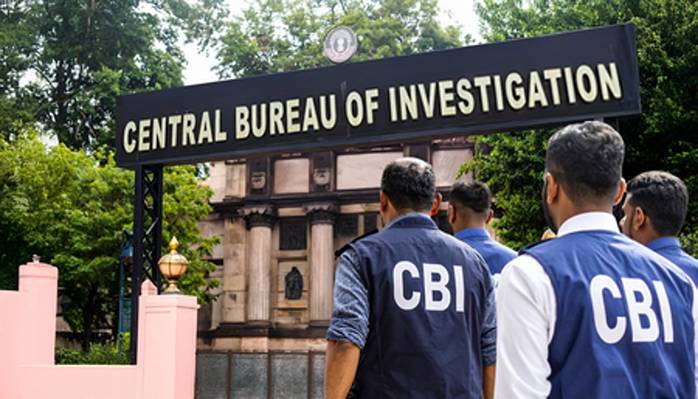
Demonstrating its role in handling highly sensitive social crimes, the Central Bureau of Investigation (CBI) overrode local police channels to re-register and take over an inter-state dowry death investigation from regional units under new provisions of the Bharatiya Nyaya Sanhita (BNS).
Main Body: Multi-Dimensional Analysis
- Federal Jurisdiction Dynamics: The takeover underscores the operational friction between state law enforcement and central agencies, testing the boundaries of state consent in handling criminal probes.
- Transition to New Criminal Codes: The case is being closely monitored as a baseline for how central units invoke specific operational sections under the newly enacted BNS framework ($80(2)$, $85$) instead of the legacy Indian Penal Code (IPC).
- Public Faith in Institutional Neutrality: Transferring high-profile investigations to central agencies is often necessitated by systemic delays or local political influences that compromise early-stage evidence gathering.
- Standard Operating Procedure Standardizations: The procedural requirement where the CBI absorbs and re-files an existing state FIR as its own ensures institutional continuity and prevents legal duplication in courts.
Positives, Negatives, & Government Schemes
| Dimension | Details |
| Positives | Bypasses local administrative biases; deploys advanced forensic and cross-state tracking assets; aligns the investigation directly with new criminal codes. |
| Negatives | Can potentially strain center-state police relations if perceived as an regular bypass of state capabilities; increases the operational load on an already overburdened central agency. |
| Associated Concepts | Delhi Special Police Establishment (DSPE) Act 1946, Bharatiya Nyaya Sanhita (BNS) 2023, National Forensic Science University (NFSU) support. |
Examples
The immediate deployment of a specialized central team to Bhopal within hours of re-registering an FIR showcases the operational speed advantage that a central agency commands over localized forces.
Way Forward
- Formalize a clear, non-political metric-based matrix to determine when a sensitive case qualifies for automatic central agency takeover.
- Equip state police units with matching modern forensic tools to reduce the structural dependency on central handovers for complex cases.
- Ensure clear, time-bound legal protocols for sharing cross-border intelligence between state police stations and central investigators.
Conclusion
The effective invocation of BNS provisions by central agencies like the CBI reinforces the rule of law, proving that federal security frameworks can protect citizen rights across state borders.
Practice Mains Question
Analyze the constitutional and federal challenges surrounding the jurisdiction of central investigative agencies in taking over criminal cases traditionally reserved under the State List. (250 words)
