
Topic 1: Tamil Nadu Government Chairs Strategic Legal Review to Safeguard 69% Reservation Policy
Subject
POLITY AND CONSTITUTION (GS Paper 2 / State Governance)
Context
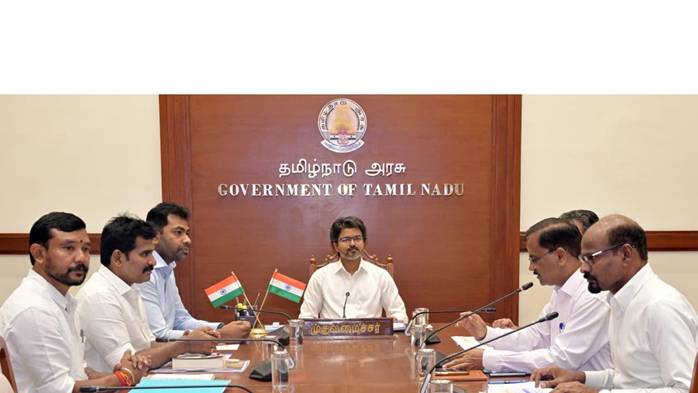
On May 26, 2026, Tamil Nadu Chief Minister C. Joseph Vijay chaired a high-level review meeting to initiate robust statutory and legal countermeasures intended to protect the state’s unique 69% affirmative action quota from ongoing judicial vulnerabilities.
Main Body: Multi-Dimensional Analysis
- Historical Context and Legislative Safeguards: The current 69% reservation is protected under the Tamil Nadu Backward Classes, Scheduled Castes and Scheduled Tribes Act, 1993, which was placed into the Ninth Schedule of the Constitution under Article 31B to shield it from fundamental rights challenges.
- The Conflict with Supreme Court Precedents: The state’s aggregate quota cap directly conflicts with the landmark Indra Sawhney v. Union of India (1992) ruling, which established a strict 50% ceiling for backward class reservation unless “extraordinary situations” are validated by empirical data.
- Judicial Review Post I.R. Coelho Case: Ever since the I.R. Coelho v. State of Tamil Nadu (2007) judgement, the Supreme Court has maintained that any law placed in the Ninth Schedule post-1973 remains fully open to judicial review if it violates the “Basic Structure” of the Constitution.
- The Imperative for Quantifiable Socio-Economic Data: To successfully defend the policy in constitutional benches, the administration is focusing heavily on compiling fresh, rigorous caste-based demographic metrics to establish “verifiable backwardness” and regional exceptionalism.
- Socio-Economic Equilibrium and State Welfare: Proponents argue that the 69% structural distribution ensures institutional representation for over 87% of the state’s population across Backward Classes (BC), Most Backward Classes (MBC), Scheduled Castes (SC), and Scheduled Tribes (ST).
Positives, Negatives, & Government Schemes
| Dimension | Details |
| Positives | Promotes deep-rooted social justice, retains representation for highly marginalized groups, and prevents historical backsliding. |
| Negatives | Risks prolonged litigation, deepens administrative friction with central education rules, and tests the outer boundaries of judicial limits. |
| Associated Laws/Concepts | Article 31B, Ninth Schedule, Article 15(4) and 16(4), Indra Sawhney Case, I.R. Coelho Judgment. |
Topic 2: Ministry of Social Justice Launches the Unified PM-AJAY Digital Portal and Mobile App
Subject
GOVERNANCE & SOCIAL JUSTICE (GS Paper 2)
Context
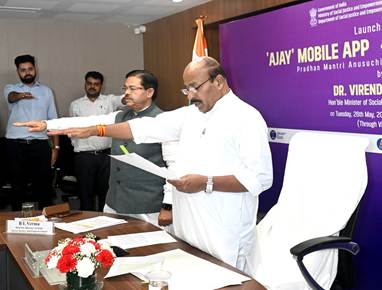
The Union Ministry of Social Justice and Empowerment officially launched the comprehensive PM-AJAY Portal and Mobile Application to completely digitize and streamline the execution of Scheduled Caste (SC) welfare programs across India.
Main Body: Multi-Dimensional Analysis
- Objective of the Digital Transformation: The portal acts as a single-window interface for the Pradhan Mantri Anusuchit Jaati Abhyuday Yojana (PM-AJAY), reducing procedural delays and administrative leaks in infrastructure grants.
- Real-Time Convergence and Monitoring Framework: The digital app tracks fund utilization and project lifecycles across thousands of SC-dominated villages, transitioning governance from retrospective audits to active, data-driven tracking.
- Skill Development and Income Generation Integration: It integrates application channels for skill-building programs, enabling beneficiaries from marginalized backgrounds to directly access state-sponsored financial assistance without middlemen.
- Empowering Grassroots Village Infrastructure: Through the Adarsh Gram component, the portal manages financial sanctions for constructing essential village assets like solar lighting, clean water pipelines, and accessible community halls.
- Data Privacy and Administrative Accessibility Metrics: While boosting accessibility for field personnel via mobile networks, the application introduces rigorous security protocols to protect sensitive demographic data of applicants.
Positives, Negatives, & Government Schemes
| Dimension | Details |
| Positives | Enhances scheme transparency, prevents bureaucratic red tape, and enables real-time auditing of social welfare funds. |
| Negatives | Marginalized populations in deep rural hinterlands facing network outages or low digital literacy could face localized access barriers. |
| Associated Schemes | Pradhan Mantri Anusuchit Jaati Abhyuday Yojana (PM-AJAY), Digital India Mission, PM-AGY (Adarsh Gram Yojana). |
Topic 3: World Health Assembly Adopts Landmark Resolution to Combat Antimicrobial Resistance
Subject
INTERNATIONAL RELATIONS & PUBLIC HEALTH (GS Paper 2)
Context
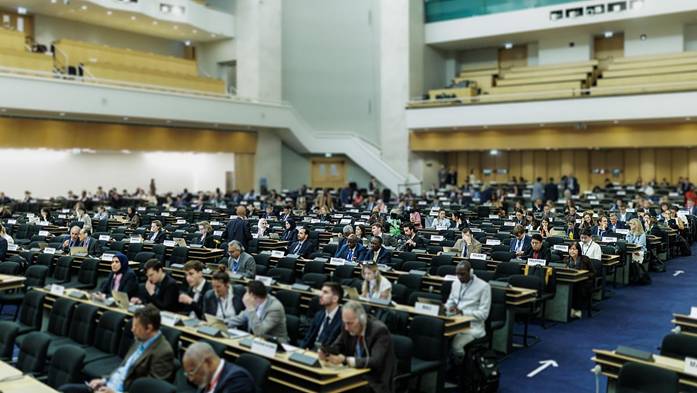
At the ongoing global assembly in Geneva, member nations formally adopted a historic resolution establishing the Global Action Plan on Antimicrobial Resistance (GAP-AMR 2026–2036), mandating legally structured targets to address the silent superbug pandemic.
Main Body: Multi-Dimensional Analysis
- Mandating the 2030 Global Mortality Reduction Goal: The resolution sets a binding milestone to achieve a 10% reduction in bacterial AMR-associated deaths globally by the year 2030, building upon past declarations.
- Enforcing Global Surveillance and Reporting Codes: The treaty establishes an automated tracking framework requiring nations to map antibiotic consumption across human healthcare and veterinary operations.
- Addressing the Economic Vulnerabilities of Healthcare: The 10-year strategy marks a shift by formally viewing AMR mitigation not merely as a medical challenge, but as an essential long-term financial investment to preserve global workforce productivity.
- The One Health Integration Imperative: The blueprint forces multi-sectoral coordination by restricting the non-therapeutic use of critical-priority antibiotics in livestock farming, aquaculture, and agriculture.
- Technology Transfer and Global Equity Disparities: Developing nations secured crucial provisions requiring advanced economies to facilitate low-cost technology transfers for point-of-care rapid diagnostic tools to prevent the over-prescription of antibiotics.
Positives, Negatives, & Government Schemes
| Dimension | Details |
| Positives | Harmonizes international drug regulation, creates funding channels for new drug discovery, and safeguards global health security. |
| Negatives | Strict bans on agricultural antibiotics may disrupt short-term livestock yields and strain food supply lines in developing states. |
| Associated Frameworks | Global Action Plan on AMR, WHO GLASS (Global Antimicrobial Resistance and Use Surveillance System), One Health Approach. |
Topic 4: Department of Space Grants Approval for Two Advanced Space-Tech Facilities in Tamil Nadu and Gujarat
Subject
SCIENCE & TECHNOLOGY (GS Paper 3)
Context
The Department of Space (DoS) granted regulatory approval for the setting up of specialized Common Technical Facilities (CTFs) in Tamil Nadu and Gujarat to accelerate domestic space-tech manufacturing.
Main Body: Multi-Dimensional Analysis
- Boosting Private Sector Space-Tech Integration: The establishment of CTFs will provide private non-governmental enterprises and start-ups with access to high-end testing and assembly platforms that were previously confined to ISRO centers.
- Strategic Geoclimatic Hub Placement: The selected states offer distinct infrastructure advantages: Tamil Nadu leverages its aerospace corridors near Kulasekarapattinam, while Gujarat taps into the electronics manufacturing clusters around GIFT City.

- Promoting the Make in India Space Paradigm: By reducing the capital expenditures of domestic startups, the facilities aim to scale up the local manufacturing of sub-orbital launch vehicles, satellite buses, and advanced sensor suites.
- Aligning with the Indian Space Policy: The move gives concrete form to the state’s space reforms, transitioning the public sector from a sole operator to a primary facilitator of commercial space operations.
- Enhancing Export Competitiveness in Small-Sat Markets: Access to institutional quality-assurance facilities will enable Indian space startups to achieve global launch compliance standards, opening access to global commercial satellite contracts.
Positives, Negatives, & Government Schemes
| Dimension | Details |
| Positives | Drastically lowers capital entry barriers for private players, builds local deep-tech skills, and accelerates launch turnaround times. |
| Negatives | Requires massive initial state infrastructure funding and runs the risk of under-utilization if private launch rates plateau. |
| Associated Frameworks | Indian Space Policy, IN-SPACe (Indian National Space Promotion and Authorization Centre), PM Gati Shakti, NewSpace India Limited (NSIL). |
Topic 5: Indian Army Deploys ‘Q-FORCE’ App and AI-Powered ‘Kautilya’ Decision Platform
Subject
DEFENCE & TECHNOLOGY (GS Paper 3)
Context
The Indian Army formally commissioned two major indigenous digital tools—‘Q-FORCE’ for automated logistics management and ‘Kautilya’, an Artificial Intelligence command intelligence platform—to upgrade tactical efficiency across border commands.
Main Body: Multi-Dimensional Analysis
- Logistics Automation via Q-FORCE: The application integrates multiple scattered inventory networks into a single screen, ensuring seamless sustainment management across extreme, high-altitude terrains.
- AI-Driven Predictive Intelligence through Kautilya: Leveraging Natural Language Processing (NLP) and advanced analytical dashboards, the Kautilya system converts unstructured field inputs into real-time tactical insights for commanders.

- Mitigating Human Errors in Command Chains: The system automates routine military data synthesis, freeing up operational commanders from administrative duties during high-stakes deployments.
- Strengthening Cyber Resilience in Frontier Communcations: Both platforms are hosted on secure, air-gapped internal defense networks utilizing end-to-end encryption protocols to guard against foreign electronic espionage.
- Fostering Self-Reliance in Military Software Ecosystems: Developed in collaboration with domestic software agencies, these platforms eliminate reliance on foreign operational software, securing critical defense source codes.
Positives, Negatives, & Government Schemes
| Dimension | Details |
| Positives | Optimizes supply lines in rugged border areas, shortens the military observe-orient-decide-act (OODA) loop, and enhances operational security. |
| Negatives | Heavy reliance on algorithmic models presents vulnerabilities if field sensory networks face electronic jamming or spoofing. |
| Associated Initiatives | Innovations for Defence Excellence (iDEX), Technology Development Fund (TDF), National Education Policy Defence Tech Focus. |
Topic 6: Ladakh Approves 5-Year Extension with ONGC for Puga Valley Geothermal Power Project
Subject
ENVIRONMENT & ENERGY SECURITY (GS Paper 3)
Context
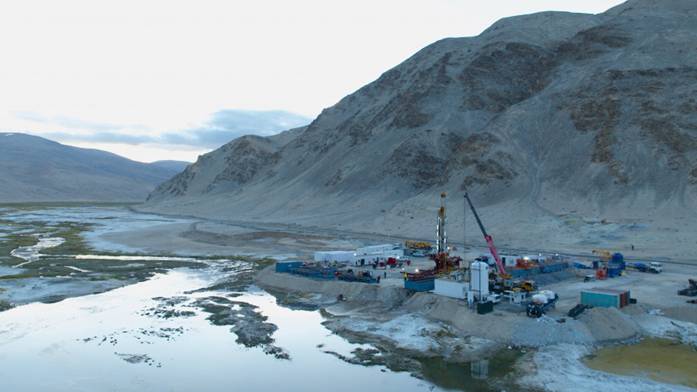
The Lieutenant Governor of Ladakh approved a critical five-year extension of the Memorandum of Understanding (MoU) with the Oil and Natural Gas Corporation (ONGC) to accelerate the execution of India’s maiden geothermal energy facility in the Puga Valley.
Main Body: Multi-Dimensional Analysis
- Tapping the Himalayan Geothermal Province: The Puga Valley is located along the tectonic suture zone of the India-Eurasia collision line, featuring unique geothermal heat gradients capable of generating consistent base-load power.
- Technical Parameter Goals of the Pilot Plant: Under the revised extension framework, the ONGC Energy Centre is mandated to drill exploration wells up to a depth of 1,000 meters to sustain a 1 Megawatt-electric (MWe) pilot geothermal facility.
- Providing Clean, Constant Power to Remote Frontiers: Unlike solar or wind arrays which face seasonal interruptions in the trans-Himalayan winters, geothermal energy provides a steady capacity factor independent of local weather.
- Reducing High-Altitude Carbon Emissions: The successful commercialization of this clean energy resource will allow the strategic frontier region to phase out its massive reliance on high-emission diesel generator sets.
- Formulating the Detailed Project Report for Commercial Scalability: The current pilot serves as a foundational scientific step to gather telemetry data needed to construct multi-megawatt commercial deep-earth power grids.
Positives, Negatives, & Government Schemes
| Dimension | Details |
| Positives | Provides uninterrupted green power to remote military and civil installations, reduces fuel transport costs, and tracks clean tech. |
| Negatives | Extreme environmental conditions at 14,000 feet limit the active engineering and drilling season to just a few months per year. |
| Associated Strategies | National Strategic Plan for Geothermal Energy, Carbon Neutral Ladakh Initiative, PM-KUSUM (Extended clean energy focus). |
Topic 7: India’s Fuel Infrastructure Pinched by West Asian Maritime Disruptions; CNG Prices Hiked
Subject
ECONOMY & ENERGY SECTOR (GS Paper 3)
Context
On May 26, 2026, major urban gas distributors in India announced a sharp ₹2 per kg hike in Compressed Natural Gas (CNG) prices, marking the fourth consecutive fuel price upward adjustment within two weeks due to deep volatility along global supply lines.
Main Body: Multi-Dimensional Analysis
- The Strait of Hormuz Chokepoint Crisis: Ongoing geopolitical conflicts in West Asia have caused structural shipping delays around the crucial Strait of Hormuz, driving up maritime freight insurance costs for energy-dependent states.
- Under-Recovery Dilemma for State Oil Marketing Companies: Rising spot prices for Liquefied Natural Gas (LNG) on international markets have widened under-recoveries for domestic state utilities, forcing immediate retail price corrections.

- The High Fiscal Weight of Energy Imports: Because India imports over 85% of its crude oil requirements and nearly 50% of its natural gas needs, global geopolitical friction directly translates to domestic consumer price shocks.
- Compounding Inflation Risks Across Transport Ecosystems: The successive fuel hikes create a domino effect on logistics, increasing transit expenses for public transport fleets and essential food supply trucks.
- Expanding Government Oversight Frameworks: In response to pricing anomalies, the state is expanding strict fuel dispenser verification protocols across all clean energy pumps to protect consumers from volume manipulation.
Positives, Negatives, & Government Schemes
| Dimension | Details |
| Positives | Market-linked price adjustments insulate state-run energy companies from balancing severe balance-sheet structural deficits. |
| Negatives | Increases inflation across the retail economy, adds financial pressure on low-income city commuters, and slows down alternative clean fuel adoption. |
| Associated Frameworks | Kirit Parikh Committee Recommendations on Gas Pricing, Petroleum and Natural Gas Regulatory Board (PNGRB) Guidelines. |
Topic 8: Ministry of Road Transport Sanctions ₹1,427 Crore for 4-Lane Thiruvarur Bypass in Tamil Nadu
Subject
ECONOMIC INFRASTRUCTURE (GS Paper 3 / State Infrastructure)
Context
The Union Ministry of Road Transport and Highways officially approved a capital allocation of ₹1,427.61 crore to construct a modern four-lane bypass road at Thiruvarur along with additional Railway Over Bridges (ROBs) in Tamil Nadu.
Main Body: Multi-Dimensional Analysis
- Mitigating Inter-District Logistic Bottlenecks: The infrastructure project directly aims to remove prolonged transit delays inside Thiruvarur town, easing freight movement across the industrial and agricultural belts of the Cauvery delta.
- Integrating Multimodal Asset Corridors via ROBs: Constructing dedicated multi-lane Railway Over Bridges removes hazardous railway level crossings, optimizing safety and speed for both freight trains and passenger vehicles.
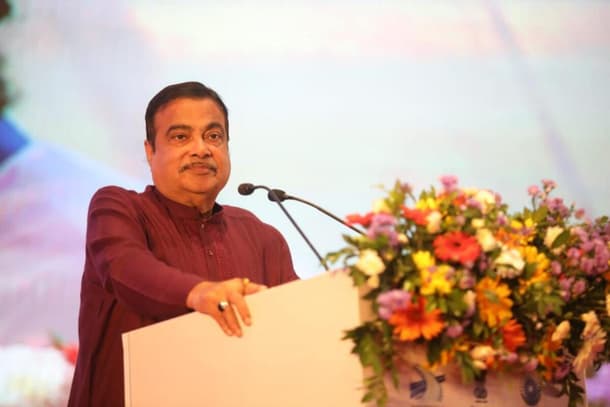
- Boosting Agrarian Market Accessibility: The expanded bypass facilitates faster, damage-free movement of paddy harvests from rural farming sectors to regional storage depots and milling units.
- Adhering to Climate-Resilient Engineering Standards: The sanctioned road architecture features elevated embankments and advanced micro-drainage channels to ensure the highway remains clear during heavy monsoonal flash floods.
- Spurring Localized Economic Growth and Asset Appreciation: Land corridors adjacent to the upcoming bypass are experiencing high commercial interest, laying the ground for warehousing hubs and rural-urban manufacturing clusters.
Positives, Negatives, & Government Schemes
| Dimension | Details |
| Positives | Lowers commercial logistics turnaround times, improves public safety at rail crossings, and creates direct local employment. |
| Negatives | Challenges involve managing complex land acquisition compensation disputes and preventing environmental damage during construction. |
| Associated Frameworks | Bharatmala Pariyojana, PM Gati Shakti National Master Plan, National Highways Development Project (NHDP). |
Practice Mains Questions
- The inclusion of regional affirmative action laws within the Ninth Schedule does not completely immunize them from constitutional scrutiny. Analyze this statement with special reference to the legal challenges surrounding Tamil Nadu’s 69% reservation policy. (250 words – GS 2)
- Examine the strategic and ecological significance of developing high-altitude geothermal energy projects in India’s trans-Himalayan frontier zones. (250 words – GS 3)
- Discuss the potential of integrating artificial intelligence and automated digital platforms into military supply lines to enhance the defensive capabilities of armed forces in rugged, border terrains. (250 words – GS 3)
