
Topic 1: Relaxation of GeM Procurement Norms for Scientific Research
Subject: Polity & Governance
Syllabus
- GS Paper 2: Government policies and interventions for development in various sectors and issues arising out of their design and implementation.
Context
The Union Finance Ministry has officially relaxed procurement norms under the Government e-Marketplace (GeM) portal for top scientific institutions, allowing them to bypass mandatory low-bidder rules for specialized equipment up to ₹200 crore to eliminate research bottlenecks.
Main Body: Multi-Dimensional Analysis
Quality vs. Cost Conundrum
- Traditional GeM regulations enforce a strict lowest-bidding (L1) vendor framework, which succeeds for standardized goods but severely fails for scientific research requiring highly customized, precision instruments.
- Forcing labs to buy subpar or mismatched diagnostic tools from underqualified suppliers led to severe structural delays, stalled clinical trials, and compromised experimental accuracy across premium national labs.
Administrative Decoupling
- By authorizing direct and global tenders outside GeM for procurements below ₹200 crore, the government acknowledges the unique nature of scientific administration, moving away from a “one-size-fits-all” bureaucratic strategy.
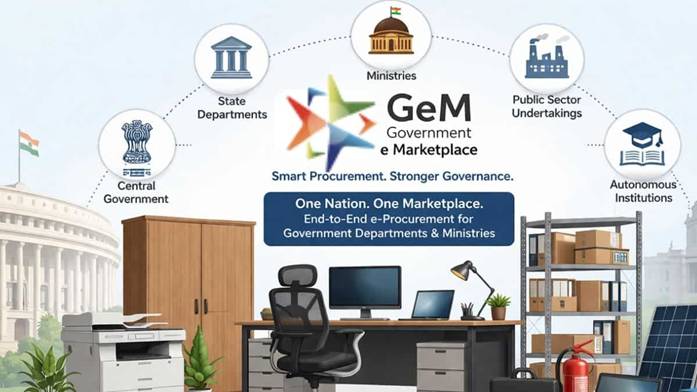
- This policy grants institutional heads greater financial autonomy, shifting accountability from strict procedural adherence to research outcomes and timelines.
Global Scientific Competitiveness
- Indian research agencies routinely lost critical time waiting for long-winded bureaucratic clearance exemptions to buy cross-border machinery, allowing foreign peers to beat them to breakthrough discoveries and patent filings.
- Streamlining procurement brings Indian research infrastructure timelines in line with global laboratories in the United States and the European Union, removing structural roadblocks to deep-tech output.
Budgetary Efficacy and Resource Deployment
- While the relaxation risks reducing price competition initially, it ensures public funds are spent on operational, high-grade instrumentation rather than cheap, faulty machinery that quickly breaks down and wastes taxpayer capital.
Positives, Negatives, & Government Schemes
| Dimension | Details |
| Positives | Grants financial autonomy to scientists, eliminates multi-month bureaucratic delays, secures top-tier precision equipment for national labs. |
| Negatives | Reduces centralized expenditure monitoring, increases risk of non-standard vendor selections without a unified price catalog. |
| Associated Schemes | Government e-Marketplace (GeM), National Deep Tech Startup Policy, National Quantum Mission, General Financial Rules (GFR). |
Examples
Prior to this relaxation, state-run genomic labs experienced over a nine-month delay in procuring specialized gene sequencers because overseas manufacturers were not listed on the standard domestic GeM portal.
Way Forward
- Introduce an electronic post-audit system to verify that the high-value exemptions are strictly used for deep scientific purposes rather than routine office upgrades.
- Create a specialized “Scientific & Research Wing” within GeM to register certified global technology manufacturers, avoiding absolute reliance on external bidding processes over the long run.
Conclusion
By recognizing that advanced scientific research cannot be run under generic commercial procurement rules, this relaxation balances financial vigilance with operational freedom, protecting the speed and integrity of India’s innovation economy.
Practice Mains Question
“Rigid public procurement protocols often compromise the operational flexibility of scientific research institutions.” Critically analyze the impact of the Finance Ministry’s recent GeM relaxation on India’s scientific output. (250 words)
Topic 2: Issuance of Letter of Request for 114 MRFA Jets
Subject: Defence
Syllabus
- GS Paper 3: Security challenges and their management in border areas; Linkages of organized crime with terrorism; Various Security forces and agencies and their mandate.
Context
The Government of India has formally issued a Letter of Request (LoR) to France for a ₹3.25 lakh crore deal to acquire 114 Rafale fighter jets under the Multi-Role Fighter Aircraft (MRFA) programme, looking to arrest the depleting squadron strength of the Indian Air Force (IAF).
Main Body: Multi-Dimensional Analysis
Tactical Squadron Depletion
- The IAF is operating at a historic low of roughly 30–31 fighter squadrons against a sanctioned strength of 42 required to tackle a potential two-front security challenge from China and Pakistan.
- Procuring 114 multi-role fighters provides immediate operational stabilization, offering a long-range, combat-proven platform capable of nuclear delivery, electronic warfare, and precision strikes.
Strategic Offset and ‘Make in India’ Alignment
- A core element of this LoR is the localization strategy: out of the 114 jets, approximately 94 aircraft are slated to be manufactured within India by Dassault Aviation via a joint venture with a domestic partner.

- This model facilitates an unprecedented transfer of technology (ToT), introducing advanced aerospace assembly lines, robotic manufacturing, and material science competencies into India’s defense ecosystem.
Interoperability and Logistics Consolidation
- Operating the Rafale platform—which is already active in the IAF’s fleet and chosen for the Indian Navy’s aircraft carriers—drastically cuts down on logistical overhead.
- It streamlines pilot training pipelines, standardizes weapons stores (like Meteor and Scalp missiles), and simplifies maintenance, repair, and overhaul (MRO) facilities across bases.
Geopolitical Interdependence
- Moving forward with a massive government-to-government (G2G) deal cements India’s strategic partnership with France, providing New Delhi with a reliable veto-wielding ally in the UN Security Council that operates free from third-party weapon export sanctions.
Positives, Negatives, & Government Schemes
| Dimension | Details |
| Positives | Rapidly fixes the IAF’s structural squadron deficit, brings ₹3.25 lakh crore into local defense assembly lines, ensures severe maritime and alpine deterrence. |
| Negatives | Massive drain on the capital defense budget that could squeeze out funding for indigenous projects like the AMCA stealth fighter. |
| Associated Schemes | Multi-Role Fighter Aircraft (MRFA) Programme, Defence Acquisition Procedure (DAP 2020), Make in India in Defence, Strategic Partnership Model. |
Examples
The deployment of the existing Rafale fleet during the eastern Ladakh border stand-off demonstrated its immediate air-superiority value along complex, high-altitude mountain borders.
Way Forward
- Enforce strict, time-bound legal clauses regarding the domestic production timeline to ensure foreign vendors do not delay localized manufacturing phases.
- Simultaneously accelerate state funding for the indigenous Advanced Medium Combat Aircraft (AMCA) program to ensure India does not remain structurally dependent on foreign technology for next-generation platforms.
Conclusion
The formal issuance of the LoR for 114 Rafale jets represents a necessary compromise between immediate military preparedness and long-term domestic industrial self-reliance, safeguarding India’s airspace against growing regional threats.
Practice Mains Question
Examine how the Multi-Role Fighter Aircraft (MRFA) acquisition strategy balances immediate tactical deterrence against the long-term mandate of indigenous defense manufacturing under the Strategic Partnership model. (250 words)
Topic 3: The India-UK Critical Minerals Supply Chain Observatory
Subject: International Relations
Syllabus
- GS Paper 2: Bilateral, regional and global groupings and agreements involving India and/or affecting India’s interests.
Context
In a bid to break the global processing monopoly held by China, India and the United Kingdom have jointly established the Critical Minerals Global Supply Chain Observatory to monitor, secure, and diversify the flow of elements vital for clean energy technologies.
Main Body: Multi-Dimensional Analysis
Breaking Geopolitical Choke-points
- Critical minerals such as lithium, cobalt, nickel, and rare earth elements are foundational to electric vehicle batteries, semiconductor chips, and defense hardware. Currently, China controls over 60% of extraction and 90% of global processing.
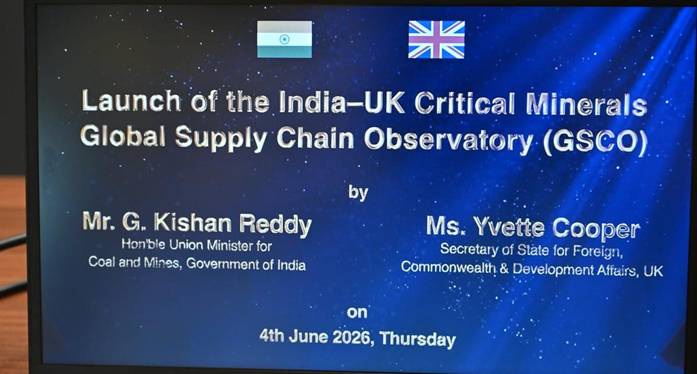
- Weaponizing these supply chains could halt India’s industrial and environmental transitions overnight; this observatory builds an early-warning network to flag supply disruptions and export bans ahead of time.
Bilateral Complementarity
- The partnership leverages distinct national strengths: India offers massive industrial scaling capacity, high domestic demand, and mineral exploration opportunities, while the UK provides deep financial capital, advanced mining technologies, and specialized geological mapping tools.
- It feeds directly into India’s National Critical Mineral Mission by pointing out where to target mineral exploration, investment, and asset acquisition in resource-rich regions like South America and Africa.
Transitioning to Cleantech Sovereignty
- Achieving India’s ambitious climate pledges depends entirely on the steady import of these minerals. The observatory helps build shared stockpiles and joint recycling technologies to reuse e-waste minerals, insulating both economies from spot-market price shocks.
Standardizing ESG Compliance
- Western supply chains face strict Environmental, Social, and Governance (ESG) rules regarding “dirty mining” or child labor. The joint body will map and certify ethical supply sources, smoothing the path for Indian electronics to enter premium Western markets.
Positives, Negatives, & Government Schemes
| Dimension | Details |
| Positives | Insulates domestic cleantech industries from single-country embargoes, expands exploration data, opens doors for joint processing ventures. |
| Negatives | Purely analytical and advisory capability; does not possess direct regulatory or legislative power to enforce alternative trade routes. |
| Associated Schemes | National Critical Mineral Mission (NCMM), Khanij Bidesh India Limited (KABIL), India-UK Roadmap 2030, Minerals Security Partnership (MSP). |
Examples
China’s previous export restrictions on gallium and germanium—crucial components for semiconductor manufacturing—show how easily concentrated processing power can be turned into diplomatic leverage.
Way Forward
- Expand the observatory’s mandate to coordinate joint sovereign investments via KABIL to buy stakes in overseas lithium mines.
- Formulate a domestic processing policy with production-linked incentives to ensure raw materials tracked by the observatory can be refined inside India rather than sent abroad.
Conclusion
The India-UK Critical Minerals Observatory is a proactive diplomatic and economic shield, turning abstract talk of supply-chain resilience into an operational data network that secures the raw components of tomorrow’s technology.
Practice Mains Question
“Securing critical mineral supply chains is as vital to 21st-century national security as oil reserves were in the 20th century.” Evaluate the role of the India-UK Critical Minerals Observatory in this context. (250 words)
Topic 4: RBI Climate Finance Targets and Net-Zero Deficit
Subject: Economy
Syllabus
- GS Paper 3: Indian Economy and issues relating to planning, mobilization of resources, growth, development and employment.
Context
The Reserve Bank of India’s (RBI) Report on Currency and Finance warns that India must inject an additional annual investment of at least 2.5% of its GDP until 2030 to fund its green transformation, highlighting a multi-trillion-dollar deficit in climate finance.
Main Body: Multi-Dimensional Analysis
Macroeconomic Capital Sufficiency
- India has committed to achieving absolute net-zero emissions by the year 2070, which requires a cumulative capital infusion of roughly $10.1 trillion.
- Traditional banking channels are structurally unequipped to handle this load alone due to asset-liability mismatches—banks borrow short-term but green infrastructure projects require long-term, low-interest funding lines.
Systemic Financial Risks
- The report highlights that climate change poses severe structural risks to the banking sector through “physical risks” (crop failures and infrastructure destruction from extreme weather leading to bad loans) and “transition risks” (fossil fuel assets turning into non-performing assets as green rules tighten).
- Financial regulators must enforce climate stress-testing across commercial banks to ensure their balance sheets can withstand sharp economic shifts.
Regulatory Influx & Sovereign Green Bonds
- To attract global capital, India needs a clear “Green Taxonomy”—a strict legal definition of what counts as a sustainable project—to prevent “greenwashing,” where normal commercial developments masquerade as eco-friendly to access cheap funds.
- Expanding the issuance of Sovereign Green Bonds can tap into international ESG funds, but success depends on offering stable yields and hedging against currency exchange fluctuations.
Blended Finance Frameworks
- The state must deploy public funds as “first-loss cushions” in blended finance structures. By taking on early project risks, the government can crowd in trillions of rupees from private venture capital and pension funds that normally avoid unproven green technologies.
Positives, Negatives, & Government Schemes
| Dimension | Details |
| Positives | Explicitly quantifies the green funding gap, pushes commercial banks to calculate climate risk, boosts interest in alternative green bonds. |
| Negatives | Redirecting 2.5% of GDP per year into green tech could pull scarce capital away from immediate poverty alleviation and basic education spending. |
| Associated Schemes | Sovereign Green Bonds Framework, RBI Framework for Acceptance of Green Deposits, Panchamrit Targets, National Action Plan on Climate Change (NAPCC). |
Examples
The sudden, volatile spikes in thermal power generation costs due to domestic coal disruptions demonstrate the financial danger of failing to diversify capital rapidly toward solar and wind storage infrastructure.
Way Forward
- Mandate a progressive increase in Priority Sector Lending (PSL) targets specifically for utility-scale battery storage and green hydrogen projects.
- Work with international financial institutions to establish a national green development bank focused exclusively on long-term, low-cost climate infrastructure loans.
Conclusion
Fixing India’s climate finance deficit requires moving past traditional banking models, utilizing innovative regulatory policy, blended public-private funds, and strict risk frameworks to turn climate liabilities into a sustainable investment pipeline.
Practice Mains Question
Examine the systemic risks that climate change poses to India’s financial sector as highlighted by the Reserve Bank of India. Suggest innovative regulatory measures to close the green financing gap. (250 words)
Topic 5: Launch of the ‘Navachar Mantra’ Flagship Skilling Scheme
Subject: National Issues / Education
Syllabus
- GS Paper 2: Development processes and the development industry — the role of NGOs, SHGs, various groups and associations, donors, charities, institutional and other stakeholders.
- GS Paper 3: Inclusive growth and issues arising from it.
Context
The Ministry of Skill Development and Entrepreneurship (MSDE) launched ‘Navachar Mantra’ at IIT-Delhi, a flagship national initiative designed to fund, mentor, and scale grassroots technological innovations outside Tier-1 cities.
Main Body: Multi-Dimensional Analysis
Decentering the Innovation Ecosystem
- India’s startup boom remains highly concentrated within metropolitan hubs like Bengaluru, Mumbai, and Delhi-NCR, creating a geographical divide where rural talent lacks access to venture capital networks.
- ‘Navachar Mantra’ targets this structural imbalance by taking funding, legal patent assistance, and advanced engineering labs directly to Tier-2, Tier-3, and rural districts, democratizing the knowledge economy.
Focus on High-Impact Verticals
- The scheme intentionally bypasses generic software applications to prioritize six high-impact socioeconomic fields: Agritech, HealthTech, EdTech, Climate Action, Rural Logistics, and Traditional Artisan Technology.
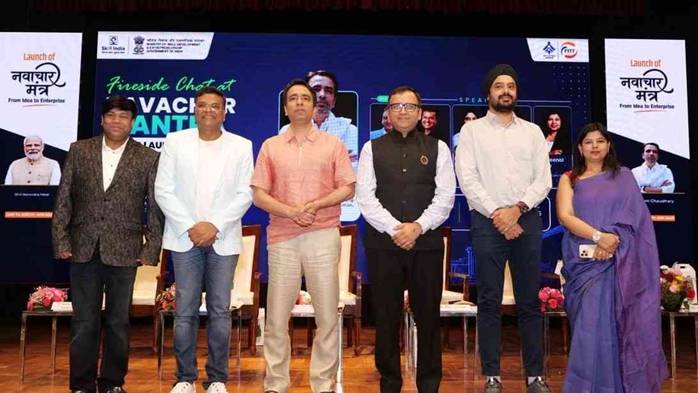
- This ensures that invention directly solves immediate national challenges, such as lowering post-harvest losses or providing cheap diagnostic tools to remote primary health centers.
Bridging the Missing Link of Incubation
- Many grassroots innovations fail during the “Valley of Death”—the phase between creating a working prototype and reaching commercial scale—due to a lack of business knowledge and initial production funds.
- The program provides a one-year structural incubation pathway, linking selected inventors with institutional investors and orchestrating state public procurement pilots to act as their first stable customer.
Enhancing Intellectual Property Assets
- India ranks high in raw engineering graduates but lags in converting ideas into globally recognized intellectual property. By offering free, automated patent filing services via the Skill India Digital Hub, the program lowers the financial barriers that stop rural inventors from protecting their creations.
Positives, Negatives, & Government Schemes
| Dimension | Details |
| Positives | Disperses economic opportunities to smaller towns, prioritizes practical problem-solving tech over speculative consumer apps, builds local patents. |
| Negatives | Risk of bureaucratic delay during the selection phase, potential mismatch between high-tech academic mentors and rural realities. |
| Associated Schemes | Skill India Mission, Atal Innovation Mission (AIM), Startup India, Navachar Mantra, Jan Shikshan Sansthan (JSS). |
Examples
The scaling of local, low-cost solar-powered crop dryers developed by rural polytechnic students highlights how minor tech interventions can transform agricultural economics when given institutional backing.
Way Forward
- Establish mandatory collaboration nodes between ‘Navachar Mantra’ hubs and local Krishi Vigyan Kendras (KVKs) to test agritech tools directly on active fields.
- Introduce a simplified corporate social responsibility (CSR) framework allowing private industries to fund regional incubation centers tax-free.
Conclusion
‘Navachar Mantra’ shifts the focus of Indian entrepreneurship from copycat digital platforms toward deep, grassroots technological solutions, laying the structural groundwork for sustainable, inclusive economic growth.
Practice Mains Question
“Grassroots innovation is vital for achieving equitable and inclusive growth in India.” In light of this statement, evaluate how the ‘Navachar Mantra’ initiative can bridge regional imbalances in the country’s startup ecosystem. (250 words)
Topic 6: Introduction of the India’s First Flex-Fuel Passenger Vehicle
Subject: Science & Technology / Environment
Syllabus
- GS Paper 3: Infrastructure: Energy, Ports, Roads, Airports, Railways etc.; Conservation, environmental pollution and degradation.
Context
The Union Ministry for Petroleum and Natural Gas launched India’s first mass-market flex-fuel passenger vehicle, co-developed with Maruti Suzuki, capable of adapting dynamically to gasoline-ethanol blends ranging from E20 to E100.
Main Body: Multi-Dimensional Analysis
Dynamic Powertrain Adaptation
- Unlike standard internal combustion engines that experience internal corrosion and stalling when ethanol concentrations exceed 20%, flex-fuel powertrains utilize a specialized fuel composition sensor.
- This sensor reads the exact alcohol-to-gasoline ratio passing through the line in real-time, signaling the Engine Control Unit (ECU) to automatically adjust fuel injection timing and spark advance parameters, ensuring smooth performance even with 100% pure ethanol.
Macroeconomic Import Substitution
- India imports over 85% of its crude oil requirements, leaving its foreign exchange reserves exposed to international supply shocks and geopolitical crises.
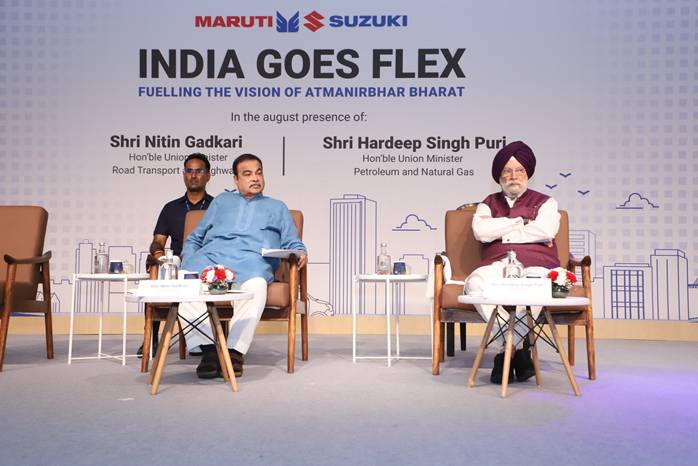
- Scaling up flex-fuel vehicles lets the country replace imported fossil fuels with domestically manufactured ethanol drawn from surplus sugarcane and broken food grains, retaining capital within the local agricultural economy.
Decarbonizing the Transport Sector
- Tailpipe emissions from vehicles are a primary driver of urban particulate matter and greenhouse gas accumulation. Pure ethanol (E100) burns far more cleanly than petrol, cutting carbon monoxide and hydrocarbon emissions by up to 40-50%.
- However, the overall environmental benefit depends on a “Well-to-Wheel” analysis: if coal-powered plants supply the electricity and energy needed to distill the bio-ethanol, the net carbon reduction drops significantly.
The Food vs. Fuel Dilemma
- Diverting massive tracts of fertile agricultural land and water resources to grow cash crops like sugarcane exclusively for fuel distillation risks undermining national food security, driving up basic food inflation.
Positives, Negatives, & Government Schemes
| Dimension | Details |
| Positives | Drastically cuts down foreign exchange spending on crude oil, reduces tailpipe emissions in cities, creates an extra revenue stream for farmers. |
| Negatives | Puts pressure on water-intensive sugarcane cultivation, demands expensive material updates (anti-corrosive linings) that raise car prices. |
| Associated Schemes | National Policy on Biofuels, Ethanol Blended Petrol (EBP) Programme, SATAT Initiative, PLI Scheme for Automobile Sector. |
Examples
Brazil serves as the premier global model for flex-fuel adoption, where over 80% of new light vehicles operate on variable ethanol-gasoline blends, insulating its economy from global oil shocks.
Way Forward
- Shift the primary feedstock for ethanol manufacturing from first-generation food crops (sugarcane, corn) to second-generation (2G) agricultural waste like rice straw and cotton stalks, avoiding food market disruptions.
- Introduce structured tax incentives under the GST framework to keep flex-fuel vehicles priced competitively with traditional options during the initial market rollout.
Conclusion
The arrival of the flex-fuel passenger vehicle marks a crucial evolutionary step for Indian automotive technology, demonstrating how advanced fuel-sensing systems can turn agricultural surpluses into a cleaner, self-reliant transport sector.
Practice Mains Question
Assess the economic and ecological implications of moving toward a nationwide flex-fuel automotive ecosystem. How can India resolve the inherent “food versus fuel” conflict associated with large-scale biofuel production? (250 words)
Topic 7: The Expansion of QR-Tagging in the Food Corporation of India (FCI)
Subject: Internal Security / Governance
Syllabus
- GS Paper 3: Public Distribution System (PDS)- objectives, functioning, limitations, revamping; issues of buffer stocks and food security.
Context
The Government of India has expanded its Quick Response (QR) code tagging initiative for Food Corporation of India (FCI) foodgrain bags into Andhra Pradesh, Telangana, and Odisha, aiming to end grain leakage and track public supplies in real-time.
Main Body: Multi-Dimensional Analysis
Ending Black-Market Leakage and Diversion
- The Public Distribution System (PDS) has long struggled with grain diversion, where high-quality public food stocks are surreptitiously swapped out for inferior grains and resold in private open markets.
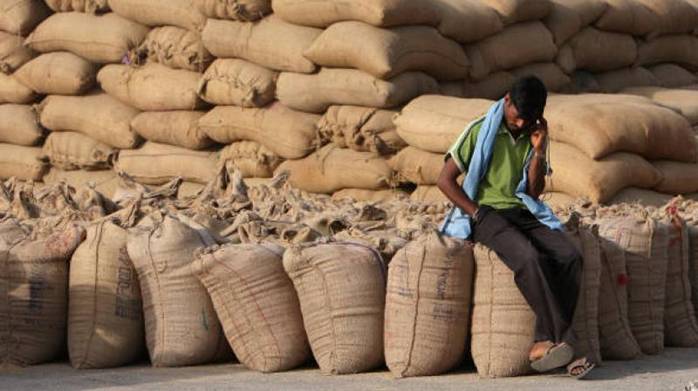
- Printing encrypted, tamper-proof QR tags directly onto grain bags at the point of procurement creates an unalterable digital footprint, making it nearly impossible to introduce unaccounted black-market stocks into the supply line.
Real-Time Grain Age and Quality Auditing
- Grains stored in regional silos frequently spoil due to moisture or pest infestations when older stocks are left buried behind fresh arrivals.
- Scanning QR codes at electronic point-of-sale (ePoS) devices allows automated inventory tracking using a First-In, First-Out (FIFO) approach, ensuring older harvests are distributed to Fair Price Shops (FPS) before they degrade.
Streamlining Public Financial Subsidies
- The integration of QR tracking with ePoS terminals enables automated billing and immediate, data-backed subsidy disbursal to state agencies.
- It removes administrative paperwork delays by generating instantaneous digital receipts the moment a grain bag enters or exits a certified repository, optimizing the deployment of state working capital.
Supply Chain Resilience During Emergencies
- Having a digitized overview of grain coordinates lets central planning authorities divert buffer stocks to areas facing sudden climate shocks, droughts, or floods, preventing localized food inflation.
Positives, Negatives, & Government Schemes
| Dimension | Details |
| Positives | Stops systemic grain diversion, automates accounting, minimizes storage spoilage through precision age-tracking. |
| Negatives | Depends heavily on continuous internet connectivity and ePoS uptime in remote tribal blocks; tags can suffer physical damage in damp warehouses. |
| Associated Schemes | National Food Security Act (NFSA), One Nation One Ration Card (ONORC), PM Garib Kalyan Anna Yojana (PMGKAY), Integrated Management of PDS (IM-PDS). |
Examples
Prior pilot deployments of biometric and electronic barcode logging in select northern blocks led to a documented 15–20% drop in off-the-record grain diversions during the first year of operation.
Way Forward
- Upgrade the paper-based QR tags to durable, water-resistant synthetic polymer labels to withstand friction and high humidity inside rural storage silos.
- Train local network operators and store owners to troubleshoot scanning hardware independently, preventing distribution delays during local internet outages.
Conclusion
Expanding QR-code tagging across the FCI network transitions public food logistics from an opaque, paper-heavy system into a transparent digital operation, protecting the nutritional safety net of millions of vulnerable citizens.
Practice Mains Question
“The integration of digital tracking mechanisms into the Public Distribution System is vital for plugging fiscal leakage and ensuring national nutritional security.” Elucidate with respect to recent FCI supply-chain reforms. (250 words)
Topic 8: Tamil Nadu’s Blue Economy Policy and Coastal Zone Regulation
Subject: Tamil Nadu Regional Issues / Environment
Syllabus
- Tamil Nadu PSC / UPSC GS Paper 3: Conservation, environmental pollution and degradation, environmental impact assessment; Development and management of coastal areas.
Context
The Government of Tamil Nadu has unveiled a dedicated state framework under its Blue Economy Policy to harmonize intensive port development with the protection of ecologically fragile coastal zones, responding to increased erosion risks along the Coromandel Coast.
Main Body: Multi-Dimensional Analysis
Balancing Infrastructure Expansion with Ecology
- Tamil Nadu features one of India’s longest coastlines, hosting major industrial ports (Chennai, Ennore, Thoothukudi) that drive the state’s manufacturing GDP.

- However, unscientific breakwater construction and constant dredging alter longshore sediment transport, triggering severe artificial erosion that swallows up neighboring fishing hamlets and coastal ecosystems.
Securing Artisanal Fishing Livelihoods
- Industrial encroachment into the coastal zone frequently pollutes traditional fishing waters and restricts community access to dry-docking beach spaces.
- The state’s new policy uses spatial mapping to mark off protected artisanal fishing zones, ensuring large-scale maritime infrastructure cannot displace local fishing communities without mandatory rehabilitation programs.
Building Blue Carbon Sinks
- The policy channels state investments into restoring marine ecosystems like the Pichavaram mangrove forests and the Gulf of Mannar seagrass meadows.
- These coastal biomes act as “Blue Carbon” sinks, sequestering carbon up to ten times faster than tropical rainforests while serving as natural shock absorbers against cyclones and rising sea levels.
Regulating Coastal Tourism and Waste Management
- The framework introduces strict zero-discharge rules for commercial resorts and beach developments, mandating localized micro-treatment plants to stop untreated sewage and plastics from blanketing marine reserves.
Positives, Negatives, & Government Schemes
| Dimension | Details |
| Positives | Creates a legal shield against destructive coastal building, protects marine biodiversity, secures long-term livelihoods for fishers. |
| Negatives | Strict environmental zoning could slow down land acquisition timelines for multi-billion-rupee port expansions and renewable offshore wind installations. |
| Associated Schemes | Tamil Nadu Coastal Zone Management Authority (TNCZMA), Deep Ocean Mission, Sagarmala Project, PM Matsya Sampada Yojana (PMMSY). |
Examples
The extensive shoreline erosion observed north of Chennai port highlights how heavy maritime infrastructure can permanently damage adjacent sandy coastlines when implemented without comprehensive sediment tracking.
Way Forward
- Deploy permanent, technology-driven beach nourishment programs that use dredged sand to rebuild eroded shorelines instead of dumping it into deep ocean trenches.
- Formulate co-management councils where local fishing panchayats hold voting rights alongside industrial port authorities when planning coastal development projects.
Conclusion
Tamil Nadu’s Blue Economy Policy establishes a necessary framework for sustainable coastal governance, showing that long-term maritime wealth depends entirely on maintaining the ecological health and stability of the shoreline.
Practice Mains Question
Analyze the conflicts between industrial port development and coastal ecosystem conservation along Tamil Nadu’s coastline. How does the state’s Blue Economy framework attempt to resolve these challenges? (250 words)
